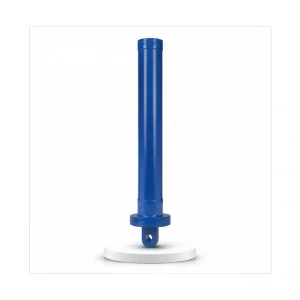
Offshore Crane A Type Mast Crane Luffing Cylinder
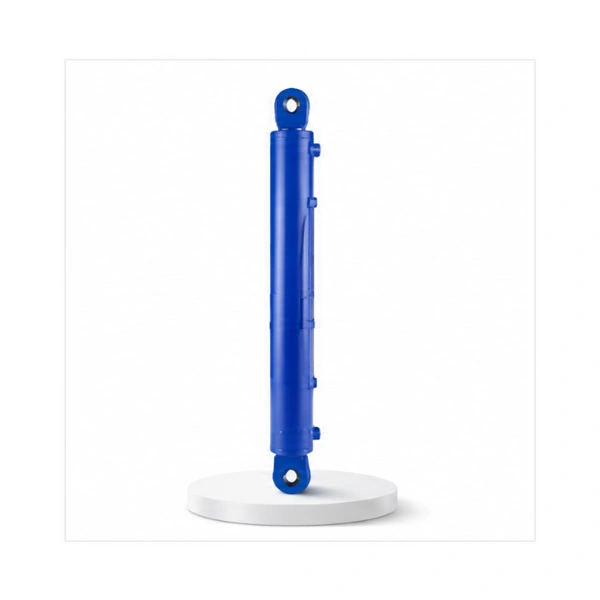
Offshore Crane A-Type Mast Luffing Cylinder
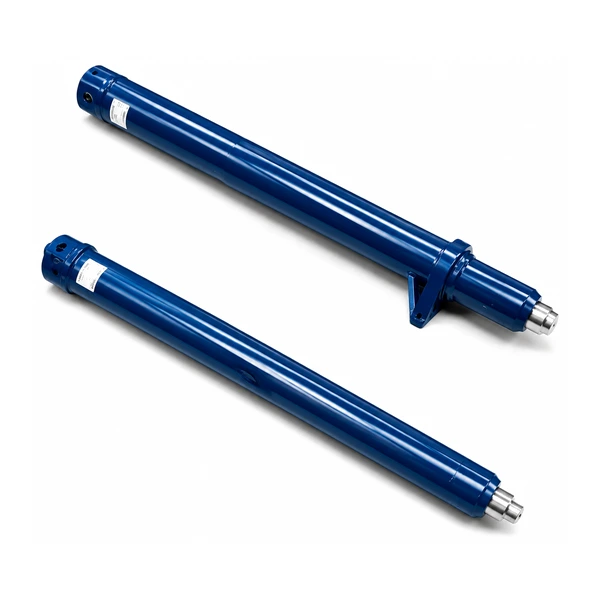
An A-frame mast crane uses a triangular mast structure to support the boom from above — like a tent pole holding up the boom tip. The mast luffing cylinder tilts this A-frame, changing the boom angle and reach. Push and pull: 8,454 KN and 3,589 KN for precise mast angle control under load.
Technical Specifications
| Parameter | Specification |
|---|---|
| Product Name | Offshore Crane A Type Mast Crane Luffing Cylinder |
| Features | Adjust horizontal angle of the A-frame mast |
| Bore Diameter | Up to 580 mm |
| Rod Diameter | Up to 400 mm |
| Stroke | Up to 5,170 mm |
| Thrust Force | Maximum 8,454 KN (push) |
| Pulling Force | Maximum 3,589 KN (pull) |
| Working Pressure | Up to 32 MPa |
| Application | Offshore Crane (A-Frame Mast) |
What Is an A-Frame Mast Crane?
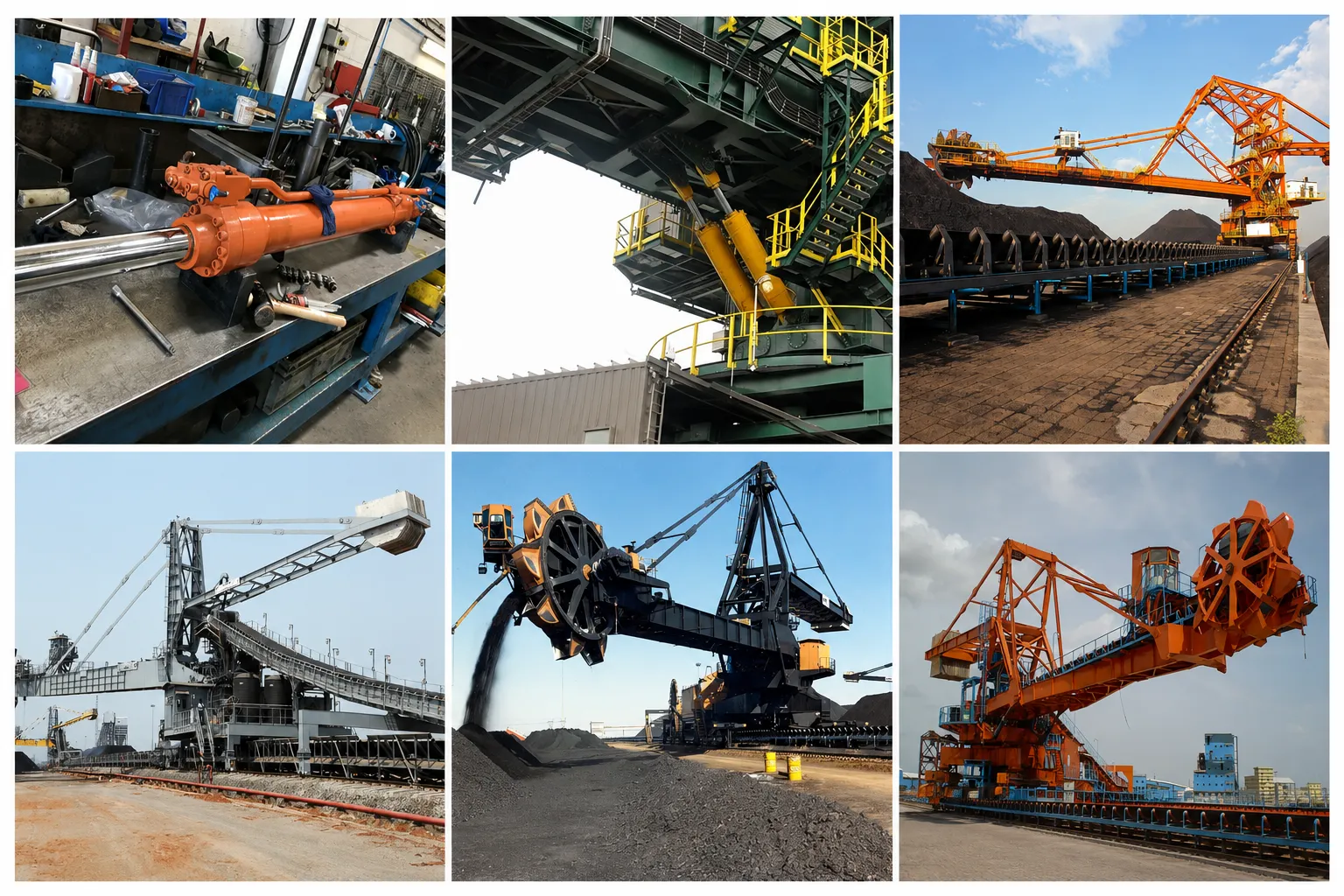
An A-frame mast crane has a distinctive triangular mast (shaped like the letter A) that rises above the crane pedestal. Wire ropes run from the mast top to the boom tip, supporting the boom from above. This design allows the boom to be much lighter than a self-supporting boom because the mast carries most of the bending load. The luffing cylinder tilts the mast backward and forward, which changes the wire rope geometry and therefore the boom angle and reach.
A-frame cranes are common on pipe-laying vessels, heavy-lift construction vessels, and platform supply vessels where high SWL (200–5,000 tonnes) is required with relatively compact deck footprint. The mast luffing cylinder is the critical actuator in this system — controlling mast angle directly controls the crane's lifting radius and height. Browse the offshore hydraulic cylinder range for the main boom (#17) and folding arm (#18) cylinders.
A-Frame vs Conventional Boom — Why the Cylinder Requirements Differ
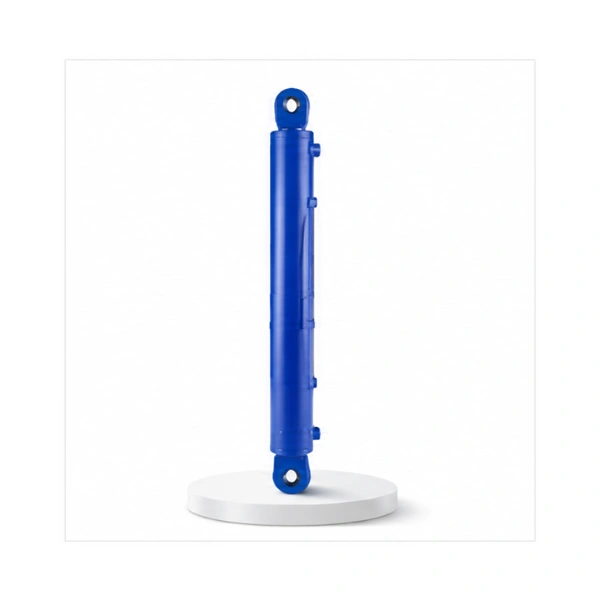
The A-frame mast cylinder faces different loading conditions than a conventional boom luffing cylinder:
- Wire rope load amplification — the cylinder does not lift the boom directly. It tilts the mast, which changes the wire rope angle, which changes the boom angle. The mechanical advantage varies across the mast angle range, meaning the cylinder force requirement is not linear with boom position.
- Bidirectional loading — the mast experiences both forward pull (from the boom and load weight) and backward push (from wind on the mast structure). The cylinder must resist forces in both directions at all mast angles.
- Mast stability in storms — when the crane is stowed for storm survival, the mast cylinder must lock the mast in the stowed position against extreme wind loads (hurricane-rated on some platforms). Load-holding valves are mandatory.
A-Type Mast Cylinder OEM & ODM
Provide the crane model, mast geometry, wire rope arrangement, maximum SWL, and classification requirement. Korea Ever-Power delivers the mast luffing cylinder with engineering drawings, FEA analysis, test certificates, and classification documentation. Contact the Korea Ever-Power hydraulic cylinder team.
Frequently Asked Questions
What Our Customers Say
"The A-frame mast cylinder on our 800-tonne pipe-lay crane has handled 14 months of continuous offshore operation. The load-holding valve performance is critical on this installation — zero drift at any mast angle under maximum SWL."
Eng. D. Petrov — Heavy Lift Superintendent, Caspian Sea contractor
"Korea Ever-Power supplied the mast cylinders for our crane conversion project — changing from a conventional boom to an A-frame design. The engineering team understood the wire rope geometry implications and sized the cylinder correctly for the non-linear force curve."
W. Tan — Naval Architect, Singapore crane integrator
"Solid build quality on the 580 mm bore mast cylinder. The laser cladding on the rod is smoother than our previous HVOF ceramic — lower breakaway friction at stroke initiation."
J. Andersen — Crane Mechanic, Danish offshore wind installation vessel
"Replacement mast cylinder delivered in 8 weeks with full ABS documentation. The original cylinder (15 years old, European OEM) would have taken 20+ weeks to replace from the original manufacturer."
B. Souza — Maintenance Director, Brazilian FPSO operator
"We use Korea Ever-Power mast cylinders on 3 A-frame cranes across our fleet. Standardised supplier, standardised spare parts, standardised documentation. Fleet logistics are much simpler now."
Capt. M. Hassan — Fleet Manager, Middle East offshore fleet
Related Hydraulic Cylinder Categories
Informazioni aggiuntive
| Editor |
|---|
Prodotti correlati
-
Empty Container Stacker Side Shift Cylinder
-
Stacker Reclaimer Chaser Pitch Cylinder
-
Reach Stacker Telescopic Cylinder
-
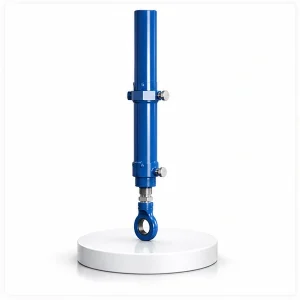
Stacker Reclaimer Skeleton Pitch Cylinder
-
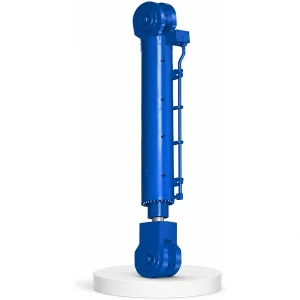
Split Barge Split Cylinder
-
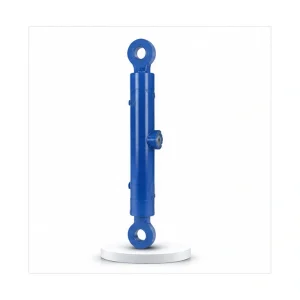
Trailing Suction Dredger Hanger Cylinder
-
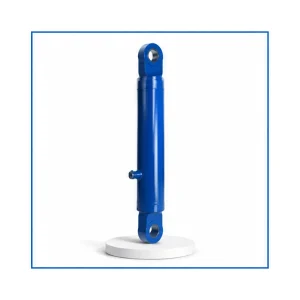
Jack-up Offshore Platform Bolt Cylinder
-
Trailing Suction Dredger Mud Door Cylinder