S Tube Swing Cylinder for Concrete Machinery
Engineered with 27SiMn steel and advanced rod protection to withstand extreme high-impact directional changes and severe abrasive mud environments.
Product Overview: The Pulse of Your Pumping Operations
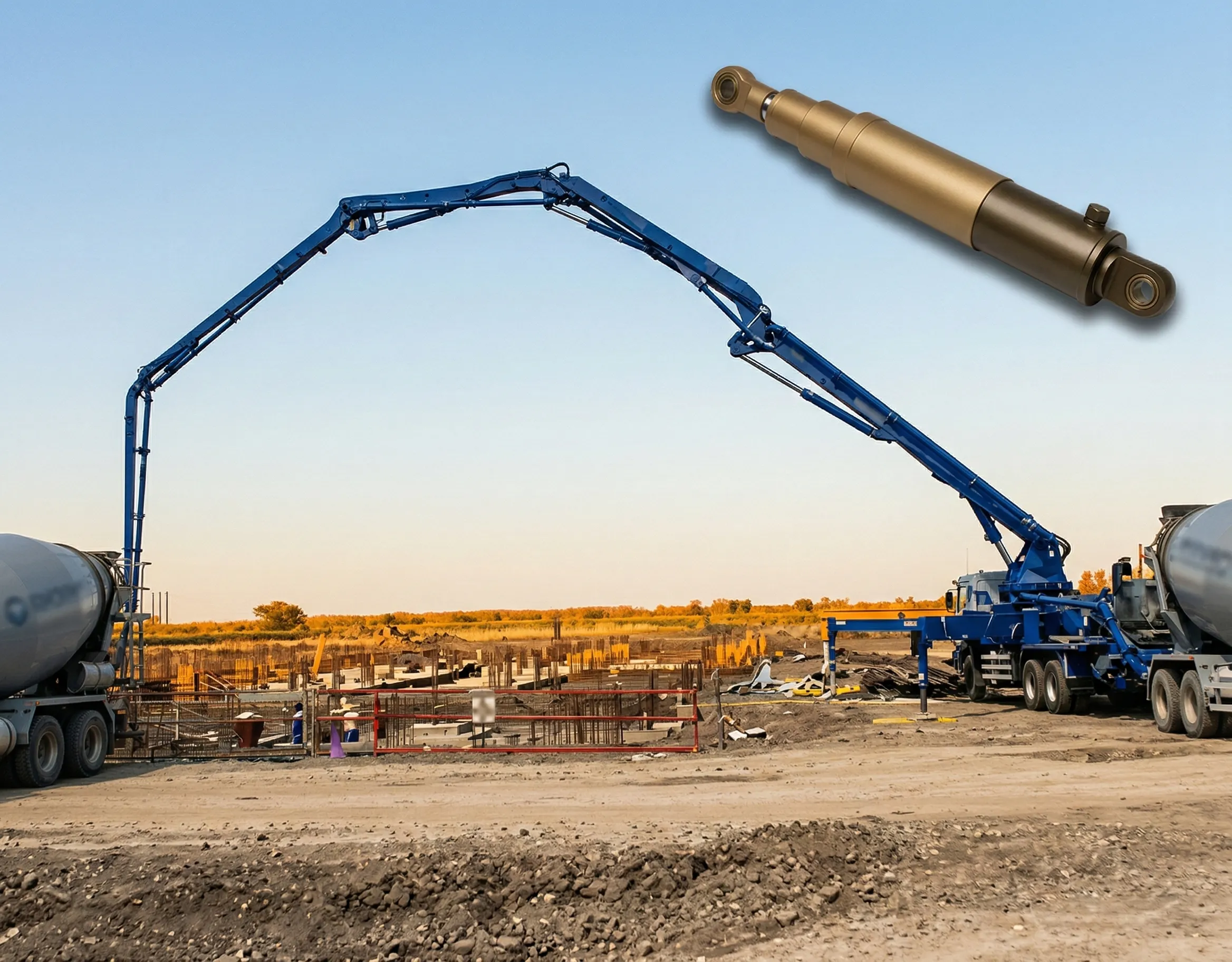
In the high-pressure environment of heavy construction, equipment reliability dictates project profitability. At the very core of a concrete pump truck’s operational capability is the directional control system. This system relies entirely on the precise, aggressive movements of the S Tube Swing Cylinder. Its primary function is to alternate the connection between the concrete delivery cylinders and the S-tube, pushing highly abrasive, viscous concrete through the boom piping.
As a leading hydraulic cylinder manufacturer with two decades of field analysis, we recognize that standard actuators fail prematurely in this specific application. The combination of high impact directional changes, constant exposure to mud, and abrasive particles destroys ordinary seals and scores standard piston rods. Our proprietary S Tube Swing Hydraulic Cylinder is engineered specifically to eliminate these chronic failure points. By utilizing high-yield 27SiMn material and a specialized rod protection cover, we offer a product that significantly extends maintenance intervals, ensuring your concrete machinery remains on site and out of the repair shop.
Detailed Technical Specifications
Precision engineering requires absolute transparency. The following table outlines the rigorous technical parameters and customization ranges for our heavy-duty directional control cylinders. These specifications are designed to combat the exact environmental stresses found in concrete pumping environments.
| Parameter | Standard Specification | Application / Notes |
|---|---|---|
| Industry Focus | Construction Machinery | Specifically Concrete Pump Trucks |
| Subsystem / Action | Directional Control System | Controls the S-valve shifting mechanism |
| Cylinder Designation | S Tube Swing Cylinder | Also referred to as swing ram or shift cylinder |
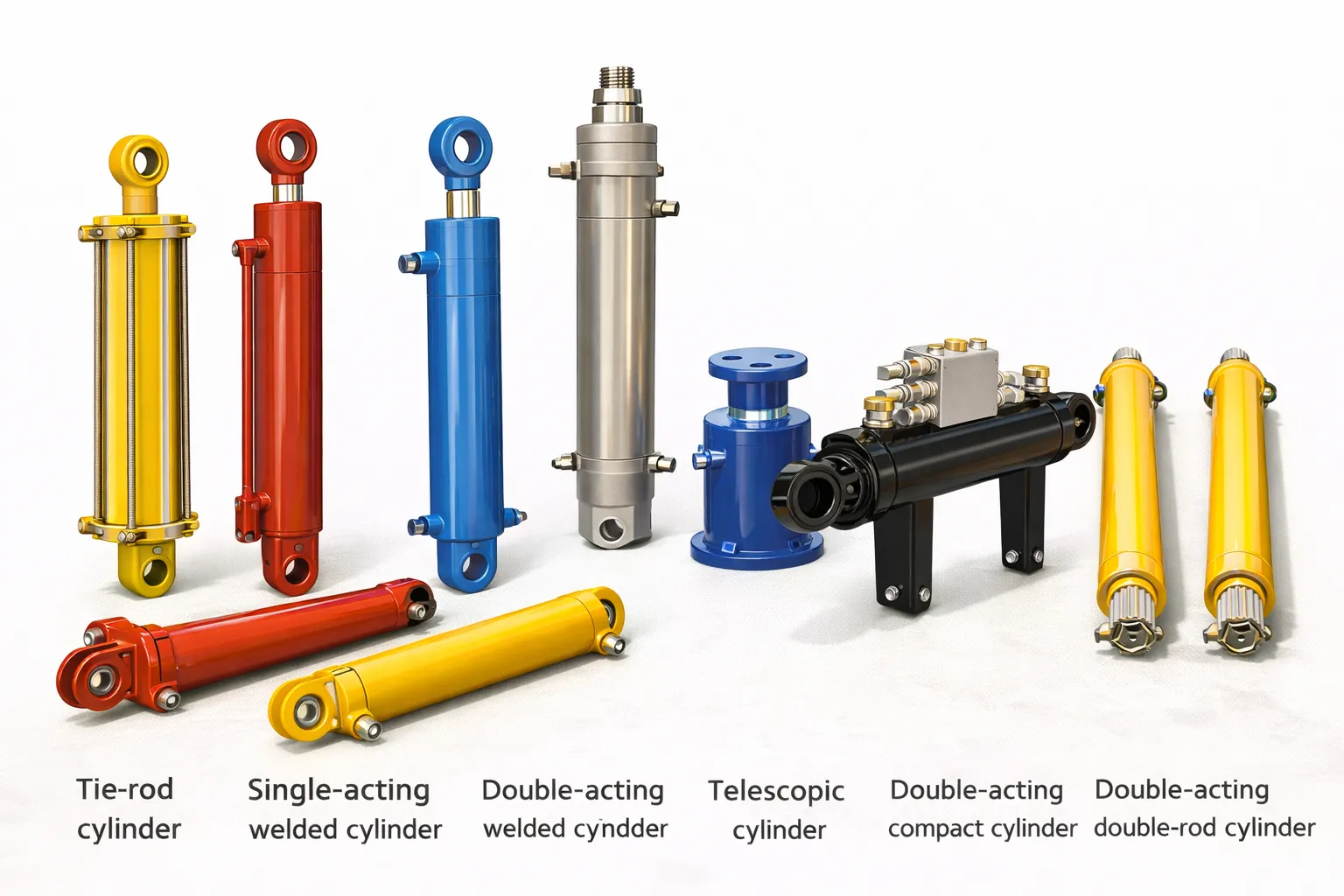
| Action Principle | Double acting hydraulic cylinder | Provides high-force pushing and pulling capability |
| Structural Type | Piston Cylinder (Welded Construction) | Heavy-duty welded design for maximum structural integrity |
| Core Material System | 27SiMn Alloy Steel | Superior yield strength compared to standard 45# carbon steel |
| Surface Treatment | Hard Chrome Plating | Multi-pass plating for enhanced corrosion and scratch resistance |
| Environmental Grade | Mud and Abrasive Particles | Highly hostile environment requiring specialized external wipers |
| Working Condition Dynamics | High Impact Directional Change | Subjected to violent shockwaves during each pump stroke |
| Typical Failure Mode Prevented | Rod End Wear & Seal Extrusion | Addressed via proprietary sealing geometry |
| Recommended Configuration | Wear-Resistant Seal Group + Rod Protection Cover | |
Kinetic Dynamics: Working Principle of the Swing System
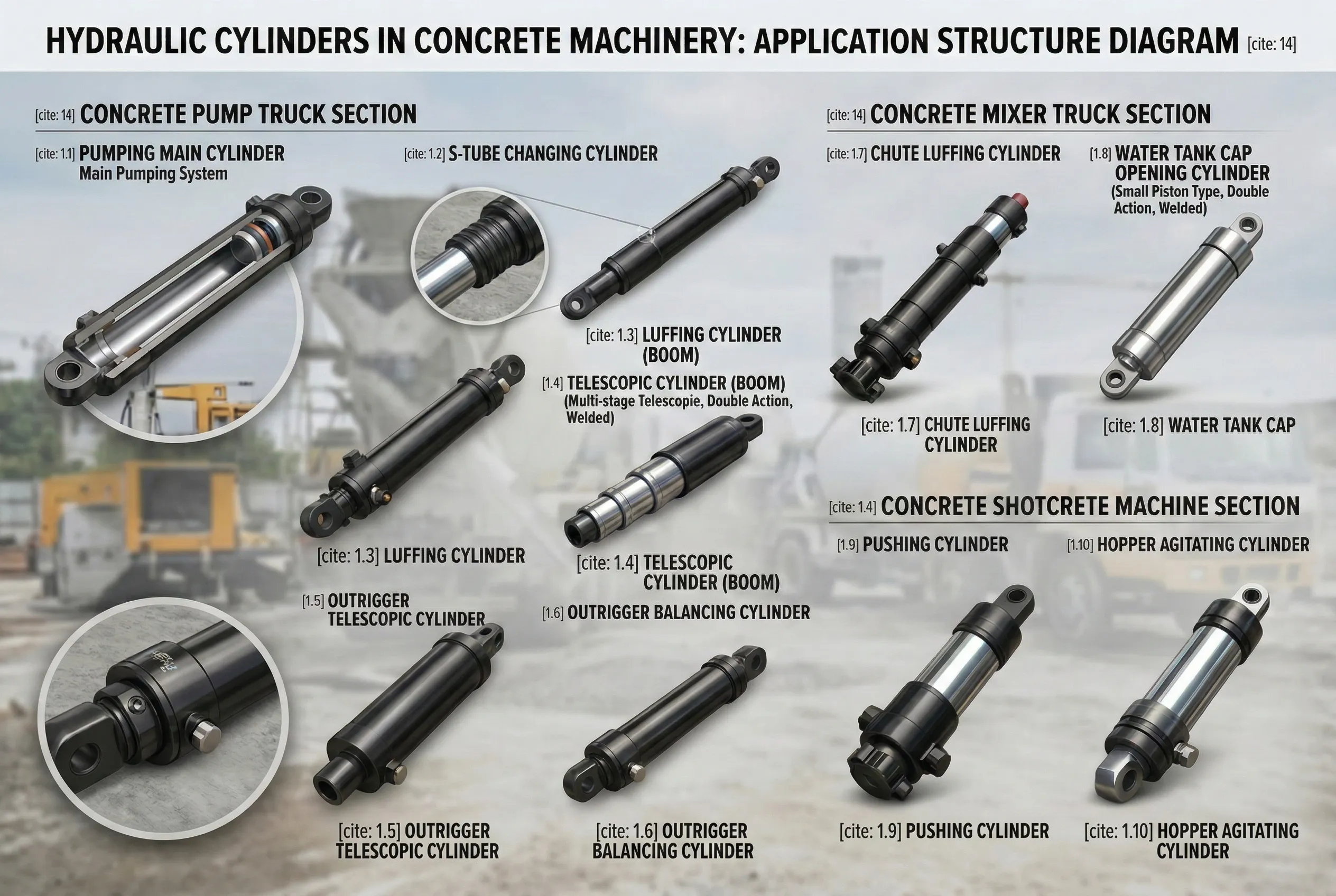
To fully understand why standard hydraulic parts fail in this application, one must examine the extreme physics of the concrete pumping cycle. The S Tube Swing Hydraulic Cylinder operates in pairs. These cylinders are cross-connected to the main hydraulic control block. When the main pumping cylinder pushes concrete forward, the swing cylinders must rapidly violently shift the heavy steel S-tube to align with the active concrete cylinder.
Because it is a double acting hydraulic cylinder, high-pressure fluid is directed to the cap end of one cylinder, forcing the rod outward, while fluid is simultaneously pumped into the rod end of the opposing cylinder, pulling its rod inward. This synchronized push-pull action occurs in fractions of a second. The hydraulic cylinder piston accelerates rapidly and then comes to an abrupt halt as the S-tube smashes against the wear plate, cutting through aggregate rock and thick cement slurry. This creates a massive hydrostatic shockwave that travels backward through the rod and into the cylinder barrel. If the internal cushioning and structural rigidity are subpar, the rod end will deform, and the seals will shatter under the pressure spikes.
Seamless Integration: Fleet Compatibility
Downtime is measured in lost revenue per hour. When fixing hydraulic cylinders in the field, technicians require precise, drop-in replacements that do not mandate custom fabrication or hose rerouting. Our engineering team has painstakingly mapped the mounting geometries, pin hole diameters, and port configurations for the most prevalent machinery globally.
Please note: The following equipment brands are mentioned strictly for compatibility reference and technical selection purposes to assist our B2B clients. We operate as an independent manufacturer and do not claim any trademark affiliation with these entities.
- Junjin & Everdigm: Highly utilized in South Korea; our cylinders match the exact trunnion and clevis dimensions for rapid swap-outs.
- Putzmeister & Schwing: We provide upgraded heavy-duty alternatives capable of matching the extreme flow rates of these premium global rigs.
- Sany & Zoomlion: Precision-engineered to replace factory original actuators that frequently suffer from premature rod end wear in high-volume pouring scenarios.
- KCP Heavy Industries: Tailored stroke lengths and holding pressures to accommodate specific long-reach boom truck configurations.
Five Pillars of Core Technical Dominance
Evaluating the true value of a hydraulic cylinder price requires looking past the exterior paint. The longevity of our products stems from five specific engineering upgrades designed to neutralize the threats of the concrete job site.
- 27SiMn High-Rigidity Material Construction: Standard cylinders utilize 45# carbon steel, which lacks the tensile strength to resist the violent lateral forces generated during the S-tube shift. We exclusively use 27SiMn alloy steel for the barrel and rod. This drastically increases yield strength, ensuring the rod remains perfectly linear during high impact directional changes, preventing eccentric wear on the internal guide bands.
- Proprietary Wear-Resistant Sealing Technology: Concrete mud and abrasive particles are the enemy of polyurethane seals. We deploy an advanced composite wear-resistant seal matrix backed by reinforced anti-extrusion rings. This setup maintains a flawless fluid barrier even when microscopic silica dust attempts to bypass the wipers.
- Integrated Rod Protection Covers: The most frequent failure mode in this application is rod end wear caused by falling cement slurry that dries on the extended rod. During retraction, this dried concrete acts like sandpaper, destroying the main seals. Our specialized rod protection cover physically shields the chrome surface, fundamentally solving this industry-wide problem.
- Optimized Thermal Stability and Fatigue Life: Continuous pumping generates massive kinetic heat, thinning the hydraulic fluid and baking the seals. Our cylinder heads and fluid port geometries are engineered to maximize heat dissipation. Furthermore, all structural welds undergo strict stress-relief treatments to prevent fatigue cracking under continuous vibration.
- Advanced Hydrodynamic End Cushioning: To absorb the shock of the S-tube slamming into the wear plate, we utilize precision-machined internal cushions. These create a momentary hydraulic brake at the exact end of the stroke, decelerating the hydraulic cylinder piston smoothly and preventing metal-on-metal impact damage within the cylinder housing.
Uncompromising Manufacturing Process & Quality Control
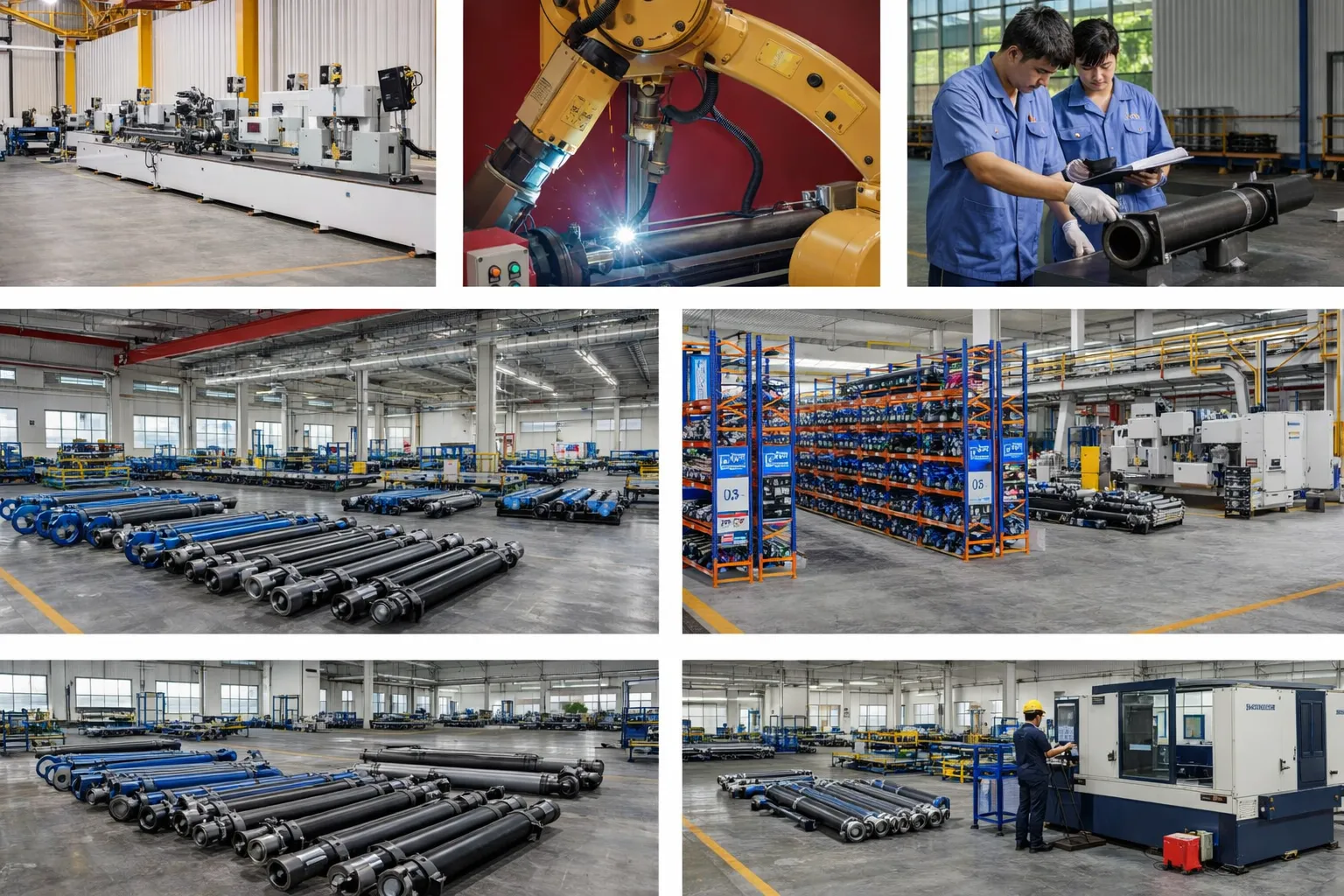
Superior engineering designs are useless without flawless factory execution. We operate a fully integrated, closed-loop manufacturing facility. By controlling every variable from raw material selection to final assembly, we ensure that every single unit meets our exacting standards. We do not outsource critical path operations like robotic welding or bore honing.
Quality assurance is paramount. Before any S Tube Swing Cylinder is approved for export, it undergoes a mandatory 100% factory pressure test. The unit is mounted to a specialized test bench and subjected to pressures exceeding its maximum rated working load while performing rapid cycle tests to simulate high impact directional changes. We utilize ultrasonic flaw detection on all welded joints to guarantee zero internal voids. Finally, every cylinder is laser-etched with a unique serial number, providing complete traceability for materials, production batches, and testing data throughout the entire lifecycle of the hydraulic cylinder components.
Expansive Industry Applications
While the architectural DNA of this product is perfectly tuned for concrete pumping, the underlying ruggedness translates exceptionally well across various heavy-duty sectors. Learn more about our solutions for the construction machinery industry.
- Engineering & Earthmoving: Boom and arm actuators for large-scale excavators operating in highly abrasive quarry environments.
- Metallurgy & Heavy Forging: High-temperature resistant rams for furnace doors and massive holding cylinders for industrial metal presses.
- Plastics & Rubber Machinery: Injection molding clamping cylinders requiring ultra-fast, high-impact locking mechanisms without seal bypass.
- Logistics & Port Automation: Heavy-duty steering and lift cylinder applications for reach stackers exposed to corrosive coastal air.
- Specialized Environments: Tunnel boring machinery (TBM) actuators dealing with continuous vibration, rock strikes, and subterranean mud.
Comparative Analysis: Standard vs. High-Performance
Procurement based solely on the lowest initial cost inevitably leads to expensive downtime. The matrix below highlights the distinct physical differences between standard aftermarket replacements and our purpose-built engineered solutions.
| Engineering Element | Standard Ordinary Cylinder | Our High-Performance Cylinder |
|---|---|---|
| Core Material | 45# Carbon Steel (Susceptible to micro-bending) | 27SiMn Alloy (High rigidity and impact resistance) |
| Sealing System | Basic Polyurethane (Prone to extrusion under shock) | Wear-Resistant Composite + Anti-Extrusion Rings |
| External Protection | Standard wiper seal only (Fails against dried cement) | Integrated Rod Protection Cover |
| Impact Handling | Relies entirely on external machine valving | Precision internal hydrodynamic cushioning |
| Testing Protocol | Random batch sampling | 100% individual high-pressure cycle testing |
Verified Success: Real-World Global Case Studies
Theoretical engineering must be proven in the dirt. Our primary market focus includes the rigorous construction sectors of South Korea and surrounding regions. Below are five documented instances where our engineered solutions dramatically reduced operational downtime.
Case 1: Eradicating Rod Wear in Seoul’s Urban Sprawl
Location: Seoul, South Korea
Client: Tier-1 Concrete Pumping Fleet Operator
The Challenge: Client was executing 24/7 pours for a commercial high-rise. Their Junjin trucks suffered chronic rod end wear on the swing cylinders due to splashing cement hardening on the rods, destroying the wipers within a month.
Connection: Discovered us via a search for a specialized “hydraulic cylinder manufacturer” solving rod wear issues.
The Result: We deployed our 27SiMn cylinders equipped with the proprietary rod protection covers. Installed in April 2024. The physical barrier completely shielded the chrome. As of early 2026, the units are still functioning perfectly without a single seal replacement.
“The rod covers are a game-changer. We previously spent thousands on constant repairs and fixing hydraulic cylinders mid-project. Your design permanently eliminated our biggest headache.” — Park D., Fleet Maintenance Director
Case 2: Overcoming Severe Abrasives in Coastal Infrastructure
Location: Busan, South Korea
Client: Marine Civil Engineering Firm
The Challenge: Pumping highly abrasive, specialized marine-grade concrete. The silica content was shredding standard polyurethane seals in the directional control system every 300 hours of operation.
Connection: Met our technical sales team at a regional heavy machinery exhibition.
The Result: Upgraded the fleet to our wear-resistant composite seal matrix. The anti-extrusion properties maintained sealing integrity despite the abrasive slurry. Maintenance intervals stretched from 300 hours to over 1,500 hours.
“The coastal mud here eats cheap seals alive. Your wear-resistant technology is the real deal. We’ve quadrupled our uptime since November 2024.” — Lee S., Site Engineer
Case 3: Neutralizing High-Impact Shockwaves in Subways
Location: Incheon, South Korea
Client: Subterranean Tunneling Contractor
The Challenge: Operating stationary pumps underground. The violent shifting of the S-valve was causing standard 45# steel cylinder rods to micro-bend and eventually snap under the intense high impact directional changes.
Connection: Reached out through our B2B technical portal analyzing yield strengths.
The Result: Delivered exact drop-in replacements forged from 27SiMn alloy with integrated hydrodynamic cushioning. The superior rigidity absorbed the lateral shockwaves entirely.
“We haven’t bent a single rod since installing your 27SiMn units last summer. The cushioning is smooth, and the build quality is vastly superior to the OEM parts we were using.” — Choi M., Operations Manager
Case 4: Thermal Endurance in Tropical Mega-Projects
Location: Hanoi, Vietnam
Client: Infrastructure Development Conglomerate
The Challenge: Continuous 48-hour bridge deck pours in 38°C ambient heat. Hydraulic oil temperatures were spiking, causing standard seals in their Sany rigs to bake, resulting in sudden pressure bleed-offs and jammed S-tubes.
Connection: Searched for a reliable hydraulic cylinder price for thermally optimized units.
The Result: Provided heavily customized cylinders with high-temperature FKM seals and optimized heat-dissipation ports. The fleet completed the 2025 summer pouring schedule with zero thermal-related actuator failures.
“We push our machines to the absolute thermal limit. Your cylinders held pressure flawlessly during the hottest weeks of the year. Exceptional product.” — Nguyen T., Procurement Officer
Case 5: Rapid Fleet Turnaround for Rental Agencies
Location: Daegu, South Korea
Client: Heavy Equipment Rental Firm
The Challenge: Purchased a fleet of used KCP pump trucks that required immediate overhaul before the spring construction rush. Needed highly reliable replacement hydraulic rams with exact OEM fitment to avoid fabrication delays.
Connection: Direct referral from a partnered hydraulic repair facility.
The Result: Shipped 15 sets of S-tube cylinders. The precise dimensional mapping allowed their mechanics to bolt them on immediately. Fleet deployed on time, securing major rental contracts.
“The fitment was millimeter-perfect. We didn’t have to modify a single pin or hose. You saved us weeks of labor and got our trucks earning money faster.” — Kim S.J., Fleet Owner
Expert Insights: Frequently Asked Questions (FAQ)
Procuring critical B2B components requires absolute clarity. Below, our engineering team addresses the most common technical inquiries regarding our directional control cylinder solutions.
1. Why is 27SiMn preferred over standard 45# steel for these cylinders?
2. How exactly does the rod protection cover prevent failure?
3. Are these units direct drop-in replacements for Korean machinery brands?
4. What makes your seals “wear-resistant” compared to standard polyurethane?
5. Is a hydraulic cylinder repair sufficient, or should I replace the whole unit?
6. How do I request a technical drawing and price quote?
Stop Settling for Unplanned Machinery Downtime
Concrete waits for no one. Equip your fleet with heavily engineered directional control cylinders designed to survive the brutal reality of the job site. Partner with a proven manufacturer dedicated to your operational uptime.
Connect With Our Engineering Team
We specialize in rapid B2B consultation. Full 3D CAD models and dimensional verification provided upon request.
Editor: Cxm