
Mini Tiller Hitch Lift Cylinder For Tillage
Precision-engineered fluid power developed explicitly for compact agricultural equipment. Constructed from high-grade carbon steel and equipped with optimized muddy-water sealing technology to permanently eliminate micro-leakage in light-load, high-frequency farming applications.
Product Overview: The Core of Compact Agricultural Maneuverability
Across highly intensive agricultural zones characterized by steep terraced hillsides, dense greenhouse operations, and small, fragmented vegetable plots particularly throughout South Korea, Japan, and Southeast Asia, deploying massive industrial tractors is entirely physically impossible. The undisputed workhorse of these highly productive environments is the mini tiller, frequently referred to as a walking tractor or power tiller. These compact, exceptionally agile machines perform the exact same fundamental soil preparation tasks as their larger counterparts, including rotary tilling, plowing, and seedbed forming. However, the true functional utility of a mini tiller is defined entirely by its rear hitch assembly. The ability to seamlessly lower a small plow into the earth or rapidly lift a rotary hoe to execute a tight headland turn depends completely on the reliability of the suspension mechanism. This mechanical responsibility is carried out entirely by the Mini Tiller Hitch Lift Cylinder.
Operating a hydraulic cylinder on a mini tiller presents a highly specific set of engineering parameters. Unlike massive deep-ripping actuators that must withstand terrifying subterranean shock loads, the hitch actuator on a compact tiller manages relatively light mechanical loads. However, the environmental conditions are incredibly demanding. Because the rear hitch sits merely inches above the soil, the actuator is constantly exposed to splashed wet mud, deeply saturated agricultural water, and abrasive dry dust. In generic commercial hydraulic cylinders, this combination of light draft loads and constant muddy water exposure results in a highly frustrating failure mode: chronic micro-leakage. When cheap, standard aftermarket cylinders are subjected to this wet, abrasive environment, microscopic silica grit easily bypasses inferior wiper seals, lightly scoring the rod and compromising the primary pressure boundaries. This leads directly to a slow, continuous weeping of hydraulic fluid.
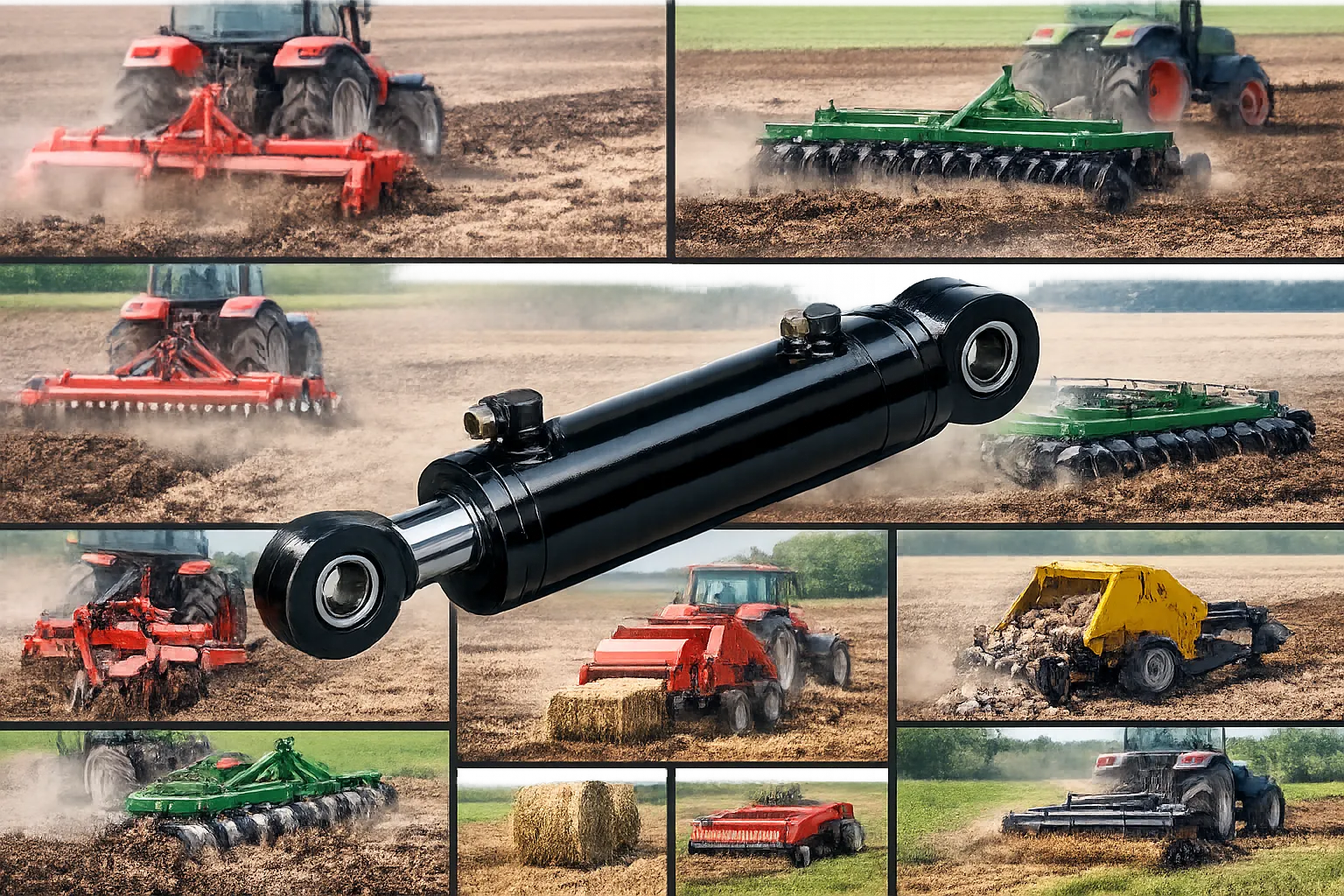
Micro-leakage is not merely an aesthetic issue; it actively destroys agronomic efficiency. As fluid slowly escapes, the hydrostatic pressure drops, causing the attached implement to slowly drift downward into the soil during transport or tilling. This ruins the precise depth control required for delicate seedbed preparation and forces the operator to constantly readjust the mechanical levers. Furthermore, leaking petroleum-based fluid directly into organic greenhouse soils or flooded rice paddies causes severe, localized crop toxicity. As a specialized, globally recognized hydraulic cylinder manufacturer, our engineering division has fundamentally solved this issue. By utilizing precision-drawn carbon steel for the structural barrel and deploying an incredibly precise standard sealing matrix tailored explicitly for muddy-water exclusion, we have developed an actuator that remains entirely leak-free. When farming cooperatives calculate the true, long-term hydraulic cylinder price, they recognize that installing a reliable component completely offsets the massive labor costs associated with constantly fixing hydraulic cylinders mid-season.
Dimensional Specifications and Technical Material Parameters
Integrating reliable fluid power actuation into the highly confined spatial footprint of a mini tiller chassis demands absolute precision in external geometry and highly intelligent material allocation. The comprehensive data matrix outlined below explicitly details the targeted metallurgical composition, structural framework, and environmental defense protocols engineered directly into our compact hitch cylinder. Leveraging our extensive array of automated CNC machining centers, we readily customize retracted pin-to-pin lengths, stroke profiles, and fluid port threads to guarantee a flawless, drop-in replacement fit for any regional machinery specification.
| Technical Parameter Category | Manufacturing Specifications and Material Data |
|---|---|
| Primary Industrial Sector | Agriculture |
| Machinery Classification | Tillage Machinery / Mini Tillers |
| Mechanical Sub-system | Mini Tiller Hitch & Implement Suspension Assembly |
| Fluid Power Nomenclature | Mini Tiller Hitch Lift Cylinder |
| Kinematic Action Mode | Double acting hydraulic cylinder |
| Internal Structural Concept | Small Piston Cylinder (Highly compact footprint) |
| Manufacturing Construction | Precision Welded Type Assembly |
| Core Barrel Metallurgy | High-Grade Carbon Steel (Optimal balance of weight and rigidity) |
| Rod Surface Treatment | Precision Hard Chrome Plated |
| Environmental Duty Level | Light Load + Muddy Water Immersion |
| Primary Functional Objective | Rapid lifting and lowering of small soil implements |
| Critical Defeated Failure Mode | Chronic micro-leakage leading to mechanical depth drift |
| Engineering Configuration | Optimized standard sealing matrix is highly sufficient for long life |
Operational Fluid Dynamics: Precision in Small Spaces
While a walking tractor is physically small, the physics governing its fluid power system are identical to those driving massive industrial machinery. To grant the operator effortless, fingertip control over the rear hitch assembly, utilizing a single acting hydraulic cylinder is mechanically inadequate. A single-acting unit relies purely on the dead weight of the implement or gravity to drop into the soil. In sticky clay, heavily rooted soil, or thick rice paddy mud, a lightweight rotary hoe simply does not have enough mass to pull a single-acting rod down; the implement will frustratingly float above the required working depth. To guarantee absolute, positive mechanical authority over the implement in all soil conditions, our engineering blueprint firmly dictates a double acting hydraulic cylinder architecture. This advanced, compact setup routes pressurized hydraulic oil directly to both the extension and retraction sides of the internal hydraulic cylinder piston.
When the farmer needs to engage the soil, they actuate the compact directional control valve located on the handlebars. Pressurized fluid from the mini tiller’s auxiliary pump smoothly enters the cap end of the welded carbon steel barrel. This hydrostatic pressure acts against the internal piston surface, forcing the hard-chromed rod to extend outward. This linear movement alters the geometry of the rear linkage, forcefully driving the plow shares or rotary tines downward into the earth to the exact depth requested. The compact piston diameter ensures that the volumetric fluid requirement is extremely low. This translates directly to incredibly rapid, highly responsive actuation that does not bog down or stall the small horsepower engine of the walking tractor.
Conversely, when approaching the end of a field row, the operator reverses the fluid flow into the rod-end port. The fluid acts powerfully against the annular area of the piston, rapidly retracting the rod and sharply lifting the implement completely out of the soil for an easy, unhindered turn. Crucially, when the control valve is returned to its neutral holding position, our highly optimized standard sealing matrix steps in. It perfectly traps the incompressible fluid within the cylinder, creating an absolute hydrostatic lock. Even while bouncing across uneven, heavily clodded fields, the hitch mechanism refuses to drift downward, ensuring the implement never drags on the ground during transport and entirely preventing the messy, frustrating micro-leakage that plagues substandard aftermarket components.
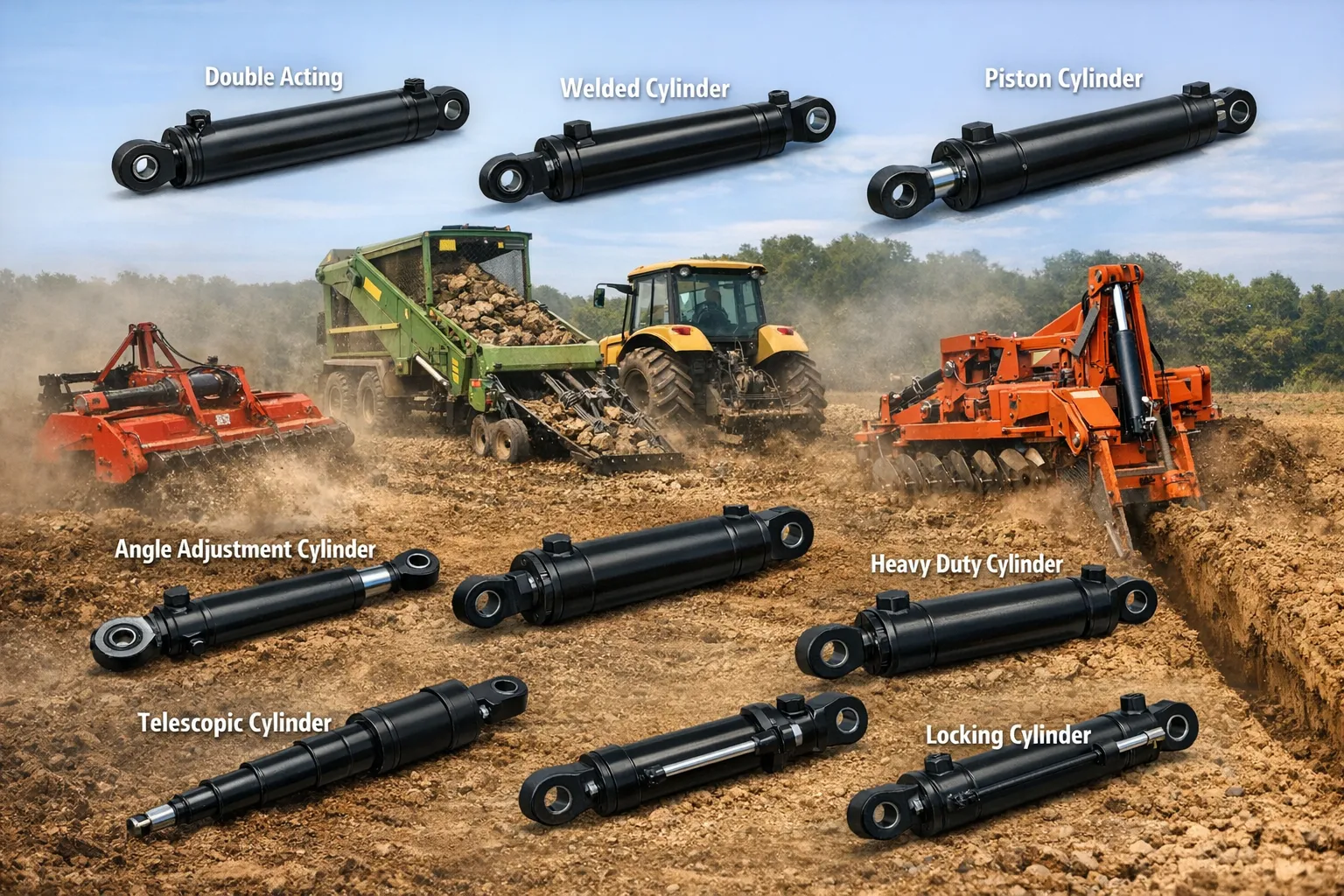
Direct Fleet Interchangeability and Rapid Field Replacement
For agricultural cooperatives and independent farmers heavily reliant on mini tillers, prolonged equipment downtime during peak planting windows is financially paralyzing. When a factory-installed cylinder inevitably begins to weep fluid due to mud ingestion, operators cannot afford to wait weeks for complex retrofits, nor do they want to struggle with modifying linkage brackets in the dirt. The agricultural industry critically demands highly reliable, dimensionally exact replacement hydraulic cylinder components that serve as effortless drop-in upgrades directly in the field. Our engineering division actively dimension-maps our aftermarket compact cylinders to ensure absolute structural compatibility with the original linkages of the most prominent walking tractor brands in the world.
For the strict purpose of maintenance sizing, dimensional cross-referencing, and rapid B2B procurement (and explicitly clarifying that we claim no direct corporate endorsement or trademark violation), our robust Mini Tiller Hitch Lift Cylinder models are routinely utilized to perfectly overhaul the suspension systems on compact equipment manufactured by major brands dominating the South Korean, Japanese, and Southeast Asian markets. This heavily includes machinery produced by Kubota, Yanmar, Iseki, Honda, Daedong (KIOTI), LS Mtron, TYM, and Asia Technology. Because we strictly adhere to OEM metrics for retracted lengths, stroke limits, and clevis pin diameters, replacing a leaking unit is a rapid, straightforward process requiring only basic hand tools.
By proactively securing your replacement hydraulic parts from our autonomous manufacturing facility, you entirely bypass the highly inconsistent quality of generic, mass-produced aftermarket tubes. You are upgrading to precision-skived carbon steel and a highly optimized mud-water sealing matrix that permanently cures the chronic micro-leakage problem. This intelligent procurement decision radically minimizes the ongoing, frustrating necessity of constantly seeking out hydraulic cylinder repair mid-season.
Six Core Technical Advantages: Agility, Protection, and Reliability
The operational superiority of our compact hitch cylinder over standard, cheap replacements lies in understanding the highly specific environmental demands of muddy, light-load agriculture. Over-engineering with massive steel adds useless weight, while under-engineering the seals causes immediate leaks. Here are the six fundamental engineering pillars that guarantee our perfect operational balance:
1. Precision Carbon Steel Architecture
Mini tillers require lightweight components to maintain soil balance and maneuverability. Because hitch lifting represents a relatively light structural load, we utilize high-grade, precision-drawn carbon steel. This provides exceptional geometric rigidity to handle implement vibrations without adding excessive, unnecessary dead weight to the rear of the compact tractor.
2. Optimized Mud-Water Sealing Matrix
The constant exposure to splashed paddy mud destroys generic rubber. While exotic extreme-pressure seals are unnecessary for light loads, we utilize a highly standardized but tightly toleranced NBR/Polyurethane sealing matrix specifically designed to repel dirty water. This maintains an absolute hydrostatic seal, completely eliminating chronic micro-leakage.
3. Hard Chrome Environmental Defense
To successfully combat the highly corrosive nature of standing agricultural water and acidic fertilizers, the carbon steel piston rod is precision-ground and treated with a dense layer of hard chrome plating. This highly durable surface entirely prevents rust and pitting during both active muddy operations and humid off-season storage in open sheds.
4. CNC Skived Ultra-Smooth Internal Bore
To ensure the internal pressure seals survive thousands of rapid, light-load actuation cycles without tearing, the interior of the carbon steel barrel is heavily processed via automated CNC skiving and roller burnishing. Achieving a mirror-like Ra 0.2 surface finish drastically reduces dynamic sliding friction, significantly extending the overall fatigue life of the seals.
5. Compact Automated Welded Geometry
Physical space is extremely constrained on the rear linkage of a walking tractor. By utilizing automated robotic MIG welding to secure the mounting clevises, we create an incredibly compact, perfectly sealed structural footprint. This guarantees a rapid drop-in installation without any mechanical interference with the tiller’s power take-off (PTO) shafts.
6. High-Agility Fluid Displacement
By meticulously sizing the small internal piston diameter to match the specific hydraulic flow rates of standard mini tiller auxiliary pumps, our cylinder achieves exceptionally fast, highly responsive fluid displacement. This grants the operator immediate, real-time control over the implement without causing the small diesel engine to lug or stall.
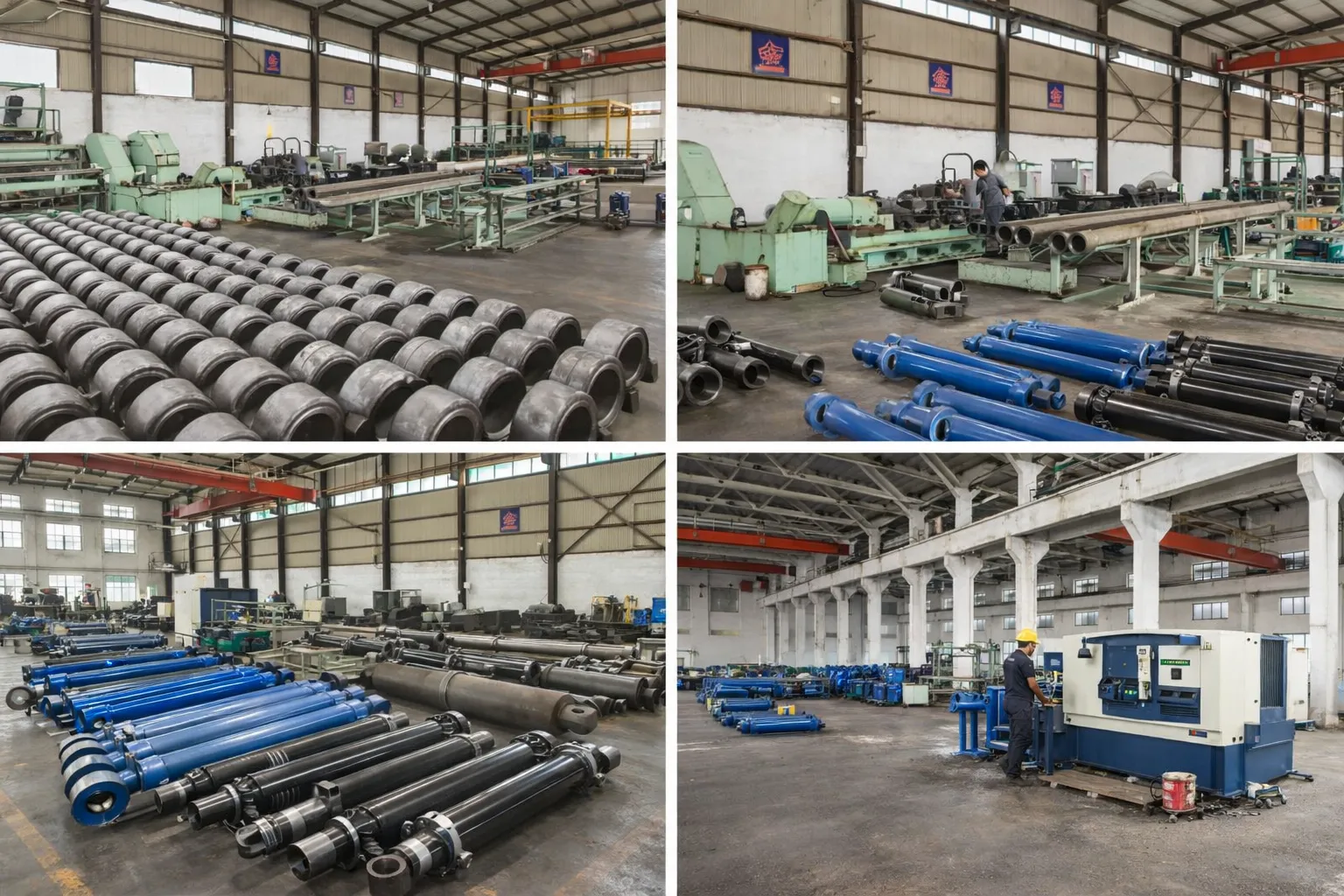
Absolute Quality Control Through Autonomous Manufacturing
True operational reliability is systematically built directly on the factory floor. As an elite, vertically integrated hydraulic cylinder manufacturer, our entire production process is fiercely controlled in-house. We do not gamble on the inconsistent quality of outsourced, pre-assembled components. Every batch of carbon steel tubing and chrome rod stock that enters our facility is subjected to rigorous dimensional and metallurgical verification. Our advanced multi-axis CNC machining centers turn the internal components to exact mathematical tolerances, ensuring that every seal groove and bearing surface is cut with absolute perfection. This high level of autonomous manufacturing control is the only way to guarantee that a hydraulic cylinder will perform flawlessly and not suffer premature micro-leakage in the field.
We explicitly reject the use of random statistical batch testing. Before any completed unit is authorized for global export packaging, it must pass an uncompromising 100% individual testing protocol. Every single cylinder is connected to a computerized test bench and subjected to severe dynamic cycling to purge internal air, followed immediately by a static hydrostatic pressure hold well above standard operating parameters. Highly sensitive digital sensors monitor the unit for any sign of internal bypass across the piston or external weeping at the weld seams. Only after flawless performance is verified is a permanent alphanumeric serial number laser-etched onto the barrel, ensuring absolute lifecycle traceability directly back to the original production date and assembly technician.
Cross-Industry Adaptability of Compact Fluid Power
The highly refined engineering principles utilized to create a lightweight, perfectly sealed, mud-resistant actuator for agricultural mini tillers translate seamlessly to other industrial sectors. A compact fluid power component that guarantees zero micro-leakage under constant vibration and wet conditions is highly prized by mechanical engineers across diverse heavy industries who require precise actuation in severely confined spaces.
Consequently, this optimized small-bore carbon steel architecture is frequently specified for auxiliary control hatches, steering mechanisms, and compact linkage adjustments within the construction machinery industry (such as on mini-excavators, walk-behind trenchers, and concrete buggies). Furthermore, the rigorous environmental exclusion provided by our specialized wiper rings makes these units highly effective for operating ventilation louvers and conveyor diverters in the dust-heavy environments of the mining industry and the demanding, highly exposed operations characteristic of the metallurgical and iron industry. Reliable, leak-free fluid power is a universal necessity.
Comparative Analysis: Generic Aftermarket vs. Precision Engineered
For procurement officers evaluating fleet maintenance budgets, selecting the cheapest available replacement part is almost always a false economy. The labor cost of constantly dealing with leaking fluids and drifting implements heavily outweighs initial part savings. The table below illustrates exactly how our targeted engineering eliminates common aftermarket failures.
| Component Feature | Generic Commercial Aftermarket | Our Engineered Tiller Cylinder |
|---|---|---|
| Internal Bore Finish | Rough machining ridges left inside the barrel act like sandpaper, rapidly shredding the piston seals during rapid use. | CNC skived and roller burnished to a mirror-like finish. Provides ultra-low friction, massively extending seal life. |
| Sealing Matrix Quality | Low-grade rubber seals that easily lose their elastic memory, leading directly to persistent fluid micro-leakage and implement drift. | Premium optimized NBR/Polyurethane profiles. Ensure an absolute hydrostatic lock to firmly hold implement depth flawlessly. |
| Mud & Water Exclusion | Basic, thin dust rings that allow wet paddy mud and abrasive soil directly into the clean hydraulic fluid reservoir. | Dedicated polyurethane wiper ring actively squeegees wet mud off the retracting rod, ensuring 100% internal fluid isolation. |
| Structural Welding | Inconsistent manual welding resulting in hidden porosity and eventual weeping from the base clevis or fluid ports. | Automated robotic MIG welding provides flawless, deep-penetration seams for absolute, leak-free structural integrity over time. |
| Quality Assurance | Random batch sampling. High operational probability of installing a defective, leaking unit right out of the box onto the tiller. | 100% individual hydrostatic pressure testing on computerized benches. Zero functional defects shipped to our clients. |
Verified Field Success: Solving Real-World Agricultural Downtime
Meticulous engineering design is only proven true by solving actual, messy mechanical failures in the dirt. By collaborating closely with small farming cooperatives and implement dealers across Asia, we have conclusively demonstrated the massive financial benefit of integrating highly reliable, leak-free actuation hardware into compact machinery.
Case Study 1: Stopping Micro-Leakage in South Korean Greenhouses
Client Profile: Specialized Greenhouse Farming Cooperative, Gyeongsangnam-do, South Korea.
The Challenge: Operating Daedong mini tillers inside tightly enclosed greenhouse vegetable plots meant the machinery was constantly subjected to extreme high humidity and sprayed irrigation water. The cheap OEM lift cylinders on the rear hitch were suffering chronic micro-leakage within months. The leaking hydraulic oil was dripping directly into the pristine organic soil beds, causing unacceptable environmental contamination, while the implements constantly drifted downward, ruining the shallow seedbeds.
The Solution & Result: The cooperative’s procurement officer utilized our B2B portal to source replacement hydraulic parts. We rapidly dispatched a bulk order of our optimized carbon steel cylinders featuring our enhanced muddy-water sealing matrix. Following fleet installation, the micro-leakage was entirely eradicated. The implements held their exact depth all day, and the organic soil remained completely free of hydraulic fluid contamination for the entire multi-crop season.
“The constant dripping oil was an absolute disaster for our organic certification. These new units sealed up perfectly and never leaked a single drop. The hydraulic cylinder price was incredibly fair considering it saved our topsoil and stopped the constant need for fixing hydraulic cylinders.” — Mr. Lee, Cooperative Operations Manager (October 2024)
Case Study 2: Conquering Mud in Japanese Terraced Paddies
Client Profile: Agricultural Machinery Dealership, Shikoku Region, Japan.
The Challenge: Farmers utilizing Kubota and Yanmar walking tractors in deeply flooded, muddy terraced rice paddies were experiencing high failure rates with aftermarket lift cylinders. The deeply abrasive, saturated mud easily bypassed the cheap rubber dust rings on the aftermarket cylinders they were buying locally. The wet clay acted as a lapping compound, totally destroying the rod chrome and internal seals within two months of use.
The Solution & Result: We rapidly supplied the dealership with our specialized units featuring tightly toleranced outer mud wipers and premium hard chrome plating. The improved wipers successfully squeegeed the liquid clay entirely off the rods before retraction. Fleet operators reported a massive 300% increase in the operational lifespan of the hitch cylinders, entirely eradicating the need for constant, messy mid-season hydraulic cylinder repair in the flooded paddies.
Case Study 3: Restoring Agility in Thai Vegetable Farms
Client Profile: Commercial Vegetable Farm, Chiang Mai, Thailand.
The Challenge: Maneuvering mini tillers with heavy furrowing attachments through tightly spaced vegetable beds required constant, rapid lifting and lowering of the hitch to avoid damaging the crops. The rough, unpolished internal bores of their cheap replacement cylinders caused significant seal drag, making the lifting action jerky, painfully slow, and prone to stalling the small tractor engines.
The Solution & Result: We supplied customized units featuring our automated CNC skived and roller-burnished internal bores. The mirror-like internal finish radically reduced dynamic sliding friction. The hitch actuation became incredibly smooth, rapid, and highly responsive, massively increasing the operators’ daily acreage and perfectly protecting the valuable vegetable beds from accidental mechanical strikes.
FAQ for Procurement and Farm Mechanics
To ensure absolute clarity for international cooperative directors, dealership procurement officers, and agricultural engineers, we clearly address the most common technical and logistical inquiries regarding the specification, sealing technology, and global procurement of our compact tillage hardware.
Permanently Secure Your Mini Tiller Fleet’s Reliability
Do not allow substandard commercial seals and rough internal machining to continually cause messy micro-leakage, ruin your precise seedbeds, and stall your compact tractors. Partner directly with a premier fluid power engineering facility to comprehensively integrate perfectly sealed, highly agile actuation hardware into your agricultural equipment.
Provide our engineering team with your specific required pin-to-pin dimensions, OEM machinery models, or direct descriptions of your current field failures for an immediate, highly actionable technical consultation.
Editor: Cxm


























