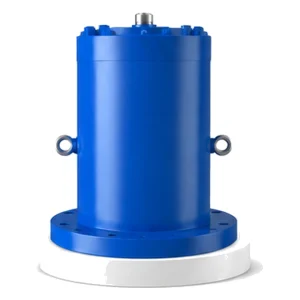
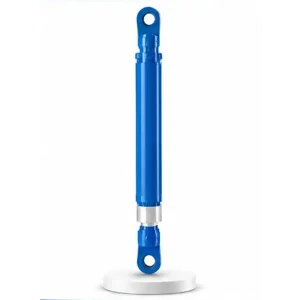
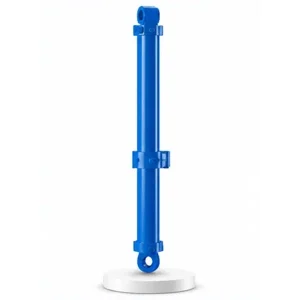
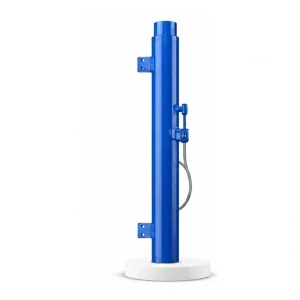
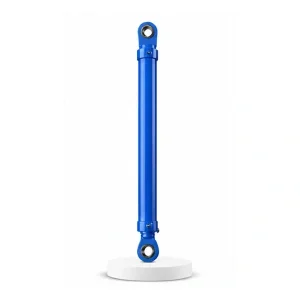
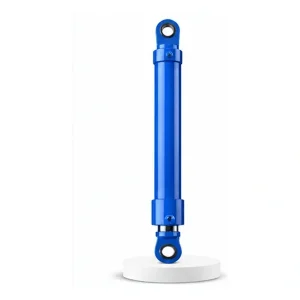
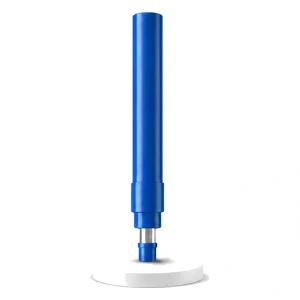
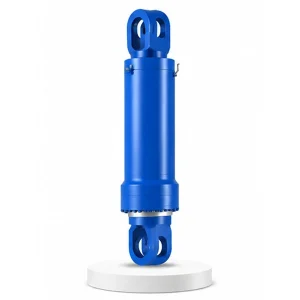
Excavator Oil Cylinder
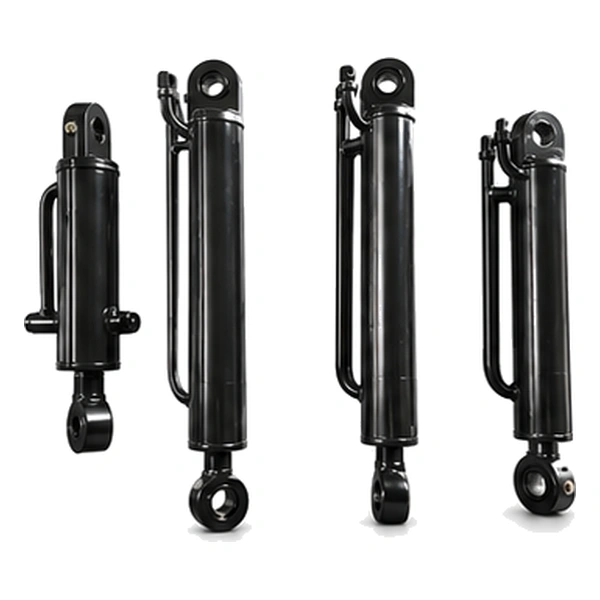
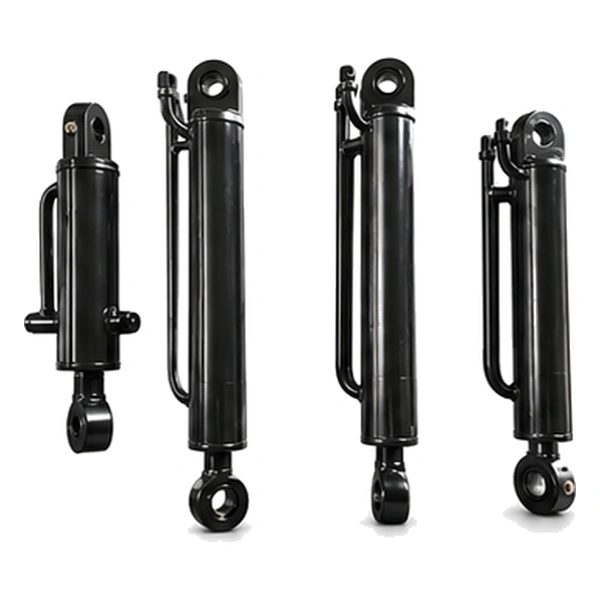
Excavator · Boom · Arm · Bucket
Break Rock at 35 MPa.
Grade a Slope to ±10 mm.
Same Three Cylinders.
The tractor cylinder (#35) lifts implements. The turnover plow cylinder (#36) flips a plough. The excavator cylinder does everything — digging trenches, loading trucks, demolishing buildings, grading roads, laying pipes, and lifting steel. Three cylinders (boom, arm, bucket) form a kinematic chain that gives the operator millimetre-level control over a bucket that can rip through frozen ground. The highest working pressure in the outdoor equipment family.
Three Cylinders, One Kinematic Chain — Boom, Arm, Bucket
The excavator's front-end is a three-link kinematic chain: the boom pivots at the machine body, the arm pivots at the boom tip, and the bucket pivots at the arm tip. Each joint is powered by its own cylinder — and every motion of one cylinder changes the geometry of the other two. The operator moves all three simultaneously to trace the bucket along a precise path through the soil.
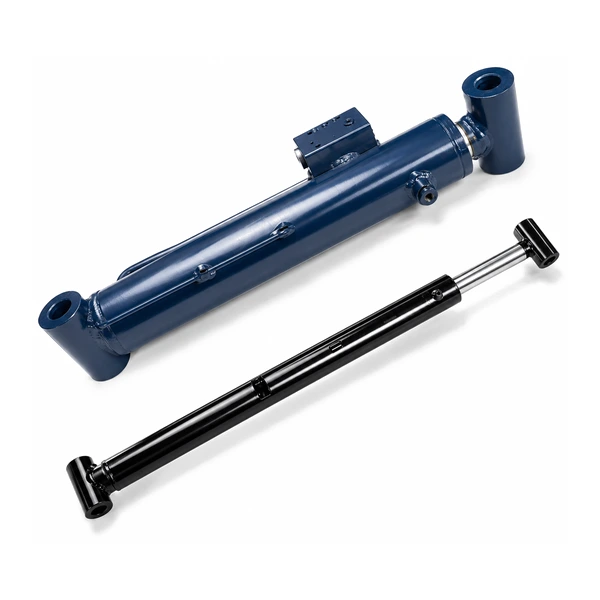
Korea Ever-Power manufactures all three excavator cylinder types as part of the construction and industrial cylinder range.
Shock Loading — The Excavator Hits Things It Cannot See
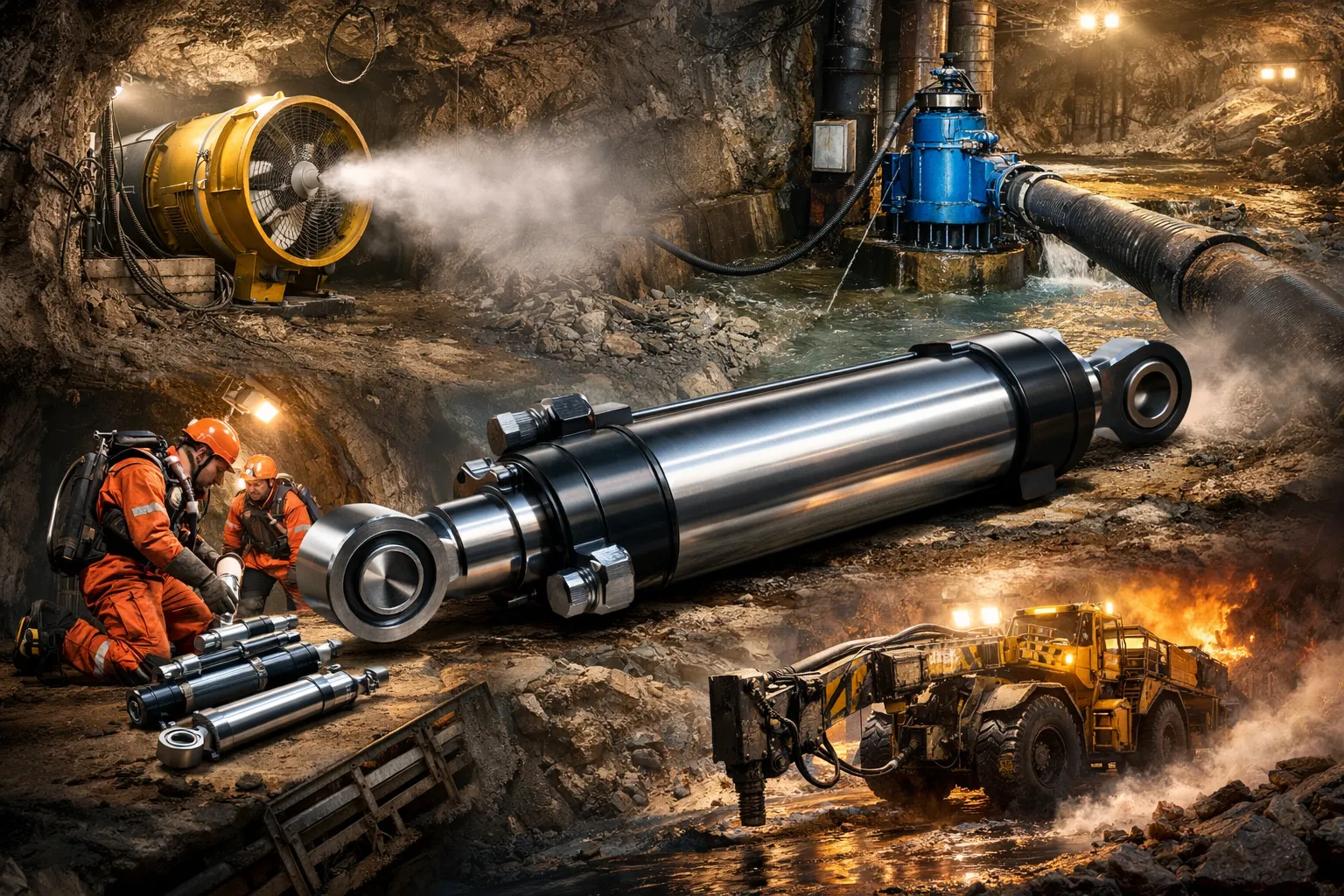
Every other cylinder in this catalogue works on known loads — a mold of known weight, a platen of known dimension, a tire of known mass. The excavator bucket digs into ground where the operator cannot see what lies below the surface. Buried boulders, concrete foundations, steel pipes, tree roots, and frozen soil all produce sudden, massive force spikes when the bucket hits them.
When the bucket strikes a buried boulder, the kinetic energy of the moving arm and bucket is absorbed in milliseconds — creating a pressure spike in the bucket and arm cylinders that can reach 3–5× the normal working pressure. The cylinders, their seals, the barrel welds, and the pin joints must all survive these spikes without failure. Korea Ever-Power designs excavator cylinders with pressure safety margins above the relief-valve setting.
A tractor cylinder sees predictable loads — the plough weight is constant. An excavator cylinder sees random shock loading that varies with every bucket-load. Digging in sandy soil: minimal shocks. Digging in rocky ground: shocks on every third or fourth bucket curl. Demolition: continuous shock from breaking concrete. The cylinder must handle all these patterns without cumulative fatigue failure.
When the excavator digs at an angle (not straight-on to the target), the bucket reaction force has a lateral component that pushes the cylinder rod sideways — creating a bending moment on the rod and uneven seal loading. Excavator cylinders use oversized rod bearings and reinforced barrel bottoms to handle this chronic side-loading without premature seal wear. Contact the hydraulic cylinder engineering team for excavator cylinder specifications.
Power and Precision — The Excavator's Impossible Duality
At 10 am, the excavator rips through frozen clay at full system pressure — the bucket cylinder producing 150+ KN of breakout force. At 2 pm, the same machine grades a drainage slope to ±10 mm over a 20-metre run — the boom cylinder making incremental adjustments measured in fractions of a millimetre.
This duality — maximum force and fine precision from the same cylinder — demands two things that are normally contradictory: high stiffness (for force) and low friction (for precision). High stiffness means tight tolerances and rigid mounting; low friction means smooth seals that respond proportionally to small valve inputs without stiction (stick-slip).
Korea Ever-Power achieves both: the bore is honed to Ra 0.2 µm (the fine end of the range) for low seal friction; the rod bearing is oversized for stiffness under side loading; and the seal compound is selected for low breakaway force — the force needed to start the cylinder moving from a standstill. Low breakaway force means the operator can make the small, controlled movements that precision grading demands.
Construction Site Survival — Harder Than the Farm
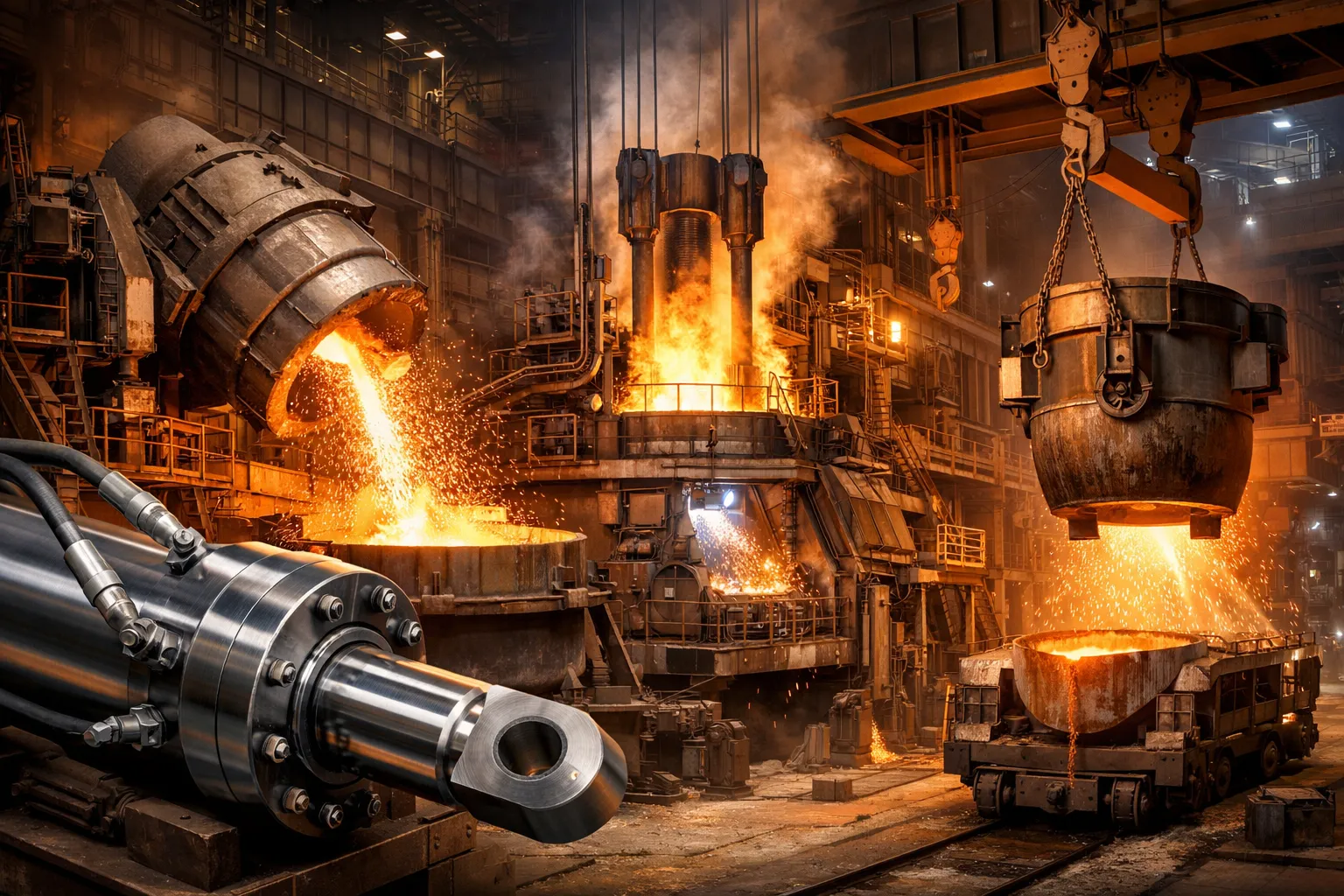
The tractor cylinder (#35) faces soil and weather. The excavator cylinder faces everything the tractor does, plus concrete dust, welding spatter, demolition debris, and salt water (marine construction). The rod is continuously coated with a film of abrasive mud that the wiper seal must scrape clean before the rod retracts into the bore.
Chrome plating is 50–80 µm minimum. Rod wipers are triple-lip with a hardened steel scraper ring — heavier than tractor specification. External hose ports use O-ring face seal (ORFS) fittings rather than tapered threads — providing leak-free connections that survive the constant vibration of excavator operation. The barrel is painted with a two-part epoxy that resists stone chips and chemical splash.
Operating hours are extreme: a construction excavator runs 2,000–5,000 hours per year. At 6–10 full boom cycles per minute during active digging, the boom cylinders alone complete 1–3 million pressure cycles per year — approaching the fatigue duty of indoor industrial cylinders but in a far harsher environment.
Manufacturing — High Pressure, High Shock, High Volume
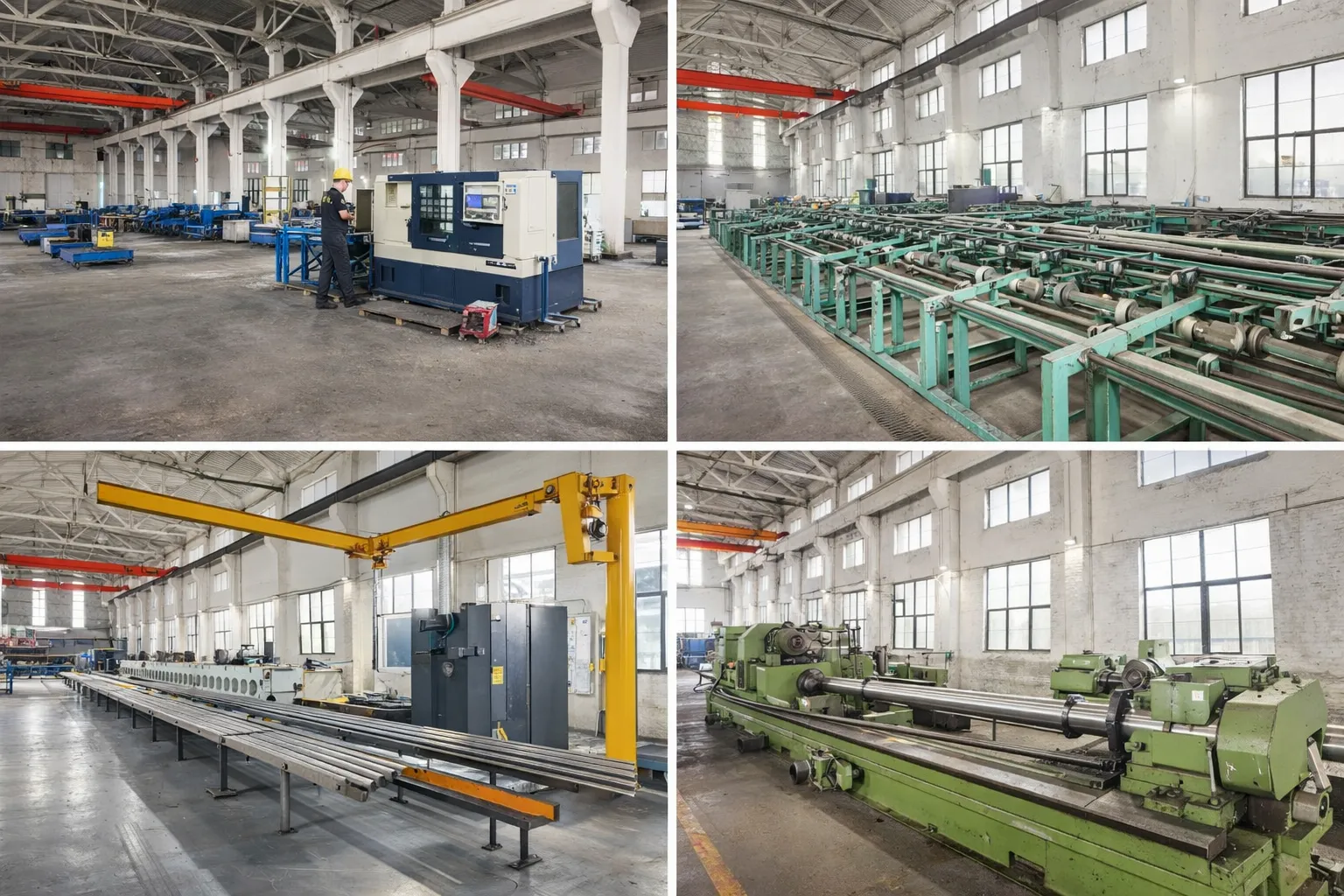
The excavator cylinder barrel is thicker-walled than a tractor cylinder at the same bore — designed for 25–35 MPa continuous duty with shock spikes to 50+ MPa. Barrel welds are full-penetration and ultrasonically inspected — weld fatigue under shock loading is the primary structural failure mode for excavator cylinders. The rod is induction-hardened at the piston-end thread zone (where shock bending loads concentrate). FKM seals are optional for tropical and high-temperature applications; NBR is standard for temperate climates. Every excavator cylinder is hydrostatic tested at 1.5× rated pressure and random-sample shock-tested — applying repeated pressure spikes at the relief-valve setting to verify barrel, weld, and seal integrity under the excavator's actual operating conditions.
OEM & ODM
FAQ
Related Categories
追加情報
| Editor |
|---|