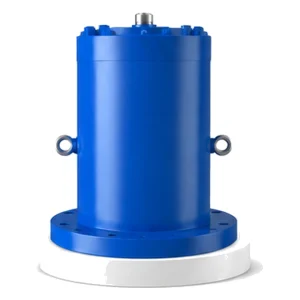
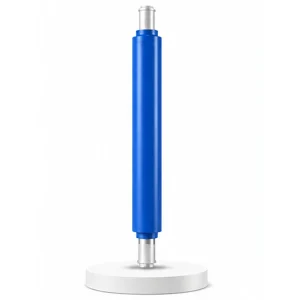
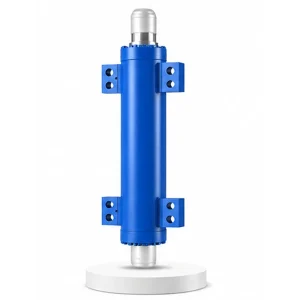
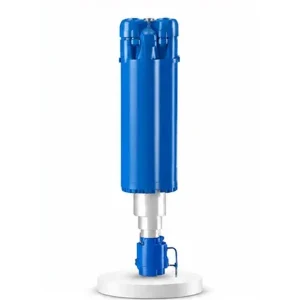
Live Molds Hydraulic Cylinder for Vulcanizing Machine
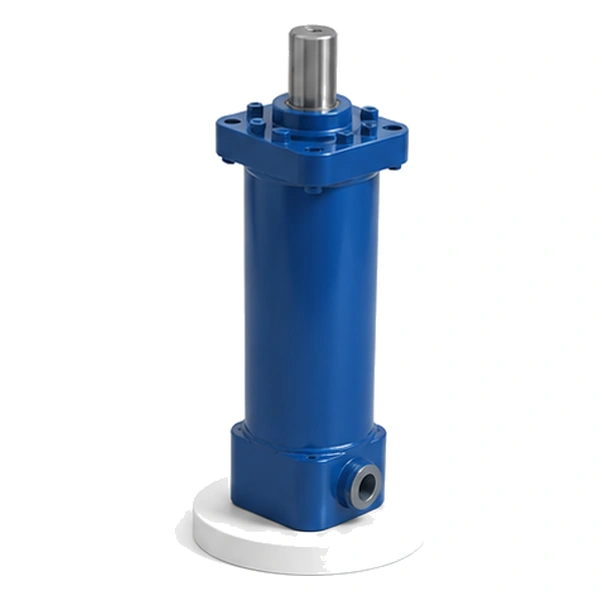
Live Molds Cylinder · 7th of 7 — Family Complete
9 Segments. 9 Cylinders.
One Seamless Tread.
A tire tread has deep grooves that would trap a two-piece mold — the mold could not open vertically without tearing the tread pattern. The solution: split the tread mold into 7–9 radial segments that slide inward to close around the tire and outward to release it. Each segment is driven by its own live molds cylinder. All 7–9 cylinders must close at the same speed to the same radial position — forming a precision ring with no gaps, no steps, and no flash lines.
Why a Tire Mold Cannot Be Two Halves — The Undercut Problem
A tire tread has deep circumferential grooves (3–10 mm deep) and lateral sipes (thin slits) that wrap around the tread surface. If the mold were two halves opening vertically (like an injection mold), the cured rubber in these grooves would lock against the mold — the mold could not open without tearing the tread pattern. These grooves are "undercuts" in mold design terminology: features that prevent straight-pull separation of a two-piece mold.
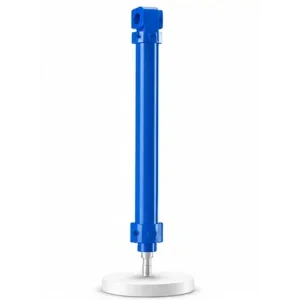
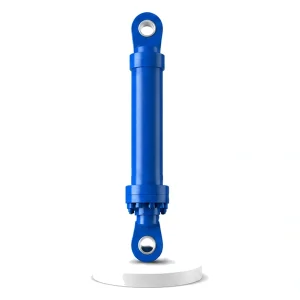
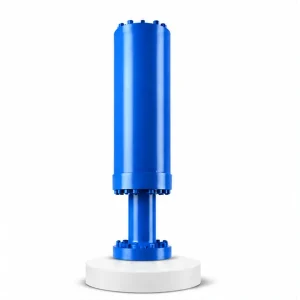
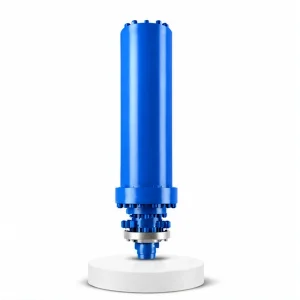
The segmented mold solves this: the tread area is divided into 7–9 pie-shaped segments arranged radially around the tire. Each segment slides radially outward to release the tread — the grooves open along their length, not across their width, so the rubber slips out without tearing. Each segment is driven by its own live molds cylinder, which pushes it inward (closed) or pulls it outward (open). Korea Ever-Power manufactures the live molds cylinder as the seventh and final component of the vulcanizing machine cylinder family.
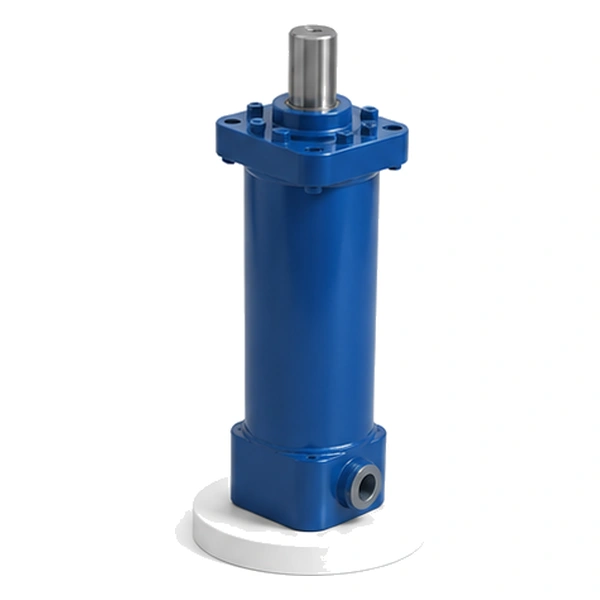
Technical Specifications
| Parameter | Value |
|---|---|
| Product | Live Molds Hydraulic Cylinder for Vulcanizing Machine |
| Function | Drive each tread segment radially inward/outward |
| Bore Diameter | 90 mm – 220 mm |
| Rod Diameter | 50 mm – 140 mm |
| Stroke | ≤ 900 mm |
| Maximum Thrust | 798 KN (bore 220 mm / pressure 21 MPa) |
| Quantity per Mold | 7–9 (one per tread segment) |
| Certification | ISO 9001 · 100% hydrostatic tested · matched set |
9 Cylinders, One Ring — Why Synchronisation Is Everything
Imagine 9 pie slices sliding inward to form a complete pie. If one slice arrives before the others, it pushes against the tire unevenly — distorting the tread on that segment. If one slice arrives after the others, a gap remains — uncured rubber squeezes through the gap, creating a "flash line" (a thin ridge of excess rubber) on the tread surface that must be trimmed manually. The 9 live molds cylinders must close at the same speed and arrive at the closed position within ±0.1 mm of each other.
All 7–9 cylinders are manufactured from the same bore-diameter batch. Any variation in bore diameter between cylinders means different piston areas — which at the same pressure produces different forces and different speeds. Korea Ever-Power holds the bore diameter to a mutual tolerance across the entire set so that at common hydraulic pressure, all cylinders extend at the same speed.
A flow divider splits the pump output equally among all 7–9 cylinders — delivering the same volume of oil to each cylinder per unit time. Equal flow + matched bore area = equal speed. The flow divider compensates for small differences in friction between cylinders, keeping all segments moving inward together.
Even with matched cylinders and a flow divider, tiny speed differences can accumulate over the 900 mm stroke. The final 10–20 mm of closure uses mechanical taper guides on the mold container that force each segment into its precise radial position — the hydraulic cylinder provides the driving force, and the taper guides provide the final alignment. Contact the hydraulic cylinder engineering team for matched live molds cylinder sets.
Segment Alignment = Tread Quality — What the Driver Sees and Feels

The tread segments carry the tread pattern — the most visually prominent part of the tire and the surface that contacts the road. Every seam between adjacent segments is a potential quality defect point: a visible flash line (excess rubber at the segment junction), a step (one segment slightly higher than the adjacent one, creating a tread height discontinuity), or a pattern mismatch (the groove on one segment does not align perfectly with the groove on the adjacent segment).
Flash lines are trimmed manually — adding labour cost and creating a potential for trimming damage. Steps create tread height variation that affects tire uniformity (radial force variation, the same RFV that the bead concentricity cylinders #31/#32 also influence). Pattern mismatches are cosmetic defects visible to the end customer.
All three defects are reduced by precise radial synchronisation of the live molds cylinders — which is why the cylinders are manufactured as a matched set and the hydraulic circuit uses a flow divider rather than individual valve control for each segment.
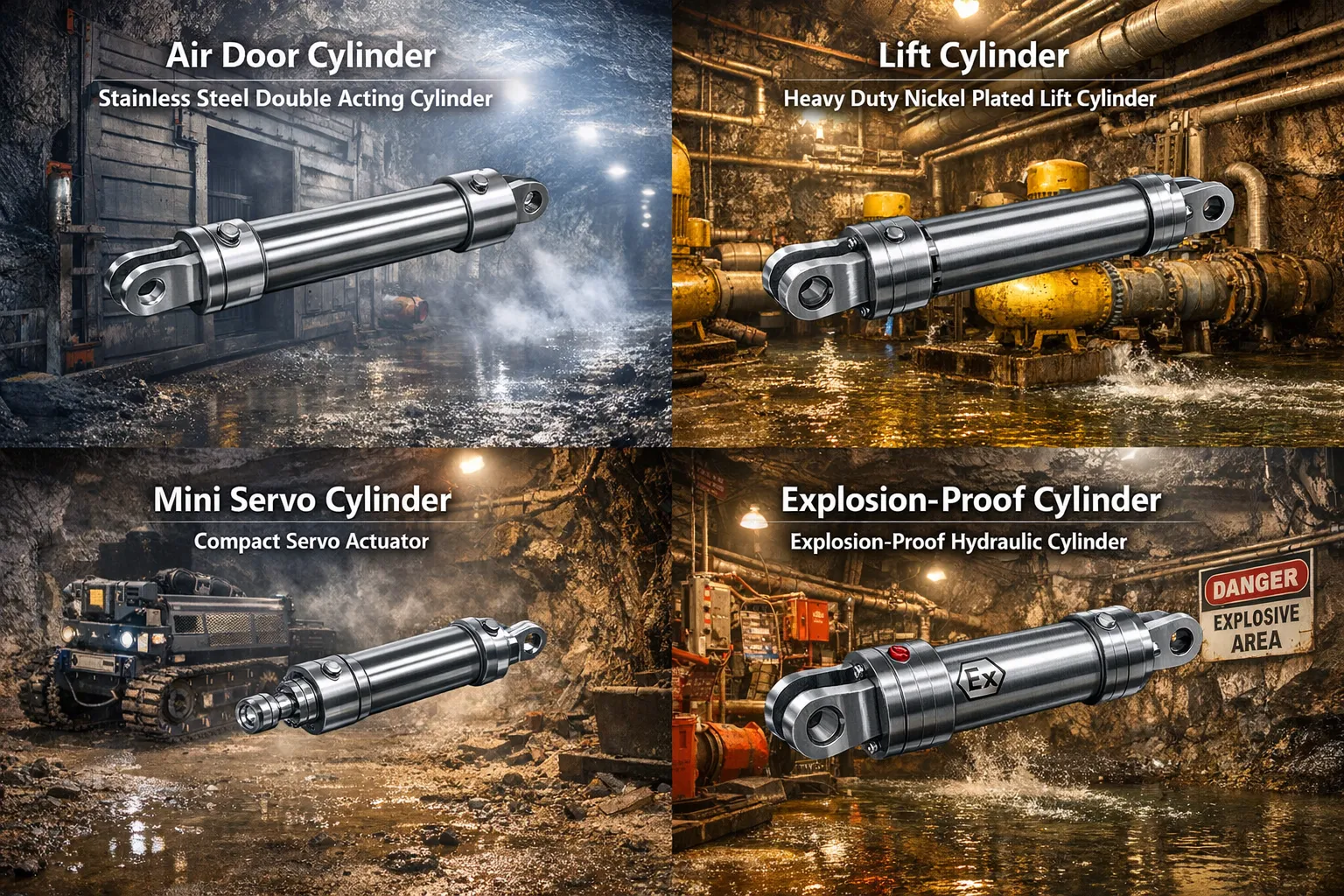
The Complete Vulcanizing Machine Cylinder Family — Seven Types, One Press
| # | Cylinder | Bore | Qty | Role |
|---|---|---|---|---|
| 28 | Tipping | 50 | 1 | Flip cured tire |
| 29 | Pressurised | 90–220 | 1–2 | Clamp mold during cure |
| 30 | Mold Open/Close | 50–140 | 1–2 | Raise/lower dome |
| 31 | Upper Ring | 50–140 | 1 | Grip upper bead |
| 32 | Lower Ring | 50–140 | 1 | Grip lower bead |
| 33 | Loading/Unloading | 63–100 | 1–2 | Transfer tire in/out |
| 34 | Live Molds | 90–220 | 7–9 | Close tread segments |
Total cylinders per segmented-mold vulcanizing press: 13–17 individual units across 7 types. Korea Ever-Power supplies the complete set from a single source — all cylinders engineered for the same press's hydraulic system, temperature environment, and cycle time. Single-source supply guarantees system compatibility and simplifies spare parts management.
Manufacturing — 7–9 Identical Cylinders, One Matched Set
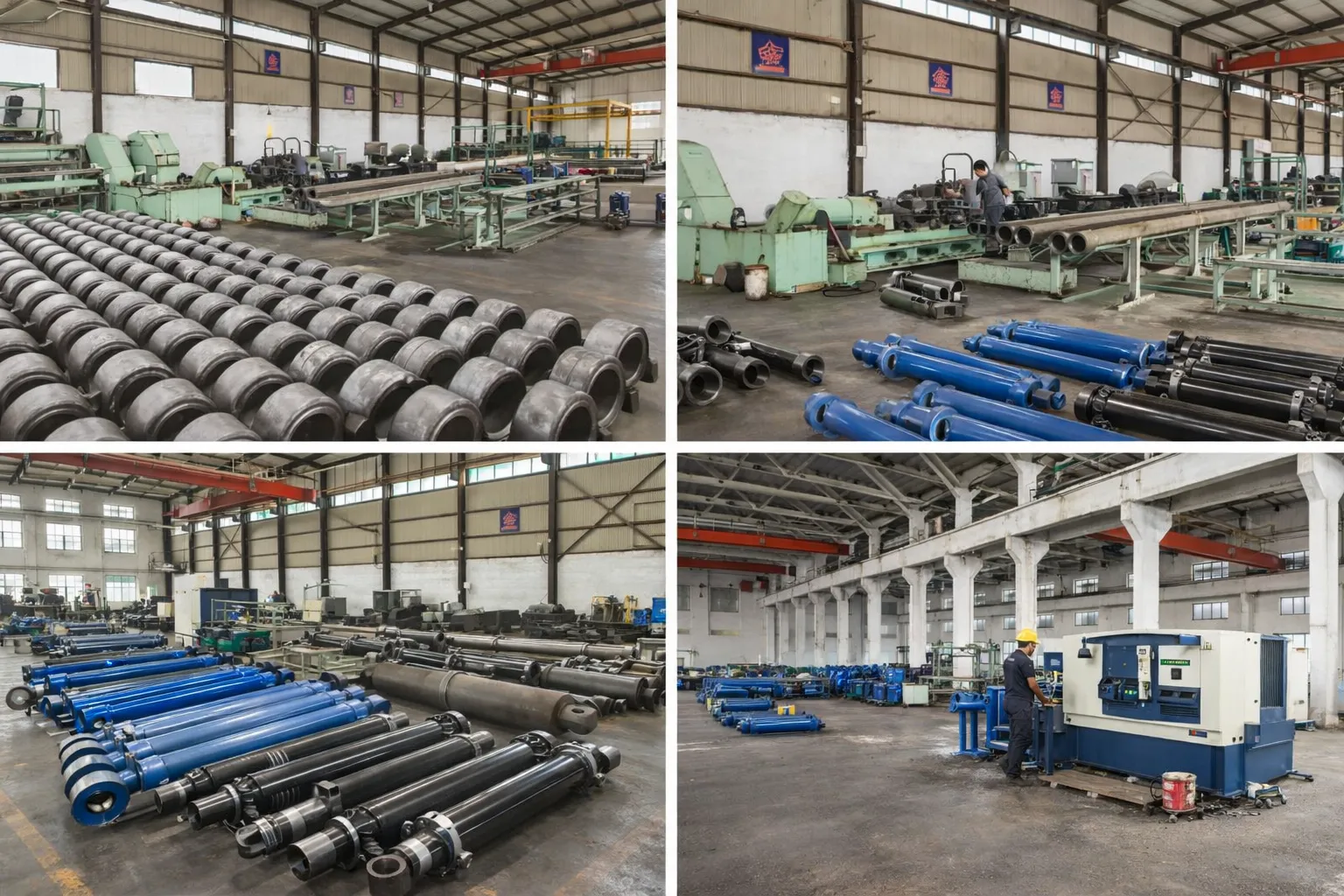
The live molds cylinder set is the largest matched-set order in the vulcanizing cylinder family — 7–9 identical cylinders that must produce identical speed and force at the same hydraulic input. Korea Ever-Power machines all cylinders in a set from the same bore-diameter stock, hones all bores in the same production run, and assembles all cylinders with seals from the same batch — minimising any variation in friction characteristics between units.
The bore (90–220 mm) is honed to Ra 0.2–0.4 µm. FKM seals are standard — the cylinders operate at the mold's peripheral temperature (80–140 °C depending on proximity to the steam-heated container). Chrome plating is 50–80 µm. The stroke (≤900 mm) is the segment's radial travel distance from the fully open (retracted) position to the fully closed (extended) position.
Every cylinder in the set is individually hydrostatic tested at 1.5× working pressure (31.5 MPa). The complete set is then speed-tested together — all 7–9 cylinders connected to a common flow divider, extending simultaneously — to verify matched extension speed across the set. Any cylinder that deviates beyond the synchronisation tolerance is reworked or replaced before the set ships.
OEM & ODM
FAQ
Related Categories
追加情報
| Editor |
|---|