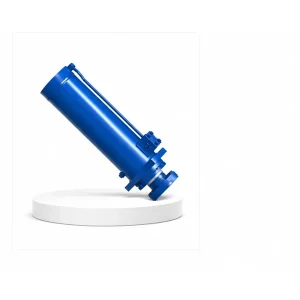
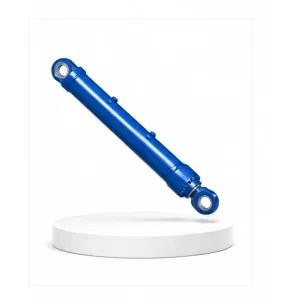
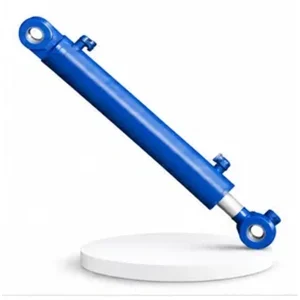
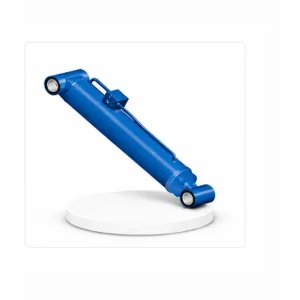
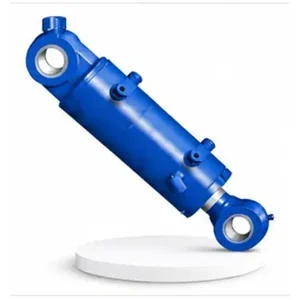
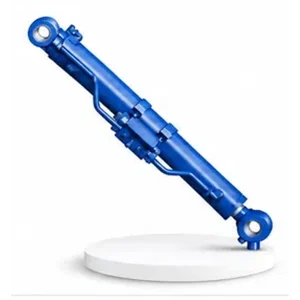
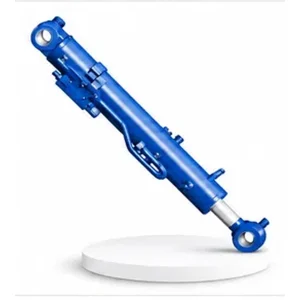
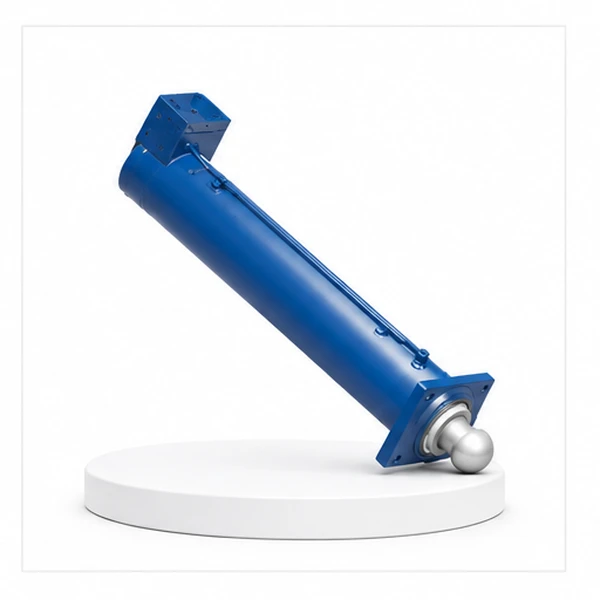
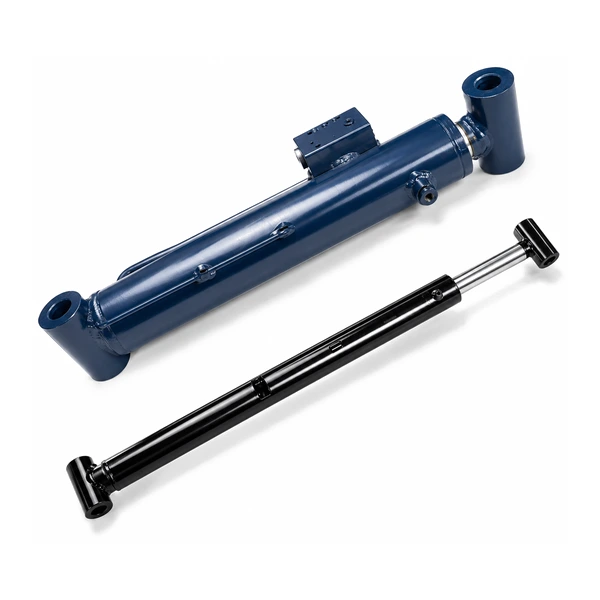
Mobile Crane Outrigger Cylinder
The Foundation of Every Lift — Why the Crane Leaves the Ground
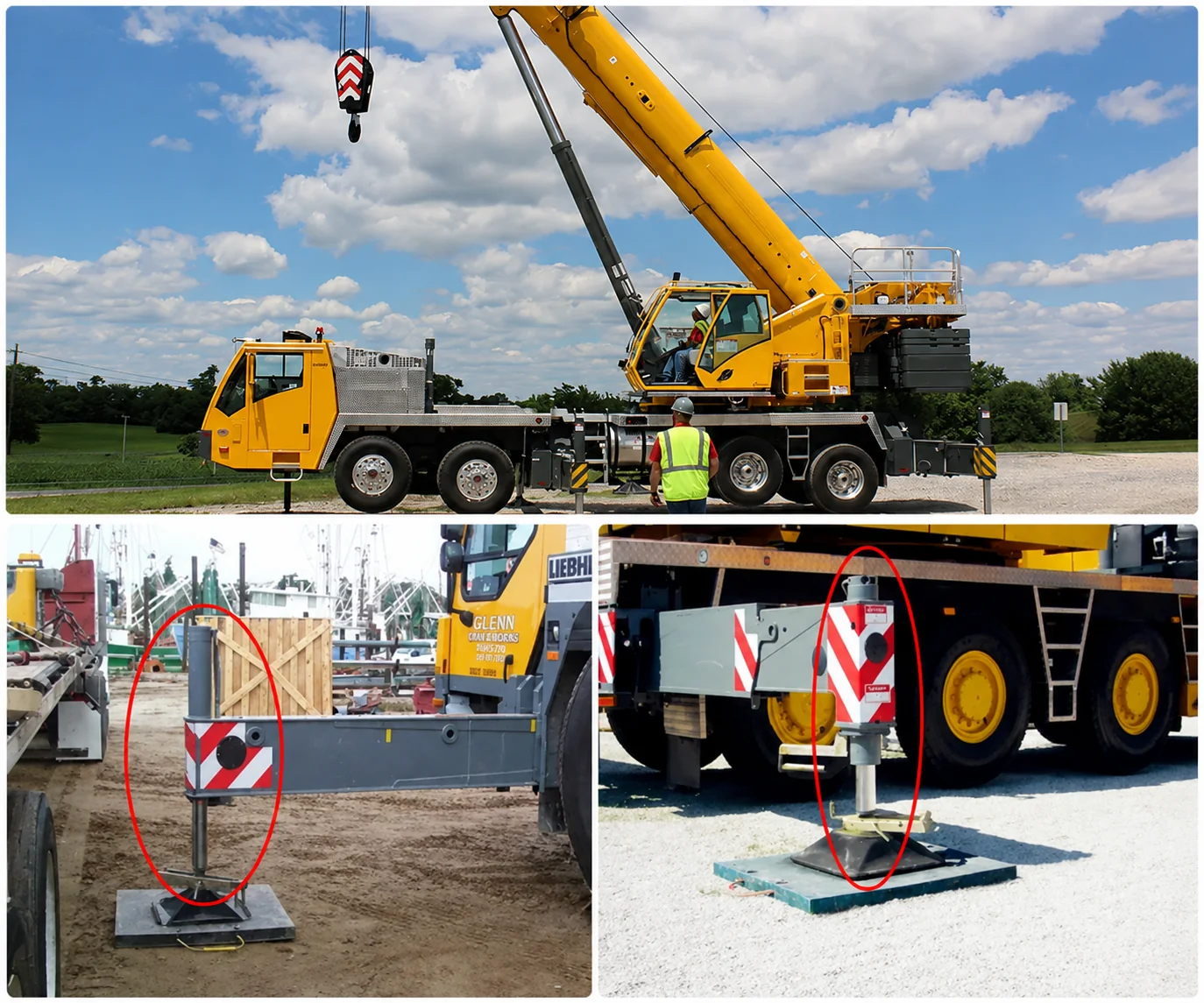
A mobile crane cannot lift from its wheels. Tyres are compliant — they compress, deform, and shift under load. If the crane lifted while resting on tyres, the suspension would compress unevenly as the boom swings, tilting the crane and making precise load placement impossible. Worse, the overturning moment from a load at the boom tip would roll the crane onto two wheels — then onto its side.
The outrigger cylinders solve this by creating a rigid, wide-footprint support base. The four cylinders extend downward, pressing steel pads firmly into the ground. As the pads take the weight, the crane's wheels lift off the surface. The crane now stands on four solid points — spaced wider than the wheel track — providing a stable platform that resists the overturning moment from any boom angle and any load within the crane's rated capacity.
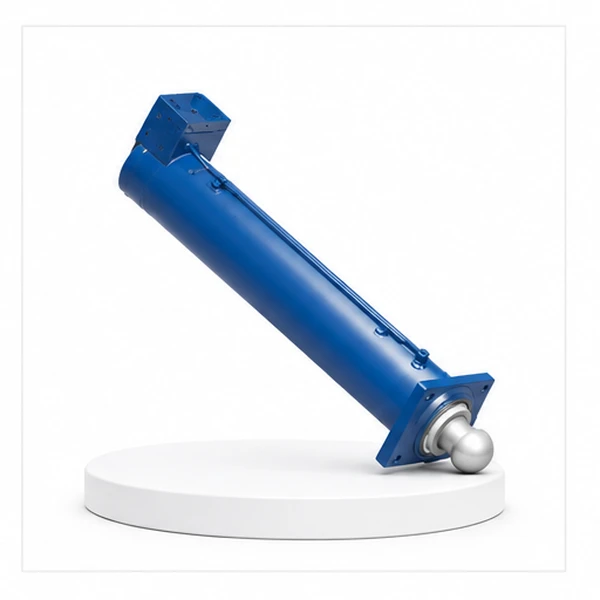
Korea Ever-Power manufactures outrigger cylinders as the stability foundation of the mobile machinery hydraulic cylinder range. Each outrigger cylinder is paired with an outrigger expansion cylinder (#21) that extends the beam horizontally before the outrigger cylinder pushes down.
Technical Specifications
| Parameter | Specification |
|---|---|
| Product | Mobile Crane Outrigger Cylinder |
| Function | Support the weight of the entire crane during lifting operations |
| Bore Diameter | 70 mm – 360 mm |
| Rod Diameter | 45 mm – 320 mm |
| Stroke | ≤ 800 mm |
| Working Pressure | Maximum 42 MPa |
| Application | Mobile Crane (all types) |
| Certification | ISO 9001 · 100% hydrostatic tested · load-holding verified |
The Tipping Edge — Why Outrigger Failure Is the Number-One Crane Accident Cause
Crane tip-overs account for the majority of fatal crane accidents worldwide. The root cause in most cases is outrigger failure — not the outrigger cylinder itself, but the ground beneath the pad sinking under the concentrated load. However, the outrigger cylinder plays a critical role in preventing and detecting ground failure:
Each outrigger cylinder has a pilot-operated check valve that locks the oil in the cylinder. Once the outrigger is set, the cylinder holds its position indefinitely — the pad does not creep downward even if the pump is shut off. This zero-drift performance is verified during factory testing: the cylinder is loaded to full rated force, the pump is disconnected, and the position is monitored for a defined hold period.
Modern cranes monitor the outrigger cylinder stroke position continuously. If one outrigger cylinder extends further than the others (indicating the ground beneath that pad is settling), the crane's safety system alerts the operator and may restrict the load chart. The outrigger cylinder's stroke sensor provides this critical feedback — making the cylinder a sensor as well as an actuator.
When the crane lifts a load at the boom tip, the overturning moment tries to tip the crane toward the load. The two outrigger cylinders on the load side resist this moment — their compressive force pushes down on the pads, and the ground pushes back up. The cylinder must sustain this compressive load without yielding, buckling, or leaking. Contact the Korea Ever-Power engineering team for outrigger cylinder force calculations.

Short Stroke, Maximum Force — Why 800 mm Is Enough
The luffing cylinder (#17) needs 5,000 mm of stroke to swing the boom through its full angle range. The telescopic cylinder (#18) needs 22,000 mm to extend the boom sections. The outrigger cylinder needs only 800 mm — just enough to push the pad from its stowed position (tucked under the crane chassis) to the ground surface and slightly beyond (to lift the crane's wheels clear of the ground).
The travel distance from the stowed pad to the ground is 300–700 mm on most cranes. The remaining 100–500 mm of stroke provides adjustment for uneven ground — one outrigger may need to extend further than the others to level the crane on a sloped surface. The 800 mm maximum stroke accommodates the steepest ground slope that a crane can safely set up on (typically 1–3° from level, depending on crane model).
Manufacturing Process
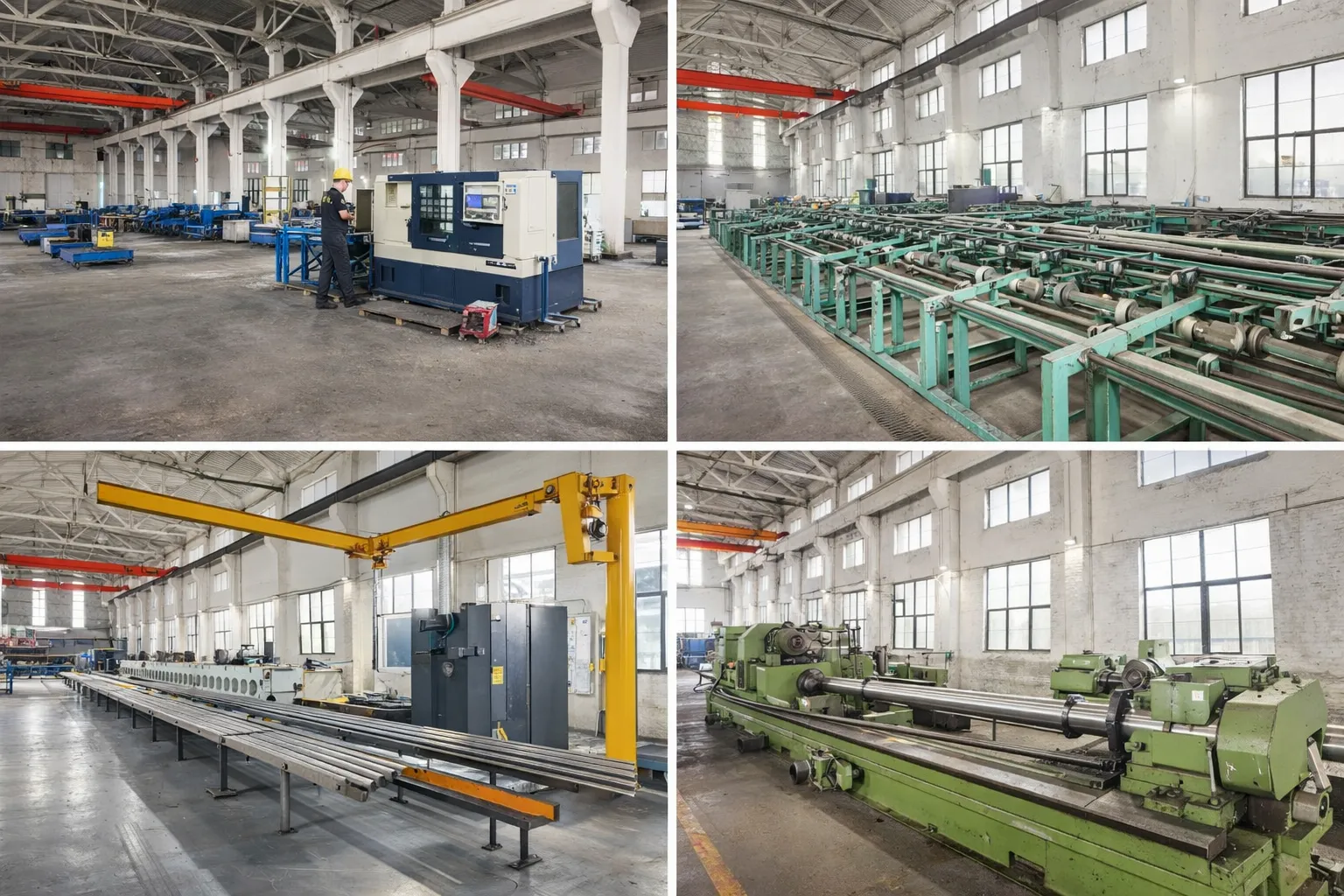
The outrigger cylinder barrel is thick-walled — designed for the full 42 MPa working pressure plus a safety factor for dynamic loads (the crane chassis experiences shock loading from wind gusts and sudden load releases). The bore is honed to Ra 0.2–0.4 µm. The rod end pad-mount is forged or welded with full-penetration welds — ultrasonically inspected, because the rod end carries the entire ground reaction force.
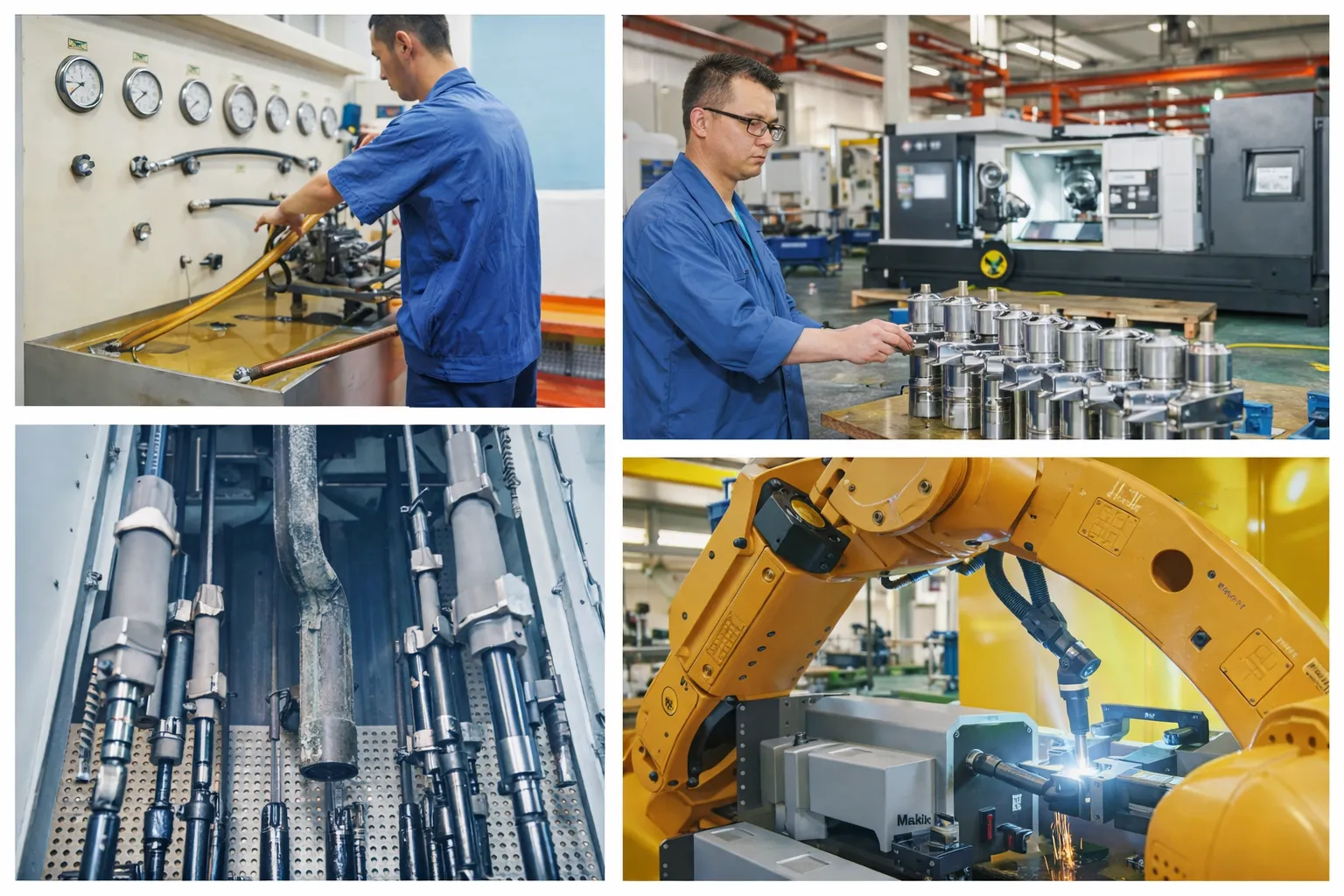
Chrome plating is 50–80 µm (outdoor service with direct ground contact splash). Seals are polyurethane with NBR wipers rated for -30 °C to +80 °C. Every outrigger cylinder is hydrostatic tested at 1.5× rated pressure (63 MPa) and load-holding tested — verifying zero measurable drift under full rated load for a defined hold period.
Outrigger cylinders are ordered in sets of 4 — Korea Ever-Power manufactures all 4 from the same bore batch to ensure matched force output across all four corners of the crane.
OEM & ODM
FAQ
Related Categories
追加情報
| Editor |
|---|