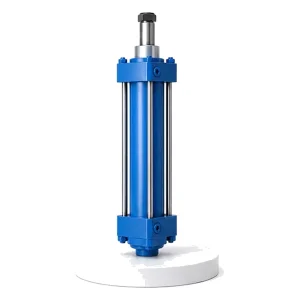
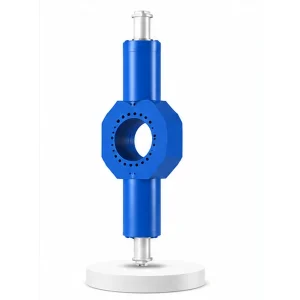
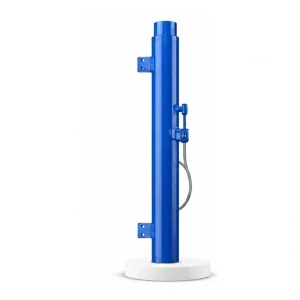
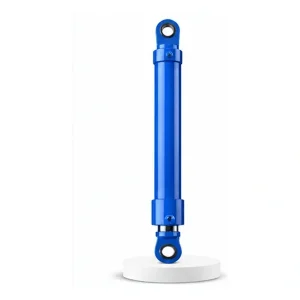
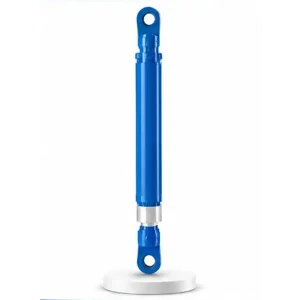
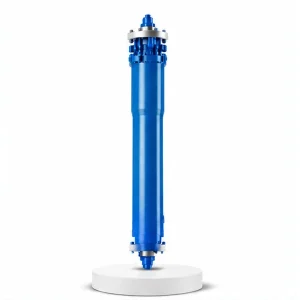
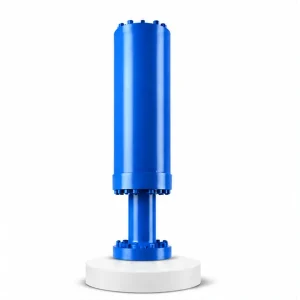
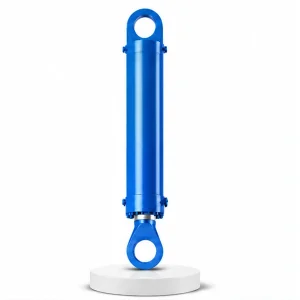
Pressurized Hydraulic Cylinder for Vulcanizing Machine
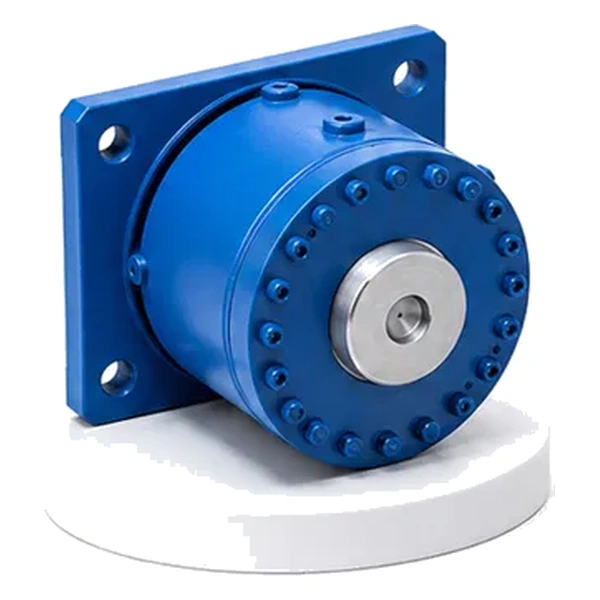
Pressurized Cylinder · Clamping Force
Hold for 30 Minutes.
At 180 °C.
Without a Drop of Pressure.
The tipping cylinder (#28) flips the tire in 2 seconds. The pressurized cylinder holds the mold closed for 30 minutes. Inside the mold, a rubber bladder inflated to 15–25 bar pushes outward against the mold halves — trying to force them apart. The pressurized cylinder pushes back — maintaining the clamping force that keeps every millimetre of the mold parting line sealed for the entire cure. If the force drops, the mold cracks open. Uncured rubber squeezes through the gap. The tire is scrap.
What Pushes the Mold Open — And What the Pressurized Cylinder Fights
Inside the closed vulcanizing mold, a rubber bladder is inflated with steam or hot water at 15–25 bar (1.5–2.5 MPa). This bladder pushes the uncured green tire outward against the mold cavity walls — forcing the rubber into the tread grooves, the sidewall lettering, and every surface detail of the mold. The bladder pressure also acts on the mold parting line — trying to push the upper mold half away from the lower half.
The pressurized cylinder provides the clamping force that resists this opening force. On a typical passenger car tire mold (600–800 mm diameter), the bladder pressure acting on the mold parting-line area produces an opening force of 200–500 KN. The pressurized cylinder must exceed this opening force by a safety margin — typically 1.5× — and maintain it without dropping for 10–30 minutes while the rubber cures. Korea Ever-Power manufactures the pressurized cylinder as the force-generating heart of the vulcanizing machine cylinder family.
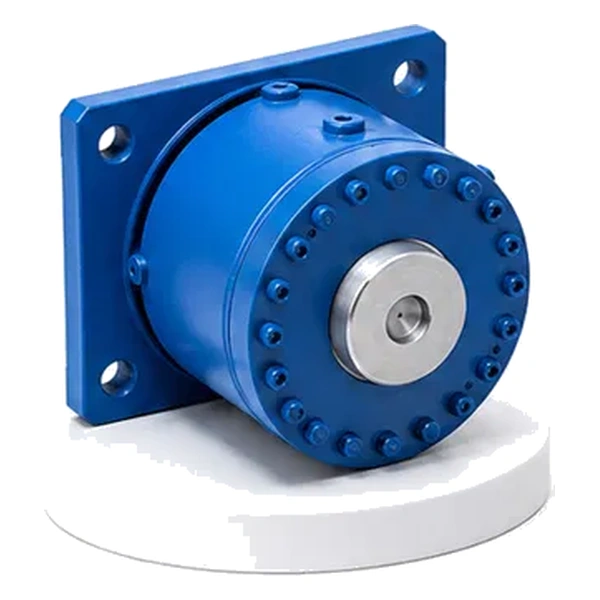
Technical Specifications
| Parameter | Value |
|---|---|
| Product | Pressurized Hydraulic Cylinder for Vulcanizing Machine |
| Function | Clamp upper/lower mold halves — sustain force during cure |
| Bore Diameter | 90 mm – 220 mm |
| Rod Diameter | 50 mm – 140 mm |
| Stroke | ≤ 600 mm |
| Maximum Thrust | 760 KN (bore 220 mm / pressure 10 MPa) |
| Working Pressure | Up to 10 MPa |
| Certification | ISO 9001 · 100% hydrostatic tested · sustained-hold verified |
Sustained Hold at 180 °C — Seal Engineering for Two Simultaneous Stresses
The filter press cylinder (#13) holds pressure for hours — but at room temperature. The pressurized vulcanizing cylinder holds pressure for 10–30 minutes — but at 150–180 °C mold temperature. The seal must resist both stresses simultaneously: the sustained pressure that causes elastomer creep, and the elevated temperature that accelerates seal ageing.
At 10 MPa sustained for 30 minutes, the piston seal's elastomer gradually extrudes into the clearance gap between the piston and the bore wall. This extrusion (creep) reduces the sealing contact pressure — and if it progresses too far, the seal begins to leak. At 180 °C, the elastomer is softer than at room temperature, so the creep rate accelerates. Korea Ever-Power specifies high-modulus FKM seals with anti-extrusion back-up rings — the back-up ring bridges the clearance gap, preventing the seal from extruding even at sustained pressure and elevated temperature.
Heat hardens elastomer seals over time — reducing their elasticity and eventually causing them to crack. At 180 °C, standard NBR seals age in weeks; FKM seals last months to years. But the vulcanizing cylinder sees 40–100+ thermal cycles per day (mold heats during cure, cools slightly during mold open), and thermal cycling accelerates ageing beyond what constant temperature alone would predict. Korea Ever-Power selects FKM compounds specifically rated for thermal-cycling duty.
During the 10–30 minute cure hold, the hydraulic pump shuts off — the clamping pressure is maintained by a pilot-operated check valve that traps the oil in the cylinder. Any internal leak (past the piston seal or through the check valve seat) causes a gradual pressure drop — which reduces the clamping force and risks mold separation. Korea Ever-Power designs the cylinder bore and piston seal for zero measurable pressure drop during the hold test period. Contact the hydraulic cylinder engineering team for sustained-hold specifications.
Pressurized Cylinder vs Mold Opening/Closing Cylinder — Two Cylinders, Two Jobs
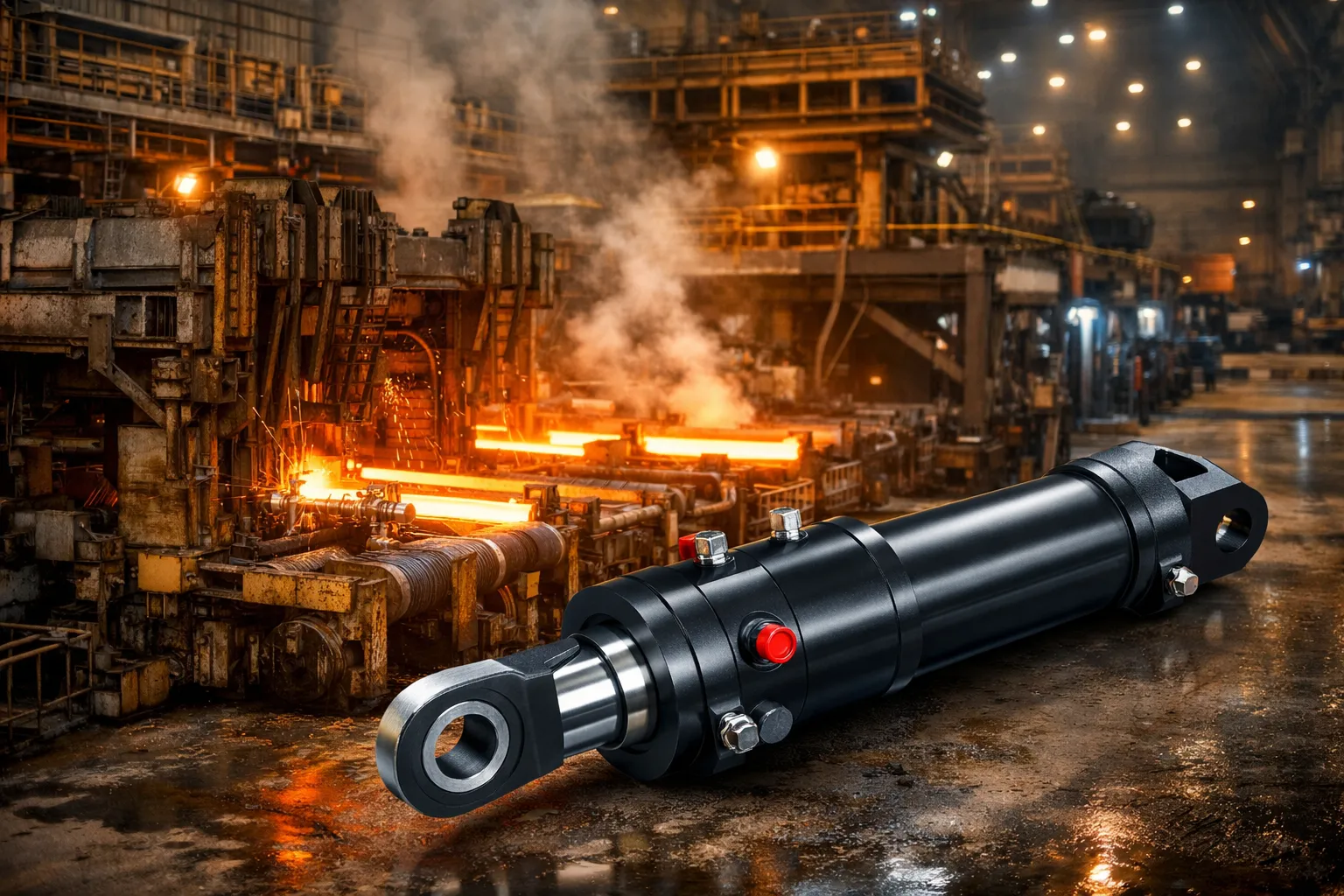
The vulcanizing press has two different cylinders for the mold: the mold opening/closing cylinder (#30) and this pressurized cylinder (#29). They serve different purposes at different phases of the cure cycle.
Mold opening/closing cylinder (#30): moves the upper platen up and down — long stroke (≤4,000 mm), fast traverse, provides the motion but not the clamping force. Think of it as the arm that moves the mold halves together and apart.
Pressurized cylinder (#29): generates and holds the clamping force after the mold halves are together — short stroke (≤600 mm), sustained pressure, provides the force but not the long-range motion. Think of it as the lock that holds the mold shut under force.
This separation of motion and force is the same architecture as toggle-clamp injection moulding machines (#26) — one cylinder for traverse, a separate mechanism for clamping force. In the vulcanizing press, the pressurized cylinder provides the clamping force directly (no toggle), because the hold time is so long (10–30 minutes vs the 5–60 second injection cycle) that a toggle's mechanical advantage is not needed — sustained hydraulic pressure is more practical for long holds.
A Unique Fatigue Profile — Long Holds, Many Cycles, Hot Environment
The pressurized cylinder's fatigue loading is unlike any other cylinder in this catalogue:
Each cure cycle is 10–30 minutes. The cylinder pressurises at the start and depressurises at the end — one pressure cycle per tire. At 48–144 tires per day (passenger car), the cylinder sees 48–144 pressure cycles daily. This is much less than the feeding cylinder's 5 million/year — but each cycle is a sustained-pressure hold, not a brief pulse.
The seal spends most of its life under pressure — not cycling. In a 24-hour day with 20-minute cure cycles, the cylinder is under sustained clamping pressure for approximately 16–20 hours. The fatigue mechanism is creep and thermal ageing — not the mechanical wear that dominates in high-cycle cylinders.
During cure, the mold reaches 150–180 °C. During mold open (for tire loading/unloading), the cylinder cools partially. This thermal cycling — heating during cure, cooling during open — is the most aggressive ageing factor for the seals and the hydraulic oil. The cylinder must tolerate this thermal cycle for 8,000+ hours per year.
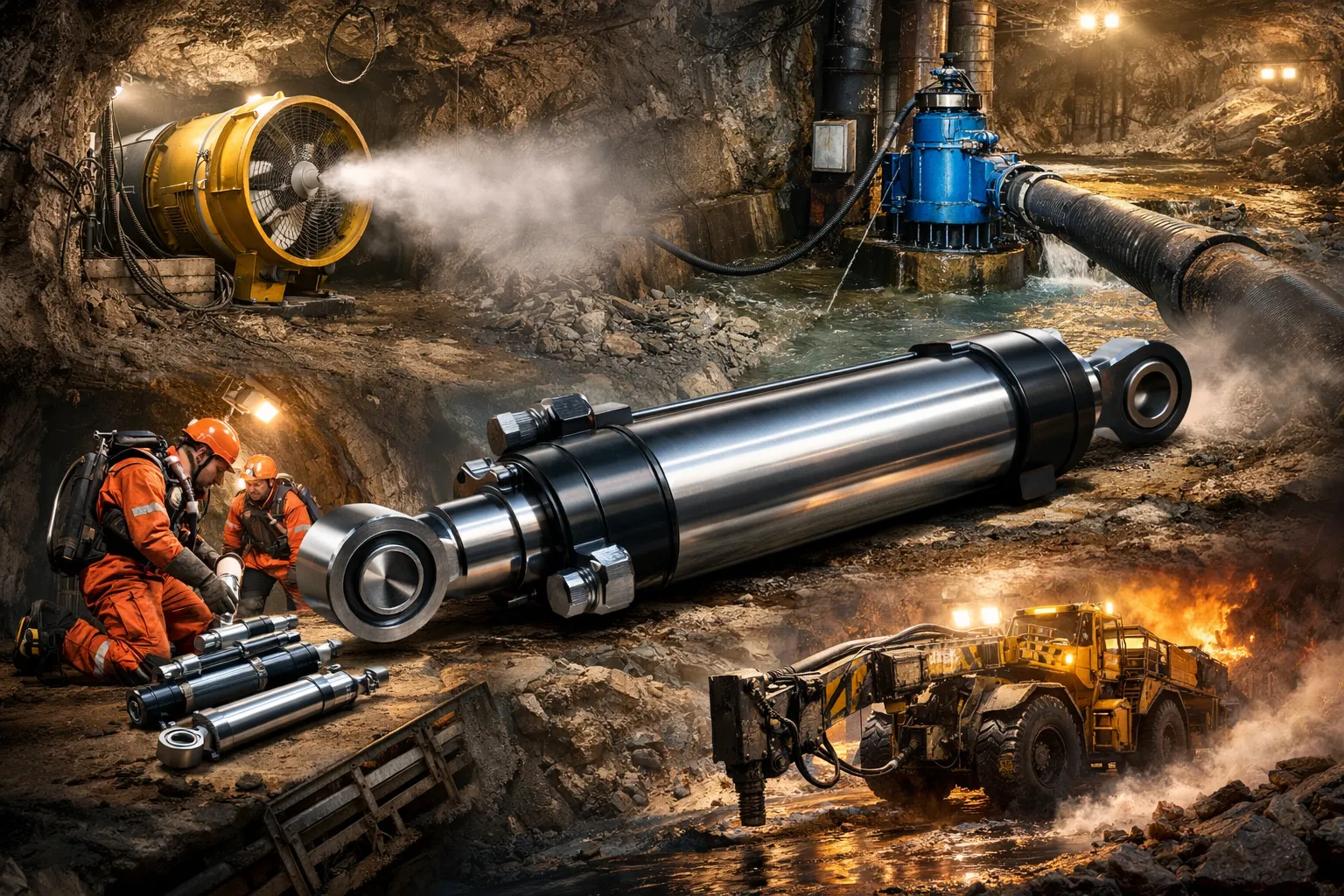
Manufacturing — Built for Sustained-Pressure Hot Service
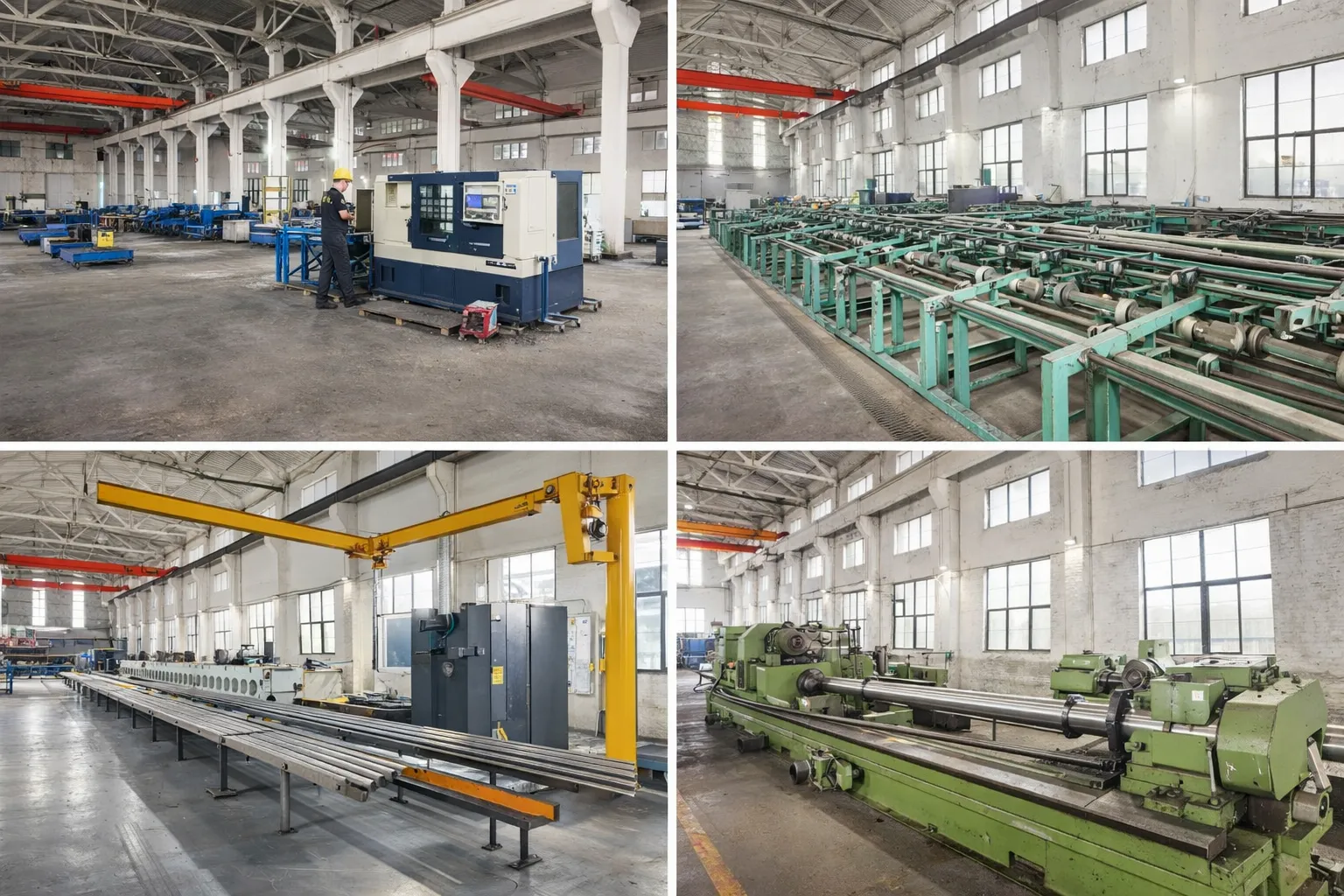
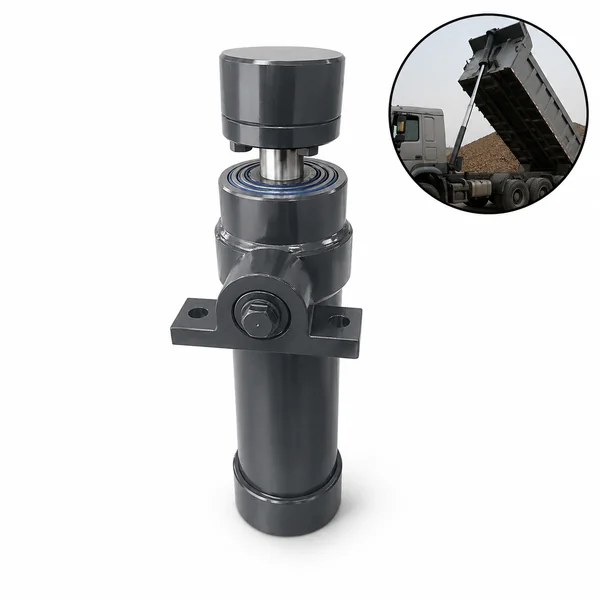
The pressurized cylinder's 90–220 mm bore is honed to Ra 0.2–0.4 µm — the Korea Ever-Power standard. FKM (Viton) seals with PTFE anti-extrusion back-up rings are standard for all vulcanizing pressurized cylinders. The bore-to-piston clearance is held tighter than on room-temperature cylinders — minimising the gap into which the seal can extrude under sustained pressure at elevated temperature.
The barrel wall thickness is calculated for sustained-pressure fatigue — not just static pressure. Although 10 MPa is modest, the barrel sees this pressure for 16–20 hours per day, 330+ days per year. Over a 15–20 year service life, the cumulative hours under pressure approach the territory of pressure vessel fatigue standards. Korea Ever-Power applies ASME or EN sustained-pressure design criteria.
Every pressurized vulcanizing cylinder is hydrostatic tested at 1.5× working pressure (15 MPa) with a sustained-hold test — the cylinder is pressurised, the pump shut off, and the pressure monitored for a defined period to verify zero measurable pressure drop. This hold test simulates the actual operating condition and is the most important QA test for this cylinder type.
OEM & ODM
FAQ
Related Categories
追加情報
| Editor |
|---|