Roll Gap Adjusting Cylinder for Rolling Mill
Engineered for precise fine clearance tuning, eliminating drift in extreme high-temperature and heavy dust metallurgical environments.
Industrial Value & Product Overview
In the highly demanding and rigorous field of heavy metallurgy, particularly within continuous hot and cold steel manufacturing, achieving flawless metal sheet thickness is not merely a goal; it is an absolute necessity. The primary mechanical subsystem responsible for this critical dimension control is the Roll Gap Adjusting Cylinder. Functioning as the core actuator of the rolling mill’s Automatic Gauge Control (AGC) system, this specialized unit dynamically manages the exact physical distance between massive work rollers, counteracting thousands of tons of separating force generated by the fast-moving metal slab.
Having dedicated decades to fluid power engineering, I understand that standard commercial components inevitably fail when subjected to the brutal realities of a steel plant. Continuous radiant heat, abrasive airborne scale, corrosive cooling fluids, and relentless high-frequency vibrations require an entirely different class of equipment. Our independently designed Roll Gap Adjusting Hydraulic Cylinder is purposefully engineered to thrive in these exact conditions. By employing a high-response servo-hydraulic architecture, we successfully eliminate the most detrimental failure mode in gauge control: positional drift. When the central controller demands a specific roll gap, our system locks that dimension into place with absolute certainty, ensuring tight material tolerances and drastically reducing scrap rates.

As a dedicated hydraulic cylinder manufacturer, we recognize the immense responsibility placed on these critical components. A failure in the gap adjustment system halts the entire production line, costing facilities immensely in downtime. Therefore, we design our products with uncompromising structural rigidity, ultra-low friction dynamic sealing, and advanced thermal stability. By integrating our specialized metallurgical hydraulic parts into your mill stands, you are investing in uninterrupted operational stability and maximized metallurgical yield for your entire plant.
Comprehensive Technical Parameters
Precision engineering requires strict adherence to material science and exact geometrical tolerances. The table below details the core baseline specifications and customizable ranges of our metallurgical-grade cylinders. Each unit is individually tailored to your facility’s exact tonnage requirements, available installation footprint, and high-speed fluid dynamics.
| Parameter Category | Specification Detail & Customization Range |
|---|---|
| Industry / Equipment Category | Metallurgy / Rolling Mill (Hot Strip, Cold Tandem, Heavy Plate) |
| Subsystem / Action Function | Roll Gap Adjustment / Fine Clearance Tuning / AGC System |
| Cylinder Designation | Roll Gap Adjusting Cylinder |
| Action Mode | Double acting hydraulic cylinder for bidirectional servo control |
| Structure Type | High-response Servo Cylinder with internal closed-loop feedback |
| Manufacturing Structure | Heavy-wall Welded Assembly (Eliminates tie-rod micro-stretching) |
| Core Material System | Forged High-Strength Alloy Steel (e.g., 42CrMo or equivalent) |
| External Surface Treatment | Thick Hard Chrome Plating (HV850+) / HVOF Ceramic options |
| Environment Grade Resistance | High-Temperature, High Humidity, and Heavy Abrasive Dust |
| Typical Failure Mode Prevented | Positional Drift / Stick-Slip / Seal Thermal Degradation |
| Recommended Configuration Point | Internally mounted Absolute Position Sensor (LVDT / SSI) |
Operational Mechanics: Achieving Fine Gap Regulation
To fully comprehend the sophisticated engineering inside a metallurgical Roll Gap Adjusting Cylinder, one must visualize the volatile physics of metal rolling. When a heated steel slab enters the stand, it generates monumental separating forces, actively trying to push the upper and lower work rolls apart. The mill’s automation logic commands a strict geometric thickness, and the hydraulic fluid power subsystem must forcefully dictate this micro-measurement regardless of the mechanical resistance encountered. Precision here is measured in microns, not millimeters.
This demanding process is governed by a high-speed, closed-loop electro-hydraulic servo architecture. A high-bandwidth proportional servo valve accurately directs pressurized fluid into the double acting hydraulic cylinder. Because it is double-acting, controlled hydraulic force is applied to both the cap side and the rod side of the massive hydraulic cylinder piston simultaneously. This bidirectional fluid control allows for instantaneous, micro-millimeter dimensional corrections in both extension and retraction. A single acting hydraulic cylinder, which relies solely on gravity or external mechanical load to retract its position, is entirely useless in this dynamic, high-frequency force control application.
The absolute secret to completely eradicating gauge error lies within the internally integrated position sensor. Safely housed inside the hollow core of the piston rod, a high-resolution LVDT or magnetostrictive transducer continuously reads the absolute physical position of the cylinder. If the immense separating forces cause even a fraction of a millimeter of compression—a catastrophic failure mode known as position drift—the sensor detects this deviation instantly. The central PLC receives this data and commands the servo valve to immediately increase fluid pressure on the opposing end, actively stiffening the hydraulic fluid column and counteracting the drift. This rapid, seamless dynamic tension guarantees the space between the rollers remains absolutely constant.

Seamless Equipment Replacement & System Upgrades
Sourcing exact replacement fluid power components for legacy heavy machinery is notoriously plagued by unacceptable OEM lead times and highly inflated commercial costs. Plant engineers cannot afford to wait six months for a crucial actuator when a line is down. We specialize in designing, reverse-engineering, and manufacturing high-performance hydraulic rams that serve as perfect, dimensionally identical drop-in replacements for major global brands. We meticulously match external trunnion mounts, fluid port interfaces, and sensor electrical outputs to ensure zero structural modifications to your existing mill framework.
You can confidently integrate our Roll Gap Adjusting Hydraulic Cylinder into existing stands originally equipped by companies such as Bosch Rexroth, Parker Hannifin, Eaton Vickers, Moog, SMS Group, and Danieli. Note: The explicit mention of these specific brand names is strictly for the purpose of equipment compatibility reference and assisting plant maintenance teams in accurate dimension cross-referencing; we operate independently and hold no trademark affiliation with these respective entities.
By choosing our tailored engineering solutions, you bypass rigid supply chain bottlenecks while simultaneously upgrading your mill’s internal sealing and positional sensing architecture. This strategic approach provides a significantly more favorable overall hydraulic cylinder price footprint and a dramatically improved return on your maintenance investment.
Five Core Technical & Engineering Advantages
Surviving the brutal physical reality of a continuous rolling mill requires highly specific, intentional engineering interventions. We have analyzed decades of field failure data to incorporate five major technical advantages into every hydraulic cylinder we build for the metallurgical sector.
1. Ultra-Low Friction Sealing Technology
Standard dynamic seals routinely suffer from “stick-slip” breakaway friction at exceptionally low stroke speeds, causing jerky movements that ruin fine clearance adjustments. We exclusively utilize proprietary PTFE-blended stepped seals and bronze-filled guiding rings. This engineered ultra-low friction profile ensures buttery smooth, instantaneous reaction to micro-servo commands without hesitation.
2. High-Rigidity Welded Alloy Construction
Standard tie-rod cylinder designs physically stretch under peak metallurgical loads, creating internal volumetric expansion. To combat this, we employ a heavy-wall welded construction machined exclusively from premium forged alloy steel (e.g., 42CrMo). This unyielding structure guarantees the hydraulic fluid column remains completely rigid, structurally eliminating volumetric drift.
3. Thermal Stability & Fatigue Life Optimization
Rolling hot steel generates severe radiant heat that destroys normal commercial rubber seals in weeks. Our metallurgical units are systematically outfitted with high-temperature Viton (FKM) sealing systems and thermally stress-relieved steel components. This prevents thermal distortion and catastrophic seal failure in intense high-ambient heat zones.
4. Advanced Contamination Defense Mechanisms
Abrasive iron oxide scale and metallic dust act exactly like grinding paste on a retracting rod. We apply an exceptionally thick layer of hard chrome plating, guarded by aggressive double-lip metallic scrapers in the gland head. This combination forcefully ejects hard contaminants before they ever breach the primary pressure seals.
5. Isolated High-Resolution Position Feedback
Positional precision requires flawless data. We machine a deep precision cavity within the hydraulic cylinder piston rod to house a state-of-the-art absolute position sensor. By isolating the delicate electronics deep within the steel structure, we protect them from external physical impacts and electromagnetic interference, guaranteeing uninterrupted micron-level feedback.
Autonomous Manufacturing & Strict Quality Control
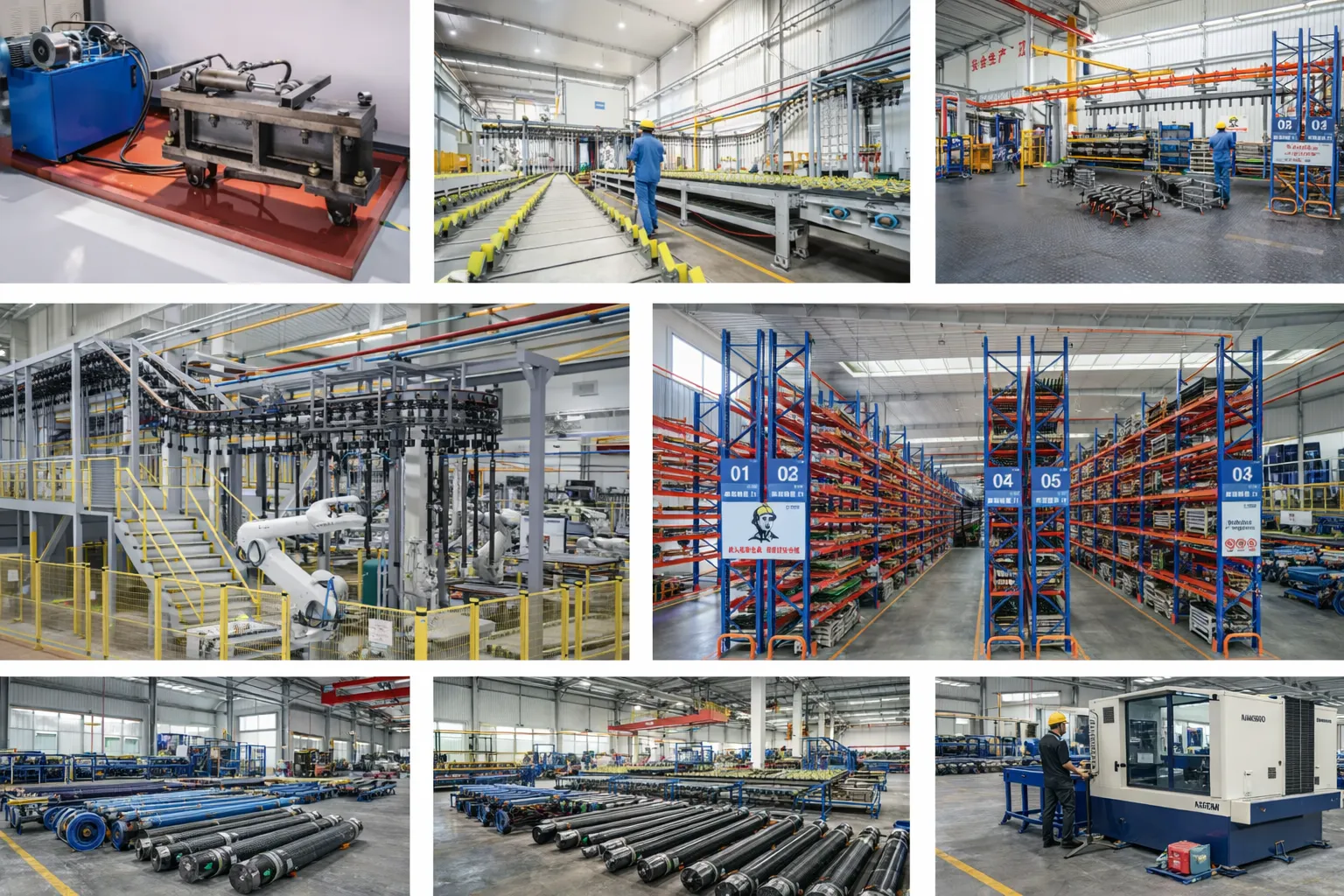
As a premier fluid power manufacturer, we never compromise on the integrity of our production processes. From the initial raw material alloy forging ultrasonic inspection to the final anti-corrosion paint application, our workflow is entirely autonomous and vertically integrated. We utilize advanced multi-axis CNC deep-hole boring and skiving-roller burnishing machines to achieve internal barrel surface finishes that practically mirror glass. This immaculate finish drastically minimizes friction and brings dynamic seal wear down to near zero.
Because sophisticated servo systems demand pristine operating conditions, our final internal assembly of all critical hydraulic parts is conducted in positive-pressure, climate-controlled cleanroom environments. This stringent protocol prevents microscopic abrasive dust from embedding into the PTFE seals during assembly. Furthermore, we enforce a strict 100% factory acceptance testing protocol for every single unit. Every Roll Gap Adjusting Cylinder undergoes severe static pressure holding tests at 150% of nominal working pressure over an extended duration to guarantee absolutely zero internal fluid bypass.
We also execute dynamic friction testing and verify exact sensor calibration prior to shipping. This exact testing protocol is heavily utilized by our specialized department for fixing hydraulic cylinders, ensuring that refurbished units perform identically to brand-new builds. Every cylinder receives a permanent serial number, granting you complete historical traceability of material certificates, weld inspection reports, and hydraulic test charts.
Broader Typical Industry Applications
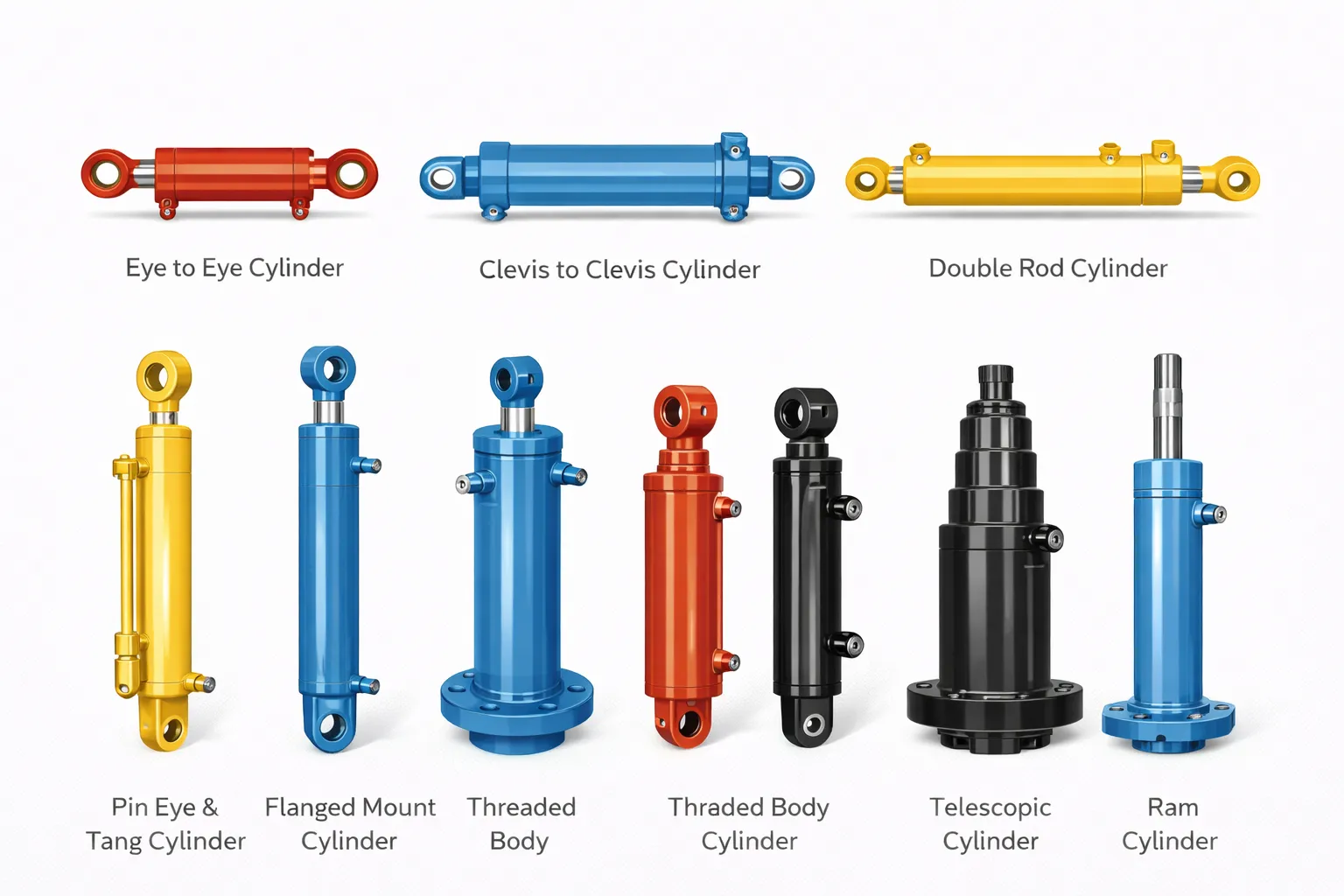
The extremely robust engineering principles applied to our metallurgical cylinders translate seamlessly to other punishing industrial environments. While our focus here is the heavy rolling mill, our heavy-duty fluid power solutions are highly trusted across a wide spectrum of demanding sectors. We encourage you to explore our main hydraulic cylinder product lineup.
- Engineering & Construction Machinery: The high-impact resistance and structural rigidity of our welded designs are perfectly suited for heavy-duty earthmoving. Explore our specialized, rugged solutions for the construction machinery industry.
- Mining & Mineral Processing: Environments choked with abrasive rock dust and slurry require our advanced metallic scraper technology. See our highly resilient applications deployed in the mining industry.
- Material Handling & Logistics: Mega-port cranes, straddle carriers, and automated stacking systems rely heavily on our fail-safe lift cylinder designs for safe, synchronized payload management.
- Plastics & Rubber Machinery: High-tonnage injection molding requires precise, entirely drift-free clamping force utilizing large-bore custom actuators.
Comparative Analysis: Standard vs. High-Performance
When calculating true capital expenditure and return on investment, procurement managers must evaluate the total cost of ownership over a multi-year period. The table below illustrates the stark, uncompromising differences between commercial-grade units and our purpose-built metallurgical solutions.
| Performance Metric | Ordinary Industrial Cylinder | Our Roll Gap Adjusting Cylinder |
|---|---|---|
| Positioning Accuracy | Basic mechanical limit tolerance (± 1.0 mm) | Sub-millimeter micron-level precision tracking |
| Seal Friction Profile | High static breakaway friction (Stick-slip present) | Ultra-low uniform friction PTFE (Buttery smooth) |
| Drift Under High Load | Noticeable internal fluid bypass over holding time | Absolute zero drift holding capability guaranteed |
| Dust & Scale Defense | Standard soft polyurethane wiper (Fails rapidly) | Aggressive dual metallic scrapers + Hard Chrome |
| Thermal Tolerance | Standard NBR chemically degrades above 80°C | High-temperature FKM (Viton) for radiant heat zones |
Verified Field Success: 5 Global Real-World Case Studies
Our deep engineering footprint is highly concentrated across the intensive manufacturing hubs of East Asia. Here are five documented, real-world instances where our fluid power technology transformed operational efficiency in South Korea and surrounding nations.
Case 1: Eradicating Gauge Drift in a Hot Strip Mill
Location: Pohang, South Korea | Client: Tier-1 Automotive Steel Manufacturer
The Challenge: The mill’s primary finishing stand experienced severe thickness variations due to position drift in their legacy OEM cylinders. Their seals melted rapidly in the 130°C ambient radiant heat.
Contact & Implementation: The maintenance engineer discovered our expertise through an online search for high-temp hydraulic rams. We engineered and deployed custom Roll Gap Adjusting Cylinders equipped with FKM seals and LVDT sensors.
The Result: Commissioned in May 2024. Measured gauge deviation was instantly reduced by 88%, saving hundreds of tons of scrap.
“The structural stability of these cylinders under peak rolling force is remarkable. We have eliminated downstream rejections completely.” — Chief Mechanical Engineer.
Case 2: Overcoming Stick-Slip in Aluminum Cold Rolling
Location: Osaka, Japan | Client: High-Precision Electronics Foil Producer
The Challenge: Conventional commercial cylinders were creating microscopic chatter marks on thin aluminum foil due to stick-slip friction during fine clearance adjustments.
Contact & Implementation: They reached out via our corporate site looking for ultra-low friction solutions. We supplied a bespoke solution utilizing our proprietary PTFE stepped-seals and micro-honed alloy barrels.
The Result: Implemented during a shutdown in early 2025. The foil surface quality improved to flawless instantly.
“The silky smooth response of the servo mechanism is impeccable. Their engineering depth regarding tribology and friction is top-tier.” — Production Director.
Case 3: Battling Abrasive Scale in Heavy Plate Manufacturing
Location: Kaohsiung, Taiwan | Client: Major Heavy Machinery Steelworks
The Challenge: Dense, airborne iron oxide scale was penetrating the rod glands, destroying the main seals and causing massive fluid loss every four months.
Contact & Implementation: Discovered our heavy-duty defense capabilities online. We supplied cylinders outfitted with multi-stage metallic scrapers and extreme thick hard chrome plating.
The Result: The new units have provided over 20 months of continuous operation since November 2024 without a single leak observed.
“Their proactive contamination defense design literally extended our maintenance interval by 500%. An absolutely outstanding return on investment.” — Reliability Supervisor.
Case 4: Rapid Retrofit for a Continuous Casting Line
Location: Incheon, South Korea | Client: Integrated Mini-Mill Facility
The Challenge: The plant required urgent replacement of obsolete double acting adjustment cylinders. The original European supplier quoted an unacceptable 8-month lead time.
Contact & Implementation: They contacted our emergency engineering desk. We utilized their original 2D drawings to reverse-engineer the entire assembly, ensuring perfect structural compatibility.
The Result: We successfully manufactured, tested, and delivered the fully operational units in just 45 days.
“Incredible manufacturing agility and precision. The drop-in replacement fit perfectly on the first try, saving our company millions in potential downtime.” — Plant Manager.
Case 5: Enhancing PLC Integration for Wire Rod Mills
Location: Rayong, Thailand | Client: Leading Wire Rod Exporter
The Challenge: Upgrading from outdated mechanical screw-downs to modern hydraulic gap control required heavy cylinders with perfectly integrated, high-shock resistant absolute position sensors.
Contact & Implementation: Their procurement met us at an industrial expo. We co-developed the solution using internally housed, vibration-dampened magnetostrictive probes wired for Profibus.
The Result: Commissioned seamlessly in January 2026, instantly elevating their product quality to meet strict export standards.
“The electronic sensor integration is brilliant. The feedback loop to our main Siemens PLC is incredibly fast and completely immune to the physical vibrations.” — Automation Lead.
B2B Technical FAQ (Frequently Asked Questions)
Procuring highly specialized fluid power components requires thorough technical clarity. Below are the most common inquiries we receive from international procurement teams.
1. What is the standard production lead time for a custom metallurgical cylinder?
2. Are your position sensors compatible with our existing mill control architecture?
3. What type of hydraulic fluid is required for these specific cylinders?
4. How does your pricing compare to major European OEM units?
5. Can we order spare internal components directly from your factory?
6. How do you guarantee absolute zero drift before the cylinder leaves your factory?
Secure Your Rolling Mill’s Precision Today
Do not let position drift, catastrophic seal degradation, and unacceptable OEM lead times compromise your metallurgical output. Partner with an expert manufacturer that intimately understands the extreme violence and required finesse of heavy sheet metal rolling.
Whether you need a complete drop-in dimension replacement, a modernization upgrade, or a reliable source for high-performance fluid power solutions, we are here to support your operations across South Korea and the globe. Provide our technical team with your operating parameters, and we will deliver a meticulously engineered solution.
Editor: Cxm