
Cutter Suction Dredger Traveling Cylinder
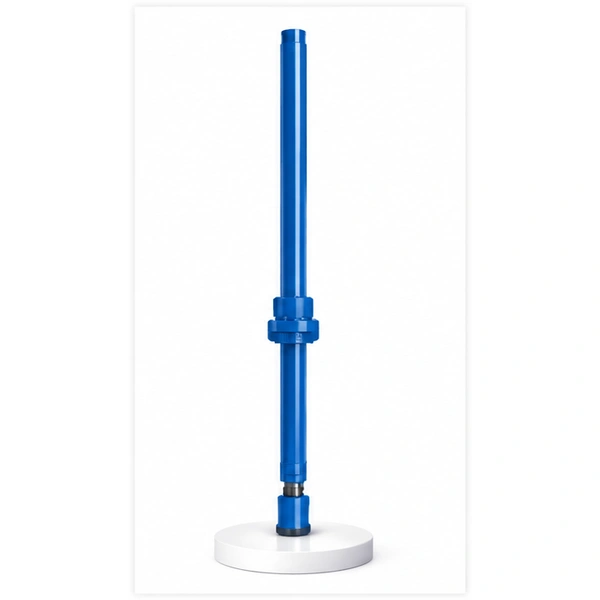
Cutter Suction Dredger Traveling Cylinder
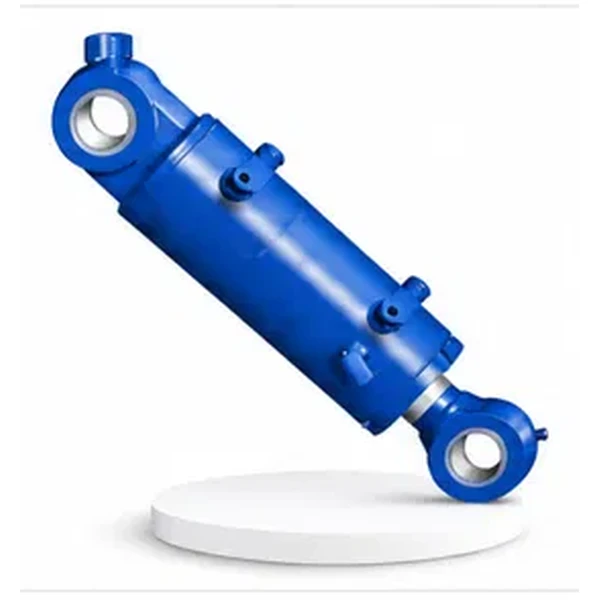
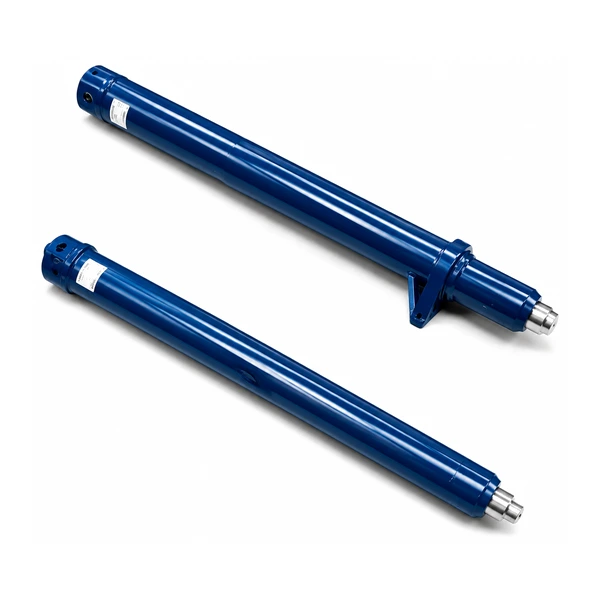
A CSD has no propellers. It "walks" — pushing itself forward along the dredging cut one stroke at a time using spud piles and this cylinder. Stroke up to 9.4 metres per step. The longest-stroke cylinder in the CSD hydraulic system.
CSD Traveling Cylinder Specifications
| Parameter | Specification |
|---|---|
| Product Name | Cutter Suction Dredger Traveling Cylinder |
| Function | Main executive element of the CSD walking (spud carriage) mechanism |
| Bore Diameter | Up to 480 mm |
| Rod Diameter | Up to 360 mm |
| Stroke | Up to 9,400 mm |
| Thrust Force | Maximum 2,900 KN |
| Working Pressure | Up to 32 MPa |
| Temperature Range | -40 °C to +100 °C |
| Application | Cutter Suction Dredger |
How Does a Cutter Suction Dredger Move Without Propellers?
A cutter suction dredger does not have propellers for positioning. Instead, it "walks" along the dredging cut using a spud-carriage system — two steel spud piles driven into the seabed, and a set of traveling cylinders that push or pull the hull relative to the spuds. The traveling cylinder extends, pushing the hull forward by one stroke length (up to 9.4 metres). Then the forward spud is lowered, the rear spud is raised, and the process reverses. This step-by-step walking allows the CSD to advance precisely along the dredging lane, maintaining the cutter head's position with centimetre accuracy — essential when dredging a navigation channel to a specified depth profile.
The traveling cylinder is the main executive element of this walking mechanism. Its stroke length determines how far the CSD advances per step, and its thrust force determines whether the vessel can push against current, wind, and the reaction forces from the cutter head cutting into hard seabed material. Korea Ever-Power engineers each traveling cylinder for the specific CSD model within the offshore hydraulic cylinder range.
Why 9,400 mm Stroke — The Longest Cylinder on a CSD
Every metre of stroke is one metre of forward travel per walking step. A 9,400 mm stroke means the CSD advances 9.4 metres per step — reducing the number of spud-shift cycles needed per hour and directly increasing dredging productivity. A shorter stroke (say 5,000 mm) would require nearly twice as many walking steps to cover the same distance, with each step-change involving a spud lift, repositioning, and re-planting sequence that takes 2–5 minutes of non-dredging time.
On a 500-metre dredging lane, a 9.4 m stroke requires ~53 steps. A 5 m stroke requires ~100 steps — 47 extra spud-shift cycles, each costing 2–5 minutes. Over a 12-hour shift, the longer-stroke cylinder can save 1.5–4 hours of non-productive time.
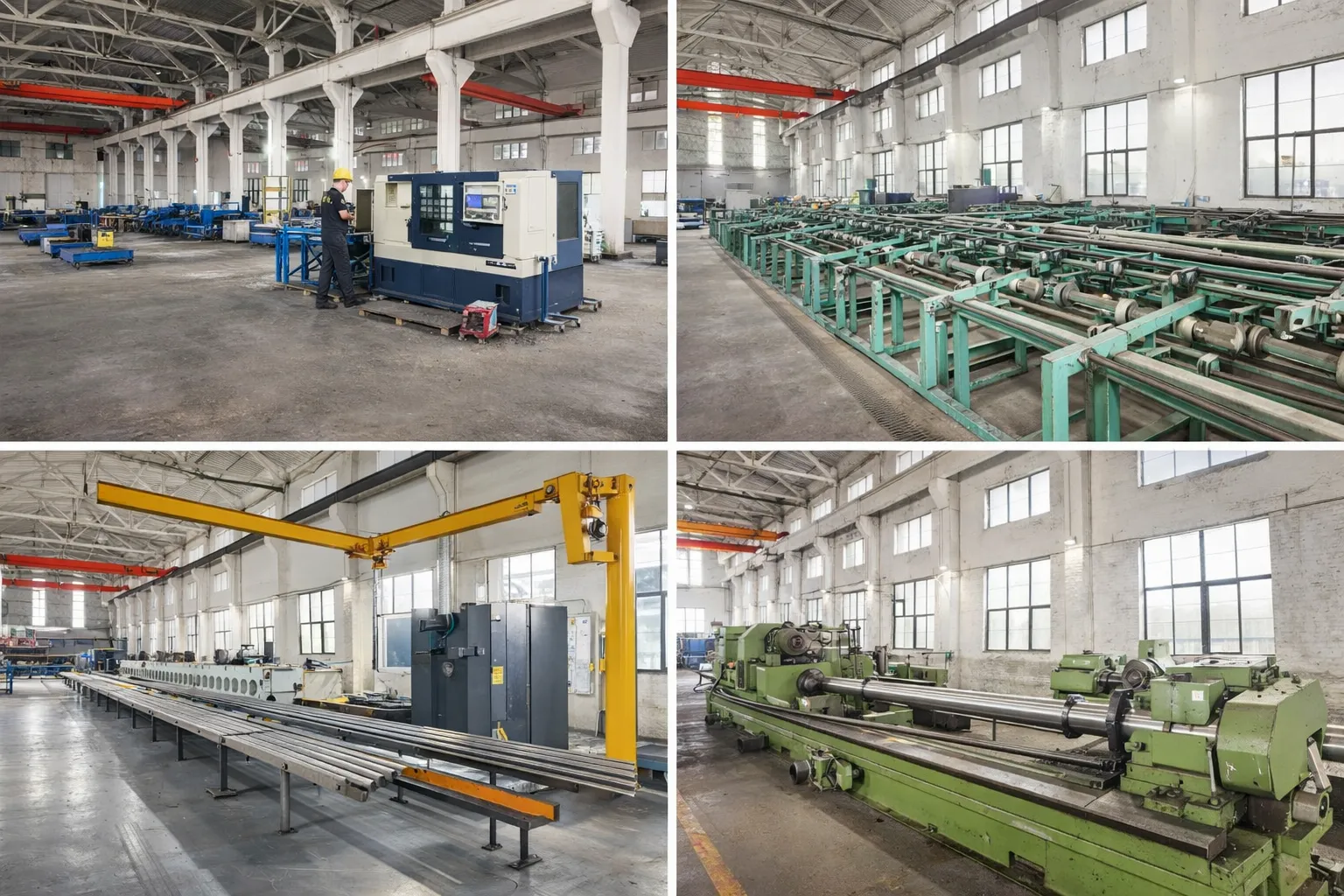
A 9,400 mm rod must be straight to ≤0.1 mm/m across its entire length — meaning total runout ≤0.94 mm. The rod is chrome-plated (or laser-clad), honed, and inspected on a dedicated long-stroke straightening and measuring bed. Contact the Korea Ever-Power hydraulic cylinder team for long-stroke marine cylinders.
CSD Traveling Cylinder Advantages
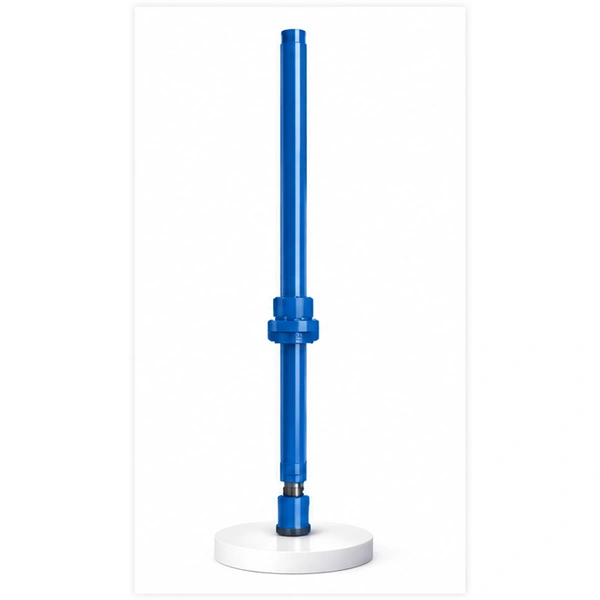
- High-strength alloy steel construction — barrel and rod forged from marine-grade steel, designed for continuous saltwater exposure, high cyclic loads, and the shock forces from cutter head contact with rock or compacted clay.
- Sealed waterproof design — the traveling cylinder operates partially submerged during dredging. Double-lip rod seals with backup wiper prevent seawater ingress even under continuous splash and immersion.
- FEA-verified structure — finite element analysis optimises the barrel wall thickness, rod diameter, and trunnion connection for the combined axial thrust, bending moment (from misalignment), and buckling risk at full 9,400 mm extension.
- ️ Anti-corrosion surface treatment — ceramic spraying (HVOF), laser cladding, or hard chrome. The long rod is particularly vulnerable to corrosion because salt spray deposits collect along its entire exposed length during each extension stroke.
- ⚙️ Integrated valve options — load-holding valves, cushion valves, and position sensors can be built directly into the cylinder to reduce external piping.
Where Cutter Suction Dredgers Operate
Cutter suction dredgers — and the traveling cylinders that move them — work across the full range of dredging projects worldwide:
- ️ Port and harbour deepening — creating and maintaining navigation channels for larger vessels. CSDs cut through silt, clay, sand, and soft rock to achieve the required channel depth.
- ️ Land reclamation — CSDs pump sand and fill material directly to reclamation sites through floating pipelines. Major projects in the Middle East and Southeast Asia rely on large CSDs for millions of cubic metres of fill.
- ⛏️ Mining and aggregate extraction — underwater mining of sand, gravel, and mineral deposits. The CSD's cutter head excavates the material while the traveling cylinder positions the vessel precisely along the mining face.
- River and canal maintenance — removing accumulated sediment to restore waterway capacity. Smaller CSDs (500–2,000 kW) are widely used for inland waterway maintenance worldwide.
Traveling Cylinder Maintenance Considerations
The traveling cylinder operates in one of the harshest maintenance environments — partially submerged, continuously cycling, exposed to saltwater spray along the full rod length. Planned maintenance is essential to prevent unscheduled downtime:
- Rod inspection every 500 hours — visual and tactile check for chrome pitting, scoring, or corrosion along the full 9,400 mm rod length. Any rod damage that penetrates the chrome layer must be addressed before it reaches the rod seal.
- Seal replacement every 2,000–4,000 hours — rod seal, wiper, guide rings, and piston seal. Korea Ever-Power supplies pre-packaged seal kits for each cylinder model — complete set in a labelled marine-duty container.
- Hydraulic oil sampling every 250 hours — particle count and water content analysis. Saltwater contamination of the hydraulic oil is the most common cause of premature seal and valve failure on marine cylinders.
Custom CSD Traveling Cylinder OEM & ODM
CSD Traveling Cylinder FAQ
Customer Reviews
"We replaced the original traveling cylinders on our 4,500 kW CSD with Korea Ever-Power units. The 8,200 mm stroke rods arrived with measured TIR of 0.65 mm — well within the 0.82 mm limit. After 6 months of daily dredging in the South China Sea, no rod corrosion visible on the laser-clad surface."
Eng. W. Tanaka — Dredge Superintendent, Japan
"Fast turnaround on 4 traveling cylinders for our spud carriage refit. The integrated cushion valves at stroke-end eliminated the jarring stop that our operators had been complaining about for years. Smoother walking, less structural fatigue on the carriage frame."
P. van Hoorn — Technical Director, Belgium
"Solid build quality at a reasonable price. We ordered 2 traveling cylinders (bore 380 mm, stroke 7,500 mm) for a mid-size CSD. Seals held well through a 10-month project in brackish water. One cylinder developed a slight external weep after ~3,000 hours — seal kit replacement resolved it within a day."
A. Rahman — Fleet Manager, Bangladesh
"We needed an emergency replacement for our port-side traveling cylinder after a rod seal failure during a critical deadline project. Korea Ever-Power shipped a form-fit-function replacement in 5 weeks — our normal European supplier quoted 14 weeks. The dredger was back walking within 6 weeks of the failure."
D. Okafor — Project Engineer, Nigeria
"Second order. We initially ordered traveling cylinders for one CSD in 2023, and now we're standardising on Korea Ever-Power for our entire 3-vessel CSD fleet. The ceramic rod coating has proven its value — our previous hard-chrome rods needed replating every 3 years, but the ceramic rods show no wear after 2 years of continuous tropical dredging."
Capt. F. Morales — Operations Manager, Philippines
Related Hydraulic Cylinder Categories
추가 정보
| Editor |
|---|
연관 상품
-
Reach Stacker Luffing Cylinder
-
Empty Container Stacker Lifting Cylinder
-
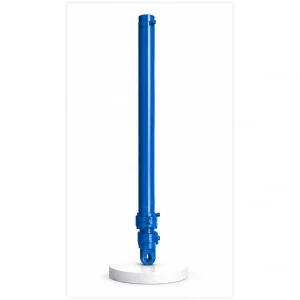
Cutter Suction Dredger Inverted Pile Cylinder
-
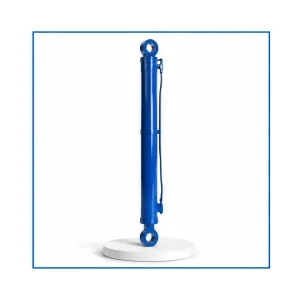
Ro-ro Platform Main Operating Cylinder
-
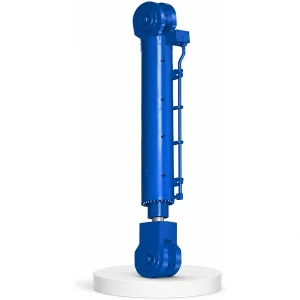
Split Barge Split Cylinder
-
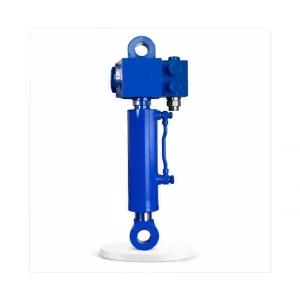
Ro-Ro Platform Latch Cylinder (Hydraulic Self-Locking)
-
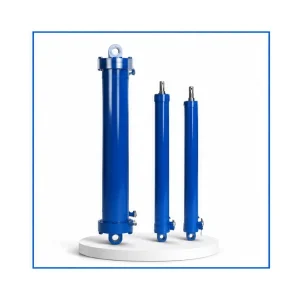
Drilling Platform Steel Wire Rope Tensioner Cylinder
-
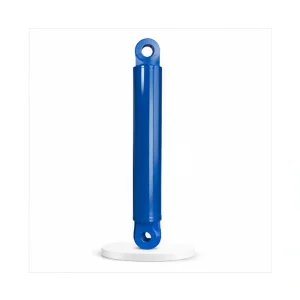
Offshore Crane Main Boom Luffing Cylinder


























