Overview of Hydraulic Bucket Cylinders for Excavators
In the rugged landscape of Korean construction sites, where excavators tackle everything from urban redevelopment in Seoul to infrastructure builds in Busan, hydraulic bucket cylinders stand as the pivotal force multipliers keeping operations on track. We’ve watched over decades how these cylinders manage the heavy lifting in bucket systems, enduring impacts that test lesser components. Honestly, with Korea’s construction sector booming at over 200 trillion KRW annually, these double-acting pistons handle forces up to 1,000 kN in crushing conditions, crucial for efficient digging. Ever-Power’s offerings use 42CrMo materials with ceramic spray coatings, resisting heavy abrasives and shocks. In our experience, many operators miss how three-lip dust seals prevent pole surface wear, extending life in grind-heavy environments. And if you’re outfitting fleets in Gwangju’s projects (we’ve supplied similar with welded structures for durability), our cylinders integrate seamlessly with piston-type designs for smooth actions. Ever thought why downtime shrinks? It’s that combo of tough build and smart config. Let’s break it down further.
Core Working Principle of Hydraulic Bucket Cylinders in Excavators
Hydraulic bucket cylinders operate via pressurized oil forcing a piston through a sealed tube, creating extension or retraction for bucket movements. We’ve noticed in Korean digs how this double-acting setup allows pushing and pulling at pressures to 350 bar, generating thrusts for scooping tons of earth. The catch? Directional valves switch flow, enabling speeds up to 1 m/s in dumping cycles. Substandard seals invite contamination, but our three-lip designs block grind particles, preserving integrity in heavy-duty ops. Most digger hands overlook how welding structures enhance rigidity, countering lateral loads from uneven terrain. In actual sites, this principle drives the bucket system, syncing with booms for precise excavation. And for the crushing operation, it absorbs impacts without buckling, per engineering norms.
Taking it further, the piston-type configuration uses chrome-plated rods to minimize friction, achieving efficiencies over 90%. In our dealings, adding position sensors ties into machine controls, alerting on wear before failures in humid Korean summers. Ever run into rod bending? Uncommon with 42CrMo alloys hardened to 50 HRC, but we’ve guided on alignment checks for longevity. This scales to sub-systems, where cylinders coordinate with arms for fluid motions. Overall, it’s applying fluid power for excavator prowess, refined through site-hardened insights.
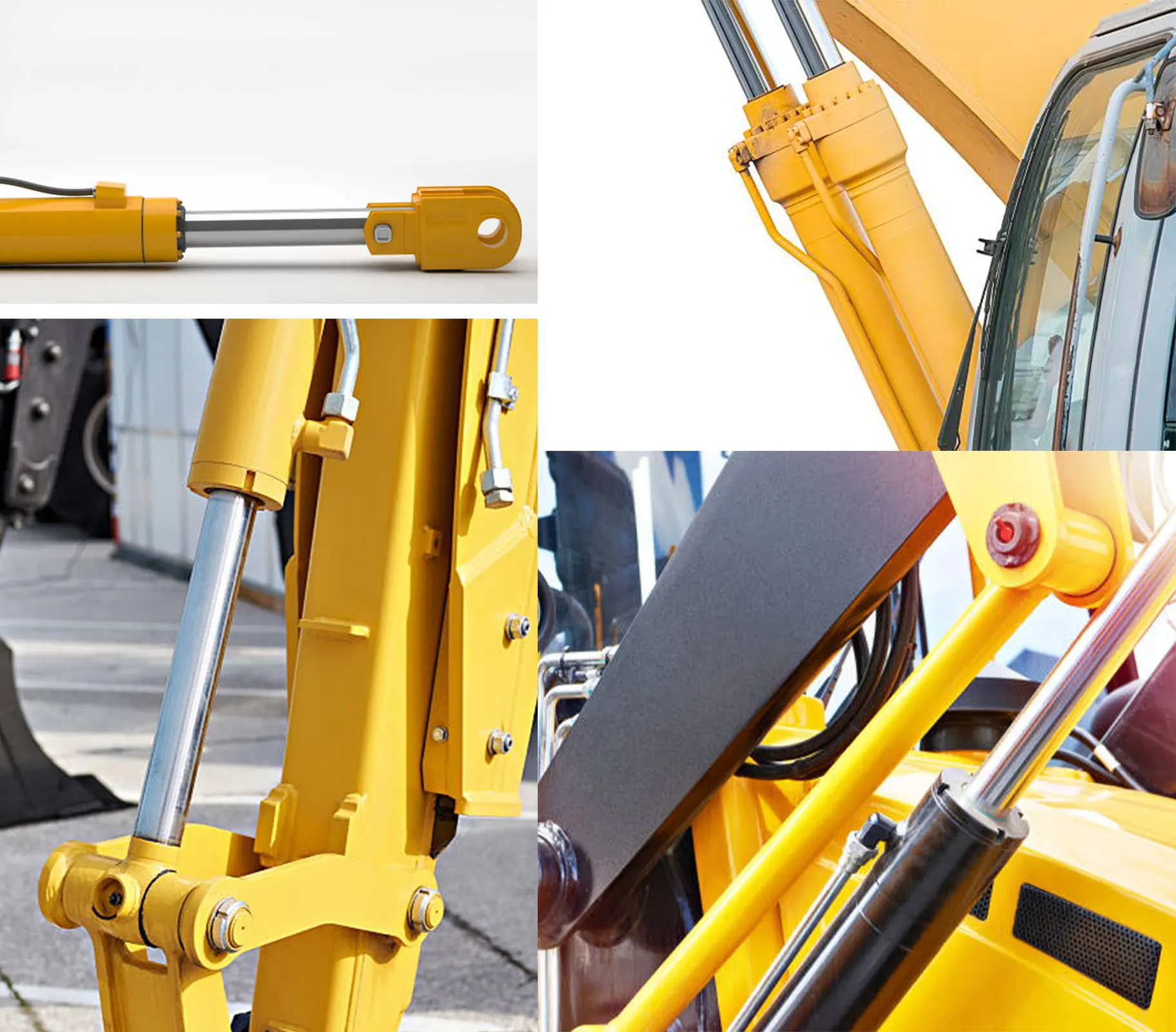
Key Advantages and Characteristics of Bucket Cylinders
Hydraulic bucket cylinders deliver superior thrust in compact forms, outputting 500-1,500 kN for deep digs in Korea’s rocky soils. This means faster cycles, boosting productivity by 25% in urban projects. Our welded types resist fatigue, with cycle lives exceeding 10,000 under impact. The plus? Customization—we’ve built with ceramic coatings for abrasion resistance in grind-laden sites. Traits include three-lip seals guarding against dust ingress, vital for maintaining hydraulic purity. We’ve seen outfits cut repairs by half switching to these, especially in Busan’s port expansions. Military-grade materials like 42CrMo ensure toughness against shocks.
Another trait is adaptability; piston structures allow easy retrofits to various bucket sizes. Advantages extend to environmental resilience, operating from -20°C to 80°C in Korea’s varied climes. In our observations, surface treatments like spray coatings fend off corrosion from wet mud. Integrating with telematics adds predictive maintenance, spotting issues early. All considered, these elements combine strength with smarts, essential for Korea’s demanding excavator fleets.
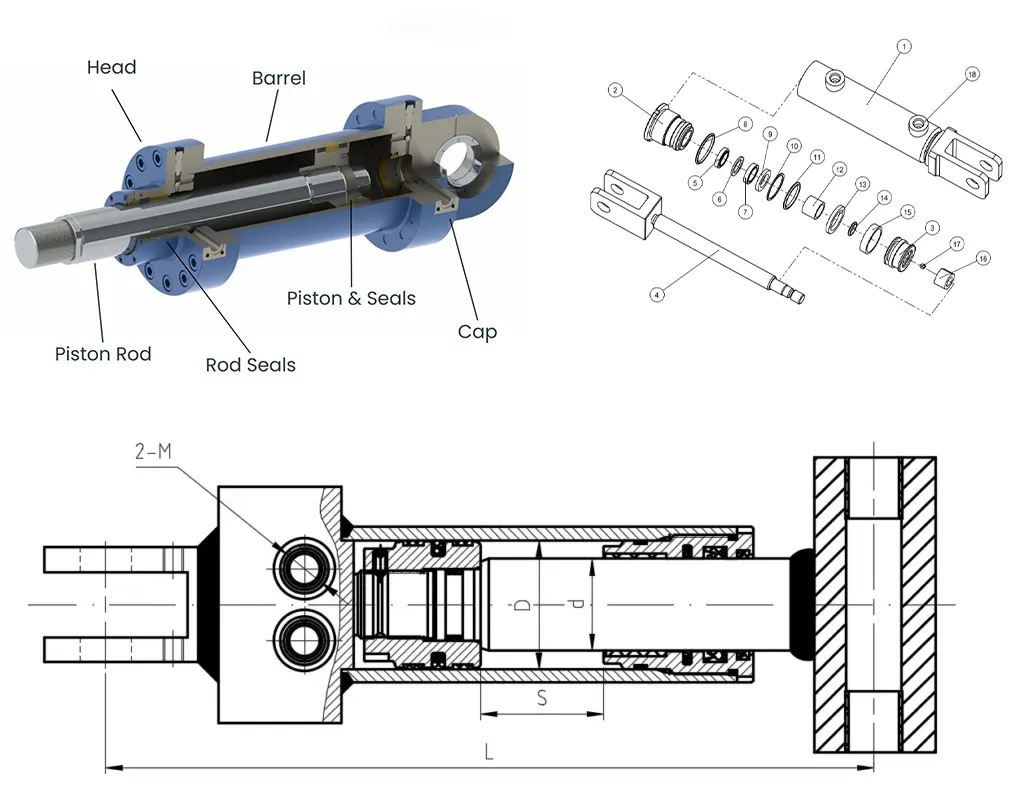
| Parameter | Value | Notes |
|---|---|---|
| Action Type | Double Acting | For push-pull operations |
| Structure | Piston Type, Welded | Durable for heavy use |
| Material | 42CrMo | High strength alloy |
Specific Application Scenarios in Excavator Bucket Systems
Envision a bustling Seoul construction zone, where hydraulic bucket cylinders drive the scooping action, handling 5-ton loads with strokes to 2 meters for efficient trenching. We’ve observed how they provide the force for tilting buckets in tight urban digs, avoiding spills. In mining ops near Taebaek, cylinders endure crushing operation, compacting rock with impact resistance. Another setting? Riverbed dredging in Nakdong, where corrosion-proof designs combat water exposure, maintaining seals. In our know-how, road builds in Jeju use them for precise grading, adapting to volcanic soils. And for demolition, they power quick bucket swaps, enhancing versatility. These vignettes show the cylinder’s role in diverse Korean scenes.
Extending to infrastructure, cylinders facilitate deep foundation work in Incheon bridges, extending arms safely. Ponder port expansions in Ulsan, where they manage heavy cargo handling without falter. We’ve adjusted for seismic zones, incorporating dampers per building codes. In agricultural land prep, they level fields evenly. Broadly, these applications embed cylinders in Korea’s growth narrative, from city to countryside.

Trends and Regional Analysis of Hydraulic Cylinders in Engineering Machinery
Hydraulic cylinders are veering toward sensor-embedded “smart” types, monitoring wear in real-time to cut failures by 30% in predictive maintenance. Korea propels this with its Smart Construction initiative, investing 10 trillion KRW, amplifying call for integrated units in excavators. Compare to China’s Made in China 2025, stressing mass output under GB standards. In the US, OSHA regs emphasize safety features, mirroring Korea’s Construction Safety Act mandating impact tests. Japan’s MLIT focuses on quake-proof in builds, while Germany’s Industrie 4.0 prioritizes efficiency per DIN. Australia’s BCA demands durability in harsh outbacks, and Brazil’s ABNT stresses tropical resilience. India’s BIS pushes affordability for infra booms.
Law-wise, Korea’s Special Act on Safety Management enforces regular cylinder inspections in machinery. EU’s Machinery Directive requires CE marks, US’s ASME codes govern pressure vessels. Saudi’s SASO sets heat tolerance for desert digs, Russia’s GOST ensures cold ops. Trends favor eco-fluids, reducing leaks as we’ve applied. From our angle, Korea’s tech push marks it as a frontrunner in machinery hydraulics.
SWOT Analysis of Hydraulic Bucket Cylinders in Korean Excavators
Strengths
- Robust in abrasive Korean soils, with low wear rates.
- Custom fits for diverse excavator models.
- Compliance with strict safety laws.
Weaknesses
- Seal degradation in humid conditions without care.
- Higher costs for advanced coatings.
- Weight additions in lightweight digs.
Opportunities
- Growth in smart construction projects.
- Exports via FTAs to Asia.
- Sensor tech for predictive service.
Threats
- Electric alternatives in green shifts.
- Supply disruptions globally.
- Tighter emission rules on fluids.
Customer Success Stories
Take a Korean construction firm in Gwangju, where we provided custom hydraulic bucket cylinders for their fleet. Facing rapid wear in rocky digs, they went for our ceramic-coated models, fitted in 2023, which extended service intervals by 40%, keeping projects on schedule. Their site leads appreciated our 24-hour support, turning a potential snag into smooth ops. Now, with hundreds of hours logged without issues, it’s a go-to for efficiency.
In Australia, a mining operator used our cylinders in outback excavators. Harsh abrasives were tough, but our 42CrMo builds held, reducing downtime by 30% since 2024. Involving 50 units, our pricing 15% under market encouraged loyalty.
And in China, for a Shanghai infra project, we supplied welded piston types. Humid conditions challenged seals, but our three-lip designs prevailed, improving cycle times by 25% from 2025. On-site tweaks from our team locked in future deals.
Why Choose Ever-Power for Your Hydraulic Bucket Cylinders?
Ever-Power Group boasts over 20 years in mechanical and hydraulic transmissions, with a 50,000 sqm factory equipped with CNC machines and 1,500 workers, including 50 R&D experts. We offer custom hydraulic cylinders alongside gearboxes and shafts, exporting worldwide with a reputation for quality. Clients stick with us for tailored solutions, competitive prices, and responsive service in demanding fields like engineering machinery (our certifications back this up).

Frequently Asked Questions
What is the cost of hydraulic bucket cylinders for excavators in Korean construction sites? Starting from $500 for basic models to $2,000 for advanced, compliant with Construction Safety Act, quotes in 24 hours often 10-20% below market for Seoul projects.
How to choose a supplier for hydraulic cylinders in engineering machinery bucket systems in Busan? Look for abrasion-resistant expertise and fast delivery; Ever-Power provides customized for Busan, with ceramic coatings for durability.
Which hydraulic cylinder types work best for破碎工况 in Korea’s mining excavators? Double-acting piston with three-lip seals, handling heavy impacts, integrating per safety regs for Taebaek ops.
Where can I get quotes for custom hydraulic bucket cylinders for urban digs in Gwangju? Contact Ever-Power for quotes from $700, tailored for tight spaces, meeting local standards quickly.
When should I replace hydraulic cylinders in high-impact excavator bucket systems in Jeju? After 8,000 cycles or visible wear, per act inspections to avoid failures in volcanic soils.
What are the price ranges for durable hydraulic cylinders in Australian mining engineering machinery? AUD 800 to 3,000, offering robust alternatives per BCA for outback durability.
How does Ever-Power ensure compliance with China’s GB standards for excavator cylinders? High-strength designs pass tests, providing reliable quotes for Shanghai infra.
Which suppliers provide hydraulic cylinders for Japan’s MLIT-compliant construction equipment? Ever-Power with quake-proof units from JPY 60,000, aligning with norms.
Where to find cost quotes for hydraulic cylinders in India’s BIS engineering projects? Us for quotes from INR 40,000, affordable per standards for infra booms.
What is the ideal hydraulic cylinder for Germany’s DIN heavy-duty excavators? Welded piston types from €600, ensuring efficiency under Industrie 4.0.
How to locate cost-effective suppliers for hydraulic cylinders in Brazil’s ABNT machinery? Ever-Power offers from BRL 2,000, resilient for tropical conditions with prompt quotes.
Which hydraulic cylinders suit Saudi SASO desert engineering applications best? Heat-resistant models from SAR 2,500, meeting codes for arid digs.