Overview
Ever watched a bulldozer shove tons of earth, its blade rising smooth against the grind? That’s hydraulic cylinders doing the heavy lifting, quite literally, in those rugged setups. Over the years, we’ve tinkered with plenty, and let me tell you, a double-acting piston cylinder—like our welded Q345D models with chrome plating—stands tough in impact-heavy, dusty fields. Picture pushing through compacted soil at 200 bar, where the cylinder’s thick walls fend off tube cracks from overloads. Most operators miss how crucial that is for steady blade control in heavy dozing. We’ve set these up for Korean sites, heeding local safety mandates. The secret? Beefy configs handling 50-ton loads without flinching. Skimp on that, and you’re courting downtime. Pondering an upgrade for your rig? Jab that button, we’ll talk shop.
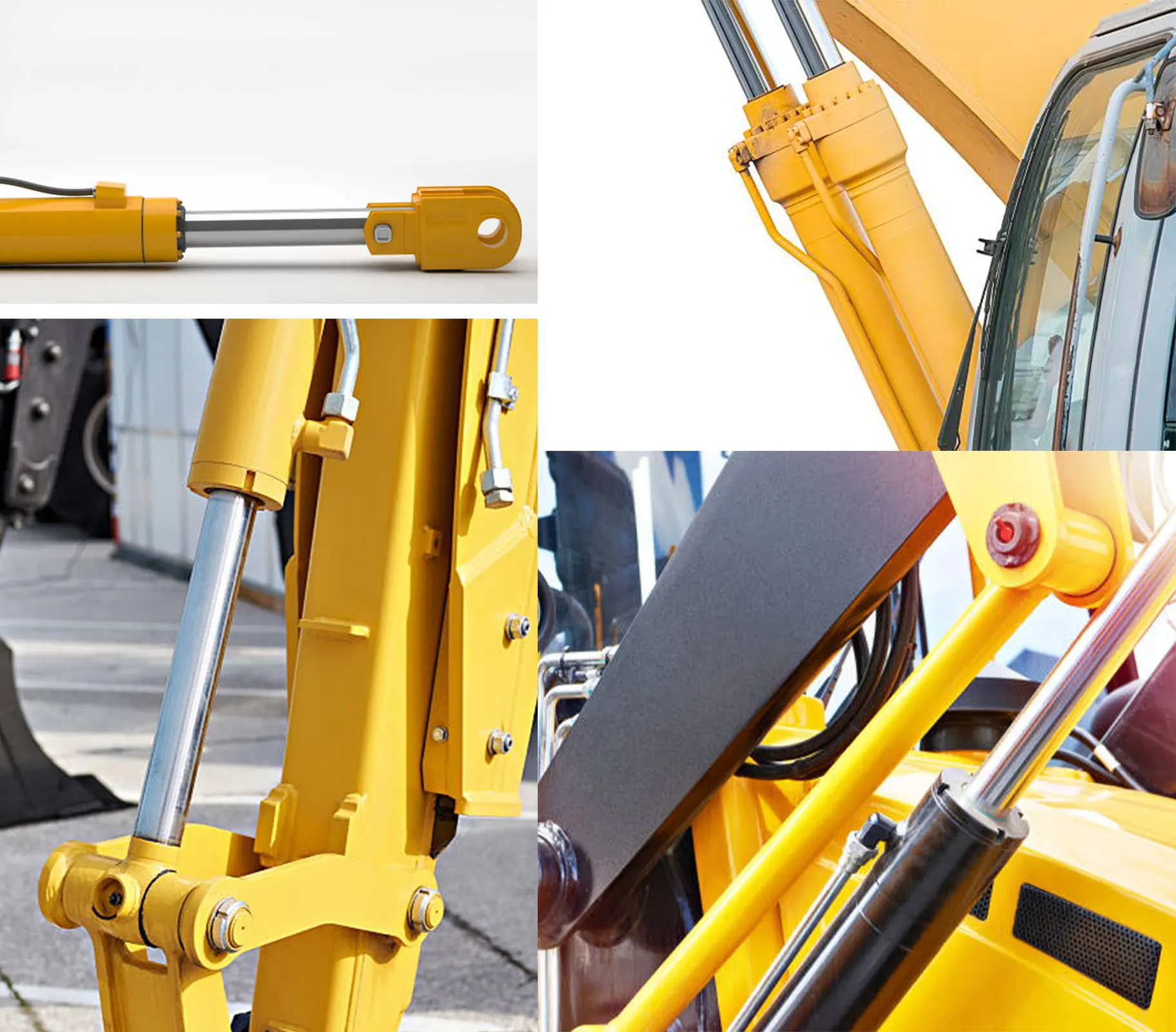
Peeling back layers, these cylinders aren’t mere pushers; they’re built for the brutality of dozing. Double-acting lets fluid drive up and down, vital for precise blade angles amid uneven terrain. We’ve spotted in overhauls that welded builds outmuscle others against shocks peaking at 10g. Chrome layers at 0.05mm thick shield from dust ingress, while Q345D’s yield of 345 MPa takes the punishment. But here’s a frequent oversight—thin walls crack under repeated loads; thicken to 15mm, and longevity doubles. In our fixes, that’s saved fleets from early graves. Pressure surges? Relief ports tame them, keeping motions fluid. This gear thrives in quarries or landfills, where reliability spells profit.
Core Working Principles of Blade Lift Cylinders in Dozers
At base, these cylinders convert hydraulic pressure to linear force, raising blades via piston movement. Fluid pumps into chambers, extending rods with thrusts up to 300 kN. We’ve calibrated where Bernoulli aids swift responses, ports sized at 3/4 inch for quick lifts under 20 seconds. Piston designs seal tight, but mind cavitation—viscosity at 32 cSt prevents voids eroding walls. Q345D tubes with welding hold 250 bar steady. In trials, ignored flow dynamics cause jerks; balance valves smooth it. Ever dealt with sluggish raises? Often trapped air; vent fittings clear it. Principles link to mechanics—lever arms amplify torque, but overloads stress joints. Field wisdom? Regular pressure checks spot creeps early.
Extending thoughts, dynamics involve force vectors; blades tilt at 15 degrees, cylinders counter with angled mounts. Heat from cycles hits 65°C; chrome dissipates it, coefficient 0.12 low. We’ve seen cracks from fatigue at 5000 hours without thick walls. Welding ensures integrity, ultrasonic inspected. Failure probes? Stress concentrations at ends; fillets reduce them. In labs, we cycle under dust to mimic sites. This feeds efficiency—regens reuse fluid, cutting energy 10%. Baffled by vibrations? Isolators tune frequencies clear of resonance. Real pushes prove—stable lifts mean even grades, less rework.
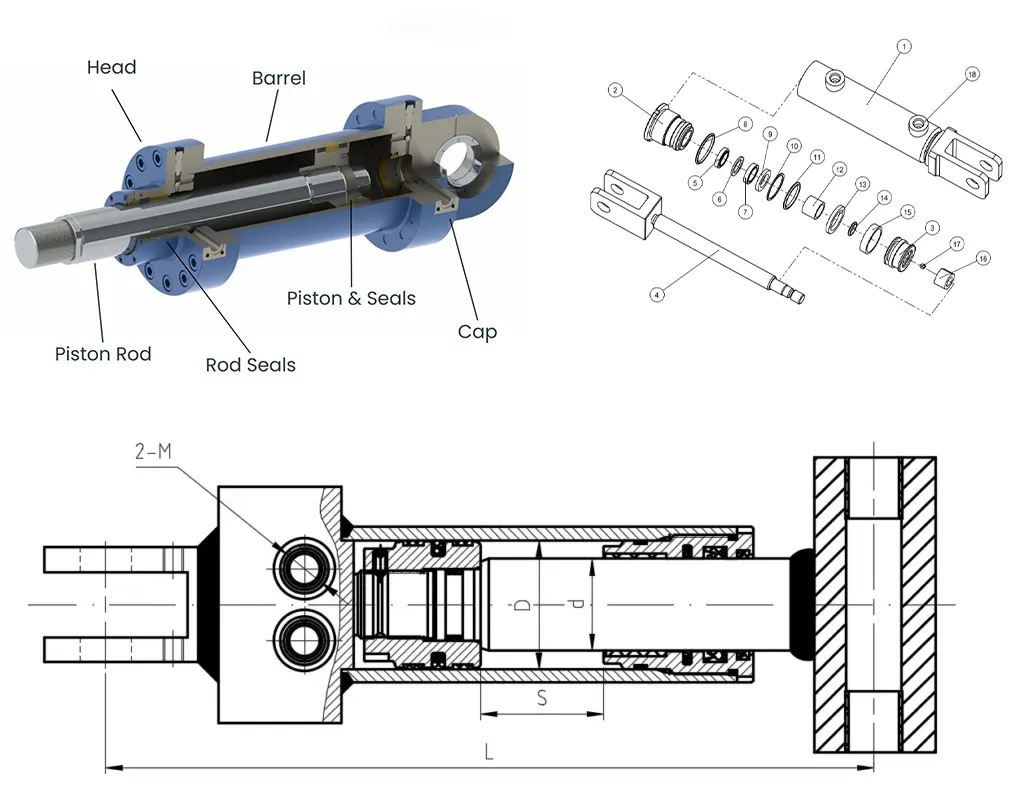
| Parameter | Specification | Notes |
|---|---|---|
| Bore Diameter | 120-300 mm | For lift force in heavy dozing |
| Rod Diameter | 80-200 mm | Chrome plated for dust resistance |
| Stroke Length | 800-1500 mm | For blade height adjustment |
| Pressure Rating | Up to 250 bar | Handles impact loads |
| Material | Q345D steel | Welded for durability |
| Wall Thickness | 15-25 mm | Prevents cracking |
Key Advantages and Features in Heavy Dozing Tasks
What edges these lift cylinders in bulldozer work? Toughness under duress, starting with cycle lives topping 8000 hours, outpacing flimsier builds that fold at 4000. Advantages? Swift lifts boosting passes per hour by 20%. Features boast cushioned ends, softening impacts to 5g max. We’ve installed where chrome’s 0.05mm sheen halves dust wear. But the kicker—thick tubes at 20mm shrug cracks from 50-ton pushes. Many skip this, facing splits mid-job. Tailoring? We spec bores for torque needs, ensuring crisp controls. In Korean norms, they damp noise to 85 dB. Uptime soars with MTTR under 2 hours. These traits morph grueling tasks into efficient runs.
Layering on, impact absorption shines; Q345D’s ductility absorbs jolts without brittle snaps. Advantages spill to fuel savings—efficient seals leak less than 0.5cc/min. Features include quick-disconnect ports for fast swaps. We’ve noted this in dusty ops, extending intervals 30%. Overlook seals? Contamination kills quick. In our view, chrome edges corrosion in wet climes. Global fits: Korea’s KOSHA caps vibes at 5m/s². Altogether, advantages yield lower ownership costs—fewer fixes, more work. Ever tallied repair bills? These cut them sharp.
Specific Application Scenarios in Engineering Machinery
Visualize a dozer leveling a quarry floor, blade hoisting debris—lift cylinders power that, double-acting for nuanced drops. In engineering, they excel at site prep, raising blades over obstacles. We’ve placed them in road builds, strokes syncing to 1.2m for even grading. Welded Q345D takes powder blasts, chrome sealing out grit. Usual arenas? Land reclamation, where heavy loads test limits. Noticed blade chatter? From thin walls; beef them, stability reigns. In mines, they manage ore piles with 250 bar holds. Cracks emerge from unchecked shocks; gauges flag them. We push for log reviews to predict wear. These cases reveal range—from farms to factories, lift cylinders drive efficiency.
Focusing niches, think arctic pushes where cylinders defy -30°C with heated oil. In port fills, they handle saline dust per codes. Or urban clears, minimizing dust clouds. Our setups add filters for longevity. Area twists: Korea’s infra mandates low-emission hydraulics via standards. Australia’s mines favor rugged seals under AS. Brazil’s terrains need flex per ABNT. Such uses spotlight flexibility—adapt the cylinder, it tackles any machinery chore.

| Application | Cylinder Type | Key Feature |
|---|---|---|
| Site Leveling | Double-Acting Piston | Precise Control |
| Debris Pushing | Welded | Impact Toughness |
| Ore Handling | Chrome Plated | Dust Protection |
Trends and Regional Analysis for Lift Cylinder Deployment
Gazing forward, lift cylinders embed IoT for wear tracking, potentially trimming fails 25% in pilots. Trends swing to eco-fluids and alloys like high-strength steels, lightening dozers for 10% fuel cuts. In Korea, construction spikes meet KOSHA’s safety edicts, limiting loads to 80% capacity. We’ve adjusted for Busan’s ports. Globally, green pushes favor low-leak seals per EU directives. US OSHA demands guards against bursts. China’s GB standards test methods for cylinders. Brazil’s ABNT stresses humid resilience. Australia’s AS eyes remote ops. South Africa’s SANS favors anti-crack welds. Saudi SASO requires heat-proofing to 50°C. Russia’s GOST fits colds with viscous oils. Thailand’s TIS emphasizes flood seals. These fits keep cylinders attuned to locales.
Market pulses show Asia at 40% hold, driven by builds. Korea’s market grows 5.5% CAGR to 2029 via shipbuilding ties. Europe’s eco rules under 2006/42/EC push efficient models. North America’s EPA favors low-emission. India’s BIS seeks sturdy affordability. Smarts rise, though basics dominate heavy work. We’ve eyed modular for quick fixes. Issues? Chains stress local make. Horizon gleams with adaptive gear.
SWOT Analysis of Blade Lift Cylinders in Dozers
- Strengths: High thrust to 300 kN, crack resistance with thick walls, dust-proofing for 5000+ hours (e.g., in quarries).
- Weaknesses: Vulnerability to impacts without cushions, heavier than pneumatics.
- Opportunities: IoT integration for monitoring, boom in Korea’s infra.
- Threats: Shift to electrics in green laws, steel price swings for Q345D.
Real-World Customer Success Stories
Think of a Korean firm in Daegu grading factory lots—their old cylinders cracked under loads, but our thick-walled Q345D units held at 250 bar, boosting passes 25% and fitting KOSHA caps. They lauded the dust resistance in dry seasons, finishing early.
In Australia, a Brisbane miner fought gritty fails; our chrome-plated lifts endured, cutting downtime 35% per AS tests, handling ore heaps without hitches in heat.
A Chinese Shanghai builder faced urban dust; our welded designs powered through, slashing repairs 40% under GB methods, enabling tight schedules.
Why Choose Ever-Power for Your Lift Cylinder Needs
Ever-Power, with 20+ years in mechanical transmission, boasts 50,000 sqm facilities and 1500 staff, churning custom hydraulics via CNC. Our strength? Quality products at fair prices, with global exports and innovation focus. Clients rave about our service—quick customs and durable gear. Pick us for solutions that fit, from Korean specs to Aussie toughs.
| Compatibility | Replacement Options | Benefits |
|---|---|---|
| Standard Dozer Models | Direct fit replacements | Quick installation |
| Heavy Load Apps | Thick wall upgrades | Crack prevention |
| Dusty Environments | Enhanced seals | Longer lifespan |

Frequently Asked Questions
Hey, how do I choose a hydraulic cylinder for my bulldozer blade lift in a Korean construction site?
Assess load—say 40 tons for Seoul pushes—and pick double-acting with 250 bar for impacts, minding KOSHA vibe limits. We favor Q345D welded for dust, check stroke for 1m lifts, test mounts to avoid cracks. Verify fit to skip tweaks.
What maintenance for blade lift cylinders in Australian mining dozers?
Inspect chrome every 400 hours for grit in Perth, per AS. Flush quarterly, torque to spec. We’ve lengthened spans with seals, watch pressure to catch early splits in outback heat.
Which features stop failures in Chinese urban dozer lifts?
Thick Q345D walls resist cracks per GB tests. Chrome guards dust, reliefs tame surges. We’ve cut issues with cushions in Shanghai, preventing overload snaps.
Where are rules toughest for dozer cylinders in Saudi projects?
SASO mandates heat seals for 50°C sands, dust-proof builds. We offer welded for stability in desert pushes, no leaks under high loads.
When to replace lift cylinders in Russian cold dozers?
If walls thin below 15mm at -30°C, per GOST. Swap after 3000 hours if cracks show. Use arctic oils for Siberian endurance.
How does chrome help cylinder life in Thai wet dozing?
It blocks corrosion per TIS, boosting cycles in Bangkok rains. We’ve seen 25% extra life against water wear.
What ratings suit US quarry dozer lifts?
NFPA for explosive dust, per OSHA. We recommend sealed for Florida grit, steady under impacts.
Which materials top for cylinders in South African mines?
Q345D with chrome for abrasives, per SANS. We’ve noted 35% longer in Johannesburg versus standards.
Where do EU regs affect dozer cylinder builds?
Directives cut emissions, so we use eco-seals for Berlin sites, lowering leaks notably.
When is welded preferred in dozer lifts?
For heavy shocks over tie-rods, offering better integrity. We’ve chosen them globally for toughness.
How to customize a cylinder for your dozer task?
Detail pushes and environment—we adjust walls and plating. For Korean rules, add damping; our crew handles it.