
Log Grapple Clamping Cylinder for Forestry
Engineered with 42CrMo high-yield steel and an integrated single-way lock to guarantee absolute zero-leakage holding power in severe humid wood chip environments.
Product Overview & Industrial Value
Operating heavy machinery in the forestry sector presents mechanical challenges that standard industrial components simply cannot endure. At the heart of a timber harvesting operation is the log grapple, an attachment that must grip, lift, and secure massive, irregularly shaped logs while navigating uneven terrain. The central actuating force behind this critical attachment is the log grapple clamping cylinder. In these brutal operating conditions, equipment is constantly bombarded by physical shock, lateral torsion, abrasive dirt, and highly acidic tree sap. If the clamping mechanism falters or experiences an internal pressure drop, the load slips. A dropped log is not merely an inconvenience; it represents a catastrophic safety hazard for ground personnel and inflicts severe damage on surrounding equipment.
As an experienced hydraulic cylinder manufacturer with decades of specialized engineering background, we have meticulously analyzed why conventional actuators fail in the woods. Standard components typically suffer from internal fluid leakage, which slowly degrades the clamping force, or they experience physical rod bending due to extreme side-loading. To eliminate these inherent flaws, we developed a highly specialized log grapple clamping hydraulic cylinder designed specifically for the rigors of forestry. We transitioned away from standard carbon steels and adopted high-tensile 42CrMo alloy steel, combined with an advanced nickel-plated surface treatment. This metallurgical upgrade provides unparalleled defense against both physical bending and the chemical corrosion caused by humid wood chips.
Our unique positioning in the Asian B2B market, specifically serving forestry fleets in South Korea and surrounding nations, focuses on providing premium reliability without an inflated OEM price tag. By integrating an advanced single-way lock directly into the welded porting block, our cylinder mechanically traps fluid to ensure an unyielding grip. This means you achieve maximum operational uptime and significantly lower your long-term maintenance costs. For fleet operators, investing in our specialized cylinders offers an exceptional hydraulic cylinder price to performance ratio, ensuring your log grapple attachments perform flawlessly shift after shift.
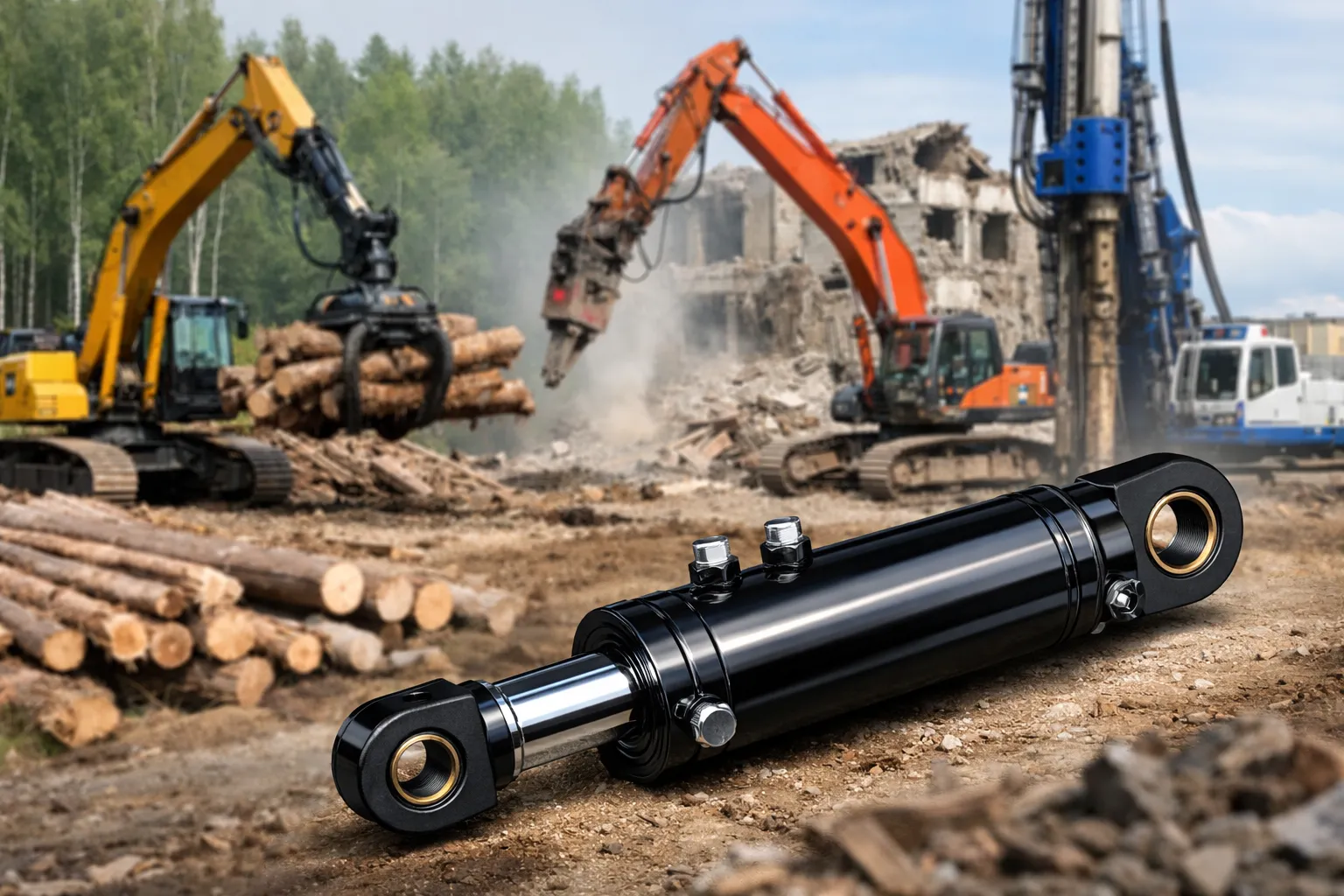
Comprehensive Technical Parameters
Accurate engineering specifications dictate the success of any fluid power system. The following table outlines the foundational technical parameters and customization capabilities of our clamping solutions, optimized specifically for heavy-duty forestry machinery.
| Parameter Category | Engineering Specification Details |
|---|---|
| Industry & Equipment | Construction Machinery / Forestry Machinery – Log Grapple |
| Subsystem Function | Log Grapple Clamping Cylinder (Primary gripping actuator) |
| Action Mechanism | Double acting hydraulic cylinder |
| Manufacturing Structure | Piston style / Heavy-duty welded construction |
| Core Material System | 42CrMo Quenched and Tempered Alloy Steel |
| Surface Treatment | Electroless Nickel Plating (Superior anti-corrosion barrier) |
| Environmental Grade | Resistant to humid wood chips, acidic sap, and abrasive dust |
| Primary Working Condition | Clamping Holding (High static pressure retention under dynamic shock) |
| Typical Failure Mode Prevented | Internal leakage leading to loss of grip and load dropping |
| Recommended Configuration | Integrated Single-Way Lock (Pilot-operated check valve) |
| Mounting Options | Heavy-duty clevis, cross-tube, or high-articulation spherical bearings |
In-Depth Working Principle: Mastering Clamping Force
To fully appreciate the reliability of our system, it is vital to understand the internal fluid dynamics governing the log grapple. This unit is intentionally designed as a high-performance double acting hydraulic cylinder. This configuration utilizes pressurized hydraulic fluid to actively power both the extension and retraction strokes of the hydraulic cylinder piston. When the machinery operator pushes the joystick to close the jaws, hydraulic fluid from the main pump rushes into the blind end (cap end) of the cylinder barrel. The immense fluid pressure acts upon the piston face, driving the 42CrMo rod outward. This mechanical extension forces the grapple arms to pivot, crush into the timber pile, and close tightly.
However, the most vulnerable moment in forestry operations occurs immediately after the grapple closes. This is the clamping holding phase. The heavy timber constantly pushes back against the jaws, trying to force them open. Standard utility cylinders rely entirely on the excavator’s main directional control spool valve to maintain this back-pressure. If that main valve is worn and allows microscopic internal leakage, or if a primary hydraulic hose bursts, the pressure in the cylinder drops instantly. The result is a catastrophic failure where the grapple jaws swing open and drop the load.
To completely eradicate this danger, our engineers integrate a specialized single-way lock directly into the cylinder port. This pilot-operated check valve functions as an impenetrable mechanical gate. The moment the maximum clamping pressure is reached and the fluid flow stops, a hardened steel poppet inside the valve snaps shut against its seat. It physically traps the high-pressure fluid inside the cylinder chamber. The hydraulic fluid cannot flow backwards. The hydraulic oil cylinder is now mechanically locked in place, maintaining 100% of its crushing grip independently of the main machine’s hydraulic health. The jaws will not yield an inch. To release the logs safely, the operator directs fluid to the retract port, which sends a pilot pressure signal that physically pushes the check valve open, allowing the trapped fluid to return to the reservoir and the grapple to part.
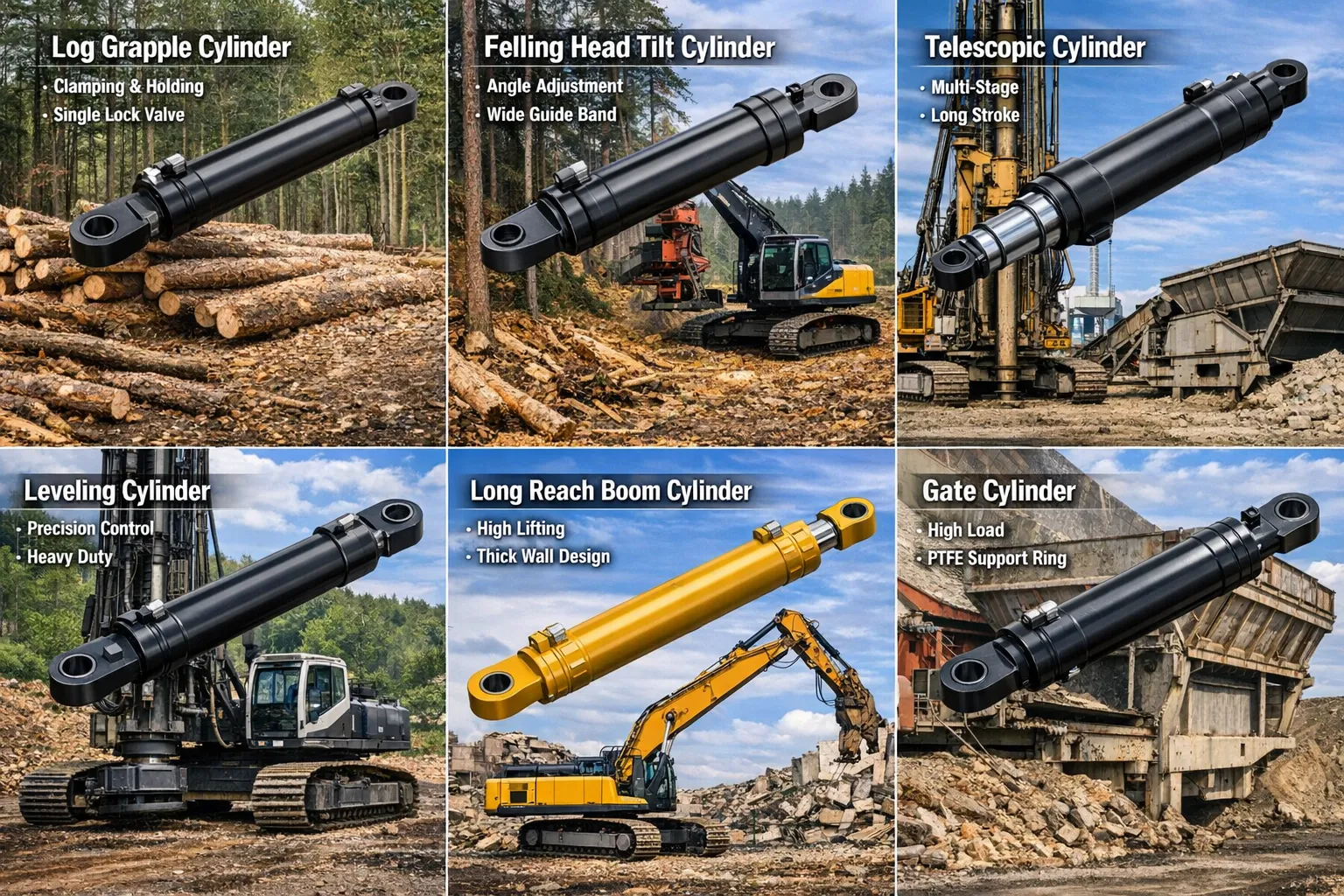
Seamless Machinery Replacement and Compatibility
In the demanding world of timber harvesting, extended equipment downtime is unacceptable. When a mechanical failure occurs, sourcing replacement hydraulic parts directly from original equipment manufacturers (OEMs) can lead to weeks of delays and severely inflated maintenance budgets. We solve this logistical nightmare by engineering our clamping cylinders to serve as flawless, drop-in aftermarket replacements for a vast array of global machinery.
By meticulously analyzing and matching pin-to-pin retracted lengths, trunnion mounting widths, clevis pinhole diameters, and fluid port thread specifications, our engineering team ensures that installation is fast and straightforward. Upgrading your log grapple requires absolutely no cutting or structural modification to your existing boom arms. We regularly supply heavy-duty replacements that perfectly integrate with equipment originally manufactured by industry leaders such as Komatsu, Caterpillar (CAT), John Deere, Doosan, Hyundai, Volvo, and Tigercat.
Disclaimer: The mention of specific heavy machinery brands and models is intended solely for the purpose of guiding technical compatibility and dimensional selection for our clients. We operate as an independent manufacturer and claim no affiliation or trademark rights to these respective corporations. Our goal is to provide accessible, premium-grade components that make fixing hydraulic cylinders more efficient for fleet operators.
Core Technical Engineering Advantages
What truly distinguishes a standard linear actuator from a professional-grade forestry component? The difference lies in a deep understanding of metallurgy, fluid retention, and environmental sealing. Here are the five core technical advantages that define the superiority of our log grapple clamping hydraulic cylinder:
1. Absolute Anti-Leakage Valving
The direct integration of the pilot-operated single-way lock acts as an impenetrable physical barrier against fluid escape. This mechanical fail-safe completely neutralizes the risk of sudden pressure drops caused by external hose failures or worn main control valves, ensuring your log grapple maintains its crushing grip and preventing catastrophic workplace accidents.
2. High-Rigidity 42CrMo Rod Construction
Forestry tasks impose brutal, unpredictable lateral forces. When an operator uses the grapple to pry or twist a stubborn log, standard 1045 carbon steel rods will easily flex, permanently bend, and score the internal barrel. We forge our rods from 42CrMo alloy steel, heavily quenched and tempered to achieve exceptional yield and tensile strength. This immense rigidity prevents deflection entirely.
3. Advanced Nickel Plating for Corrosive Environments
Wet wood chips and tree sap create a highly acidic and corrosive poultice that wraps around the cylinder. Traditional hard chrome plating contains inherent micro-pores that allow these tannic acids to penetrate and rust the underlying steel, causing the chrome to flake off. Our specialized electroless nickel plating process deposits a dense, non-porous chemical barrier. It is completely impervious to acidic sap, ensuring the rod remains flawlessly smooth and protects the seals.
4. Deep Penetration Welded Barrels
Unlike standard tie-rod designs that can stretch and loosen under constant high-pressure spikes and vibration, our heavy-wall welded construction provides superior burst resistance. The end mounts and trunnions are attached using automated submerged arc welding, creating a monolithic structure capable of absorbing thousands of hours of violent shock loading without suffering from fatigue cracking.
5. Ultra-Low Friction Sealing Matrix
Continuous, rapid clamping cycles generate immense friction and localized heat, which breaks down hydraulic fluid viscosity and bakes standard NBR seals. We equip our hydraulic cylinder components with premium PTFE-blended step-seals and high-grade polyurethane guide rings. This low-friction architecture prevents stick-slip, ensures smooth actuation, and drastically lowers operating temperatures, vastly extending the MTBF (Mean Time Between Failures).
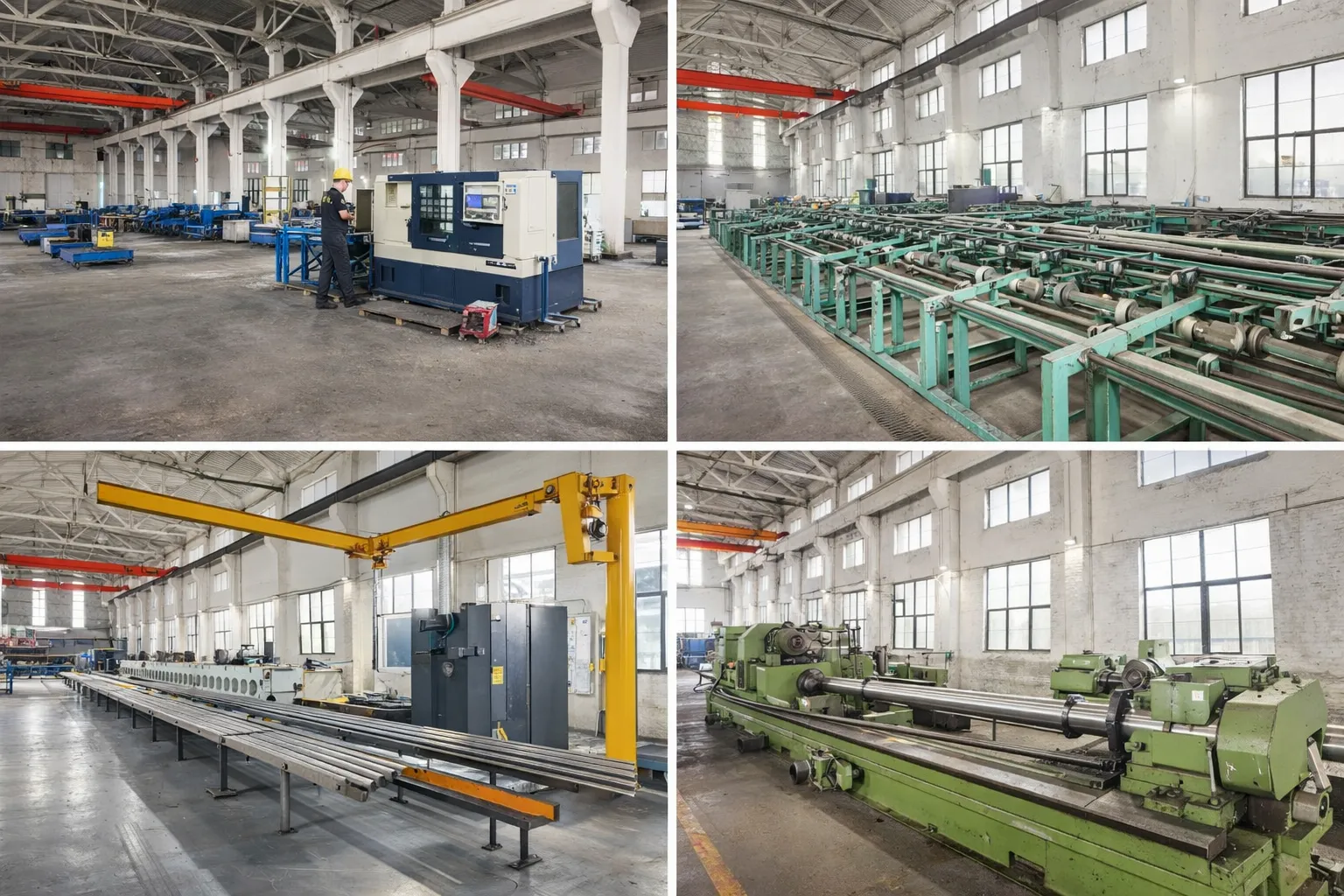
Manufacturing Craftsmanship & Uncompromising Quality Control
To consistently produce world-class hydraulic rams, a manufacturer must maintain absolute control over the entire production ecosystem. We do not rely on outsourced sub-assemblies. From the moment the raw 42CrMo steel billets arrive at our facility to the final application of industrial polyurethane paint, the entire manufacturing process is executed autonomously within our state-of-the-art plant.
Our CNC machining centers turn and bore the cylinder barrels to exact micrometric tolerances. The internal surfaces undergo deep-hole roller burnishing, creating a mirror-like finish that drastically minimizes seal wear. The robotic welding cells operate with precise heat-input parameters to prevent structural warping. However, precision machining is only half of the equation; rigorous quality control is what guarantees field reliability.
Every single log grapple clamping cylinder undergoes a mandatory 100% factory pressure test before it is approved for shipping. We subject the units to hydrostatic testing at 1.5 times their maximum rated working pressure. By monitoring for any microscopic pressure decay over an extended holding period, we empirically verify the absolute integrity of the single-way lock and the internal piston seals. Furthermore, each unit is permanently laser-engraved with a unique serial number, offering lifetime traceability of materials, assembly dates, and testing parameters.
Expansive Industry Applications
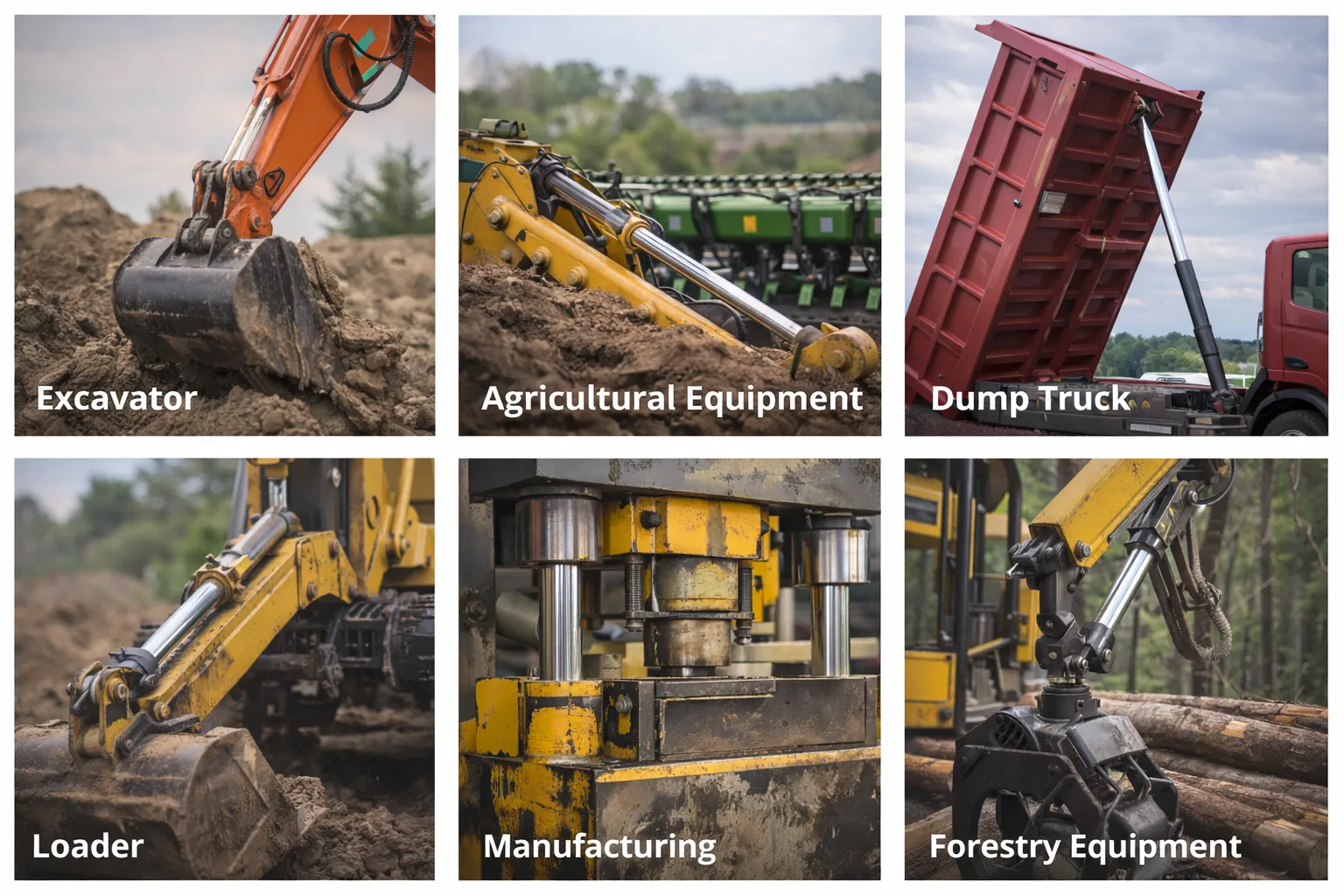
While explicitly optimized for the brutal realities of timber harvesting, the immense holding force, structural rigidity, and zero-leakage valving of this product make it highly adaptable. The engineering principles required to secure heavy logs translate perfectly across multiple severe-duty sectors. We invite you to explore our comprehensive solutions for the construction machinery industry to see how our actuators power global infrastructure.
- Forestry and Logging Camps: Deployed as the primary gripping force on log loaders, forwarders, and skidder grapples to sort, stack, and transport raw timber safely over mountainous terrain.
- Metallurgy & Heavy Manufacturing: High-temperature variants are utilized in scrap metal sorting grapples at steel recycling plants, where the heavy-duty welded body easily handles jagged, unpredictable metallic loads.
- Biomass and Renewable Energy: Actuating stationary cranes that feed continuous volumes of wet wood chips, bark, and organic waste into industrial shredders, where the nickel-plated rod resists acidic degradation.
- Port Logistics and Material Handling: Integrated into massive port-side gantry cranes unloading bundles of timber and bulk materials from cargo vessels, where mid-air load dropping over a ship’s deck is strictly prohibited.
- Plastics and Rubber Recycling: Providing immense, unyielding static crushing force to hold bouncing, highly resilient synthetic bales during the shredding process.
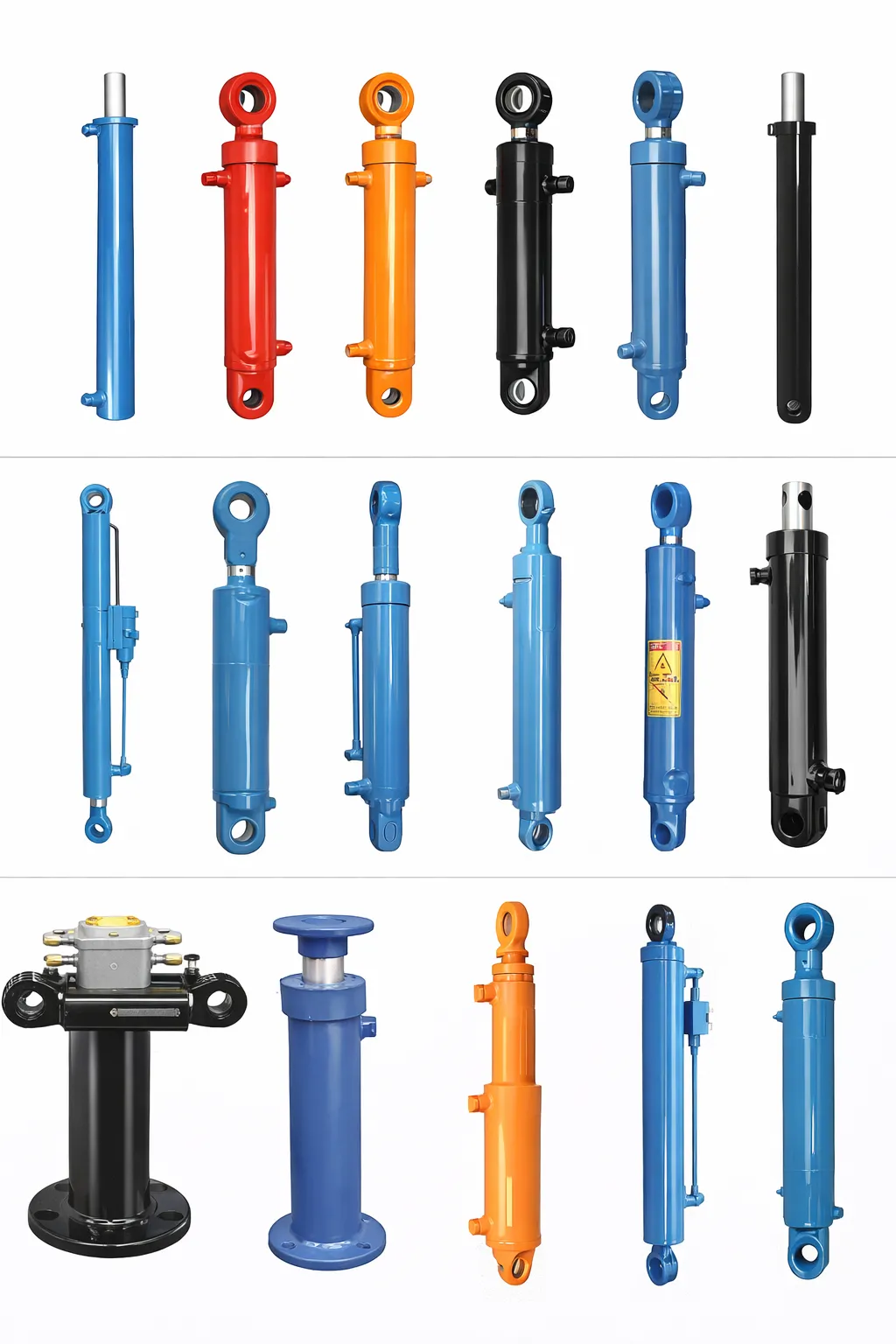
Comparative Analysis: Standard vs. High-Performance
Making an informed technical procurement decision requires looking well beyond the initial purchase cost. The table below illustrates the stark technical contrast between standard aftermarket offerings and our optimized clamping cylinders, demonstrating why upgrading yields a vastly superior return on investment and reduces downtime.
| Engineering Feature | Ordinary Market Cylinder | Our High-Performance Cylinder |
|---|---|---|
| Rod Metallurgy | Standard 1045 Carbon Steel (Prone to flexing and bending under load) | Forged 42CrMo Alloy Steel (Exceptional yield strength and rigidity) |
| Surface Coating | Hard Chrome (Porous, pits and rusts when exposed to acidic sap) | Electroless Nickel Plating (Dense, non-porous chemical barrier) |
| Load Security | Relies purely on excavator valves (High risk of pressure bleed and dropping) | Integrated Single-Way Lock (Guaranteed zero-drop mechanical lock) |
| Friction Profile | Standard NBR seals (Generates high friction and localized heat) | PTFE-blended step-seals (Ultra-low friction, cooler operation) |
| Maintenance Frequency | Frequent resealing required due to rapid debris ingress and wear | Extended MTBF, significantly reducing long-term operational downtime |
Proven Global Performance: 5 Real-World Case Studies
Engineering theory must ultimately be proven in the mud, dirt, and brutal weather of active job sites. Our presence across East Asia demonstrates the unyielding reliability of our hydraulic systems. Here are five documented success stories where our clamping cylinders resolved critical operational bottlenecks for our international B2B clients.
1. Eliminating Winter Leakage in Gangwon, South Korea
Client Profile: A major timber harvesting contractor in Gangwon-do, South Korea.
The Challenge: Their fleet of Doosan excavator log grapples was suffering from severe pressure loss during the freezing winter months. Standard seals were shrinking in the cold, and the acidic pine sap was pitting the chrome rods, leading to highly dangerous mid-air log drops.
Contact Route: The lead fleet mechanic discovered our specialized log grapple clamping cylinder through an online technical search for cold-weather actuation solutions.
The Solution & Result: We retrofitted their fleet of 12 machines with our nickel-plated units featuring low-temperature PTFE seals and integrated single-way locks. The mechanical locking completely resolved the dropping issue.
“Since installing these custom cylinders in October 2024, we have experienced zero dropped logs. The pressure holding capability even at -15 degrees Celsius is remarkable. It completely solved our winter downtime.” — Mr. Park, Lead Fleet Mechanic, March 2025.
2. Conquering Mountain Slopes in Hokkaido, Japan
Client Profile: An independent heavy equipment modifier and logging company in Hokkaido, Japan.
The Challenge: They needed robust components to build custom grapples for steep-slope mountain logging. Operating on inclines created extreme lateral stress that was permanently bending the standard carbon steel rods of their existing cylinders.
Contact Route: Connected with our engineering team via our online technical B2B portal.
The Solution & Result: We supplied our heavily forged 42CrMo high-rigidity cylinders to resist the severe side-loading forces. The heavy-duty welded mounts held up perfectly against the mechanical shock of the mountain terrain.
“The structural rigidity of the 42CrMo alloy is vastly superior to the standard units we previously used. Our clients immediately noticed the increased clamping stability on the slopes. Fantastic engineering.” — K. Tanaka, Chief Engineer, January 2026.
3. Port Timber Handling Efficiency in Busan, South Korea
Client Profile: A heavy maritime logistics company operating at the Port of Busan, South Korea.
The Challenge: Unloading imported hardwood logs from cargo ships required absolute holding power in a highly corrosive saltwater and humid air environment. Port safety regulations strictly prohibit any mid-air load dropping over the ship decks.
Contact Route: Sourced our factory directly via a heavy machinery procurement platform looking for marine-resistant holding solutions.
The Solution & Result: Provided custom-engineered clamping cylinders with enhanced nickel surface treatments and oversized pilot check valves for rapid fluid return, ensuring safety and speed.
“The single-way lock provided complete peace of mind during safety inspections. Furthermore, the nickel plating has kept the piston rods spotless despite the salty, humid air. A highly professional supplier.” — Lee Ji-hoon, Port Engineering Supervisor, February 2026.
4. Combating High-Cycle Fatigue in Binh Duong, Vietnam
Client Profile: A large-scale rubber wood processing and biomass generation plant in Vietnam.
The Challenge: The main sorting yard cranes faced massive heat generation from cycling thousands of times a day. This heat was destroying the NBR seals, causing the grapples to lose grip. Additionally, the acidic rubber wood sap was aggressively rusting the rods.
Contact Route: Met our international sales engineers at a construction machinery exhibition in Ho Chi Minh City.
The Solution & Result: Deployed cylinders with ultra-low friction step-seals to significantly reduce operating temperatures, combined with the impenetrable nickel plating to stop the sap corrosion.
“Our thermal imaging shows the new cylinders run 15 degrees Celsius cooler than the old ones. Seal life has tripled, and the rust issue is gone. We are outfitting all our cranes with these units.” — Nguyen V., Plant Manager, November 2025.
5. Rapid Fleet Standardization in Sarawak, Malaysia
Client Profile: A large-scale timber plantation and land-clearing contractor in Malaysia.
The Challenge: Operating a mixed fleet of various machine brands (Caterpillar and Komatsu) caused massive inventory headaches for spare parts. They were spending too much time and capital on fixing hydraulic cylinders with different specs.
Contact Route: Contacted our sales engineering team via an industry recommendation.
The Solution & Result: We standardized their grabber attachments using our universally adaptable dimensioned cylinder mounts. We provided uniform replacement units that fit seamlessly across the mixed fleet, streamlining their entire maintenance protocol.
“Standardizing our mixed fleet with these specific cylinders simplified our inventory immensely. The drop-in replacement was flawless, and the technical support is unmatched.” — Ahmad Abdullah, Technical Procurement Lead, December 2025.
Frequently Asked Questions (B2B Procurement)
Industrial procurement demands thorough technical clarity to avoid expensive misapplications. Below are the most common inquiries our engineering team receives from international clients regarding our forestry clamping solutions.
1. Can this replace a single acting hydraulic cylinder on older log grapples?
No, this specific component is engineered exclusively as a double acting hydraulic cylinder. The complex, forceful movements of a modern log grapple require powered extension to crush and clamp the timber, and powered retraction to force the heavy jaws open against mechanical resistance. Single-acting systems rely on gravity or weak springs for retraction, which cannot provide the controlled opening force required. Your machine must possess a two-way auxiliary hydraulic circuit.
2. How exactly does the single-way lock (pilot check valve) prevent load dropping?
The integrated valve acts as an unyielding mechanical gate. When pressurized fluid enters to close the grapple, it passes through the valve freely. However, when fluid flow stops—or if the main machine loses pressure due to an engine stall or a burst hose—the valve’s internal poppet snaps shut. This physically traps the high-pressure fluid inside the cylinder barrel. The hydraulic cylinder piston cannot retract, meaning the grapple jaws stay locked shut around the timber until pilot pressure is deliberately applied to the opposing port to release it.
3. Why do you recommend nickel plating over hard chrome for forestry operations?
Standard hard chrome plating inherently contains microscopic cracks resulting from the electroplating process. Acidic tree sap and moisture from humid wood chips easily penetrate these micro-cracks, causing the underlying steel to rust, blister, and ultimately flake the chrome off. Our heavy-duty electroless nickel plating process provides a dense, uniform, and non-porous chemical barrier. It is completely inert to the acidic environment, ensuring the rod remains perfectly smooth to protect the internal seals.
4. Do you provide comprehensive seal kits and spare parts for future maintenance?
Yes. While our cylinders are heavily over-engineered for maximum longevity, routine wear on wiper seals is eventual. We supply complete OEM-grade seal kits, including our proprietary low-friction composite seals, heavy-duty wear bands, and replacement pilot valve cartridges. Because every unit is serialized, we can instantly identify your exact build and ensure your maintenance teams have the precise parts needed when fixing hydraulic cylinders.
5. What are the typical lead times for custom replacement variations to South Korea?
As a fully autonomous manufacturer, our in-house CNC machining and automated welding facilities allow for rapid production without relying on third parties. Standard dimensional replacement models are frequently in stock or can be assembled within 15 to 20 days. Ocean freight from our facility to major South Korean ports like Busan or Incheon typically adds only an additional 5 to 7 days, ensuring your fleet is upgraded swiftly.
Upgrade Your Forestry Operations Today
Do not allow inferior aftermarket components to dictate your productivity or compromise worksite safety. Equip your heavy machinery with a log grapple clamping hydraulic cylinder engineered specifically for absolute reliability, zero internal leakage, and extreme corrosion resistance.
Editor: Cxm


























