Main Screw-down Hydraulic Cylinder for Rolling Mill
Engineered with ultra-thick wall forged 42CrMo steel and advanced servo architecture to conquer immense separation forces and deliver sub-millimeter gauge precision.
Product Overview and Industrial Value
In the highly demanding and rigorous field of heavy metallurgy, achieving precise dimensional accuracy in metal sheets is the ultimate operational objective. For facility operators and chief engineers managing continuous rolling mills, the reliability of your automatic gauge control (AGC) mechanisms directly dictates plant profitability and finished product quality. At the very center of this complex mechanical orchestration lies the main screw-down hydraulic cylinder, an industrial component subjected to some of the most punishing mechanical environments on the planet. Operating under extreme high temperature and high pressure conditions, this specific fluid power actuator must apply immense crushing force to deform solid steel or aluminum slabs while simultaneously making micro-adjustments to the roll gap.
When standard actuators are pushed to these operational limits, they frequently succumb to catastrophic failures. The most notable failure mode we observe across the industry is cylinder tube yielding, where the massive internal pressure literally stretches the steel barrel out of geometric tolerance. As a dedicated, deeply experienced hydraulic cylinder manufacturer, we have fundamentally redesigned the fluid power architecture to eliminate these structural vulnerabilities. Our approach abandons standard drawn steel tubes in favor of ultra-thick wall forged cylinder bodies, creating a rigid, unyielding chamber that translates one hundred percent of the hydraulic fluid energy into direct linear reduction force.

By deploying our heavily reinforced double acting hydraulic cylinder systems, major steel plants across South Korea and the broader East Asian industrial corridor have successfully stabilized their continuous rolling operations. We deeply understand that in modern manufacturing, the initial hydraulic cylinder price is merely a fraction of the total cost of ownership. Unplanned downtime caused by a ruptured seal, sticking friction, or a binding piston rod can cost a rolling mill hundreds of thousands of dollars per hour. Therefore, our engineering philosophy focuses intensely on absolute longevity and sustained precision.
Customizable Technical Parameters
Because no two rolling mills are constructed identically, we offer an expansive range of customizable engineering specifications. We match our manufacturing capabilities to your exact mill stand footprint, fluid pressure requirements, and gauge control parameters. Below is a comprehensive overview of the technical data and operating parameters for our heavy-duty metallurgical actuator series.
| System Attribute | Parameter Specification | Engineering Significance |
|---|---|---|
| Target Industry | Metallurgy | Designed exclusively to survive continuous heavy-duty industrial processing. |
| Equipment Category | Rolling Mill | Compatible with hot strip, cold tandem, and heavy plate rolling lines. |
| Subsystem / Action | Main Screw-down System | Directly manipulates the physical gap between the massive work rolls. |
| Cylinder Name | Main Screw-down Cylinder | The primary force application actuator within the AGC control loop. |
| Action Method | Double Acting | Provides powered, instantaneous control for both extension and retraction. |
| Structure Type | Servo Piston Cylinder | Deeply bored to integrate absolute linear position sensors for feedback. |
| Manufacturing Structure | Forged Cylinder Body | Eliminates the weakness of welded seams, cast porosity, and thin walls. |
| Material System | 42CrMo Alloy Steel | Provides exceptional tensile strength, yield strength, and fatigue resistance. |
| Surface Treatment | Ceramic Coating | Offers vastly superior corrosion and abrasive scale resistance over hard chrome. |
| Environment Grade | High Temperature + High Pressure | Specialized fluoroelastomer (FKM) seals prevent severe heat degradation. |
| Working Condition Feature | Extremely Large Screw-down Force | Easily absorbs dynamic shock loads and pressure spikes reaching 400+ bar. |
| Typical Failure Mode | Cylinder Yielding | Completely resolved by our massively thick-walled forging techniques. |
| Recommended Configuration | Ultra-thick Wall Forged Body + Servo Valve | The ultimate robust architecture for speed, pressing force, and absolute precision. |
Specific Working Principle: The Physics of Gauge Control
To truly appreciate the necessity of high-end manufacturing in this sector, one must understand the complex fluid dynamics and mechanical interactions occurring inside the main screw-down unit during active rolling. The primary function of this actuator is not simply to push a mass, but to hold a highly specific spatial position against a constantly fluctuating and violently resisting force. As the glowing steel slab or cold strip enters the work rolls, the separation force spikes dramatically. Sophisticated X-ray or isotope thickness gauges located downstream instantly read the output gauge of the steel and continuously send electronic deviation signals back to the mill’s central automation system.
This computerized system then commands a highly sensitive, high-frequency proportional servo valve. The valve rapidly meters highly pressurized hydraulic fluid into either the cap end or the rod end of the cylinder. If the steel is exiting too thick, fluid floods the cap chamber, driving the massive hydraulic cylinder piston downward to close the roll gap. This entire feedback loop happens dozens of times per second. The fundamental engineering challenge here is fluid compressibility (compliance) and mechanical static friction. If the internal seals generate too much static breakout friction, the cylinder suffers from “stick-slip” behavior—it jerks into position rather than gliding smoothly, immediately causing rippling thickness variations in the steel sheet.
Our solution involves utilizing proprietary ultra-low friction PTFE stepped seals combined with a directly mounted servo valve manifold. By bolting the control valve directly onto the forged body, we minimize the trapped volume of hydraulic oil between the spool and the piston. Less oil volume translates directly to less fluid compressibility, leading to a much higher natural frequency for the system. Furthermore, because our 42CrMo thick-walled cylinder does not bulge or yield under 400 bar of pressure, there is zero volume expansion loss. This allows our cylinders to respond to 5-micrometer adjustment commands instantaneously, absorbing extreme press-down forces without any loss in closed-loop positioning accuracy.

Seamless Brand Compatibility & Direct Replacement
Maintenance directors and plant engineers often face massive logistical headaches and capital expenditure hurdles when original European or Japanese equipment begins to fail. Long lead times and exorbitant costs for OEM replacements can easily paralyze a facility’s maintenance budget. As an agile, highly advanced hydraulic cylinder manufacturer, we have strategically engineered our main screw-down series to be one hundred percent dimensionally interchangeable with the cylinders originally supplied by global industry giants.
We routinely provide exact drop-in structural upgrades for equipment previously supplied by prominent plant builders and hydraulic integrators such as SMS Group, Primetals Technologies, Danieli, Bosch Rexroth, Moog, and Parker Hannifin.
(Disclaimer Note: The mention of these corporate brand names is strictly for the purpose of technical sizing, dimensional compatibility assessment, and assisting engineers in identifying the correct replacement parameters for their specific mill stands. We operate as a completely independent manufacturing entity and do not claim any affiliation, endorsement, or trademark rights associated with these companies.)
Our core mission is to offer a structurally superior forged alternative that perfectly utilizes your existing mounting flanges, trunnion blocks, high-pressure piping manifolds, and LVDT electrical connections, allowing for rapid fixing hydraulic cylinders operations during scheduled shutdown windows.
Five Core Technical Advantages
We do not rely on standard catalog designs or modified agricultural components. Every main screw-down actuator we produce is a testament to advanced mechanical engineering and metallurgical science. Here are the five definitive reasons why leading steel producers systematically upgrade to our technology:
1. High Rigidity Forged Cylinder Body
The most devastating mechanical failure in a rolling mill is cylinder tube yielding. When a standard seamless pipe is subjected to a massive shock load during a mill stall, it permanently bulges outward, destroying the internal seal contact. We machine our cylinder bodies entirely from solid, ultra-thick 42CrMo steel forgings. The dense, aligned grain structure of the forging provides immense internal hoop strength, mathematically eliminating the possibility of radial yielding even under extreme fault conditions.
2. Ultra-Low Friction Sealing Architecture
To respond accurately to servo commands as small as a few micrometers, the breakaway friction must be identical to the dynamic running friction. Standard rubber seals grip the rod, causing stiction. We utilize a proprietary blend of custom PTFE composite step seals and specialized bronze-filled guide bands. This architecture completely eradicates stick-slip behavior, ensuring the actuator glides seamlessly and responds to high-frequency signals perfectly.
3. Advanced Ceramic Coating Technology
Hot rolling environments are constantly saturated with corrosive cooling emulsions and highly abrasive, flying iron scale. Standard hard chrome plating eventually develops stress micro-cracks under thermal cycling, leading to base metal corrosion and severe rod scoring. Our proprietary high-velocity oxygen fuel (HVOF) plasma-sprayed ceramic coating provides a virtually impenetrable, non-porous surface with extreme hardness, drastically extending the life of the hydraulic cylinder piston rod.
4. Extreme Thermal Stability Optimization
Continuous proximity to glowing steel slabs degrades internal hydraulic oil viscosity and destroys standard polyurethane seals. We proactively integrate specialized internal cooling geometries and specify high-temperature fluoroelastomer (FKM/Viton) static and dynamic seals throughout the entire assembly. This ensures that the hydraulic rams maintain absolute dimensional stability and zero internal bypass leakage even during prolonged high-heat summer campaigns.
5. Fatigue Life Optimization via FEA
The alternating stresses acting on the cylinder mountings can cause catastrophic fatigue failure over time. We utilize advanced Finite Element Analysis (FEA) software to model the physical stresses. By re-engineering transition radii, eliminating sharp thread profiles, and beefing up flange geometries, our robust designs safely handle millions of high-impact load cycles without developing structural micro-cracks, vastly outlasting standard commercial designs.
Autonomous Manufacturing Process & Stringent Quality Control
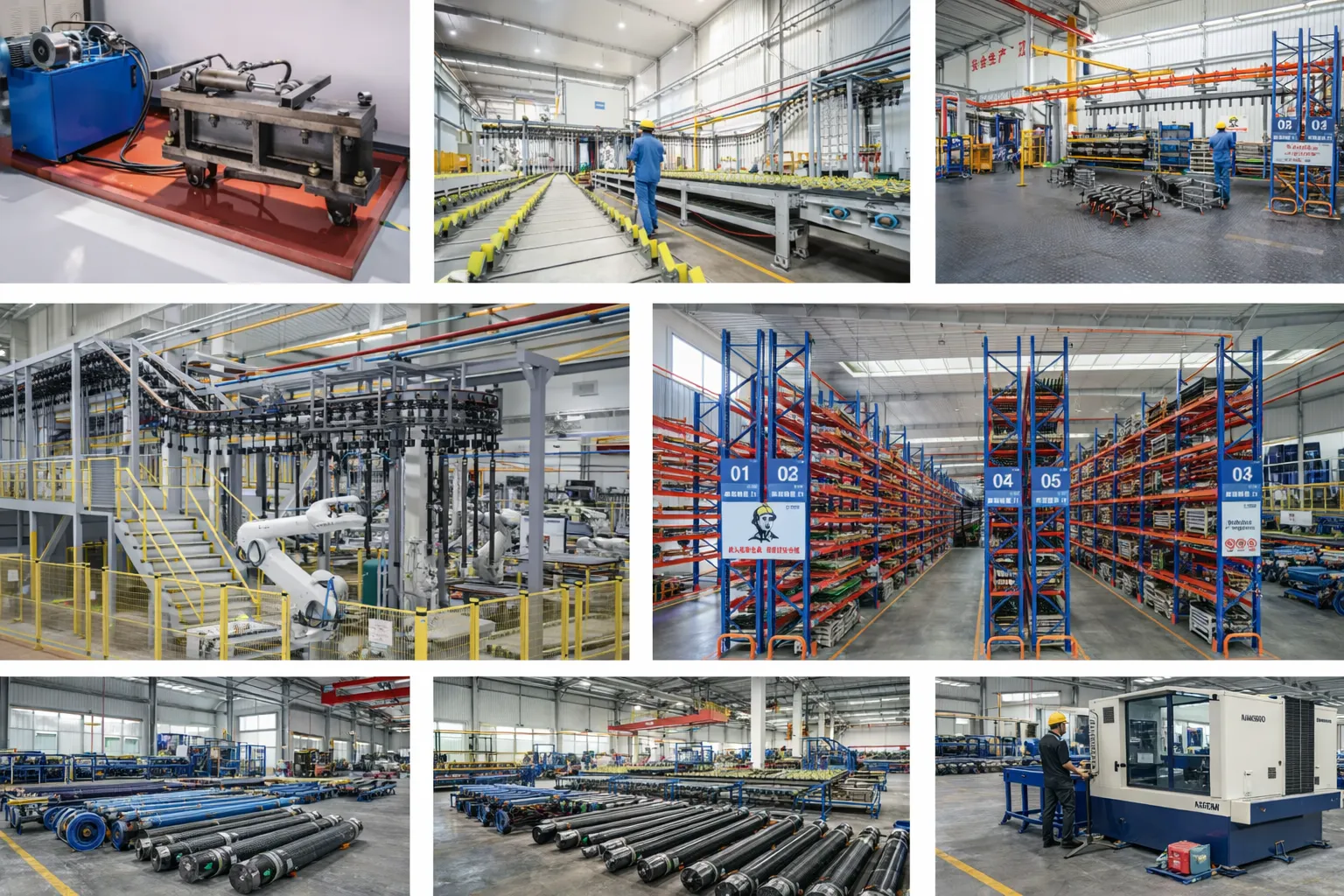
A superior engineering blueprint means nothing without flawless physical execution. We maintain total, uncompromising control over the manufacturing lifecycle of our hydraulic components. From the moment the raw 42CrMo steel billet arrives at our heavy machining facility, it undergoes multi-directional ultrasonic non-destructive testing (NDT) to detect any microscopic internal voids, porosity, or inclusions. Following the heavy forging process, the cylinder blocks are quenched and tempered in computer-controlled furnaces to achieve the perfect metallurgical balance of core toughness and surface hardness.
Our deep hole boring and CNC machining centers operate with micron-level tolerances. We execute specialized skiving and roller burnishing, followed by precision honing, to achieve an internal bore surface finish of Ra 0.2 micrometers. This mirror-like finish is crucial for avoiding seal wear under high velocity. Assembly is conducted in climate-controlled, positive-pressure clean rooms to prevent airborne particulate contamination, which is the primary enemy of highly sensitive servo valves.
Before any cylinder is authorized for shipping, it is subjected to a one hundred percent rigorous performance evaluation. We conduct extreme static pressure holding tests at 150% of the rated maximum operating pressure to guarantee absolute zero internal fluid bypass or external leakage. We dynamically plot friction curves digitally to certify that the cylinder will respond faithfully to minute servo commands. Every single unit is laser-engraved with a unique serial number, offering full material traceability and simplifying future requests for hydraulic cylinder repair or seal kit replacements.
Expansive Typical Industry Applications
While the main screw-down unit is specifically tailored for the grueling environment of metallurgy and flat rolling mills, the core technology—combining extreme structural push force with micrometer precision—translates beautifully to other heavy industries. When plant managers demand the most resilient actuators to prevent catastrophic failures, they turn to our engineering expertise.
- Metallurgy & Heavy Manufacturing: Hot strip mills, cold reversing mills, heavy plate mills, continuous casting oscillation stations, and heavy open-die forging presses.
- Mining & Extraction: High-load gyratory rock crushers, massive haul truck suspension struts, and specialized tunnel boring machine (TBM) steering systems. Discover how our forged strength supports heavy extraction in the Mining Industry.
- Infrastructure Development: Massive bridge-building launch gantries, heavy piling rigs, and extreme-duty excavators that require an unfailing lift cylinder to ensure operational safety. Learn more about our solutions for the Construction Machinery Industry.
- Plastics & Rubber Processing: Large tonnage injection molding machines that require precise mold clamping force without platen deflection or stretching.
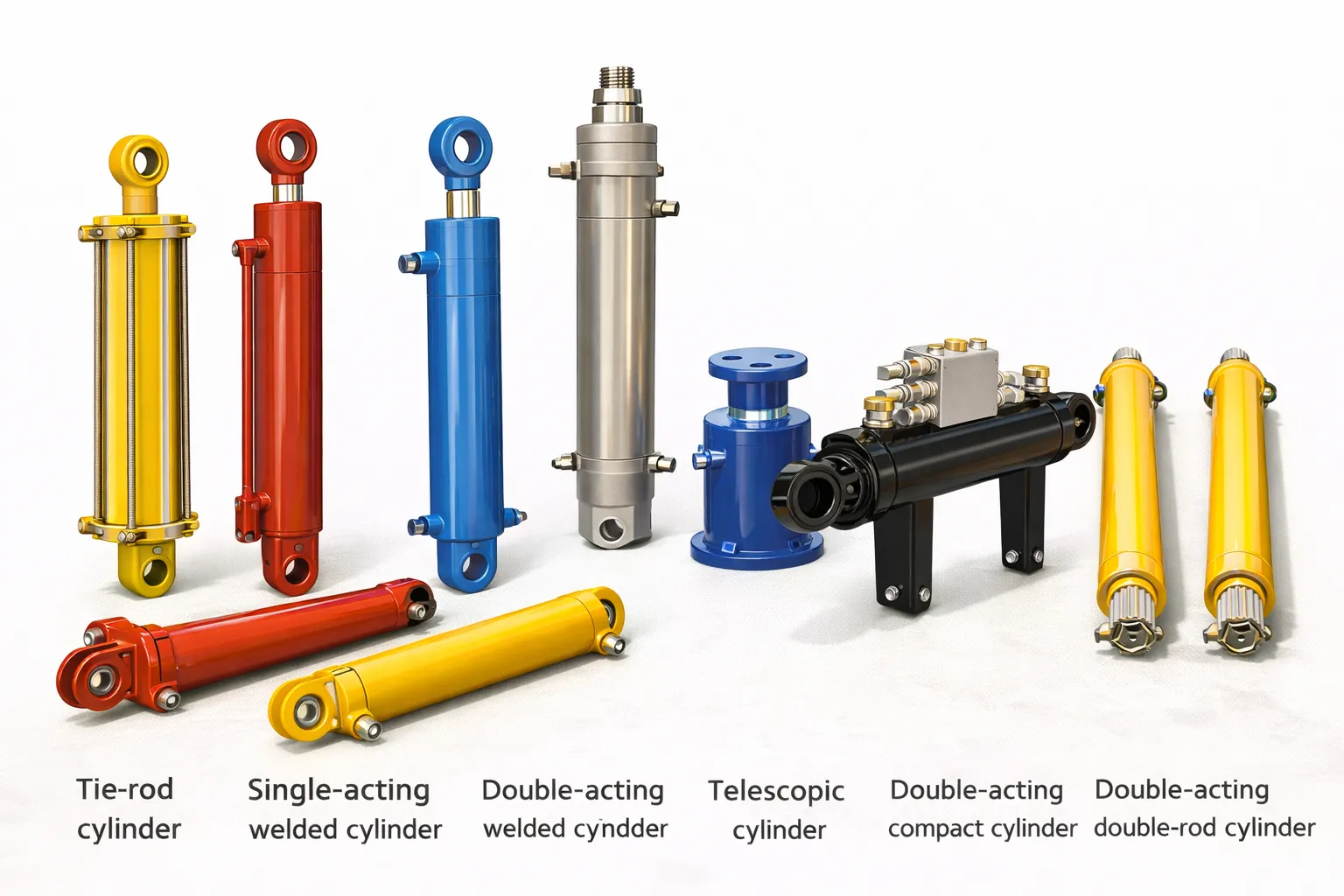
- Specialized Custom Scenarios: Aerospace structural testing rigs, hydroelectric dam spillway gate controls, and specialized single acting hydraulic cylinder applications requiring massive one-way tonnage and fail-safe holding.
Comparative Analysis: Standard Cylinders vs. Our High-Performance Actuators
To truly appreciate the value of an optimized fluid power system designed for AGC loops, it is essential to compare our engineered solutions directly against generic heavy-duty cylinders that are often mistakenly applied in severe metallurgical settings. The cost of a cheap cylinder is paid continuously through unplanned downtime.
| Feature / Attribute | Standard Heavy-Duty Cylinder | Our High-Performance Cylinder |
|---|---|---|
| Cylinder Body Construction | Cold-drawn seamless steel tube (welded flanges). | Ultra-thick one-piece 42CrMo forging (no welds). |
| Under Peak Load Behavior | Highly prone to radial expansion (yielding) and accuracy loss. | Zero mechanical breathing; total structural force transfer. |
| Rod Surface Protection | Standard Hard Chrome Plating (susceptible to micro-cracking). | Advanced Ceramic Coating (Extreme wear and scale resistance). |
| Dynamic Friction Response | Prone to stick-slip at micro-adjustments, causing gauge errors. | Ultra-low friction PTFE stepping seals; completely smooth motion. |
| Maintenance Frequency | Frequent seal replacements and mid-campaign breakdowns. | Extended multi-year lifecycle, drastically increasing plant uptime. |
Global Success: 5 Real-World Case Studies in East Asia
Engineering theory is only proven true on the factory floor. Our commitment to resolving the most complex hydraulic challenges has made us a preferred technical partner in South Korea, Japan, and Taiwan. Here are five documented cases where our technology transformed operational efficiency.
1. Hot Strip Mill Gauge Resolution – Pohang, South Korea
Date: October 2024
Client Profile: A Tier-1 automotive high-strength steel producer operating a continuous hot strip mill.
The Challenge: The roughing stands experienced catastrophic yielding on their OEM cylinders due to the extreme hardness of the newer steel alloys. The cylinder expansion caused massive internal bypass leakage and rejected coils.
How they found us: The plant’s procurement director submitted an inquiry via our website after searching for custom heavy forging capabilities.
The Result: We designed an oversized, ultra-thick walled 42CrMo screw-down cylinder. The absolute rigidity of the forged body completely eliminated the yielding issue. Gauge deviation dropped to a microscopic 0.02mm.
“The structural integrity of these custom forged units is unmatched. They handled our peak tonnage effortlessly without breathing. The technical support during commissioning was exceptional.” — Mr. Kang, Chief Mechanical Engineer
2. Battling Heat and Scale – Kitakyushu, Japan
Date: February 2025
Client Profile: A heavy plate mill producing thick structural steel for the shipbuilding industry.
The Challenge: Extreme ambient radiant heat and abrasive flying iron scale were causing rapid corrosion and peeling of the hard chrome plating on the cylinders, destroying the main seals every four months.
How they found us: Introduced through a metallurgical machinery consultant specializing in advanced hydraulic parts.
The Result: By substituting the standard rods with our advanced ceramic-coated actuators and FKM high-temp seals, continuous operation time was extended past 18 months without any signs of rod degradation or fluid leakage.
“The plasma ceramic technology is a total game-changer for our maintenance schedules. We have entirely eliminated mid-campaign cylinder swaps, saving a fortune in downtime.” — T. Tanaka, Lead Maintenance Manager
3. Eradicating Stiction in Aluminum Rolling – Ulsan, South Korea
Date: May 2024
Client Profile: An advanced non-ferrous cold rolling facility producing ultra-thin battery foils.
The Challenge: Stick-slip behavior in the bottom AGC cylinders caused surface chatter marks and tearing on high-value aluminum foil runs, rendering whole sections unsellable.
How they found us: A referral from a hydraulic system integrator who utilizes our specific low-friction configurations for precision upgrades.
The Result: We implemented our ultra-low friction PTFE seal package and customized the servo geometry. The cylinders now respond cleanly to 50Hz signals without dragging. Foil tearing incidents dropped by 94%.
“Friction was our biggest enemy on the cold line. These custom units glide with perfect responsiveness. The surface finish of our aluminum products is now world-class.” — S. Lee, Quality Assurance Head
4. Rapid Emergency OEM Replacement – Incheon, South Korea
Date: December 2024
Client Profile: A specialized copper alloy reversing mill.
The Challenge: A massive 20-year-old European cylinder body developed a critical fatigue crack, halting all production. The original manufacturer quoted an unacceptable 8-month lead time for a replacement.
How they found us: The plant’s emergency response team reached out via our web portal looking for rapid manufacturing capabilities.
The Result: Leveraging our in-house forging stock, we reverse-engineered the exact flange and port mapping, delivering a superior forged drop-in replacement within 45 days. The highly competitive pricing allowed the plant to order a spare unit simultaneously.
“Fast engineering turnaround without compromising the forged integrity. The drop-in fit was exact, and the performance actually exceeds the original OEM specs.” — Plant Operations Director
5. Upgrading Mill Tonnage Capacity – Busan, South Korea
Date: July 2025
Client Profile: A medium-scale structural steel mill modernizing their product line.
The Challenge: The mill needed to handle higher strength alloys requiring modern AGC capabilities, but lacked the physical housing space to install larger diameter cylinders to achieve the necessary increased forces.
How they found us: Reached out after viewing our technical webinars on hydraulic system modernization and pressure optimization.
The Result: We designed a compact, ultra-high pressure (450 Bar) hybrid actuator that fit flawlessly into their legacy mill stands but delivered 30% more screw-down force, saving them from modifying the massive steel housing.
“They didn’t just sell us a cylinder; they re-engineered the hydraulic dynamics to fit our old frames. Brilliant execution that saved us millions compared to a full mill replacement.” — Chief Project Engineer
Frequently Asked Questions (B2B Engineering)
To further assist procurement officers and maintenance engineers in their decision-making process, we have compiled the most common technical inquiries regarding our high-performance rolling mill setups and manufacturing capabilities.
1. What is the typical lead time for a custom Main Screw-down Cylinder?
Because we manage the entire forging, CNC machining, ceramic coating, and testing process autonomously in-house, our lead times are highly competitive. Depending on the required massive bore size and material availability, custom AGC cylinders typically ship within 10 to 14 weeks. Expedited breakdown options are available for emergency situations in South Korea and Japan.
2. Can you precisely match the footprint of our existing European OEM cylinders?
Yes. A significant portion of our business involves engineering direct drop-in replacements. We meticulously match the exact mounting trunnions, flange dimensions, hydraulic manifold port locations, and internal LVDT sensor interfaces to ensure you will not need to modify your mill housing or high-pressure piping during installation.
3. Why should we invest in ceramic coating over traditional hard chrome?
In the incredibly hot, acidic, and scale-heavy environment of a rolling mill, hard chrome inevitably develops structural micro-cracks, leading to underlying rust and eventual peeling. Plasma-sprayed ceramic creates an incredibly hard, non-porous surface that is chemically inert and completely withstands high temperatures, extending your rod and seal life dramatically.
4. How is the initial premium hydraulic cylinder price justified for this specific upgrade?
While our advanced 42CrMo forged and ceramic-coated cylinders represent a higher initial capital investment over standard industrial tubes, the ROI is realized exceptionally fast. By definitively eliminating cylinder yielding and extending maintenance cycles from months to multiple years, you drastically reduce unplanned plant downtime, eliminate hourly production losses, and significantly improve your prime metal yield percentage.
5. Do you provide services for fixing hydraulic cylinders from other manufacturers?
Absolutely. Our heavy engineering division excels at comprehensively fixing hydraulic cylinders and refurbishing older units. We can tear down existing damaged cylinders, upgrade the internal seals to our low-friction PTFE packages, apply ceramic coatings to worn-out rods, re-hone the inner bore, and return an actuator that performs significantly better and longer than the original OEM specification.
6. What is the difference between a single acting hydraulic cylinder and a double acting hydraulic cylinder in this context?
A single acting hydraulic cylinder applies force in only one direction and relies on external gravity or massive mechanical springs to return to its original position. The AGC process in a rolling mill requires active, forceful, and instantaneous control in both downward pressure and upward retraction to continuously and dynamically adjust the roll gap. Therefore, a specialized double-acting servo piston design is absolutely mandatory.
7. Are spare hydraulic cylinder components readily available for future maintenance?
Yes, we supply a complete, traceable range of precise hydraulic cylinder components for all our manufactured units based on their unique serial numbers. This includes custom PTFE seal kits, replacement high-temp guide bands, internal position sensors, and servo-valve mounting blocks. This guarantees your local maintenance team has exactly what is needed for rapid, scheduled plant overhauls.
8. Do you provide comprehensive factory testing documentation?
Yes, testing is paramount. Every cylinder is subjected to 150% static over-pressure testing to guarantee absolute zero internal fluid bypass and external leakage. We provide full digital dossiers including 42CrMo material heat certificates, ultrasonic NDT reports, and dynamic friction testing charts with every single delivery.
Upgrade Your Mill’s Core Actuation Today
Do not let inadequate, standard hydraulic systems bottleneck the dimensional quality and output volume of your rolling mill. Partner with an expert manufacturer who deeply understands the intricate relationship between high-pressure fluid power and metallurgical success. By investing in our highly engineered, forged main screw-down technology, you are directly securing the future reliability, precision, and profitability of your steel production lines.
Provide us with your current cylinder specifications or operational pain points, and we will deliver a customized, high-yield solution.
Editor: Cxm