Pitch Cylinder for Wind Turbine
Precision-engineered to eliminate servo drift, our advanced actuation systems deliver flawless blade angle adjustment and unmatched fatigue resistance in extreme offshore and low-temperature environments.
Product Overview & Industrial Value
In the rapidly expanding sector of global renewable energy generation, the structural safety and financial viability of a wind turbine depend entirely on its internal fluid power mechanics. Deep within the rotating nacelle, the pitch control system operates as the primary safeguard and efficiency regulator for the massive aerodynamic rotor blades. The central component tasked with this critical actuation is the pitch cylinder. Its fundamental purpose is to continuously and dynamically adjust the blade angle relative to the oncoming wind vector. By doing so, the pitch hydraulic cylinder ensures that the turbine captures the maximum possible kinetic energy during fluctuating wind speeds. Furthermore, during catastrophic weather events such as typhoons, or in the event of a sudden grid disconnection, this system executes an emergency aerodynamic braking maneuver by rapidly feathering the blades to a neutral 90-degree position to prevent the entire tower structure from experiencing a fatal mechanical overload.
As a seasoned hydraulic cylinder manufacturer with over two decades of dedicated engineering expertise, we recognize that standard industrial fluid power components simply cannot survive the relentless punishment of wind power applications. An offshore wind farm presents one of the most hostile operating environments on Earth: continuous multidirectional vibrations, violent aerodynamic shear forces, extreme low temperatures, and pervasive, highly corrosive salt moisture. When generic hydraulic parts are deployed in these conditions, they rapidly succumb to rod pitting, seal degradation, and devastating internal fluid bypass. Our unique positioning in the global market is built upon our refusal to compromise on metallurgical science and servo-hydraulic precision. We engineer heavy-duty double acting hydraulic cylinder solutions specifically tailored to completely eradicate these failure modes.
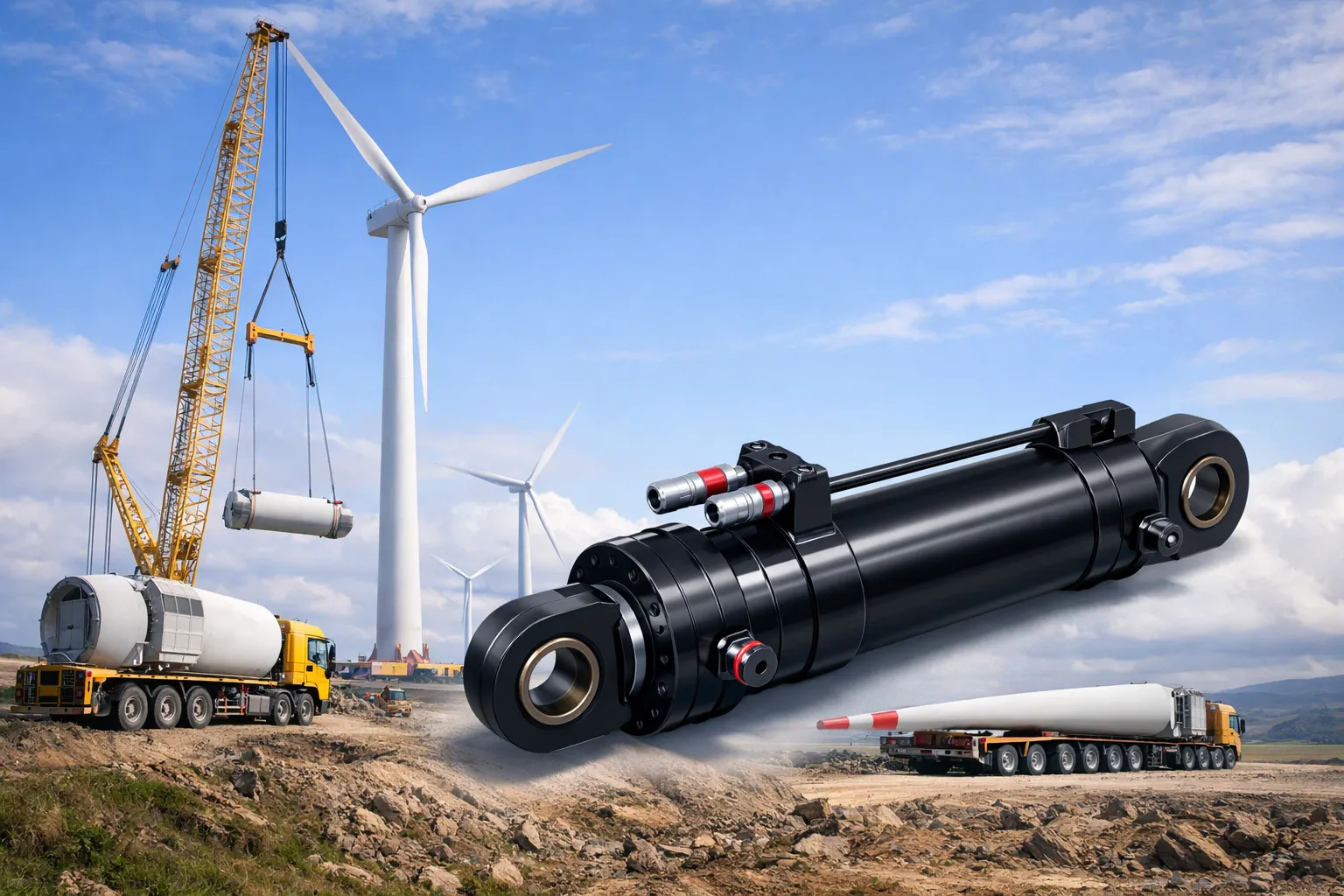
By integrating ultra-low friction composite seals, advanced multi-layer surface treatments, and high-resolution internal feedback sensors, our pitch cylinder systems offer a seamless closed-loop control experience. Whether you are erecting next-generation multi-megawatt offshore platforms or retrofitting an aging onshore alpine fleet, our highly optimized fluid power solutions drastically reduce your levelized cost of energy.
Technical Parameters & Customization Capabilities
Integrating a high-pressure actuation system into a constrained turbine hub requires absolute dimensional accuracy and robust technical specifications. We maintain a highly flexible manufacturing pipeline, allowing us to perfectly tailor our pitch cylinder dimensions to match your specific rotor hub layout. The table below details the primary engineering parameters and the extensive customization envelope available for our wind energy series.
| Technical Parameter | Standard Specification | Engineering Context & Options |
|---|---|---|
| Target Industry | Wind Power Generation | Optimized for both onshore alpine and offshore marine environments. |
| Equipment Category | Wind Turbine | Compatible with 1.5MW up to ultra-large 15MW+ turbine classes. |
| Subsystem Integration | Pitch System | Mounted deep within the rotating hub manifold. |
| Product Designation Name | Pitch cylinder | The primary actuator controlling aerodynamic blade rotation. |
| Operating Action | Double acting hydraulic cylinder | Provides active, highly pressurized force during both extension and retraction. |
| Specific Structure Type | Servo piston cylinder | Engineered for high-frequency, micron-level positional adjustments. |
| Manufacturing Structure | Welded construction | Eliminates tie-rod stretching and vibration failures under high dynamic loads. |
| Material System | High-strength alloy steel | Forged 42CrMo or equivalent high-yield materials for maximum fatigue life. |
| Surface Treatment | Nickel plated | Provides a C5-M marine-grade anti-corrosion barrier, vastly superior to standard chrome. |
| Environmental Rating | Low temperature + Moisture + Fatigue | Guaranteed leak-free performance from freezing -40 C up to +70 C. |
| Working Condition | Adjust blade angle | Translates linear force into precise rotational aerodynamic control. |
| Typical Failure Mode Mitigated | Servo drift | Completely prevents internal fluid bypass that leads to unintended blade rotation. |
| Recommended Configuration | Servo seal + Magnetostrictive feedback | Combines zero-leakage, ultra-low friction movement with absolute position accuracy. |
Operational Mechanics: How This Pitch Cylinder Works
To truly appreciate the precision engineering behind a pitch hydraulic cylinder, one must understand the complex fluid dynamics and electro-hydraulic control logic occurring within the nacelle. This mechanism is not a rudimentary push-pull device; it is a highly responsive closed-loop servo system. The process initiates when the turbine’s external anemometer detects a shift in wind speed. The central Programmable Logic Controller (PLC) immediately calculates the new optimal aerodynamic angle for the blades to maintain the generator’s ideal rotational speed. This digital command is dispatched to a high-speed proportional directional control valve mounted directly onto the hydraulic cylinder manifold.
This servo valve accurately meters highly pressurized hydraulic fluid into either the cap end or the rod end of the cylinder chamber. As fluid enters, it generates immense differential pressure against the hydraulic cylinder piston, forcing the massive forged rod to extend or retract. Because the rod eye is mechanically connected to the root bearing of the blade, this linear movement is directly translated into the rotational pitching of the entire turbine blade. During severe wind gusts, the aerodynamic forces attempting to back-drive the blade are monumental.
The greatest challenge in this operation is maintaining absolute positional integrity. Standard industrial cylinders inevitably suffer from a critical flaw known as servo drift, where microscopic internal fluid bypass allows the blade to slowly deviate from its set angle. To permanently resolve this, our engineered pitch cylinder features a high-resolution magnetostrictive linear displacement sensor completely encapsulated within the deeply gun-drilled, hollow core of the piston rod. As the hydraulic cylinder components move, this non-contact sensor relays absolute, micron-level position data back to the PLC in real-time. If wind turbulence attempts to force the blade out of alignment, the closed-loop system detects the micro-movement instantly, prompting the servo valve to adjust fluid pressure and rigidly lock the blade precisely in place.
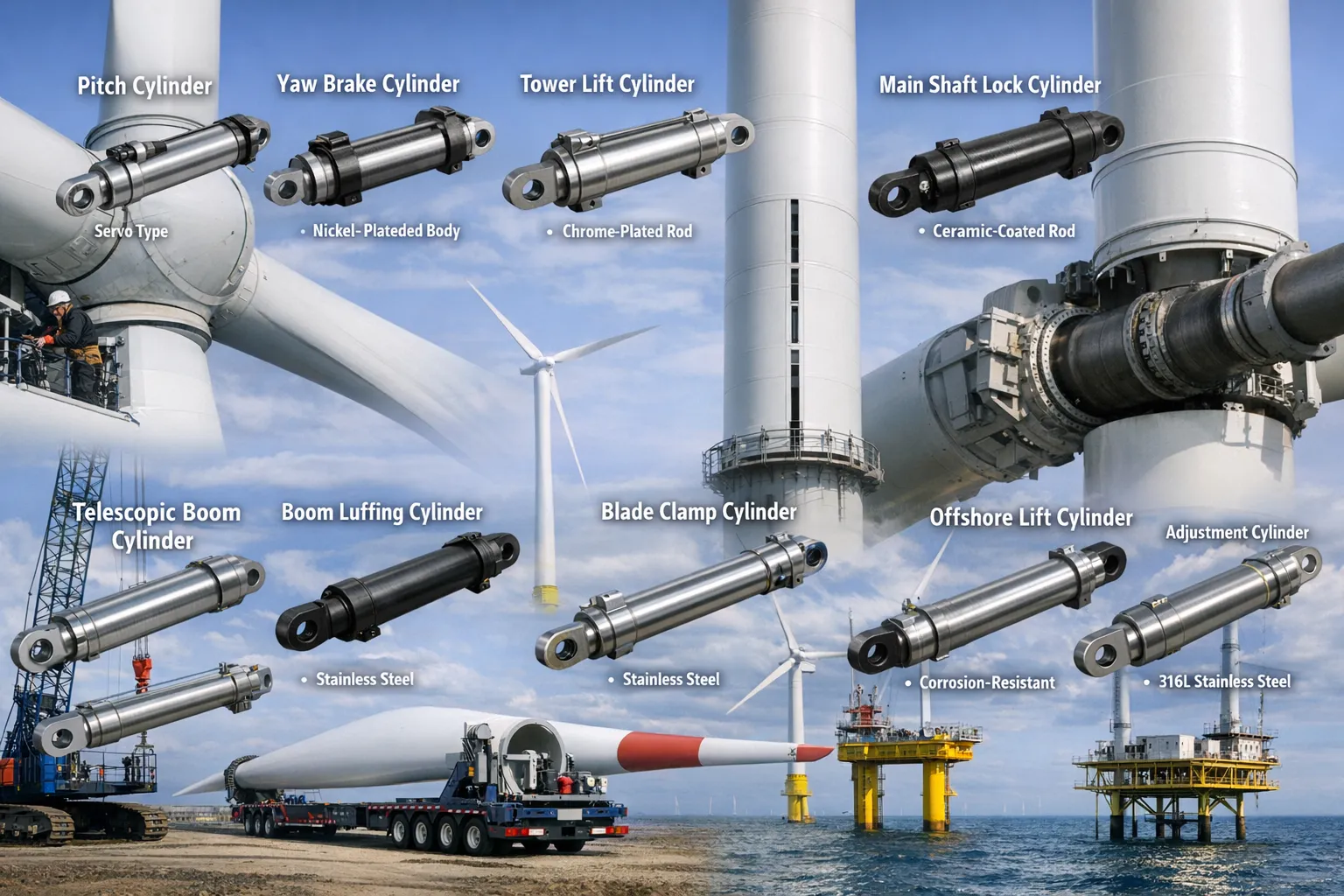
Seamless Direct Replacement for Leading Brands
Wind farm operators and maintenance engineering firms frequently face critical supply chain bottlenecks when sourcing replacement hydraulic parts. Original Equipment Manufacturers (OEMs) often dictate exorbitant markups and suffer from inflexible, multi-month lead times. To alleviate this burden, our reverse-engineering division has meticulously dimensioned our pitch actuation systems to serve as seamless, drop-in replacements for standard global fluid power brands.
We confidently supply customized units that flawlessly match the mounting trunnions, hydraulic port configurations, stroke lengths, and sensor communication protocols of equipment originally manufactured by industry giants such as Bosch Rexroth, Parker Hannifin, Moog, Eaton, and Hydac. By integrating our independently manufactured solutions, maintenance crews tasked with fixing hydraulic cylinders in the field can perform exact hardware swaps without modifying the turbine hub structure or recalibrating the PLC software.
Disclaimer: The mention of these specific third-party brands is strictly intended for the purpose of demonstrating dimensional compatibility, technical cross-referencing, and facilitating rapid maintenance selection for engineers. It does not imply any direct affiliation, partnership, nor does it constitute trademark infringement against the respective trademark owners. We provide our own uniquely engineered alternative solutions at a highly competitive hydraulic cylinder price.
Five Core Technical Advantages
What fundamentally distinguishes a premium wind turbine pitch hydraulic cylinder from a generic off-the-shelf actuator? It is an uncompromising dedication to solving the specific tribological and metallurgical challenges inherent to the wind energy sector. Here are five core engineering advantages that establish our product’s superiority:
1. Ultra-Low Friction Servo Sealing Technology
To achieve instantaneous response to servo valve commands without the destructive stick-slip juddering common at low velocities, we utilize a proprietary arrangement of PTFE-blended step seals and heavy-duty elastomeric energizers. This advanced ultra-low friction architecture ensures incredibly smooth micro-adjustments, drastically reduces kinetic wear on the internal hydraulic parts, and establishes a zero-leakage barrier that completely prevents servo drift.
2. High-Rigidity Welded Alloy Construction
A wind turbine hub endures violent, multidirectional aerodynamic vibrations. Standard tie-rod cylinders quickly stretch and vibrate apart under these torsional loads. We manufacture our pitch cylinder using deep-penetration automated robotic welding to fuse forged alloy steel components. This highly rigid monolithic structure provides exceptional impact toughness, completely preventing fatigue micro-fractures in the pressure vessel across millions of load cycles.
3. Optimized Thermal Stability and Extreme Cold Resilience
Fluid viscosity and seal elasticity change dramatically with temperature. Standard elastomers shrink and leak hydraulic fluid during freezing winters. By specifying aerospace-grade low-temperature seal compounds and optimizing internal fluid clearances through rigorous thermal modeling, our cylinders maintain perfect pressure retention and frictionless gliding in sub-zero alpine environments down to -40 Celsius.
4. Advanced Nickel Plated Surface Treatment
Coastal and offshore wind farms present a lethal combination of corrosive salt spray and high ambient humidity. Standard hard chrome plating eventually develops micro-cracks, leading to catastrophic rust and seal shredding. We employ an advanced multi-layer electroless nickel plated process that creates an impenetrable, pore-free barrier on the rod surface. This routinely surpasses 1,000-hour neutral salt spray tests, achieving strict C5-M marine anti-corrosion ratings.
5. Integrated Magnetostrictive Precision Sensing
External linear potentiometers are highly vulnerable to physical damage and moisture ingress. By embedding high-speed magnetostrictive sensors directly into the deeply bored core of the piston rod, we permanently shield the sensitive electronics from the outside environment. Operating on non-contact magnetic principles, the sensor suffers zero mechanical wear, providing flawless, absolute positional feedback for the entire 20-year lifespan of the turbine.
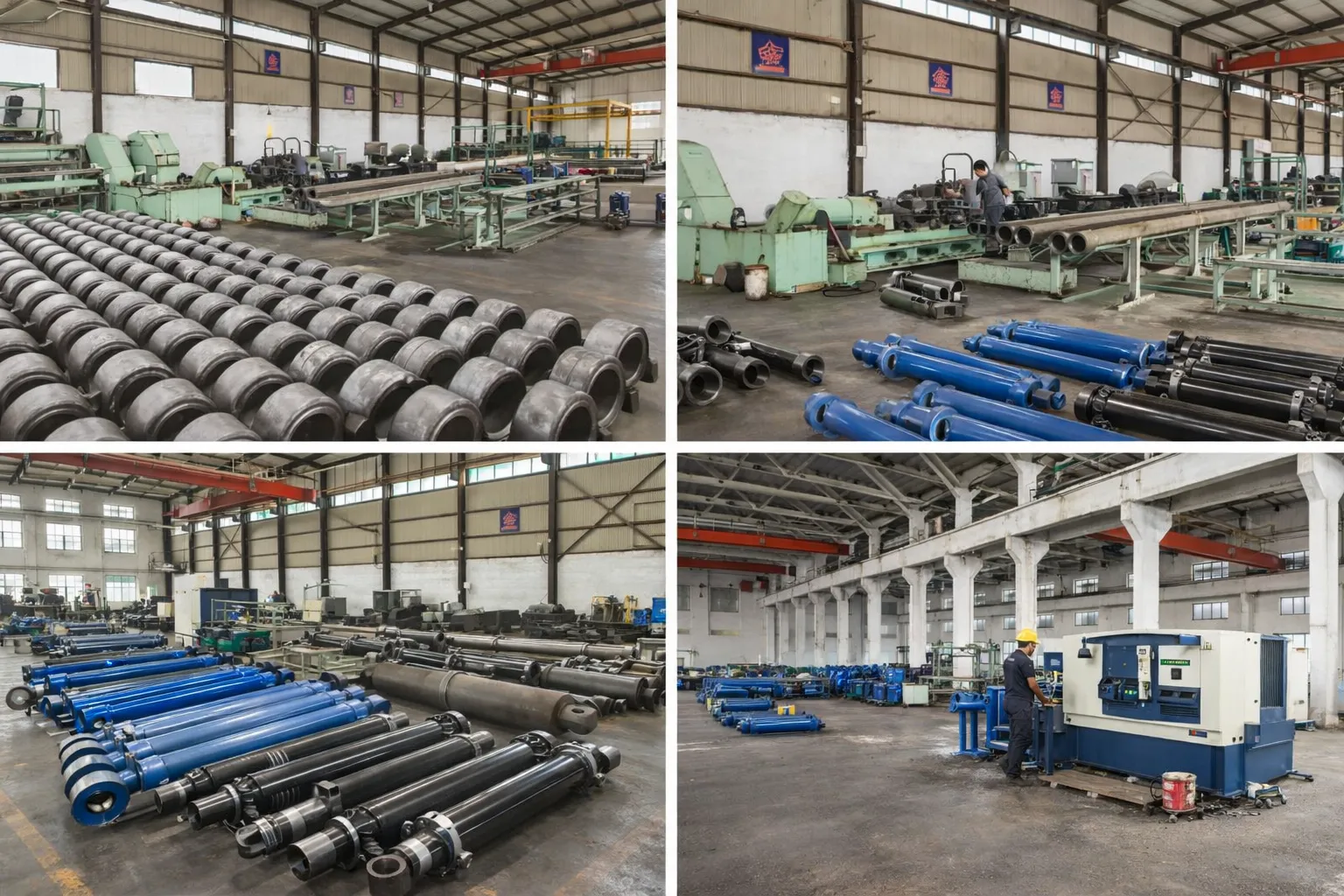
Autonomous Manufacturing & Relentless Quality Control
The zero-defect reliability required by the renewable energy sector dictates that a hydraulic cylinder manufacturer must maintain absolute mastery over their production pipeline. Operating as a vertically integrated facility, we do not outsource critical mechanical operations. The manufacturing journey begins with stringent metallurgical analysis and ultrasonic non-destructive testing (NDT) of raw steel forgings to ensure no internal microscopic voids exist. Our high-precision multi-axis CNC turning and milling centers machine the hydraulic cylinder components to single-digit micron tolerances, followed by deep bore honing to achieve a mirror-like internal finish.
Because microscopic particulate contamination will instantly destroy sensitive servo valves and PTFE seals, our assembly processes are heavily regulated. Following the nickel plating treatment, all components undergo multi-stage ultrasonic chemical cleaning. Final assembly of the pitch cylinder occurs exclusively within a positively pressurized, climate-controlled cleanroom.
The cornerstone of our engineering promise is an uncompromising 100 percent Factory Acceptance Testing (FAT) protocol. Every single completed unit is mounted on an automated test rig. We subject the cylinders to hydrostatic proof testing at 150 percent of their maximum rated working pressure, conduct rigorous internal and external leakage verifications, and perform dynamic high-frequency friction mapping to calibrate the magnetostrictive sensor. Every passed unit receives a laser-engraved serial number, establishing a permanent digital trace back to its specific batch of raw materials and testing curves.
Broad Spectrum of Industry Applications
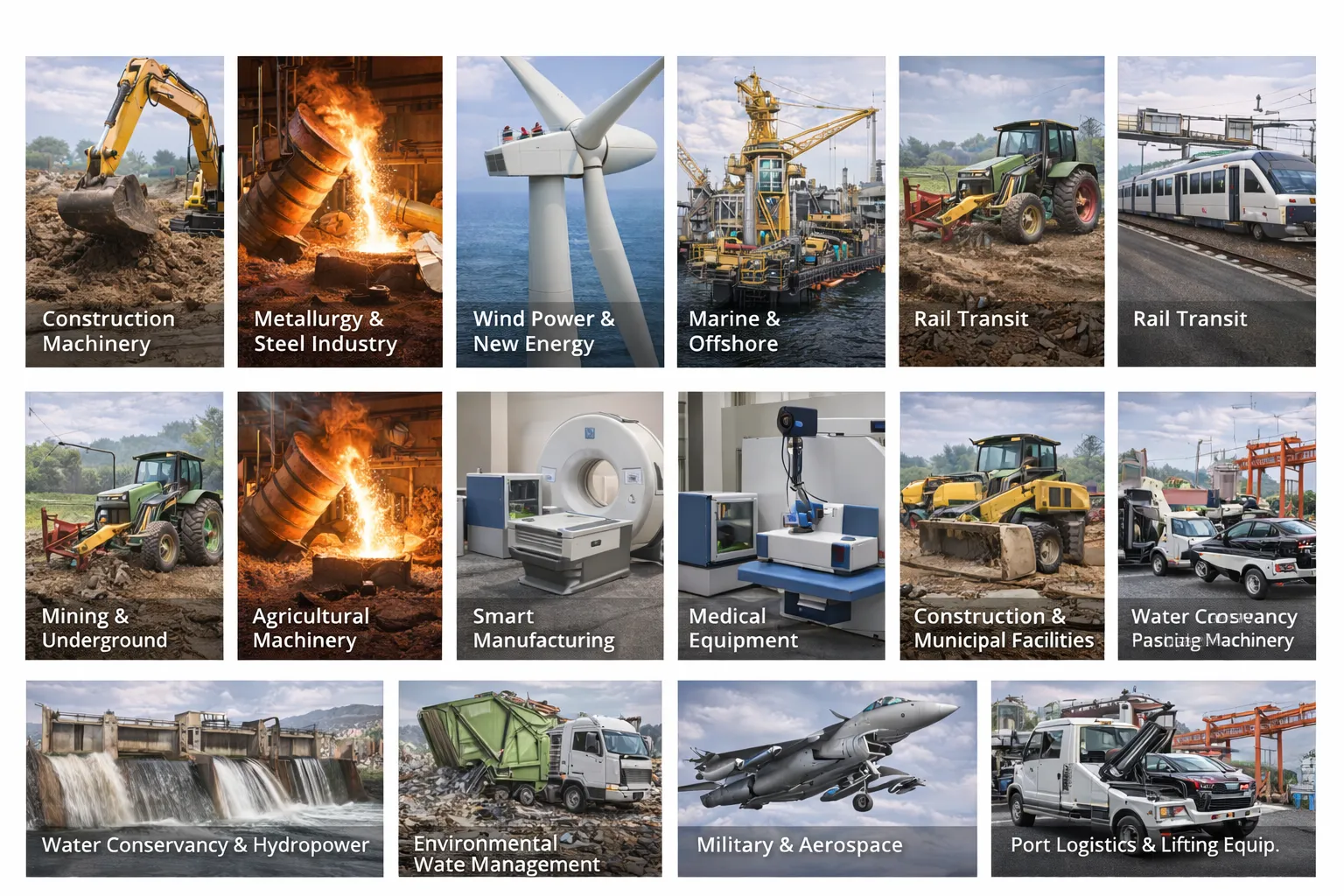
While the highly specialized servo-piston architecture detailed above represents the ultimate solution for wind energy pitch and yaw control, the foundational fluid power engineering and extreme fatigue resistance we have developed translate brilliantly across a multitude of heavy-duty industrial sectors. When a commercial environment demands absolute reliability under extreme force, our versatile technology consistently over-delivers. Discover more in our comprehensive hydraulic cylinder product category.
- Metallurgical and Heavy Iron Manufacturing: We engineer extreme heat-resistant, high-force actuators for electric arc furnace tilting, continuous casting lines, and steel rolling mill automatic gauge controls. Explore our solutions for the metallurgical and iron industry.
- Earthmoving and Subterranean Extraction: Highly durable, impact-resistant hydraulic rams specifically tailored to survive the extreme dust, flying rock debris, and brutal shock loads prevalent in the mining industry.
- Heavy Infrastructure and Building: Precision steering, robust boom extensions, and primary lift cylinder applications essential for the safety and efficiency of mobile cranes and earthmoving equipment within the construction machinery industry.
- Plastics and Rubber Machinery: High-speed injection molding clamping cylinders requiring exact positional repetition and immense locking force over millions of cycles.
- Material Handling and Port Logistics: High-cycle automated lifting platforms, ship-to-shore crane spreaders, and heavy maritime port container handling equipment.
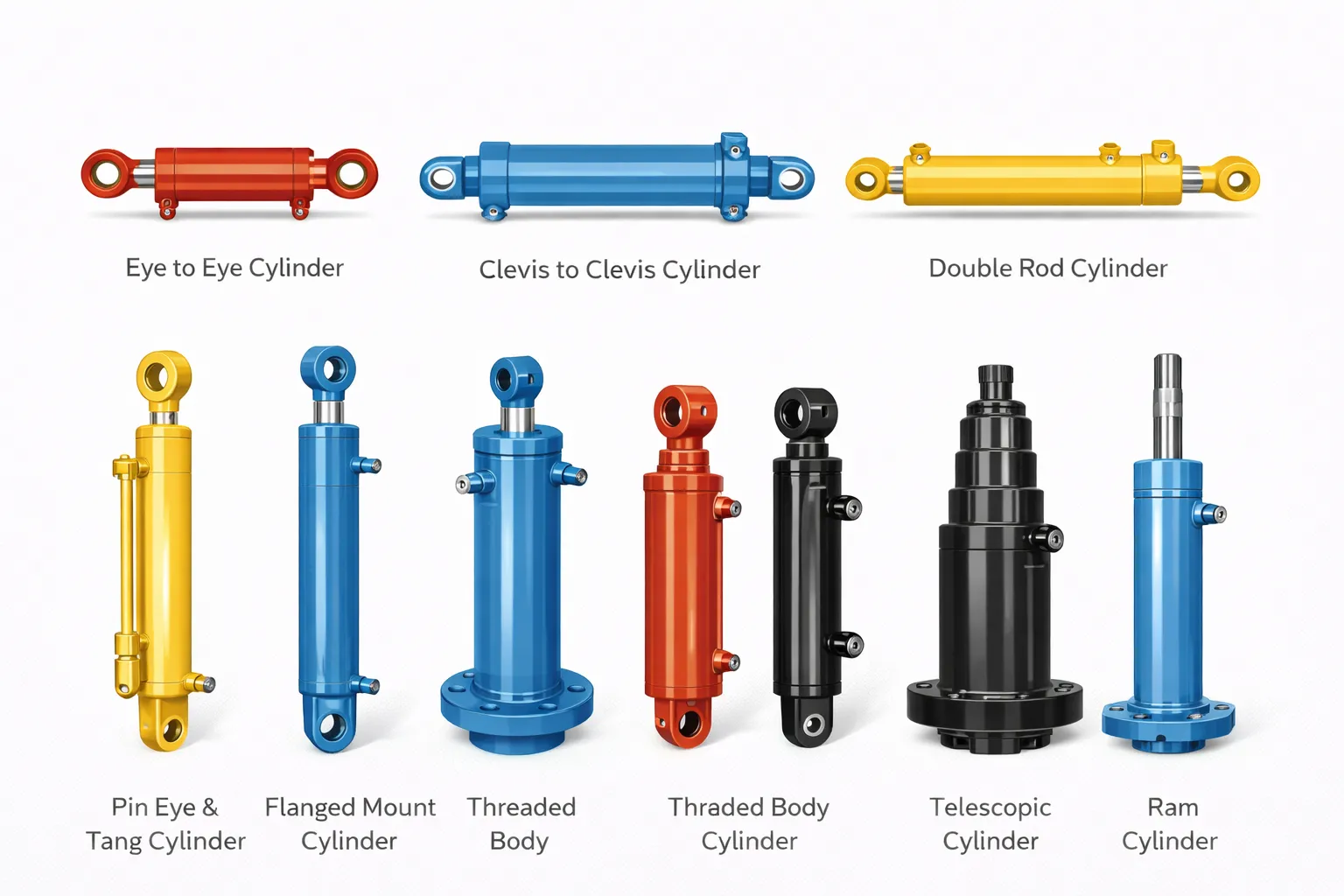
Comparative Analysis: Standard Actuators vs. Our Pitch Cylinders
To truly comprehend the return on investment when upgrading an aging turbine fleet, one must look beyond the initial hydraulic cylinder price and evaluate long-term operational survivability. The following comparative matrix clearly highlights why investing in purpose-built engineering drastically reduces your total cost of ownership.
| Engineering Feature | Standard Market Hydraulic Cylinder | Our High-Performance Pitch Cylinder |
|---|---|---|
| Sealing Tribology | Standard Polyurethane (PU); high kinetic friction causing erratic stick-slip under micro-movements. | PTFE-based composite servo seals; ultra-low friction, ensuring zero stick-slip response. |
| Position Feedback | External linear encoders; highly susceptible to physical damage, ice buildup, and severe servo drift. | Internally mounted, fully encapsulated absolute magnetostrictive sensor; complete immunity to shock. |
| Anti-Corrosion Surface | Standard 20-micron hard chrome; frequently pits, flakes, and rusts rapidly in marine salt-spray. | Multi-layer nickel plated finish; easily passes and exceeds 1,000-hour severe salt-spray C5-M testing. |
| Fatigue Failure Resistance | Standard threaded tie-rod connections; highly vulnerable to loosening and catastrophic fatigue failure. | Fully welded high-strength alloy construction; deeply engineered via FEA for infinite fatigue life. |
| Cold Weather Operation | Seals harden and leak profusely when ambient temperatures drop below -15 Celsius. | Aerospace-grade low-temperature elastomeric compounds remain fully pliable down to -40 Celsius. |
Real-World Case Studies: Validating Engineering Excellence
Theoretical engineering must be rigorously validated by real-world field practice. Over the past decade, our industrial footprint has expanded heavily across East Asia, where extreme coastal weather and harsh mountainous environments demand the absolute pinnacle of fluid power reliability. Here are five documented cases where our solutions drove tangible, massive operational improvements for our clients.
Case 1: Offshore Wind Farm Retrofit – Jeju Island, South Korea
Client: Leading South Korean Renewable Energy Utility Provider
The Challenge: A major 3MW offshore wind turbine fleet was suffering from severe rod corrosion, pitting, and catastrophic seal failure due to relentless oceanic salt spray.
How They Contacted Us: The chief maintenance engineer discovered our robust marine portfolio while specifically searching for corrosion-resistant hydraulic parts online.
The Solution & Result: We replaced the failing European OEM units with our custom nickel-plated pitch hydraulic cylinder systems. After enduring the subsequent severe typhoon season in late 2024, independent metallurgical inspections showed zero pitting or seal degradation. Unscheduled offshore vessel chartering for maintenance was reduced by an impressive 40 percent.
“We were hemorrhaging our operational budget on continuous offshore hydraulic cylinder repair. Switching to these custom nickel-plated units solved our salt-spray corrosion issue completely. The technical team’s grasp on marine metallurgy is exceptional.” — Mr. Park, Lead Offshore Maintenance Manager (October 2024).
Case 2: Eradicating Servo Drift in Cold Climates – Hokkaido, Japan
Client: Independent Onshore Alpine Wind Operator
The Challenge: Continuous blade pitch control failures occurred in sub-zero mountainous environments where ambient winter temperatures frequently plummeted to -30 Celsius, causing massive internal fluid bypass.
How They Contacted Us: We met their procurement team at an international fluid power trade convention in Tokyo and followed up via our digital B2B inquiry portal.
The Solution & Result: The existing seals were freezing and hardening in the severe cold, causing unacceptable servo drift. We deployed a fleet of identical cylinders fitted with aerospace-grade low-temperature PTFE seals and optimized internal fluid porting. The turbines maintained perfect pitch angles throughout two harsh winter seasons without logging a single fault code.
“Our winter megawatt output used to drop significantly because the blades could not maintain the optimal attack angle due to internal leakage. These new cold-weather cylinders eliminated the drift problem entirely. Reliable, highly precise, and incredibly robust.” — K. Tanaka, Operations Director (February 2025).
Case 3: Cost Optimization for Emerging Markets – Coastal Vietnam
Client: Regional EPC (Engineering, Procurement, Construction) Contractor
The Challenge: Procuring highly reliable, marine-grade fluid power systems for a mid-scale 1.5MW coastal wind project in Binh Thuan province while adhering to exceedingly tight emerging market capital constraints.
How They Contacted Us: The EPC contractor reached out directly through our website, seeking a delicate balance between high tropical durability and an aggressive procurement budget.
The Solution & Result: We engineered a standardized, high-volume version of our pitch cylinder that utilized smart manufacturing efficiencies while retaining the vital high-performance core seals and nickel rod treatments. The fluid power portion of the wind project was successfully completed 18 percent under budget and fully on schedule.
“They did not just sell us a product; they provided highly intelligent value engineering. The extremely competitive hydraulic cylinder price combined with superior technical support made our coastal wind project highly profitable.” — Nguyen V. Anh, Project Director (January 2025).
Case 4: Extreme Typhoon Resilience and Structural Reinforcement – Taiwan Strait
Client: Maritime Energy Engineering Consortium
The Challenge: The consortium required absolute guarantees regarding emergency aerodynamic braking (feathering) capabilities during Category 5 typhoons, as previous standard tie-rod cylinders had structurally buckled under the immense wind shear.
How They Contacted Us: A direct, glowing referral from an existing client operating heavy port machinery in the maritime transport sector.
The Solution & Result: We supplied units featuring a deep-penetration welded construction forged from massive alloy steel billets. During Super Typhoon Gaemi, grid power was entirely lost. Our heavy-duty cylinders and pre-charged accumulators automatically forced the massive 80-meter blades into the safe 90-degree feathered position. Post-storm metallurgical inspection revealed zero mechanical deformation or seal blowouts.
“We rely entirely on these cylinders for the survival of the entire multi-million dollar turbine asset. They actuated flawlessly under the most extreme structural stress we have ever recorded.” — Dr. Chen, Chief Structural Engineer (August 2024).
Case 5: Resolving Moisture Interference in External Sensors – Jeolla Province, South Korea
Client: Coastal Wind Farm Operations Firm
The Challenge: High coastal humidity was constantly penetrating the external linear potentiometers on their existing pitch systems, causing electrical short circuits, erratic blade positioning, and continuous PLC error codes.
How They Contacted Us: Reached out via our technical support email requesting a comprehensive solution for sensor modernization and a full fleet component overhaul.
The Solution & Result: We delivered a complete retrofit package featuring our fully encapsulated, internally mounted magnetostrictive sensors. By physically shielding the electronics deep inside the pressurized fluid environment of the hydraulic cylinder piston rod, the design proved completely impervious to the coastal humidity. Electrical sensor faults were reduced to zero.
“Moving the position sensor inside the hydraulic rod was an absolute game-changer. Our system communication errors have vanished, and turbine uptime has never been higher.” — S. Lee, VP of Maintenance Operations (March 2025).
B2B Frequently Asked Questions (FAQ)
We understand that procuring mission-critical fluid power components involves rigorous technical vetting. Below are detailed answers to the most common questions our engineering team addresses during the initial B2B consultation phase.
1. What is the expected maintenance cycle for your pitch hydraulic cylinders?
2. Can you manufacture replacements for obsolete turbine models or perform repairs?
3. What variables influence the hydraulic cylinder price in a custom fleet order?
4. How do you integrate the magnetostrictive sensors, and what output signals are supported?
5. What is the typical lead time for a fleet replacement order to South Korea?
6. Do you supply individual replacement seal kits and spare components?
Secure Your Turbine’s Performance Today
Do not allow inferior fluid power components to jeopardize the reliability, energy yield, and ultimate safety of your renewable assets. As a trusted hydraulic cylinder manufacturer with two decades of heavy-industry expertise, we are ready to supply the ultimate pitch control solution for your wind turbines. Let our engineers review your schematics to provide a targeted, highly competitive technical proposal.
Responsive technical support guaranteed. We typically analyze B2B engineering inquiries and return detailed assessments within 24 hours.
Editor: Cxm