
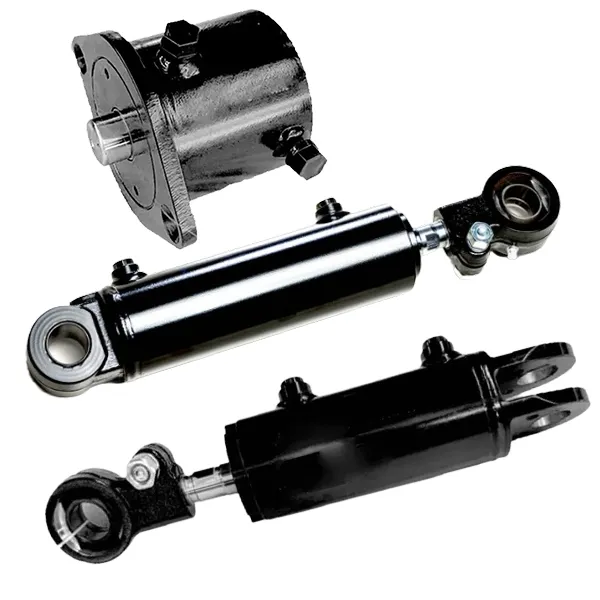
Tractor & Forklift Hydraulic Steering Cylinder — OEM Cross-Industry Power Steering Cylinder
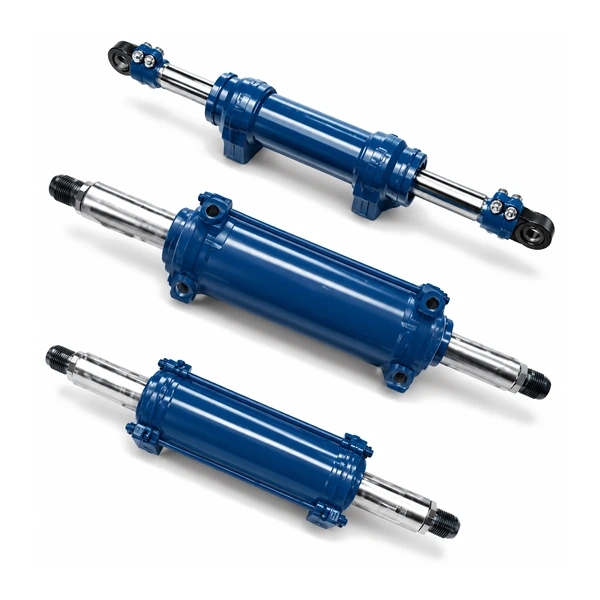
Same Cylinder Principle, Different Engineering Demands
Both tractors and forklifts use a hydrostatic steering system — an orbital (gerotor) valve driven by the steering wheel, connected to a double-acting hydraulic steering cylinder that pushes the steered axle through tie rods. The cylinder architecture is the same. What differs is the severity of the operating conditions, and these differences drive the material and seal choices that determine whether a cylinder lasts 2 years or 10 years in each environment.
| Operating Condition | Forklift (Indoor) | Tractor (Field) |
|---|---|---|
| Ambient Temperature | 15–35°C | -20 to +50°C |
| Contamination Exposure | Low (concrete dust) | Severe (mud, crop residue, chemicals) |
| Vibration Level | Low (smooth floor) | High (rough field, PTO vibration) |
| Oil Cleanliness | ISO 18/15 typical | ISO 21/18 typical |
| Corrosion Risk | Minimal | High (fertiliser, herbicide, moisture) |
| Typical Steering Pressure | 10–16 MPa | 10–20 MPa |
| Steering Load Source | Rear axle weight (~500 kg) | Front axle + implement weight (1–5 t) |
| Maintenance Attention | Regular (fleet service team) | Seasonal (farmer-maintained) |
For tractor applications, Korea Ever-Power specifies the cylinder with heavier chrome rod plating (30–40 μm vs 20 μm standard), FKM or HNBR seal compounds (chemical-resistant vs standard NBR), and zinc-nickel plating or hot-dip galvanising on external hardware — addressing the corrosion, contamination, and temperature challenges that separate field duty from warehouse duty.
Product Specification
| Product Type | Custom hydraulic steering cylinder for industrial vehicles and agricultural tractors |
| Acting Type | Double-acting |
| Structure | Piston cylinder — single-rod or dual-rod |
| Reference Weight | 16.5 kg (varies by bore, stroke, configuration) |
| Body Material | 20# carbon steel / 45# medium carbon steel |
| Seal Options | Parker, NOK, Hallite, Busak Shamban |
| Certification | ISO 9001:2015, ISO 14001, ISO 45003 |
| Condition | New — manufactured to order |
| MOQ | 1 piece |
| Service Model | OEM (build-to-print) + ODM (design-to-spec) |
| Annual Capacity | 1,200,000 pieces / year |
| Applicable Industries | Agriculture, manufacturing, construction, mining, energy, material handling |
| Outgoing Inspection | Video inspection, machinery test report — provided |
| Packaging / Shipping | Crate, pallet, or custom · Port: Shanghai / Ningbo |
Design Features for Agricultural Tractor Steering
Agricultural steering cylinders face environmental stresses that no indoor forklift cylinder encounters. The following design features are available as standard or optional specifications when the cylinder is ordered for tractor applications.
Heavy-Duty Rod Sealing System
Tractors operate in field conditions where soil particles, crop residue, and chemical spray droplets accumulate on the piston rod surface. The tractor specification includes a triple-lip scraper wiper (versus the standard double-lip), a secondary dust exclusion ring behind the wiper, and an optional rod boot (bellows cover) that physically shields the entire exposed rod length from direct environmental contact. This multi-layer sealing system maintains the rod surface cleanliness required for the primary rod seal to function at specification over 3,000+ field operating hours.
Chemical-Resistant Seal Compounds
Standard NBR (nitrile rubber) seals degrade when exposed to the ester-based hydraulic fluids, biodegradable oils (HETG/HEES), and chemical spray residues common in agricultural environments. For tractor applications, FKM (Viton) or HNBR (hydrogenated nitrile) seal compounds are specified — providing resistance to agricultural chemicals at temperatures from -30°C to +120°C. The seal compound is selected based on the specific hydraulic fluid and the chemical exposure profile of the tractor's operating environment.
Corrosion-Protected External Hardware
Every external fastener, clevis pin, and mounting bracket on the tractor variant receives zinc-nickel plating (minimum 12 μm) or hot-dip galvanising — providing 720+ hours of salt spray resistance per ISO 9227. The cylinder barrel receives either an E-coat + polyurethane topcoat system or a zinc-rich primer + agricultural-grade enamel, both rated for outdoor exposure to fertiliser, manure, and acidic soil conditions. Standard forklift finish specifications (E-coat only) are insufficient for sustained agricultural exposure.
Heavy Chrome Rod Plating
Standard forklift rod plating is 20 μm hard chrome. Tractor specification increases this to 30–40 μm — providing a sacrificial chrome layer that can tolerate the surface micro-abrasion from field dust particles impacting the rod at high frequency during steering movements over rough terrain. The thicker chrome also provides a longer re-chrome interval: 6,000–8,000 hours versus 4,000–5,000 hours for the standard 20 μm specification.
16-Component Architecture — Shared Across Both Industries
The internal architecture is identical for tractor and forklift variants. What changes between applications is the material grade, the seal compound, and the surface treatment of each component — not the component design itself. This architectural consistency is what enables Korea Ever-Power to manufacture both variants on the same production lines, using the same tooling and the same quality process, at the scale needed to keep OEM pricing competitive.
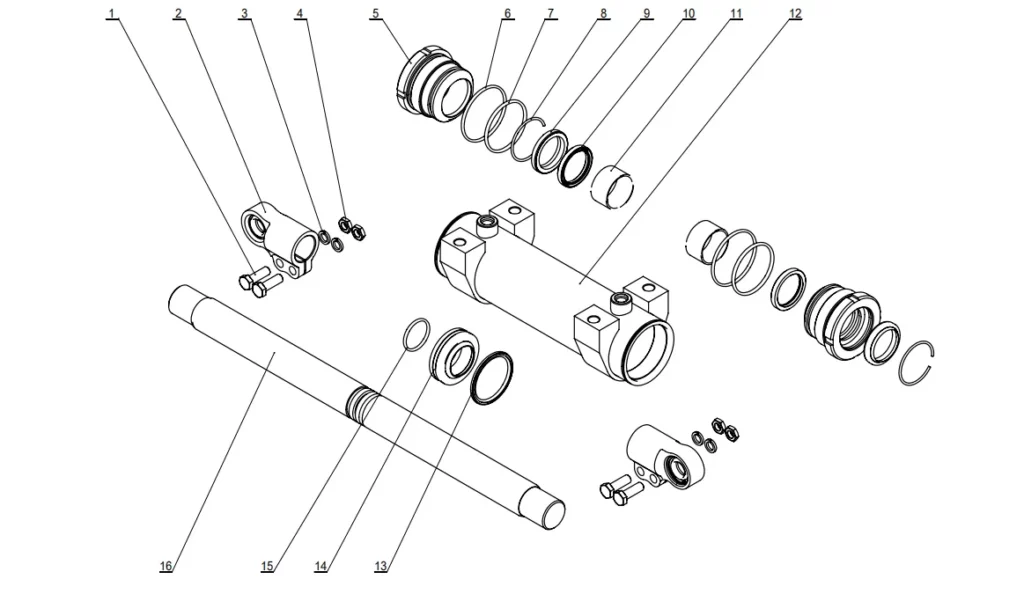
| # | Component | # | Component |
|---|---|---|---|
| 1 | Hex Bolt | 9 | Dust Wiper |
| 2 | Clevis | 10 | Rod Seal |
| 3 | Spring Washers | 11 | Du Bush |
| 4 | Hex Nut | 12 | Cylinder Housing Assy |
| 5 | Guide Bush | 13 | Hole Seal |
| 6 | O-Ring | 14 | Piston |
| 7 | O-Ring | 15 | O-Ring |
| 8 | Round Wire | 16 | Piston Rod |
Tractor Hydrostatic Steering System — Where the Cylinder Fits
On an agricultural tractor, the steering cylinder is part of a closed hydrostatic steering circuit that operates independently from the tractor's main implement hydraulics. Understanding this circuit is essential for specifying the correct cylinder — particularly the flow rate, pressure, and port sizing — because mismatching the cylinder to the orbital valve produces sluggish or erratic steering response.
Orbital Steering Valve
The gerotor valve displaces a fixed volume of oil per revolution of the steering wheel (typically 100–250 cc/rev). This displacement must match the cylinder bore area so that one full turn of the wheel produces a predictable wheel angle change — usually 5–15° per turn depending on the tractor's steering geometry.
Priority Valve
On tractors, the steering circuit shares the hydraulic pump with the implement circuit (loader, three-point hitch, remotes). The priority valve guarantees that steering flow is delivered first, regardless of implement demand. If the cylinder's internal leakage exceeds the priority valve's make-up capacity, steering response degrades — making seal condition the first diagnostic check on tractors with sluggish steering.
Relief Valve
The steering circuit relief valve (typically set 2–4 MPa above normal operating pressure) protects the cylinder from pressure spikes caused by hitting a rock or kerb at speed. The cylinder must be rated for the relief valve setting, not just the normal operating pressure. For tractors operating on rough terrain, the cylinder proof test pressure is set at 1.5× the relief valve setting — not 1.5× the normal working pressure.
Cross-Industry Applications
Row-Crop Tractors (60–180 HP)
Front-axle steering cylinders for row-crop tractors operating in tillage, planting, spraying, and harvesting operations. These cylinders must handle the combined steering load from the tractor's front axle weight (1–3 tonnes) plus the front-mounted implement weight (loader bucket, front-hitch cultivator). The wider bore variants (Φ80+) serve this application class, with FKM seals and heavy chrome rod standard for seasonal agricultural exposure.
Counterbalance Forklifts (2–10 t)
Rear-steer cylinders for counterbalance forklifts in warehouse, port, and industrial environments. These cylinders operate at lower steering loads than tractor variants (rear axle only, no implement weight) but at higher cycle frequencies — continuous micro-corrections during every second of travel. Standard NBR seals and 20 μm chrome rod are typical for indoor-only applications; the tractor-grade seal and chrome spec is recommended for forklifts operating outdoors or in multi-surface environments.
Specialty Vehicles and Self-Propelled Equipment
Self-propelled sprayers, turf maintenance vehicles, airport ground support equipment, aerial work platforms, and compact utility vehicles that use hydrostatic steering systems adapted from the tractor or forklift architecture. The custom OEM service allows these niche vehicle builders to specify the exact cylinder dimensions for their unique chassis geometry without being limited to standard forklift or tractor catalogue models.
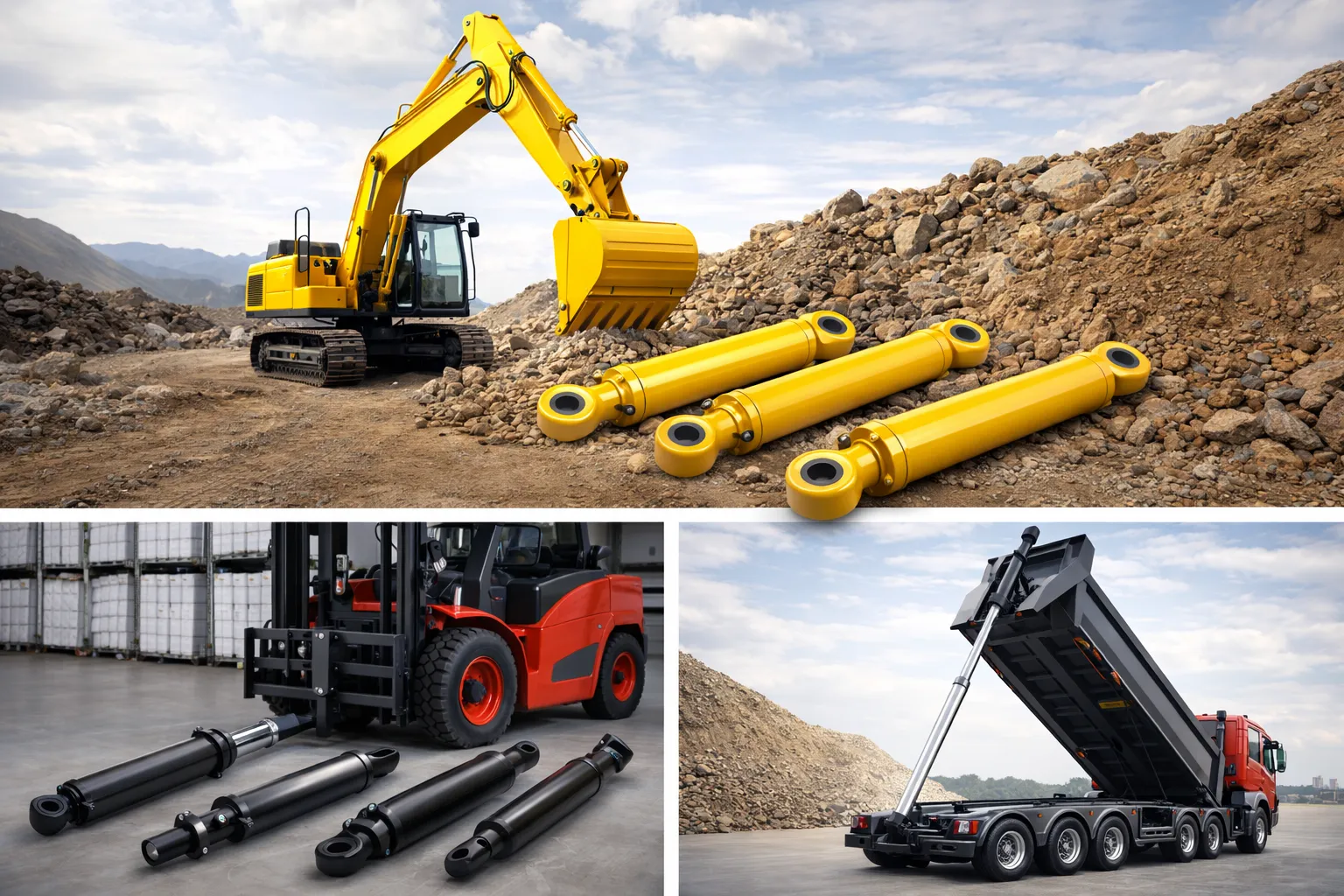
Tractor & Forklift Steering Cylinder — Technical Questions
Standard Catalogue Steering Cylinders
For forklift applications that match a standard bore, stroke, and mounting configuration, catalogue cylinders provide the same quality at lower cost and shorter lead time.
Aanvullende informatie
| Editor | Cxm |
|---|
Gerelateerde producten
-

Forklift Steering Cylinder | EP-HCYY11112002 Model
-
LS-HCZD30N-03 Forklift Truck Steering Cylinder
-
Forklift Truck Lift Oil Cylinder — Single-Acting Hydraulic Lift Cylinder
-
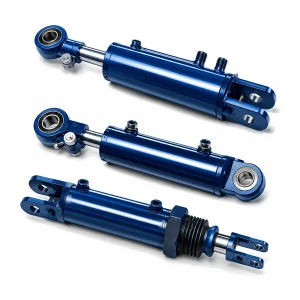
20176B-02000 Forklift Truck Support Hydraulic Cylinder
-
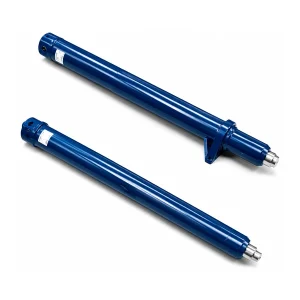
Industrial Vehicle Short Stroke Forklift Lift Cylinder
-
Custom Hydraulic Lift Cylinder — OEM Lift Cylinder with Integrated Check Valve and Sprocket for Forklifts
-
Custom Hydraulic Cylinder for Forklift Steering
-
Forklift Lifting Hydraulic Cylinder — Single-Acting Mast Lift Cylinder


























