Stabilizer Wing Servo Cylinder for Wind Power Transport Ship
Engineered with premium 2205 duplex stainless steel and an impenetrable ceramic layer to completely neutralize severe wave impact. Delivering zero-latency stability control and infinite fatigue resistance for offshore renewable energy logistics.
Product Overview: Securing High-Value Offshore Cargo Transit
The rapid and exponential expansion of the global offshore renewable energy sector relies entirely on the safe, highly efficient maritime transport of massive infrastructural components. Specialized wind power transport ships are tasked with moving enormous turbine blades exceeding 100 meters, exceedingly heavy nacelles, and towering monopiles from coastal manufacturing hubs to deep-water installation sites across the ocean. During these critical transit phases, these transport vessels are continuously subjected to unpredictable, violent ocean swells. The immense cargo drastically raises the vessel’s center of gravity, making it dangerously susceptible to extreme roll and pitch. Excessive rolling not only threatens the structural integrity of the multi-million-dollar cargo through immense lateral gravitational forces but also creates highly dangerous working conditions for the maritime crew. To actively counteract these powerful hydrodynamic forces, modern transport ships deploy sophisticated active fin stabilizers from their lower hulls. These hydrodynamic fins constantly adjust their angle of attack to neutralize the vessel’s roll. The absolute mechanical heart of this critical roll-reduction system is the Stabilizer Wing Servo Cylinder. This high-precision linear actuator is entirely responsible for translating hydraulic fluid pressure into the immense, instantaneous mechanical force required to pivot the submerged fins against the violent drag of the ocean current.
Operating an actuation system continuously below the waterline presents some of the most extreme metallurgical and tribological challenges in modern engineering. The primary environmental condition is relentless wave impact. A standard hydraulic cylinder designed for terrestrial industrial applications will fail catastrophically in this marine environment. The constant buffeting of the ocean generates immense, alternating side loads on the cylinder rod, leading directly to the most critical targeted failure mode: structural fatigue. Furthermore, the highly corrosive nature of warm, highly oxygenated seawater rapidly degrades standard carbon steel and even basic 316L stainless steel through chloride-induced pitting. Once the protective rod surface is compromised, seawater inevitably invades the primary dynamic seals, destroying the internal hydraulic circuitry and rendering the stabilizer fin completely paralyzed. Such a mechanical failure forces the transport vessel to reduce speed drastically or abort the mission entirely, causing severe logistical bottlenecks for offshore wind farm developers and generating enormous costs associated with emergency dry-docking and complex underwater hydraulic cylinder repair.
As a highly specialized and globally recognized hydraulic cylinder manufacturer, we have engineered a definitive, uncompromising solution to these severe offshore challenges. Our purpose-built Stabilizer Wing Servo Hydraulic Cylinder transcends conventional marine engineering standards. We have abandoned standard materials in favor of a 2205 duplex stainless steel welded architecture, providing double the yield strength of conventional marine grades to effortlessly withstand brutal wave impact. We coat the retracting rod with a dense, impenetrable ceramic layer, rendering it entirely immune to chloride pitting and abrasive marine biological growth. Furthermore, we integrate high-resolution servo feedback mechanisms paired with a proprietary 316L+PTFE guide system to ensure flawless, high-frequency stabilizer control. By neutralizing fatigue and corrosion, we provide maritime operators with a stabilization actuator that guarantees the safe, timely delivery of wind power assets, thereby securing the profitability of your entire logistical supply chain.
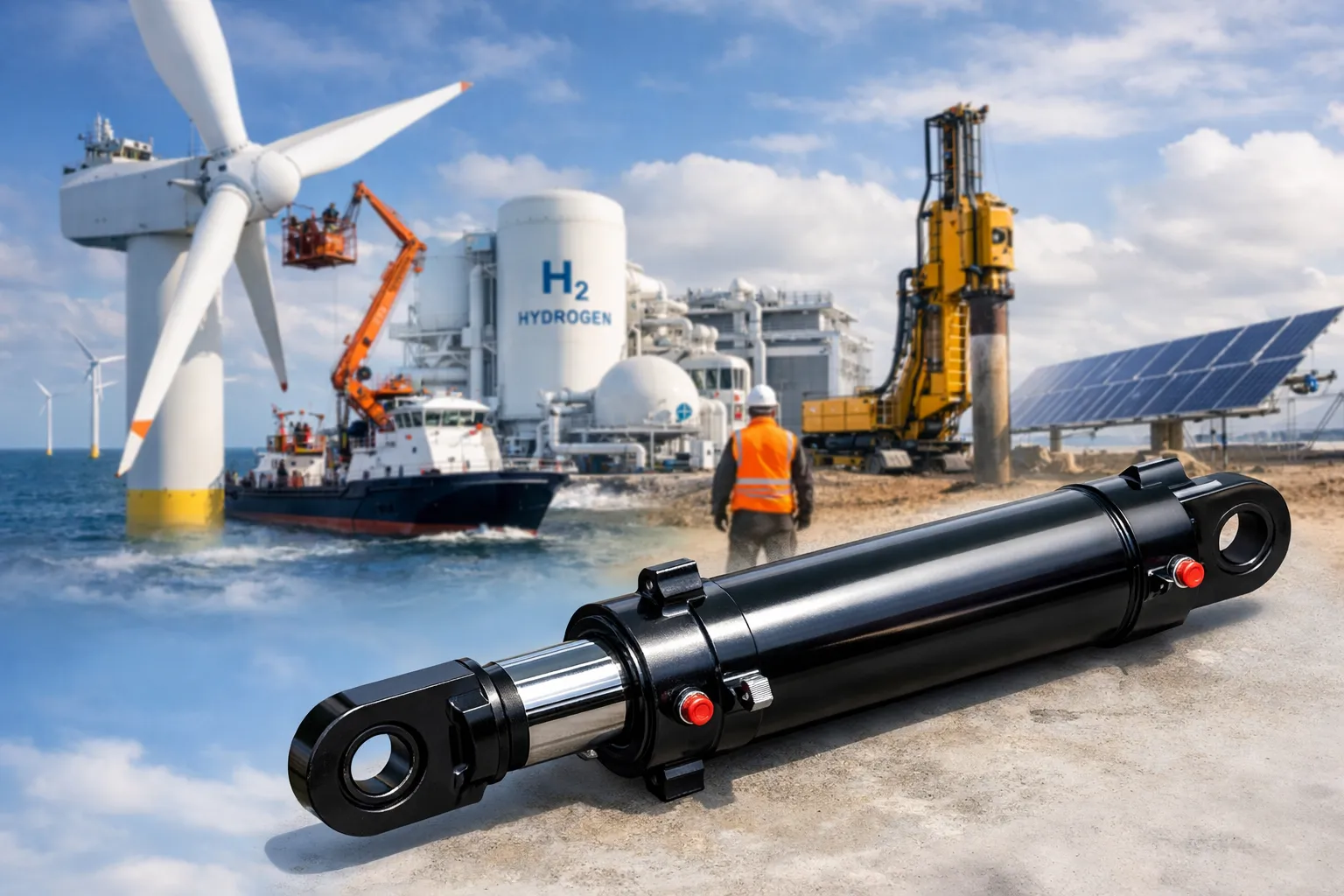
Comprehensive Technical Parameters
Integrating critical hydraulic parts into the hull of a commercial wind power transport ship requires uncompromising dimensional precision and rigorous adherence to strict maritime classification standards. The comprehensive data table below outlines the foundational engineering specifications and customized parameters for our dedicated marine stabilizer actuators.
| System Category | Specification Configuration | Marine Engineering Value |
|---|---|---|
| Target Industry | New Energy / Maritime Logistics | Designed strictly for offshore installation and heavily loaded transport vessels. |
| Equipment Category | Wind Power Transport Ship | Interfaces directly with the vessel’s internal hydraulic power units and lower hull compartments. |
| Subsystem Action | Stabilizer Wing System / Stability control | Dictates the rapid angular adjustment of the submerged anti-roll hydrodynamic fins. |
| Product Designation | Stabilizer Wing Servo Cylinder | The exact B2B nomenclature for this highly specialized active marine roll-reduction actuator. |
| Action Method | Double Acting | Provides active, high-pressure push and pull forces to constantly counteract reversing ocean wave vectors. |
| Structure Type | Servo cylinder / Welded construction | Eliminates tie-rod stretching and securely integrates precision positional feedback transducers. |
| Material System | 2205 Duplex Stainless Steel | Offers massive yield strength to survive hydrodynamic shock while effortlessly resisting saltwater chlorides. |
| Surface Treatment | Ceramic layer | A thermally sprayed barrier that provides absolute immunity to pitting, scoring, and barnacle attachment. |
| Environmental Grade | Wave impact | Engineered explicitly to survive violent, high-velocity seawater bombardment during severe oceanic storms. |
| Targeted Failure Mode | Fatigue | Optimized welding geometry and FEA-tested heavy-duty brackets ensure an infinite cyclic structural life. |
| Recommended Configuration | 316L+PTFE Guide & Duplex steel + Servo feedback | The ultimate marine upgrade combining unparalleled structural dominance with ultra-low friction kinematics. |
Kinematic Working Principle: Mastering Hydrodynamic Forces
To truly comprehend the unparalleled performance of our Stabilizer Wing Servo Cylinder, one must deeply understand its real-time interaction with the violent kinetics of the ocean. The vessel’s active stabilization process relies on a highly sophisticated centralized gyroscopic sensor array located within the ship’s bridge. This system detects impending wave impacts and calculates the exact counter-roll force required in milliseconds. The central computer then instantly signals highly responsive proportional directional control valves, which in turn direct highly pressurized hydraulic fluid into our double acting hydraulic cylinder.
As the hydraulic fluid fills the specific chamber, it acts against the specialized hydraulic cylinder piston, forcefully extending or retracting the heavy ceramic-coated rod. This linear motion is mechanically coupled to the tiller arm of the stabilizing fin, forcefully altering the fin’s angle of attack as it cuts through the water. Because oceanic wave action is chaotic and multidirectional, a basic single acting hydraulic cylinder is entirely useless; the system must actively push against the wave and then immediately pull back to maintain equilibrium. The double-acting design allows the actuator to lock the fin rigidly in place, forming an unbreakable hydraulic strut that absorbs massive multi-ton wave impacts without yielding.
What truly distinguishes a Stabilizer Wing Servo Hydraulic Cylinder is its internal closed-loop intelligence. We integrate high-resolution Linear Variable Differential Transformers (LVDTs) directly into the cylinder‘s core. These advanced sensors provide continuous, sub-millimeter positional feedback to the ship’s control systems. Combined with our ultra-low friction 316L+PTFE guide bands, the actuator executes incredibly smooth, micro-stepping angle adjustments, entirely eliminating the dangerous “stick-slip” hesitation that plagues standard cylinders. This guarantees the transport vessel maintains a perfectly level deck while carrying sensitive, multi-million-dollar wind turbine components across the sea.
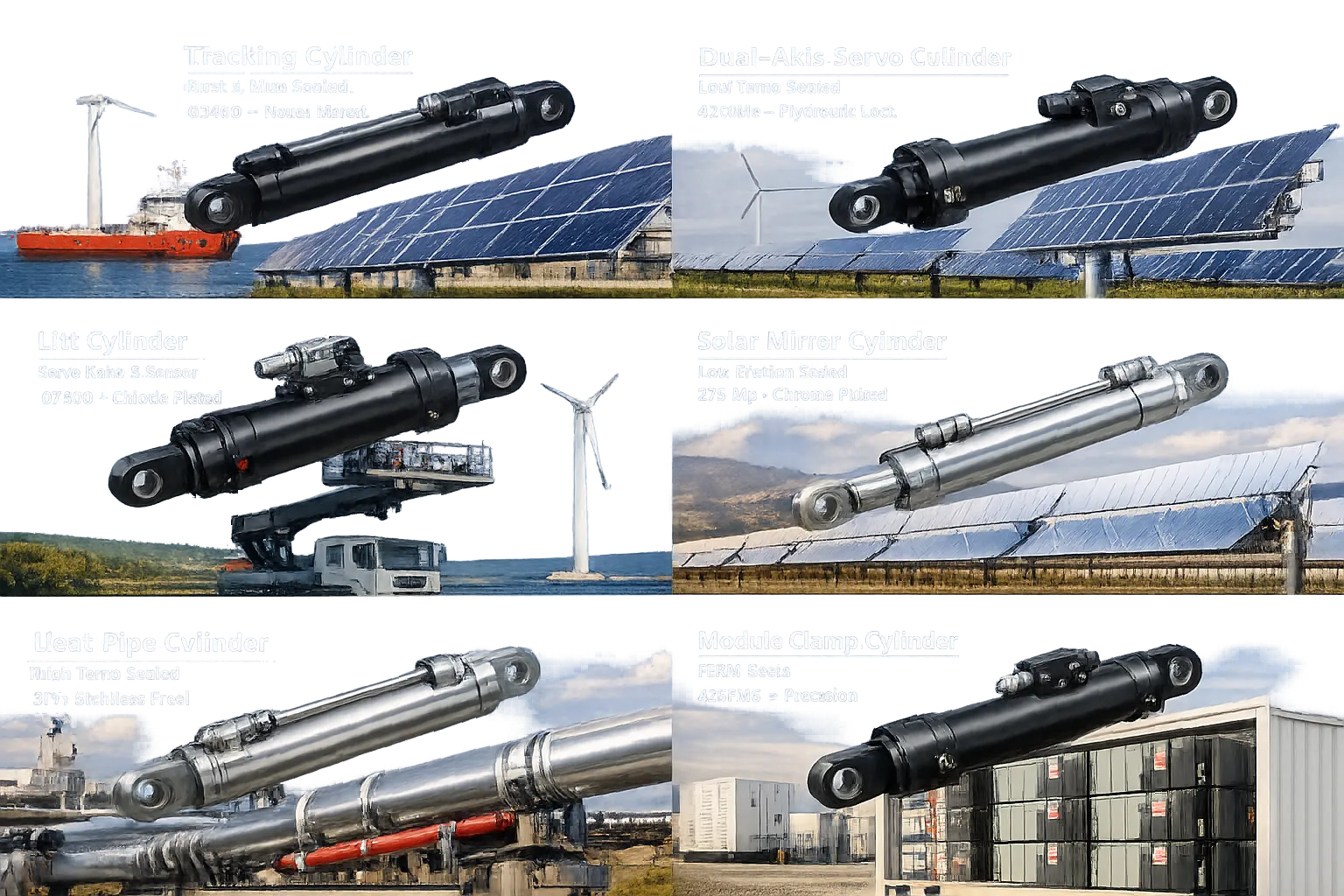
Seamless Marine Fleet Modernization & OEM Replacements
Shipyards and maritime fleet operators frequently encounter severe operational bottlenecks when the original equipment manufacturer (OEM) stabilization systems begin to fail. Standard factory actuators often prioritize generic cost-efficiency over extreme-duty marine survival. When these original units succumb to saltwater intrusion or fatigue cracking, the resulting vessel downtime is financially devastating. Securing proprietary replacement hydraulic parts from original European or American machine builders often involves entirely unacceptable lead times, threatening strict wind farm deployment contracts and angering major energy developers.
We specialize in manufacturing exact dimensional drop-in upgrades for these legacy marine systems. By retrofitting your transport vessels with our highly advanced Stabilizer Wing Servo Cylinder, you immediately bypass OEM supply chain delays. Your fleet receives a massive metallurgical upgrade—transitioning to 2205 duplex steel and ceramic layers—drastically extending the maintenance intervals. Furthermore, you secure a highly optimized hydraulic cylinder price directly from the manufacturer, eliminating the need to continuously perform expensive underwater fixing hydraulic cylinders and keeping your vessels actively generating revenue on the open ocean.
Core Engineering Advantages for Unyielding Maritime Survival
Defeating relentless wave impact and pervasive saltwater corrosion requires pushing far beyond standard industrial fluid mechanics. Our engineering team has implemented a suite of rigorous technical advancements to ensure our hydraulic rams operate flawlessly year after year:
- 1. Total Corrosion Immunity (2205 Duplex Steel): Standard marine grades like 316L stainless steel remain highly susceptible to crevice corrosion and pitting in oxygen-starved, high-chloride underwater environments. We forge the entire cylinder barrel and end caps from 2205 Duplex Stainless Steel. This specialized microstructure provides an exceptionally high Pitting Resistance Equivalent Number (PREN) and nearly double the yield strength of standard austenitic steels, making it virtually impervious to the aggressive chlorides found in deep ocean deployments.
- 2. Impenetrable Ceramic Layer Technology: Traditional hard chrome plating inherently develops micro-cracks under constant wave flexing, allowing saltwater to penetrate and rust the base steel. Our piston rods undergo an advanced High-Velocity Oxygen Fuel (HVOF) thermal spray process, depositing a dense ceramic layer. This creates a diamond-hard, non-porous barrier that entirely eliminates chloride pitting and actively prevents marine bio-fouling (barnacles) from adhering to the retracting rod.
- 3. Ultra-Low Friction (316L + PTFE Guide): For the servo loop to accurately maintain vessel stability, internal friction must be practically zero. We utilize a proprietary 316L stainless internal guide system paired with highly energized PTFE (Teflon) composite wear bands. This sophisticated architecture entirely eradicates “stick-slip” juddering, allowing the Stabilizer Wing Servo Hydraulic Cylinder to execute micro-metric high-frequency angle changes flawlessly.
- 4. Infinite Fatigue Life (Welded Architecture): Millions of continuous stabilizing wave cycles cause standard tie-rod cylinders to stretch, resulting in catastrophic thread fracture and fluid blowouts. We utilize fully automated Submerged Arc Welding (SAW) to fuse the heavy-duty mounting trunnions directly to the duplex barrel. Coupled with advanced Finite Element Analysis (FEA), this creates a monolithic structure that easily absorbs continuous multi-directional shock loads without suffering metal fatigue.
- 5. Precision Servo Feedback Integration: We embed premium subsea-rated Linear Variable Differential Transformers (LVDTs) deep within the hollow piston rod. These sensors provide unyielding positional accuracy back to the vessel’s gyroscopic controllers, remaining entirely shielded from external water pressure and physical trauma.
- 6. Environmental Fluid Compatibility: Protecting the marine ecosystem is a strict international maritime law. Our internal elastomer seals are specifically formulated to operate seamlessly with Environmentally Acceptable Lubricants (EALs) and water-glycol fluids, ensuring absolute zero ecological toxicity in the unlikely event of extreme hull trauma.
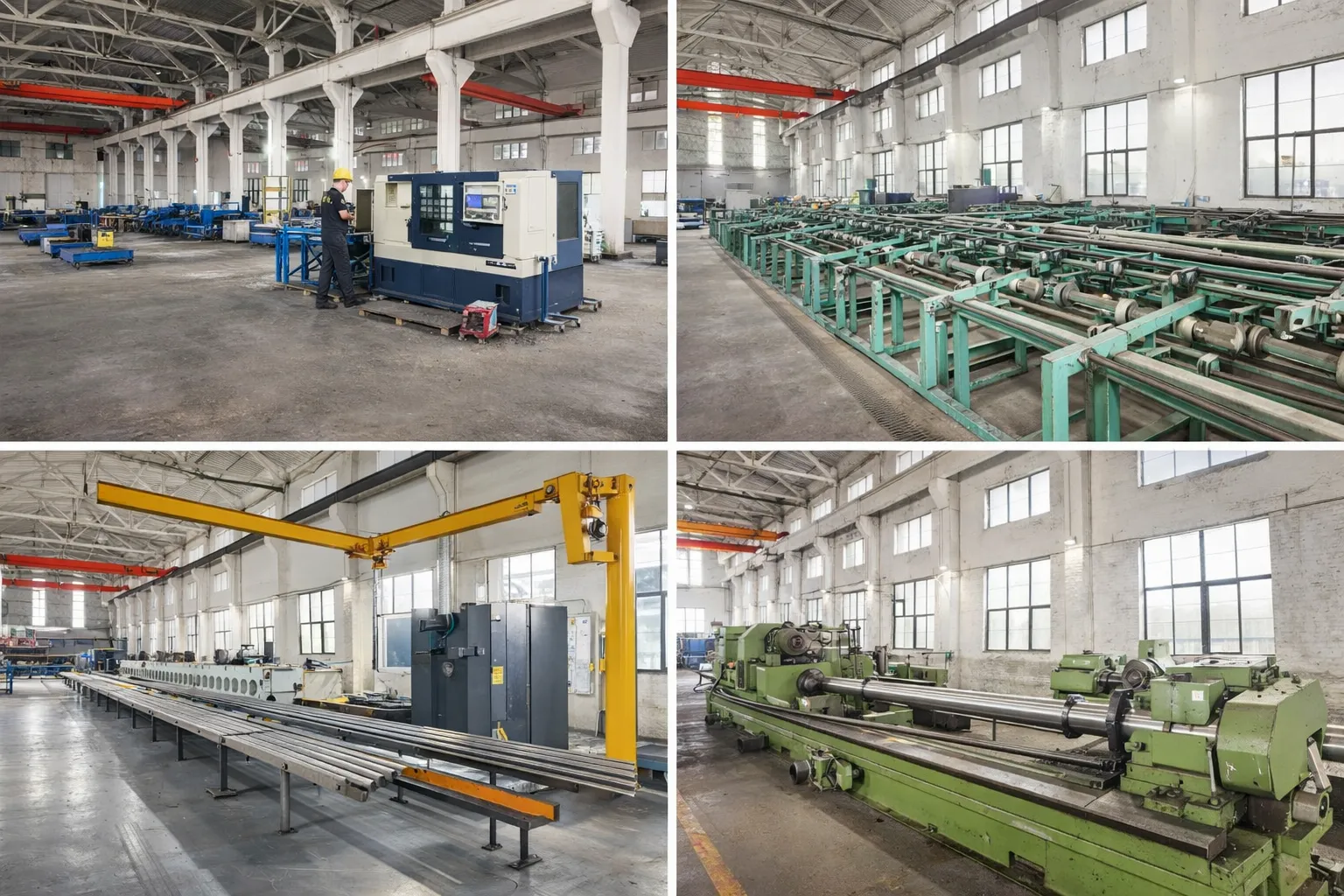
Autonomous Marine Manufacturing & Total Traceability
Processing advanced metallurgical grades like 2205 Duplex requires specialized carbide tooling and immense structural rigidity due to its rapid work-hardening characteristics. Sourcing these critical hydraulic cylinder components from disjointed third-party machine shops introduces fatal quality risks. As a premier integrated manufacturer, we execute the entire production lifecycle completely in-house. From initial optical emission spectrometry verifying the raw billet chemistry to the precision CNC machining of the internal bores, we maintain absolute autonomous control over every micrometer.
Because underwater equipment cannot be easily monitored, we operate with a strict zero-defect mandate. 100% of our Stabilizer Wing Servo Cylinder units undergo punishing Factory Acceptance Testing (FAT) within our facility. This protocol includes static hydrostatic pressure holding at 1.5 times the maximum rated load to verify structural integrity, dynamic friction analysis, and rigorous servo step-response charting to guarantee flawless integration with your vessel’s electronic control unit.
Every completed heavy-duty cylinder receives a permanent laser-etched serial identification plate. This correlates directly to a comprehensive digital dossier containing full material certificates, NDT weld inspection reports, and pressure test results. This ensures the complete, unbroken traceability required by major offshore classification societies such as DNV, ABS, and Lloyd’s Register.
Cross-Industry Engineering Pedigree
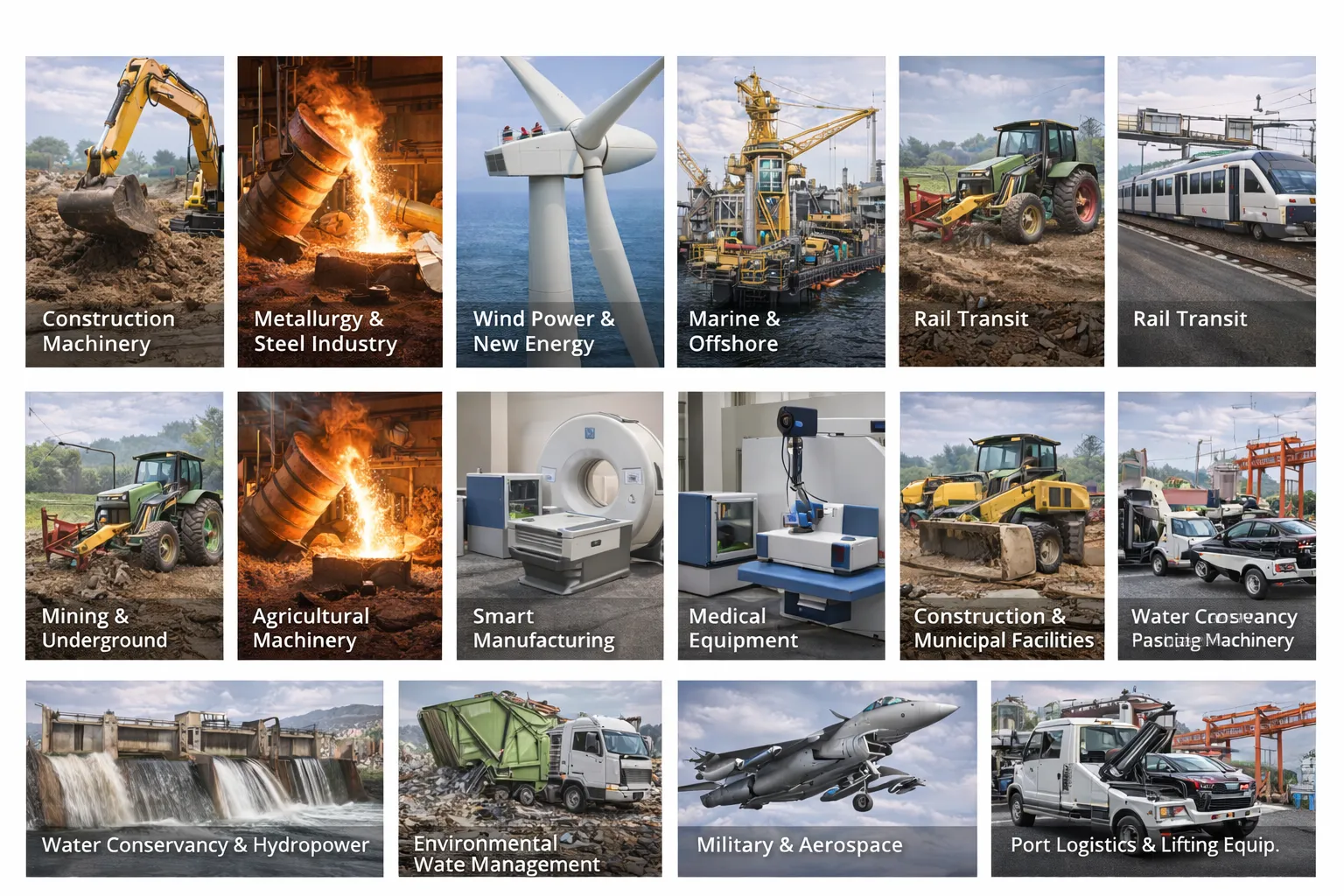
The advanced material science and heavy-duty structural engineering required to dominate the open ocean form the absolute foundation of our design philosophy. This unparalleled capacity to neutralize severe fatigue and block corrosive contamination makes our actuation technology highly sought after across multiple heavy industrial sectors worldwide:
- Construction Machinery Industry: The unyielding structural integrity of our welded maritime architecture directly informs the design of a main lift cylinder operating on heavy earthmoving excavators subjected to brutal breakout forces in rocky terrain.
- Metallurgical and Iron Industry: The advanced thermal stability and ultra-low friction designs required for marine servos are repurposed to survive the intense radiant heat and precise operations of modern steel mill continuous casting lines.
- Mining Industry: The impenetrable ceramic rod technology that ignores marine salt spray and barnacles is exactly what protects deep underground drilling actuators from highly corrosive, acidic groundwater and abrasive quartz dust.
- Port Logistics Automation: Our exact servo-positioning technology allows automated ship-to-shore cranes and heavy-duty straddle carriers to operate with absolute millimeter precision in coastal salt-spray environments.
- Plastics and Rubber Machinery: Our high-pressure double acting holding capabilities deliver the exact, unyielding locking tonnage required in high-speed industrial injection molding presses.
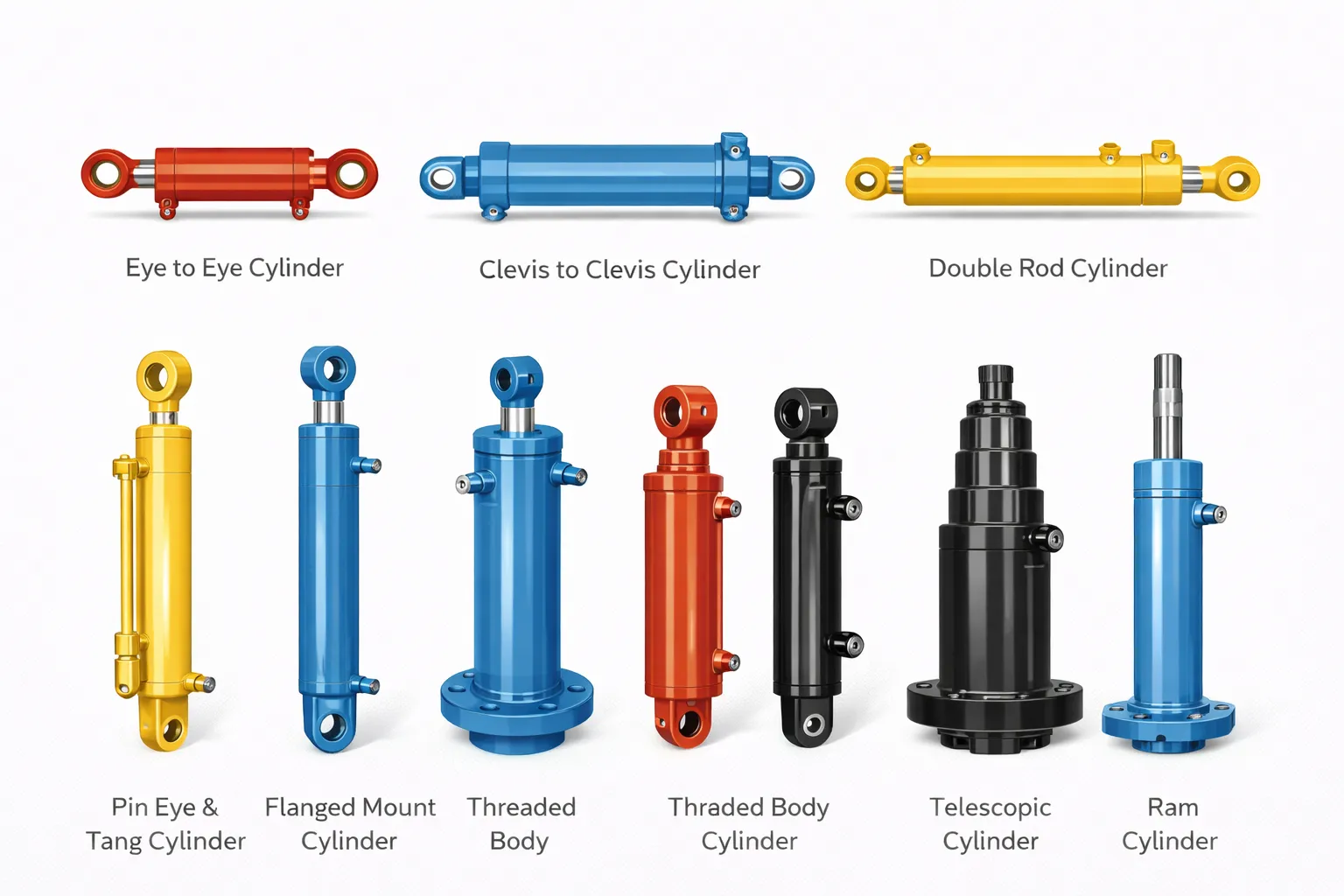
Comparative Analysis: Standard Commercial vs. Naval High-Performance
Attempting to optimize a shipbuilding budget by equipping a specialized wind transport vessel with generic industrial cylinders is a proven path to catastrophic cargo loss and maritime disaster. The matrix below illustrates exactly why purpose-built marine engineering is a strict necessity for protecting your logistics operations.
| Evaluation Metric | Standard Industrial Cylinder | Our High-Performance Servo Cylinder |
|---|---|---|
| Fatigue Resistance | Tie-rod construction (Stretches and snaps under cyclic wave impacts) | Heavy-wall Welded Body (Infinite fatigue life geometry) |
| Piston Rod Metallurgy | Hard Chrome Plated Steel (Micro-cracks allow rapid salt pitting) | Thermally Sprayed Ceramic (Impenetrable, absolute zero corrosion) |
| Friction Kinematics | High friction (Causes stick-slip juddering during micro-adjustments) | 316L + PTFE Guide Matrix (Perfectly smooth servo response) |
| Control Integration | Basic limit switches (Provides no active feedback to the ship’s PLC) | Internal LVDT Sensors (Continuous, real-time sub-millimeter positional data) |
| Operational Lifespan | Requires frequent, highly expensive dry-dock seal replacements | Engineered for 10-15 years of uninterrupted maritime deployment |
Proven at Sea: Real-World Global Case Studies
Theoretical naval specifications must be rigorously validated against the violent reality of the ocean. Our stability systems are actively protecting highly valuable renewable energy cargo across the most brutal shipping lanes in Asia. Below are detailed accounts of how our engineering resolves critical maritime failures.
Case Study 1: Eradicating Extreme Roll in South Korean Blade Transport
Client Location: Busan Shipyard, South Korea | Application: 120m Blade Transport Vessel | Date: November 2024
The Challenge: A major shipping line was contracted to transport next-generation, 120-meter offshore wind turbine blades. During sea trials in the Korea Strait, the original commercial fin actuators suffered from severe stick-slip friction, causing a dangerous latency in the stability control system. The vessel experienced rolling exceeding 15 degrees in moderate swells, creating an unacceptable risk of cargo shifting and composite blade fracture.
The Solution & Result: The shipyard contacted our engineering division. We rapidly supplied highly customized Stabilizer Wing Servo Cylinder units featuring our ultra-low friction PTFE guide rings and integrated LVDT sensors. Following the retrofit, the mechanical latency vanished entirely. The gyroscopic control system could now micro-adjust the fins instantly. Vessel roll was drastically reduced from 15 degrees to under 3 degrees, ensuring the flawless, safe delivery of the multimillion-dollar cargo.
“The precision of these servo cylinders completely transformed the handling of our transport ship. The latency issues are gone, and the deck remains incredibly flat even during winter swells. Their deep understanding of maritime fluid dynamics saved our logistics contract.” — Captain Park Min-ho, Fleet Operations Director
Case Study 2: Defeating Corrosion on Japanese Installation Vessels
Client Location: Nagasaki Shipyard, Japan | Application: Offshore Wind Installation Vessel (WTIV) | Date: May 2025
The Challenge: A massive WTIV operating off the coast of Hokkaido was experiencing continuous failure of its stabilizer actuators. The oxygen-starved, high-chloride environment in the lower fin compartments was causing severe pitting on the standard 316L rods. This led to rapid seal degradation, requiring the vessel to constantly abort installation missions and undergo emergency hydraulic cylinder repair every six months, decimating the project’s overall profitability.
The Solution & Result: We deployed our premium configuration utilizing 2205 Duplex steel combined with thermally sprayed Ceramic rods. The ceramic coating offered extreme hardness and absolute immunity to chloride attack. Since the retrofit, the hydraulic rams have operated for over 18 months without a single seal failure or pressure drop, completely eliminating the need for unscheduled dry-docking and maximizing the vessel’s operational uptime.
“The ceramic rod technology is phenomenal. We were burning through maintenance budgets just replacing damaged seals. These new units haven’t required a single intervention. A truly permanent fix for harsh marine environments.” — Chief Engineer Kenji Sato
Case Study 3: Bypassing OEM Delays for Rapid Taiwan Retrofit
Client Location: Kaohsiung Port, Taiwan | Application: Heavy-Lift Monopile Transport | Date: January 2026
The Challenge: A maritime logistics firm was retrofitting a heavy-lift ship to transport massive 1,500-ton steel monopiles for a new offshore wind farm. They urgently needed to replace the aging European stabilizer cylinders. The original manufacturer quoted an unacceptable 7-month lead time, threatening to completely derail the wind farm’s construction schedule and incur massive delay penalties.
The Solution & Result: Acting swiftly, our engineers reverse-engineered the precise mounting trunnions and fluid port interfaces from the client’s mechanical drawings. Operating our autonomous manufacturing facility, we produced, pressure-tested, and delivered the exact heavy-duty 2205 duplex drop-in replacements in just 40 days. The client secured a vastly superior hydraulic cylinder price and deployed the vessel perfectly on schedule.
“We simply could not wait over half a year for European parts. Their team delivered dimensionally perfect, high-performance replacements in weeks. The equipment bolted right into the hull compartments. Incredible manufacturing speed without sacrificing naval quality.” — Lin Chen-Yu, Naval Architect
Frequently Asked Questions (B2B Naval Procurement)
Specifying critical stabilization equipment for open-ocean shipping requires absolute engineering clarity. Below, we comprehensively address the most common technical inquiries from fleet directors and naval architects evaluating our marine technologies.
1. Why is a double acting configuration mandatory for fin stabilization?
2. How does the ceramic rod upgrade justify its cost over standard chrome plating?
3. What is the standard lead time for a custom batch of duplex cylinders delivered to South Korea or Japan?
4. Can you integrate specific LVDT sensors to match our vessel’s existing PLC architecture?
5. How does your pricing structure eliminate third-party marine supply chain markups?
6. Do you supply preventative maintenance spare kits with the cylinders?
7. Are your hydraulic cylinders compatible with Environmentally Acceptable Lubricants (EALs)?
Secure Your Heavy Transport Operations Today
Do not allow substandard marine actuators to jeopardize the safety of your crew and the financial returns of your offshore logistics contracts. Upgrade your fleet to specialized Stabilizer Wing Servo Cylinders engineered for absolute corrosion immunity, zero mechanical latency, and uninterrupted performance. Submit your vessel’s specifications to our naval engineering team today for an immediate technical evaluation and consultation.
Editor: Cxm