
Heavy Lift Luffing Cylinder For Offshore Platform Cranes
Strictly engineered with a monolithic forged 42CrMo cylinder body, an advanced ceramic rod, and reinforced clevis mounts to conquer extreme heavy loads and permanently eliminate catastrophic oil leakage in critical marine lifting systems.
Product Overview: The Indestructible Core of Marine Lifting Systems
The operational capability and fundamental safety of offshore drilling platforms, heavy-lift crane vessels, and subsea pipe-laying ships depend entirely upon the absolute structural reliability of their heavy lifting infrastructure. In the unforgiving maritime environment, maneuvering multi-hundred-ton payloads—such as subsea manifolds, heavy wind turbine nacelles, or massive accommodation modules—requires immense, perfectly controlled mechanical force. The most critical subsystem responsible for managing the outreach and dynamic working angle of the crane’s massive steel boom is the luffing mechanism. Operating at the very structural heart of this system is the heavy lift luffing cylinder. This colossal fluid power actuator transforms highly pressurized hydraulic energy into the raw linear force required to articulate the heavy boom against gravity, violent wind sheer, and unpredictable hydrodynamic ocean forces.
As a highly specialized and globally trusted hydraulic cylinder manufacturer, we understand profoundly that deploying standard commercial industrial fluid power components in an offshore heavy lifting environment is highly dangerous. The dominant and most destructive operational condition these cranes face is the combination of extreme heavy load and violent hydrodynamic shock. When a suspended payload is suddenly subjected to a rogue wave or sudden vessel pitch, massive dynamic amplification factors multiply the load instantly. Standard welded cylinders simply cannot survive this. The typical, inevitable failure mode is catastrophic oil leakage. Immense internal pressure spikes deform standard welded barrels, while abrasive salt environments destroy standard chrome rods, which in turn violently shred the internal dynamic seals. Once severe oil leakage occurs, the crane immediately loses its load-holding capability, leading to potentially fatal dropped loads, massive environmental contamination on the deck, and disastrous, highly expensive operational downtime.
Our purpose-built, highly advanced heavy lift luffing hydraulic cylinder is meticulously engineered from the metallurgical level upwards to permanently eradicate these specific offshore operational threats. By fundamentally upgrading the baseline metallurgy to a monolithic forged 42CrMo alloy steel cylinder body, deploying a marine-grade nickel-plated base combined with an impenetrable ceramic rod layer, and integrating heavily reinforced clevis mounts, we deliver a hydraulic cylinder that flawlessly absorbs extreme shock loads. Whether you are outfitting a new 5,000-ton heavy lift vessel in the elite shipyards of South Korea, or retrofitting an aging semi-submersible platform across East Asia, our specialized hydraulic parts are strictly designed to maximize your lifting capacity, fiercely protect your rigging crew, and significantly lower your total lifecycle maintenance expenditure.
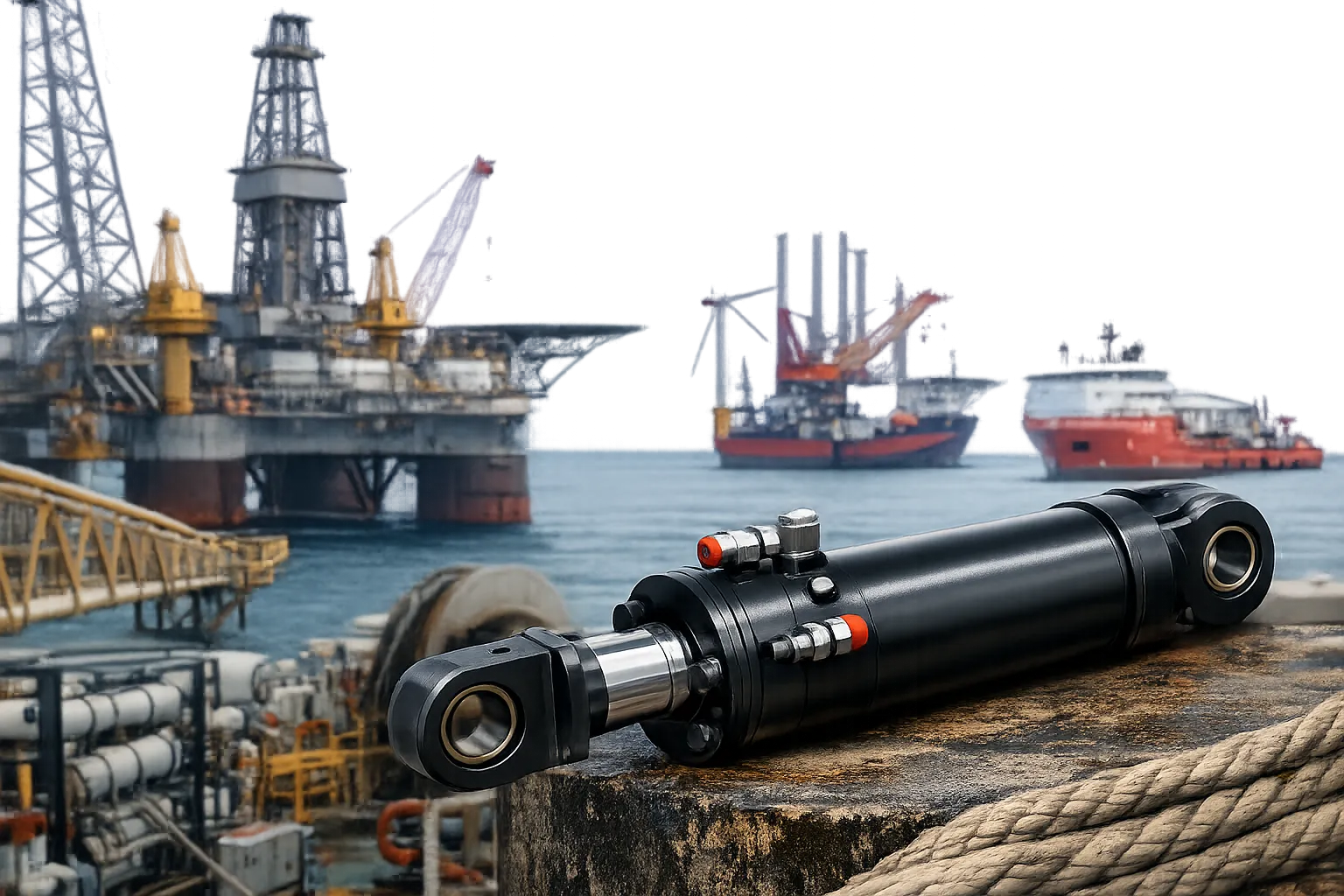
Comprehensive Technical Parameters and Material Specifications
Naval architecture and marine heavy engineering demand absolute, uncompromising adherence to precise dynamic load calculations, extreme safety margins, and rigorous international classification society standards. We provide a completely adaptable manufacturing framework to ensure your customized heavy lift luffing cylinder perfectly matches the physical dimensional footprint, safe working load (SWL), and structural bending moments of your specific offshore crane. The technical matrix below comprehensively outlines the foundational engineering parameters, elite structural material choices, and environmental resistance grades of our massive luffing actuators.
| Engineering Specification | Technical Details & Customization Range |
|---|---|
| Target Industry Sector | Marine & Offshore Engineering |
| Equipment Category | Offshore Platforms / Heavy Lift Crane Vessels |
| Subsystem / Application Area | Lifting System / Boom Luffing Mechanism |
| Primary Product Designation | Heavy Lift Luffing Cylinder / Heavy Lift Luffing Hydraulic Cylinder |
| Action Mechanism | Double acting hydraulic cylingder (Mandatory for absolute bidirectional boom control) |
| Internal Structure Type | Large Piston Cylinder Architecture (Bore sizes customized up to 1500mm+) |
| Manufacturing Construction | Forged Cylinder Body (Completely eliminates dangerous weld heat-affected zones) |
| Core Structural Material | 42CrMo High-Yield Alloy Steel (Engineered to absolutely resist extreme hoop stress) |
| Rod Surface Treatment | Marine-Grade Nickel Plated Base with Top Ceramic Layer |
| Environmental Resistance Grade | Extreme Heavy Load + Violent Hydrodynamic Shock |
| Dynamic Operating Condition | Boom Luffing (Adjusting crane radius accurately under massive dynamic payloads) |
| Primary Failure Mitigation | Engineered exclusively to eradicate catastrophic oil leakage and rod bending |
| Mandatory Premium Configuration | Ceramic Rod + Reinforced Clevis Mounts + Counterbalance Valves |
| Deck Installation Mountings | Oversized heavy-duty spherical bearing trunnions or massive reinforced clevis brackets |
The Operational Dynamics: The Physics of Heavy-Lift Luffing
To thoroughly comprehend the highly advanced, massive-scale engineering embedded within this product, one must deeply analyze the complex mechanical physics required to safely manipulate a multi-thousand-ton crane boom over the open ocean. In rudimentary, light-duty terrestrial lifting applications, engineers might occasionally attempt to utilize a single acting hydraulic cylingder, which relies purely on gravity or the heavy dead weight of the load to force the fluid back into the reservoir and retract the rod. However, offshore crane operations occur in a highly dynamic, wildly unpredictable physical space. A heavy lift vessel is constantly subjected to sudden coastal wind gusts, extreme list angles, and violent wave-induced pitching. Relying passively on gravity to safely lower a 100-meter steel boom is incredibly dangerous and mechanically impossible. Therefore, the boom luffing system strictly utilizes a heavily engineered double acting hydraulic cylingder arrangement.
When the crane operator commands a change in the working radius to lift a massive subsea structure, the central hydraulic power unit (HPU) forcefully pumps highly pressurized synthetic fluid through massive steel piping and into the extension port of the cylinder barrel. This highly pressurized fluid pushes directly against the precision-machined surface area of the internal hydraulic cylinder piston. The resulting hydrostatic pressure accumulation generates an immense, unstoppable linear force, driving the thick ceramic-coated rod to smoothly articulate the boom upward. Because the massive crane boom acts as a colossal mechanical lever, the physical strain exerted on the lifting equipment changes drastically as the angle alters. These heavy-duty hydraulic rams must be entirely capable of handling highly variable pressure spikes flawlessly, without allowing the heavy boom to bounce, judder, or experience static stick-slip friction, which would violently multiply the dynamic forces on the crane pedestal to highly dangerous levels.
Crucially, when managing extreme heavy load and sudden shock, absolute safety relies entirely on perfect fluid containment. If a sudden rogue wave causes the suspended payload to swing violently, a massive pressure shockwave is sent straight down the cylinder rod directly into the barrel. Our heavy lift luffing cylinder manages this intense kinetic energy by combining a monolithic forged body that will never stretch or balloon under pressure, with heavily reinforced clevis mounts that distribute the mechanical shock safely into the crane’s superstructure. Furthermore, integrated pilot-operated counterbalance load-holding valves instantly snap shut if fluid flow ceases from the HPU. They lock the incompressible hydraulic fluid solidly inside the massive chamber, physically preventing the boom from entering an uncontrolled, lethal free-fall, while our advanced seals completely prevent the deadly oil leakage that constantly plagues inferior welded designs.
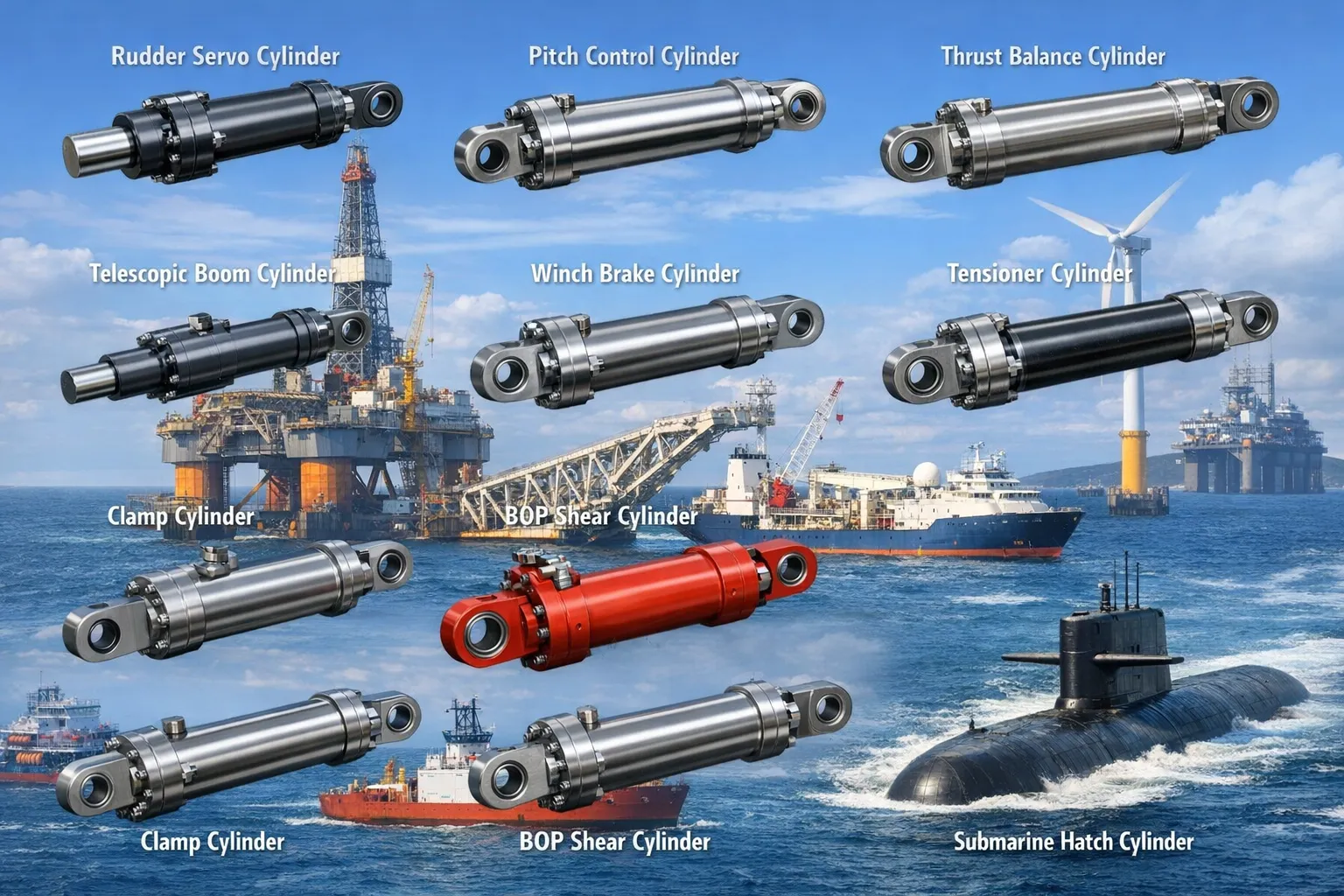
Seamless Global Fleet Integration and Direct Brand Replacement
Major shipyards, commercial fleet technical managers, and offshore drydock engineers frequently encounter severe logistical bottlenecks when attempting to rapidly source replacement heavy lifting components from traditional European original equipment manufacturers (OEMs). Confronting massive, unjustified hydraulic cylinder price inflations and entirely unacceptable 20-to-24 week delivery timelines for massive luffing cylinders can completely derail a vessel’s carefully planned drydock maintenance schedule. If an offshore crane cannot be safely operated due to chronic oil leakage, the vessel will lose its highly lucrative charter contract immediately. We completely bypass this logistical nightmare by engineering exact, dimensionally faithful, high-fidelity drop-in replacements for all standard marine heavy lifting equipment. Our heavy engineering team meticulously maps the existing pin-to-pin retracted lengths, massive spherical bearing diameters, and high-pressure fluid port threads to definitively guarantee that your shipyard mechanics can execute a rapid, flawless installation directly onto the crane pedestal without hot work.
Technical Reference Disclaimer: To greatly assist naval architects, purchasing officers, and marine engineers in rapid dimensional sizing, accurate cross-referencing, and urgent technical selection during drydocking, we explicitly state that our highly durable custom heavy lift luffing hydraulic cylinder line is expertly designed to physically and functionally replace massive boom articulation equipment originally supplied by prominent legacy brands such as Liebherr, MacGregor, Huisman, National Oilwell Varco (NOV), TTS, and Kenz Figee. We operate strictly as an independent, high-precision heavy manufacturing corporation. The mention of these specific registered trademarks is executed solely for the operational convenience of dimensional compatibility matching for the end-user; absolutely no corporate affiliation, formal sponsorship, or trademark endorsement is intended or implied.
Additionally, if an offshore crane vessel arrives in a South Korean or Singaporean port and the core forged cylinder bodies are ultrasonically inspected (NDT) and found to be structurally sound, but are merely suffering from deep external rod scoring or blown internal seals, demanding a complete unit replacement is highly economically inefficient. Our dedicated, globally responsive hydraulic cylinder repair division offers rapid, class-certified heavy remanufacturing programs. We specialize heavily in fixing hydraulic cylinders of extreme scale by completely stripping the damaged unit down, precision honing the massive inner tube, manufacturing a brand new heavy ceramic-coated 42CrMo rod from raw billet, and installing entirely new premium zero-leakage seal kits. By deeply integrating our superior hydraulic cylinder components into your existing legacy casing, we deliver a beautifully refurbished actuator that actively resists future oil leakage, functioning better than new, at a highly competitive fraction of the massive capital cost.
Core Technical Advantages: Exclusively Engineered for Extreme Heavy Load + Shock
Designing a massive lift cylinder intended to permanently survive the highly corrosive, perpetually humid, and physically violent environment of offshore heavy lifting requires a strict adherence to advanced metallurgical principles and fluid tribology. Here are the core engineering advantages that firmly establish our custom heavy lift luffing cylinder as the definitively superior choice for global heavy-lift fleet operators:
- 1. Monolithic Forged 42CrMo Cylinder Body Integrity
Standard commercial large cylinders are manufactured by welding thick steel end-caps to drawn steel tubes. Under the massive pressure spikes generated by sudden heavy load shock and dynamic wave impacts, these heat-affected weld zones become prime locations for severe fatigue failure, stretching, and ballooning, which instantly ruins the seals and causes massive oil leakage. Our heavy lift luffing hydraulic cylinder bodies are heavily machined from solid forged 42CrMo alloy steel billets. The deep forging process perfectly aligns the internal grain flow of the steel, providing immense monolithic hoop strength and completely eliminating dangerous weld-fatigue points entirely, ensuring the barrel remains perfectly cylindrical under maximum shock loads. - 2. Advanced Ceramic Rod Layer over Nickel Base
The primary, root cause of oil leakage in the marine environment is rod pitting. Standard hard chrome plating develops microscopic cracks that allow saltwater to penetrate and rust the base steel, violently blistering the surface and shredding the seals. We conquer this by applying a marine-grade nickel plated base layer for absolute chemical isolation, overlaid with a high-velocity thermal-sprayed advanced ceramic layer. This incredibly dense, non-porous ceramic surface is exceptionally hard (exceeding 850 HV), highly polished, and entirely impervious to saltwater, flying salt crystals, and abrasive deck debris, completely preventing rod scoring and preserving the internal seals indefinitely. - 3. Reinforced Clevis Mounts for Violent Hydrodynamic Shock
When a vessel pitches violently, the massive crane boom transfers immense lateral bending moments and crushing compressive loads directly into the cylinder’s mounting points. We utilize advanced Finite Element Analysis (FEA) to design heavily reinforced clevis mounts and massive spherical bearing trunnions. By significantly increasing material thickness precisely at stress concentration points and deep-rolling all transition radii, we safely distribute the extreme shock energy throughout the crane’s pedestal structure, entirely preventing mechanical pin fracture or trunnion tear-out. - 4. Zero Oil Leakage: Ultra-Low Friction Dynamic Sealing Matrix
Safely lowering a 1,000-ton subsea module requires incredibly smooth, highly proportional, and perfectly linear boom movement. Standard rubber seals grip the rod tightly under high pressure, creating severe “stick-slip” juddering that shakes the entire crane violently. We integrate a highly specialized sealing matrix utilizing PTFE (Teflon) energized step seals, robust fluoroelastomers, and massive bronze-filled composite guide bands on the hydraulic cylinder piston. This matrix aggressively blocks high-pressure fluid bypass to completely prevent oil leakage while dramatically lowering static friction, allowing the massive boom to articulate with microscopic precision without a single shudder. - 5. Superior Thermal Stability and Extended Fatigue Life Optimization
Continuous heavy lifting operations in deep water generate immense fluid shear heat as the oil is constantly pumped through the counterbalance valves. Our internal geometric porting is optimized via computational fluid dynamics (CFD) to minimize turbulence. Furthermore, our specialized elastomer seal energizers are explicitly formulated to maintain their elasticity and high sealing force across a vast temperature spectrum, protecting the massive cylinder from thermal degradation and sudden pressure loss during extended, continuous lifting campaigns.
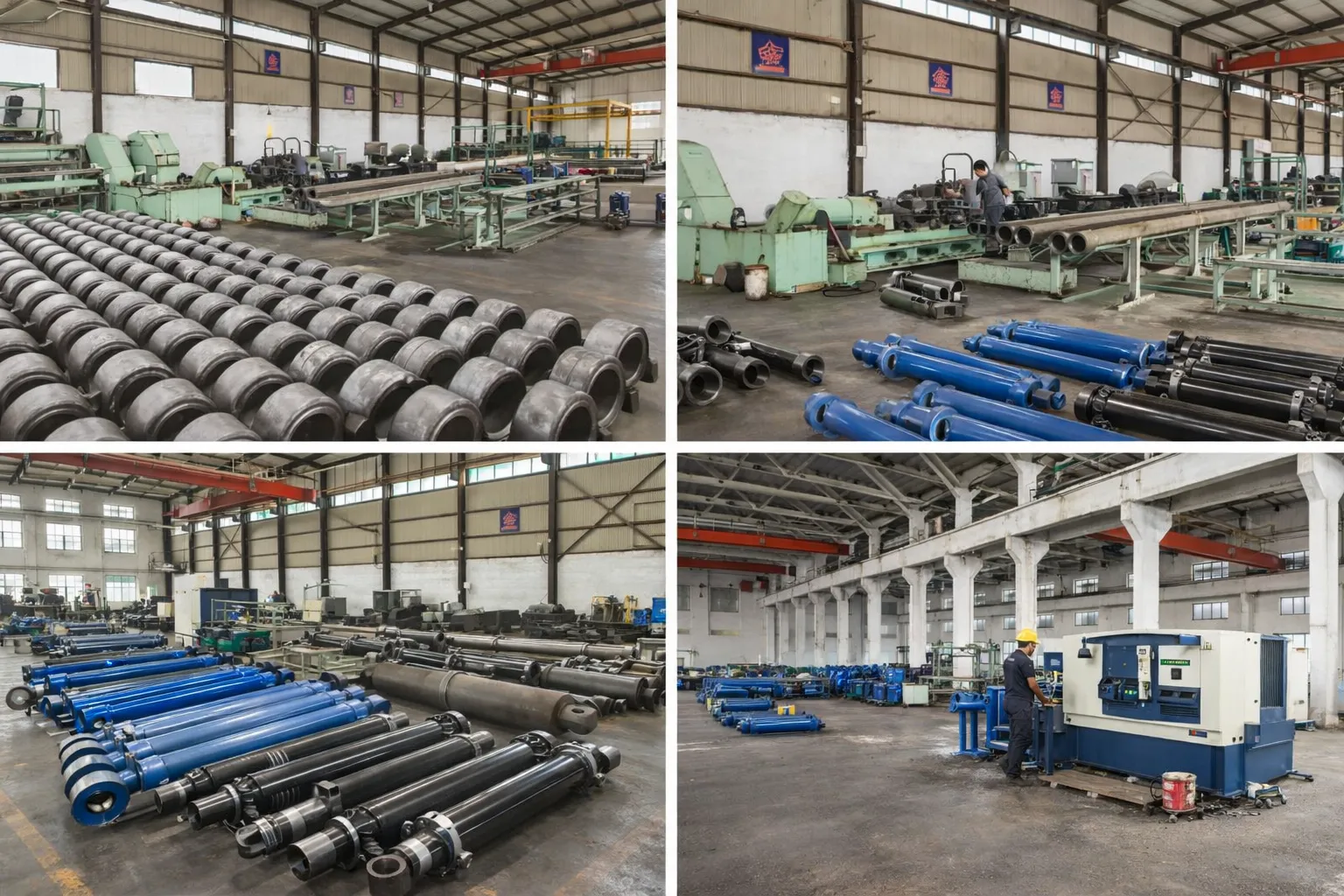
Autonomous Heavy Manufacturing and Strict Quality Assurance Protocols
True operational reliability that protects multi-million dollar payloads and human life cannot merely be assumed; it must be systematically manufactured into the very core of the massive product and rigorously verified by independent authorities. As a fully integrated, elite heavy hydraulic cylinder manufacturer, we maintain complete, absolute autonomous control over our entire production ecosystem. We flatly refuse to rely on fragmented, unverified external sub-contractors for massive pressure-retaining components. Every single phase of heavy fabrication, from the initial raw material spectroscopy to the final application of heavy marine-grade multi-part epoxy coating, is executed entirely within our own advanced, ISO-certified heavy manufacturing facility.
Production officially commences with stringent ultrasonic testing (UT) of the massive forged 42CrMo steel billets to absolutely verify the complete absence of internal micro-voids, slag inclusions, or metallurgical flaws before any machining begins. Heavy-duty, multi-axis CNC lathes and highly specialized, massive deep-hole boring machines meticulously sculpt the internal heavy-wall forged barrels to exacting micron-level tolerances. We achieve a highly specific, mathematically calculated cross-hatch surface finish inside the steel tube that purposefully retains a microscopic, invisible film of hydraulic oil, which perfectly and continuously lubricates the dynamic PTFE seals without ever allowing fluid bypass. Concurrently, the massive alloy piston rods undergo the complex nickel plating and high-velocity thermal-sprayed ceramic process in tightly controlled, automated environments to ensure perfectly uniform coating thickness and unbreakable molecular adhesion.
Quality assurance within our facility is a completely non-negotiable, uncompromising gateway process. Final delicate seal assembly takes place strictly in positive-pressure cleanrooms to absolutely prevent any microscopic airborne particulate contamination from entering the massive fluid pathways. Every single heavy lift luffing cylinder undergoes a punishing 100% Factory Acceptance Test (FAT) on our massive custom test benches before it is permitted to reach the shipping dock. This aggressive testing protocol involves static pressure hold testing at 150% of the nominal designed working pressure to aggressively verify the absolute zero oil leakage performance of the seals under extreme stress. Because we consistently supply the most demanding top-tier shipyards across South Korea, Japan, and Singapore, we maintain absolute material traceability. We routinely manufacture heavily to the exacting standards of major marine classification societies, seamlessly facilitating on-site independent surveyor witness testing and delivering full, verified certification from the Korean Register (KR), DNV, ABS, and Lloyd’s Register (LR).
Cross-Industry Heavy Engineering Applications for Severe Environments
While the advanced metallurgical features, thick ceramic rods, forged monolithic bodies, and massive load-holding technologies detailed here are optimized perfectly for the punishing dynamic forces, extreme heavy load, and continuous shock of marine boom luffing systems, these foundational robust technologies are highly demanded across multiple severe-duty global industries. Heavy machinery designed specifically to survive lifting 3,000 tons on the open ocean excels effortlessly in the harshest, most unforgiving land-based industrial applications.
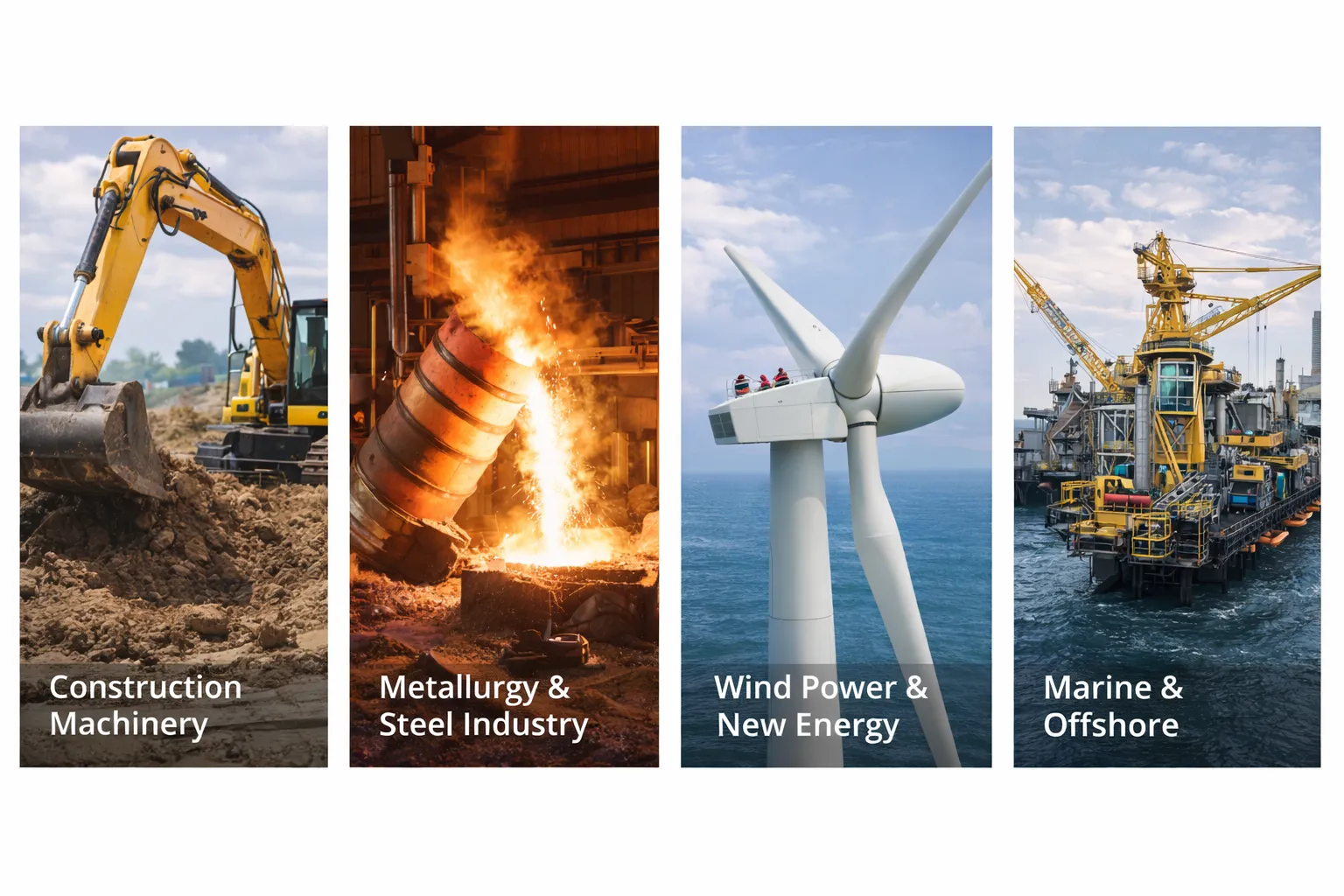
- Other Marine & Offshore General Deck Machinery: Beyond the primary crane boom, our heavily forged, heavily sealed units act perfectly as the primary, fail-safe actuator for massive offshore A-frames, heavy pipe-laying tensioner systems, subsea trenching equipment deployment, and heavy-duty anchor handling towing winch (AHTW) systems.
- Metallurgical and Iron Industry: Global steel mills and heavy foundries are characterized by extreme radiant ambient heat, heavy mechanical shock from falling slabs, and highly abrasive metallic dust. Our thick forged steel bodies, ceramic-protected rods, and specialized high-temperature PTFE seals provide exceptional longevity for massive continuous casting machines, heavy slab manipulators, and electric arc furnace tilt mechanisms where unexpected downtime costs hundreds of thousands of dollars an hour.
- Mining Industry: Operating in deep, dark underground shafts or vast open pits, mining machinery faces relentless mechanical shock, highly acidic groundwater, and extremely abrasive silica rock dust that destroys standard chrome instantly. Our custom-engineered, heavily sealed hydraulic rams provide absolutely unmatched lifting reliability for massive electric rope shovel crowd cylinders, towering dragline walking mechanisms, and ultra-class haul truck hydro-pneumatic suspensions.
- Construction Machinery Industry: Massive coastal civil engineering and infrastructure projects require incredibly heavy machinery that won’t leak oil or buckle under pressure. We supply incredibly durable actuation solutions for heavy crawler crane luffing systems, massive rotary drilling rigs, heavy-duty bridge launching gantries, and massive tunnel boring machine (TBM) articulation drives.
- Hydro-power and Civil Infrastructure: We engineer massive, custom-forged actuators for massive dam spillway radial gates and critical flood control barriers where any mechanical failure equates to a catastrophic natural disaster.
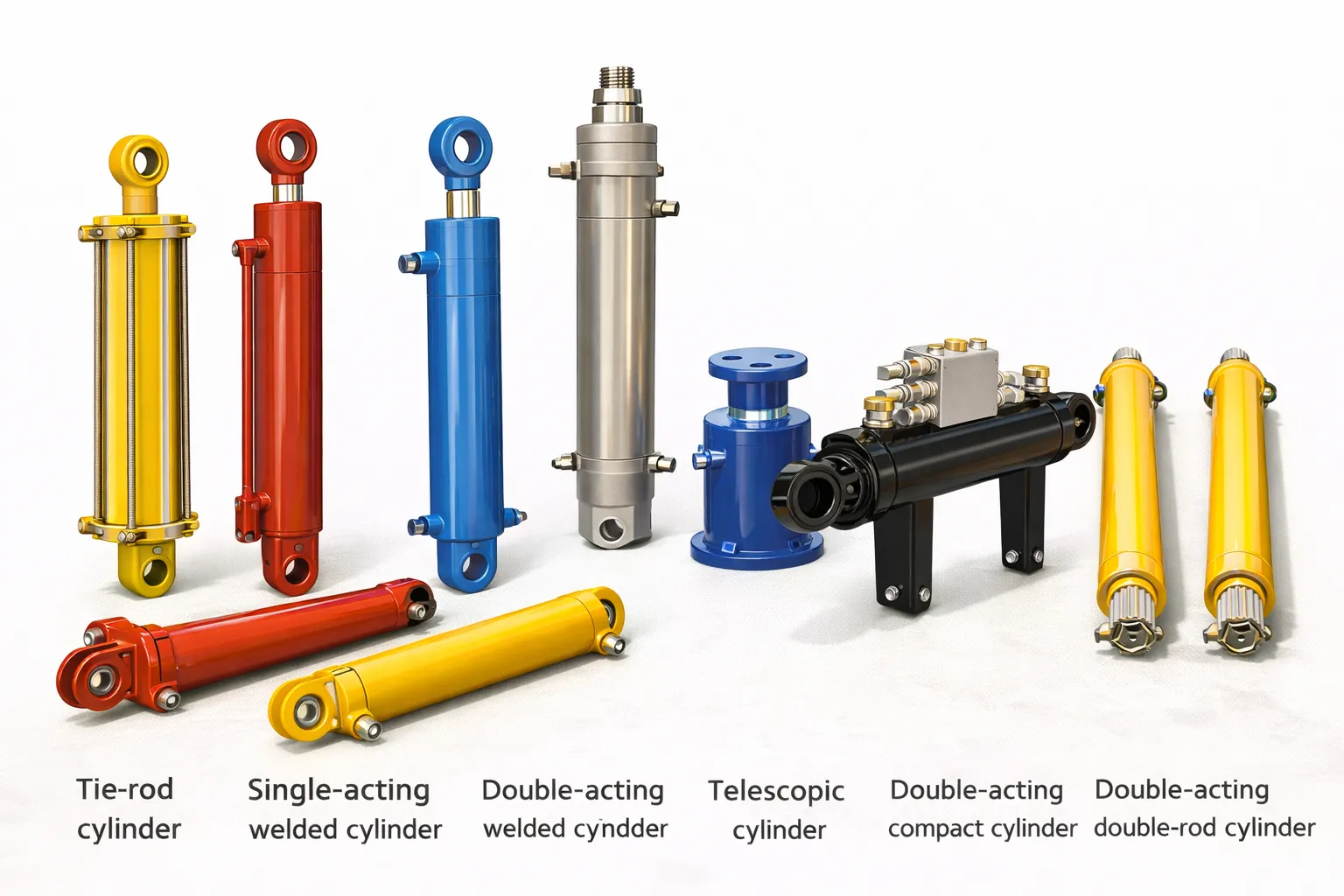
Comparative Analysis: Standard Commercial vs. Elite Heavy Lift Engineered
When evaluating millions of dollars in vessel drydock maintenance and upgrade budgets, strictly comparing the initial quoted hydraulic cylinder price against the actual, comprehensive total lifecycle cost is absolutely critical for fleet technical directors and heavy-lift vessel owners. Attempting to artificially lower initial capital expenditure by installing cheap, standard industrial welded cylinders on a critical marine crane always, without exception, results in catastrophic long-term costs due to rapid equipment failure, massive environmental fines from oil leakage, port state control detentions, and severe personnel safety risks. The detailed matrix below explicitly highlights the stark, undeniable contrast between conventional, land-based adaptations and our purpose-built, uncompromising heavy lift marine engineering.
| Core Engineering Feature | Standard Commercial Welded Cylinder | Our Heavy Lift Luffing Cylinder |
|---|---|---|
| Structural Base Material | Basic ST52 carbon steel tubing with welded end-caps. Highly prone to catastrophic ballooning, weld fatigue cracking, and structural yielding under extreme heavy shock loads. | Monolithic Forged 42CrMo Alloy Steel. Superior tensile hoop strength naturally absorbs massive kinetic energy and pressure spikes, maintaining perfect rigidity without yielding. |
| Corrosion Resistance (Rod) | Thin commercial hard chrome plating. Quickly micro-cracks and pits deeply when exposed to constant coastal humidity, salt spray, and marine chlorides. | Marine-Grade Nickel + Advanced Ceramic Layer. Provides an absolute, non-porous chemical and physical barrier, entirely preventing rust pitting and scoring. |
| Oil Leakage Mitigation | Standard NBR rubber seals extrude and blow out under heavy pressure spikes. Rust pitting acts like sandpaper, shredding the seals and causing massive, continuous oil leakage. | Advanced PTFE sealing matrix perfectly matched to the polished ceramic rod. Actively blocks high-pressure fluid bypass, ensuring absolute zero oil leakage. |
| Control Precision & Movement | High static friction causes severe “stick-slip” juddering, shaking the entire crane violently when attempting to lower a heavy suspended load slowly. | Ultra-low friction PTFE sealing and massive composite guide bands ensure completely smooth, continuous, and highly proportional boom articulation. |
| Maintenance Lifecycle | Typically requires complete replacement or major seal overhauls every 18 to 24 months due to severe rod pitting, weld fatigue, and constant, minor fluid leaks. | Engineered via FEA to comfortably exceed major 5-year and 10-year classification society special survey intervals, drastically lowering total lifecycle costs. |
Proven Field Performance: Documented Global Maritime Success Stories
Theoretical specifications, 3D CAD modeling, and engineering blueprints must be violently validated by relentless, punishing field performance lifting massive weights over the open ocean. Our bespoke heavy fluid power solutions are deeply trusted by top-tier maritime operators, heavy-lift shipping conglomerates, and naval architects globally, boasting a particularly dominant and heavily documented track record in the technically rigorous and high-volume South Korean, Japanese, and Singaporean commercial shipbuilding and repair sectors. Below are heavily detailed instances where our elite engineering resolved critical operational lifting crises.
Case Study 1: 3,000-Ton Heavy Lift Vessel Crane Upgrade in Busan, South Korea
The Engineering Challenge: During a scheduled, rigorous class survey in the port of Busan, a major commercial heavy-lift shipping operator discovered chronic, severe damage to the primary boom luffing cylinders on their flagship crane vessel. The original European OEM welded cylinders were suffering from extreme barrel ballooning due to continuous heavy shock loads during offshore wind turbine installations. This deformation, combined with aggressive rod pitting from saltwater exposure, completely shredded the internal seals. The result was massive, continuous oil leakage directly onto the crane pedestal, creating a severe environmental hazard and rendering the massive crane entirely unable to hold a suspended load safely.
The Solution Delivered: We rapidly reverse-engineered the massive spatial constraints and manufactured fully custom heavy lift luffing cylinders utilizing our monolithic forged 42CrMo steel bodies to eradicate the ballooning issue. We applied our advanced ceramic rod layer over a nickel base to defeat the salt spray, and integrated heavily reinforced clevis mounts to handle the violent hydrodynamic shock.
The Result: The massive units were fully certified by the Korean Register (KR) and installed seamlessly. The forged architecture completely eliminated the oil leakage issue. The vessel returned to its offshore wind farm contract on schedule, with the fleet owner noting a massive reduction in their anticipated total lifecycle hydraulic cylinder price due to the elimination of constant seal replacements.
“The forged engineering quality and metallurgical focus from this facility completely eliminated our oil leakage nightmares. The ceramic rods have effectively defeated the heavy salt spray we encounter daily. They are an absolutely exceptional manufacturing partner for heavy, critical maritime lifting equipment.” — Fleet Technical Superintendent, Heavy Lift Operations, Busan.
Case Study 2: Semi-Submersible Platform Deck Crane Retrofit in Yokohama, Japan
The Engineering Challenge: A stationary offshore drilling platform operating in highly aggressive coastal waters required an absolutely reliable, perfectly smooth control upgrade for its primary 150-ton deck crane. The existing standard industrial hydraulic systems were suffering from severe “stick-slip” friction due to rapidly degraded and swollen rubber seals, causing the massive steel boom to lower in violent, unpredictable, terrifying jerks that sent massive shockwaves through the crane pedestal and threatened the safety of the deck crew below.
The Solution Delivered: We engineered highly specific, heavy-wall double acting hydraulic cylinder units equipped internally with our ultra-low friction PTFE sealing matrix riding directly on the hydraulic cylinder piston. Additionally, the units featured massive composite guide bands to absorb wave-induced side loads, and integrated pilot-operated counterbalance valves mounted directly to the forged steel barrels to provide flawless, highly proportional, and locked load control regardless of the suspended weight.
The Result: The integration of the heavy lift luffing hydraulic cylinder was a complete success. The articulation of the heavy steel boom became completely fluid, silent, and microscopically precise, instantly resolving the highly dangerous juddering effect and completely restoring total confidence in daily heavy lifting operations for the rig crew.
Case Study 3: Emergency Drillship Lifting System Remanufacturing in Singapore
The Engineering Challenge: A massive deepwater drillship entered drydock in Singapore with severely damaged subsea handling crane equipment following an intense lifting campaign. Local port attempts at rapidly fixing hydraulic cylinders failed because the original rods were heavily bent and deeply scored from extreme lateral side-loading and wire rope slap. Sourcing entirely new massive OEM units from Europe would delay the massive vessel’s departure by 18 weeks, incurring hundreds of thousands of dollars in massive off-hire demurrage penalties daily.
The Solution Delivered: Reached via an urgent emergency inquiry, our dedicated hydraulic cylinder repair and remanufacturing division activated a rapid, 24/7 response protocol. Because the massive forged steel barrels were ultrasonically verified as intact, we completely remanufactured the units. We heavily machined brand new 42CrMo high-yield rods from raw billet, applied our dense ceramic layer, and installed full marine-grade hydraulic cylinder components, shipping the fully refurbished, DNV-tested units back to the Singapore drydock in under 28 days.
“Their rapid heavy engineering response and internal ability to supply fully certified, heavy-duty marine remanufacturing saved us weeks of devastating downtime. They deeply understand the absolute, unforgiving urgency of commercial drillship drydocking. This level of premium heavy industrial agility is unmatched.” — Drydock Operations Manager, Singapore Shipyards.
Frequently Asked Questions (Heavy Engineering & Procurement Insights)
Specifying critical marine heavy-lift life-safety components involves rigorous, unforgiving technical due diligence. Below, we comprehensively address the most common, highly technical inquiries received from naval architects, drydock purchasing managers, and chief marine engineers regarding the operational specifications, metallurgy, and rapid logistics of our massive fluid power products.
1. Why is a forged cylinder body strictly required over a standard welded body for a Heavy Lift Luffing Cylinder?
2. Exactly how does the Ceramic Rod Layer prevent Oil Leakage better than standard Chrome plating?
3. Why must naval architects strictly specify a double acting hydraulic cylinder for boom luffing?
4. Are your heavy manufacturing facilities capable of producing Class Society certified units for 3,000+ Ton cranes?
5. How exactly do you calculate the hydraulic cylinder price for a custom massive crane boom retrofit?
6. Can you handle comprehensive hydraulic cylinder repair for massive, severely rusted, leaking units?
Ensure the Absolute Safety of Your Heavy Lifting Operations Today
Catastrophic oil leakage and dropped loads in marine heavy lifting are entirely preventable engineering risks. Do not permit sub-standard, mass-produced industrial fluid power actuators to jeopardize the safety of your deck crew, your environmental compliance, or the highly profitable efficiency of your offshore installation contracts. Partner directly with an elite heavy engineering facility that thoroughly understands the severe metallurgical demands of extreme heavy load and hydrodynamic shock.
Editor: Cxm


























