Product Overview and Industrial Value
In the highly demanding and rigorous environment of modern metallurgy, the continuous casting machine represents the most critical transition phase where molten steel solidifies into semi-finished products such as slabs, blooms, or billets. At the very heart of this intricate transition lies the mold oscillation system. If the copper mold does not vibrate with absolute consistency and precision, the solidifying steel shell will adhere to the mold walls. This sticking phenomenon invariably leads to disastrous breakouts, catastrophic equipment damage, and extensive, costly facility downtime. To combat this extreme mechanical challenge, steel plants rely on our highly specialized mold oscillation cylinder.
Unlike a standard industrial actuator or a basic lift cylinder, this sophisticated hydraulic cylinder must execute high-frequency micro-movements, often operating between 200 to 450 cycles per minute, while continuously exposed to intense radiant heat, abrasive metallic dust, and relentless vibration fatigue. As a globally trusted hydraulic cylinder manufacturer, we have strategically engineered our oscillation cylinders to address the root causes of metallurgical equipment failure. By utilizing premium forged alloy steels, advanced servo-piston architecture, and integrated thermal management systems, our products ensure that the negative strip time, the precise fraction of a second when the mold moves downward faster than the casting speed to heal the steel shell, is executed flawlessly over millions of continuous cycles.
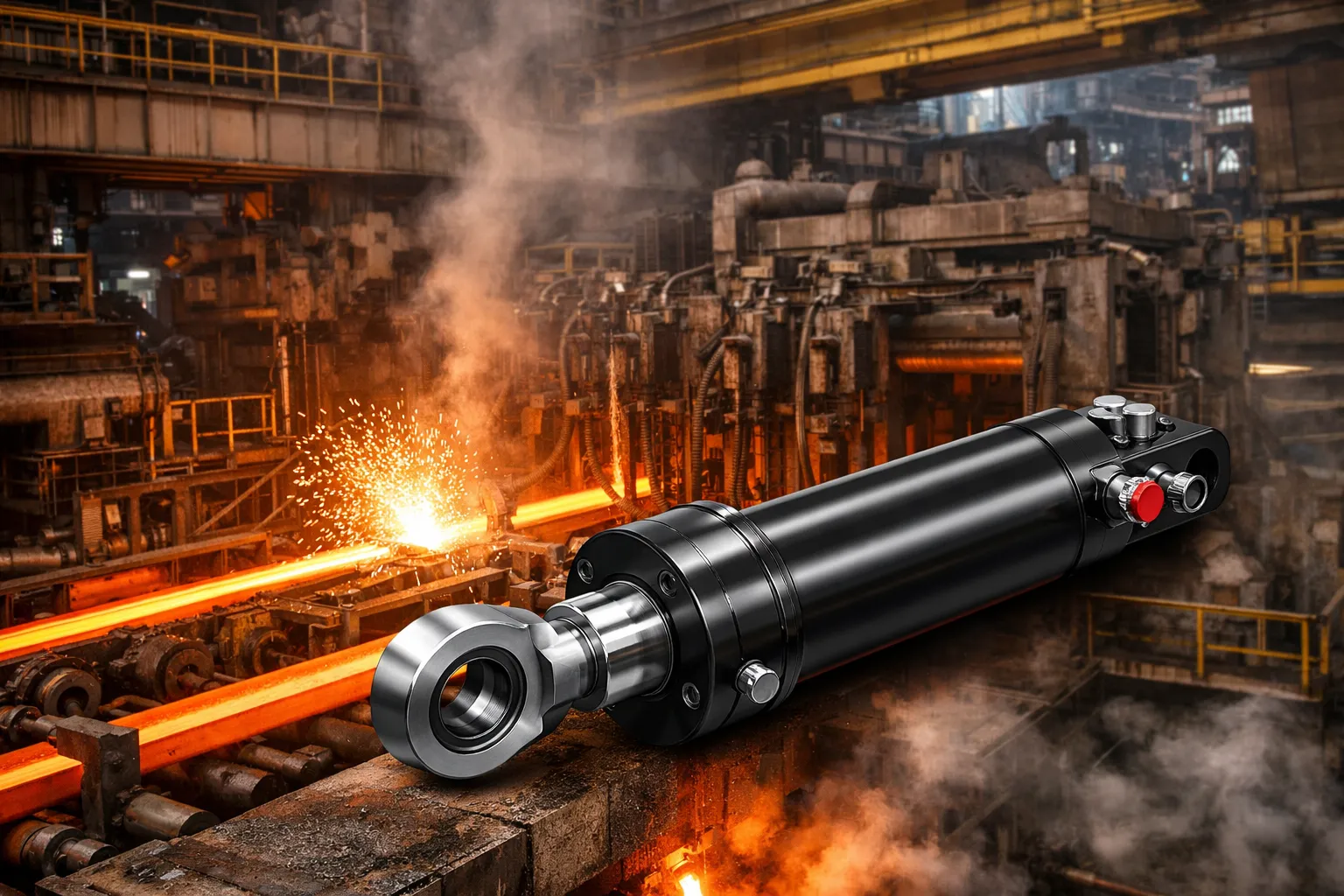
Our unique industrial positioning focuses on delivering uncompromising reliability without inflating your total cost of ownership. When evaluating the overall hydraulic cylinder price against the extended operational lifecycle our units provide, plant managers consistently find that our solutions drastically reduce the need for frequent maintenance and emergency operations regarding fixing hydraulic cylinders. This high level of operational security is essential for maintaining uninterrupted, highly profitable casting campaigns, particularly in highly competitive markets across South Korea and the broader East Asian industrial sector.
Technical Specifications and Customizable Range
We thoroughly understand that every continuous casting floor possesses unique kinematic and dimensional requirements. The engineering parameters detailed below represent the foundational specifications of our double acting hydraulic cylinder units designed explicitly for mold oscillation. Each parameter can be meticulously tailored to match the precise tonnage, stroke envelope, and frequency demands of your specific metallurgical facility.
| Engineering Parameter | Specification and Implementation Detail |
|---|---|
| Industry Sector | Metallurgy and Heavy Steelmaking |
| Equipment Category | Continuous casting machine (Slab, Bloom, Billet) |
| Subsystem / Action Target | Mold System (Oscillation and Vibration) |
| Product Designation | Mold Oscillation Cylinder |
| Action Method | Double acting hydraulic cylinder |
| Structure Type | Servo Piston Cylinder with Internal Position Feedback |
| Manufacturing Structure | Heavy-Duty Welded Construction (Thermally Stress-Relieved) |
| Material System | High-Strength Forged Alloy Steel |
| Surface Treatment | Micro-Cracked Hard Chrome Plating or Thermal Sprayed Ceramic |
| Environment Level | Extreme High Temperature and Severe High-Frequency Vibration |
| Working Condition Characteristics | Continuous non-stop operation, high mechanical resonance, abrasive dust |
| Typical Failure Mode Prevented | Vibration Fatigue, Thermal Seal Degradation, Rod Surface Scoring |
| Recommended Configuration | Ultra-low friction Servo Seal coupled with Integrated Oil Cooling System |
Operational Dynamics and Working Principle
The operational mechanics of our continuous casting cylinders represent a masterclass in modern electro-hydraulic servo control. In contemporary steel mills, rigid mechanical cams have been rendered entirely obsolete by advanced hydraulic systems, primarily because fluid power allows for the real-time adjustment of the oscillation stroke and frequency without ever halting production. The ultimate objective is to impart a complex, non-sinusoidal waveform to the massive copper mold table, a task that requires unparalleled precision from the hydraulic parts involved.
Here is exactly how our engineered system achieves this feat: The central programmable logic controller computes the ideal displacement curve based on the current casting speed and the specific metallurgical grade of the steel. This electronic command is transmitted instantaneously to a high-response proportional servo valve that is directly mounted to the cylinder body. The valve precisely meters high-pressure fluid into the alternating chambers of the double acting hydraulic cylinder. Unlike simpler single acting hydraulic cylinder systems that rely on gravity or mechanical springs for retraction, our double-acting design utilizes fluid pressure to forcefully and accurately drive both the extension and retraction phases at blistering speeds, often reaching up to 450 cycles per minute.
Embedded deep within the hollow center of the hydraulic cylinder piston rod is a highly sensitive Linear Variable Differential Transformer sensor. This sophisticated sensor continually measures the absolute position of the rod with micron-level accuracy, feeding this vital data back to the servo controller to close the electronic control loop. If there is even a fraction of a millimeter of deviation caused by mechanical friction or slag resistance, the servo valve instantly compensates. To guarantee this instantaneous physical response, our cylinders are designed with virtually zero internal breakaway friction, preventing any stick-slip juddering that would undoubtedly tear the delicate steel shell. This harmonious integration of advanced electronics and robust metallurgy is what establishes our cylinders as the definitive industry standard for casting stability.
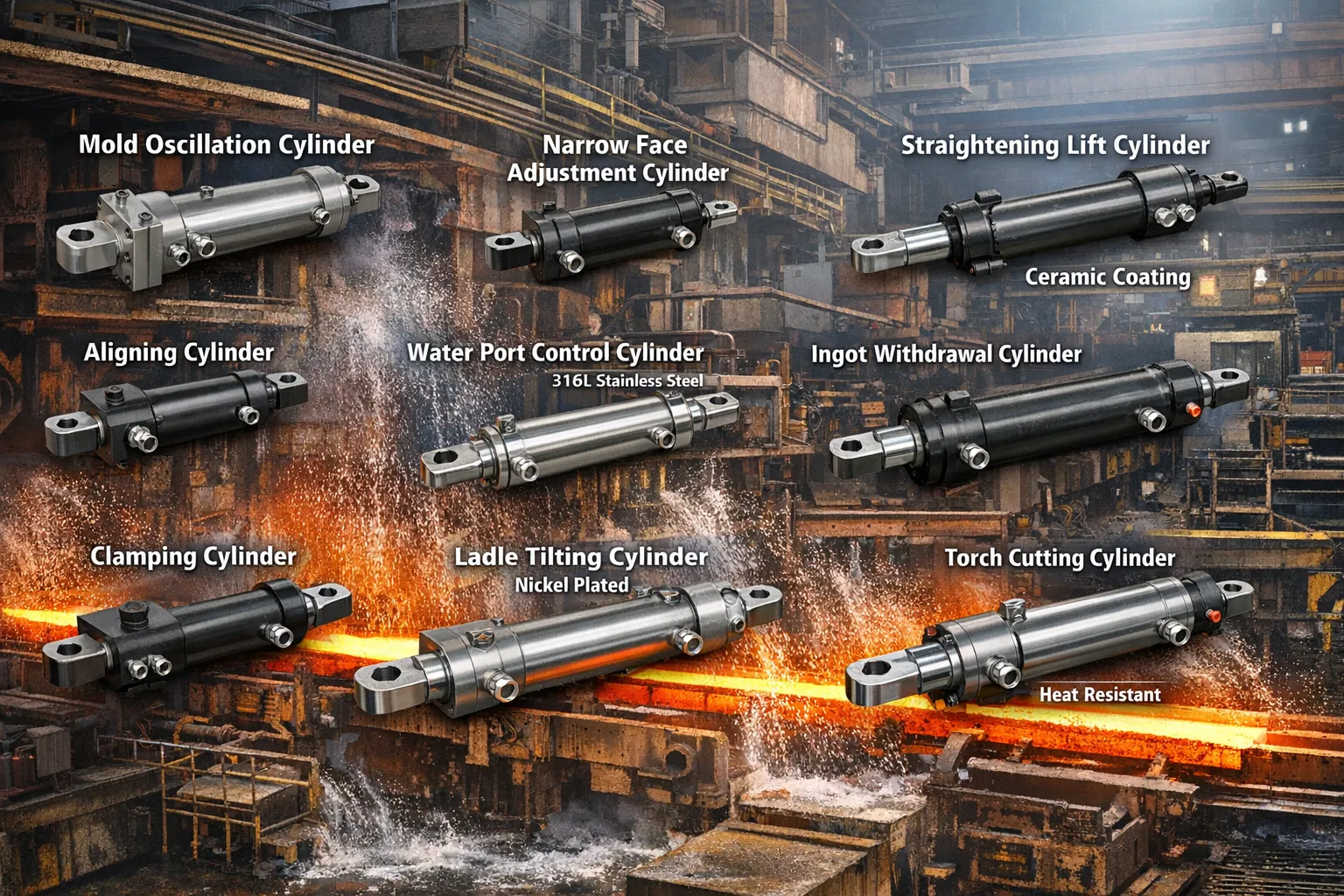
Seamless Brand Interchangeability and Plant Modernization
We acutely recognize that numerous steel plants, particularly those operating across East Asia, are currently functioning with legacy equipment originally supplied by European, American, or Japanese original equipment manufacturers. When these aging original parts inevitably fail, sourcing identical replacements often involves exorbitant costs and unacceptable procurement lead times. Our specialized engineering division excels in creating exact dimensional drop-in replacements tailored for your existing operational infrastructure.
Our highly skilled technical drafting team can cross-reference and perfectly replicate the stroke length, bore diameter, rod diameter, fluid porting configurations, and mounting flanges of cylinders originally built by industry giants such as Rexroth, Parker, Moog, SMS group, Danieli, Primetals, and Concast. Please note that the mention of these specific corporate brand names is strictly to assist maintenance engineers in selecting the correct dimensional matching and operational specifications. It does not imply any trademark affiliation, endorsement, or infringement. Our primary objective is to provide superior hydraulic cylinder components that fit your machines flawlessly, significantly streamlining the process of fixing hydraulic cylinders without requiring invasive modifications to your plant’s structural framework or complex hydraulic piping.
Five Core Technical Advantages
Deploying a standard commercial actuator in a continuous casting zone guarantees premature failure and extensive downtime. We have engineered our continuous casting machine oscillation cylinders to decisively conquer specific metallurgical challenges through five distinct technological breakthroughs:
1. Ultra-Low Friction Servo Sealing Technology
High-frequency micro-movements notoriously destroy standard polyurethane seals through severe localized heat generation and static friction. We implement proprietary ultra-low friction servo seals crafted from specialized polytetrafluoroethylene compounds enriched with bronze fillers. This sophisticated material science eliminates the stick-slip effect entirely, ensuring a butter-smooth transition at the precise peak and valley of the non-sinusoidal wave. This tribological innovation alone exponentially reduces the frequency of required hydraulic cylinder repair.
2. High-Rigidity Welded Alloy Steel Structure
The constant, violent vibration of the mold table generates immense lateral and longitudinal stress that standard tie-rod cylinders simply cannot withstand. Our cylinder bodies are forged from premium high-tensile alloy steels, utilizing a heavy-duty, thick-walled welded construction. Every critical weld is subjected to post-weld stress-relief heat treatment and comprehensive ultrasonic testing, ensuring absolute mechanical rigidity and total immunity to sudden vibration fatigue fracture.
3. Integrated Oil Cooling and Thermal Stability
Operating mere feet from molten steel subjects the cylinder to extreme radiant heat. Combined with the internal fluid friction of continuous high-speed operation, hydraulic fluid can easily lose viscosity and chemically degrade seals. We combat this thermodynamic threat by machining an integrated cooling jacket directly into the cylinder head. By circulating a metered flow of chilled fluid through these internal passages, we actively draw thermal energy away from the critical rod seals, ensuring long-term operational stability.
4. Advanced Sensor Integration and Protection
Precision casting requires infallible data streams. Standard external mechanical limit switches are virtually useless in this environment. Our position transducers are embedded directly within the hollowed center of the hydraulic cylinder piston rod. This ingenious internal placement perfectly shields the delicate electronics from external slag splashes, corrosive steam, and blunt mechanical impacts while providing continuous, zero-backlash positional feedback directly to the main servo valve.
5. Unyielding Surface Metallurgy
The continuously exposed piston rod endures a relentless bombardment of abrasive metallic dust, corrosive cooling water, and reactive mold powder. A standard thin chrome layer will quickly pit, subsequently shredding the primary wiper seals. Our rods undergo a meticulous multi-layer, micro-cracked hard chrome plating process. For the most extreme plant environments, we offer specialized thermal-sprayed ceramic coatings, making the rod practically invincible against aggressive chemical and abrasive tribological attacks.
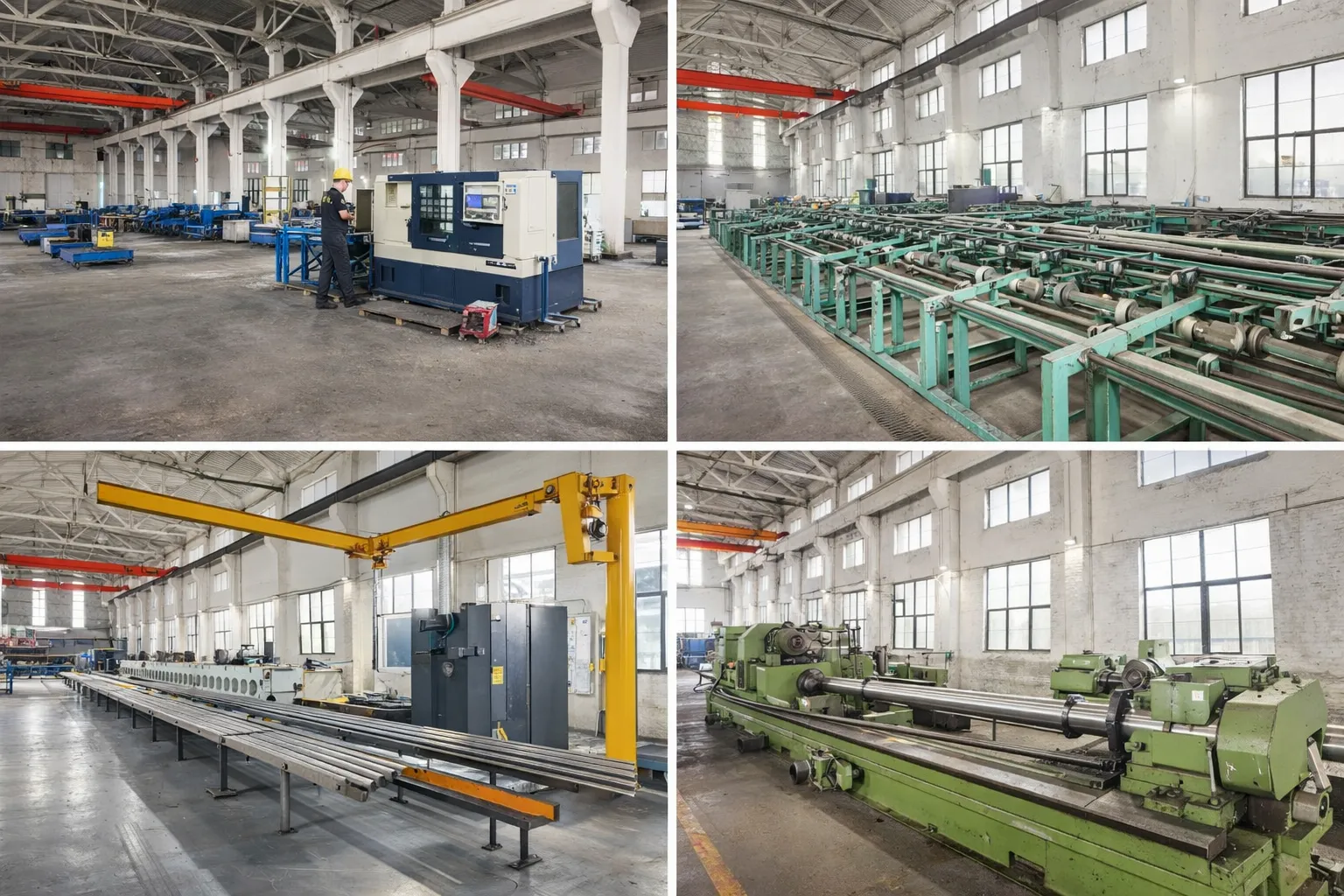
Autonomous Manufacturing Process and Rigorous Quality Control
Trusting a heavy-duty hydraulic cylinder manufacturer means demanding absolute transparency and precision in their production workflow. We proudly operate a fully vertically integrated manufacturing facility. From the moment the raw steel billets are ultrasonically scanned at our receiving docks to the final coating of high-temperature industrial epoxy paint, every manufacturing step is strictly controlled under rigorous ISO-certified protocols. Our multi-axis computer numerical control boring and skiving machines finish the internal cylinder barrels to exacting geometric tolerances, guaranteeing perfectly concentric bores necessary for optimal servo-seal efficiency.
Quality assurance does not merely happen at the end of the line; it is systematically built into the product. Every single mold oscillation cylinder is subjected to 100% dynamic factory testing before authorization for shipment. We mount the completed units on specialized servo test rigs that accurately simulate the exact high-temperature and high-frequency oscillation environment of your specific plant. We meticulously chart the dynamic friction curve, verify sensor linearity, and pressurize the internal chambers to 150% of the nominal rating to ensure absolutely zero internal fluid bypass. A comprehensive data pack and material traceability certificate accompany every unique serial number, easily justifying our highly competitive hydraulic cylinder price with irrefutable proof of lasting quality.
Expanding Beyond the Mold: Typical Industry Applications
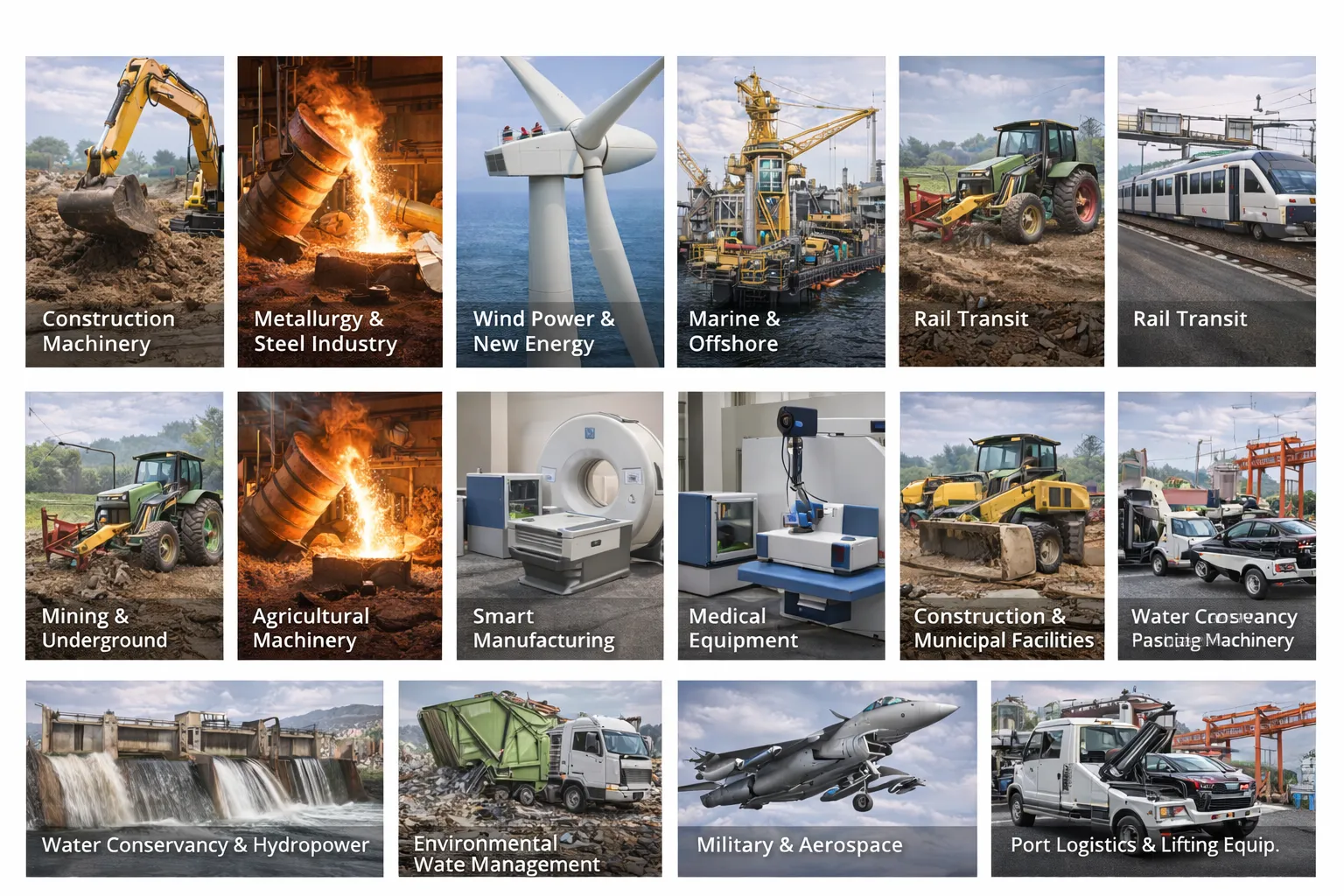
While the ultra-precise oscillation cylinder detailed here represents the pinnacle of our engineering for the continuous casting sector, our deep expertise in fluid power extends across multiple heavy industrial landscapes. The robust engineering principles we apply to defeat metallurgical vibration fatigue translate seamlessly into other demanding applications.
- Metallurgical and Iron Industry: Beyond mold oscillators, we manufacture massive hydraulic cylinders for ladle turret lifting, electric arc furnace roof swings, and highly precise automatic gauge control cylinders for demanding hot and cold rolling mills.
- Mining Industry: We provide incredibly robust hydraulic rams and heavy suspension cylinders specifically designed to absorb massive shock loads and resist highly abrasive silica dust in open-pit crushers and underground mining equipment.
- Construction Machinery Industry: Delivering high-reliability boom, stick, and bucket cylinders for heavy excavators, mobile cranes, and concrete pump trucks, offering exceptionally smooth articulation under extreme operational loads.
- Plastics and Rubber Machinery: High-speed injection molding machines utilize our specialized servo-proportional cylinders for rapid mold closing and precise injection velocity control without risking fluid aeration.
- Material Handling and Logistics: Heavy-duty lifting mechanisms requiring smooth, continuous operation, often acting as a superior, heavy-duty alternative to standard lift cylinders in automated warehousing and port handling equipment.
- Specialized Testing Equipment: We engineer bespoke, high-frequency solutions for complex aerospace testing rigs that subject materials to millions of cyclic loads, perfectly mirroring our core metallurgical cylinder designs.
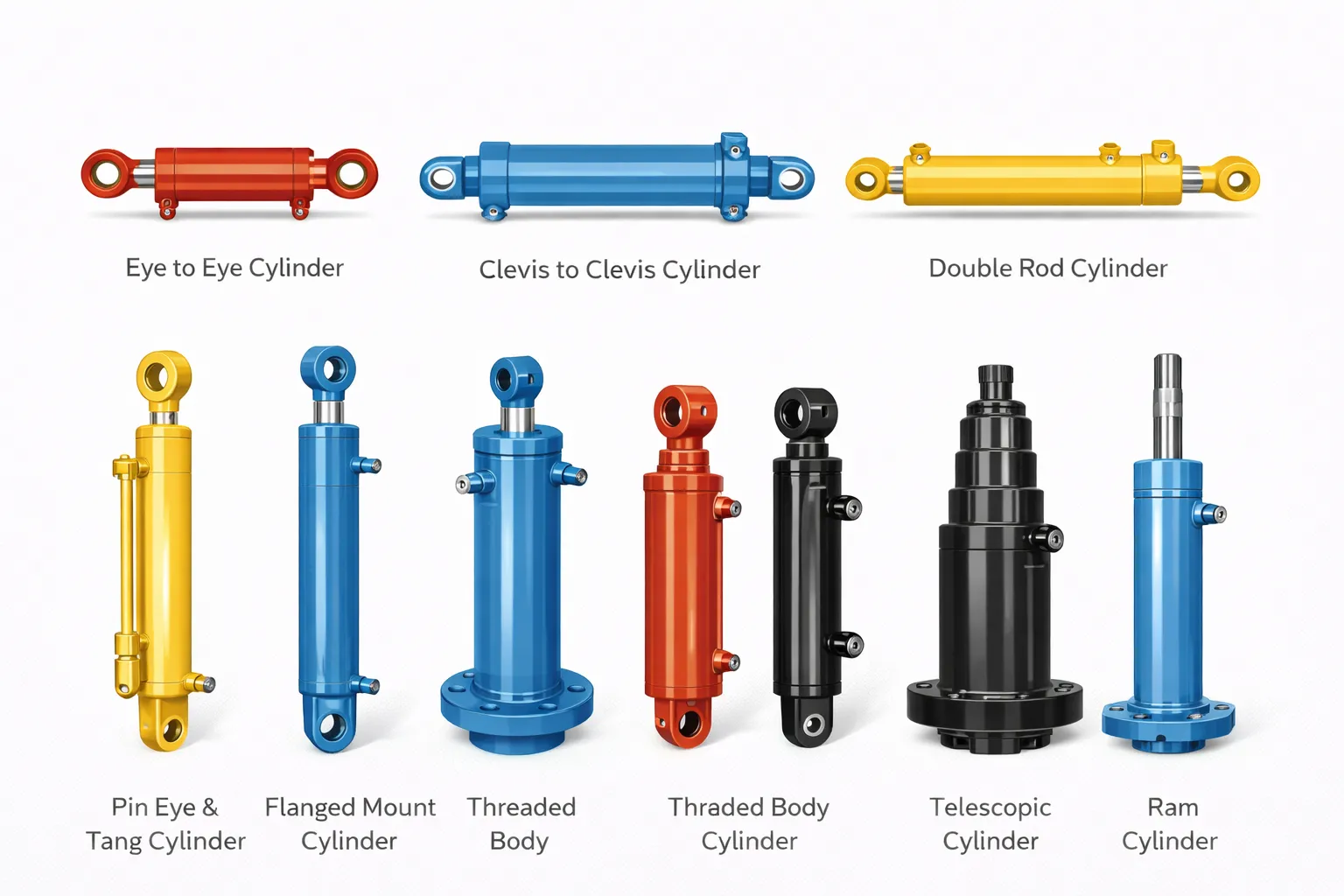
Comparative Analysis: Standard Commercial vs. High-Performance Servo Cylinders
Why allocate a specific maintenance budget for a specialized high-performance unit rather than relying on a standard commercial catalog cylinder? The side-by-side comparative data below clearly illustrates the operational advantages and demonstrates why generic fluid power parts represent a dangerous false economy in continuous casting environments.
| Feature / Operational Metric | Standard Industrial Hydraulic Cylinder | Our Mold Oscillation Hydraulic Cylinder |
|---|---|---|
| Seal Friction Profile | High starting friction; highly prone to stick-slip juddering during micro-strokes. | Near-zero breakaway friction; tracks non-sinusoidal curves perfectly. |
| Frequency Capability | Designed strictly for low to medium speeds (Maximum 50-80 Hz). | Engineered for ultra-high continuous vibration (Up to 450 Hz). |
| Thermal Management | Relies solely on ambient air cooling; internal fluids degrade rapidly. | Integrated internal fluid cooling jackets protect dynamic seals actively. |
| Structural Fatigue Limit | Standard welds and threaded tie-rods crack under relentless vibration. | Stress-relieved, fully inspected forged alloy construction handles millions of cycles. |
| Maintenance Expectancy | Requires frequent line stops and constant fixing hydraulic cylinders. | Extended lifecycle allows for uninterrupted, multi-month casting campaigns. |
Proven Field Excellence: B2B Case Studies in the Asian Market
Our highly specialized fluid power engineering has been fundamentally trusted by major steel producers globally. We maintain a particularly strong and expanding footprint resolving critical production bottlenecks in technologically advanced sectors across South Korea and surrounding East Asian countries.
Case 1: Eradicating Breakouts in a Major Slab Caster
Location and Client: Top-tier Integrated Steel Mill, Pohang, South Korea.
Application: Twin-strand Slab Continuous Casting Machine.
Connection Method: The plant’s engineering director discovered our specific interchangeable cylinder dimensions via a targeted Google search in Q2 2024.
The Challenge: The facility faced frequent breakout alarms. Aging European OEM cylinders were exhibiting severe stick-slip friction due to seal heat degradation, severely distorting the programmed oscillation curve.
The Result: We delivered a complete set of upgraded mold oscillation cylinders featuring our integrated cooling loops. Breakout rates dropped by an unprecedented 90% over the following six months.
“The thermal stability of these custom units is phenomenal. Our non-sinusoidal curves look textbook perfect on the PLC scope, and the slab surface quality has noticeably improved.” — Chief Maintenance Engineer, Dec 2024.
Case 2: Extending Lifecycle for Specialty Alloy Steels
Location and Client: Specialty High-Alloy Steel Plant, Kobe, Japan.
Application: Billet Caster for automotive-grade high-strength steel.
Connection Method: Initial consultation occurred at a major international metallurgical trade exhibition in late 2023.
The Challenge: Abrasive mold flux and intense ambient heat were destroying standard rod wiper seals, requiring costly hydraulic cylinder repair every 3 to 4 weeks, severely impacting productivity.
The Result: We deployed cylinders equipped with thermal-sprayed ceramic piston rods and extreme-temperature dual-wiper systems. The mean time between failures was instantly extended from a few weeks to over 16 months.
“We were highly skeptical about changing from our OEM supplier, but the ceramic coating technology solved our most persistent maintenance headache. Brilliant fluid power engineering.” — Plant Operations Manager.
Case 3: Retrofitting Heavy Equipment without Structural Changes
Location and Client: Heavy Industry Steel Group, Kaohsiung, Taiwan.
Application: Bloom Continuous Casting Machine Modernization.
Connection Method: Referred to us by an industrial automation integrator tasked with upgrading the plant’s PLC systems.
The Challenge: The client wanted to upgrade to servo-hydraulic oscillation but possessed an older mold table structure that could not accommodate standard bulky actuators. Redesigning the steel framework was cost-prohibitive.
The Result: Our engineers provided a highly compact yet exceptionally powerful double acting hydraulic cylinder design that precisely matched the legacy mounting points while delivering full modern servo responsiveness. The retrofit was executed seamlessly.
“Their ability to custom manufacture the mounting interface while maintaining high-end servo performance allowed us to modernize our plant without massive structural rebuilding.” — Project Engineer.
Case 4: Fast-Track Emergency Replacement
Location and Client: Emerging Integrated Steelworks, Ha Tinh, Vietnam.
Application: High-speed 6-strand Billet Caster.
Connection Method: Direct emergency inquiry via our website’s technical contact form.
The Challenge: A catastrophic failure of an existing cylinder halted production on a critical casting strand. The original European supplier quoted an unacceptable 24-week lead time for a replacement unit.
The Result: Leveraging our agile autonomous manufacturing capabilities, we rapidly reverse-engineered the specifications, machined the components, dynamically tested the assembly, and air-freighted a perfectly compatible unit within 28 days.
“Speed and uncompromising communication. We received the cylinders precisely when promised, preventing a massive revenue loss for the quarter.” — Procurement Director.
Case 5: Cost Optimization for Scaling Operations
Location and Client: Large Smelting and Casting Group, Gujarat, India.
Application: Multiple Billet Continuous Casting Lines.
Connection Method: Reached out via a professional network connection to our sales engineering team in May 2025.
The Challenge: Expanding their facility meant ordering dozens of new oscillation cylinders. European OEM quotes were prohibitively expensive and carried long lead times that threatened the expansion timeline.
The Result: As a specialized manufacturer, we provided a bulk manufacturing contract with a much shorter lead time and superior testing protocols. The client successfully commissioned their new lines ahead of schedule while saving significantly on their capital expenditure.
“Outstanding value proposition. The performance directly rivals the top-tier German brands we previously used, but with much better customer support and lead times.” — Managing Director.
Frequently Asked Questions (FAQ)
Clear engineering communication is at the absolute core of our business model. To assist procurement managers and plant engineers in making informed decisions, we have compiled the most common technical inquiries regarding our high-frequency oscillation systems.
What differentiates a mold oscillation cylinder from a standard industrial cylinder?
A standard double acting hydraulic cylinder is generally designed for low-speed, point-to-point power transfer over long distances. Conversely, a mold oscillator cylinder is a high-precision servo-instrument designed to execute continuous, high-frequency micro-strokes without hesitation. It utilizes specialized low-friction seals, integrated internal oil cooling, and zero-backlash feedback sensors to execute complex non-sinusoidal waveforms without suffering from vibration fatigue or thermal seal degradation.
Can these units directly and seamlessly replace my existing European brand cylinders?
Yes, absolutely. As a highly capable custom hydraulic cylinder manufacturer, we routinely map the exact bore, stroke, flange mounting patterns, and port configurations of machinery originally built by major OEMs. This enables a direct mechanical drop-in replacement, massively simplifying your procurement process and eliminating the need for costly plant piping or structural modifications.
What is the typical lead time for delivering these specialized parts to South Korea or East Asia?
For standard metallurgical dimensional models and documented drop-in replacements, our comprehensive manufacturing and testing cycle is typically 4 to 6 weeks. For entirely custom engineering requiring unique manifolds or ceramic rod coatings, lead times range from 6 to 8 weeks. Logistics to major South Korean ports like Busan or Incheon are highly streamlined, ensuring prompt and reliable delivery.
Do you provide support for hydraulic cylinder repair and complete refurbishments?
Yes. In addition to manufacturing brand-new units, we operate a dedicated service division for comprehensive hydraulic cylinder repair. We can comprehensively assess your failed or worn units, replace degraded seals, re-hone the barrels, re-chrome the rods, and perform full dynamic testing. This process of expertly fixing hydraulic cylinders effectively restores them to zero-hour OEM performance standards.
How competitive is your pricing compared to purchasing directly from primary equipment OEMs?
Because we meticulously control 100% of the manufacturing, assembly, and testing processes strictly in-house, we entirely eliminate massive middleman and brand markups. As a result, our hydraulic cylinder price is highly competitive, routinely delivering significant cost savings over traditional European OEMs, while often exceeding their fatigue life and dynamic performance metrics.
What hydraulic fluid cleanliness level is required to safely operate these servo cylinders?
Because these specialized cylinders rely on ultra-precise, high-response servo proportional valves to function correctly, strict fluid cleanliness is mandatory. We strongly recommend maintaining the hydraulic fluid at ISO 4406 16/14/11 (or NAS 1638 Class 5) to prevent micro-particulates from jamming the delicate valve spools or prematurely wearing the internal servo seals.
Ready to Optimize Your Continuous Casting Operations?
Do not let underperforming fluid power components dictate your plant’s maintenance schedule or compromise the critical surface quality of your steel slabs. Partner with a dedicated fluid power engineering expert to design a robust solution that maximizes your continuous casting machine’s uptime. Connect with our team today to discuss customized oscillation solutions, request a detailed technical audit, or secure an accurate manufacturing quote for your facility.
Editor: Cxm