
Rear Cover Opening Cylinder for Straw Crushers
Meticulously engineered with robust carbon steel and an advanced protective sleeve architecture to definitively eradicate rod pitting and ensure flawless operational safety in extreme agricultural dust environments.
Strategic Agronomic Value and Extreme Operational Context
In the highly intensive agricultural landscapes of South Korea, Japan, and the broader East Asian perimeter, efficient crop residue management is the absolute cornerstone of sustainable soil health. Following the harvest of dense crops such as rice, wheat, and corn, leaving whole stalks in the field severely impedes subsequent planting operations, traps vital nutrients, and encourages pest proliferation. The professional mechanical solution is the heavy-duty straw pulverizer returning machine, frequently referred to as a flail mower or straw crusher. These massive, tractor-mounted implements utilize a high-speed rotating drum equipped with heavy forged steel flails to violently shred crop residue, turning it into a fine mulch that rapidly decomposes and returns essential organic matter directly into the topsoil profile.
However, operating machinery designed to continuously and violently pulverize tough, fibrous plant material inevitably leads to internal blockages, wrapped twine, and the constant necessity to inspect, balance, or replace shattered cutting blades. To facilitate this mandatory field maintenance, the machine is equipped with a heavy, armored steel rear hood or access panel. Safely elevating and securely locking this massive steel canopy is the sole, critical responsibility of the rear cover opening cylinder. When the operator requires access, this specific fluid power actuator must lift hundreds of kilograms of steel smoothly and hold it rigidly in place, protecting the mechanics working directly underneath the exposed, razor-sharp rotor.
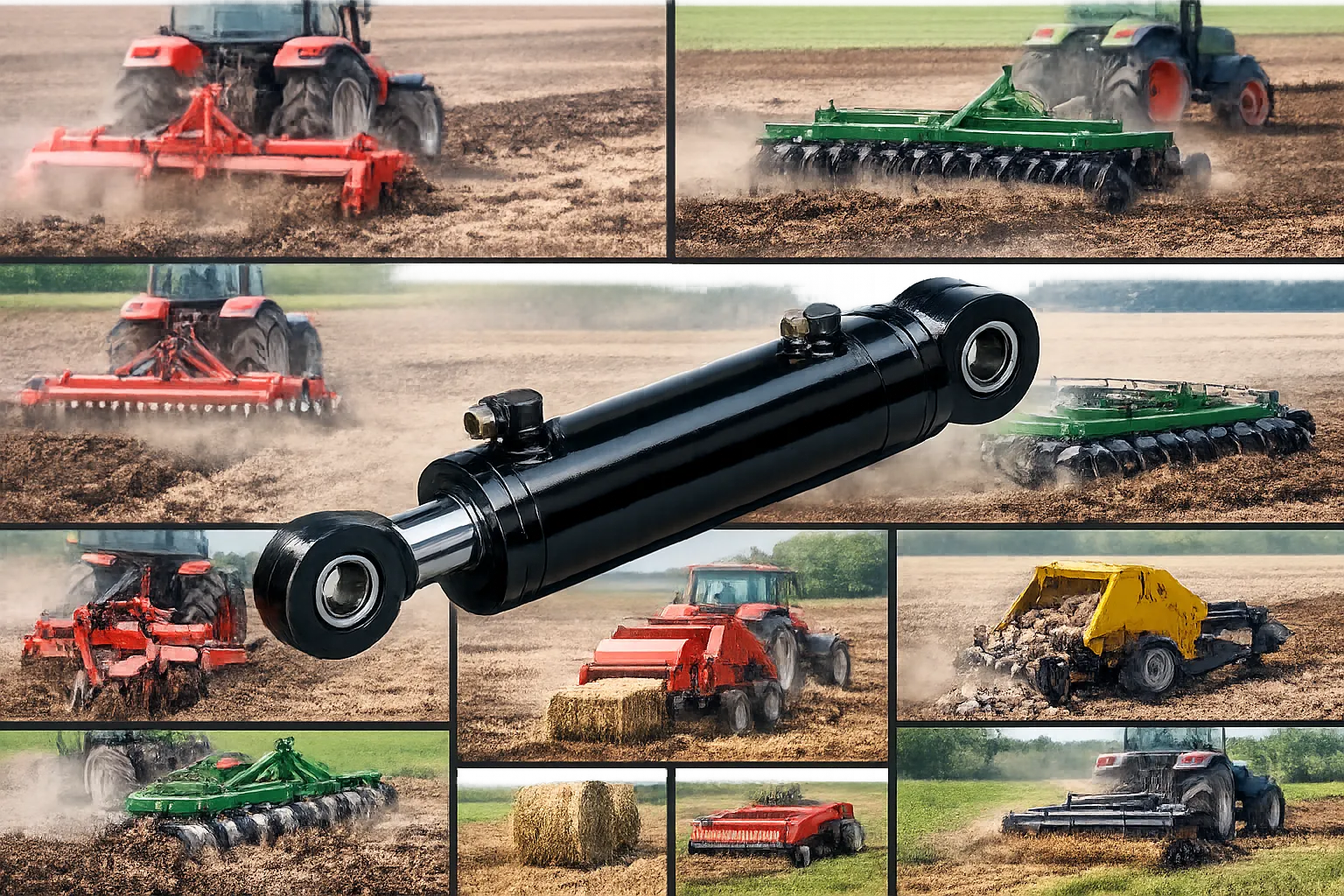
The operating environment for a rear cover opening hydraulic cylinder mounted on the rear of a straw pulverizer is arguably one of the most hostile airborne environments in the agricultural equipment sector. The machine constantly generates a massive, suffocating cloud of highly abrasive silica dust, pulverized plant matter, and corrosive, acidic plant sap. When standard, mass-produced commercial hydraulic parts are deployed in this specific location, the fine dust instantly settles on the exposed chrome rod. As the rod retracts to close the cover, this abrasive paste acts like a grinding compound, rapidly destroying the wiper seals. Furthermore, the acidic plant residue causes severe rod pitting—microscopic galvanic corrosion cavities that permanently ruin the smooth sealing surface. This inevitably results in catastrophic fluid hemorrhage, a dangerous loss of holding pressure, and an immediate, costly need for fixing hydraulic cylinders right in the middle of a narrow harvest window.
Operating exclusively as a premium, highly specialized industrial hydraulic cylinder manufacturer, our engineering philosophy completely abandons these fragile commercial constraints. We engineer for absolute survival in extreme dust. Our proprietary solutions feature robust welded carbon steel construction, advanced micro-cracked hard chrome plating, and most critically, the integration of a heavy-duty, impermeable protective sleeve that entirely isolates the hydraulic cylinder piston rod from the abrasive atmosphere. This uncompromising preventative design eradicates rod pitting, ensuring maximum fleet uptime and unparalleled mechanical safety.
Precision Engineering Parameters and Customization Framework
Ensuring absolute mechanical safety and operational longevity in dust-choked environments requires complete transparency regarding material specifications and environmental defensive layers. The successful deployment of specialized tillage machinery demands actuation systems that are dimensionally exact and metallurgically superior. Our vertically integrated manufacturing infrastructure allows for highly adaptable stroke lengths and mounting configurations while rigidly enforcing our heavy-duty, anti-pitting baseline metrics. The detailed technical matrix below defines the exact engineering parameters of our severe-duty rear cover opening cylinder solutions.
| Engineering Discipline | Specification Thresholds and Technical Directives |
|---|---|
| Target Industry Sector | Agriculture / Advanced Crop Residue Management |
| Equipment Category | Tillage Machinery (Straw Pulverizers / Flail Mowers / Crop Shredders) |
| Target Subsystem Mechanism | Heavy steel hood elevation and secure maintenance positioning |
| Official Component Nomenclature | Rear Cover Opening Cylinder |
| Actuation Methodology | Double acting hydraulic cylinder (Mandatory for powered lift and secure, controlled hood closing) |
| Fundamental Architecture | Piston cylinder arrangement (Completely enclosed, tie-rod free rigid design) |
| Manufacturing Assembly | Welded structural construction (Automated deep-penetration robotic fusion) |
| Core Metallurgical System | Premium Carbon Steel (Optimized for excellent weldability and lifting rigidity) |
| Surface Defense Treatment | High-hardness Chrome Plating (Specifically formulated to resist acidic plant sap) |
| Operational Environment Rating | Extreme Dust / High concentrations of abrasive airborne organic particulate |
| Primary Working Characteristic | Smoothly open and securely close the heavy rear maintenance cover |
| Eradicated Typical Failure Mode | Total elimination of rod pitting (galvanic corrosion) and subsequent seal failure |
| Mandatory Engineering Configuration | Strict utilization of a flexible protective sleeve (bellows boot) over the rod |
Operational Fluid Dynamics and Kinematic Safety Mechanisms
To fully appreciate why a specialized rear cover opening hydraulic cylinder is strictly necessary, one must deeply understand the operational sequence and the severe safety liabilities involved. When a massive slug of wet crop residue inevitably jams the high-speed rotor, the operator must halt the PTO, engage the tractor’s auxiliary spool valve, and direct highly pressurized hydraulic fluid into the base (cap end) of the cylinder. This massive volumetric pressure forcefully extends the hydraulic cylinder piston, overpowering gravity to lift the heavy, steel-reinforced rear hood wide open, exposing the rotor for safe manual clearing by the field technicians.
A single acting unit could technically push the door open, but it relies entirely on the heavy dead weight of the door to fall closed. This is extremely dangerous and inefficient. During active pulverizing, high-velocity chunks of wood, stones, and thick stalks are violently thrown against the inside of the rear hood. A gravity-closed hood will bounce open under this severe impact, discharging lethal debris directly at trailing vehicles or field workers. A true double acting hydraulic cylinder is a non-negotiable safety requirement. By routing pressurized fluid to the rod end during operation, the cylinder actively and forcefully pulls the door tightly shut, structurally locking it against the machine chassis to contain all pulverized material safely within the cutting chamber.
It is exactly during the extended, open-maintenance phase that the polished steel rod is at its most vulnerable. Even with the PTO disengaged, the immediate environment is swirling with suspended crop dust. If this dust settles on an exposed, oil-filmed rod, pitting is guaranteed to begin. Our proprietary implementation of a heavy-duty, flexible elastomer protective sleeve entirely isolates the extended rod from the atmosphere. This robust bellows-style boot acts as an impenetrable physical barrier. When the rod extends, the sleeve expands; when it retracts, the sleeve compresses. The underlying chrome rod operates in a perfectly clean, dust-free micro-environment, entirely preventing the galvanic pitting reaction. This simple, brilliant integration guarantees your hydraulic parts remain pristine and functional for thousands of cycles.
Seamless Global OEM Fleet Integration and Aftermarket Retrofitting
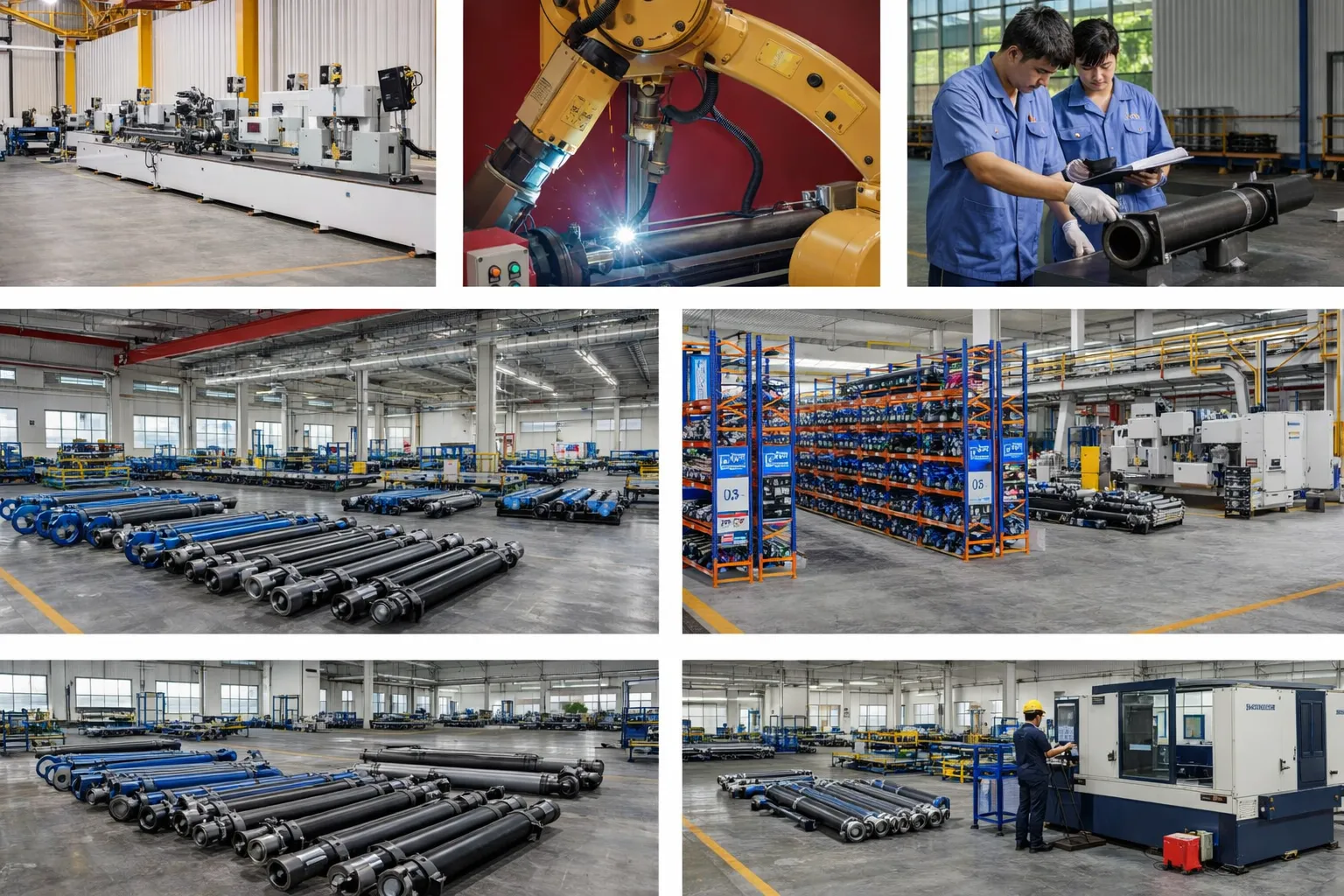
In the highly compressed and economically vital window of autumn harvest and residue management, enduring lengthy supply chain delays for imported original equipment replacement parts is an operationally disastrous scenario for commercial cooperatives. When a straw pulverizer is paralyzed in the field because a pitted rod blew a lift cylinder seal, the crop residue cannot be processed, stalling the entire subsequent planting schedule. Furthermore, replacing a failed factory component with the exact same unsleeved, inherently weak commercial design virtually guarantees a repeat failure within the season. Our dedicated B2B engineering database meticulously catalogs the precise retracted lengths, extended strokes, mounting pin diameters, and fluid port configurations of the industry’s most trusted heavy flail mowers.
This immense dimensional cross-referencing capability empowers us to manufacture exact, direct drop-in replacement hydraulic rams that are fully and flawlessly compatible with premium global machinery brands, including Maschio Gaspardo, Kuhn, Nobili, Muthing, Breviglieri, and Seppi M. (Legal notice: The explicit mention of these international trademarked brand names within this technical specification document serves strictly to assist B2B procurement managers and independent field mechanics with essential dimensional matching and aftermarket selection convenience. We operate proudly and entirely as an independent hydraulic cylinder manufacturer and firmly assert no formal commercial affiliation, sponsorship, or endorsement with these respective corporate entities.)
By choosing to bypass fragile, standard OEM replacements and actively upgrading directly to our sleeve-protected, carbon steel units, fleet managers execute a permanent environmental upgrade. Heavy equipment technicians spend drastically less time in the dirt dealing with repetitive hydraulic cylinder repair issues because our components physically reject the dust that causes failure. Procuring these critical upgrades directly from our factory ensures you secure a highly aggressive, bulk-optimized hydraulic cylinder price, drastically reducing your long-term total cost of ownership while maximizing safety for your field operators.
Core Technological Advancements Defining Dust Immunity
The profound distinction between a disposable, light-duty commercial agricultural cylinder and our severe-duty industrial actuator lies entirely in the uncompromising application of advanced environmental defense mechanisms, optimized metallurgy, and a deeply data-driven approach to addressing specific field failures. Below are the definitive technical advantages deeply embedded into every pulverizer hood cylinder we dispatch:
Integrated Flexible Protective Sleeve (Bellows)
The ultimate countermeasure to rod pitting. We encase the extended piston rod in a heavy-duty, UV-resistant elastomeric bellows. This sleeve acts as an impenetrable physical barrier, ensuring that the abrasive, hygroscopic crop dust swirling around the pulverizer never makes physical contact with the chrome rod, eliminating the root cause of galvanic corrosion and preserving the internal seals indefinitely.
High-Grade Carbon Steel Welded Structure
Because the hood lifting mechanism does not endure the extreme compressive shock of deep subsoiling, we utilize a highly optimized, premium carbon steel for the barrel and rod. This provides the perfect rigidity-to-weight ratio, ensuring the cylinder is strong enough to rigidly lock the heavy rear door closed against debris impacts without adding unnecessary dead weight to the implement chassis.
Micro-Cracked Hard Chrome Defense
Even beneath the protective sleeve, we refuse to compromise on rod quality. The extending rod undergoes precision grinding followed by a specialized micro-cracked hard chrome plating process. This provides a brilliant, secondary layer of extreme corrosion resistance against condensation, ensuring the rod remains absolutely rust-free over decades of use.
Ultra-Low Friction Internal Sealing Matrix
Jerky, stick-slip actuation when lifting a heavy steel cover is incredibly dangerous and unpredictable. We employ an advanced composite matrix of ultra-low friction PTFE (Teflon) glide rings and highly resilient polyurethane lip seals. This ensures perfectly smooth, judder-free lifting power, allowing the operator to raise and lock the hood safely with complete hydraulic precision.
Safety Valve Integration Compatibility
Safety is paramount when suspending heavy steel plates over mechanics. Our rear cover opening hydraulic cylinder base blocks are specifically engineered to seamlessly accept pilot-operated check valves (PO check valves). If a hydraulic hose bursts on the tractor while the hood is open, these integrated valves instantly lock the fluid in the chamber, physically preventing the massive steel cover from dropping and crushing the operator.
Automated Submerged Arc Welding
The heavy vibration generated by the high-speed flail rotor transfers directly into the chassis mounts. We strictly utilize fully automated, multi-pass robotic submerged arc welding to seamlessly fuse the carbon steel trunnions to the barrel. This ensures deep, flawless metallurgical penetration, creating a monolithic structure completely immune to vibration-induced weld tearing.
Autonomous Manufacturing Precision and Uncompromising Traceability
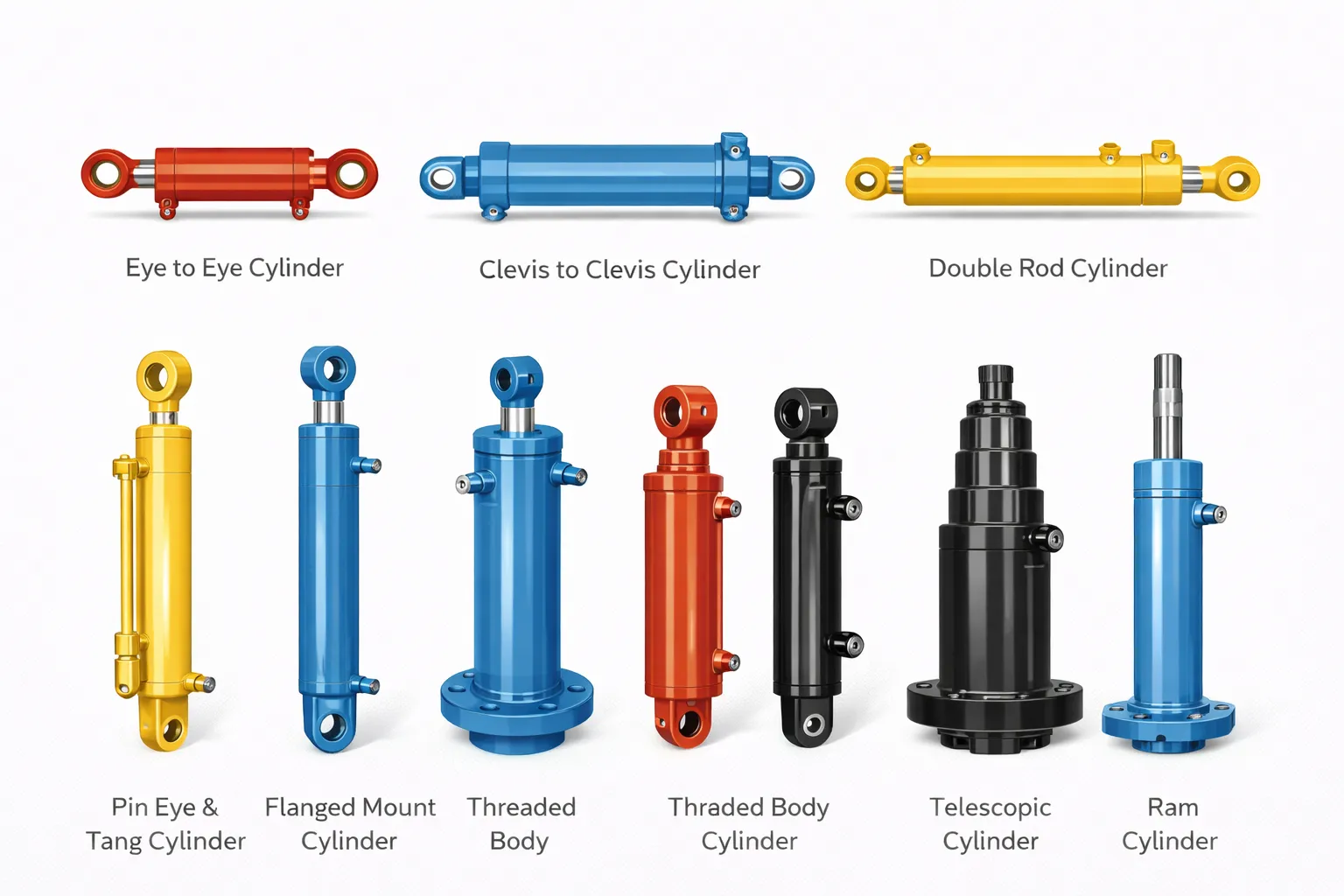
Advanced theoretical engineering blueprints hold zero practical value without uncompromising precision during physical execution on the factory production line. As a highly trusted, internationally ISO-certified fluid power manufacturing enterprise, we operate a vast, fully vertically integrated, autonomous production campus. This total infrastructure control over the entire supply chain—from the strict ultrasonic defect testing of raw carbon steel tubing to precision CNC machining, robotic assembly, and rigorous industrial testing—guarantees that every single component dispatched meets our absolute industrial survival standards. We completely reject the fragmented, outsourced supply chains that cause severe quality fluctuations in standard commercial agricultural parts.
During the critical CNC internal machining phase, our technicians maintain exacting internal bore tolerances of H8. The inner diameter of the carbon steel barrel is subjected to an advanced deep skiving and roller burnishing process. This critical cold-working technique compresses the internal steel grain, creating a stunning, mirror-like internal surface finish tighter than Ra 0.2 microns. This flawless, zero-friction internal environment is the absolute operational secret to exponentially extending the life of our internal seals, ensuring absolutely zero internal fluid bypass when the cylinder is locked in position, holding the heavy hood safely above the mechanics.
Our internal quality assurance mandate is absolute. We rigorously enforce a strict 100% factory hydrostatic testing protocol for all outbound inventory. Every assembled unit is securely mounted to an automated computerized test bench, aggressively pressurized to 1.5 times its maximum rated working limit, and dynamically cycled repeatedly to verify flawless sealing integrity and the immense holding power of the structural welds. We guarantee absolute zero external fluid weeping. Finally, to ensure permanent lifecycle accountability, each cylinder is permanently laser-etched with a unique alphanumeric serial number. This provides our discerning B2B procurement partners with complete metallurgical traceability, drastically simplifying aftermarket support for decades.
Cross-Industry Adaptability of Dust-Immune Actuators
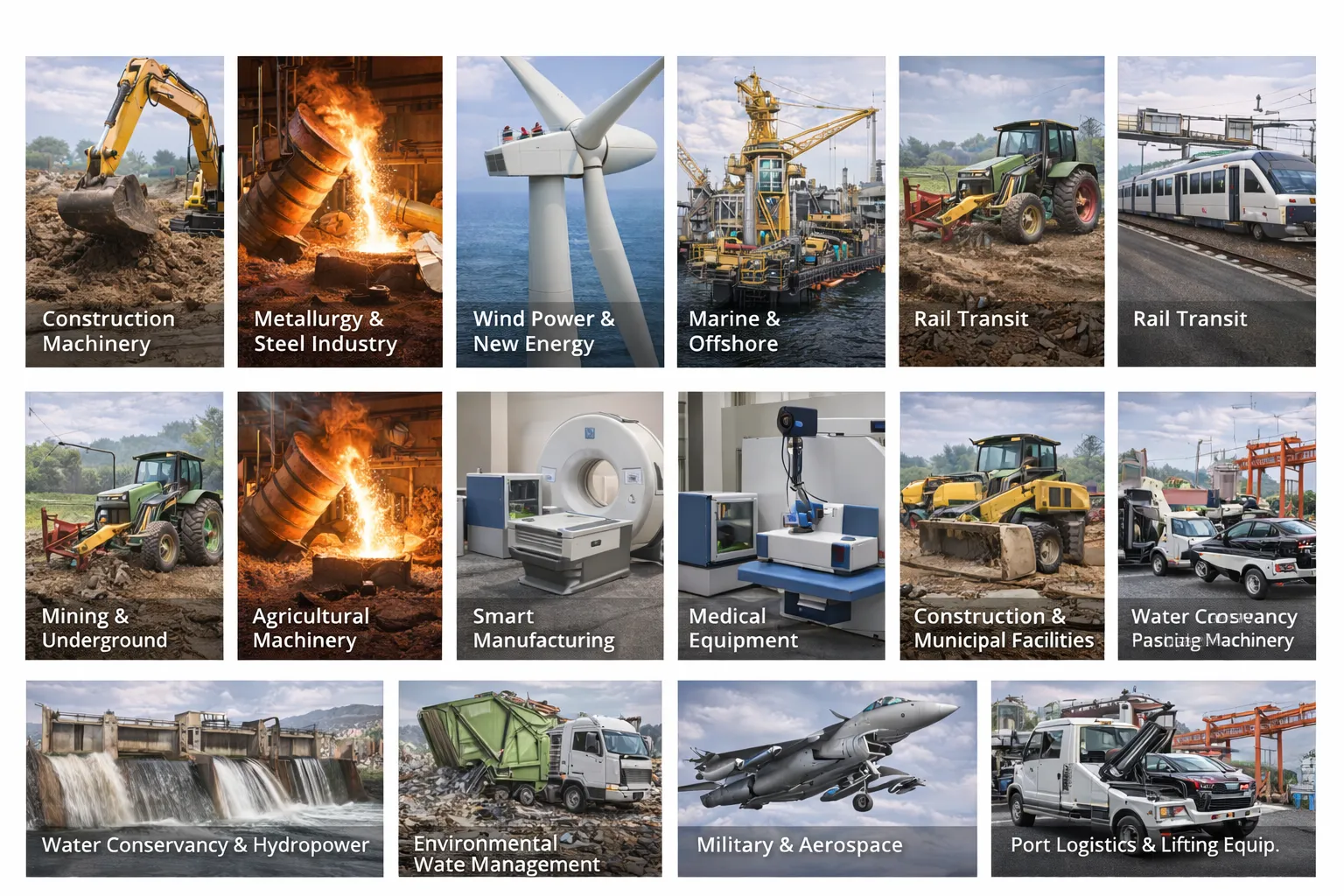
While this specific engineering architecture—featuring sleeved protection and carbon steel construction—is uniquely optimized to conquer rod pitting on a straw pulverizer hood, the fundamental underlying engineering philosophy of actively isolating the rod from severe airborne particulate holds massive value across numerous other heavy industrial sectors. Any machinery tasked with operating in dense dust or corrosive environments desperately requires this robust structural defense.
- Mining Industry: Subterranean rock crushers, massive conveyor belt tensioning systems, and surface continuous miners rely entirely on our sleeved technology to survive the relentless, highly abrasive silica dust contamination deep underground, preventing immediate seal destruction.
- Construction Machinery Industry: Concrete pulverizers, heavy demolition shears, and cement mixer drum tilt actuators heavily utilize our enclosed cylinder architecture to operate flawlessly amidst dense clouds of abrasive cement dust and falling debris.
- Metallurgical and Iron Industry: Slag handling equipment and heavy foundry actuators demand the absolute surface integrity our protective sleeves provide to resist scoring and pitting from corrosive metallic dust and extreme radiant heat in the steel mill environment.

Definitive Comparative Analysis: Commercial vs. High-Performance Engineering
When meticulously calculating operational capital expenditure and actively negotiating the optimal hydraulic cylinder price, visionary B2B fleet directors profoundly understand that the initial purchase cost represents only a tiny fraction of its true long-term impact. The devastating financial blow of sudden equipment downtime and the severe safety risks of a failing lift cylinder far outweigh any minor initial savings. The technical matrix below unequivocally illustrates the severe structural and operational disparities between sourcing standard, unprotected agricultural replacements and investing in our dust-defended engineered solutions.
| Engineering Metric | Standard Commercial Agricultural Cylinder | Our High-Performance Opening Cylinder |
|---|---|---|
| Environmental Dust Defense | Naked, exposed rod. Relies purely on a weak rubber wiper that easily fails in thick dust. | Fully enclosed protective bellows physically isolates the rod from all atmospheric dust. |
| Rod Pitting Vulnerability | Extremely High; settling dust draws moisture, causing rapid galvanic rust and pitting. | Virtually zero; the rod operates in a clean micro-environment, preserving the chrome indefinitely. |
| Seal Contamination Risk | Certainty of failure; pitted rods drag through seals, shredding them and causing massive leaks. | Eliminated; the pristine, un-pitted rod extends the life of internal fluid seals by years. |
| Actuation Smoothness | Basic rubber seals cause jerky, erratic movement, making precision hood control dangerous. | Advanced PTFE glide rings allow perfectly smooth, safely controlled hydraulic hood lifting. |
| Safety Valve Readiness | Standard ports cannot readily accept safety lock valves without messy external plumbing. | Custom engineered base blocks natively accept pilot-operated check valves for absolute safety. |
| Operational Lifecycle TCO | Fails rapidly in dusty conditions, demanding continuous, expensive downtime and replacement. | Delivers robust, reliable multi-season performance regardless of severe airborne dust load. |
Proven Global Reliability: Frontline Field Triage Cases Across Asia
Rigorous engineering theories and advanced design claims are entirely meaningless unless they are decisively validated by brutal reality in the field. Our highly efficient global logistics network rapidly deploys premium fluid power solutions to major agricultural hubs across East Asia. Below are highly detailed, verified accounts demonstrating exactly how our environmental enhancements have fundamentally eradicated critical pain points and transformed equipment reliability for major B2B operators.
Field Triage: Eradicating Rod Pitting in Gyeonggi-do, South Korea
Client Profile: Large-Scale Rice and Arable Farming Cooperative.
Application Environment: Deploying massive tractor-mounted straw pulverizers to shred tough, abrasive dry rice straw immediately following the autumn harvest.
The Dire Challenge: The cooperative faced a terrifying safety issue. The abrasive silica dust from the rice paddies was severely pitting the rods on their factory cylinders. Mechanics reported that the heavy steel maintenance hoods were slowly drifting downward while they were underneath attempting to change flail blades. The seals were completely shredded. The constant need for emergency fixing hydraulic cylinders to prevent a lethal accident was destroying their operational budget.
Contact & Engineered Solution: The desperate fleet director discovered our specific dust-defense technical specifications via an organic engineering search. After closely analyzing their OEM linkage dimensions, we rapidly supplied a custom batch of our rear cover opening cylinder models equipped with our heavy-duty protective bellows and robust carbon steel cores to completely seal the system from the dust.
Landed Outcome: Installed immediately, the cooperative proudly reported absolute zero seal failures over the subsequent massive straw shredding season. The protective sleeve completely isolated the rod, preventing all pitting and fluid leaks, eliminating the safety hazard of drifting hoods.
“The sleeve design is so simple but completely genius. Our mechanics finally feel safe performing maintenance under the hood. Not a single seal has blown since we upgraded. It completely solved our biggest safety liability.” — Mr. Choi D., Fleet Maintenance Director (December 2025).
Field Triage: Rapid Fleet Retrofit in Hokkaido, Japan
Client Profile: Prominent Regional Importer and Distributor of Heavy Agricultural Implements.
Application Environment: Supplying replacement components for heavy wheat stubble mulchers operating in expansive, dry fields across northern Japan.
The Dire Challenge: The importer noted widespread, furious complaints from local contractors. Their expensive European mulchers were sidelined because the OEM hood cylinders were failing due to dust-induced seal blowouts, and sourcing original replacements took over two months. The mechanics were terrified of working under hoods supported by leaking cylinders, fearing a catastrophic drop.
Contact & Engineered Solution: Seeking a premium, fast-lead-time, incredibly safe upgrade for their catalog, they engaged our technical sales team. We engineered exact-fit, direct drop-in replacements utilizing our protective sleeve design and integrated ports for safety check valves. We guaranteed the dimensional accuracy perfectly matched the European pin geometries.
Landed Outcome: Leveraging expedited maritime freight, the upgraded aftermarket hydraulic components arrived within weeks. The Japanese market widely recognized our cylinders as functionally and safely superior to the original European parts due to the enhanced dust resistance and safety valve compatibility.
“The dimensional precision is flawless, they dropped right onto the existing European linkage. Getting premium, highly durable, and safe replacement units alongside such rapid delivery completely saved our clients’ autumn harvest schedules. A perfectly executed B2B partnership.” — Takahashi H., Procurement Lead (October 2025).
Field Triage: Humid Corrosion Defiance in Suphan Buri, Thailand
Client Profile: Large Commercial Corporate Sugarcane Plantation.
Application Environment: Pulling massive, PTO-driven shredders to pulverize thick sugarcane leaves in a highly humid, tropical environment.
The Dire Challenge: The combination of aggressive, sticky sugarcane dust and extreme tropical humidity created an incredibly corrosive paste that coated the cylinder rods. Standard cylinders were rusting and blowing seals within days. The constant downtime and labor costs associated with pulling machines out of the field for hydraulic cylinder repair was severely destroying their post-harvest efficiency.
Contact & Engineered Solution: They submitted a direct technical inquiry through our main corporate website. We engineered a highly customized solution featuring our ultra-hard chrome plating paired entirely enclosed within our heavy-duty protective bellows to ensure absolute zero corrosive paste ever touched the metal rod.
Landed Outcome: The upgraded units were deployed rapidly mid-season. The physical isolation provided by the sleeve entirely prevented the acidic sugarcane dust from causing rust, resulting in the total elimination of seal blowout and drastically accelerating their field clearing pace.
“The protective boots on these units are incredible. Even completely bombarded by sticky, wet sugarcane dust all day, the rod underneath stays perfectly dry and shiny. This is definitively the best return on our hydraulic cylinder price investment we’ve ever experienced.” — Supakorn W., Operations Manager (August 2025).
Expert Technical Inquiries (FAQ)
Selecting the optimal fluid power components to survive severe agricultural dust and ensure mechanical safety requires absolute engineering clarity. Below, we have comprehensively compiled in-depth technical answers to the most critical operational and structural inquiries our global engineering teams receive regarding crop residue applications.
Why exactly does dust cause rod pitting, and how does the sleeve prevent it?
Why is it absolutely critical to utilize a double acting hydraulic cylinder for the rear cover?
Can your factory engineer exact drop-in replacements for my specific European flail mower?
How does your cylinder design accommodate load-holding safety valves?
Do you reliably supply replacement seals and replacement bellows for localized maintenance?
What primary factors dictate your bulk OEM hydraulic cylinder price structure for the Asian market?
Eradicate Dust Failures and Ensure Operator Safety
Do not allow the inadequate environmental defenses of generic commercial cylinders to shred your seals, paralyze your expensive heavy machinery, and compromise the safety of your maintenance mechanics. Upgrade decisively to a genuinely severe-duty engineered solution built with integrated protective boots to definitively conquer the most abrasive dust environments on earth.
Editor: Cxm


























