Trench Depth Adjustment Cylinder for Disc Trencher
Engineered specifically to eradicate internal fluid bypass. Maintain absolute cutting depth accuracy in medium-load agricultural operations with our imported sealing matrices and precision CNC-honed pressure vessels.
Strategic Product Overview: Securing Agronomic Precision
In modern commercial land management, the preparation of subsurface drainage networks and deep irrigation channels is an exact science. Agricultural contractors rely heavily on the mechanical efficiency of the disc trencher. This heavy implement utilizes a vertically oriented, rotating steel disc equipped with thick carbide cutting teeth to physically saw through compacted earth, dense clay, and subterranean root systems. The structural component exclusively responsible for forcing this massive cutting wheel into the soil and holding it at a mathematically precise grade is the Trench Depth Adjustment Cylinder. Operating continuously in a medium-load environment, this actuator must absorb violent, high-frequency kinetic vibrations without yielding a single millimeter of vertical travel.
Through extensive forensic analysis of failed agricultural equipment, we have determined that standard commercial actuators routinely fail in this specific application due to one insidious mechanism: internal fluid leakage. Because the hydraulic cylinder must maintain a rigid static hold while absorbing continuous mechanical chatter, the internal seals are subjected to severe micro-abrasion. When generic rubber seals are operated against roughly machined steel barrels, the high-pressure hydraulic oil eventually seeps past the hydraulic cylinder piston. This fluid bypass causes the heavy disc trencher to slowly drift upward against the resistance of the soil. This mechanical drift creates a shallow, uneven trench floor, completely ruining the required gravity-flow gradient. Contractors are forced to waste massive amounts of labor hours manually grading the trench, while fleet operators face the continuous financial drain of constantly fixing hydraulic cylinders just to maintain baseline operations.
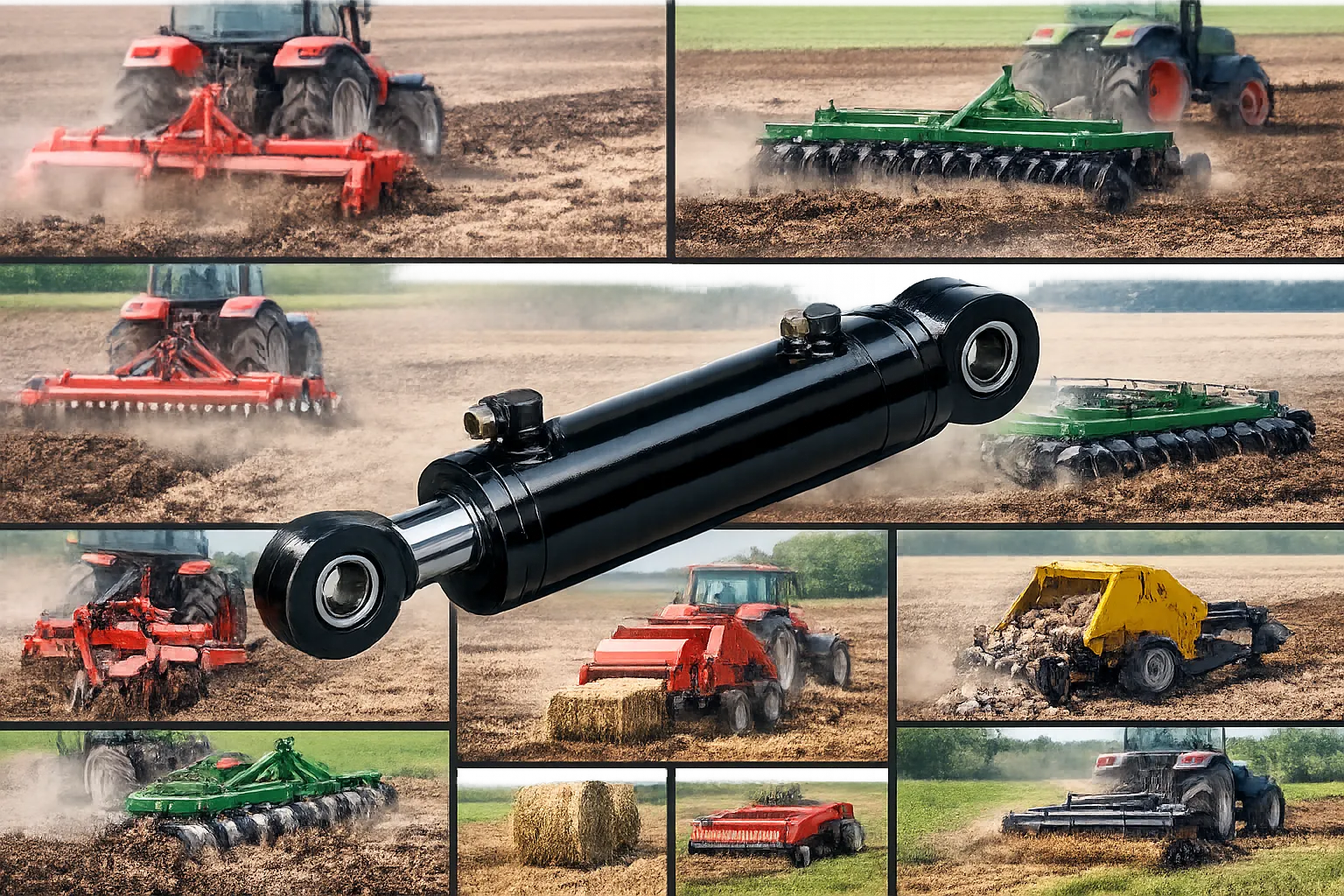
As a globally recognized and technically advanced hydraulic cylinder manufacturer, we have permanently resolved this systemic flaw. Our custom-engineered Trench Depth Adjustment Hydraulic Cylinder targets the root cause of implement drift. By integrating a precision-honed inner bore paired with an elite, imported sealing matrix, we guarantee absolute dimensional perfection between the piston profile and the barrel wall. Upgrading your heavy tillage machinery with our specialized hydraulic parts creates an impenetrable hydrostatic barrier. Once your operator sets the required trenching depth, our component ensures it remains relentlessly locked in place for the entire pass, eliminating rework and drastically increasing your daily linear yield.
Comprehensive Engineering Specifications
Achieving flawless integration into complex agricultural linkages requires strict adherence to dimensional tolerances and targeted material science. The detailed engineering matrix below outlines the baseline parameters and optimized structural configurations of our depth-control actuators. For procurement directors requiring solutions across varied machinery platforms, we encourage you to review our broader manufacturing capabilities within our complete hydraulic cylinder catalog.
| System Parameter | Engineering Specification Profile | Design Rationale & Impact |
|---|---|---|
| Target Industry | Agriculture / Land Infrastructure | Engineered explicitly for severe off-highway, open-air field conditions. |
| Equipment Category | Tillage Machinery / Disc Trencher | Built to manage continuous vertical soil resistance without structural flexing. |
| Subsystem Integration | Disc Depth Control Linkage | Directly commands the precise vertical positioning of the cutting assembly. |
| Component Designation | Trench Depth Adjustment Cylinder | The primary load-bearing fluid actuator for geometric trench grading. |
| Action Mode | Double Acting | Requires active, powered hydraulic force to both penetrate the earth and retract the disc. |
| Structure Type | Piston Cylinder | Provides optimal internal geometric uniformity for high-pressure fluid containment. |
| Manufacturing Format | Heavy-Duty Welded Construction | Completely eliminates joint weeping and structural stretching inherent to tie-rod designs. |
| Core Material Metallurgy | Q345D Low-Alloy Structural Steel | Delivers superior yield strength and critical low-temperature impact toughness. |
| Surface Armor Treatment | Micro-Cracked Hard Chrome Plating | Defends fiercely against chemical fertilizer corrosion and physical stone pitting. |
| Environmental Grade | Medium Load / High Vibration | Optimized to handle the continuous, rapid chatter of subsurface cutting. |
| Working Condition Feature | Control disc trench depth | Demands absolute hydrostatic holding stability without a single millimeter of drifting. |
| Typical Failure Mode | Internal Leakage (Fluid Bypass) | Causes the heavy implement to lose its hydrostatic lock and rise out of the soil. |
| Recommended Configuration | Imported Composite Seals + Precision Machined Inner Bore | The definitive engineering solution to mathematically eradicate internal fluid bypass. |
Operational Fluid Dynamics: Achieving a Hydrostatic Lock
Understanding the fluid physics occurring within the steel pressure vessel is crucial for recognizing why premium components are mandatory for this application. To forcefully drive a massive steel disc into heavily compacted earth, gravity alone is completely inadequate. This mechanical reality dictates that the actuator must function as a double acting hydraulic cylinder. Unlike a basic single acting hydraulic cylinder that relies on implement deadweight to retract, our unit utilizes highly pressurized fluid from the tractor’s auxiliary pump to actively power both the mechanical extension and the forced retraction strokes. When the operator pushes the cabin control lever to lower the disc, high-pressure fluid floods into the cap end of the cylinder, generating immense hydrostatic force against the piston face to extend the rod and physically sink the disc into the hardpan.
The true engineering test begins the exact moment the control valve is neutralized to lock the required trenching depth. As the heavy tractor pulls the trencher forward, the compacted soil violently pushes upward against the cutting disc. This massive upward kinetic force translates directly into intense hydrostatic pressure inside the cap-end fluid chamber. If the internal bore of the barrel is roughly machined, or if the hydraulic cylinder components are equipped with inferior domestic seals, this highly pressurized fluid will literally squeeze past the seals into the low-pressure rod-end chamber. Because hydraulic fluid is physically incompressible, this internal fluid migration is the absolute mechanical reason the cylinder rod retracts, causing the disc to rise and destroying the gradient of the trench floor.
By implementing an ultra-precision CNC honed inner bore, we systematically eliminate the microscopic surface gaps that allow fluid to escape under load. Our imported sealing matrix tightly grips this mirror-smooth surface, creating a flawless pressure barrier. Regardless of the medium-load vibration and upward resistance from rocky soil, the hydraulic oil remains trapped exactly where it needs to be. This ensures that the Trench Depth Adjustment Cylinder acts as an unyielding solid steel column, holding the precise calibrated depth across the entire length of your agricultural project.
Seamless Aftermarket Fleet Integration and Machinery Upgrades
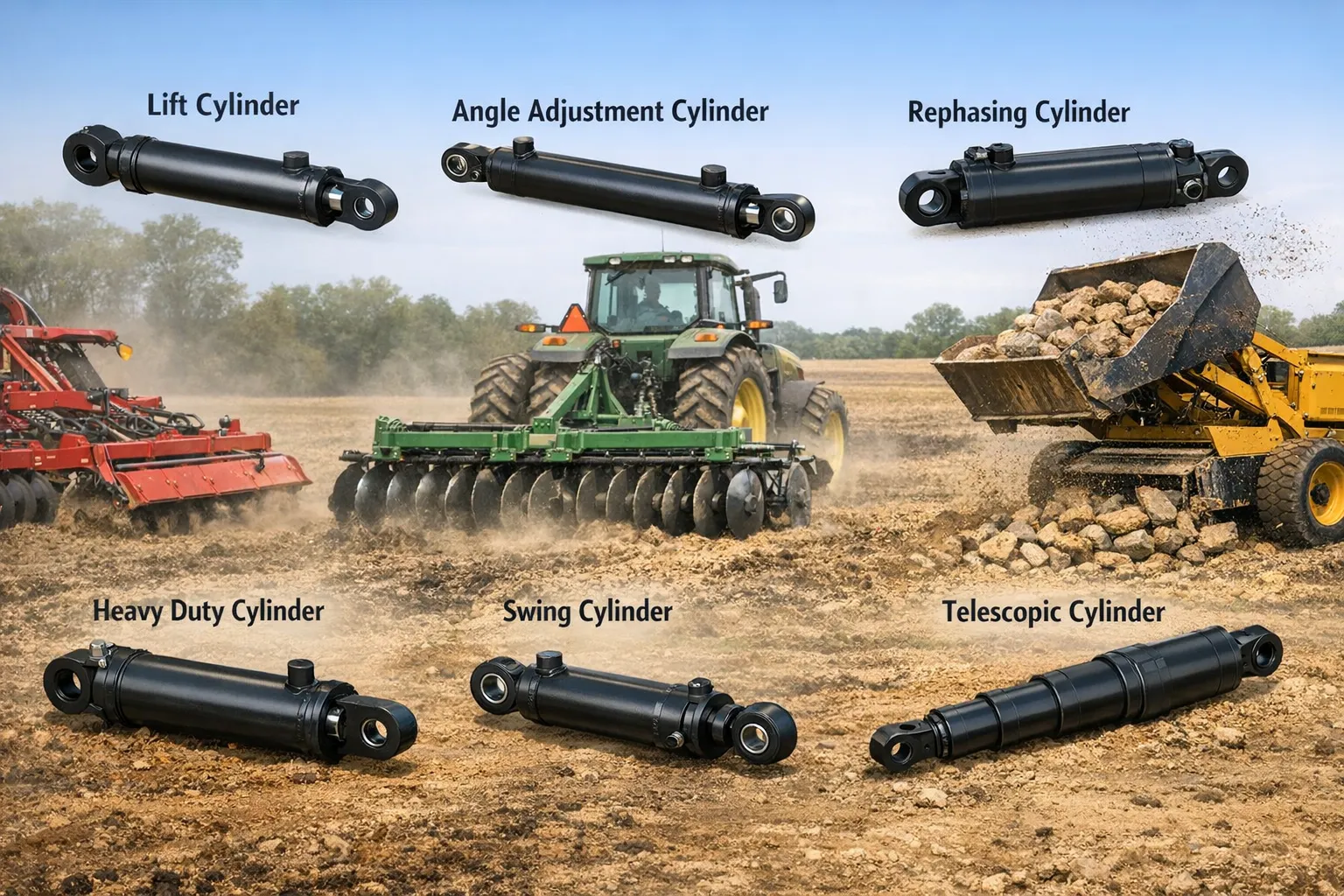
Agricultural contractors and civil engineers operate under exceptionally tight, weather-dependent schedules. Waiting weeks for an imported, overpriced factory original component to clear customs is not a viable strategy when an active project is stalled. We meticulously engineer our aftermarket lift cylinder and depth-control units to serve as rapid, dimensionally exact mechanical upgrades for the industry’s most prominent tillage equipment. Our strict manufacturing protocols guarantee that critical installation metrics—including closed pin-to-pin lengths, total stroke dimensions, rod eye diameters, and exact hydraulic port thread pitches—perfectly mirror your existing equipment geometry for immediate, trouble-free installation using standard field tools.
We continuously manufacture high-reliability replacements for depth control systems on specialized implements utilized with heavy tractors from Kubota, John Deere, Case IH, New Holland, and prominent South Korean brands like LS Mtron, TYM, and Daedong, as well as dedicated trenching equipment from Ditch Witch and Vermeer. (Please be advised: The inclusion of these specific original equipment manufacturer brand names is strictly intended to assist fleet mechanics and procurement specialists in cross-referencing dimensional compatibility and structural application parameters. We operate independently as a dedicated hydraulic oil cylinder supplier and assert no trademark affiliation or endorsement by these corporate entities.)
By choosing to retrofit your disc trenchers with our specialized hydraulic rams, you are actively bypassing inflated dealership parts pricing while permanently curing the systemic internal leakage vulnerabilities inherent in standard factory designs. This strategic procurement choice secures a highly favorable long-term hydraulic cylinder price by effectively eliminating continuous replacement cycles.
Core Technological and Metallurgical Advantages
Completely eradicating internal fluid bypass in high-vibration environments requires far more than simply replacing a rubber O-ring during routine maintenance. It demands a holistic, factory-level approach to metallurgy, precision machining, and tribology (the study of friction and wear). The following specific technical advantages define why our hydraulic cylinder components drastically outperform commercial alternatives:
1. Precision Machined Inner Bore (Ra 0.2 – 0.4μm)
The primary physical defense against fluid bypass is the microscopic smoothness of the barrel. We utilize advanced multi-axis CNC skiving and roller-burnishing machines to process the internal bore to a mirror-like finish of Ra 0.2 to 0.4 micrometers. This exact precision completely eliminates the sharp ridges that tear seals apart, drastically reducing thermal friction and guaranteeing absolute seal integrity under static loads.
2. Premium Imported Sealing Matrix
Standard domestic nitrile (NBR) seals suffer from rapid extrusion and nibbling under continuous trenching vibrations. We equip our pistons with a highly advanced, ultra-low friction composite sealing matrix sourced from leading global manufacturers. This architecture integrates wear-resistant PTFE (Teflon) guide bands and high-temperature polyurethanes, creating an unyielding hydrostatic barrier.
3. Q345D High-Strength Steel Architecture
Agricultural earthworks often commence in the freezing temperatures of early spring. Standard carbon steel barrels become highly brittle and risk structural fracturing at the weld seams. We exclusively construct our load-bearing components from Q345D low-alloy steel. This metallurgy provides exceptional yield strength to prevent barrel swelling and superior low-temperature impact toughness.
4. Monolithic Welded Construction
The continuous lateral vibrations generated by a massive steel disc cutting through hardpan will easily shake generic tie-rod cylinders loose, leading to external pressure leaks. Our heavy-duty design utilizes automated, deep-penetration submerged arc welding to permanently fuse the end caps and port fittings directly to the barrel, producing a pressure vessel immune to high-cycle fatigue cracking.
5. Micro-Cracked Hard Chrome Defense
Operating inches from the soil exposes the extended rod to abrasive silica dust, flying rocks, and corrosive moisture. We apply an ultra-thick layer of micro-cracked hard chrome plating (exceeding 25 microns) over the induction-hardened rod. This specialized surface treatment provides impenetrable defense against pitting while retaining a microscopic film of lubricating oil to protect the wiper seals.
6. Optimized Thermal Fatigue Life
Continuous depth adjustments generate immense internal hydraulic heat, accelerating fluid breakdown and seal hardening. By combining ultra-low friction imported seals with a polished mirror bore, our engineering dramatically reduces internal heat generation. This thermodynamic efficiency extends the operational fatigue life of the fluid power circuit, preventing expensive mid-season breakdowns.
Autonomous Manufacturing and Exhaustive Quality Control
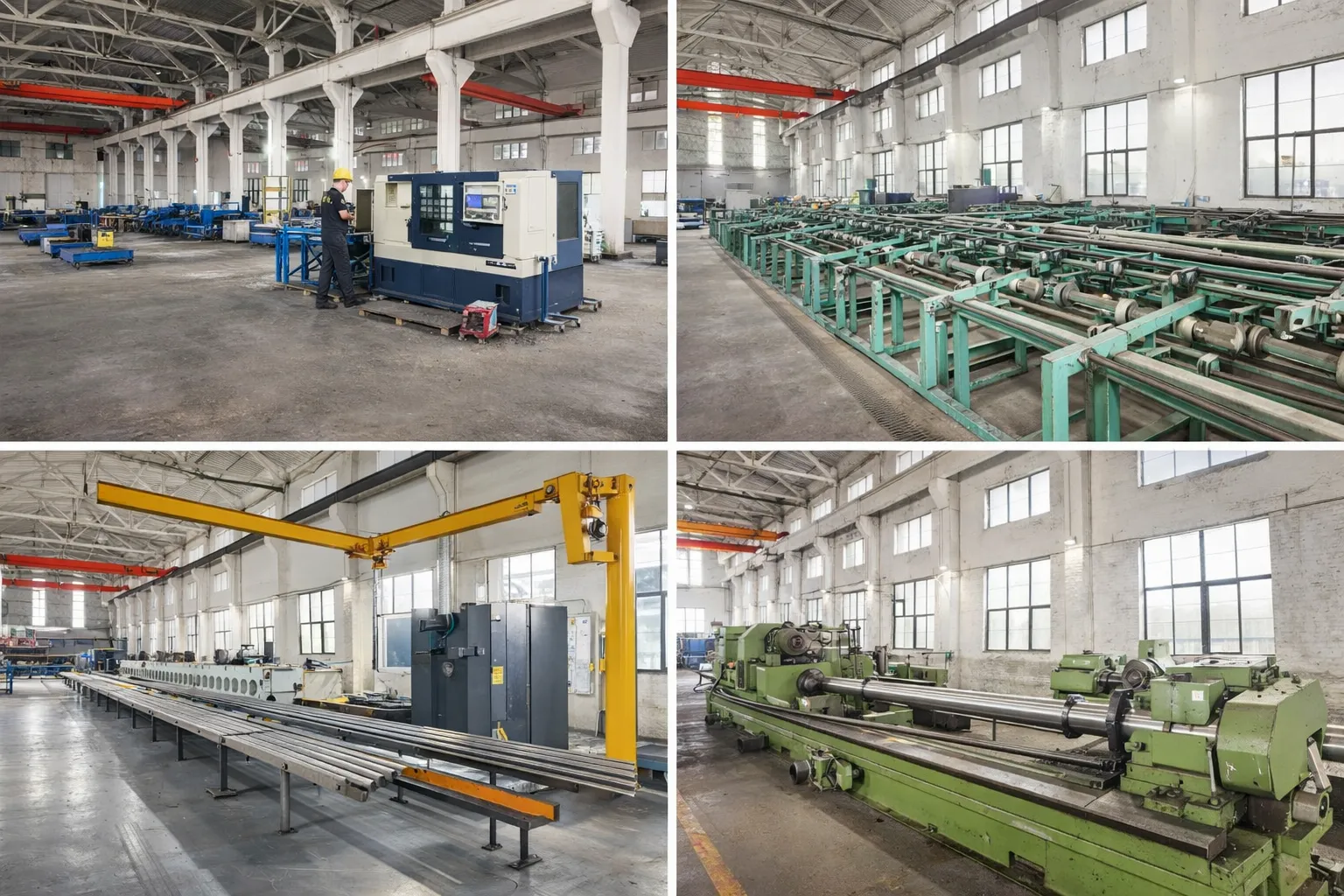
Industrial-grade mechanical reliability cannot be guaranteed by simply assembling outsourced components from low-cost vendors. By operating a highly capitalized, vertically integrated manufacturing facility, we maintain absolute sovereign control over the entire production lifecycle of our products. When raw Q345D steel billets arrive at our unloading docks, they immediately undergo strict material spectrometry and ultrasonic non-destructive testing (NDT) to verify their chemical composition and detect any sub-surface metallurgical imperfections that could cause the barrel to rupture under heavy loads.
The physical internal architecture of our fluid power systems is carved using highly advanced, multi-axis CNC turning and milling centers. This automation entirely removes human error, allowing us to consistently achieve incredibly tight diametrical tolerances on the piston seal grooves. This mathematical precision guarantees that the imported seals are compressed correctly to prevent internal leakage without inducing severe drag. Following the machining phase, all load-bearing structural weld seams are completed by automated robotic arms to ensure deep penetration, followed by secondary ultrasonic testing to confirm the total lack of internal weld porosity.
Crucially, before any Trench Depth Adjustment Cylinder is authorized for packaging and export, it must survive an uncompromising 100% factory pressure testing regimen. We mount each individual unit to highly calibrated hydraulic test benches and pressurize them to 1.5 times their maximum rated operational capacity. The most critical phase of this protocol is the static holding test: we lock the control valves and monitor the high-resolution gauges for an extended period. If the pressure drops by even a fraction of a bar, it indicates microscopic fluid bypass, and the unit is instantly rejected. Every passing cylinder is then laser-etched with a unique serial number, providing full material traceability for our B2B partners.
Cross-Industry Adaptability of Precision Actuators
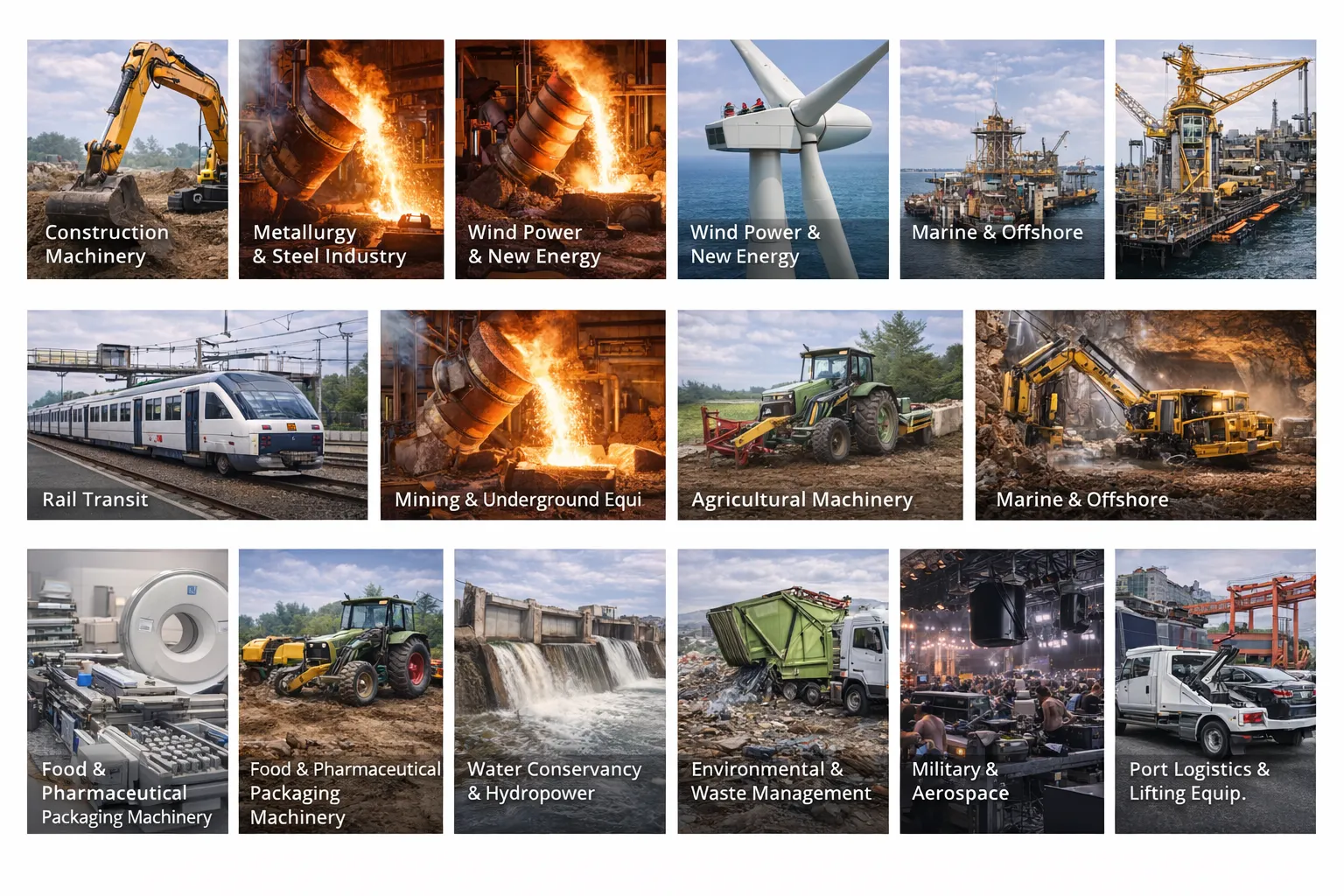
While the exact mounting geometry of this specific unit is optimized for agricultural disc trenchers, the underlying fluid power engineering—specifically the absolute eradication of internal leakage through precision honing and premium imported seals—is universally demanded across severe-duty industrial landscapes where position holding is a critical safety and operational requirement.
- Heavy Earthmoving Operations: The exact same zero-leakage holding technology is essential for stabilizing excavator boom arms and holding precision grading blades within the construction machinery industry.
- Subterranean Extraction: The unyielding structural integrity provided by our welded Q345D architecture makes our fluid power systems the premier choice for rock-crushing and heavy material handling machinery utilized deep within the mining industry.
- Heavy Utility Installations: The same robust depth control mechanisms are widely utilized by contractors laying long-distance transmission cables and infrastructure for the wind power and new energy sectors.
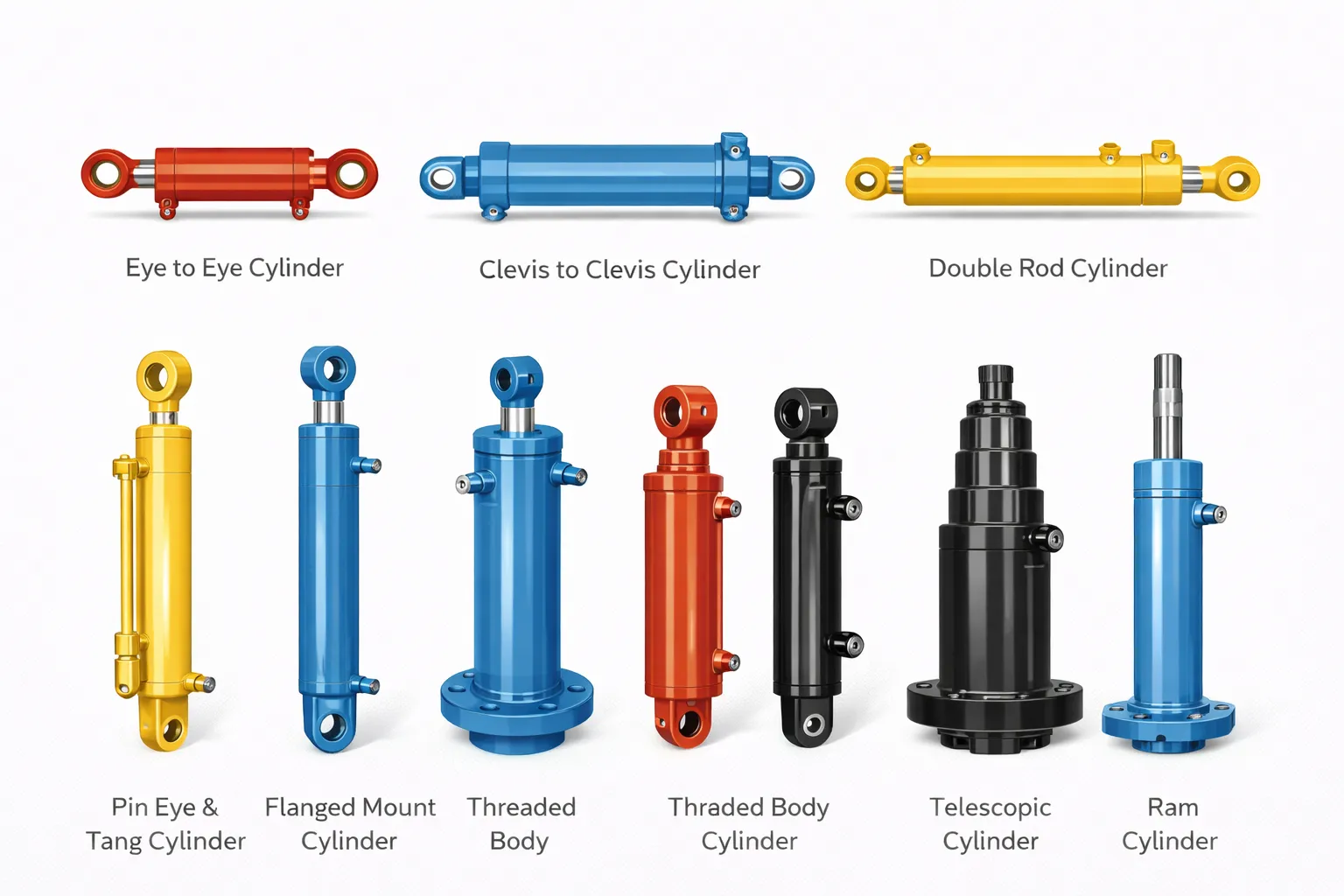
Comparative Analysis: Standard Commercial vs. High-Performance
Evaluating the true commercial value of an actuator requires analyzing far beyond the initial procurement invoice. Choosing a cheaper, generic cylinder inevitably leads to massive mid-season downtime, erratic trenching quality, and continuous repair bills. The comparative matrix below definitively illustrates why upgrading to our specialized depth-control components is a structurally and financially superior business decision.
| Critical Engineering Feature | Standard Aftermarket Agricultural Cylinder | Our High-Performance Depth Cylinder |
|---|---|---|
| Depth Holding Stability | Highly prone to internal fluid bypass; allows the heavy trencher disc to slowly drift upward during operation. | Impenetrable hydrostatic hold; maintains absolute millimeter precision without drifting, ensuring an even trench floor. |
| Internal Sealing Technology | Basic local nitrile seals; suffer rapid friction wear and extrusion under the heavy vibrations of the cutting disc. | Premium imported composite matrix with PTFE guides; provides ultra-low friction and guaranteed seal integrity. |
| Bore Surface Finish | Rough, standard drawn tubing; acts like abrasive sandpaper against internal seals, drastically reducing lifespan. | Automated CNC multi-pass honing; achieves a mirror-like finish (Ra 0.2-0.4μm) to drastically reduce thermal friction. |
| Structural Metallurgy | Common carbon steel; susceptible to brittle weld fractures during early-spring freezing temperatures. | Q345D High-Strength Low-Alloy steel; provides immense yield strength and flawless low-temperature impact toughness. |
| Total Cost of Ownership | Deceptively high; requires continuous manual grading of uneven trenches, massive oil loss, and frequent rebuilds. | Exceptionally low; engineered for years of maintenance-free, continuous holding performance in severe conditions. |
Proven Global Field Performance: B2B Case Studies
The theoretical superiority of combining CNC honed bores with imported sealing matrices is definitively proven daily in the mud, rock, and grueling realities of commercial agriculture. Below are documented cases detailing how our fluid power solutions have resolved chronic implement drift for major business partners in the Asian market.
Case Study 1: Eradicating Uneven Trench Floors for a South Korean Agricultural Contractor
Location & Client: Gyeonggi-do, South Korea — A large-scale agricultural infrastructure contractor specializing in subsurface irrigation networks for commercial farming.
The Challenge: During a massive piping project in late 2024, the contractor’s heavy disc trenchers were cutting highly uneven trenches. The intense vibration from the compacted hard clay was rapidly destroying the internal seals of their standard OEM cylinders. The resulting internal fluid leakage caused the trenching discs to slowly drift upward mid-pass, forcing the crews to waste enormous amounts of time manually digging out and grading the trench floor to establish proper gravity flow before pipes could be laid.
Contact & Solution: The lead project engineer located our factory capabilities through a targeted technical search for advanced hydraulic cylinder repair and drift prevention technology. We rapidly exported a complete fleet-wide retrofit batch of our Trench Depth Adjustment Cylinder, engineered specifically with our precision-honed bores and premium imported seals.
The Result: Implement drift was entirely eliminated. The trenchers maintained absolute depth precision across kilometers of operation, accelerating the project timeline and drastically reducing manual labor overhead.
Case Study 2: Conquering Cold Weather Operations in Hokkaido, Japan
Location & Client: Hokkaido, Japan — An independent commercial farming enterprise executing deep drainage trenching in abrasive, partially frozen volcanic soil (Andosols).
The Challenge: Operating heavy disc trenchers in sub-zero spring conditions placed immense thermal and kinetic stress on their equipment. The standard carbon steel bodies of their OEM units were brittle in the cold, and the immense shock of hitting frozen subterranean rocks caused hairline fractures at the base welds. This resulted in dangerous high-pressure external fluid leaks and a total loss of depth control.
Contact & Solution: The owner reached out directly via our technical portal seeking tougher components. We prescribed our monolithic welded models constructed entirely from Q345D low-alloy structural steel, utilizing its exceptional low-temperature impact toughness to absorb the kinetic shock without fracturing.
The Result: Structural failures were completely eradicated. The upgraded machinery survived the harshest early-spring frost periods without a single fractured weld, ensuring continuous drainage installation.
Case Study 3: Providing Reliable OEM Solutions in Taiwan
Location & Client: Taichung, Taiwan — A highly specialized manufacturer of custom tractor attachments and trenching implements exporting heavily to the broader Southeast Asian agricultural market.
The Challenge: To remain competitive, the manufacturer needed to source dependable depth-control mechanisms for their new line of disc trenchers. The cheap, locally sourced cylinders they initially used suffered from rough internal bores that shredded seals quickly, leading to an unacceptable volume of warranty claims from end-users complaining about implement drift and poor trench quality.
Contact & Solution: Searching global B2B directories for a highly capable hydraulic cylinder manufacturer, their procurement officer connected with us. We established a long-term bulk-supply protocol, providing dimensionally perfect, 100% pressure-tested units featuring our CNC-honed internal finish and imported seal matrices.
The Result: The OEM elevated the technical quality of their product line, virtually eliminating field warranty claims related to hydraulic drifting, significantly improving their brand reputation and profit margins.
Frequently Asked Questions
We prioritize absolute engineering transparency. To assist agricultural fleet operators, OEM designers, and procurement managers in thoroughly qualifying our heavy-duty fluid power solutions, we have detailed comprehensive answers to the most common technical inquiries regarding our depth-control mechanisms.
1. What exactly causes my disc trencher to slowly drift upward into the soil while working?
Implement drift is caused almost exclusively by fluid bypass, technically known as internal leakage. In standard cylinders, the intense kinetic vibrations of trenching cause the internal hydraulic cylinder piston seals to rub aggressively against a roughly finished barrel interior. Once those rubber seals wear down, high-pressure hydraulic oil physically seeps past the piston, allowing the rod to retract under the upward pressure of the soil. We solve this permanently by utilizing a CNC mirror-honed bore combined with premium imported PTFE seals that resist wear and hold the fluid absolutely tight.
2. Are your depth cylinders compatible with single acting hydraulic setups?
No. Controlling a heavy disc trencher requires active, powered hydraulic force to both push the massive disc into hard, compacted soil and efficiently lift it out. Therefore, these actuators are exclusively engineered as a double acting hydraulic cylinder, ensuring you have positive, rigid mechanical control in both directions at all times.
3. Why utilize Q345D steel instead of standard carbon tubing for the barrel?
Agricultural equipment often operates in severe, unpredictable environments. Q345D is a specialized high-strength low-alloy steel that possesses a significantly higher yield strength than standard carbon steel, preventing the barrel from swelling under intense pressure spikes. More critically, it maintains exceptional impact toughness at freezing temperatures, neutralizing the risk of brittle weld fractures during early-spring field operations.
4. How does your manufacturing process justify the hydraulic cylinder price compared to cheap aftermarket units?
You are purchasing directly from a vertically integrated manufacturing facility, entirely bypassing the heavy markups imposed by trading companies and regional dealership networks. The price reflects direct-from-factory access to industrial-grade Q345D metallurgy, advanced CNC mirror-honing (Ra 0.2μm), imported composite sealing technology, and 100% factory pressure testing. This investment drastically lowers your long-term total cost of ownership by entirely eliminating continuous replacement cycles.
5. Are custom stroke lengths and pin sizes available for unique implement prototypes?
Yes. Custom engineering is a foundational aspect of our factory operations. Our technical department can rapidly adjust the bore diameter, specific stroke length, closed pin-to-pin dimensions, and end connections (such as integrating heavy-duty clevis or cross-tube mounts) to precisely match the unique mechanical kinematics of your specific disc trencher frame.
6. What are the standard lead times for manufacturing and exporting a bulk order to South Korea or Japan?
By maintaining a heavily stocked, vertically integrated inventory of raw Q345D steel billets and pre-machined internal components, our standard manufacturing, robotic welding, and pressure testing cycles typically require 25 to 35 days for commercial bulk agricultural orders. Subsequent ocean freight logistics to major destinations in South Korea, Japan, or Taiwan generally add 5 to 10 days. We are highly proficient at synchronizing our production schedules to hit your strict seasonal planting deadlines.
7. Can our fleet mechanics rebuild these cylinders in our own maintenance shop?
Absolutely. We design our equipment specifically for long-term fleet maintainability. Because our cylinders utilize easily accessible, heavy-duty threaded glands rather than cheap welded-shut designs, routine fixing hydraulic cylinders within your fleet can be executed efficiently by your maintenance personnel using standard heavy shop tools. We globally supply exact-match replacement seal kits.
8. How does the 25-micron chrome plating protect the internal components?
When a cylinder rod retracts, it pulls whatever is on its surface directly past the external wiper seal. If the rod is pitted from rock strikes or rust, those pits will act like razor blades, shredding the wiper seal and allowing silica dirt straight into the barrel. Our 25+ micron hard chrome prevents the rod from pitting in the first place, ensuring the wiper seal stays perfectly intact and continues to block environmental contamination.
Secure Your Implement Depth and Eliminate Trenching Errors
The mechanical precision and profitability of your agricultural water management operations should never be compromised by leaking, drifting equipment. By upgrading your heavy tillage machinery with our heavily armored, zero-drift Trench Depth Adjustment Cylinder, you definitively ensure that your cutting discs will hold firm through the most aggressive soils without losing a fraction of an inch in required depth.
Editor: Cxm