Product Overview & Industrial Value
In the rigorous and uncompromising domain of heavy-duty excavation, the mobility platform of a tunneling machine dictates the entire operational tempo. The walking system must carry hundreds of tons of mechanical weight while simultaneously absorbing the massive reactive forces generated when the cutting head grinds into solid rock. A fundamental requirement for this mobility is maintaining exact and continuous tension on the steel crawler tracks. This massive mechanical responsibility falls entirely on the Walking Tensioning Cylinder. It acts as the dynamic structural bridge holding the front idler wheel in position against the immense pull of the track chain. Without reliable tension, the crawler tracks will sag, slip over the drive sprockets, or completely derail, leading to catastrophic equipment damage and days of costly project downtime.
As an established hydraulic cylinder manufacturer, we have conducted extensive failure analysis on undercarriage systems worldwide. The most pervasive and damaging failure mode in this application is not sudden mechanical fracture, but rather a phenomenon known as slow leakage. In mining equipment, the environment is saturated with highly abrasive rock and coal dust. Over time, standard rod seals degrade, allowing this microscopic dust to infiltrate the cylinder housing. The abrasive particles score the internal metal surfaces, causing the hydraulic fluid or grease to slowly bypass the main seals. When slow leakage occurs, the Walking Tensioning Hydraulic Cylinder loses tension imperceptibly. Operators often do not realize the tension has been compromised until the track physically walks off the idler wheel during a critical steering maneuver.
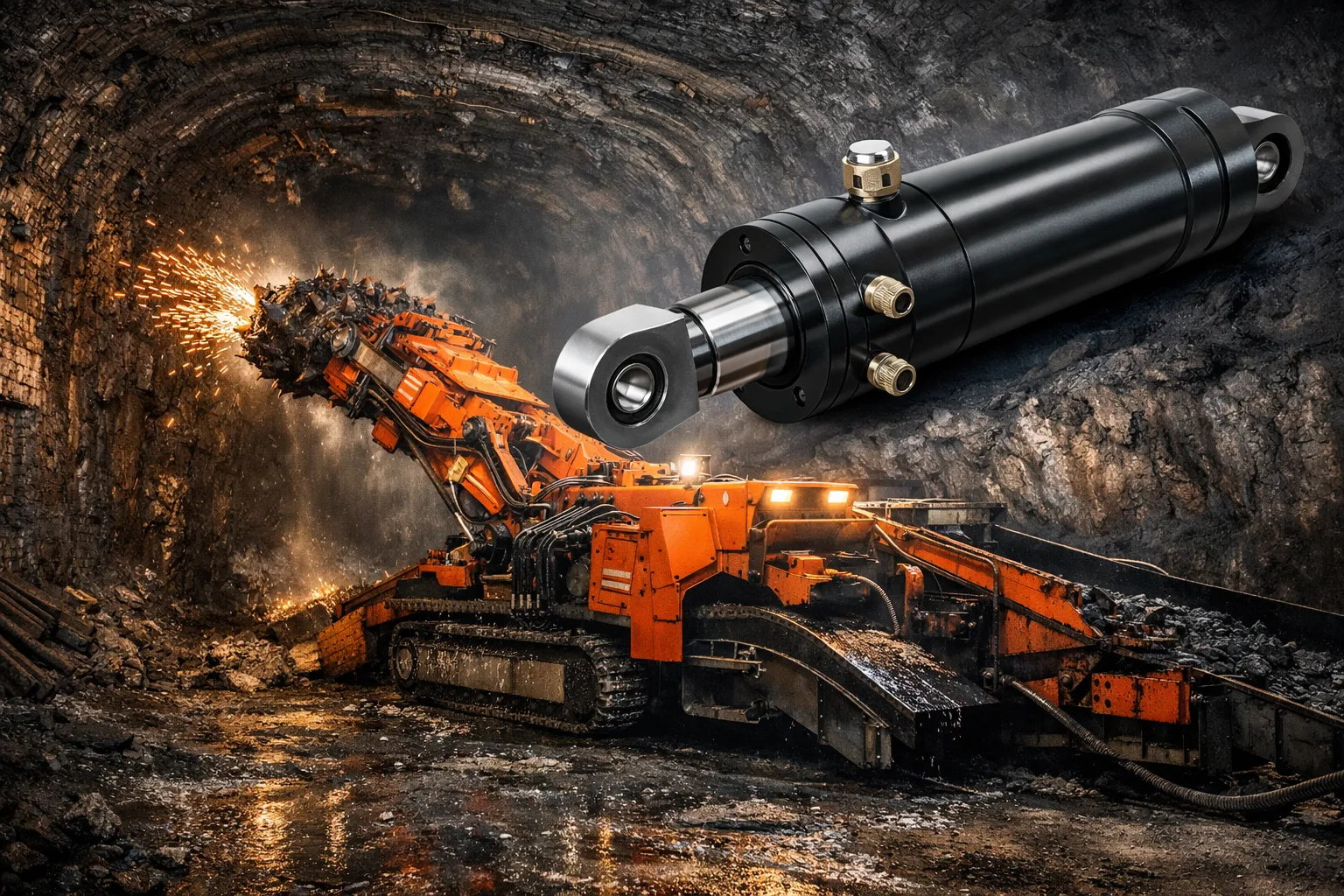
Our specifically engineered Walking Tensioning Cylinder addresses this critical vulnerability directly. By abandoning standard commercial seal profiles in favor of a proprietary high-stability sealing matrix, and utilizing deep-forged 42CrMo alloy steel instead of common carbon steel, we have created a component that actively repels abrasive dust and withstands immense lateral shock loads. This uniquely positions our product not merely as a replacement part, but as a severe-duty mechanical upgrade that permanently resolves the legacy issues of track maintenance, securing optimal uptime for large-scale mining operations in South Korea, Japan, and the surrounding Asian infrastructure markets.
Technical Parameters & Engineering Specifications
Proper fluid power specification is non-negotiable when dealing with the undercarriage of a roadheader. The following parameters represent the baseline engineering framework of our heavy-duty tensioning units. We offer highly customizable stroke lengths and bore diameters to accommodate the specific tonnage and track pitch configurations of your machinery. Evaluating the hydraulic cylinder price based on these premium specifications reveals a significantly lower total cost of ownership over the lifespan of the machine.
| Engineering Category | Specification Detail | Operational Significance |
|---|---|---|
| Target Industry | Mining Equipment | Built to endure continuous underground excavation. |
| Equipment Category | Tunneling Machine | Optimized for heavy vibrations and high torque. |
| Subsystem Integration | Walking System | Manages crawler track stability directly. |
| Component Name | Walking Tensioning Cylinder | Primary track tightening mechanism. |
| Action Mode | Single acting hydraulic cylinder | Uses fluid for extension, mechanical force for retraction. |
| Structure Type | Plunger Type | Maximum cross-sectional strength against bending. |
| Manufacturing Structure | Welded Construction | Monolithic design prevents thread unspooling from shock. |
| Material System | 42CrMo Alloy Steel | Exceptional yield strength and fracture toughness. |
| Surface Treatment | Hard Chrome Plated | Thick coating resists scoring and acidic mine water. |
| Environment Grade | Dust (High Abrasive Particulate) | Equipped with heavy-duty metal-encased scrapers. |
| Working Condition | Crawler Tensioning | Handles static holding loads and dynamic rock impacts. |
| Typical Failure Mode Solved | Slow Leakage | Guarantees tracks will not slowly loosen over time. |
| Recommended Configuration | High Stability Sealing | Tandem polyurethane setup absorbs extreme pressure spikes. |
In-Depth Mechanical Working Principle
To appreciate the superiority of this design, one must understand the exact fluid mechanics and structural physics occurring within the walking system. While a lift cylinder manages the vertical positioning of the heavy cutting boom, the Walking Tensioning Cylinder is mounted horizontally within the track frame, situated directly behind the front idler wheel. It does not operate like a conventional double acting hydraulic cylinder, which uses fluid pressure on both sides of a hydraulic cylinder piston to actively push and pull.
Instead, it functions as a highly robust single acting hydraulic cylinder using a solid plunger architecture. During track adjustment operations, a technician connects a high-pressure grease gun or hydraulic pump to the integrated check valve. As heavy-viscosity grease is injected into the closed rear chamber of the cylinder barrel, the rising internal volume exerts massive force against the base of the 42CrMo plunger. Because the fluid is incompressible, the plunger is forced to extend outward. This outward stroke pushes the heavy steel idler wheel forward, thereby pulling the steel crawler chain tight around the drive sprocket. The check valve closes, trapping the fluid and locking the track tension in place.
The true test of the Walking Tensioning Hydraulic Cylinder occurs during movement. When the tunneling machine navigates over a large boulder, the impact violently shoves the idler wheel backward. This kinetic energy is transferred instantly into the extended plunger. The Walking Tensioning Cylinder acts in tandem with a massive recoil spring located behind it. The internal fluid pressure spikes astronomically for a fraction of a second as the shock is absorbed. It is during this violent pressure spike that generic seals warp and allow fluid to bypass, creating slow leakage. Our high-stability seals are engineered to flex microscopically and maintain absolute contact with the plunger, sealing the pressure completely. When retraction is needed for track replacement, opening the bleed valve allows the immense mechanical tension of the crawler chain to push the plunger safely back into the barrel.
Seamless OEM Machinery Replacement
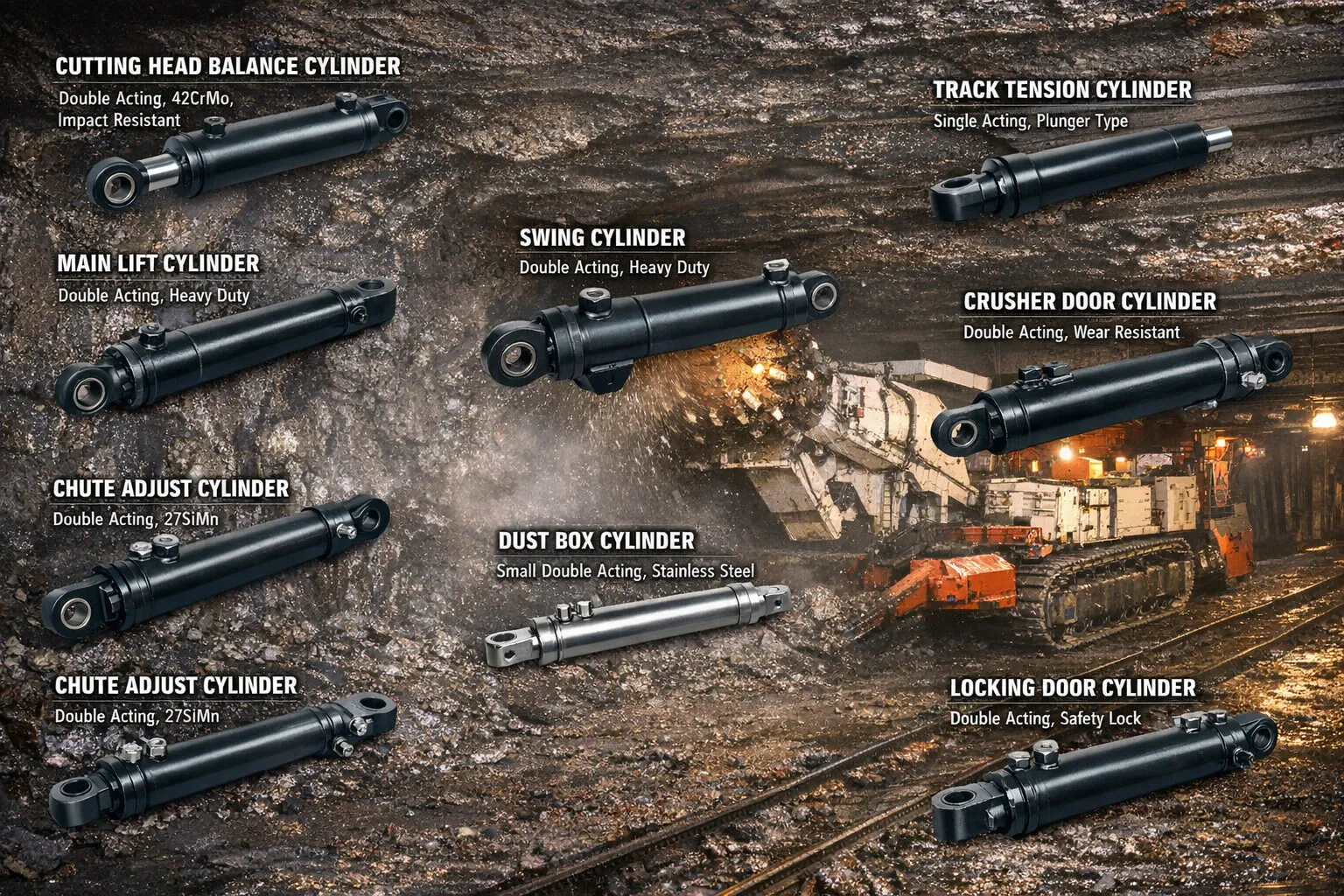
A significant challenge for fleet maintenance directors is sourcing reliable hydraulic parts when original equipment components fail prematurely or carry unacceptable lead times. We have mapped the dimensional envelopes of the world’s leading tunneling equipment, ensuring that our hydraulic cylinder components serve as direct, drop-in upgrades for your existing fleet.
Our Walking Tensioning Hydraulic Cylinder units can perfectly replace the original assemblies found on major roadheaders and continuous miners, including those manufactured by Sandvik, Epiroc, Mitsui Miike, Komatsu, SANY, and XCMG. The pin-to-pin lengths, mounting yoke diameters, and hydraulic port threads are precision-machined to match the factory specifications perfectly, eliminating the need for any complex chassis modifications during installation. Whether you are conducting routine maintenance or an emergency hydraulic cylinder repair, these units slide perfectly into the original mounting brackets, reducing your labor costs dramatically.
Note: The brand names mentioned above are registered trademarks of their respective owners. They are referenced here strictly for the convenience of our customers in identifying equipment sizing and verifying dimensional compatibility. We do not claim any direct affiliation or trademark ownership. We are an independent supplier of premium-grade aftermarket hydraulic solutions.
5 Core Technical Advantages
Evaluating the true hydraulic cylinder price requires looking beyond the initial purchase cost. When you factor in the devastating financial impact of an unplanned track derailment deep inside a tunnel, the value of superior engineering becomes obvious. Here are the five core technical advancements that separate our hydraulic rams from standard market offerings:
1. Ultra-Low Friction High-Stability Sealing Technology
To combat the insidious problem of slow leakage, we completely redesigned the sealing gland of the Walking Tensioning Cylinder. Instead of standard nitrile rubber, we utilize a tandem configuration of high-grade polyurethane lip seals backed by advanced PTFE guide rings. This high-stability architecture resists extrusion under massive pressure spikes and maintains a perfect fluid boundary. Even when the undercarriage is subjected to extreme vibrational frequencies, zero pressure drop occurs, ensuring the crawler chain never loses its tension mid-operation.
2. 42CrMo Alloy Steel Plunger with Enhanced Rigidity
The structural integrity of the plunger is paramount. Standard generic cylinders utilize basic 45# carbon steel. When an asymmetrical rock impact strikes the edge of the idler wheel, it transfers severe lateral bending forces into the plunger. Carbon steel can microscopically deflect or bend, causing the seals to seat unevenly and leak. We forge the plungers of our Walking Tensioning Hydraulic Cylinder from 42CrMo chromium-molybdenum alloy steel. After rigorous quenching and tempering, this material achieves exceptional yield strength and fracture toughness, resisting any deflection regardless of the impact angle.
3. Deep-Penetration Welded Cylinder Body
Many commercial cylinders utilize threaded end caps that can slowly unscrew when subjected to the continuous low-frequency vibrations generated by a tunneling machine’s cutting head. Our Walking Tensioning Cylinder is manufactured using an automated submerged arc welding process. This creates a monolithic, deeply penetrated weld seam at the base of the cylinder barrel, eliminating any risk of structural separation or mechanical fatigue over years of service. It drastically reduces the need for emergency fixing hydraulic cylinders on-site.
4. Advanced Hard Chrome Plating Against Abrasive Dust
Abrasive silica and coal dust act like grinding paste against exposed metal rods. We subject the 42CrMo plunger of our Walking Tensioning Hydraulic Cylinder to a highly controlled hard chrome plating process, achieving a surface hardness exceeding HV800 and a micro-polished finish. This ultra-smooth, hardened barrier resists scratching from flying debris and provides superior defense against the highly acidic, corrosive underground water frequently encountered in deep mines. This surface is continuously cleaned by a double-lip heavy-duty metal-encased dust wiper.
5. Exceptional Thermal Stability and Fatigue Life
Enclosed undercarriages generate significant ambient heat due to constant friction. Elevated temperatures can break down the viscosity of tensioning grease and cause standard rubber seals to become brittle. Our advanced high-stability polymers used in the Walking Tensioning Cylinder are thermally engineered to maintain their elasticity and sealing memory across a massive temperature gradient, ensuring that track tension remains constant whether operating in a freezing alpine tunnel or a sweltering deep-vein coal mine.
Autonomous Manufacturing & 100% Quality Traceability
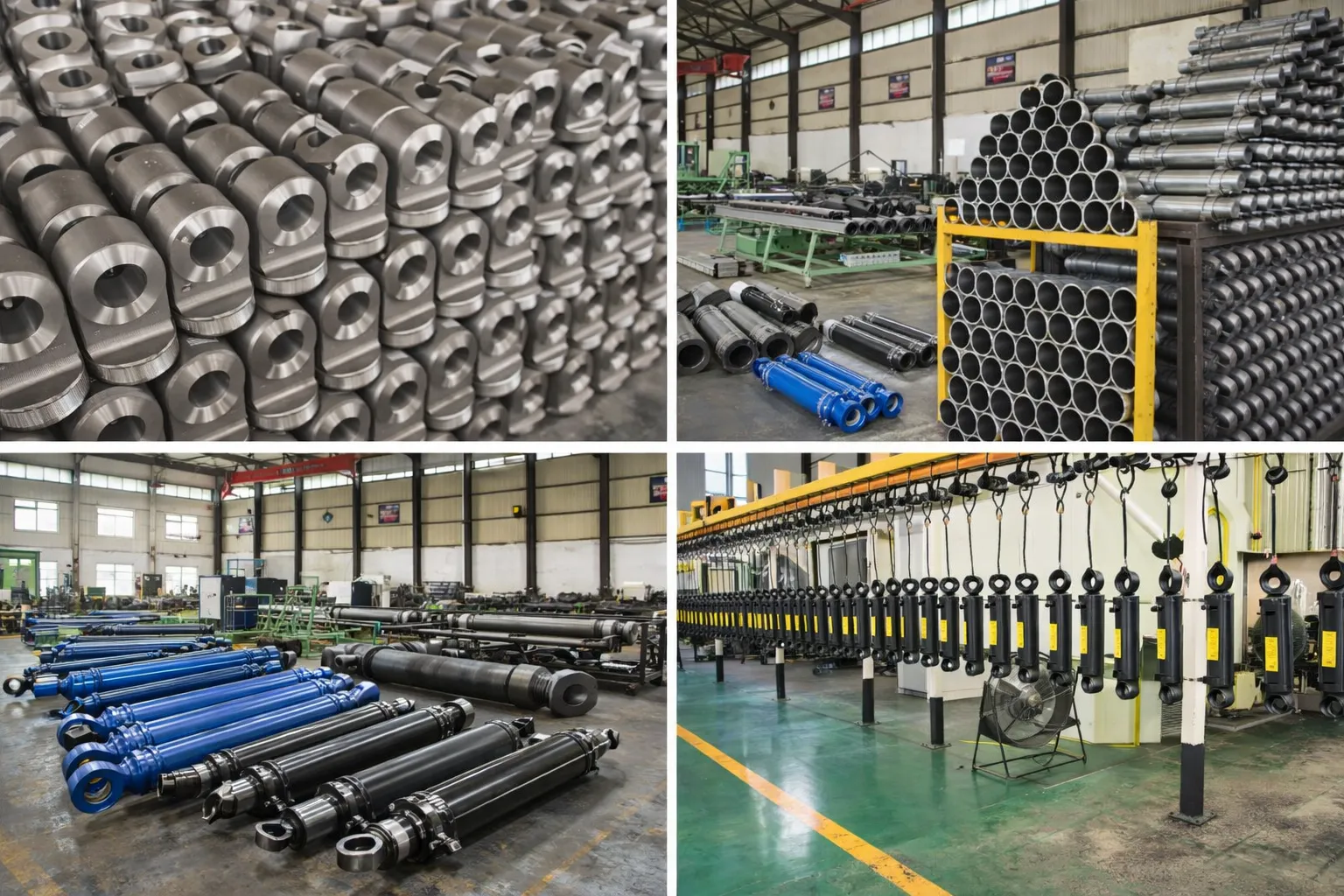
We do not operate as a mere assembly house or trading firm; we are a comprehensive, autonomous hydraulic cylinder manufacturer. Total control over the manufacturing pipeline is the only way to guarantee the reliability of equipment destined for subterranean operations. From the moment the raw 42CrMo steel billets arrive at our facility, they undergo ultrasonic non-destructive testing to verify internal metallurgical integrity.
Our production floor is equipped with advanced multi-axis CNC turning and milling centers that machine the cylinder barrels and plungers to exact micron-level tolerances. Achieving perfect concentricity in the bore of the Walking Tensioning Hydraulic Cylinder is essential to ensure that the high-stability seals wear evenly over their lifespan. Following the automated welding and chrome plating phases, every single Walking Tensioning Cylinder is routed to our testing facility.
We enforce a mandatory 100% factory static pressure hold test. The cylinder is extended and pressurized to 1.5 times its maximum rated operating pressure. Highly sensitive digital gauges monitor the chamber for an extended duration. If there is even a fractional drop in pressure, the unit is rejected. This rigorous validation ensures that the slow leakage phenomenon is entirely engineered out of the product before it is shipped. Each cylinder is laser-etched with a unique serial number, providing full lifetime traceability. When maintenance directors choose our products, they are choosing to prevent failures rather than constantly paying for hydraulic cylinder repair.
Expansive Industry Applications
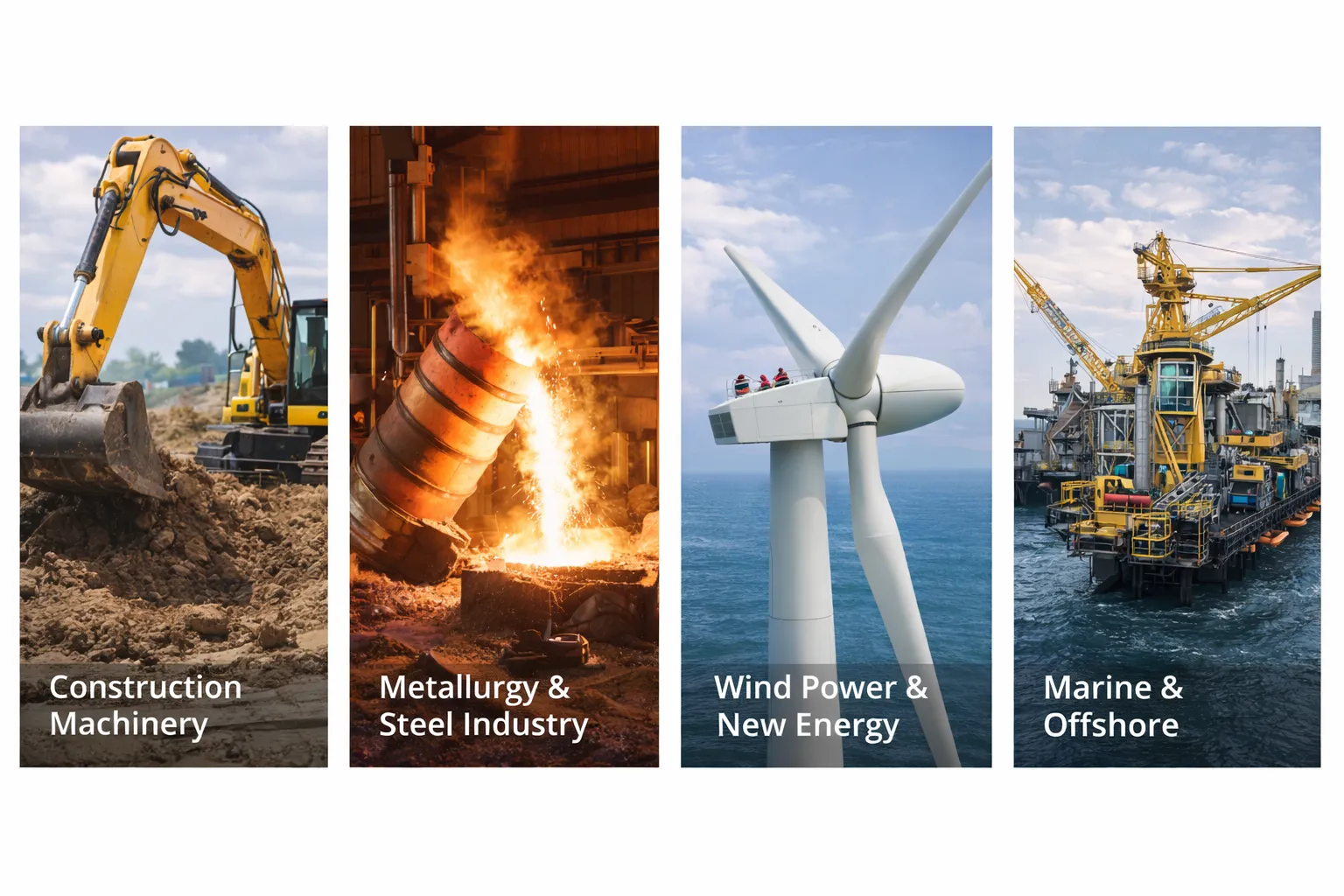
While the rugged architecture of the Walking Tensioning Hydraulic Cylinder was specifically developed for roadheaders, its ability to repel dust and hold immense static pressure translates perfectly across a wide spectrum of heavy industries. We proudly supply specialized hydraulic cylinder solutions for:
- Mining Equipment: Continuous miners, heavy tracked drill rigs, and shuttle cars operating in highly abrasive open-pit or underground sectors rely on our Walking Tensioning Cylinder to maintain traction.
- Construction Machinery Industry: Large-tonnage crawler excavators, heavy bulldozers, and mobile cranes where undercarriage stability directly impacts lifting safety.
- Metallurgy & Heavy Manufacturing: Track-mounted slag pot carriers and material handlers subjected to extreme heat and metallic dust in steel mills utilizing our heat-resistant hydraulic rams.
- Material Handling & Logistics Automation: Massive tracked stacker-reclaimers operating at bulk port terminals that demand zero-leakage hydraulic cylinder components.
- New Energy & Environmental Equipment: Tracked foundation drilling rigs used in wind turbine installations and heavy soil remediation machines.
- Specialized Custom Scenarios: Amphibious excavators requiring heavily plated, corrosion-resistant tensioners for saltwater and marsh operations.
Comparative Analysis: Standard Market Cylinders vs. Our High-Performance Solution
To truly understand the value proposition, one must compare the engineering priorities. The table below highlights why investing in a premium tensioning unit drastically lowers your long-term operational costs.
| Engineering Feature | Ordinary Aftermarket Cylinder | Our High-Performance Cylinder |
|---|---|---|
| Material Strength | Standard 45# Carbon Steel (Prone to bending under lateral rock impacts) | Forged 42CrMo Alloy Steel (Superior yield strength and toughness) |
| Sealing Architecture | Basic NBR single-lip seals (Rapid wear in dusty sites) | High-Stability Polyurethane Tandem + PTFE Guides |
| Resistance to Slow Leakage | Poor. Requires continuous track re-tensioning. | Excellent. Holds static pressure for months without adjustment. |
| Dust Exclusion | Single generic wiper seal (Allows silica dust ingress) | Heavy-duty metal-encased double-lip scraper |
| Weld Integrity | Manual welding or threaded caps (Vibrates loose) | Automated submerged arc welding + Ultrasonic NDT |
Verified Field Deployments in the Asian Market
Our high-performance components have been heavily deployed across critical infrastructure and mining projects, particularly in South Korea, Japan, and surrounding industrial hubs. The following case studies illustrate how substituting standard hydraulic parts with our engineered Walking Tensioning Cylinder directly resolved severe operational bottlenecks.
Case 1: Urban Subway Expansion – Seoul, South Korea
Client: Tier-One Civil Engineering Consortium
Application: Heavy Roadheader Traveling System
The Challenge: In Q3 2024, the client faced massive delays. High-abrasion granite dust was destroying OEM tensioner seals, causing slow leakage. The crawler tracks were derailing at least twice a week in a confined tunnel, requiring hours of dangerous manual recovery.
Contacted Via: The lead maintenance engineer found our technical specifications through a Google search for high-stability tensioning solutions and contacted us directly.
The Result: We rapidly deployed a customized batch of our 42CrMo Walking Tensioning Hydraulic Cylinder equipped with extreme dust scrapers. Installed in October 2024, the machines have recorded zero tension loss over the last 16 months.
“The return on investment was immediate. By eliminating the slow leakage, we stopped fixing hydraulic cylinders mid-shift and gained back over 15 hours of active excavation time per month per machine.” — Mr. Park, Lead Equipment Manager
Case 2: Deep-Vein Coal Extraction – Gangwon Province, South Korea
Client: Regional Energy Extraction Cooperative
Application: Continuous Miner Track Undercarriage
The Challenge: The highly acidic underground water mixed with coal dust was rapidly corroding the thin chrome plating on standard aftermarket rods, leading to severe seal blowouts and constant hydraulic cylinder repair.
Contacted Via: B2B Industry Sourcing Portal in early 2025.
The Result: Our advanced hard chrome plating process (HV800+ hardness) completely neutralized the corrosion issue. The robust welded body of the Walking Tensioning Cylinder handled the uneven floor shocks flawlessly.
“Evaluating the hydraulic cylinder price against the operational lifespan, these units are incredibly cost-effective. The chrome plating looks brand new even after a year in corrosive coal sludge.” — Operations Director Choi
Case 3: Mountain Bypass Highway Tunnel – Hokkaido, Japan
Client: National Infrastructure Development Consortium
Application: Excavator and Roadheader Fleet
The Challenge: Freezing ambient temperatures caused generic rubber seals to harden and lose their elasticity. When shock loads hit the idler wheel, the brittle seals bypassed fluid instantly.
Contacted Via: Direct outreach through our homepage inquiry system.
The Result: We utilized our thermally stable, low-temperature polyurethane seal formulation inside the Walking Tensioning Hydraulic Cylinder. The cylinders retained perfect pressure holding capabilities throughout the harsh winter excavation phase.
“Their deep understanding of fluid dynamics in sub-zero environments is outstanding. We had zero tension failures from January through March 2025.” — K. Tanaka, Fleet Technical Supervisor
Case 4: Limestone Quarry Extraction – Taichung, Taiwan
Client: Major Aggregate Supplier
Application: Heavy Crawler Rock Crushers
The Challenge: The massive vibration generated by the rock crushing process caused standard carbon steel plungers to deform and bend slightly, destroying the cylinder’s internal seals.
Contacted Via: Referral from a construction equipment dealer.
The Result: Upgraded the fleet to our 42CrMo Walking Tensioning Cylinder. The enhanced yield strength completely absorbed the asymmetrical impacts without bending, removing the need for hydraulic cylinder repair.
“Instead of constantly replacing bent rods, we installed these heavy-duty units. They are structurally vastly superior to the original parts.” — Lin Wei, Workshop Manager, Aug 2025
Case 5: Port Infrastructure Excavation – Busan, South Korea
Client: Marine and Civil Earthworks Company
Application: Crawler Excavator Fleet
The Challenge: Operating in highly abrasive coastal mud, the undercarriage tracks required constant tensioning. They needed a bulk supply of reliable aftermarket components urgently.
Contacted Via: Google Search for direct factory suppliers.
The Result: We shipped a bulk order of precisely dimensioned Walking Tensioning Hydraulic Cylinder units within three weeks. The 100% factory pressure testing ensured that every unit performed flawlessly right out of the crate.
“Fast delivery to Busan, perfect fitment, and the high-stability seals keep the mud out completely. They are now our exclusive supplier for hydraulic cylinder components.” — Mr. Kim, Procurement Head, Dec 2025
Expert B2B FAQ: Technical & Procurement Answers
Our engineering and sales teams frequently consult with B2B clients regarding track maintenance and equipment upgrades. Below are the detailed answers to the most common technical inquiries.
1. What defines a single acting hydraulic cylinder in this crawler tensioning context?
2. How does your factory guarantee the complete elimination of slow leakage in the Walking Tensioning Cylinder?
3. Is it better to focus on fixing hydraulic cylinders or replacing them entirely?
4. How do you ensure your hydraulic cylinder components will fit my specific machine model?
5. How does the hydraulic cylinder price compare to purchasing directly from the OEM dealer?
6. Can these hydraulic rams be used in applications outside of the mining industry?
7. What is the fundamental difference between a standard hydraulic cylinder piston and this plunger design?
8. Do you provide support if I need to perform a hydraulic cylinder repair in the future?
9. Can your factory manufacture a double acting hydraulic cylinder or lift cylinder as well?
10. How quickly can you deliver the Walking Tensioning Hydraulic Cylinder to South Korea or other parts of East Asia?
Secure Your Equipment’s Mobility and Reliability Today
Do not let track derailment caused by slow fluid leakage dictate your project deadlines and maintenance budget. Upgrade your heavy machinery with our superior Walking Tensioning Cylinder and experience the absolute reliability of 42CrMo metallurgy and high-stability sealing. Whether you require a single emergency replacement unit or are looking to retrofit an entire fleet of tunneling machines, our expert engineering team is ready to deliver.
Editor: Cxm