Roller Table Lift Cylinder for Rolling Mill
Engineered strictly for segmented roller tables, our robust actuation systems conquer severe high-temperature environments and abrasive iron scale to deliver flawless vertical lifting performance in metallurgical operations.
Equipment Overview & Core Industrial Value
Within the relentless environment of a modern steel production facility, the seamless, uninterrupted transportation of glowing, multi-ton steel slabs forms the absolute foundation of plant profitability. This massive logistical undertaking relies heavily upon the segmented roller tables. These heavy mechanical conveyor beds must routinely lift, lower, and transfer moving steel across transition gaps, between processing stands, and into cooling beds. The critical driving force executing this immense physical exertion is the highly specialized roller table lift cylinder. If these lifting actuators hesitate, fail to extend, or lose their holding elevation, the continuous casting or hot rolling line comes to an immediate, catastrophic halt, resulting in severely damaged steel profiles, cold slabs stuck on the line, and staggering downtime expenses.
The operational environment surrounding a rolling mill table pit is uniquely destructive. As 1,000°C hot steel passes directly overhead, it radiates intense thermal energy downward into the equipment pit while shedding thick clouds of abrasive iron oxide scale. When standard commercial actuators are deployed in this specific metallurgical zone, the radiant heat rapidly degrades their standard polyurethane internal seals, causing them to harden and shrink. Simultaneously, the falling scale accumulates heavily on the exposed cylinder rods, shredding standard wiper seals upon retraction. This deadly environmental combination invariably leads to a severe operational failure: internal leakage. Once internal fluid bypass occurs within the hydraulic cylinder piston architecture, the actuator completely loses its load-holding pressure. The heavy roller table then drifts downward uncontrollably, causing devastating mechanical misalignments and transfer jams.
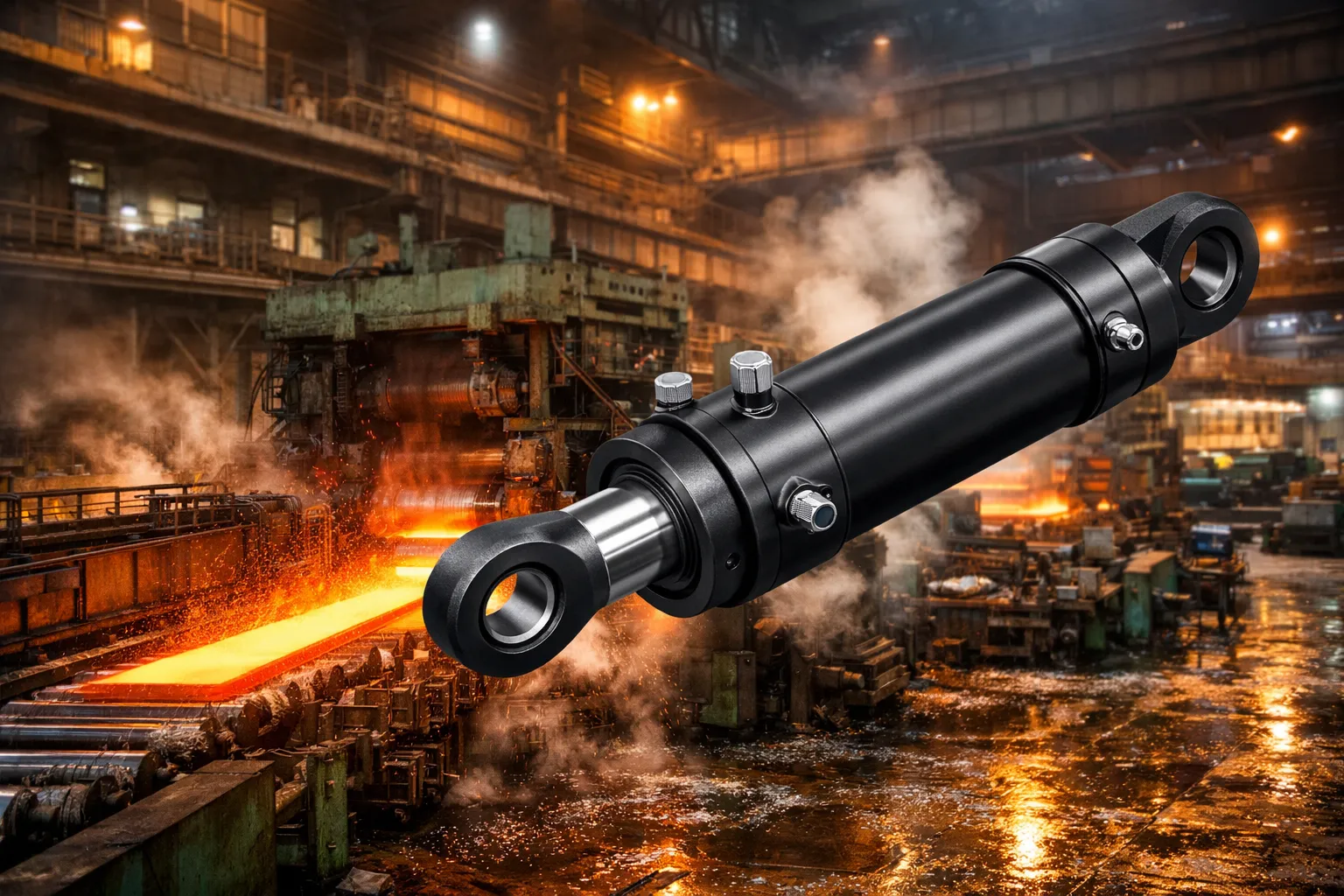
Functioning as a seasoned hydraulic cylinder manufacturer, our engineering team has spent years diagnosing these precise fluid power failures within heavy industry. Our bespoke roller table lifting hydraulic cylinder is designed explicitly to defeat this high-temperature, high-dust failure mode. We bypass fragile commercial constructions, choosing instead to engineer heavy-duty welded structures utilizing impact-resistant Q345D structural steel, fully integrated with advanced aerospace-grade high-temperature sealing architectures. This specific industrial positioning provides metallurgical facilities with an actuation system that actively prevents internal leakage, extends scheduled maintenance intervals exponentially, and fundamentally optimizes the long-term hydraulic cylinder price by guaranteeing continuous plant operations without sudden table drops.
Technical Specifications & Engineering Parameters
Rolling mills are highly individualized facilities. The tonnage of the processed steel slabs, the geometrical design of the segmented tables, and the operational pressure of the central fluid power infrastructure require precise engineering alignment. We provide extensive customization capabilities to ensure our B2B clients receive the exact mechanical fit required. The following matrix outlines the rigorous engineering parameters, specific material selections, and targeted configurations of our heavy-duty lifting systems.
| System Parameter | Specification Details & Customization Range |
|---|---|
| Primary Industry Target | Metallurgy (Steel Processing, Hot Strip, Plate, and Bloom Mills) |
| Equipment Classification | Rolling Mill Machinery (Material Logistics & Transfer) |
| Subsystem / Core Action | Segmented Roller Table / Vertical Lifting, Lowering, and Load Holding |
| Product Nomenclature | Roller Table Lift Cylinder |
| Actuation Method | Double acting hydraulic cylinder (Powered thrust and controlled descent) |
| Internal Structure Type | Piston Cylinder (Precision-honed concentricity for static holding) |
| Manufacturing Build | Heavy-Duty Welded Construction (Monoblock capability for extreme shock resistance) |
| Material Matrix | Q345D Low-Alloy High-Strength Structural Steel |
| Surface Protection | Deep Hard Chrome Plated (Extreme abrasion defense against iron scale) |
| Environmental Rating | Severe: Heavy Dust, Abrasive Particulates, and High Radiant Temperature |
| Operational Focus | Lifting roller table modules smoothly under massive, uneven steel loads |
| Targeted Failure Mode | Internal Leakage (loss of table height), Thermal Seal Melting |
| Mandatory Configuration | High-Temperature Resistant Seals (FKM Matrix), Heavy-Duty Scrapers |
| Mounting Interface | Bottom Flange, Rear Clevis, Trunnion (Fully customizable to OEM blueprints) |
Operational Dynamics: Mastering Vertical Transportation
Deeply understanding the physical mechanics required of these hydraulic parts clarifies exactly why robust, specialized engineering is mandatory. In a typical rolling mill sequence, a segmented roller table must frequently alter its elevation to safely transition material into a walking beam furnace or onto a cooling bed. When the mill’s Programmable Logic Controller (PLC) initiates a height adjustment, proportional directional control valves route highly pressurized hydraulic fluid from the central reservoir directly into the base chamber of the cylinder.
Because our system operates as a double acting hydraulic cylinder, it exerts positive hydraulic force during both upward extension and downward retraction. The incoming pressurized fluid forcefully pushes against the internal hydraulic cylinder piston, generating massive vertical thrust. This force smoothly raises the heavy steel framework of the roller table, easily overcoming both the static weight of the machinery and the dynamic tonnage of the steel slab. Once fully elevated, the system enters a critical holding phase. During this phase, the high-temperature resistant seals must completely block the fluid from bypassing the piston to the low-pressure side. If these seals hold perfectly, the table remains rigidly locked at the correct height without drifting.
When the automation system commands the table to lower, fluid is actively pumped into the annular (rod-end) chamber, while the fluid in the base chamber is precisely metered out. This active hydraulic counterbalance prevents the massive table from plummeting downward uncontrollably, ensuring a stable, safe descent. The primary engineering challenge occurs throughout this cycle: as the lift cylinder rod extends, it is exposed to extreme radiant heat and falling iron scale. Our custom actuators utilize advanced thermal elastomers and heavy-duty dust-exclusion scrapers to guarantee the internal pressure chambers remain perfectly sealed, cool, and free of abrasive contaminants, permanently preserving the integrity of your elevation systems.
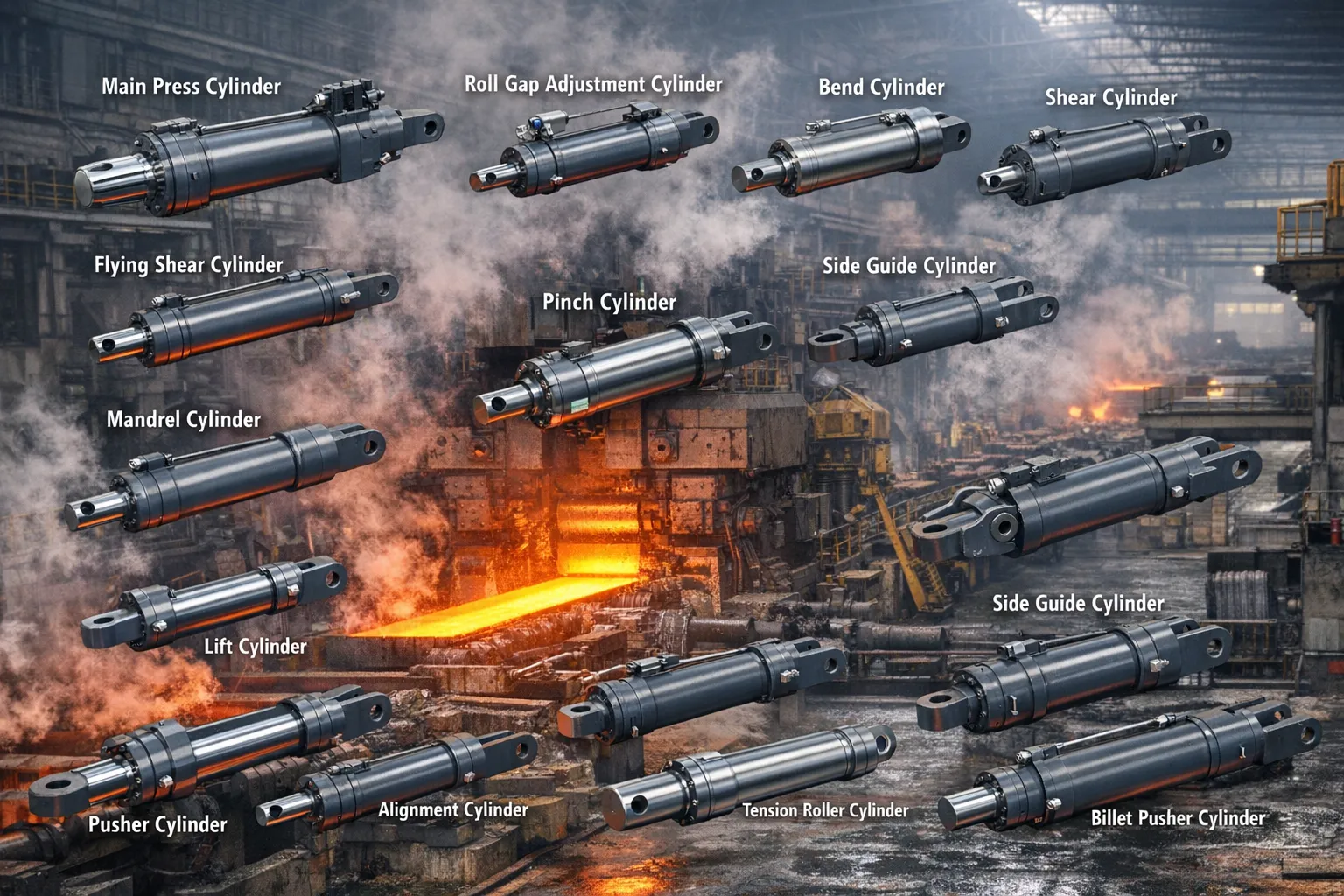
Seamless Integration & Global Equipment Replacement
Procurement directors and maintenance engineers often face agonizing operational delays due to the extended lead times associated with importing OEM replacement parts from overseas. We excel at eliminating this bottleneck by providing rapid, flawlessly engineered drop-in replacements that instantly upgrade your system’s thermal reliability without requiring any costly modifications to your plant infrastructure.
Our highly customized roller table lifting hydraulic cylinder assemblies are meticulously reverse-engineered to be dimensionally identical to legacy equipment originally supplied by prominent global machinery manufacturers such as Bosch Rexroth, Parker Hannifin, Eaton Vickers, SMS Group, Primetals Technologies, and Danieli. (Please note: These corporate brand names are mentioned strictly for the convenience of B2B equipment selection, dimensional cross-referencing, and technical matching. This does not constitute trademark infringement or imply direct official affiliation.)
By accurately replicating the critical mounting trunnions, clevis pin diameters, base flanges, stroke lengths, and hydraulic port threads, we guarantee a perfect plug-and-play installation. Your onsite maintenance personnel can execute the swap seamlessly. This shifts the tedious process of fixing hydraulic cylinders from a temporary repair into a strategic opportunity to permanently fortify your plant with superior Q345D materials and high-temperature seals.
Five Core Technical Advantages
Why do leading metallurgical facilities in South Korea, Japan, and Southeast Asia consistently trust our engineering footprint? The answer is rooted in our targeted resolution of specific heavy-industry failure modes. Here are the five core engineering pillars of our specialized lifting actuators:
1. Absolute Internal Leakage Prevention via High-Temp Seals
Standard polyurethane seals cook, harden, and fail rapidly under intense radiant heat, leading directly to pressure loss and dangerous load drift. We integrate an advanced high-temperature resistant sealing matrix utilizing aerospace-grade FKM (Viton) elastomers and reinforced PTFE step seals. This sophisticated tribological configuration maintains perfect elasticity and fluid sealing integrity even at extreme temperatures, absolutely preventing internal leakage and ensuring the roller table lift cylinder holds its elevation permanently.
2. High-Rigidity Q345D Structural Steel Construction
Lifting massive mechanical tables subjects the cylinder body to intense compressive stress, and sudden vertical impact loads occur if a heavy steel slab drops onto the rollers. Standard carbon steel barrels can balloon or deform. Our units are manufactured exclusively from Q345D low-alloy, high-strength structural steel. This specific material grade provides exceptional yield strength and remarkable impact toughness, ensuring the barrel remains geometrically perfect under peak tonnage.
3. Heavy-Duty Welded Architecture
The continuous, heavy mechanical vibration of a rolling mill will rapidly stretch and loosen the bolts of a standard tie-rod cylinder, causing external fluid weeping and safety hazards. We utilize a highly robust welded construction for all critical hydraulic components. Automated submerged arc welding creates deep, stress-relieved fusion zones between the Q345D barrel, end caps, and mounting trunnions, resulting in a monolithic structure that completely shrugs off severe industrial shockwaves.
4. Aggressive Abrasive Dust Exclusion
When hot iron scale settles on the extending rod, it acts exactly like coarse sandpaper against the internal gland seals upon retraction. We deploy a multi-tiered defense system featuring a rigid metallic scraper backed by heavy-duty elastomer wipers. This setup aggressively fractures and scrapes away baked-on scale. Coupled with an extra-thick hard chrome plating (exceeding HRC 65), the hydraulic rams remain highly polished and entirely free from abrasive scoring.
5. Precision-Honed Internal Zero-Leakage Bore
To ensure a roller table rises and lowers smoothly without stick-slip juddering, the internal dynamic friction must be aggressively minimized. The bore of our Q345D barrel undergoes heavy CNC deep-hole turning followed by advanced skiving and roller burnishing. This process plastically compresses the metal’s inner surface, yielding a brilliant mirror finish (Ra ≤ 0.2µm). This ultra-smooth bore maximizes the operational lifespan of the high-temperature seals and guarantees smooth vertical motion.
Autonomous Manufacturing & Absolute Quality Control
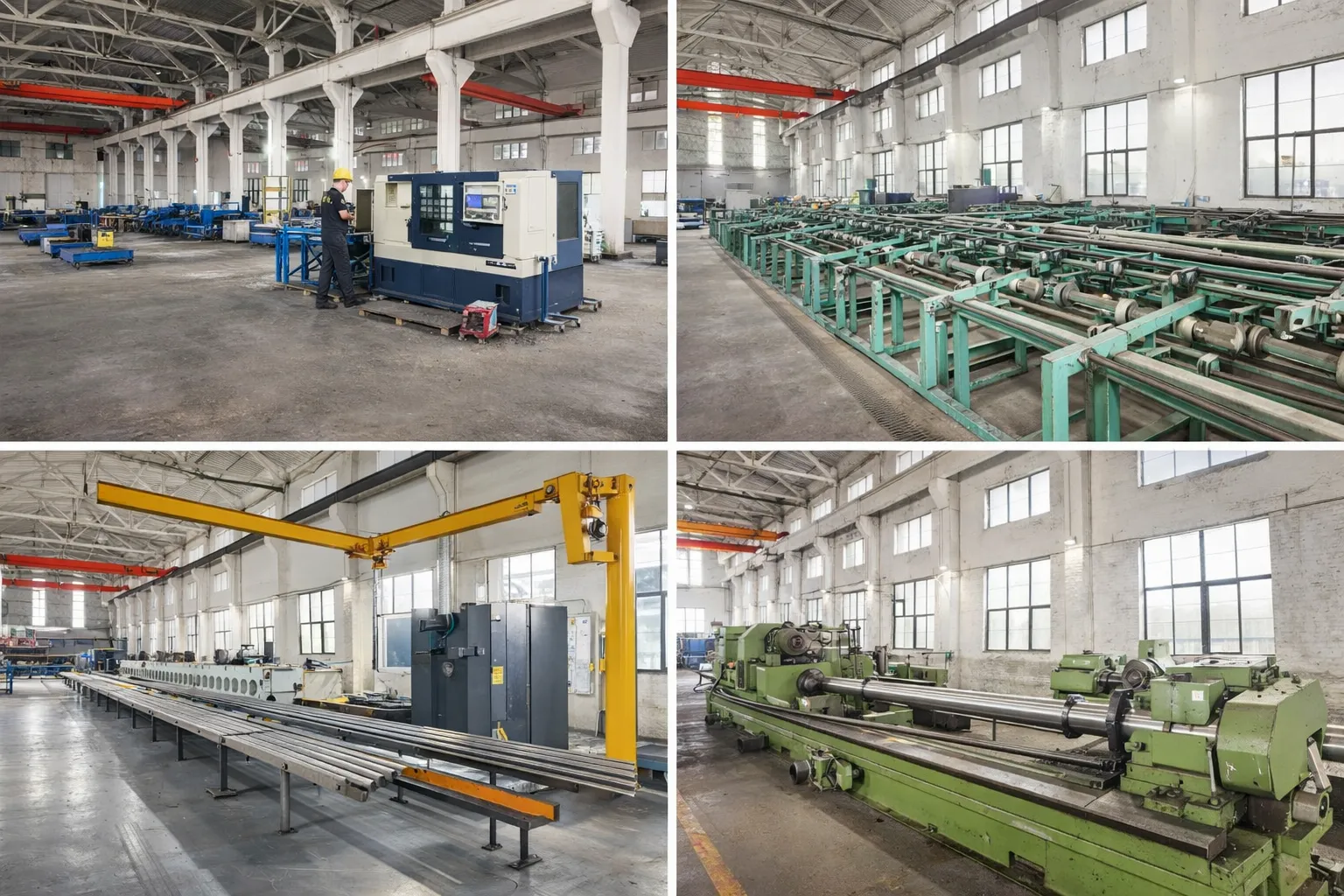
True industrial reliability stems directly from total manufacturing transparency and execution control. We do not outsource our primary machining or welding processes. Our autonomous production cycle begins the moment raw Q345D steel billets arrive at our facility. Every single batch is subjected to comprehensive ultrasonic Non-Destructive Testing (NDT) to verify absolute internal metallurgical purity, ensuring no hidden microscopic voids or inclusions compromise the high-pressure integrity of the equipment.
The structural assembly is executed by automated robotic welding cells to ensure consistent, flawless penetration on every single joint. Following welding, critical structural components undergo thermal stress relief processes to remove any internal stresses introduced by the welding heat. The piston rods are turned, precision-ground to exact tolerances, induction-hardened, and electro-plated under strictly controlled environmental parameters to achieve perfect dimensional concentricity.
Our quality assurance protocols strictly forbid statistical batch sampling. We enforce a 100% factory testing mandate. Every single piece of our assembled hydraulic cylinder units is mounted on automated computerized test benches and hydraulically pressurized to 1.5 times its maximum operating rating. We rigorously hold this extreme pressure to verify absolute zero internal leakage across the piston and confirm the flawless performance of the external seals. Finally, each unit is permanently laser-engraved with a unique tracking code, ensuring total material traceability and streamlining your future hydraulic cylinder repair spare parts procurement.
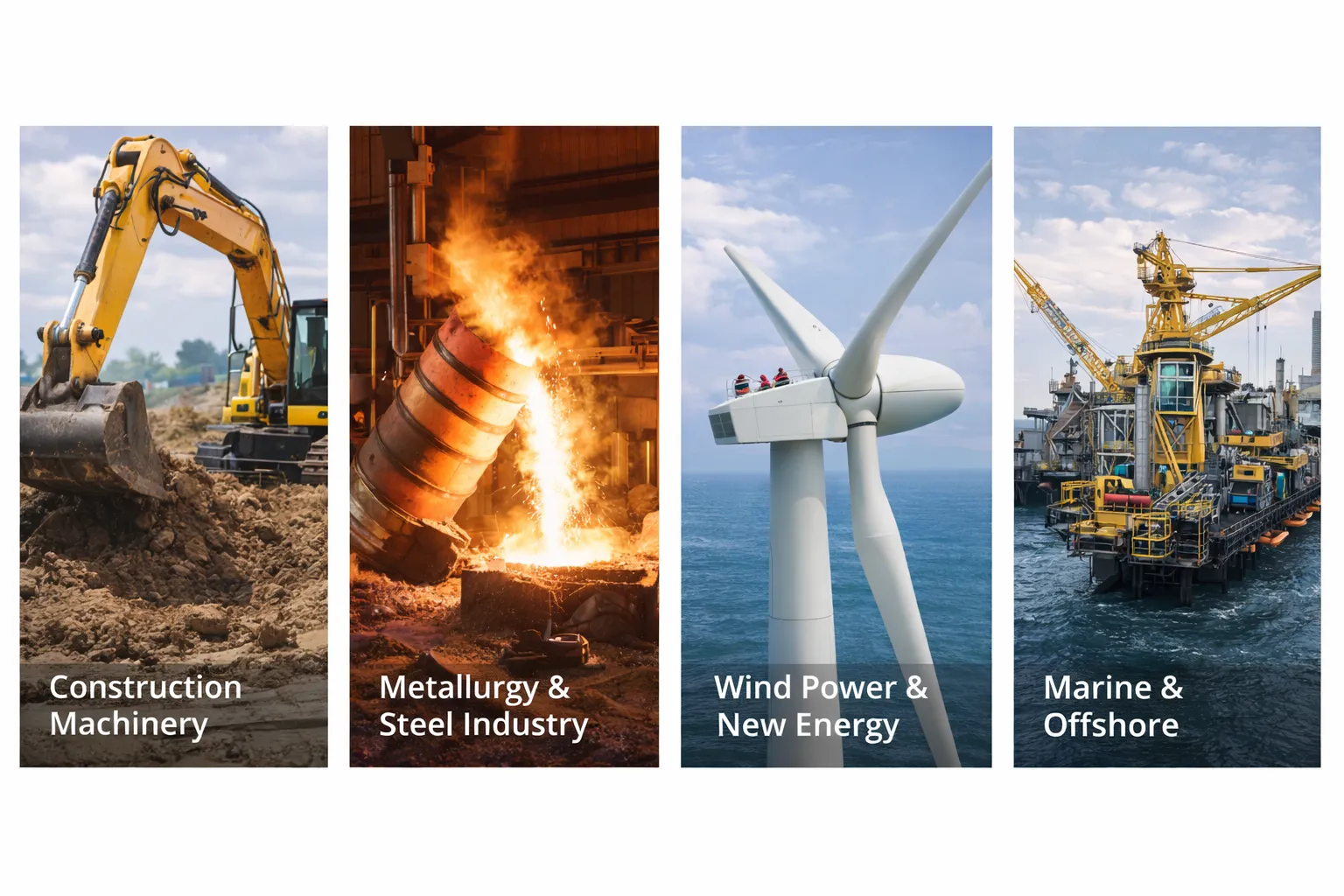
Broad Industrial Applications Beyond the Steel Mill
While our advanced Q345D welded construction and high-temp sealing matrices are perfectly optimized for the metallurgical sector, the fundamental engineering principles of extreme lifting force and zero-leakage reliability make our fluid power systems highly critical across a wide spectrum of heavy industries.
- Metallurgical and Iron Industry: Walking beam furnaces, continuous casting ladles, scrap shear pushers, and heavy coil handling systems requiring high-temperature resistance.
- Construction Machinery Industry: High-tonnage excavators, piling rigs, and heavy-duty wheel loaders operating in highly abrasive, dust-choked construction environments.
- Mining Industry: Massive primary jaw crushers, heavy apron feeders, and underground longwall roof supports that demand fail-safe vertical load holding.
- Material Handling & Logistics: High-capacity port straddle carriers, automated guided vehicles (AGVs), and heavy container handlers requiring highly stable lift cylinder mechanisms.
- Plastic & Rubber Machinery: Large-tonnage injection molding machines where immense, deflection-free clamping force is absolutely mandatory to prevent plastic flashing.
- Specialty & Custom Environments: Although most systems are double-acting, we routinely engineer robust single acting hydraulic cylinder configurations for gravity-return applications in heavy processing plants.
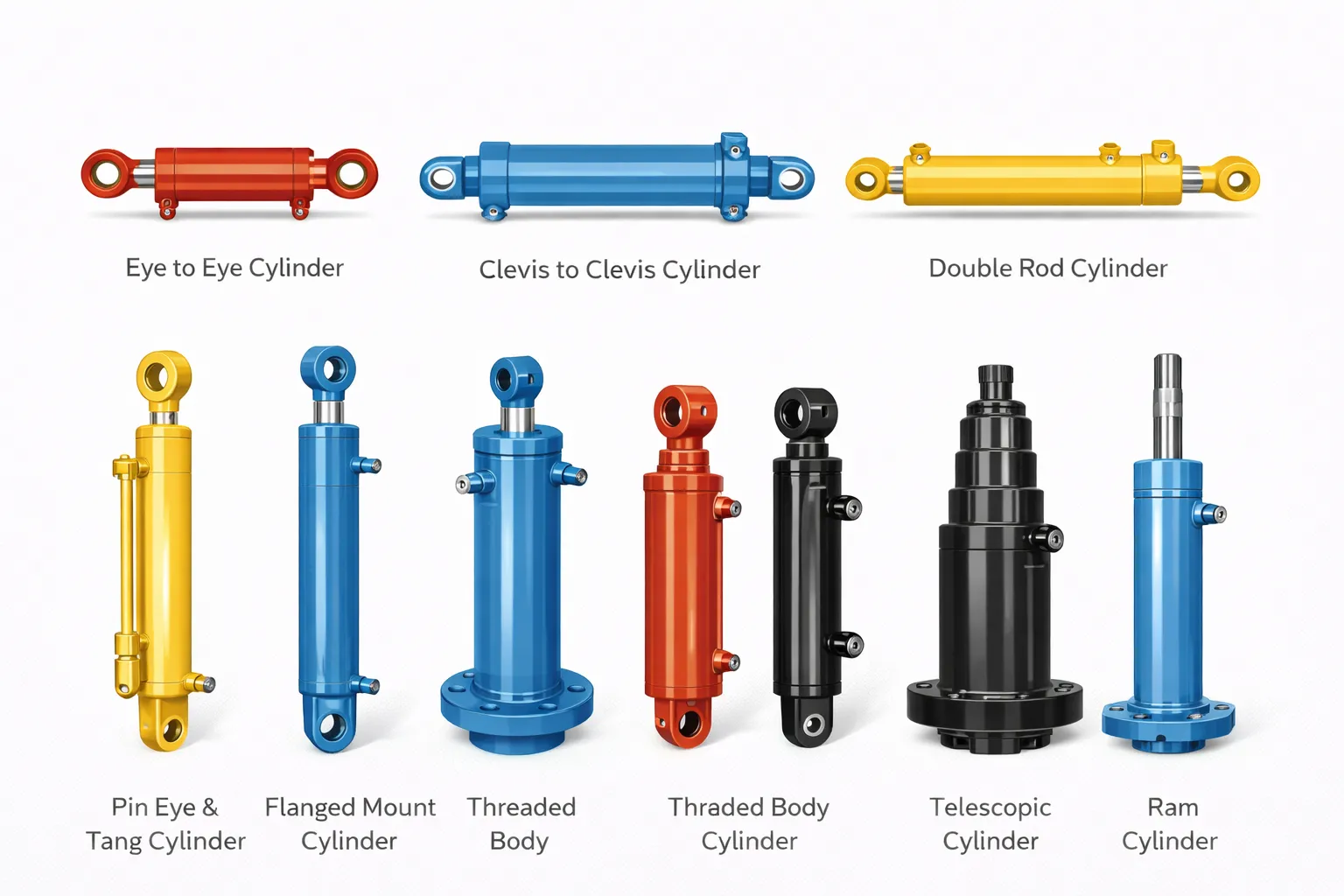
Comparative Analysis: Standard Commercial vs. High-Performance Engineering
When industrial buyers evaluate the true hydraulic cylinder price, focusing only on the lowest initial purchase cost is a critical error. The actual expense lies in unplanned mill downtime, spoiled steel product, and the labor costs of constant seal replacements. The table below illustrates the stark mechanical differences between generic catalog models and our purpose-built lifting solutions.
| Critical Operational Variable | Standard Commercial Hydraulic Cylinder | Our Roller Table Lift Cylinder |
|---|---|---|
| Internal Leakage Resistance | Standard PU seals degrade rapidly in heat, allowing fluid bypass and severe load drifting. | High-temperature FKM seals guarantee zero internal fluid bypass, holding heavy loads permanently. |
| Barrel Material & Rigidity | Basic 1045 Carbon Steel. Prone to stretching and ballooning under sudden vertical shock loads. | Q345D Low-Alloy Steel. Exceptional yield strength prevents all deformation under peak mill tonnage. |
| Dust & Scale Exclusion | Single rubber wiper. Iron scale embeds easily, deeply scoring the rod and destroying main pressure seals. | Heavy metallic scraper system. Physically fractures and cleanly ejects baked-on iron scale completely. |
| Construction Method | Tie-rod assembly. Heavy mill vibration causes bolts to stretch, leading to rapid external fluid weeping. | Heavy-duty welded monoblock. Stress-relieved for infinite structural rigidity against high vibration. |
| Maintenance Lifecycle | High failure rates resulting in hazardous emergency replacements every 3 to 6 months. | 100% individual pressure testing guarantees operation routinely exceeding 24 months leak-free. |
Proven Success: Real-World Global Case Studies
The ultimate validator of specialized industrial engineering is sustained performance on the factory floor under brutal conditions. Our fluid power teams have consistently eradicated massive production bottlenecks for major operators across East Asia. Here are five documented examples of our custom components delivering transformative results.
Case 1: Eradicating Internal Leakage in Pohang, South Korea
Client Details: Tier-1 Integrated Steel Hot Strip Mill | Application: Transfer Roller Table Lift
The Challenge: The plant’s standard lifting cylinders were experiencing severe internal leakage because extreme radiant heat was melting the internal polyurethane seals. The tables were slowly drifting downward during slab transfer, causing massive impact damage to the downstream rollers and ruining the steel profile.
How They Found Us: Their lead reliability engineer searched online specifically for a hydraulic cylinder manufacturer with expertise in high-temperature metallurgical sealing.
The Results: In May 2024, we supplied fully upgraded units equipped with high-temp FKM seals and heavy-duty Q345D barrels. The internal leakage was entirely eliminated. The tables now hold elevation perfectly, cutting roller replacement costs by an estimated 60% over the last year.
“Your high-temp sealing technology saved our transfer line. We haven’t had a single load drift incident since the installation. Outstanding holding reliability.” — Mr. Kang, Plant Maintenance Director.
Case 2: Defeating Abrasive Scale in Gwangyang, South Korea
Client Details: Heavy Plate Mill Operator | Application: Cooling Bed Entry Table
The Challenge: Extremely heavy, abrasive iron scale was settling directly onto the extended cylinder rods in the pit. Retracting the rods dragged the scale past standard wipers, deeply scoring the chrome and destroying the main pressure seals every 3 months, leading to massive external fluid leaks.
How They Found Us: Recommended by a specialized industrial fluid power distributor based in Seoul.
The Results: We deployed custom double acting hydraulic cylinder configurations featuring our heavy metallic scraper system and thickened hard chrome plating. After 14 months in the drop zone, the rods remain completely unblemished and entirely leak-free.
“The metallic scrapers are incredible. They literally chisel the baked-on scale off the rod before it retracts. Our seal replacement frequency has dropped to zero.” — Lee J.H., Mechanical Engineer.
Case 3: Rapid European OEM Replacement in Chiba, Japan
Client Details: Specialty Alloy Steel Processor | Application: Reversing Mill Table Lift
The Challenge: A catastrophic structural failure on an aging lifting cylinder halted production. The original European equipment manufacturer quoted an unacceptable 22-week lead time for a replacement unit, severely threatening the plant’s quarterly output.
How They Found Us: Reached out through our B2B portal searching for emergency reverse-engineering services.
The Results: Working directly from their technical blueprints, we rapidly manufactured a dimensionally identical unit using superior Q345D steel. We air-freighted the unit, restoring mill operation perfectly in just 5 weeks.
“Your manufacturing speed and dimensional accuracy were flawless. The unit bolted directly to the existing trunnions without a single piping modification. Absolute lifesavers.” — T. Sato, Procurement Lead.
Case 4: Solving Tie-Rod Vibration Leaks in Kaohsiung, Taiwan
Client Details: Stainless Steel Cold Rolling Mill | Application: Segmented Transfer Table
The Challenge: Heavy, low-frequency vibrations generated during the rolling process were causing the bolts on their standard tie-rod cylinders to constantly stretch and loosen, resulting in persistent external fluid weeping and creating massive slip hazards on the floor.
How They Found Us: Met our technical sales team at a major metallurgical machinery expo in Taipei.
The Results: We replaced the fragile tie-rod designs entirely with our heavy-duty welded monoblock construction. The infinite structural rigidity absorbed the mill vibrations completely. The external weeping stopped entirely on day one.
“Switching to your welded design permanently cured our vibration issues. The pit is finally free of hydraulic oil, and our daily maintenance checks are much faster.” — C.W. Lin, Safety & Maintenance Coordinator.
Case 5: Upgrading Heavy Logistics in Busan, South Korea
Client Details: Steel Coil Processing & Port Logistics Hub | Application: Heavy Coil Transfer Cart
The Challenge: Their coil transport carts required immense vertical lifting power. Standard carbon steel cylinders were visibly bulging and suffering structural fatigue under the intense hydraulic pressure spikes needed to reliably lift 35-ton coils.
How They Found Us: Conducted a targeted online search for heavy-tonnage fixing hydraulic cylinders and specialized Q345D engineering.
The Results: We delivered highly customized lifting units forged entirely from Q345D steel with heavy wall thickness. The advanced yield strength easily handles the extreme pressure spikes without stretching, completely eliminating structural fatigue.
“The Q345D material is incredibly rigid. These actuators lift our heaviest coils effortlessly without a hint of stress or bulging. Fantastic heavy-duty engineering.” — Park M.S., Operations Director.
B2B Technical Engineering FAQ
For supply chain managers, procurement officers, and plant reliability engineers evaluating strategic upgrades, we have compiled transparent, highly technical answers to your most pressing operational inquiries.
1. How exactly does your design prevent load drift and internal leakage?
2. Can you guarantee dimensional compatibility with our current European OEM actuators?
3. What specific advantage does Q345D steel offer over standard 1045 carbon steel?
4. How do you support emergency breakdown situations for clients in South Korea?
5. Do you supply internal spare parts such as the piston or high-temp seal kits?
6. How do I request a formal quotation, and what factors determine the pricing?
Secure Your Roller Tables Against Extreme Heat and Dust
Do not allow internal leakage, load drifting, and generic equipment failure to dictate your plant’s production schedule. Upgrade to a lifting system explicitly engineered from Q345D steel to survive the severe realities of the metallurgical zone. Partner with our specialized engineering team today to permanently resolve your actuator failures.
Editor: Cxm