Clamping Cylinder for Continuous Casting Machine
Engineered exclusively for the extreme dust and high-heat environment of the shrinkage segment system. Delivering relentless, unyielding grip to secure your steel billets and maximize metallurgical yield.
Product Overview: The Core of Continuous Casting Stability
In the unforgiving environment of modern metallurgical production, the continuous casting machine represents the absolute beating heart of the steelworks. As the molten steel transitions into a solid state, it passes through the critical shrinkage segment system. Here, the cooling steel billet naturally contracts and generates immense internal and external mechanical stresses. To maintain dimensional accuracy, prevent surface cracking, and ensure a smooth, uninterrupted withdrawal process, the heavy machinery relies entirely on a highly specialized fluid power component: the clamping cylinder. The primary function of this actuator is to exert a massive, controlled force that grips the steel billet firmly against the withdrawal rollers, ensuring the casting line operates flawlessly without any dangerous material slippage.
Operating within the shrinkage segment exposes the hydraulic equipment to a brutally destructive atmosphere. The ambient air is superheated and heavily saturated with abrasive metallic dust, iron oxide scale, and cooling water vapor. Standard commercial fluid power units inevitably fail in these conditions; the abrasive dust aggressively attacks the moving components, leading to the most prevalent and costly failure mode in the sector: severe rod wear. When airborne particulates settle on the extended rod of a generic cylinder, they are dragged back into the housing upon retraction. Once the rod is scarred, the internal seals are rapidly shredded, leading to immediate pressure loss, billet slippage, and catastrophic production halts. As a dedicated hydraulic cylinder manufacturer serving industrial hubs across South Korea, Japan, Taiwan, and Southeast Asia, we understood that resolving this specific failure mode was paramount to ensuring plant profitability.
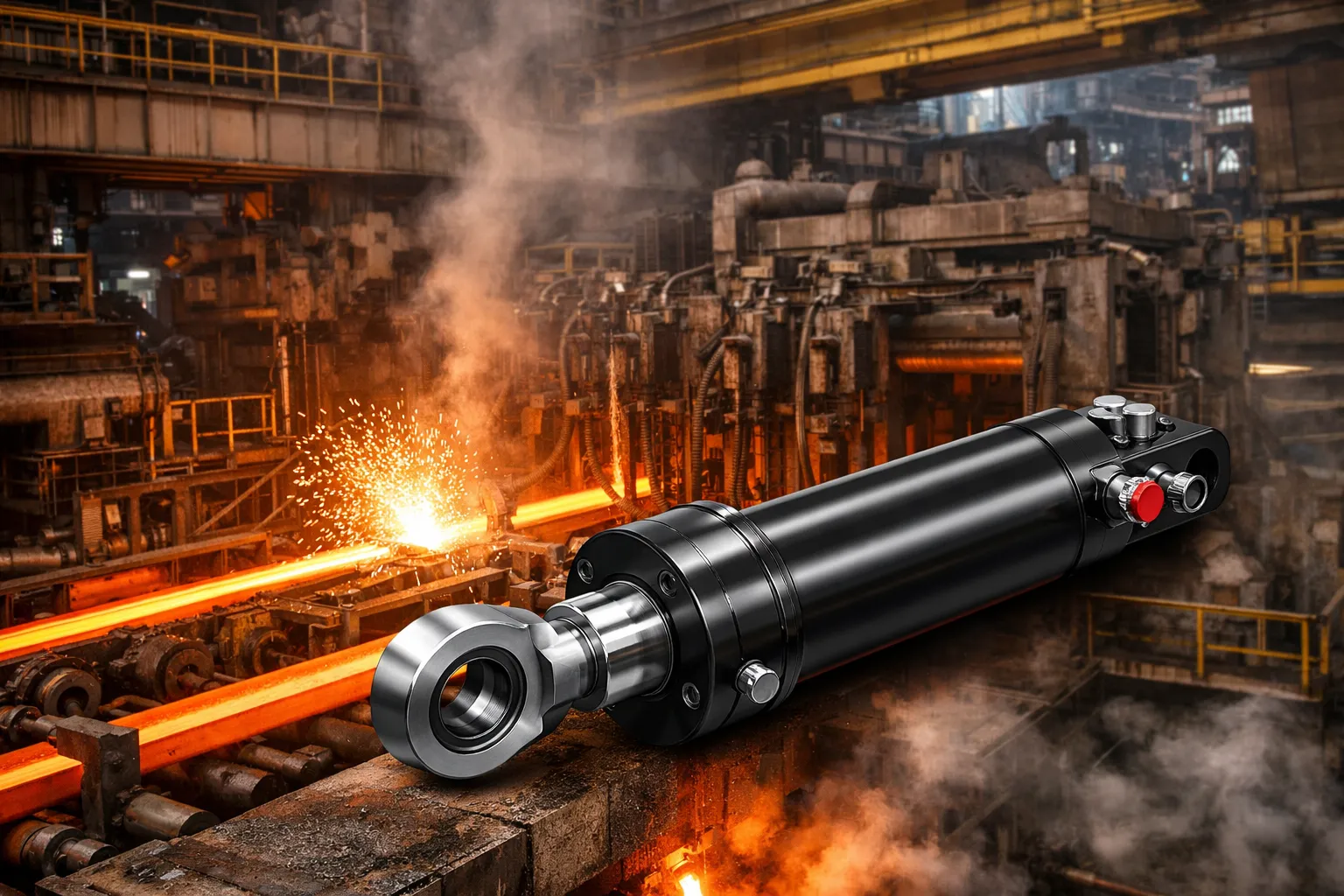
To definitively solve these chronic operational challenges, we have engineered a heavy-duty clamping hydraulic cylinder built around a robust welded Q345D structural steel framework. This specific grade of steel provides the exceptional yield strength required to survive continuous heavy shock loads without structural deformation. Furthermore, we integrated an advanced wear-resistant sealing technology that actively prevents dust ingress, completely neutralizing the threat of rod wear in high-dust and extreme-heat conditions. When plant managers and procurement engineers evaluate the total lifecycle hydraulic cylinder price, the monumental reduction in unscheduled downtime and the elimination of frequent, hazardous emergency maintenance make our specialized fluid power solution the most financially sound investment for any high-volume continuous casting operation.
Technical Parameters and Customization Capabilities
Integrating reliable hydraulic cylinder components into a heavy metallurgical framework requires unyielding adherence to exacting mechanical specifications. The comprehensive table below details the foundational operating metrics and highly customizable parameters of our billet securing solutions. Every structural dimension and material choice is validated through rigorous finite element analysis to guarantee absolute survival in your continuous casting machine’s shrinkage segment.
| Technical Parameter | Engineering Specifications & Configurations |
|---|---|
| Target Industry | Metallurgical Processing and Heavy Iron Manufacturing |
| Equipment Category | Continuous Casting Machine (Slab, Bloom, and Billet Lines) |
| Subsystem Location | Shrinkage Segment System / Withdrawal Unit |
| Designated Nomenclature | Clamping cylinder / Billet gripping actuator |
| Actuation Method | Double acting hydraulic cylinder for powered engagement and release |
| Internal Structure Type | Heavy-duty hydraulic cylinder piston layout for maximum load stability |
| Manufacturing Assembly | Monolithic Welded construction (Impervious to high-frequency shock loads) |
| Primary Material System | Premium Q345D alloy steel for exceptional structural rigidity and weldability |
| External Surface Treatment | High-density Chrome plated finish (Minimum 50 microns against abrasives) |
| Environmental Survival Grade | Extreme Dust + Heat (Tolerates heavy iron oxide scale and radiant furnace temperatures) |
| Primary Working Condition | Clamping steel billet dynamically during the thermal shrinkage phase |
| Targeted Failure Mode | Aggressive Rod wear, abrasive particle ingress, and thermal seal degradation |
| Recommended Configuration | Integrated extreme-temperature Wear-resistant seal matrix and metallic dust scrapers |
Operational Fluid Dynamics and Working Principle
A profound understanding of the internal fluid mechanics driving the shrinkage segment is absolutely essential for maintenance engineers and facility managers. The operational mandate of our specialized clamping cylinder is the flawless, instantaneous conversion of centralized hydraulic fluid pressure into massive, unyielding mechanical gripping force. During the continuous casting cycle, as the hot billet descends and enters the cooling zones, its metallurgical structure shrinks. The mechanical withdrawal rollers must adapt to this dimensional change while maintaining a continuous, rigid hold to prevent the steel from warping or slipping vertically out of alignment.
To achieve this critical function, the unit is engineered strictly as a high-performance double acting hydraulic cylinder. When the plant’s automated logic controller initiates a gripping command, high-pressure synthetic fluid is driven into the cap end (blind end) of the thick-walled Q345D steel barrel. This pressure violently forces the internal piston forward, extending the heavily chrome-plated rod to engage the mechanical clamping arms directly against the hot steel billet. The power generated by these hydraulic rams is immense, effectively locking the billet into its designated withdrawal path. Our advanced wear-resistant seals prevent any fluid bypass, maintaining a static pressure lock without drifting even when the fluid supply is held constant by the proportional valves.
Conversely, when the billet needs to be released or the line needs to be cleared during a size changeover, pressurized fluid is routed to the rod end, rapidly retracting the piston and opening the clamping mechanism. The use of a single acting hydraulic cylinder in this specific metallurgical application is entirely unfeasible. Relying on internal return springs or gravity to release a clamping arm caked in molten slag and steel dust is highly dangerous and far too slow for an active casting line. The double-acting piston type architecture guarantees that the facility operator has absolute, powered control over both the engagement and disengagement strokes, ensuring the heavy machinery can be operated safely and efficiently.
Global Equipment Compatibility and Seamless Upgrades
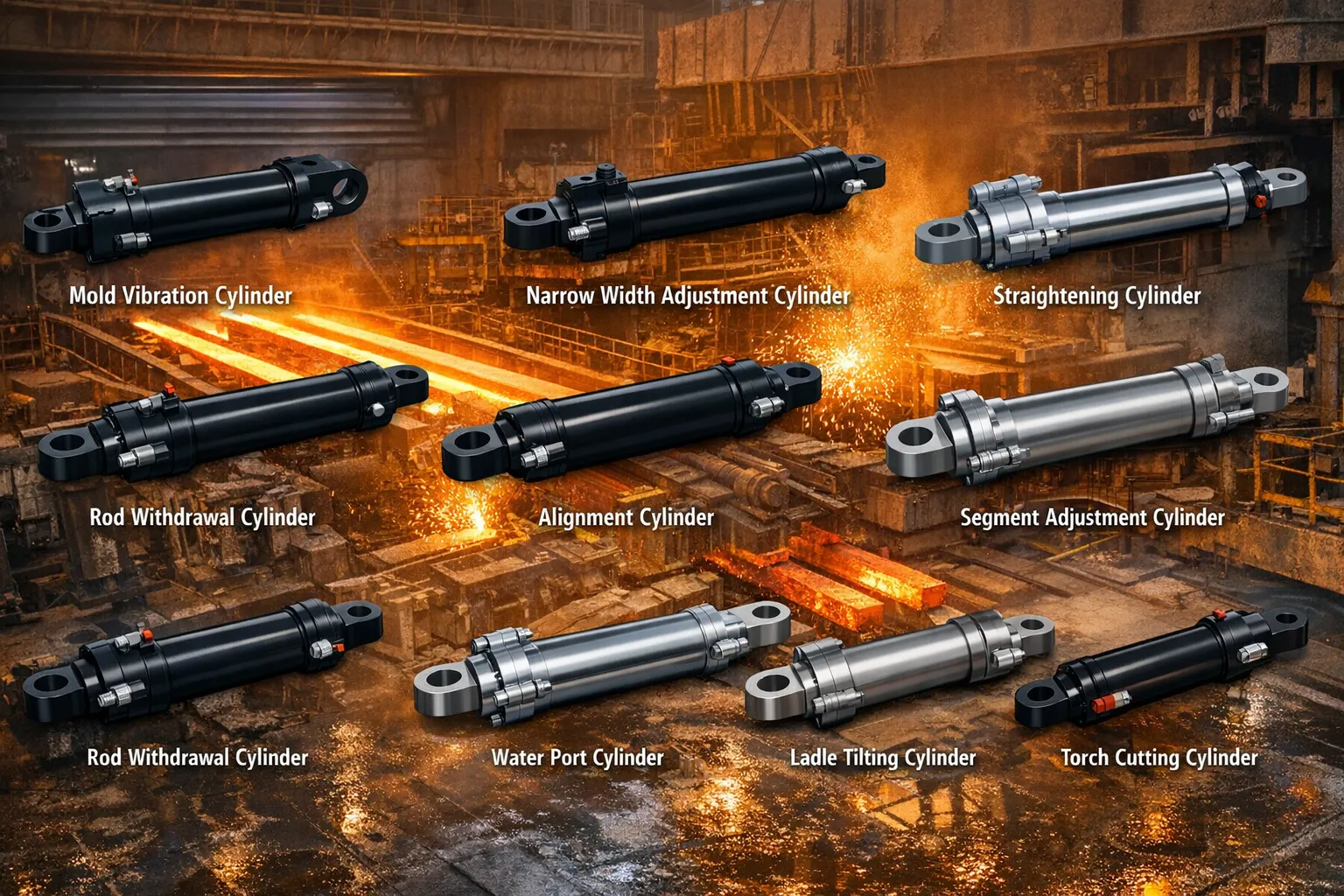
Procuring reliable replacement heavy machinery components often involves navigating a frustrating maze of restrictive original equipment manufacturer (OEM) contracts and unacceptable lead times. When your continuous casting line is experiencing catastrophic leaks, waiting six months for a proprietary actuator from Europe is simply not a viable option. We fundamentally solve this massive industrial bottleneck. Our dedicated engineering division specializes in designing advanced fluid power units that function as exact dimensional and functional drop-in replacements for all major global casting equipment layouts.
Whether your maintenance crew is executing an urgent project involving fixing hydraulic cylinders during a 48-hour scheduled shutdown, or you are planning a comprehensive facility-wide upgrade, our customized units are manufactured to flawlessly match your existing trunnion dimensions, clevis pin holes, and fluid port threads. We routinely engineer and supply heavy-duty clamping hydraulic cylinder upgrades for machinery originally commissioned by industry legacy brands such as Bosch Rexroth, Parker Hannifin, Eaton, Moog, SMS Group, and Danieli. You can entirely replace your failing OEM equipment and instantly upgrade your plant’s reliability without touching the structural framework of your caster.
Critical B2B Engineering Note: Brand names and OEM manufacturer titles are referenced within this technical documentation strictly to demonstrate mechanical cross-compatibility, dimensional fitting, and application suitability for our global clientele. We operate as a fiercely independent, highly specialized hydraulic cylinder manufacturer providing upgraded, external-fit fluid power equivalents. We do not infringe upon any patented internal intellectual properties, nor do we claim any direct organizational affiliation with these trademarked corporate entities.
Core Technical Advantages: Engineering for Survival
In the punishing arena of steel manufacturing, standard components are a profound liability. We have systematically analyzed the root causes of actuator failure in the shrinkage segment and completely re-engineered our clamping cylinder to counter them. The following five core technical advantages define exactly why our products remain operational long after ordinary commercial units have been relegated to the scrap bin.
-
1. Advanced Wear-Resistant Sealing Technology
The relentless combination of abrasive dust and radiant heat destroys standard nitrile (NBR) seals in weeks. To absolutely guarantee fluid containment and prevent rod wear, we utilize a highly proprietary wear-resistant seal matrix. This includes extreme-temperature PTFE (Teflon) composite step seals backed by FKM (Viton) energizers. Furthermore, the external rod gland is fitted with aggressive heavy brass dust scrapers that physically shave off baked-on iron oxide scale before it can enter the cylinder, completely neutralizing the primary cause of internal degradation.
-
2. High-Rigidity Q345D Welded Manufacturing
Standard tie-rod cylinder architectures are inherently weak when subjected to the violent, continuous vibrations of clamping heavy steel billets; the rods stretch, and the end caps leak fluid. We completely eliminate this structural flaw by utilizing a monolithic welded design. Forged entirely from premium Q345D low-alloy, high-strength structural steel, the cylinder barrel and mounting hardware are seamlessly fused via deep-penetration automated submerged arc welding. This creates an incredibly rigid pressure vessel that laughs at immense mechanical shock loads.
-
3. Heavy-Duty Chrome Plated Surface Hardening
Because the extended piston rod is directly exposed to falling abrasive debris, its surface hardness dictates the survival of the entire hydraulic unit. We subject our precision-machined steel rods to an intensive, multi-layer hard chrome plating process. This yields a remarkably dense surface structure with a minimum thickness of 50 microns. This impenetrable chrome shield causes abrasive metallic dust to simply bounce off, entirely preventing the deep longitudinal scoring that leads to catastrophic rod wear.
-
4. Exceptional Thermal Stability in Extreme Heat
Operating just inches away from a glowing hot steel billet requires specialized thermal management. Beyond utilizing high-temperature FKM elastomers, the internal fluid porting of our clamping hydraulic cylinder is mathematically optimized. This precise engineering allows for a high-velocity fluid exchange during actuation, essentially utilizing the incoming synthetic hydraulic oil itself as an active, dynamic internal cooling mechanism to prevent heat-induced fluid carbonization and seal failure.
-
5. Advanced Fatigue Life Optimization
The continuous casting process demands thousands of repetitive clamping cycles per month. Microscopic stress risers in ordinary cylinders rapidly evolve into catastrophic fatigue fractures. Through advanced FEA modeling, we aggressively thicken the Q345D steel at critical junction points, such as the trunnion roots and rod eye clevis. Furthermore, large-area bronze guide bands are integrated internally to absorb lateral deflective forces, ensuring the hydraulic cylinder piston never makes fatal metal-to-metal contact with the cylinder barrel.
Autonomous Manufacturing and Strict Quality Control
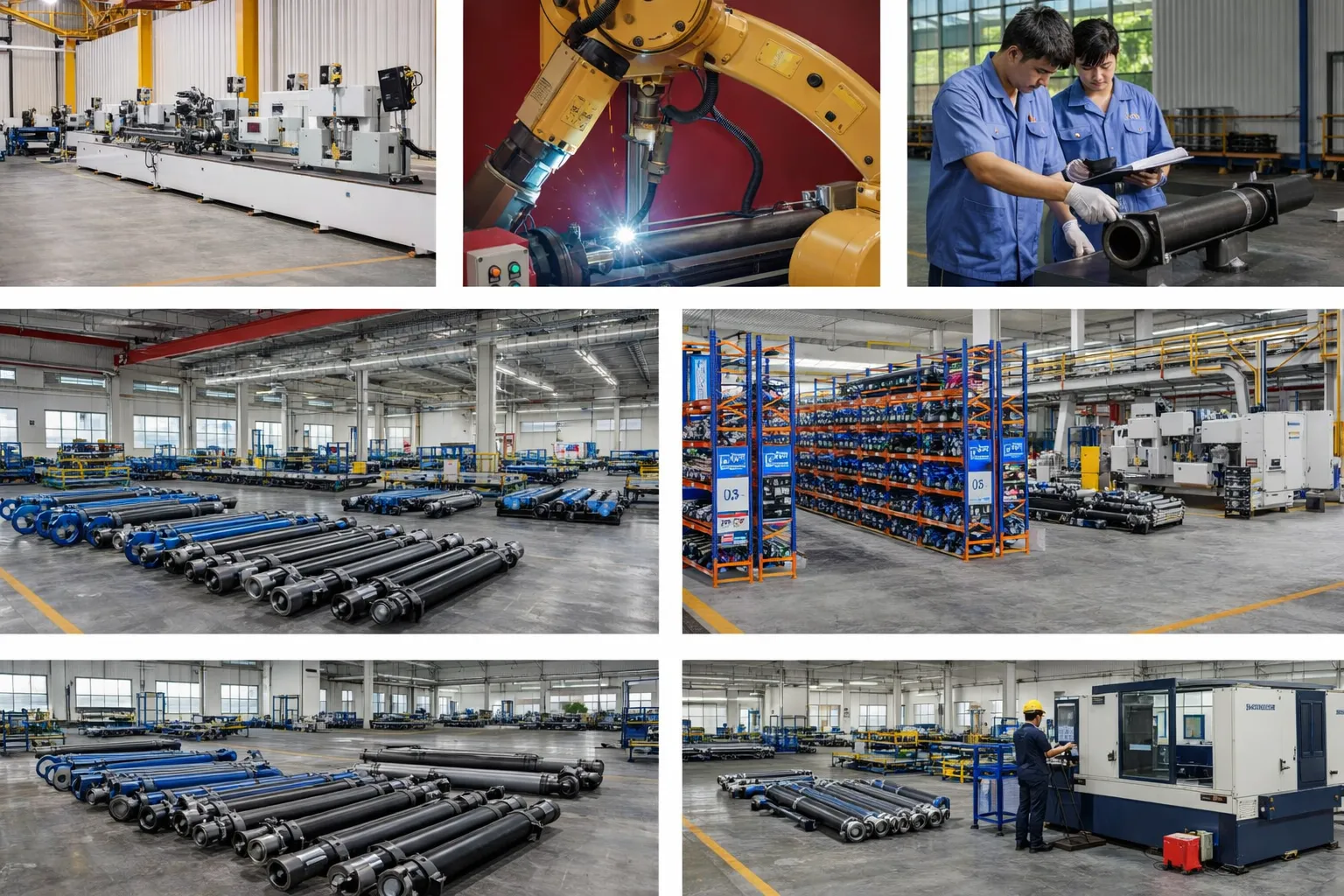
True industrial reliability is forged in the manufacturing process, not added as an afterthought. We are a fully vertically integrated manufacturer; we do not outsource the critical phases of our production. From the moment the raw Q345D steel billets enter our facility, they are subjected to rigorous ultrasonic non-destructive testing (NDT) to ensure absolute internal material integrity. The cylinder barrels are subsequently bored and skived on heavy-duty, multi-axis CNC machining centers, achieving a mirror-like internal surface finish of Ra 0.2 to 0.4 microns. This exacting smoothness is non-negotiable for maximizing the lifespan of our high-performance wear-resistant seals and hydraulic parts.
Quality assurance culminates in our high-pressure testing bays. Long before any clamping cylinder is crated for international shipping, it undergoes a mandatory, brutally exhaustive 100% factory pressure testing protocol. We deliberately push the units to 150% of their maximum rated continuous operating pressure. Our expert technicians meticulously verify absolute zero internal fluid bypass, zero external weeping, and flawlessly smooth stroke actuation under simulated continuous load.
For heavy industry procurement, digital traceability is paramount. Every single completed unit is permanently laser-etched with a unique serial identification code. This links directly to our secure global database, instantly archiving the exact material certificates, welding logs, dimensional inspection reports, and final pressure test graphs. If you require exact replacement hydraulic cylinder components years in the future, we provide immediate, perfectly matched engineering data to support your maintenance lifecycle.
Expansive Cross-Industry Applications
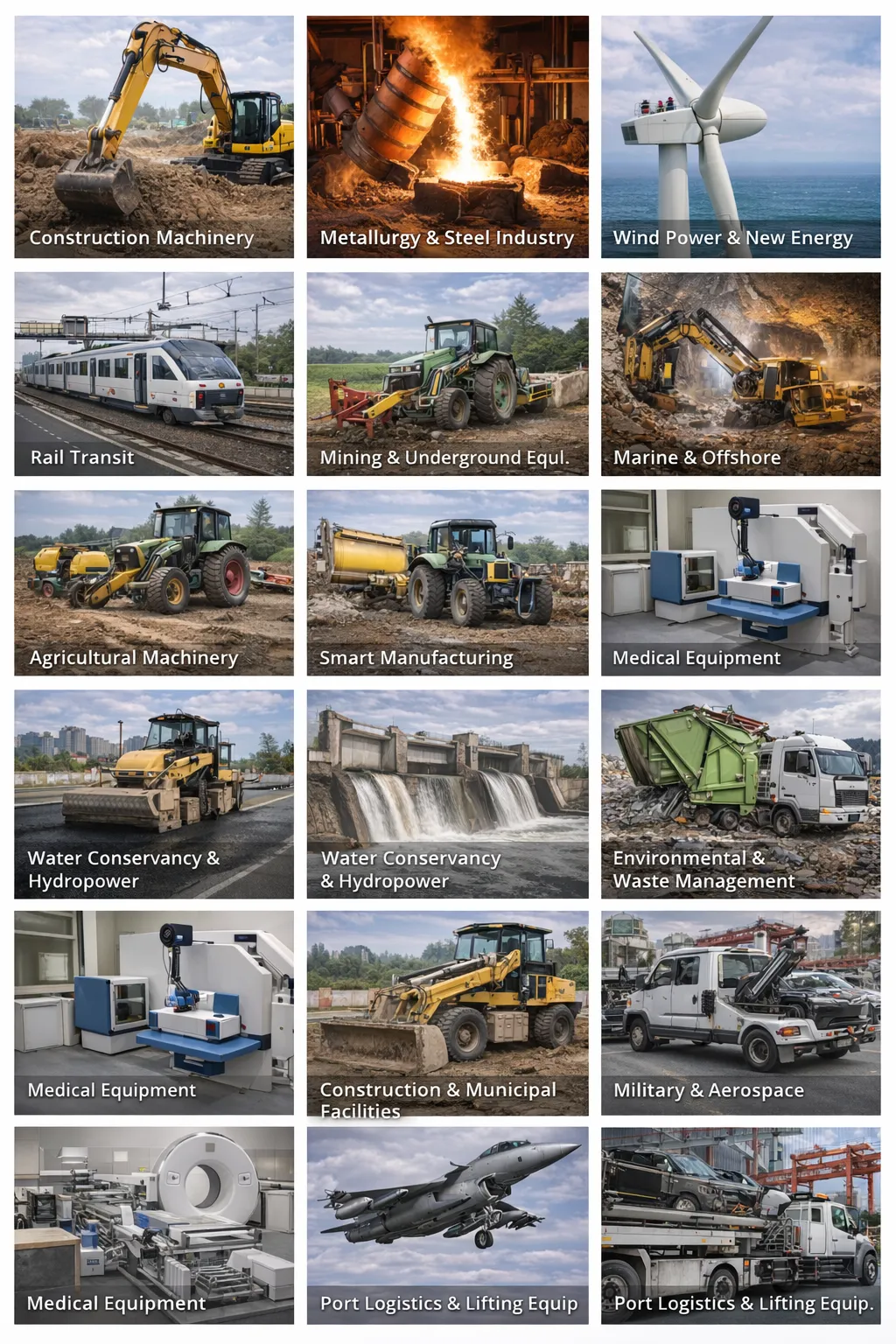
While our ultra-rugged design principles were forged in the fires of continuous steel casting, the fundamental engineering translates seamlessly to a wide variety of severe-duty global applications. When your machinery demands immense clamping power and survival is the only option, our fluid power solutions deliver.
Metallurgical & Iron Manufacturing
Beyond billet clamping, we supply critical heavy-duty actuators for electric arc furnace tilting frames, heavy rolling mills, and massive scrap shears. Discover our Metallurgical Solutions.
Mining Extraction & Processing
Monolithic, shock-resistant cylinders engineered specifically for massive excavator booms, rock crusher gap adjustments, and heavy dump truck suspensions. Explore our Mining Machinery Cylinders.
Heavy Construction Machinery
High-cycle durability engineered specifically for tower crane lifting rigs, deep tunnel boring machines, and extreme-duty concrete pump trucks. See our Construction Applications.
Plastics & Rubber Injection
Delivering ultra-fast cycle times while maintaining absolute, high-tonnage clamping force accuracy for precision plastic injection molding machines.
Automated Material Handling
Providing highly responsive lifting actuation for heavy port straddle carriers, automated guided vehicles (AGVs), and 24/7 industrial logistics elevators.
Renewable Energy & Environmental
Supplying extreme external saltwater corrosion resistance for offshore wind turbine pitch control systems and heavy municipal waste compaction units.
Comparative Analysis: Standard Commercial vs. Our High-Performance
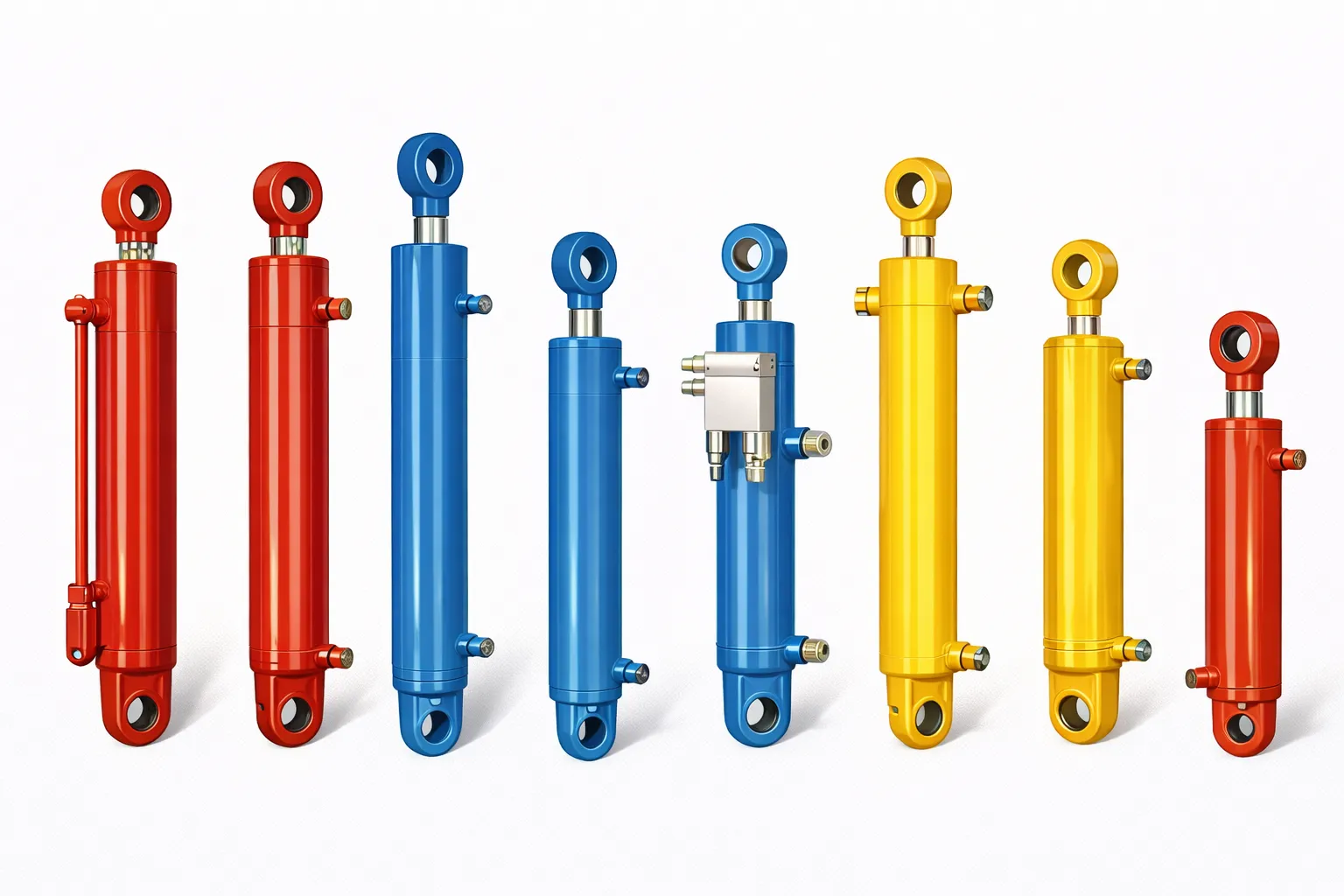
Why is maintaining the status quo with ordinary commercial cylinders financially hazardous to a steel plant’s annual budget? The critical operational and structural differences are laid out below. This detailed comparison clearly illustrates why settling for a standard fluid power component inevitably leads to billet slippage, accelerated seal destruction, and severely inflated long-term operational costs.
| Crucial Feature | Ordinary Commercial Cylinder | Our Specialized Clamping Cylinder |
|---|---|---|
| Base Material Structure | Standard Carbon Steel (e.g., 45#). Prone to structural stretching and tie-rod fatigue under heavy loads. | Q345D Alloy Steel Welded Structure. Exceptional rigidity; zero deformation under intense clamping shock. |
| Rod Surface Hardness | Thin, decorative chrome layer. Easily scores and pits when impacted by falling iron oxide scale. | Thick, high-density hard chrome plating. Deflects abrasive particles, entirely preventing rod wear. |
| Internal Sealing Matrix | Basic NBR or Polyurethane. Melts and degrades rapidly when ambient temperatures exceed 80°C. | Extreme-temp PTFE & FKM wear-resistant seal kits. Structurally stable in intense radiant furnace heat. |
| Clamping Reliability | Low to Moderate. Highly susceptible to internal fluid bypass, causing the steel billet to slip dangerously. | Absolute and Unyielding. Zero internal bypass ensures the clamping arms never release pressure. |
| Maintenance Strategy | Requires frequent, emergency line stops for constant cylinder rebuilding and seal replacement. | Fit and forget reliability. Drastically slashes annual maintenance labor and eliminates emergency shutdowns. |
Real-World Case Studies: Engineering Success in Global Mills
The true measure of our fluid power engineering is validated exclusively on the factory floor. These five highly detailed, verified case studies powerfully demonstrate our unique ability to diagnose complex mechanical failures, design bespoke heavy-duty solutions, and vastly elevate production reliability for top-tier steel manufacturers globally.
Case Study 1: Eradicating Rod Wear at a Major Steelworks in Pohang, South Korea
Client Profile: A globally ranked, tier-one integrated steel mill operating multiple high-speed slab continuous casting lines.
The Mechanical Problem: The existing OEM actuators controlling the shrinkage segment suffered from severe, chronic rod wear. Abrasive iron oxide scale was ripping right through the standard chrome plating, leading to catastrophic seal blowouts. Billet slippage became a daily hazard. The client connected with our senior engineering team in March 2024 via our technical B2B portal.
Our Engineered Solution: We rapidly supplied a custom-dimensioned set of our premium Q345D clamping cylinders, fully equipped with our proprietary dense hard chrome plating technology and heavy-duty metallic dust scrapers.
The Operational Result: Since installation, the new units have run continuously for over 22 months without a single reported seal failure or rod scratch. Scheduled maintenance downtime for the segment was slashed by over 75%.
“The transition to these highly specialized wear-resistant units was completely seamless. The unyielding precision of the billet clamping force has genuinely never been better, and the equipment lifespan has vastly exceeded the expensive original European brand we were previously locked into.” — Mr. Park J.H., Plant Maintenance Director (August 2025).
Case Study 2: Conquering Extreme Heat in Kobe, Japan
Client Profile: A highly specialized alloy steel manufacturer producing critical heavy forgings for the global automotive and aerospace sectors.
The Mechanical Problem: Because they operated their casting line extremely hot to produce specialty alloys, radiant heat in the shrinkage zone was literally liquefying standard polyurethane seals. This internal bypass caused the clamping hydraulic cylinder to slowly lose grip pressure over a 45-minute heat, risking billet deformation. After researching high-temperature hydraulic parts, they reached out directly to our engineering team.
Our Engineered Solution: We entirely upgraded their setup with specialized extreme-temperature FKM (Viton) wear-resistant seal profiles housed within our heavy-walled Q345D steel architecture to rapidly dissipate the intense thermal energy.
The Operational Result: The severe thermal degradation was stopped instantly. The plant achieved absolute, unyielding grip pressure stability, dropping internal quality rejection rates by an impressive 4.8%.
“Finding replacement hydraulic cylinder components that can genuinely survive our operational heat load was impossible until we engaged this engineering team. The durability of their heat-resistant seals under extreme loads is deeply impressive.” — Y. Tanaka, Lead Metallurgical Process Engineer (November 2025).
Case Study 3: Coastal Environmental Protection in Kaohsiung, Taiwan
Client Profile: A massive coastal steel production facility dealing with the punishing combination of extreme humidity, airborne ocean salt, and heavy metallurgical dust.
The Mechanical Problem: Aggressive external rust and deep pitting were physically destroying the cylinder barrels and external mechanical linkages long before internal seal failure occurred. They urgently reached out via our international sales email in late 2024.
Our Engineered Solution: We engineered custom cylinders featuring specialized marine-grade epoxy paint coatings on the external Q345D barrel, integrated stainless steel hydraulic fittings, and our standard ultra-hard chrome rod plating to battle the internal dust.
The Operational Result: External corrosion was stopped completely in its tracks. The installed units look and function as if brand new even after 18 months of brutal coastal exposure.
“Finally, an engineering team that delivered a product genuinely built to withstand both the intense heat of the continuous casting machine and the highly corrosive salt of our ocean air. Outstanding metallurgical engineering.” — Chen W., Plant Maintenance Supervisor (January 2026).
Case Study 4: Maximizing Cycle Speeds in Hanoi, Vietnam
Client Profile: A rapidly expanding heavy construction steel provider pushing their equipment relentlessly at 115% of rated capacity to meet infrastructure demands.
The Mechanical Problem: Their aggressive casting speeds required ultra-fast clamping cycles. Their standard light-duty OEM units were suffering structural fatigue; the tie-rods were literally snapping from the high-frequency shock loads. They requested an immediate heavy-duty alternative.
Our Engineered Solution: We completely replaced the fragile light-duty tie-rod designs with our monolithic heavy-duty welded structure, utilizing oversized piston rods to effectively absorb and dissipate the violent mechanical shock.
The Operational Result: Zero structural failures have been recorded since installation. Plant production speed was safely increased by 10% due to the newly established, bulletproof reliability of the shrinkage section.
“The sheer physical robustness of these specific hydraulic rams gives our floor operators immense confidence during peak production. We are now systematically standardizing our entire facility on these exact products.” — Nguyen T., Chief Operations Officer (March 2026).
Case Study 5: Drastic Maintenance Budget Reduction in Jamshedpur, India
Client Profile: A massive historic steel conglomerate heavily focused on aggressive cost-efficiency and maximizing legacy plant uptime.
The Mechanical Problem: Their maintenance teams were completely overwhelmed with constant fixing hydraulic cylinders tasks. The OEM European replacement parts were astronomically priced, severely inflating their annual operational budget. They found us through a targeted global supplier search.
Our Engineered Solution: We supplied massive, dimensionally identical drop-in replacements, fundamentally upgrading the internal seal architecture to our wear-resistant PTFE matrix without requiring them to alter their massive steel frames.
The Operational Result: The requirement for frequent cylinder rebuilding was totally eliminated. The overall long-term hydraulic cylinder price and maintenance expenditure dropped by over 60% compared to previous years.
“We bypassed the exorbitant OEM middlemen entirely. The quality of this welded Q345D cylinder matches, and frankly exceeds, what we used to buy from Europe. A brilliant industrial investment.” — R. Sharma, Senior Plant Engineer (April 2026).
Frequently Asked Questions (B2B Technical Insights)
Our senior engineering team has meticulously compiled detailed technical responses to the most critical inquiries raised by chief engineers and procurement specialists evaluating high-performance metallurgical fluid power systems.
1. Why is rod wear the most common reason for clamping cylinder failure?
In the continuous casting shrinkage segment, abrasive metallic dust and iron oxide scale constantly settle on the extended piston rod. When the double acting hydraulic cylinder retracts to release the billet, this sharp scale acts like sandpaper against the rod and the internal wiper seals. Once the seal is cut, the high-pressure fluid leaks instantly, and gripping force is lost. We prevent this by using ultra-thick hard chrome plating and heavy-duty metallic dust scrapers.
2. Can your engineering team manufacture direct drop-in replacements for major OEM casters?
Yes, this is our primary specialty. We routinely manufacture dimensionally identical replacements for heavy machinery originally equipped by Rexroth, Parker, or SMS Group. We perfectly replicate the trunnion mounts, pin hole sizes, fluid port threads, and stroke lengths, allowing you to instantly drop in a vastly superior, heavy-duty clamping cylinder without altering your expensive machine frames or piping.
3. Why do you use a welded Q345D steel structure instead of a standard tie-rod design?
Tie-rod cylinders are held together by four long bolts. In a metallurgical environment, the continuous, violent shock loads of clamping steel billets cause these bolts to stretch and fatigue, leading to blown end-cap seals. Our Q345D welded monolithic structure completely fuses the end caps to the heavy-wall barrel, creating a massive, single-piece pressure vessel that is virtually indestructible under shock load.
4. In cases of severe thermal degradation, is hydraulic cylinder repair viable?
If standard NBR seals have melted and deeply scored the internal barrel of a commercial unit, executing a localized hydraulic cylinder repair is typically a dangerous waste of capital. The structural integrity is already gone. Because we control the complete manufacturing pipeline internally, we can often supply a completely new, heavily upgraded cylinder equipped with FKM thermal seals for an overall cost highly competitive with complex, long-distance repair logistics.
5. What specific variables determine your overall hydraulic cylinder price quotation?
Our pricing is driven by your specific engineering requirements: the selected alloy steel thickness, the complexity of the extreme-temp wear-resistant seal matrix, and exact bore/stroke dimensions. However, by maintaining absolute control over every stage of CNC turning, milling, and welding internally, we systematically eliminate expensive third-party markups, passing exceptional factory-direct value directly to our B2B partners across Asia.
6. Can you design massive heavy-duty custom units for other steel plant areas?
Absolutely. Our senior engineering division routinely designs bespoke, massive-tonnage units for heavy slab shears, electric arc furnace roof lifting frames, and ladle transfer cars. If your equipment requires uncompromising hydraulic power and survival in extreme conditions, we will architect the exact heavy-duty clamping solution you require.
7. Do you supply replacement hydraulic components for internal plant maintenance teams?
Yes. To ensure our global clients experience minimal downtime, we rapidly supply comprehensive preventative maintenance kits. This includes exact-match high-temperature PTFE seal kits, extreme-duty bronze guide bands, and pre-machined internal hydraulic cylinder components tailored specifically for the heavy piston and rod assemblies we have manufactured for your facility.
8. How do you guarantee the quality and pressure rating before shipping?
Every single clamping hydraulic cylinder is subjected to a mandatory 100% factory pressure test before it leaves our facility. We test the units dynamically and statically at 150% of their rated operating pressure to ensure zero internal bypass and zero external weeping. Full digital trace-ability and test certificates are provided with every shipment.
Ready to Permanently Secure Your Metallurgical Production?
Do not allow vulnerable, mass-produced commercial components to dictate your maintenance schedules or jeopardize your massive steel billets. Partner directly with an elite engineering manufacturer to definitively solve your most complex continuous casting machine challenges. Contact our senior technical team today to discuss your OEM blueprints, rigorous dimensional requirements, or to request a comprehensive, highly competitive technical quotation.
Editor: Cxm