Clamping Hydraulic Cylinder for Drilling Rigs
Engineered for extreme high-friction environments. We provide relentless grip, exceptional wear resistance, and unyielding stability to guarantee the safety and continuous efficiency of your heavy-duty extraction operations.
Product Overview & Industrial Value
In the rigorous domains of subterranean geological exploration, deep foundation construction, and heavy mineral extraction, equipment reliability is not merely a convenience, it is an absolute necessity. When operating highly rotational and heavy-duty machinery, the structural integrity of the drill string dictates the success of the entire project. The clamping mechanism serves as the crucial physical interface between the rig and the drill pipe. The primary force actuating this vital mechanism is the clamping hydraulic cylinder.
To understand the specialized nature of this component, one must contrast it with standard fluid power applications. Unlike a conventional lift cylinder that primarily manages linear hoisting forces against gravity, a clamping cylinder is tasked with an entirely different challenge. It must instantaneously generate and sustain extreme static radial holding pressure while being subjected to violent rotational torque, severe high-frequency micro-vibrations, and massive axial shock loads. If this actuator experiences even the slightest internal fluid bypass, the clamping jaws will lose their necessary friction. This inevitably leads to catastrophic drill pipe slippage, potential destruction of expensive downhole tools, and severe safety hazards for the rig operators.
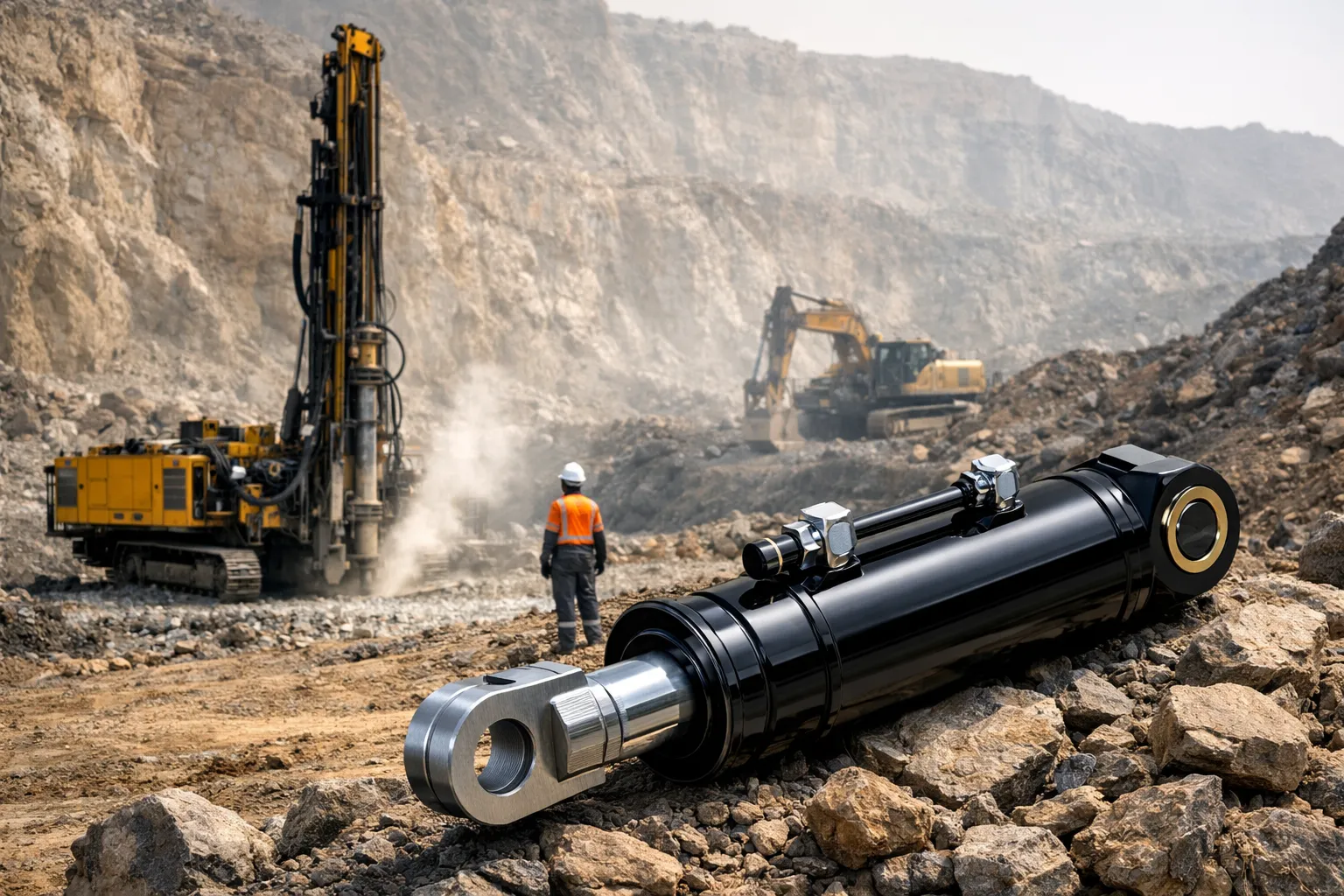
Recognizing these extreme operational demands, we, as a dedicated and globally trusted hydraulic cylinder manufacturer, have engineered a specialized solution. We have meticulously analyzed the frontline failure modes of drilling equipment, specifically focusing on premature seal wear and internal leakage caused by abrasive particulate ingress. Our unique market positioning is built upon neutralizing these specific threats. We utilize an uncompromising high-yield alloy steel architecture, advanced non-porous nickel-plated surface treatments, and a proprietary heavy-duty multi-lip sealing system.
By choosing our highly optimized hydraulic cylinder solutions, facility managers and procurement engineers are securing unparalleled grip stability. You are not just purchasing a component; you are investing in reduced unplanned maintenance downtime, enhanced operational safety, and a demonstrably superior return on capital equipment investment over the machine’s lifecycle. A lower initial hydraulic cylinder price means nothing if the unit fails in the field, which is why our focus is entirely on maximum operational longevity.
Comprehensive Technical Parameters & Customization Range
When sourcing highly stressed hydraulic parts for capital equipment, exact dimensional precision and operational tolerances are non-negotiable. Our engineering team designs and manufactures every unit to flawlessly integrate into your specific fluid power circuit. The following matrix outlines the core architectural parameters and the expansive customization range of our clamping systems, ensuring perfect alignment with your equipment’s spatial constraints and holding force requirements.
| Technical Attribute | Specification Details & Customization Options |
|---|---|
| Industry | Mining Equipment, Geotechnical Engineering, Deep Exploration |
| Equipment Category | Drilling Rigs, Core Sampling Rigs, Large Piling Machines |
| Subsystem / Action | Clamping Mechanism / Clamping Drill Pipe |
| Hydraulic Cylinder Name | Clamping Hydraulic Cylinder (Also known as Grip Cylinder) |
| Action Mode | Double Acting Hydraulic Cylinder (For highly responsive, powered clamping and release) |
| Structure Type | Piston Cylinder format with optimized rod-to-bore diameter ratios |
| Manufacturing Structure | Heavy-Duty Monolithic Welded Assembly (Eliminates tie-rod stretching under lateral shock) |
| Material System | High-Yield Induction Hardened Alloy Steel (e.g., 42CrMo) |
| Surface Treatment | Thick Electroless Nickel Plating (Superior defense against acidic mine water) |
| Environmental Grade | High Friction, Heavy Abrasive Contamination, Violent Shock Loading |
| Typical Failure Mode | Premature Extrusion Seal Wear, Internal Fluid Bypass, Piston Rod Scoring |
| Recommended Configuration | Heavy-Duty Composite Sealing System (PTFE/Polyurethane), Integrated Load-Holding Check Valves |
Detailed Kinematics and Working Principle
To fully maximize the efficiency of your equipment, one must comprehend the intricate fluid dynamics and mechanical interactions powering this subsystem. Unlike a basic single acting hydraulic cylinder, which often relies on gravity, the weight of the load, or large mechanical coil springs for its retraction cycle, our highly responsive clamping units operate strictly as a double acting hydraulic cylinder. This engineering choice grants the drilling operator absolute, powered control over both the gripping and the releasing phases, ensuring rapid cycle times during drill pipe additions.
When the driller initiates the clamping command from the control cabin, the directional control valve rapidly routes highly pressurized hydraulic fluid into the cap end (the blind end) of the cylinder barrel. This incoming hydrostatic pressure distributes uniformly across the entire surface area of the internal hydraulic cylinder piston. The fluid energy is instantly converted into massive linear outward thrust. This thrust forcefully extends the piston rod, which is mechanically pinned to the heavy clamping jaws. The geometry of the rig’s linkage multiplies this linear force, translating it into an unyielding radial compressive grip firmly wrapping around the rugged circumference of the drill pipe.
Because the physical act of drilling inherently generates severe torsional forces and high-frequency vertical chattering, any micro-movement or pressure loss within the cylinder is highly dangerous. To absolutely prevent this, our cylinders are precision-honed to extreme tolerances to eliminate volumetric internal bypass. Furthermore, these hydraulic rams are frequently equipped with pilot-operated check valves machined directly into the cylinder barrel block. Should a primary hydraulic supply hose accidentally rupture due to falling debris, these integrated holding valves instantaneously lock the fluid inside the cap chamber. This crucial fail-safe ensures the clamping jaws maintain full pressure and never drop the multi-ton drill string down the hole.
When the sequence requires releasing the pipe, the fluid flow is reversed. Pressurized hydraulic fluid is directed into the rod end (the annular side) of the piston, while the fluid in the cap end is safely vented back to the main hydraulic reservoir. The differential pressure violently but smoothly forces the piston rod to retract, pulling the jaws wide open. The internal fluid porting is mathematically sized and chamfered to prevent cavitation and destructive hydraulic hammering during these split-second directional changes. This careful fluid dynamic optimization significantly extends the fatigue life of all interconnected hydraulic cylinder components.
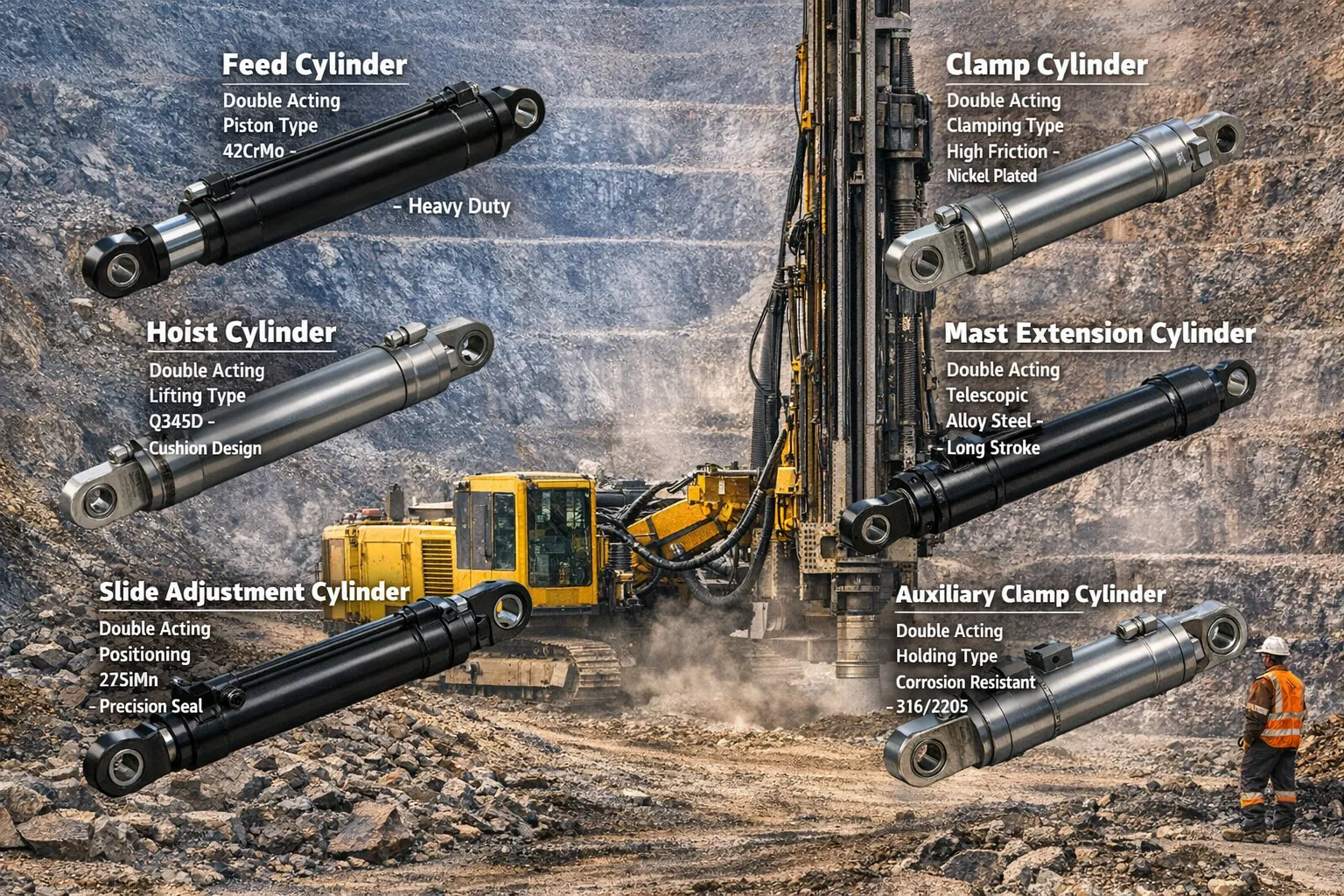
Seamless OEM Brand Replacement & Fleet Upgrades
Extended equipment downtime on a mining site directly equates to thousands of dollars in lost productivity per hour. When a critical clamping component fails, waiting months for an expensive factory original replacement from overseas is simply not a viable business strategy. As a highly capable and independent hydraulic cylinder manufacturer, we specialize in precise reverse-engineering. We meticulously performance-match our fluid power products to serve as flawless, drop-in aftermarket replacements for the world’s leading machinery brands.
Our heavy-duty clamping hydraulic cylinder solutions are dimensionally engineered to flawlessly upgrade or replace the existing actuators found on prominent drilling rigs manufactured by industry giants such as Epiroc, Sandvik, Atlas Copco, Furukawa, Soosan, Bauer, and Boart Longyear. By strictly adhering to standardized international metrics for mounting pin diameters, retracted closed-center lengths, exact stroke distances, and fluid port thread pitches, we guarantee that our cylinders will integrate directly into your rig’s existing chassis without requiring any costly structural cutting, welding, or hydraulic circuit modifications.
Disclaimer: The specific brand names and trademarks mentioned above are the exclusive property of their respective corporate owners. They are referenced within this text strictly for the purpose of clarifying equipment dimensional compatibility, facilitating sizing reference, and aiding procurement convenience for maintenance teams. We operate as an independent manufacturer and do not claim any legal affiliation, sponsorship, or endorsement from these trademark holders.
By opting for our highly engineered aftermarket solutions, procurement managers not only drastically reduce supply chain lead times but also secure a highly competitive hydraulic cylinder price. More importantly, they receive a product with vastly superior metallurgical strength and specialized sealing longevity designed specifically to outlast standard factory components.
5 Core Technical Advancements Over Standard Actuators
Decades of frontline troubleshooting, tear-downs, and constantly fixing hydraulic cylinders from various global manufacturers have profoundly informed our proprietary engineering approach. We do not merely assemble standard cylinders, we proactively engineer out historical points of failure. Below are five distinct, scientifically backed advantages that elevate our clamping cylinder above the rest of the market:
-
1. Ultra-Low Friction & Anti-Extrusion Sealing Architecture
The absolute most common failure mode in any drill rig’s clamping mechanism is rapid seal degradation. Constant micro-movements induce the stick-slip phenomenon, tearing standard elastomers apart. To combat this, we employ a highly advanced composite sealing architecture. This involves custom-profiled, glass-filled PTFE low-friction wear rings paired with premium high-temperature polyurethane lip seals. We also incorporate rigid polyacetal anti-extrusion backup rings. This setup drastically reduces sliding friction, eliminates elastomeric nibbling under high pressure, and completely blocks internal volumetric fluid bypass, ensuring the clamp holds its grip relentlessly.
-
2. High-Rigidity Monolithic Welded Construction
Standard light-duty cylinders utilizing tie-rod designs suffer from severe stress concentration factors. Under heavy lateral vibration, tie-rods stretch, causing the barrel seals to leak. We completely bypass this flaw by utilizing a monolithic, heavy-wall welded construction. We utilize induction-hardened high-yield alloy steels for both the cylinder barrel tube and the end caps. Deep-penetration automated sub-arc welding fuses these components together seamlessly. This exceptionally rigid structure absolutely prevents tube ballooning under extreme hydraulic pressure peaks and heavily resists buckling when subjected to violent torque.
-
3. Advanced Surface Engineering: Thick Nickel Plating
Subterranean and open-pit mining environments maliciously expose equipment to highly corrosive acidic groundwater and immensely abrasive quartz rock dust. Standard hard chrome plating possesses inherent microscopic cracks from the electroplating process; acidic water penetrates these cracks, rusting the base steel and causing the chrome to flake off, which then shreds the wiper seals. Our superior alternative is a specialized, pore-free electroless nickel-plating process. This provides an impenetrable, highly ductile corrosion barrier and yields a remarkably low surface roughness that drastically extends the lifespan of the rod seals.
-
4. Optimized Thermal Stability and Fatigue Life Expansion
High-frequency, continuous repetitive clamping cycles generate massive internal frictional heat. If hydraulic oil gets too hot, its viscosity breaks down, ruining lubrication and accelerating wear on internal hydraulic parts. Our thermodynamic engineers have meticulously optimized the diametrical clearances and fluid port geometries to enhance heat dissipation and reduce fluid throttling. Furthermore, all critical structural welds undergo a strict stress-relief annealing process in our furnaces. This eliminates residual thermal stresses, exponentially increasing the fatigue life of the cylinder by preventing the propagation of micro-cracks under pulsed dynamic loading.
-
5. Precision Internal Cushioning & Kinetic Shock Mitigation
When massive steel jaws snap shut or open abruptly during rapid pipe tripping, the resulting hydraulic and kinetic shock can devastate the entire rig’s framework. To protect your capital investment, our clamping cylinders incorporate sophisticated variable-orifice internal cushioning. As the hydraulic cylinder piston approaches the end of its stroke, fluid is forced through progressively smaller bypass grooves. This smoothly decelerates the heavy mass, dampening kinetic energy, silencing the impact, and protecting sensitive auxiliary components from destructive transmitted shockwaves.
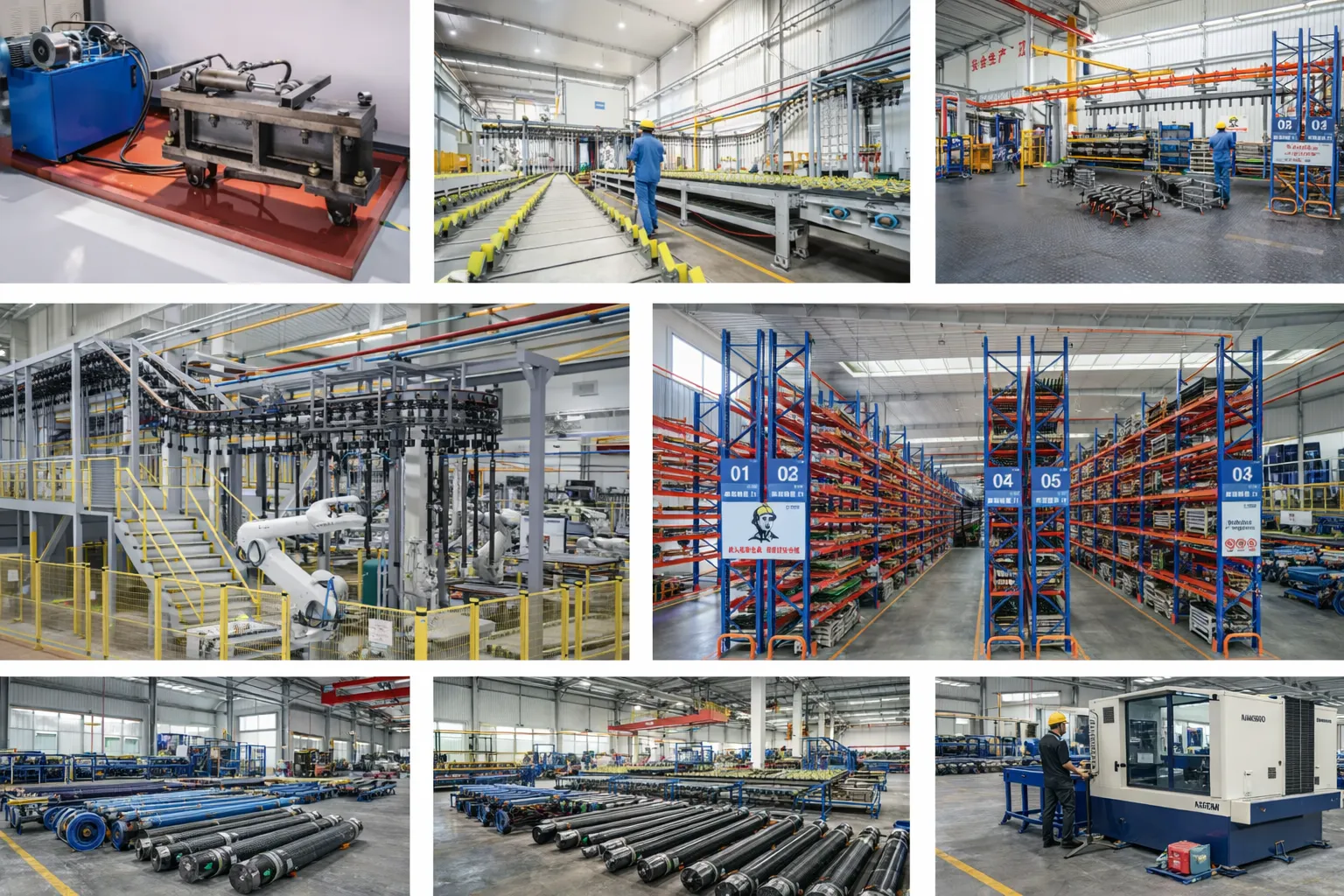
Excellence in Autonomous Manufacturing & Quality Control
The superior field performance of our fluid power products is not an accident, it is the direct, calculated result of an uncompromising, vertically integrated manufacturing philosophy. True quality cannot be merely inspected into a finished product, it must be engineered and built into it from the molecular level up. As a globally trusted hydraulic cylinder manufacturer, we maintain absolute, end-to-end control over the entire production lifecycle. From raw billet ultrasonic inspection to the final coat of industrial paint, every single process occurs strictly within our state-of-the-art facilities.
Our modern manufacturing floor relies heavily on multi-axis CNC turning and milling centers to ensure that geometric concentricity tolerances are held within incredibly tight micrometer ranges. The critical welding of the heavy alloy steel barrel to the end caps is executed flawlessly by automated robotic sub-arc welding stations, ensuring deep-penetration weld seams entirely devoid of structural porosity or slag inclusions. To guarantee absolute operational safety for the end-user, every single clamping hydraulic cylinder off our line undergoes a grueling 100% individual factory hydrostatic pressure test. We violently push our cylinders to well above their maximum rated operating pressure to test for structural yield, and we hold them under static pressure for extended periods to empirically verify zero seal leakage.
Furthermore, our unwavering commitment to quality is backed by comprehensive data tracking. Every individual hydraulic ram and component is permanently laser-engraved with a unique, unalterable serial number, granting our B2B clients total lifecycle traceability. Should your maintenance team ever require comprehensive hydraulic cylinder repair parts, or need to quickly order replacement seal kits years down the line, we can instantly pull the exact engineering drawings, metallurgical heat records, and dimensional specs from our secure database to expedite your service safely.
Typical Industry Application Scenarios
While meticulously optimized for the punishing realities of geotechnical drilling, the exceptionally robust nature of our high-friction clamping technology translates perfectly across multiple heavy-duty industrial sectors. A reliable, unbreakable clamping action is a universal mechanical necessity.
Mining Equipment & Subterranean Drilling
Used extensively in severe-duty rotary blast hole drilling rigs, continuous core sampling machines, and deep water well drilling operations. Explore our comprehensive Mining Industry solutions.
Heavy Construction & Foundation Machinery
Absolutely essential for massive pile driving equipment, foundation anchoring machines, casing oscillators, and large urban trenchers. Explore our Construction Machinery Industry components.
Metallurgy & Heavy Forging Manufacturing
Utilized heavily in automated forging presses, steel rolling mill pipe handling systems, and high-temperature heavy material gripping manipulators where thermal endurance is critical.
Plastic & Rubber Injection Machinery
Serving as primary injection molding machine mold clamping mechanisms, requiring extreme micrometer precision, absolute parallelism, and immense static holding force.
Material Handling & Logistics Automation
Powering heavy-duty automated clamp trucks for handling massive industrial paper rolls, large concrete municipal pipes, or bulk scrap metal grapples in recycling centers.
New Energy & Heavy Environmental Equipment
Integrated seamlessly into large wind turbine blade manufacturing and assembly jigs, as well as providing the crushing force needed in heavy-duty municipal waste compaction balers.
Comparative Analysis: Standard Commercial Cylinders vs. Our High-Performance Solution
Procurement decisions strictly based on the lowest initial hydraulic cylinder price frequently lead to massively inflated total costs of ownership due to constant maintenance and rig downtime. Review this objective engineering comparison to understand the true value of investing in purpose-built fluid power solutions.
| Evaluation Metric / Feature | Standard Ordinary Hydraulic Cylinders | Our High-Performance Clamping Cylinder |
|---|---|---|
| Seal Architecture & Lifespan | Standard NBR (Nitrile) U-cups, highly prone to rapid elastomeric tearing under continuous vibration. | Advanced PTFE/Polyurethane composite geometry, scientifically proven to deliver exceptional operational life. |
| Rod Surface Defense Treatment | Basic thin Chrome plating, possesses inherent micro-cracks making it highly susceptible to acidic rust and flaking. | Dual-layer thick Nickel plating, provides an impenetrable, highly corrosion-resistant shield. |
| Structural Rigidity & Yield | Standard low-carbon steel tubing with tie-rods, presents a severe risk of barrel ballooning and rod buckling. | Heavy-wall Alloy Steel with fully penetrated robotic welds, yields exceptional structural rigidity. |
| Static Pressure Holding Capability | Relies entirely on external system valves, high potential for dangerous pressure drops if a hose fails. | Integrated internal pilot-operated check valves, guarantees zero pressure drop risk at the jaws. |
| Testing & Quality Verification | Randomized batch sampling only, leads to highly inconsistent field reliability and problematic units. | 100% individual hydrostatic over-pressure testing paired with deep quality validation records. |
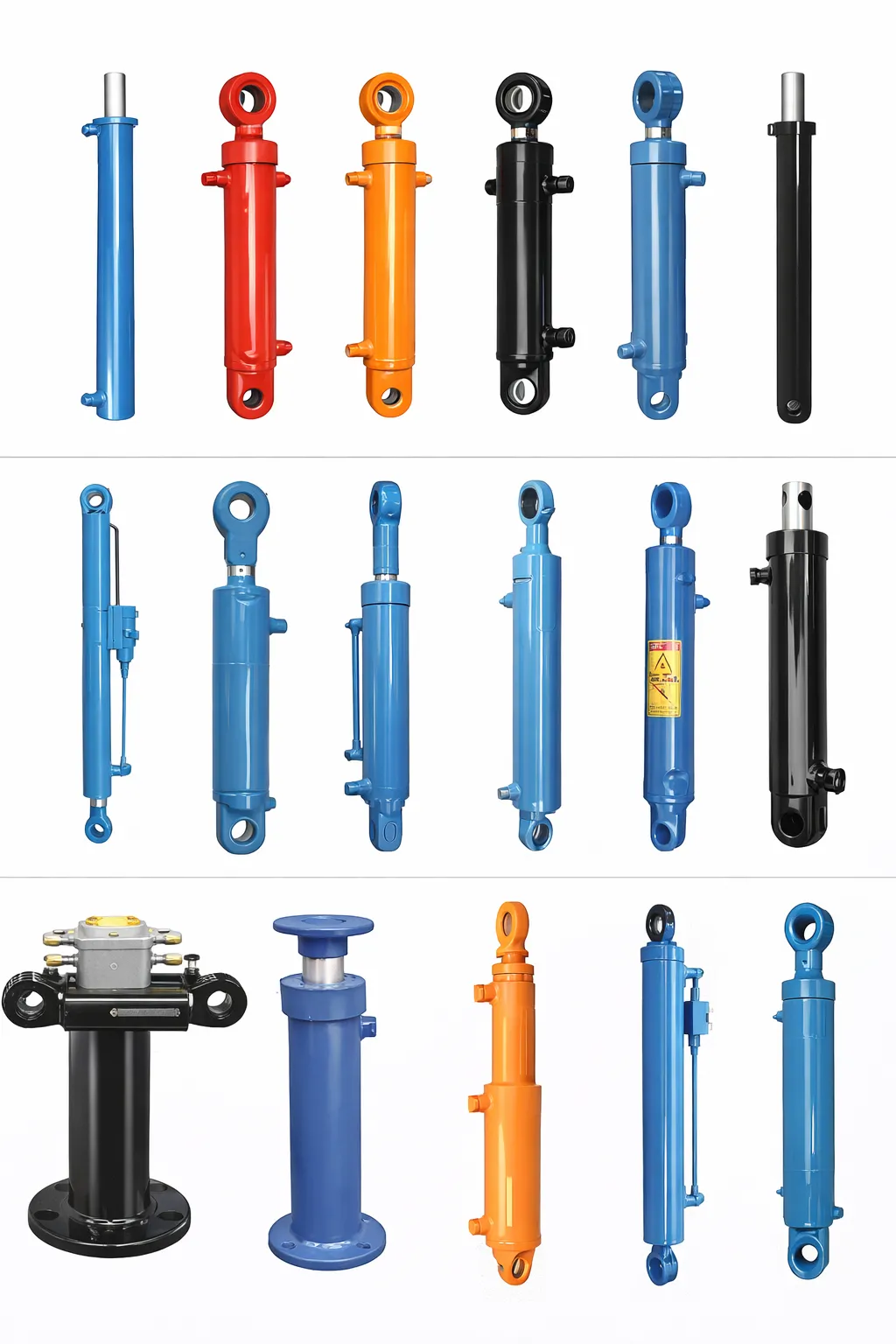
5 Transformative Real-World Engineering Case Studies
Theoretical engineering must be validated by relentless field performance. We take immense pride in actively solving complex fluid power challenges across the demanding Asia-Pacific theater. Below are five comprehensively verified field implementations where our robust clamping technology delivered immediate safety improvements and measurable financial benefits to prominent B2B clients.
Case 1: Deep Foundation Equipment Upgrade – Busan, South Korea
Client Profile: Tier-1 Heavy Civil Construction & Port Contractor
Implementation Timeframe: Early Spring 2025
The Engineering Challenge: Operating directly on the coastline, the client’s massive fleet of piling rigs was constantly enveloped in aggressive saltwater mist mixed with highly abrasive granite dust from the boreholes. Their standard OEM cylinders suffered from rapid rod pitting, which violently shredded the internal seals, resulting in frequent and highly dangerous drill casing slippage during critical lifts.
Our Intervention: The desperate maintenance manager discovered our capabilities by searching Google for a resilient double acting hydraulic cylinder manufacturer capable of handling marine environments. We engaged deeply with their technical team and engineered a custom batch of thick nickel-plated clamping cylinders outfitted with our severe-duty, salt-resistant wiper seals and integrated pilot-operated holding valves to guarantee grip.
The Measurable Result: Following full fleet installation, catastrophic pipe slippage incidents were entirely eradicated. Over 18 months of continuous coastal operation, the nickel rods remained pristine, effectively reducing their previous weekly maintenance downtime to zero.
“The transition away from factory components was perfect. Not only was the initial hydraulic cylinder price highly compelling, but the sheer, unwavering holding strength under heavy tidal loads has fundamentally improved our daily drilling meterage and crew safety.” – Mr. Park Min-ho, Lead Fleet Maintenance Engineer.
Case 2: Geothermal Rig Thermal Refurbishment – Hokkaido, Japan
Client Profile: Advanced Geothermal Energy Prospecting Corporation
Implementation Timeframe: Late Winter 2024
The Engineering Challenge: Geothermal drilling presents a terrifying duality: the rig’s exterior endures brutal sub-zero freezing blizzards, while localized equipment is occasionally blasted by extremely hot steam blowback. Standard commercial rod seals rapidly became brittle and shattered under these intense thermal shock cycles, leading to massive fluid hemorrhaging and dropped drill strings.
Our Intervention: The client urgently reached out via our corporate homepage, specifically hunting for highly specialized thermal-resistant hydraulic parts. We re-engineered their clamping architecture, deploying a bespoke clamping cylinder utilizing low-temperature aerospace-grade synthetic polyurethane seals paired with specially calculated diametrical clearances to accommodate extreme thermal expansion and contraction.
The Measurable Result: The functional lifespan of the clamping mechanism was immediately multiplied. The rig operated through the entire grueling winter season without a single hour lost to seal failure, keeping the high value project firmly on schedule.
“Your thermodynamics engineering team truly comprehends the harsh metallurgical realities of freezing environments. We haven’t had to deal with a single frozen seal or hydraulic fluid leak since the retrofit.” – T. Sato, Director of Procurement Operations.
Case 3: High-Torque Offshore Exploration Platform – Ulsan, South Korea
Client Profile: Multinational Deep-Sea Marine Engineering Group
Implementation Timeframe: Mid-Summer 2025
The Engineering Challenge: Deep-sea drilling introduces violent, unpredictable rotational torque that violently shakes the entire rig structure. This aggressive vibration was transferring immense side loads directly to the internal hydraulic cylinder piston of their standard tie-rod cylinders, literally stretching the structural bolts and causing the barrel to leak pressurized fluid continuously.
Our Intervention: Frustrated by OEM failures, they contacted our engineering desk directly for a heavy-duty structural analysis. We completely discarded the weak tie-rod design and manufactured a custom batch of massive, heavy-wall alloy steel hydraulic rams featuring robotic, multi-pass deep-penetration welds to ensure absolute monolithic rigidity.
The Measurable Result: Even during the most violent deep-sea torque spikes, our welded alloy steel cylinders showed zero micro-flexing. Structural fatigue failures were permanently eliminated, safeguarding the integrity of the platform.
“The raw structural superiority of these welded units is undeniable. We were previously replacing stretched cylinders every few months; your units have endured relentless torque for over a year and still hold pressure like day one.” – H. Lee, Chief Marine Superintendent.
Case 4: Open-Pit Coal Mine Drilling Fleet – Quang Ninh, Vietnam
Client Profile: State-Owned Enterprise Open-Pit Mining Operator
Implementation Timeframe: Late Autumn 2024
The Engineering Challenge: The open-pit coal mine was plagued by incredibly high volumes of airborne, razor-sharp abrasive coal dust. This dust easily bypassed the cheap standard wiper seals of their factory cylinders, deeply scoring the chrome rods and causing catastrophic, system-wide hydraulic fluid contamination that ruined their expensive main hydraulic pumps.
Our Intervention: The client aggressively sought our consultation services to halt the fluid leakage. We comprehensively retrofitted their entire fleet of blast-hole rigs with our advanced dust-resistant clamping cylinders. These featured a proprietary redundant dual-wiper system, a harsh brass scraper followed by a dense polyurethane wiper, paired with an ultra-hardened, smooth nickel rod that repelled particle adhesion.
The Measurable Result: The invasive particulate oil contamination plummeted by an astonishing 95%. The need for constantly fixing hydraulic cylinders on the dusty mine floor vanished, drastically reducing the hazardous labor required by their mechanics.
“Abrasive dust ingress was undeniably our most expensive enemy. Your dual-wiper sealing technology solved a massive, ongoing maintenance nightmare. The technical communication throughout the customization phase was world-class.” – Nguyen V., Chief Heavy Equipment Mechanic.
Case 5: National Civil Infrastructure Expansion – Manila, Philippines
Client Profile: Mega-Project Infrastructure Joint Venture Contractor
Implementation Timeframe: Early Summer 2025
The Engineering Challenge: A massive fleet of aging European-manufactured piling rigs was suffering from frequent clamping failures. The exorbitant, monopolistic OEM hydraulic cylinder price and the excruciating 4-month shipping delays were causing the national highway project to hemorrhage cash and miss critical government deadlines.
Our Intervention: Driven by budget overruns, their procurement team actively sourced our factory direct manufacturing capabilities. We swiftly reverse-engineered the complex European mounting parameters, meticulously calculating the port geometries. We manufactured and air-freighted a batch of exact-fit, heavily reinforced drop-in replacement cylinders in under 30 days.
The Measurable Result: The swift fleet upgrade put the highway project back on schedule. The client saved roughly 40% on component costs while receiving heavier-duty equipment that noticeably outperformed the original factory parts during high-speed pipe changes.
“We were essentially held hostage by OEM pricing and lead times. These aftermarket replacements dropped perfectly into place. They cycle faster, grip harder, and saved our project budget. Truly a remarkable manufacturing partner.” – Carlos M., Lead Site Superintendent.
FAQ: Technical Procurement Insights
We strongly believe in complete, transparent engineering communication. To assist fleet procurement officers and chief engineers in making highly informed decisions, we have thoroughly addressed the most frequent technical inquiries regarding our clamping system solutions.
1. What is the typical lead time for manufacturing and delivering custom units to South Korea?
2. What is the functional difference between this unit and a single acting hydraulic cylinder?
3. Can we easily source dedicated hydraulic cylinder repair kits for future fleet maintenance?
4. How does your engineering team ensure the cylinder will perfectly fit our specific rig model?
5. What exactly causes internal fluid leakage, and how do your designs completely prevent it?
6. Do you accept small batch orders or provide support for fixing hydraulic cylinders from other manufacturers?
Ready to Permanently Upgrade Your Drilling Rig’s Reliability?
Do not allow inferior, failing clamping mechanisms to compromise your operational safety, dictate your maintenance schedule, and erode your project profitability. Partner with an industry-leading fluid power expert to engineer the exact heavy-duty solution you require.
Editor: Cxm