Freight Door Opening Cylinder for Freight Trains
Engineered with a heavily reinforced extended guide configuration and high-yield 42CrMo alloy steel to conclusively defeat severe rod wear in extreme dust and continuous high-vibration bulk transit environments.
Product Overview & Industrial Value in Bulk Logistics
The foundation of heavy industrial economies across South Korea, Japan, and the broader East Asian manufacturing corridors relies completely on the relentless, uninterrupted flow of bulk raw materials. High-density freight railway networks transport millions of tons of coal, iron ore, crushed limestone, and agricultural commodities every single day. The operational efficiency and profitability of these massive logistics chains depend entirely on the speed and reliability of the discharging process at power plants, steel mills, and port terminals. The rolling stock handling these commodities—primarily heavy-duty bottom-dump or side-dump hopper cars—utilize complex mechanical gates to retain the payload during transit. The definitive core of this discharge mechanism is the Freight Door Opening and Closing Cylinder. This heavy-duty fluid power actuator bears the immense operational responsibility of forcefully swinging these heavy steel doors open to dump tons of abrasive cargo in seconds, and then actively pulling them shut to seal the hopper for the return journey.
Operating a Freight Door Opening and Closing Hydraulic Cylinder within this specific railway environment introduces two exceptionally destructive mechanical hazards: pervasive abrasive dust and relentless harmonic track vibration. As the freight train travels at speed, minor track variations and wheel-rail interactions induce severe lateral swaying and vertical bouncing. When the train unloads, enormous, choking clouds of silica-rich coal dust or metallic iron ore grit engulf the entire undercarriage. If a standard commercial hydraulic cylinder is deployed in these conditions, it will fail rapidly. The heavy lateral vibration causes the extended rod to deflect and oscillate within the barrel, grinding against the internal guide rings. This deflection opens microscopic gaps in the external wiper seals. Instantly, the abrasive dust enters the cylinder gland, mixing with the hydraulic oil to form a highly destructive lapping paste. This leads to the most common, expensive, and paralyzing failure mode in bulk rail transport: severe rod wear (scoring) and subsequent catastrophic seal blowout. A leaking unit loses its holding pressure, risking an accidental door opening on the main line—a highly dangerous scenario that can derail a train, trigger massive environmental fines, and halt an entire regional rail network.
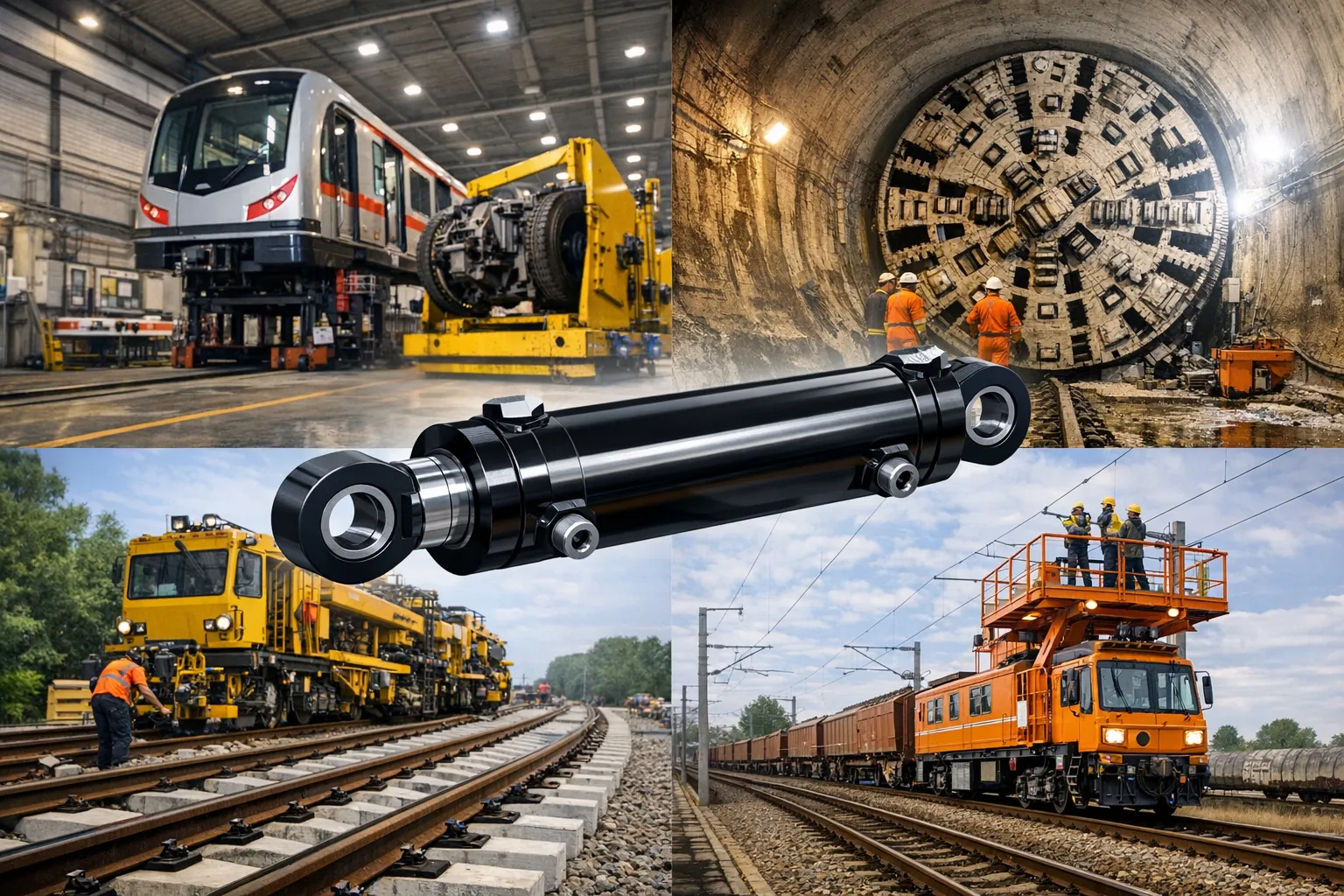
Operating globally as an elite, vertically integrated hydraulic cylinder manufacturer, our engineering doctrine is strictly focused on eliminating these specific mechanical vulnerabilities. We have structurally redesigned the freight door actuator from the ground up by introducing a proprietary extended guide geometry combined with exceptionally rigid 42CrMo forged alloy steel. This unique internal configuration completely absorbs side-loads and prevents lateral rod deflection, ensuring the primary seals remain tightly compressed against the chrome rod, effectively locking out abrasive dust. For rolling stock procurement managers and railway maintenance directors looking to permanently eradicate door system failures and aggressively optimize their long-term hydraulic cylinder price by doubling or tripling component lifespans, our specialized hydraulic oil cylinder provides unmatched security and return on investment.
Technical Parameters & Dimensional Customization
To interface flawlessly with the heavy steel mechanical linkages of modern bulk freight hopper cars, precise dimensional accuracy and superior metallurgical properties are absolutely mandatory. The operational parameters of our door actuators are specifically calibrated to absorb extreme vibration while reliably delivering immense pushing and pulling forces through compacted, freezing cargo. The table below outlines our core engineering framework. Because we completely control our own CNC machining and automated welding production lines, we possess the exact engineering flexibility to adjust stroke lengths, heavy-duty mounting trunnions, spherical bearing sizes, and fluid port locations to perfectly match the mechanical schematics of your specific rolling stock fleet.
| Engineering Category | Specification Details & Engineering Customization Range |
|---|---|
| Industry Segment | Rail Transit Infrastructure |
| Equipment Category | Freight Trains (Hopper Cars, Coal Wagons, Ore Carriers) |
| Subsystem / Action | Door System / Freight door opening and closing |
| Cylinder Designation | Freight Door Opening and Closing Cylinder |
| Action Mechanism | Double Acting Hydraulic Cylinder (Guarantees active hydraulic force for crushing debris during closure) |
| Structure Type | Piston Cylinder format (Optimized for linear high-force actuation) |
| Manufacturing Structure | Welded assembly (Fundamentally immune to tie-rod stretching under high-frequency track vibration) |
| Material System | 42CrMo Alloy Steel Forgings (Provides exceptional core yield strength against asymmetrical bending) |
| Surface Treatment | Thick Hard Chrome Plating (Micro-cracked structure for maximum abrasion resistance against coal dust) |
| Environmental Condition | Dust + Vibration (Continuous abrasive particulate exposure and harmonic shaking) |
| Working Condition Feature | High-torque door actuation under massive bulk material loads and freezing weather |
| Typical Failure Mode Prevented | Rod wear, side-load scoring, and subsequent abrasive seal blowout |
| Recommended Configuration | Extended Guide Architecture + Heavy-Duty Multi-Lip Wiper Seals |
Operational Mechanics & Bulk Fluid Dynamics
To accurately appreciate the necessity of our specialized engineering, one must observe the immense mechanical forces and complex fluid dynamics at play during a hopper car unloading sequence. When a heavy freight train arrives at a coastal power plant or an inland steel mill, hundreds of tons of raw material are pressing down heavily on the bottom hopper doors, often compacted by thousands of miles of transit vibration. To initiate the dump, the train’s central pneumatic control or a wayside hydraulic power unit routes highly pressurized fluid into the extension port of the actuator. Because the fluid is physically incompressible, this rapid influx generates an enormous, unyielding hydrostatic force that pushes evenly against the full surface area of the internal hydraulic cylinder piston.
This linear kinetic energy violently forces the hardened, chrome-plated 42CrMo rod outward. The rod is physically pinned to the massive lever arms of the hopper door mechanism. The immense power of these specialized hydraulic rams allows them to easily overcome the static friction of rusted door hinges and the crushing weight of the bulk coal or iron ore pressing down from above. As the doors swing open, a massive, choking cloud of abrasive particulate dust envelops the entire undercarriage mechanism. The cylinder rod operates directly inside this abrasive storm. If the rod is not perfectly aligned, the dust acts as a grinding compound. This is where our extended guide configuration proves its worth, holding the rod perfectly steady and allowing the heavy-duty scraper seals to wipe the dust away cleanly upon retraction.
The closure phase is equally critical to mainline transportation safety. Once the payload is dumped, the doors must be pulled completely flush and locked securely before the train can depart the terminal. This rigid operational requirement dictates the exclusive use of a double-acting architecture. Attempting to deploy a single acting hydraulic cylinder relying on a passive mechanical return spring is functionally impossible in the rail logistics industry; the door frames frequently become jammed with rogue rocks, frozen mud, or packed coal dirt. A passive spring simply cannot generate the sheer breakaway pulling force required to crush through this debris and seal the door. Active, high-pressure fluid must be routed directly into the rod-side retraction chamber, forcefully ripping the doors closed and holding them under hydraulic lock to ensure zero cargo spillage during transit.
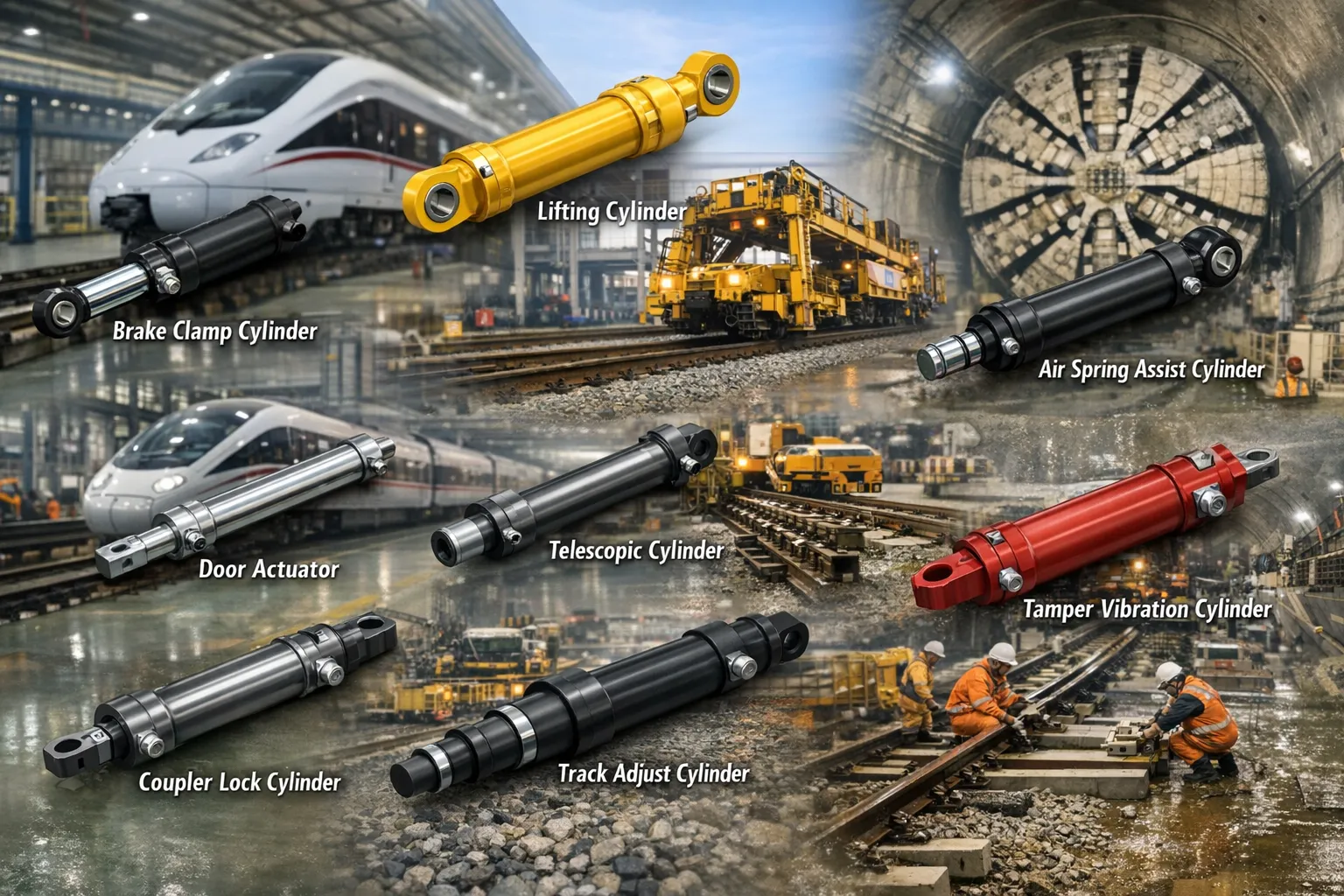
Seamless Equipment Upgrades & Legacy Machinery Compatibility
Rolling stock maintenance depots and private rail leasing companies operate under incredibly strict overhaul schedules. When a door mechanism fails due to severe rod wear and grounds a hopper car, the financial loss in transport capacity is immediate and punitive. Relying on legacy original equipment manufacturers (OEMs) located in Europe or North America for specialized hydraulic cylinder components often results in unacceptable international shipping lead times and monopolistic pricing structures that heavily inflate your annual depot budget. We specifically engineer our heavy-duty fluid power components to serve as exact, dimensionally accurate drop-in upgrades, thoroughly bypassing these global supply chain bottlenecks and getting your wagons back on the revenue track.
Our mechanical reverse-engineering division precisely maps the heavy trunnion mounts, extended stroke profiles, spherical bearing pin hole diameters, and high-flow porting to ensure our hydraulic parts align flawlessly with the door chassis structures of the world’s most prominent freight wagons. If your depot mechanics are currently spending valuable downtime fixing hydraulic cylinders originally supplied by major legacy railway manufacturers such as CRRC, Wabtec, Greenbrier, TrinityRail, FreightCar America, Amsted Rail, or Knorr-Bremse subsystems, our specialized extended-guide units will fit your hoppers perfectly. They require absolutely no structural cutting, welding modifications, or custom adapter plates to the wagon chassis. (Please note: The mention of these specific corporate brands is done strictly for technical dimension cross-referencing and fleet compatibility identification to assist procurement teams. We operate as a completely independent manufacturing entity and hold no trademark affiliation, sponsorship, or endorsement with these respective rail equipment builders.)
By systematically migrating to our advanced 42CrMo components during your off-season hydraulic cylinder repair operations and comprehensive wagon overhaul schedules, you are fundamentally upgrading the rolling stock’s capability to survive in highly abrasive dust environments. You achieve an elite tier of material reliability while securing an incredibly competitive procurement price, maximizing the purchasing power of your heavy infrastructure maintenance division without sacrificing an ounce of safety or quality.
Core Technical Advantages of Our Extended Guide Actuators
Transitioning a standard indoor industrial actuator to a specialized, ruggedized component capable of surviving years in a vibrating storm of coal dust requires uncompromising enhancements in internal geometry, seal architecture, and metallurgical strength. Below are the definitive technological advantages built into every Freight Door Opening and Closing Hydraulic Cylinder we meticulously manufacture.
- Extended Guide Architecture: This is the single most critical defense against rod wear. Standard cylinders utilize very short, narrow internal guide rings. Under the severe lateral vibration of a moving train, the heavy rod acts like a lever, pressing hard against one side of the gland and warping the seal. We engineer our units with exceptionally long, heavy-duty composite bronze bearing guides. This massive bearing surface keeps the rod perfectly centered at all times, preventing off-axis deflection and ensuring the wiper seals maintain a flawless, gap-free 360-degree contact against the chrome, completely stopping the grinding wear.
- Forged 42CrMo Alloy Steel Construction: The extreme forces required to pull a jammed steel door through compacted iron ore necessitate exceptional material yield strength. We manufacture the rod and primary mounting clevises exclusively from 42CrMo alloy steel forgings. This provides dramatically higher tensile strength and fatigue resistance compared to standard 1045 carbon steels, entirely preventing the rod from permanently bending under heavy, asymmetric operational loads.
- High-Rigidity Welded Monolithic Design: Freight trains endure relentless, high-amplitude harmonic vibration from the rails. Traditional tie-rod cylinders will inevitably stretch and shake apart under these conditions, causing the end caps to rattle loose and leak fluid. Our cylinders utilize automated, deep-penetration TIG welding to permanently fuse the heavy end caps directly to the high-strength barrel, creating a monolithic body that is functionally immune to vibration-induced structural failure.
- Advanced Dual-Lip Dust Sealing Technology: To combat the dense clouds of coal and silica dust, we equip the cylinder head with aggressive, dual-acting heavy-duty polyurethane scraper rings. The outer lip acts as a physical chisel to forcefully scrape away hardened mud, ice, and rock dust during rod retraction, while the inner lip traps any residual microscopic particulate, ensuring absolute purity of the internal fluid chamber.
- Thick Hard Chrome Plating: Operating in the exposed undercarriage, the rod faces severe abrasion. We apply a specialized thick hard chrome plating that features a controlled micro-crack network. This unique, ultra-smooth surface provides an impenetrable barrier against rust and mechanical scratching, while retaining a microscopic film of oil for continuous low-friction self-lubrication of the dynamic seals.
- Wide-Temperature Elastomer Resilience: Freight trains operate across vast geographic regions, experiencing freezing blizzards and extreme radiant summer track heat. Our meticulously selected internal FKM and specialized PTFE blended seals maintain perfect elasticity and compressive strength across extreme temperature differentials (from -40°C to +80°C), entirely preventing winter weeping leaks or summer seal melting.
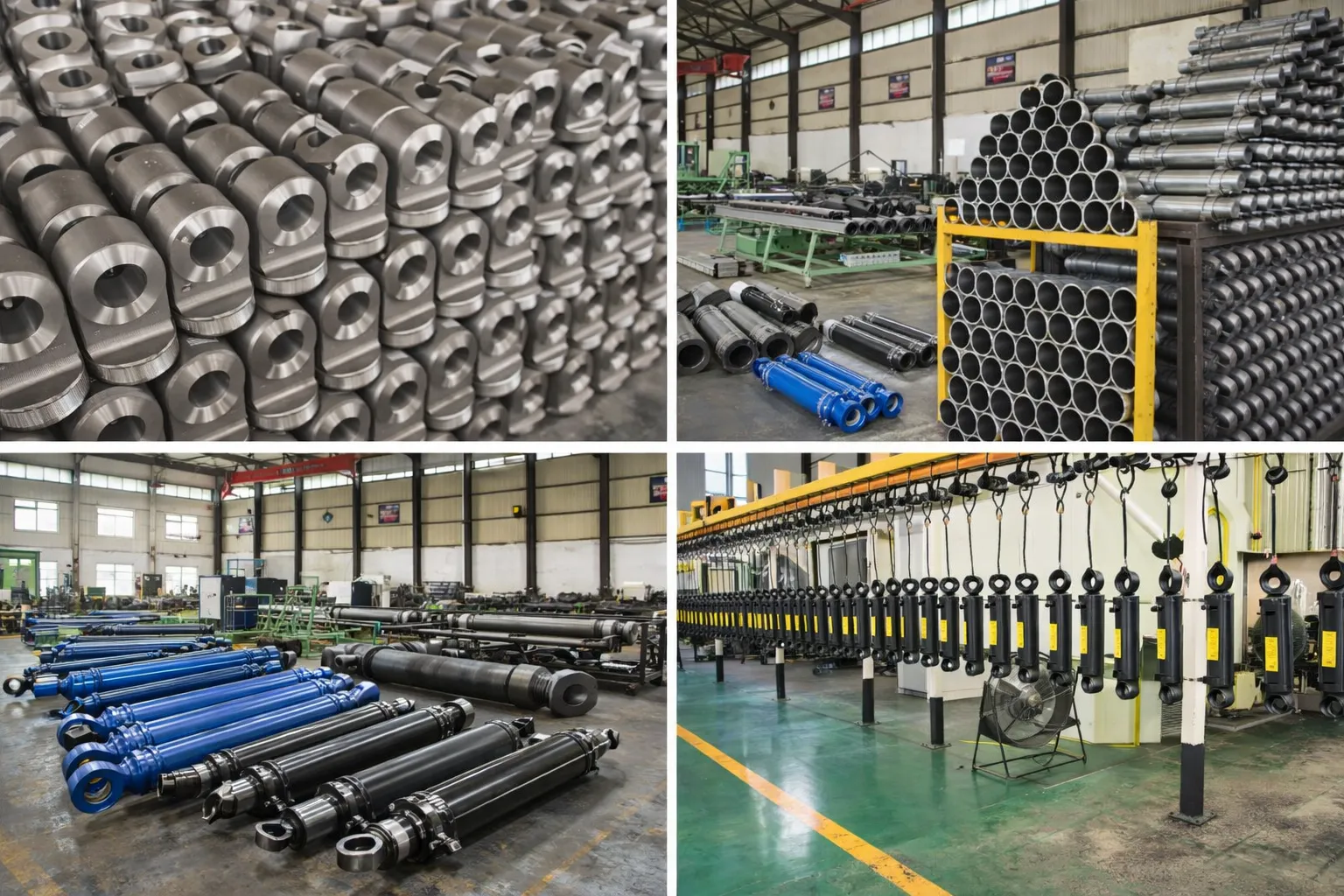
Autonomous Manufacturing & Unyielding Quality Control
The exceptional environmental survival rate of our equipment is not a matter of chance; it is strictly governed by the absolute control we maintain over our factory production floor. As a fully vertically integrated manufacturing facility, we do not rely on third-party outsourcing for our critical load-bearing assemblies or metallurgical treatments. Raw 42CrMo high-tensile alloy steel billets undergo rigorous spectrographic chemical analysis to verify their precise elemental composition. This is followed immediately by deep ultrasonic flaw detection to ensure there are zero internal voids, microscopic inclusions, or structural weaknesses before the steel is allowed to enter our heavy CNC turning centers.
Machining massive alloy forgings to exact, repeatable tolerances requires specialized heavy-duty tooling. Our multi-axis CNC milling centers achieve dimensional accuracies measured in exact micrometers, ensuring perfect alignment of the critical extended guide sleeves. The internal bore of the high-strength cylinder barrel undergoes a highly specialized deep-hole honing and skiving process to create an impeccably smooth surface finish (Ra ≤ 0.2µm), which drastically reduces internal friction and extends the life of the internal PTFE piston seals exponentially. Final assembly of all delicate internal fluid components occurs strictly inside positive-pressure, climate-controlled clean rooms, ensuring no ambient factory dust can contaminate the high-performance seal matrix prior to final closure.
Quality control for railway logistics equipment must be uncompromisingly exhaustive. We subject 100% of our production to severe dynamic pressure testing prior to dispatch. We strictly simulate rapid, high-pressure opening cycles while intentionally applying off-axis loads to verify the structural performance of the extended guide rings under simulated train vibration. We closely monitor for the slightest internal fluid bypass, pressure drop, or exterior weeping. Once a heavy-duty unit successfully passes this rigorous simulation at 150% of its rated maximum working pressure, it is laser-marked with a permanent serial number. This protocol provides our B2B clients with complete digital traceability, linking the final product back to the original steel mill heat certificates, material test reports, and performance graphs.
Expansive Cross-Industry Heavy Bulk Applications
While the extended guide architecture and robust dust-repellent technology detailed here are heavily calibrated for the physical destruction of a moving railway hopper car, the core engineering principle of surviving extreme asymmetrical loads and heavy particulate contamination translates perfectly into other severe heavy industrial bulk handling sectors.
For instance, the unyielding durability of our lengthened guides and 42CrMo rods is heavily relied upon within the bulk material handling systems of the metallurgical and iron industry. Heavy slag bay doors, furnace gates, and raw material dumping hoppers at steel mills face identical threats from abrasive dust and intense ambient heat; standard cylinders fail instantly, while our sealed units survive. Similarly, the ability to operate under heavy lateral vibration and severe dirt makes these actuators highly sought after in the mining industry, specifically for actuating massive heavy-duty dump truck beds, subterranean ore chutes, and rock crushers. We also actively deploy robust variations of this anti-dust technology as reliable main boom lift cylinder mechanisms within the highly abrasive environments of the construction machinery sector.
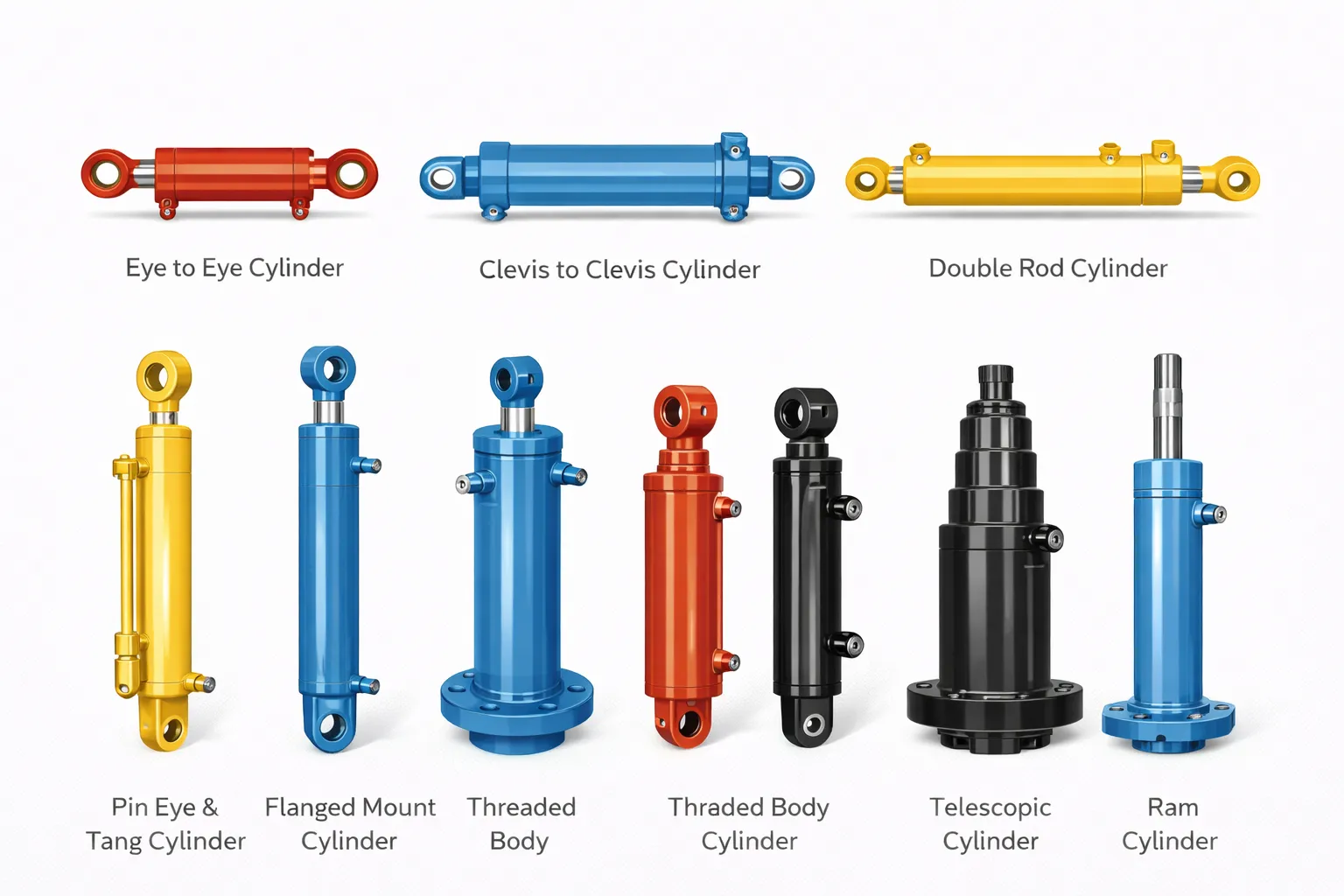
Comparative Analysis: Standard Cylinder vs. Extended Guide Freight Cylinder
To objectively illustrate the massive operational divide between standard fluid power equipment and our specialized rail logistics components, the following table compares basic off-the-shelf industrial cylinders against our high-performance freight door actuators. This vital engineering distinction heavily dictates the total lifecycle cost and ultimately determines whether your freight wagons remain profitable on the mainline or spend weeks deadlined in the maintenance depot.
| Performance Metric | Standard Commercial Hydraulic Cylinder | Our High-Performance Freight Door Cylinder |
|---|---|---|
| Rod Deflection & Wear Defense | Short guide rings. High-speed track vibration causes immediate rod deflection, resulting in metal-to-metal rod scoring. | Extended Guide Architecture. Massive bronze bearing surface prevents all lateral rod deflection, eliminating scoring. |
| Dust Intrusion Resistance | Basic NBR wiper seals quickly pack with coal dust, fail to seal, and allow silica to destroy primary pressure seals. | Heavy-duty dual-lip polyurethane scrapers forcefully chisel hardened track dust and ice off the retracting rod. |
| Core Metal Yield Strength | Standard carbon steel (e.g., 1045 or ST52). Highly prone to bending under heavy bulk material door-jam loads. | Forged 42CrMo Alloy. Exceptional yield strength resists immense door-jamming forces without permanent deformation. |
| Vibration & Shock Tolerance | Tie-rod assembly violently shakes apart over long transit distances, causing end caps to stretch and leak fluid. | Monolithic Welded body. Automated deep-penetration welds ignore harmonic vibration completely, maintaining fluid seal. |
| Total Cost of Ownership | Very High. Constant depot repairs, grounded wagons, and catastrophic unloading delays destroy logistical ROI. | Extremely Low. Dramatically extended MTBF protects fleet revenue generation and utilization rates. |
Proven Field Performance: Real-World Freight Logistics Triumphs
Engineering specifications on paper must continually be validated by flawless, relentless performance in the dust, grime, and immense vibration of a live commercial rail corridor. Our high-performance fluid power solutions are actively trusted by major national railway authorities and private bulk commodity leasing conglomerates across East Asia. Here are specific deployments demonstrating our success in resolving critical discharging failures for our B2B clients.
Case Study 1: Eradicating Rod Scoring on South Korean Coal Hopper Fleets
Location & Client: Major National Power Generation Logistics Co., Donghae Port, South Korea (October 2024).
The Challenge: The operator’s dedicated fleet of bottom-dump coal hopper cars was suffering from severe, chronic downtime at the coastal power plant unloading terminals. The intense lateral vibration of the mountainous track routes caused rod deflection, allowing highly abrasive coal dust to easily bypass the wiper seals of their OEM European cylinders. The resulting severe rod wear (scoring) caused major fluid leaks, frequently preventing the doors from opening entirely, and forcing entire train consists out of revenue service. The procurement team urgently searched for a specialized manufacturer capable of solving this severe abrasion and vibration issue.
Our Solution & Result: They contacted us through our engineering portal. We rapidly reverse-engineered the dimensions and supplied a full fleet upgrade of Freight Door Opening and Closing Cylinder units featuring our exclusive Extended Guide technology and thick hard chrome. Over the next 18 months of continuous running, they reported absolutely zero rod scoring and no seal blowouts, saving the company millions in potential downtime penalties.
“The extended guide design completely eliminated the lateral grinding that was bankrupting our maintenance schedule. Their profound understanding of rail vibration physics is evident in the heavy-duty build quality. We have significantly reduced our emergency hydraulic fluid expenditures and stabilized our coal deliveries.” — Park Min-ho, Lead Fleet Engineer.
Case Study 2: Conquering Vibration Seal Blowout for Japanese Bulk Carriers
Location & Client: Private Industrial Bulk Logistics Company, Nagoya, Japan (April 2025).
The Challenge: A rail contractor moving dense iron ore continuously faced sudden internal seal failures. The extreme vibration of the fully loaded train traveling at high speeds caused the tie-rods on their standard industrial cylinders to loosen. This structural loosening resulted in catastrophic internal fluid bypass, leaking end caps, and a complete, highly dangerous failure to lock the heavy sliding side doors shut during transit.
Our Solution & Result: We supplied precise drop-in replacement units featuring our heavy-duty monolithic welded structure. By eliminating the tie-rods entirely and fusing the end caps to the barrel, the new welded cylinders absorbed the vibrational shockwaves perfectly without loosening. The logistics firm operated for two full years without a single wagon door swinging open in transit or leaking fluid.
“Finding a manufacturer who truly understands the destructive nature of rail harmonic vibration was critical for our safety record. The physical robustness of their welded monolithic design is vastly superior to the fragile tie-rod versions we previously relied upon. We trust these actuators implicitly to keep our heavy cargo secured.” — Kenichi Tanaka, Operations Director.
Case Study 3: Supplying Rapid Fleet Overhaul Solutions in Taiwan Coastal Freight
Location & Client: Regional Rolling Stock Overhaul Depot, Kaohsiung, Taiwan (November 2025).
The Challenge: Facing a massive summer fleet overhaul schedule for cement hopper wagons operating along humid coastal routes, the depot found that the original North American manufacturer quoted a 20-week lead time for a batch of replacement door cylinders. The coastal salt air combined with the highly abrasive cement powder had severely rusted and scored their existing actuators. Desperate to keep their wagons operational for the peak construction season, they sought rapid custom reproduction.
Our Solution & Result: Utilizing their submitted physical samples and CAD schematics, we reverse-engineered and manufactured a completely customized batch of 150 exact-fit replacement units featuring our upgraded dust wiper technology. We delivered the entire batch in just 6 weeks. The firm successfully overhauled the hopper cars on schedule, passing safety inspections and saving hundreds of thousands of dollars compared to legacy OEM pricing.
“The speed of their engineering and manufacturing is incredible, and the parts fit the complex door linkages perfectly. Securing such a competitive hydraulic cylinder price without sacrificing an ounce of quality or durability has made them our primary supplier.” — Lin Wei, Senior Project Manager.
Frequently Asked Questions
For logistics procurement managers, lead fleet mechanics, and rolling stock maintenance directors tasked with upgrading their bulk freight machinery, we have compiled comprehensive, expert answers to the most common technical inquiries regarding our heavy-duty fluid power solutions.
1. Exactly how does an Extended Guide (加长导向) prevent rod wear on hopper doors?
2. Why do you use 42CrMo Alloy Steel instead of standard carbon steel for the rod?
3. What is the typical production lead time for a fleet-wide replacement cylinder order?
4. Can you repair or overhaul our existing, badly damaged OEM door cylinders?
5. Why is a Double Acting Cylinder required instead of a single acting spring return?
6. Are your internal seals compatible with extreme weather conditions across rail routes?
Protect Your Wagon Fleet Utilization with Unyielding Reliability
Terminal unloading breakdowns caused by failed door mechanisms severely disrupt the entire supply chain and incur devastating financial penalties. Do not allow fragile commercial cylinders to jeopardize your fleet’s delivery schedule. Partner directly with a premier engineering manufacturer capable of delivering extreme-duty fluid power solutions meticulously calibrated to survive the brutal vibration and abrasive dust of rail freight. Supply us with your technical specifications, drawings, or OEM dimensions, and let us demonstrate how our engineered upgrades can maximize your operational efficiency while vastly reducing your annual depot repair budget.
Editor: Cxm