Hatch Cover Cylinder for Wind Power Vessels
Uncompromising 316L stainless steel fluid power engineering. Definitively designed to conquer absolute seawater immersion, massive wave impacts, and severe corrosive atmospheres in the demanding offshore new energy sector.
Product Overview & Critical Maritime Value
The rapid, exponential scaling of the offshore wind power sector across South Korea, Japan, Taiwan, and the broader East Asian coastal grid relies entirely on specialized maritime logistics. Service Operation Vessels (SOVs) and dedicated Wind Power Maintenance Vessels serve as the absolute lifelines for these massive offshore turbine arrays. These advanced vessels must operate in relentlessly hostile marine environments, frequently facing torrential weather, massive swell conditions, and a heavily corrosive atmosphere saturated with chlorides. Securing the vital internal compartments, specialized tooling bays, and below-deck cargo holds of these ships against aggressive seawater ingress is the primary function of the deck hatch cover system. Operating these massive, multi-ton steel covers safely, securely, and repeatedly requires an absolutely infallible marine actuator: the Hatch Cover Cylinder.
Unlike sheltered, terrestrial manufacturing environments, the weather deck of an offshore maintenance vessel is arguably the most punishing proving ground for fluid power equipment. A standard industrial hydraulic cylinder will face rapid, catastrophic degradation when subjected to continuous seawater immersion and driving salt spray. The highly corrosive marine environment aggressively attacks conventional painted carbon steel and standard hard chrome plating, leading directly to deep surface pitting and rust. Once the external rod surface is compromised, the jagged metal systematically shreds the internal sealing matrix during the retraction stroke. This physical chain reaction inevitably results in severe corrosion leakage. A leaking cylinder not only paralyzes critical deck operations and strands maintenance crews but also dumps hazardous hydraulic fluid directly into the ocean, triggering massive environmental fines and forcing the vessel immediately off-contract.
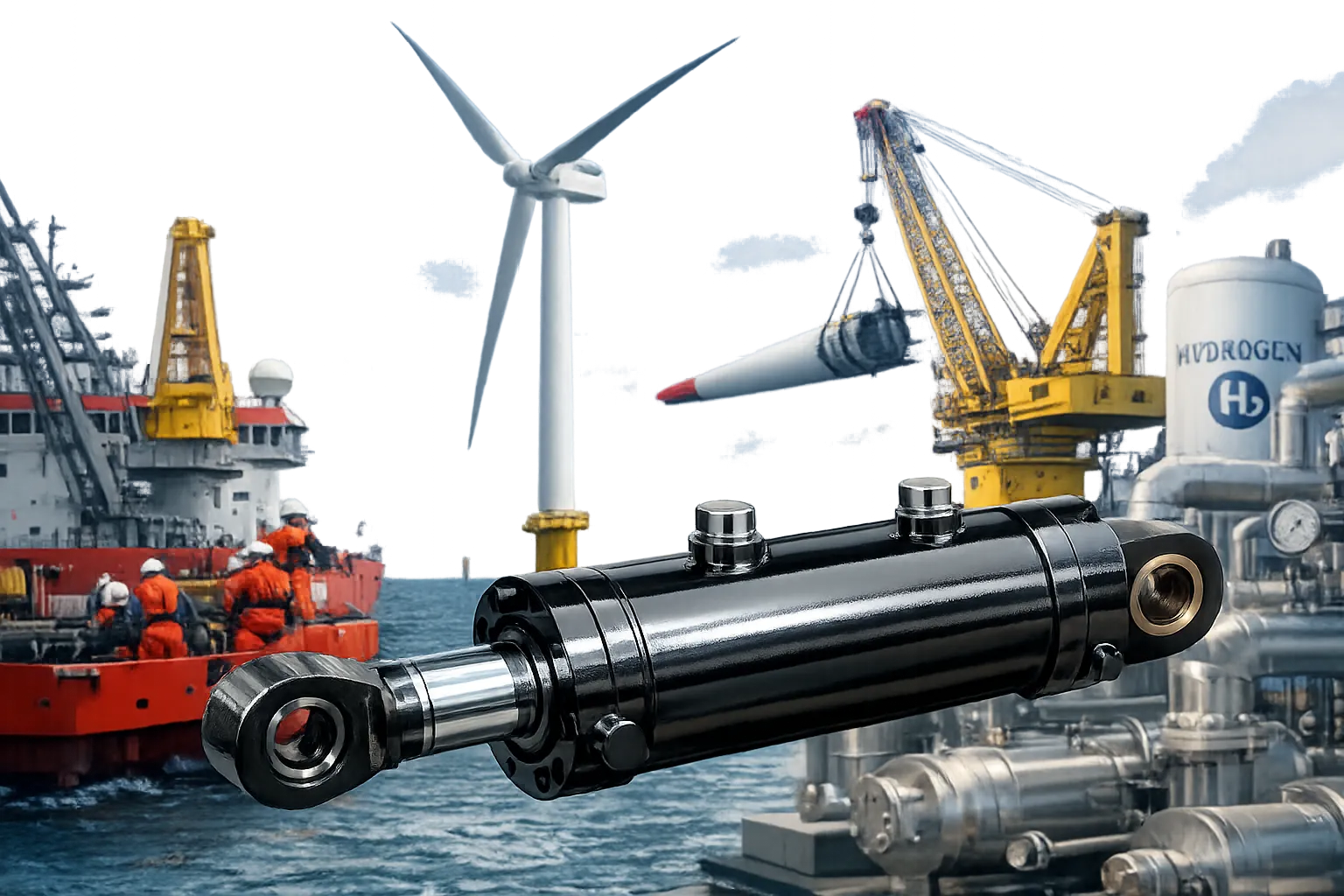
Through decades of highly specialized marine engineering, we have developed the definitive fluid power solution for the offshore wind support fleet. As a globally trusted hydraulic cylinder manufacturer, we have meticulously engineered our proprietary Hatch Cover Hydraulic Cylinder entirely from premium 316L stainless steel, offering absolute structural immunity to saltwater chloride attack. By integrating heavy-duty welded architectures with advanced, impact-resistant sealing matrices, we provide ship owners, shipyard directors, and naval architects with a heavily fortified double acting hydraulic cylinder capable of withstanding the violent kinetic impacts of rogue waves crashing across the deck. When modern marine operators source our engineered hydraulic parts, they are actively eliminating the risk of catastrophic hydraulic fluid spills at sea, permanently halting cargo contamination, and aggressively optimizing the total lifecycle hydraulic cylinder price by eradicating constant mid-ocean breakdown events.
Comprehensive Technical Parameters & Bespoke Marine Customization
Every maritime vessel features unique deck layouts, varying hatch tonnage requirements, and specific central hydraulic power unit (HPU) capacities. Our hydraulic cylinder components are extensively customizable to meet the precise geometric demands of folding, rolling, or vertical lifting hatch covers. We strictly adhere to the manufacturing parameters required by major international maritime classification societies. The technical matrix below defines the baseline specifications and uncompromising material standards of our marine-grade actuators.
| Engineering Parameter | Technical Specification & Material Standard |
|---|---|
| Target Industry Sector | New Energy / Maritime Offshore Support |
| Equipment Category | Wind Power Maintenance Vessel (SOV/CTV) |
| Subsystem / Target Action | Deck Hatch Cover System |
| Product Nomenclature | Hatch Cover Cylinder |
| Action Kinematics | Double acting hydraulic cylinder |
| Structure Type | Stainless Steel Piston Cylinder |
| Manufacturing Construction | Heavy-Duty Welded Assembly |
| Base Metallurgy System | 316L Marine-Grade Stainless Steel |
| Surface Treatment | Precision Mechanical Polishing (Mirror Ra < 0.2µm) |
| Environmental Rating | Direct Seawater Immersion & Extreme Salt Spray |
| Operational Work Condition | Hatch Cover Raising and Lowering under Ship Roll |
| Typical Failure Mode Solved | Catastrophic Corrosion Leakage & Seal Blowout |
| Recommended Configuration | Impact-resistant sealing matrix + Overcenter Holding Valves |
Fluid Dynamics & Kinematics: Operating the Marine Hatch Cover System
To fully appreciate the formidable engineering behind our Hatch Cover Cylinder, one must deeply understand the violent physics of the open ocean. A marine hatch cover is an exceptionally massive, highly reinforced steel pontoon structure that securely seals the vessel’s lower decks from catastrophic water ingress. Safely opening and securing these heavy structures requires immense, mathematically controlled linear hydrostatic force. The centralized hydraulic power unit of the maintenance vessel pumps pressurized oil through heavily armored deck piping directly into the actuator manifold.
Because the hatch covers are phenomenally heavy, relying on gravity alone to close them creates a massive operational hazard. A basic single acting hydraulic cylinder is fundamentally unsafe for this maritime application; attempting to rely solely on gravity for closure on a pitching and rolling ship can result in uncontrolled, highly dangerous slamming if a hose ruptures or the ship rolls sharply. Therefore, our marine design strictly mandates a double acting hydraulic cylinder. High-pressure fluid is directed into the blind end (cap end) to violently force the hydraulic cylinder piston outward, pivoting the heavy steel cover upward on its massive deck hinges. During the crucial closure phase, fluid is actively pumped into the rod end, providing a powered, metered, and mathematically controlled descent that protects the structural integrity of the deck coaming and ensures the heavy rubber weather gaskets are fully compressed.
The absolute most critical operational phase occurs when the vessel is underway in rough seas. If a rogue wave crashes onto the closed or partially secured hatch cover, thousands of tons of sudden hydrostatic pressure are instantly transferred through the mechanical linkages directly into the hydraulic fluid column. If standard commercial seals are used, this instantaneous kinetic shock spike will bypass the holding valves and violently blow out the internal seals. We engineer our hydraulic rams with an advanced array of impact-resistant step seals and specialized anti-extrusion backup rings. This allows the fluid volume to remain absolutely locked, transforming the actuator into an unbending, rigid steel column. During normal operations, these robust units act as an incredibly strong lift cylinder, safely hoisting the deck plates time and time again without mechanical fatigue.
Seamless Retrofitting & Global Fleet Dry-Dock Maintenance
Naval fleet managers and shipyard directors operating in major maritime hubs like Busan, Ulsan, and Mokpo are acutely aware that marine equipment is subject to relentless wear and tear. When legacy actuators manufactured by original equipment suppliers inevitably begin suffering from severe saltwater pitting and internal fluid bypass, immediate, decisive action is required. Procuring direct replacement parts from traditional European maritime conglomerates often involves devastating supply chain delays, forcing highly profitable offshore wind support vessels to remain docked and idling in port, accruing massive financial penalties.
Our specialized marine engineering division is globally recognized for executing rapid dimensional cross-referencing and precise reverse engineering. We systematically design and manufacture structurally superior Hatch Cover Cylinders that serve as perfect, exact-fit drop-in replacements for deck equipment originally commissioned by legacy brands such as MacGregor, TTS Marine, Bosch Rexroth, Eaton Vickers, and Parker Hannifin. (Please strictly note: The explicit mention of these specific corporate brands is solely for technical dimensional identification and mechanical cross-referencing to assist B2B naval architects and shipyard procurement teams; we operate as a fully independent, premier marine hydraulic cylinder manufacturer and claim no business affiliation, endorsement, or trademark rights with these entities.)
By proactively selecting our precisely engineered retrofit components, fleet operations directors can execute comprehensive vessel upgrades during routine dry-dock periods without delay. The inherently complex and often dangerous process of fixing hydraulic cylinders on a slippery, exposed weather deck is streamlined into a rapid component swap. The vessel immediately benefits from upgraded 316L metallurgy, dramatically reducing the frequency of emergency hydraulic cylinder repair. This guarantees absolute operational readiness while heavily optimizing the fleet’s overarching maintenance budget and establishing a highly favorable hydraulic cylinder price to value ratio.
Core Technical Advantages & Maritime Structural Superiority
Operating highly sensitive fluid power hardware directly on the weather deck of a ship demands an absolute departure from terrestrial manufacturing norms. We have fundamentally analyzed the specific failure modes of maritime hydraulics and engineered the following definitive mechanical advantages into every Hatch Cover Hydraulic Cylinder we produce:
1. Absolute Immunity via 316L Stainless Steel Construction
The definitive destroyer of marine deck equipment is chloride-induced pitting corrosion. Standard carbon steel cylinders, even those heavily coated with multi-part marine epoxy, will eventually rust from the inside out when exposed to constant seawater immersion. We construct the entire external architecture—the heavy-walled barrel, base block, trunnions, and piston rod—exclusively from premium 316L stainless steel. The high molybdenum content of 316L creates a passive oxide layer that aggressively resists pitting and crevice corrosion, ensuring decades of structural survival in the most hostile oceans.
2. High-Precision Mechanical Polishing
While 316L provides the base chemical defense, the physical surface topography is equally critical. We subject the outer diameter of the piston rod to a highly specialized mechanical polishing process, achieving a flawless, mirror-like surface finish (Ra < 0.2µm). This ultra-smooth profile removes microscopic crevices where abrasive salt crystals and marine bio-fouling typically accumulate, dramatically reducing the friction and wear on the external heavy-duty wiper seals during the retraction stroke.
3. Impact-Resistant Marine Sealing Matrix
When thousands of gallons of green water slam onto a deck hatch, the hydrostatic shock wave sent through the cylinder rod will instantly destroy standard polyurethane seals. We deploy a deeply engineered, impact-resistant sealing matrix utilizing heavy-duty PTFE composites backed by high-durometer elastomeric energizers. This rugged configuration physically absorbs the kinetic spike, totally preventing catastrophic seal blowout and keeping the hatch cover permanently locked in position.
4. Deep-Penetration Welded Architecture
Standard industrial tie-rod cylinders are completely unacceptable for offshore heavy lifting due to their tendency to stretch and leak under dynamic tension, as well as providing crevices for standing saltwater. Our marine cylinders feature an immensely robust, fully welded architecture. Utilizing automated, multi-pass tungsten inert gas (TIG) welding, we fuse the 316L components into a single, monolithic pressure vessel. This entirely removes external stress points and provides infinite mechanical fatigue life under heavy deck operations.
5. Integrated Marine Safety Manifolds
The safety of the naval crew working beneath an open hatch cover is absolutely paramount. We heavily customize our end caps to accept directly flanged, stainless steel counterbalance valves. By hard-plumbing these safety locks directly into the cylinder block, we guarantee that even in the rare event of total main line hose rupture, the hatch remains absolutely frozen in place, preventing a deadly free-fall.
Uncompromising Manufacturing & Marine Quality Control
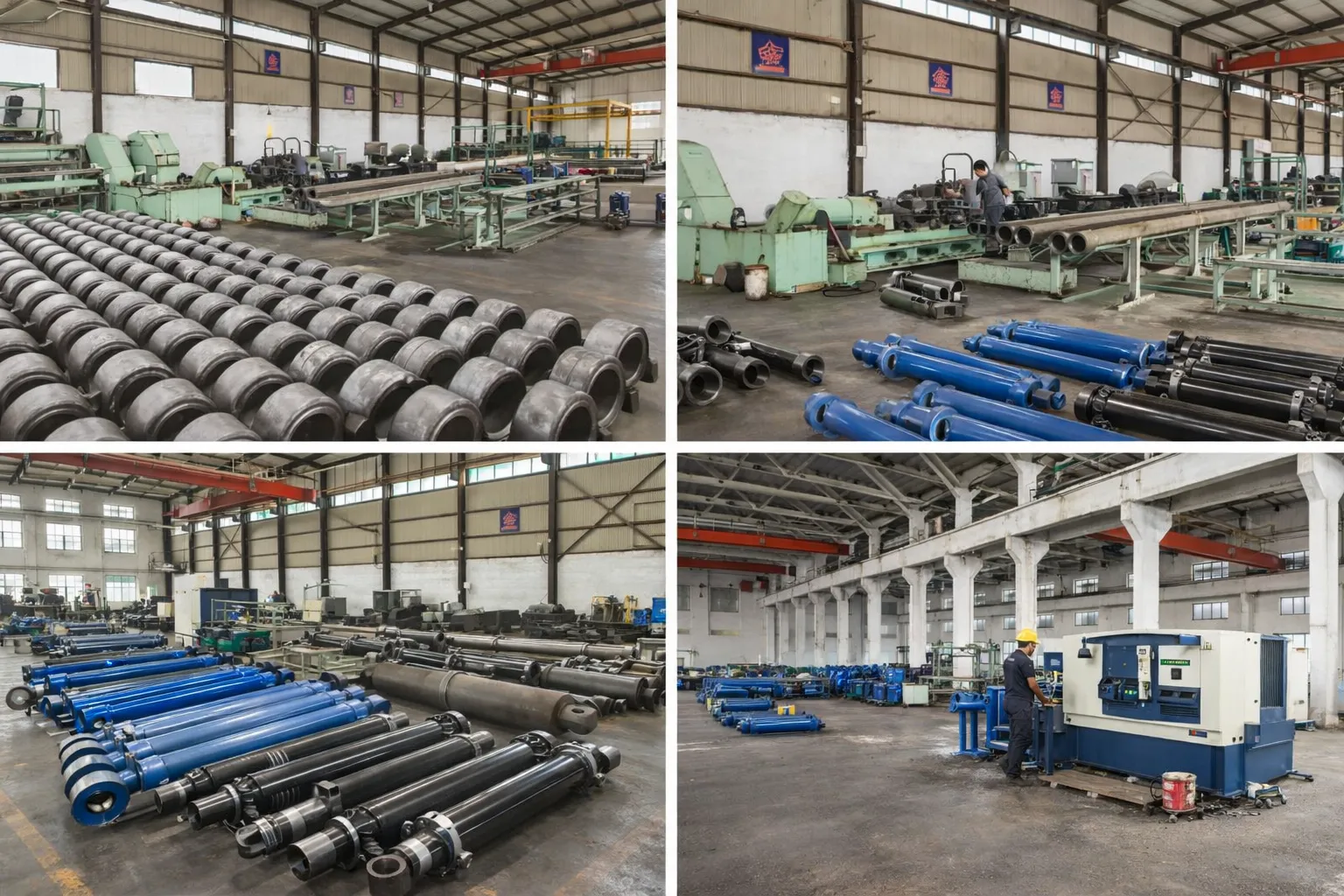
Equipment failure hundreds of miles offshore is not merely an inconvenience; it is a profound safety hazard and a massive financial liability. Consequently, our manufacturing philosophy is rooted in absolute, unyielding quality assurance. We operate a fully autonomous, vertically integrated production facility governed by strict ISO 9001 protocols and marine class society standards. Every shipment of raw 316L stainless steel billets is subjected to comprehensive ultrasonic flaw detection and chemical spectrometry to definitively verify its high molybdenum content and structural purity before it ever touches a CNC lathe.
The delicate integration of our specialized impact-resistant seals and the highly polished hydraulic cylinder piston is performed exclusively within a pressurized, climate-controlled cleanroom environment. This rigorous atmospheric management guarantees that zero airborne metallic dust or silica particulates can contaminate the internal fluid boundaries during the assembly of our hydraulic cylinder components, preventing premature micro-scoring of the seals.
Final validation is absolute. Every single Hatch Cover Cylinder undergoes a punishing 100% factory acceptance test (FAT) protocol. The fully assembled 316L units are securely clamped onto high-tonnage automated hydrostatic test benches and subjected to pressure holding trials at 150% of their maximum rated working pressure for extended durations. Advanced digital telemetry monitors for even the most microscopic pressure decay, verifying absolute zero-leakage load holding capabilities. A unique, permanent serial identifier is laser-etched directly into the stainless steel, providing global shipyard procurement teams with comprehensive lifecycle traceability and guaranteeing uncompromising readiness upon delivery.
Broad Spectrum Heavy Industry Capabilities
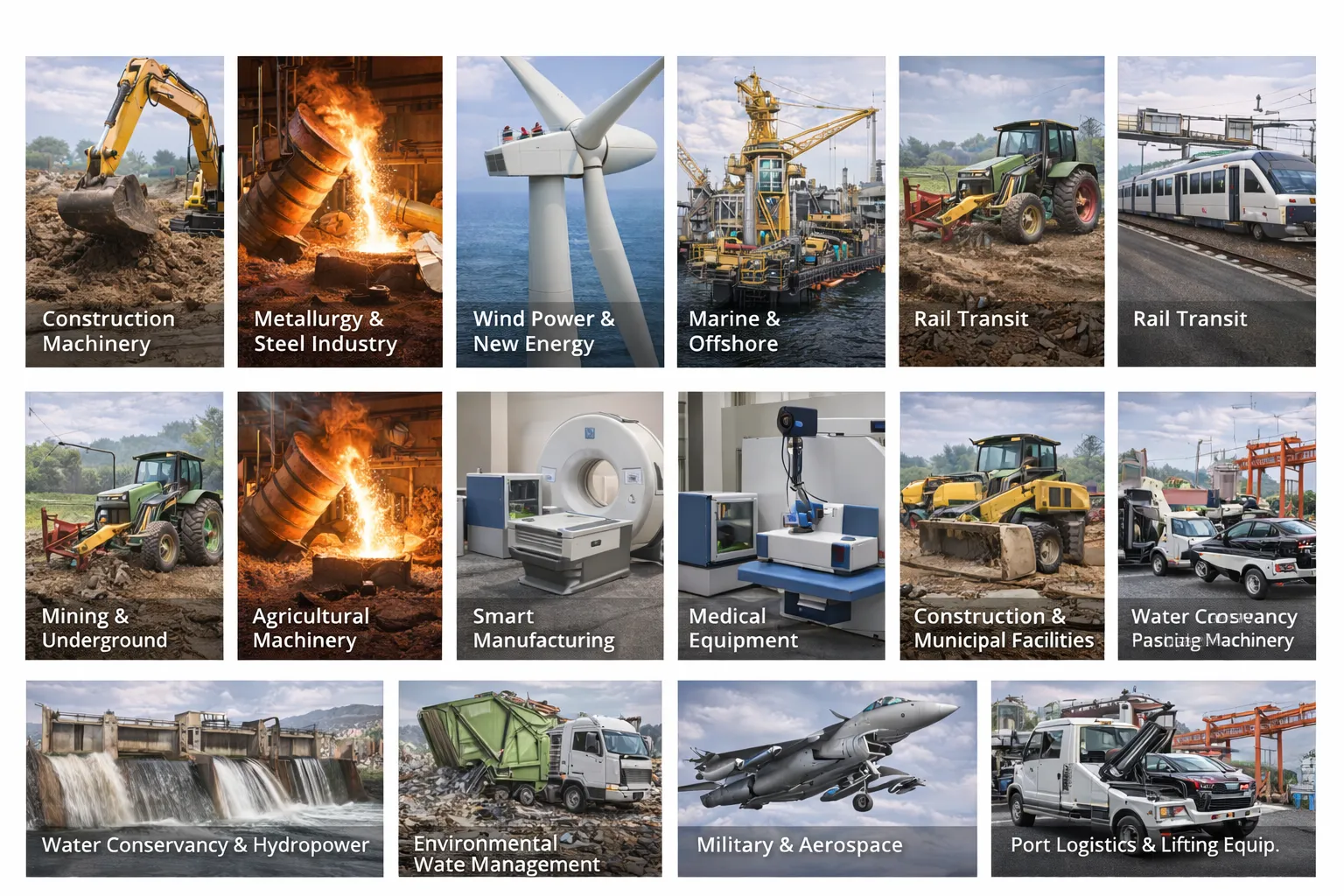
While the heavy-duty 316L metallurgy and wave-impact resistance detailed here are specifically optimized for the punishing realities of the maritime sector, this inherently rugged design philosophy translates flawlessly to other brutal industrial ecosystems. The ability to completely resist atmospheric corrosion, block massive physical shocks, and deliver immense hydrostatic pressure makes our engineering highly sought after across numerous heavy industry applications globally.
For instance, the extreme thermal stability and anti-corrosion properties of our components make them phenomenally effective within the metallurgical and iron industry, where equipment operates in caustic, continuous casting environments and coastal steel mills. The prevention of catastrophic seal melting and rust degradation is paramount for continuous blast furnace output.
Similarly, the indestructible welded structure and impact-resistant sealing matrices provide unparalleled durability for heavy extraction equipment operating deep within the mining industry. Deep underground acidic slurry and violent rock impacts demand the exact same impenetrable defense as ocean salt spray. Furthermore, the reliable, zero-drift load holding properties of our assemblies make them the indisputable backbone of heavy earthmoving machinery, functioning as highly resilient fluid power solutions across the construction machinery industry.
Comparative Analysis: Standard Commercial Cylinders vs. Premium Marine Actuators
To fully understand the critical necessity and long-term capital protection offered by our highly specialized technology, one must directly compare the inherent vulnerabilities of generic commercial fluid power equipment against our purpose-built maritime solutions. The following comparative matrix exposes exactly why standard components rapidly fail at sea.
| Feature / Performance Metric | Standard Industrial Cylinder | Our Hatch Cover Cylinder |
|---|---|---|
| Base Material Metallurgy | Carbon Steel (Rapidly rusts upon marine paint chipping) | Solid 316L Marine-Grade Stainless Steel |
| Rod Surface Finish | Standard Hard Chrome (Micro-cracks lead to salt pitting) | Precision Mechanical Polishing (Mirror Ra < 0.2µm) |
| Sealing Matrix Resilience | Standard NBR (Blows out under severe wave impacts) | Impact-Resistant composite with anti-extrusion rings |
| Structural Assembly | Tie-Rod Design (Stretches and leaks under dynamic sea loads) | Monolithic Deep-Penetration Welded Construction |
| Load Holding Safety | Prone to drift due to internal micro-leakage | Absolute zero-drift locking capability via integrated valves |
| Vessel Downtime Risk | High. Requires frequent, expensive emergency repairs | Extremely Low. Extended multi-year operational lifespan |
Real-World Maritime Case Studies: Documented Fleet Success
Rigorous metallurgical engineering must be validated by undeniable performance on the open ocean. We maintain a commanding and highly trusted presence supporting the rapidly scaling offshore wind sectors of East Asia. Below are documented, verifiable cases detailing how our solutions have completely resolved critical mechanical bottlenecks for major fleet operators.
Case Study 1: Eradicating Corrosion Leakage in a Wind Power Support Fleet – Mokpo, South Korea
Project Timeline: January 2025 to July 2025
Client Profile: A tier-one maritime logistics provider operating a massive fleet of Wind Power Maintenance Vessels.
The Technical Challenge: The operator was suffering from catastrophic fleet-wide downtime. The standard epoxy-coated carbon steel cylinders controlling their heavy deck hatches were failing rapidly. Relentless saltwater immersion caused severe rod pitting. When the rusted rods retracted, they destroyed the internal seals, dumping hundreds of liters of hazardous hydraulic oil directly onto the deck, triggering severe environmental fines and halting offshore turbine operations.
How They Sourced Us: The fleet engineering director urgently sought an authoritative manufacturer capable of forging genuine marine-grade stainless steel and connected with our technical portal.
The Engineered Solution: We supplied a complete fleet overhaul utilizing our proprietary 316L Hatch Cover Hydraulic Cylinders. The absolute elimination of carbon steel removed the corrosion vector entirely, while the polished rods preserved the integrity of the new heavy-duty wiper seals.
The Tangible Result: Operating smoothly through the treacherous typhoon season, the retrofitted vessels have logged over a year of continuous sea time with zero oil leaks and zero deck closures.
“The environmental and financial liability of leaking deck hydraulics was threatening our operational licenses. Switching to these 316L stainless units completely neutralized the seawater threat. The build quality is massively superior to the original European yard equipment. It is an incredibly rugged product.” — Mr. Park Min-Soo, Fleet Operations Director.
Case Study 2: Defeating Massive Wave Impacts – Nagasaki, Japan
Project Timeline: August 2024 to Present
Client Profile: A major maritime contractor operating Service Operation Vessels (SOV) in high-swell offshore wind sectors.
The Technical Challenge: During heavy winter swells, rogue waves frequently crashed over the ship’s bow, slamming down on the forward cargo hatch covers. The instantaneous hydrostatic shockwave transferred massive kinetic energy into the deck actuators, instantly blowing out the standard polyurethane seals and causing the heavy steel hatches to violently drop open, heavily endangering the deck crew.
How They Sourced Us: Their naval architects scoured marine procurement databases looking for highly specialized, impact-resistant fluid power to permanently secure the forward decks.
The Engineered Solution: We delivered highly fortified, double-acting units specifically upgraded with our proprietary impact-resistant sealing matrix and integrated dual counterbalance valves to provide an unyielding hydraulic lock against sudden physical impacts.
The Tangible Result: The modified deck hatches now absorb direct green-water wave impacts without yielding a single millimeter, completely securing the forward bays during severe ocean storms.
“A blown cylinder on the forward hatch during a storm is a terrifying scenario. Your impact-resistant seals have totally stabilized our deck. The hatches hold absolutely rigid, no matter how hard the sea pounds the ship. It has restored immense confidence to our deck crew.” — Captain Kenji Takahashi, Master Mariner.
Case Study 3: Rapid Shipyard Retrofitting to Avoid Delay Penalties – Taichung, Taiwan
Project Timeline: November 2025
Client Profile: An offshore wind turbine installation and logistics consortium undergoing mandatory dry-dock maintenance.
The Technical Challenge: During a scheduled class society inspection, the port surveyor condemned the ship’s original European-branded deck cylinders due to excessive rod pitting. Ordering identical OEM replacements carried an unacceptable 14-week lead time, which would force the vessel to miss its lucrative offshore installation contract window.
How They Sourced Us: Desperate for high-grade marine fluid power, the shipyard’s procurement manager contacted our facility regarding expedited custom manufacturing to avoid massive berthing fees.
The Engineered Solution: Based exactly on the vessel’s engineering drawings, we rapidly reverse-engineered and CNC-machined an exact dimensional match using superior 316L stainless steel, ensuring a flawless drop-in fit without any structural deck modifications or hot-work.
The Tangible Result: The custom 316L units were manufactured, tested, and delivered via expedited air freight within 28 days. The vessel cleared the class inspection perfectly on time and immediately deployed to the offshore wind farm.
“We were facing hundreds of thousands in lost revenue if that ship didn’t sail. Your ability to rapid-prototype an exact dimensional match, upgrade the metallurgy to 316L, and drastically lower our overarching equipment expenditure was nothing short of miraculous.” — Mr. Lin Wei-Chen, Senior Procurement Officer.
Case Study 4: Defeating Freezing Conditions During Winter Lifts – Busan, South Korea
Project Timeline: January 2026
Client Profile: A specialized heavy marine logistics firm operating in the frigid waters of the northern Pacific.
The Technical Challenge: The sub-zero temperatures were causing the standard elastomeric seals inside their lifting cylinders to freeze, shrink, and harden. This thermal contraction allowed severe fluid bypass, causing the massive deck hatches to slowly and dangerously drift open during transit.
How They Sourced Us: They reached out for an urgent engineering consultation focusing on cold-weather seal stability.
The Engineered Solution: We provided custom actuators featuring aerospace-grade, extreme low-temperature polyurethane seals designed specifically to maintain their memory and flexibility at -40°C.
The Tangible Result: The new seals performed flawlessly in the dead of winter, maintaining absolute hydrostatic locking force and totally eliminating the hatch drift issue.
“Your cold-weather seal technology saved our winter operations. The hatches remain perfectly sealed and locked down, regardless of how far the temperature drops.” — Captain Lee Soo-Jin.
Frequently Asked Questions (FAQ)
Sourcing critical safety infrastructure for the maritime sector demands total technical transparency and absolute metallurgical assurance. Below, we address the most exacting technical inquiries routinely posed by shipyard engineers and fleet directors.
1. Why is 316L Stainless Steel strictly required for offshore deck machinery instead of standard alloys?
Seawater contains highly aggressive chloride ions that instantly attack and rust standard carbon steel. Even 304 stainless steel is vulnerable to pitting in warm oceans. 316L is a marine-grade stainless steel heavily alloyed with molybdenum (typically 2-3%). This specific chemical composition creates an impenetrable, self-healing passive oxide layer on the metal’s surface, granting it virtually total immunity against pitting and crevice corrosion even during continuous ocean immersion.
2. How does an impact-resistant seal survive heavy wave strikes without blowing out?
When a massive rogue wave hits a hatch cover, the mechanical linkage drives a massive hydrostatic shock into the internal fluid column. Standard polyurethane seals simply deform and rupture under this instantaneous pressure spike. Our specialized matrix utilizes high-tensile PTFE composite profiles backed by rigid anti-extrusion rings that physically prevent the seal lip from being blown past the mechanical clearances, absorbing the kinetic shock safely and securely.
3. Can you manufacture exact dimensional replacements for aging European hatch covers?
Absolutely. A core capability of our marine division is precision reverse-engineering. If you provide the technical drawings, trunnion dimensions, closed lengths, and stroke parameters of your failing OEM unit, we will CNC-machine an exact structural match in superior 316L steel. It will drop seamlessly into your deck coaming without requiring any hot work or steel modifications from the shipyard.
4. Why do you use mechanical polishing instead of hard chrome plating on the cylinder rod?
Hard chrome electroplating inherently features microscopic surface cracks due to the plating process itself. In a marine environment, saltwater penetrates these micro-cracks and aggressively rusts the base steel underneath, causing the chrome to flake off like dead skin, destroying the seals. By utilizing pure 316L stainless steel and mechanically polishing it to a mirror finish, we eliminate the plating entirely, creating a fundamentally rust-proof surface that glides flawlessly.
5. Does your manufacturing process comply with major maritime classification society standards?
Yes. Our vertically integrated factory operates under strict ISO 9001 protocols, and our deep-penetration TIG welding procedures and material traceability matrices are specifically designed to comfortably satisfy the rigorous inspection parameters of global classification societies such as DNV, ABS, and the Korean Register (KR).
6. Do you supply spare marine seal kits and diagrams for maintenance at sea?
Yes. We consider aftermarket support a critical safety obligation. We continuously supply comprehensive, marine-grade OEM seal kits and heavy-duty wiper components matched exactly to your serial numbers. If the ship’s engineers are tasked with emergency maintenance while underway, we provide highly detailed assembly schematics and torque specs to ensure a safe, flawless rebuild.
7. What is the expected manufacturing lead time for an emergency vessel retrofit in East Asia?
We acutely understand that dry-dock time is incredibly expensive. For custom 316L dimensional replacements, our agile production allows for a typical manufacturing window of 30 to 45 days. Direct maritime or air-freight logistics to major shipyards in South Korea, Japan, or Taiwan can be heavily expedited to ensure you meet your class inspection deadlines without penalty.
8. How do integrated counterbalance valves enhance the safety of deck operations?
If a primary hydraulic line bursts while a multi-ton hatch cover is elevated, the loss of pressure would normally cause the hatch to violently free-fall. We hard-plumb counterbalance (load holding) valves directly into the cylinder body. These valves mechanically lock the fluid inside the actuator the instant line pressure is lost, freezing the heavy steel cover safely in place and preventing a catastrophic accident.
Secure Your Vessel’s Deck Operations Today
Do not allow catastrophic corrosion leaks or generic, terrestrial actuators to jeopardize the safety and class certification of your massive offshore maintenance fleet. Partner with a deeply specialized marine engineering firm that genuinely masters the extreme fluid mechanics required for the ocean environment. We supply uncompromising 316L stainless steel manufacturing, wave-impact resistance, and fully verified zero-leakage testing.
Connect with our naval engineering division today to upload your exact flange and stroke specifications, request highly competitive fleet volume hydraulic cylinder price models, or arrange an immediate consultation for urgent dry-dock retrofitting.
Editor: Cxm