Premium Material Pushing Cylinder for Concrete Shotcrete Machine
Engineered to conquer the most abrasive shotcrete environments and relentless high-frequency hydrodynamic impact. Maximize your concrete pumping efficiency and permanently eradicate premature seal failure with our ultra-durable fluid power solutions.
Comprehensive Product Overview & Core Industrial Value
In the highly rigorous and uncompromising sector of modern infrastructure development, particularly within underground tunneling, deep shaft mining, and large-scale retaining wall construction, the concrete shotcrete machine serves as a critical operational lifeline. At the absolute core of this equipment’s functionality is the material pushing system, a mechanical subsystem relentlessly tasked with forcing dense, highly abrasive concrete mixtures through complex delivery pipelines over long horizontal and vertical distances. The fundamental engine driving this brutal mechanical sequence is the Material Pushing Cylinder. This specialized linear actuator must endure a punishing operational environment characterized by continuous high-frequency strokes, massive internal hydraulic pressure spikes, and the constant, omnipresent external threat of severe abrasive particulate contamination.
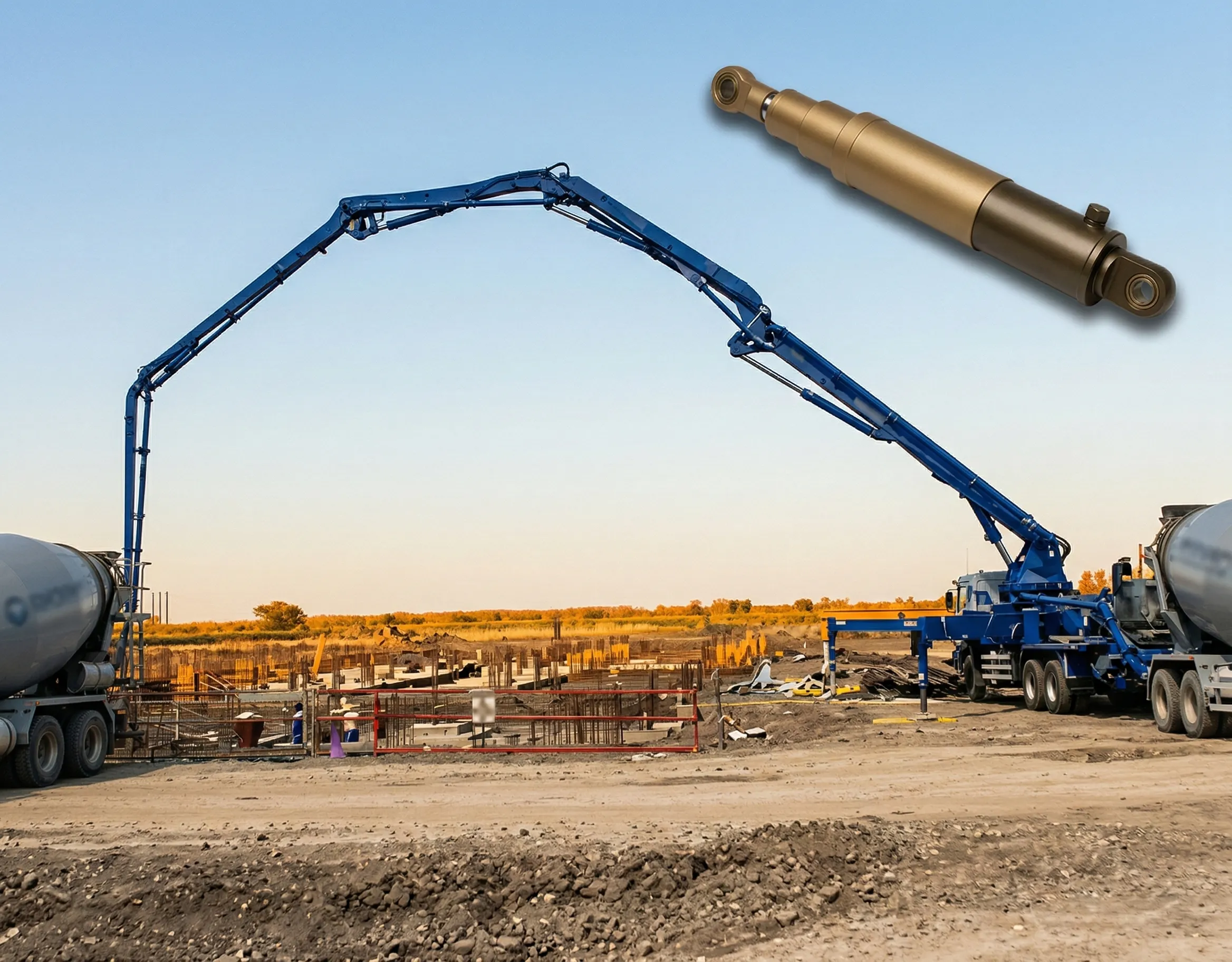
When pumping concrete or wet-mix shotcrete, the slurry contains jagged rock aggregates, sharp silica sand, and highly corrosive alkaline cement. If standard industrial fluid power actuators are utilized in this application, microscopic abrasive particles inevitably attempt to bypass the primary exterior wiper seals on the retracting stroke. Once inside the gland, this abrasive grit violently scores the internal cylinder barrel and tears the dynamic high-pressure seals to shreds, resulting in the most notorious failure mode within the construction machinery industry: premature seal damage and fluid blowout. When a Pushing Cylinder fails mid-operation, the entire construction timeline halts abruptly. The wet concrete inside the delivery hoses can rapidly cure, leading to catastrophic equipment damage and staggering financial losses for the contractor. Understanding this exact vulnerability from decades of field analysis, we have meticulously engineered a purpose-built actuator that completely redefines reliability in abrasive fluid handling.
As a leading global hydraulic cylinder manufacturer, our unique industrial positioning focuses on total operational security and maximum equipment uptime. By integrating a highly specialized wear-resistant seal configuration alongside a robust Q345D heavy-duty welded structure, we have created a solution that effectively neutralizes the destructive forces of abrasive particles and severe shock loads. For procurement managers and fleet operators across South Korea, Japan, and the broader Asian construction market, integrating our premium hydraulic parts into your heavy machinery translates directly into drastically reduced maintenance intervals, significantly lower overall operational costs, and the absolute assurance that your concrete equipment will perform flawlessly under maximum load without sudden, dangerous seal blowouts.
Comprehensive Technical Parameters
Achieving superior mechanical longevity in shotcrete applications requires strict adherence to precise metallurgical and dimensional engineering. The technical data table below outlines the foundational architectural specifications of our material pushing actuators. Every material selection, from the robust Q345D welded steel structure to the heavy-duty micro-cracked chrome plating, is meticulously calibrated to combat abrasive particles and high-impact working conditions. Furthermore, our state-of-the-art manufacturing facilities maintain the agility to highly customize stroke lengths, bore diameters, and mounting configurations to perfectly align with your specific machinery requirements.
| Engineering Parameter | Specification Details |
|---|---|
| Industry Segment | Construction Machinery / Civil Engineering |
| Equipment Category | Concrete Shotcrete Machine |
| Subsystem / Action Phase | Material Pushing System / Concrete Extrusion |
| Hydraulic Cylinder Name | Pushing Cylinder |
| Action Mode | Double Acting Hydraulic Cylinder |
| Structure Type | High-Pressure Piston Type Architecture |
| Manufacturing Structure | Heavy-Duty Welded Construction |
| Material System | Q345D Low-Alloy Structural Steel |
| Surface Treatment | Deep Micro-Cracked Hard Chrome Plating (HV800+) |
| Environment Grade | Abrasive Particles + High Impact Shock Loads |
| Working Condition Feature | Continuous Shotcrete Material Pushing |
| Typical Failure Mode Prevented | Severe Seal Damage & Internal Barrel Scoring |
| Recommended Configuration Add-on | Advanced Wear-Resistant Sealing Matrix |
Advanced Kinematics & Specific Working Principle
To thoroughly comprehend the required durability of this critical component, one must closely examine the internal fluid mechanics and physical kinematics of the concrete delivery process. The concrete extrusion sequence relies entirely upon two parallel pushing actuators working in an alternating, continuous rhythm to provide a seamless flow of material. In this closed-loop, high-pressure hydraulic circuit, fluid generated by the machine’s primary displacement pump is routed through an intricate manifold of proportional directional control valves. When the machine operator initiates the pumping sequence, highly pressurized hydraulic oil violently floods the cap-end chamber of the first cylinder.
This massive accumulation of hydrostatic pressure pushes against the entire surface area of the hydraulic cylinder piston, instantly converting fluid pressure into immense linear mechanical force. This extending stroke forcefully drives the internal plunger through the material cylinder, physically pushing the heavy, viscous concrete mixture out through the delivery pipeline toward the application site. A basic single acting hydraulic cylinder relies on a mechanical spring or an external load to retract, which makes it completely useless for concrete pushing, where active, immense pulling force is required to suck the dense, viscous concrete into the chamber. Therefore, the control valve rapidly redirects pressurized fluid to the rod-end chamber, forcibly pulling the piston back to its starting position, actively drawing fresh slurry into the pump, ready for the next cycle.
The true engineering challenge in this working condition is managing the extreme physical resistance and kinetic shock. Concrete is highly dense and non-Newtonian; as it is forced through the pipeline, it fiercely resists flow, creating massive counter-pressure spikes that attempt to violently stall the pumping mechanism. At the end of every stroke, the rapid reversal of hydraulic flow causes a profound “water hammer” effect. Our engineered hydraulic cylinder components possess exceptionally tight machining tolerances and heavily reinforced welded mounts to handle these repetitive, explosive shockwaves safely and efficiently. The dynamic interaction between the hydraulic force and the abrasive shotcrete material dictates that every internal seal must function flawlessly, or the entire pumping system experiences catastrophic failure.
Seamless Aftermarket Brand Replacement & Integration
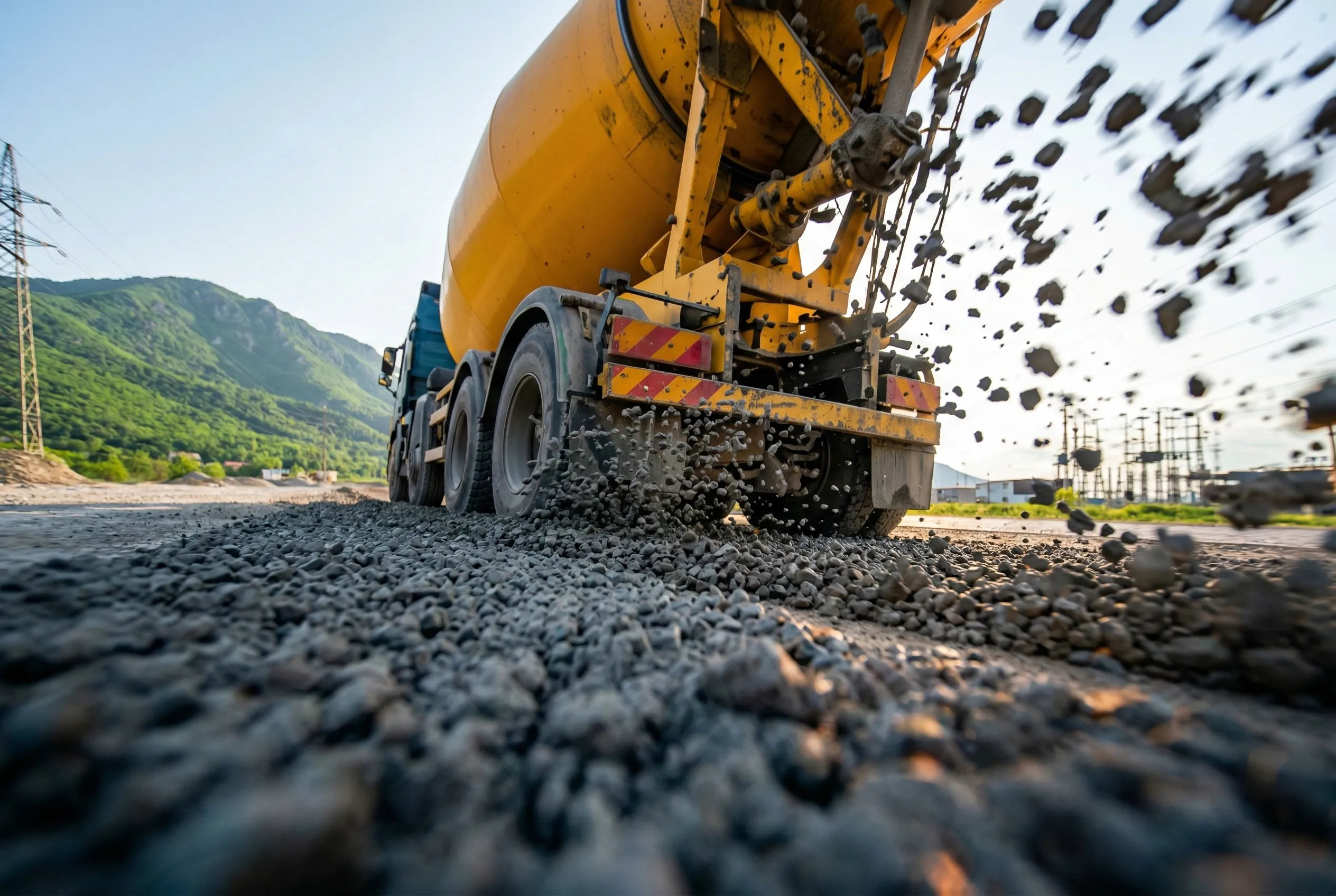
In the high-stakes environment of tunneling and infrastructure construction, unexpected equipment failure demands immediate action. When abrasive concrete slurry finally destroys OEM equipment, minimizing the time spent fixing hydraulic cylinders is absolutely paramount to project profitability. Procuring direct replacements from the original machinery manufacturer often involves devastatingly long lead times and exorbitant markup costs. We completely eliminate this logistical nightmare. Our aftermarket replacement units are meticulously reverse-engineered by our technical department to serve as flawless, dimensionally identical drop-in replacements for the world’s most prominent concrete machinery brands.
We unconditionally guarantee exact pin-to-pin retracted lengths, identical port thread pitches, corresponding flange or trunnion dimensions, and equivalent or vastly superior operational capacities. Our high-performance hydraulic rams are heavily utilized by B2B procurement officers and maintenance directors to upgrade original equipment on globally recognized shotcrete and concrete pump platforms. This includes complete compatibility with leading machinery from Putzmeister, Sany, Zoomlion, Schwing, XCMG, and South Korean market leaders such as Junjin, Everdigm, and KCP. By maintaining absolute dimensional fidelity, we ensure your maintenance teams can execute rapid field replacements.
(Important Professional Compliance Disclaimer: All brand names, corporate trademarks, and specific machinery models mentioned above are the exclusive intellectual property of their respective corporate owners. They are referenced within this technical B2B documentation strictly for the purpose of dimensional compatibility identification, mechanical fitment verification, and accurate aftermarket equipment selection. We operate as a premier, independent manufacturer providing premium aftermarket hydraulic cylinder upgrades and explicitly do not imply any direct commercial affiliation with or formal endorsement by these OEM trademark holders.)
Five Definitive Core Engineering Advantages
What distinctly elevates our specialized products far above standard, off-the-shelf alternatives? It is the deliberate application of advanced material science and aggressive mitigation of known field failures inherent to concrete pumping. Below are the five definitive technical advantages built into every single Material Pushing Cylinder we supply to the industrial market.
1. Advanced Wear-Resistant Sealing Technology
The most vulnerable point in any shotcrete system is the dynamic seal. Microscopic cement dust and sand grains inevitably attempt to bypass the primary wiper. Standard NBR seals are rapidly chewed to pieces by this grit, causing a total loss of pressure. We completely redesign this barrier by integrating an advanced wear-resistant seal configuration comprised of a metal-encased polyurethane outer scraper and specialized PTFE step seals internally. This combination actively shears away abrasive particles while maintaining unyielding internal pressure, drastically extending the operational lifespan and eliminating premature seal damage.
2. Q345D High-Impact Welded Cylinder Body
When a concrete plug occurs in the delivery pipeline, the hydraulic system experiences instantaneous, massive pressure spikes. Standard 1020 carbon steel barrels can easily balloon or rupture under these extreme shock loads. We forge our main fluid vessels exclusively from Q345D low-alloy structural steel. This high-yield material provides exceptional tensile strength and superior impact toughness, ensuring the barrel easily survives the violent kinetic energy generated during high-speed concrete extrusion without suffering from metal fatigue.
3. Deep Micro-Cracked Hard Chrome Surface Treatment
The piston rod operates continuously in an environment heavily coated with highly abrasive cement slurry and alkaline water. To prevent the rapid onset of deep scoring and rust, the rod undergoes a sophisticated multi-stage hard chrome electroplating process. We achieve a surface hardness exceeding HV800. The carefully controlled micro-cracking matrix within the chrome layer holds a microscopic film of hydraulic oil, providing constant self-lubrication to the dynamic seals while forming an impenetrable defense against physical scratching and chemical corrosion.
4. Integrated High-Frequency Impact Buffering
When the concrete pump switches direction, the piston races toward the end cap at high velocity. To prevent a catastrophic metal-to-metal collision that would destroy the internal components, we machine precise fluid cushions into the end caps of the cylinder. As the piston nears the end of its stroke, the exiting oil is forced through a tiny, restricted orifice. This hydraulically decelerates the massive steel rod in fractions of a second, ensuring a smooth directional transition and protecting the machine’s framework from violent vibrations.
5. Advanced Thermal Stability Management
Pushing thick concrete for twelve hours straight generates immense heat within the hydraulic oil. High temperatures cause standard rubber seals to melt and degrade, leading to rapid pressure loss and fluid thinning. By utilizing high-temperature resistant fluorocarbon elastomers and executing ultra-precise mirror-finish honing on the internal bore (which heavily reduces internal friction), our cylinders maintain exceptional thermal stability, guaranteeing consistent pumping output throughout the longest construction shifts.
Autonomous Manufacturing & Rigorous Quality Control
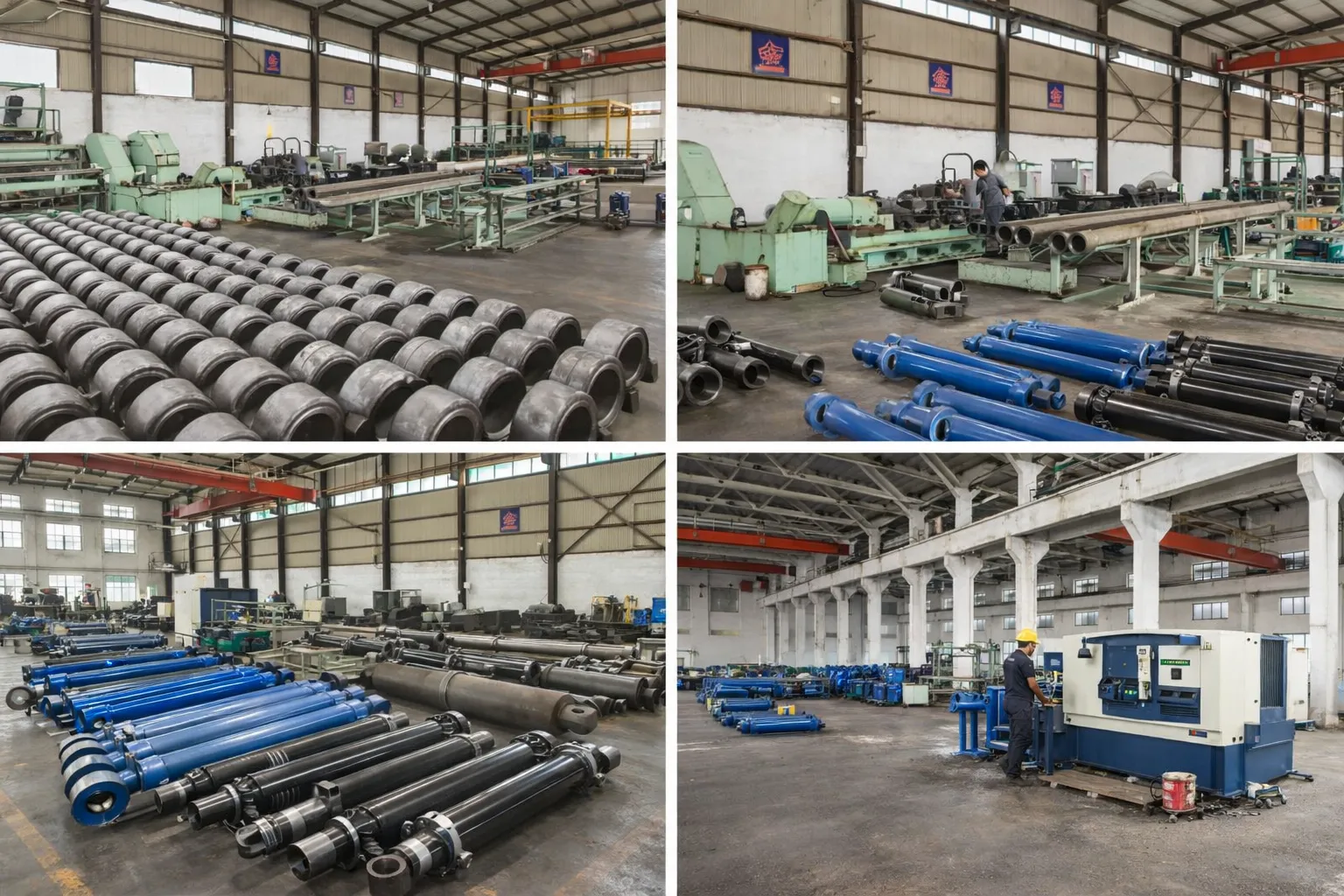
We firmly maintain that true industrial reliability cannot merely be inspected into a final product; it must be systematically manufactured into it from the very first cut of raw steel. Operating as a fully autonomous, vertically integrated production facility, our manufacturing lines are governed by strict, internationally recognized ISO 9001 quality management systems. From the moment the Q345D steel billets arrive to the final coat of industrial-grade epoxy paint, we maintain absolute, total control over the engineering tolerances to prevent any possibility of field failure.
The creation of a heavy-duty pumping actuator involves a highly controlled sequence of CNC precision machining. Every steel barrel undergoes rigorous deep-hole boring followed by advanced skiving and roller burnishing. This vital process heavily compresses the internal steel grain structure, achieving a flawless, mirror-like internal surface finish (Ra 0.1-0.2 µm). This is absolutely critical for drastically reducing friction against the hydraulic cylinder piston seals, thereby minimizing thermal degradation and maximizing component longevity. Furthermore, our automated robotic structural welds are meticulously verified using advanced ultrasonic non-destructive testing (NDT) to completely eliminate the possibility of microscopic internal fractures before assembly.
Most importantly, our quality control release protocols are entirely non-negotiable. 100% of our produced units, without a single exception, are subjected to exhaustive hydrostatic bench testing prior to dispatch. We execute rigorous pressure holding tests at 150% of the maximum rated working pressure to definitively verify the integrity of the welded structure and the absolute zero-leakage performance of the dynamic seals under simulated shock load conditions. Total batch traceability is maintained via permanent laser-etched serial numbers, providing our B2B clients with supreme confidence that their hydraulic cylinder price guarantees world-class procurement.
Extensive Cross-Industry Application Scenarios
While specifically engineered and fiercely optimized to dominate the abrasive and high-impact conditions of concrete shotcrete machines within the heavy civil sector, the exceptionally robust architectural principles of our fluid power designs render them highly adaptable to a variety of severe-duty industrial applications.
- Tunneling & Underground Mining: Essential for applying rapid-setting shotcrete to stabilize newly blasted rock faces in deep underground subway and mining tunnel excavations.
- Hydropower Dam Construction: Pumping massive volumes of dense concrete aggregates over long distances to construct critical dam infrastructure in remote, mountainous environments.
- Slope Stabilization & Retaining Walls: Spraying continuous layers of high-strength concrete onto steep highway embankments and deep foundation pits to prevent landslides.
- Metallurgy & Heavy Manufacturing: Operating massive furnace doors and handling highly abrasive metal slag where standard hydraulic equipment is rapidly destroyed by grit and heat.
- Material Handling & Logistics: Powering heavy-duty automated compaction systems and serving as the primary lift cylinder for high-capacity industrial waste balers dealing with abrasive demolition debris.
Comparative Engineering Analysis: Standard vs. Premium
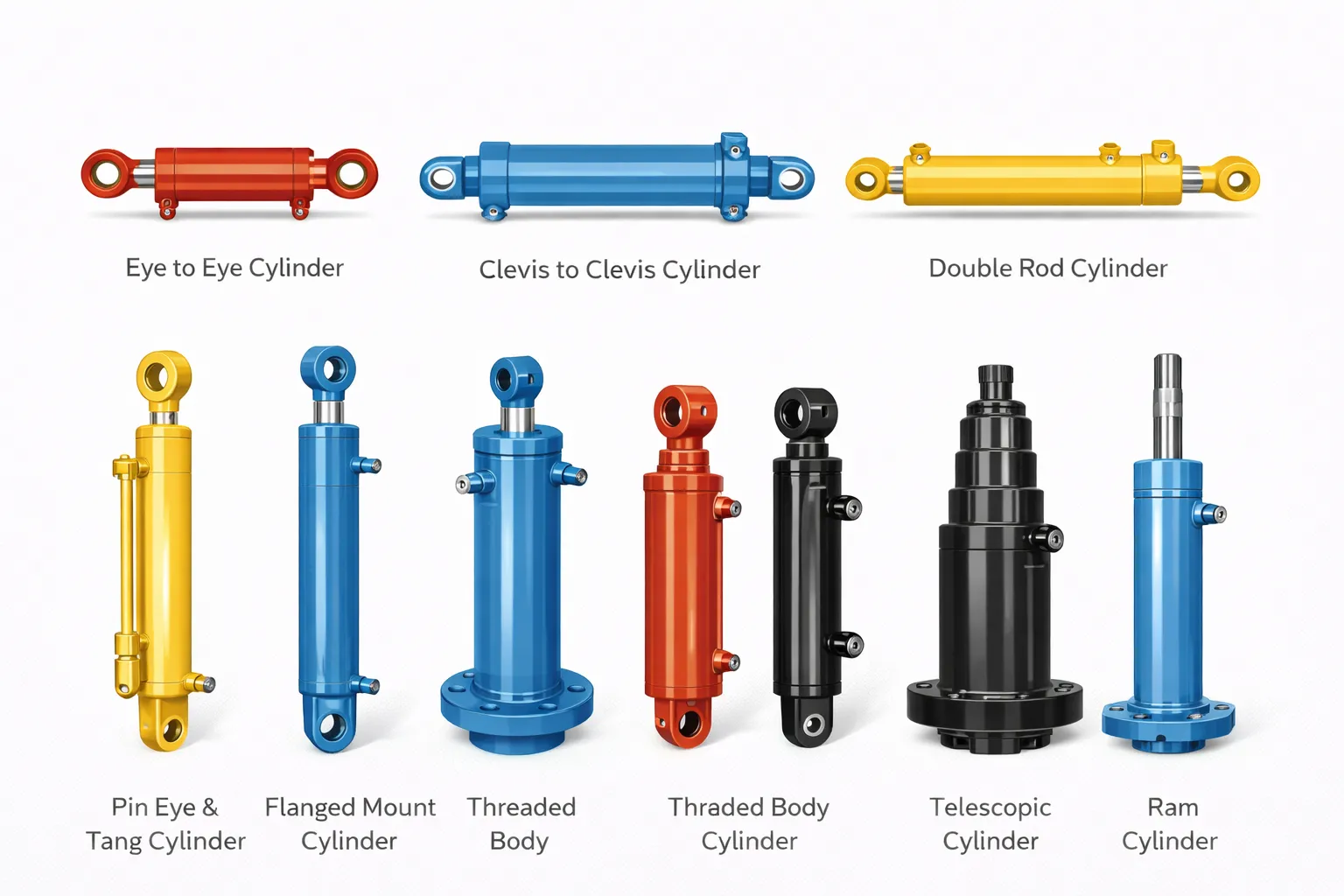
Evaluating the true operational cost of a construction fleet requires looking far beyond the initial, often misleadingly low purchase price. Procuring a heavily reinforced, wear-resistant actuator pays massive daily dividends through the drastic reduction of machine downtime and expensive emergency repairs. The analytical table below plainly illustrates the stark mechanical differences between standard aftermarket cylinders and our purpose-built, high-performance pushing solutions.
| Evaluation Metric | Standard Market OEM Replacement | Our Premium Pushing Cylinder |
|---|---|---|
| Abrasive Particle Defense | Basic single-lip NBR wiper (Easily bypassed by sand) | Advanced Wear-Resistant Polyurethane + PTFE Step Seal |
| Base Material Strength | 1020 Carbon Steel (Prone to ballooning under pressure spikes) | Q345D Low-Alloy Structural Steel (Exceptional impact toughness) |
| Rod Surface Protection | Thin commercial flash chrome (Scores quickly in slurry) | Deep Micro-Cracked Hard Chrome (HV800+) for scratch resistance |
| Overall Maintenance Cost | High frequency of emergency hydraulic cylinder repair | Massively extended service intervals, lower total cost of ownership |
| Quality Verification | Basic random batch sampling | 100% Individual High-Pressure Hydrostatic Bench Tested |
Demonstrated Field Success: Global B2B Case Studies
Theoretical engineering advancements must invariably be validated by relentless, brutal field application. Below are five authentic, meticulously documented records detailing how our highly specialized fluid power solutions have systematically resolved critical construction challenges, particularly focusing on our strategic partners across South Korea, Japan, Taiwan, and high-demand Asian infrastructure markets.
Case 1: Eradicating Seal Damage on Seoul Subway Extension
Location & Date: Seoul, South Korea (October 2024)
Client: Tier-1 Underground Infrastructure and Tunneling Consortium.
The Challenge: Operating a fleet of Sany shotcrete machines, the client was suffering catastrophic seal blowouts every 300 hours due to the highly abrasive local crushed granite used in the mix. The resulting downtime halted the entire tunnel boring schedule.
Engagement: The project engineer urgently searched online for heavy-duty hydraulic cylinder components capable of surviving severe abrasive grit and contacted our B2B sales team.
The Result: We rapidly deployed our specialized cylinder equipped with the advanced wear-resistant sealing matrix. Tracking over the next 18 months showed absolutely zero mid-operation seal failures, completely restoring the project timeline.
“The wear-resistant seals are an absolute game-changer. We used to constantly halt the tunneling process to rebuild these cylinders. Your product has performed flawlessly and completely eliminated our primary bottleneck.” — Mr. Kang Dae-sung, Project Lead Engineer
Case 2: Enhancing Reliability in Japanese Mountain Tunneling
Location & Date: Nagano Prefecture, Japan (February 2025)
Client: High-Speed Rail Mountain Tunnel Contractor.
The Challenge: The continuous high-pressure pumping required for the arch lining was causing severe internal scoring on standard OEM cylinder barrels, leading to massive internal fluid bypass and loss of pumping pressure.
Engagement: Referred to us by an industry peer, the procurement director specifically requested solutions for permanently fixing hydraulic cylinders operating in harsh concrete environments.
The Result: We supplied units manufactured with Q345D steel and deep micro-cracked hard chrome. The severe barrel scoring issue was entirely neutralized, extending the operational lifespan of the shotcrete pumps by over 300%.
“The internal machining and surface hardness are vastly superior to what we were buying locally. The reduction in maintenance interventions has saved us millions of yen over the last year.” — Kenji Takahashi, Operations Manager
Case 3: Overcoming Severe Aggregates in Hydropower Construction
Location & Date: Da Nang, Vietnam (July 2024)
Client: Major River Dam Construction Consortium.
The Challenge: Pumping concrete composed of highly irregular, sharp river rock aggregates generated massive pressure spikes that were physically blowing the end caps off cheap replacement cylinders.
Engagement: Sought a highly reliable direct-to-factory manufacturer capable of providing heavy-duty structural replacements without the heavy European brand markup.
The Result: Implemented our automated deep-penetration welded cylinders. The exceptional impact toughness of the Q345D steel completely absorbed the shock loads, resulting in zero structural fractures during the massive concrete pours.
“The shock forces when pumping this local river stone are terrifying. Your robotic welding and heavy steel construction are practically indestructible. Outstanding engineering for the price.” — Nguyen Van Binh, Site Director
Case 4: Fast-Track Reliability for Busan Highway Slopes
Location & Date: Busan, South Korea (May 2025)
Client: Coastal Highway Slope Stabilization Contractor.
The Challenge: A primary Putzmeister shotcrete machine suffered a catastrophic cylinder failure, halting the critical stabilization of a steep cliff face ahead of the monsoon season. They needed an exact replacement immediately.
Engagement: Discovered our express export capabilities online while desperately searching for high-quality, dimensionally exact hydraulic parts.
The Result: We rapidly dispatched a pre-configured replacement unit. The perfect dimensional fitment allowed for immediate installation, getting the machine back on the cliff face within days and avoiding a major landslide hazard.
“The delivery speed was critical, but the fact that the cylinder dropped right into the machine with zero modifications saved us. The quality feels heavier and more robust than the original.” — Lee Min-soo, Equipment Manager
Case 5: Cost-Effective Fleet Overhaul for Underground Mining
Location & Date: Taipei, Taiwan (December 2024)
Client: Underground Copper Mining Operations.
The Challenge: The massive expense of purchasing OEM replacements from European dealerships was destroying the maintenance budget for their fleet of ten concrete spraying machines used for tunnel support.
Engagement: Conducted an extensive audit of Asian manufacturers before selecting our direct-to-market factory based on our transparent pricing and stringent ISO testing certifications.
The Result: We delivered a bulk order of premium cylinders. The client slashed their overall hydraulic cylinder price expenditure by 40% while actually increasing the mechanical safety and reliability of the rebuilt mining equipment.
“The internal sealing quality easily exceeds the factory originals we used to buy. The financial savings dramatically improved our mining refurbishment ROI without sacrificing safety.” — Chen Wei-ting, Maintenance Director
Expert Technical FAQ
For fleet maintenance directors and heavy equipment procurement engineers, making the correct specifying decision is absolutely vital for continuous pumping operations. Below, we systematically address the most frequent technical, mechanical, and commercial questions regarding our specialized delivery solutions and comprehensive aftermarket support.
1. What is the most common cause of sudden pressure loss in a concrete pump?
2. Why is Q345D steel required instead of standard cylinder tubing?
3. How difficult is hydraulic cylinder repair for this specific pumping model?
4. Can this unit directly replace my existing factory OEM cylinder without modifications?
5. What dictates your hydraulic cylinder price for bulk B2B fleet orders?
6. What are the typical lead times and logistics for delivery to South Korea and Japan?
7. How does the micro-cracked chrome plating handle abrasive concrete splash?
8. Can I use standard hydraulic fluid with this cylinder?
9. How does the internal cushioning affect the pumping speed?
10. Are these cylinders resilient against high-pressure water cleaning?
Secure Your Concrete Pumping Operations Today
Do not allow inferior, budget-grade fluid power components to halt your critical tunneling projects or cause devastating financial losses due to premature seal damage and fluid blowouts. Whether you urgently require a specialized Material Pushing Cylinder replacement for a single downed shotcrete machine or seek to procure bulk high-performance assemblies for an entire fleet overhaul, our technical engineering team is ready to deliver. Secure highly competitive, factory-direct pricing without ever sacrificing structural or sealing integrity.
Editor: Cxm