Hydraulic Press Side Cylinder
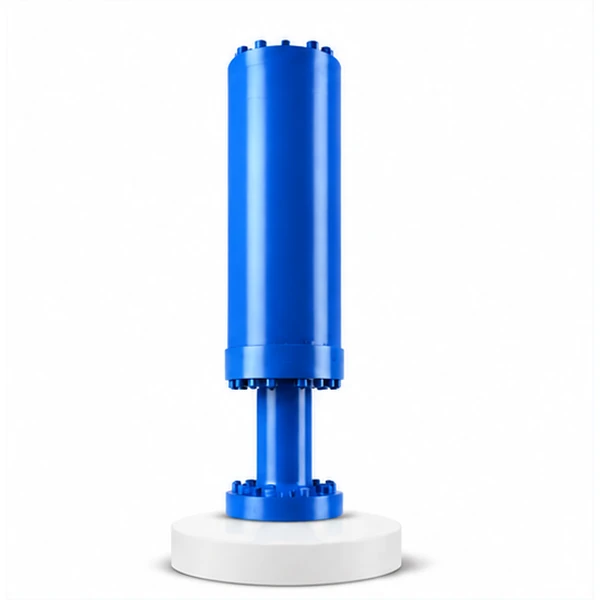
The Force Behind
Balanced Pressing
A press with only a master cylinder pushes from the centre. Add side cylinders and the force spreads evenly across the entire ram face — eliminating the angular tilt that ruins forging accuracy and shortens die life. The side cylinder is not "extra force" — it is balanced force.
Why a Press Needs Side Cylinders
Imagine pressing a book flat with one finger in the centre — the edges lift. Now press with your whole palm — the book stays flat. That is the difference between a press with only a master cylinder and a press with master plus side cylinders. The master cylinder applies force at the centre of the ram; the side cylinders apply supplementary force outboard, toward the ram edges. Together, they produce a uniform pressure distribution across the entire die face — which is the fundamental requirement for consistent forging thickness, accurate die fill, and long die life.
Without side cylinders, the ram deflects under load: the centre (directly above the master cylinder) is pushed hardest, while the edges spring away from the die. This angular deflection — even a fraction of a millimetre — causes thicker forgings at the edges, premature die wear at the centre, and flash variation around the parting line. Side cylinders eliminate this deflection by providing force exactly where the ram tends to lift. Korea Ever-Power manufactures side cylinders as part of the complete industrial engineering hydraulic cylinder system for press builders.
Technical Specifications
| Parameter | Value |
|---|---|
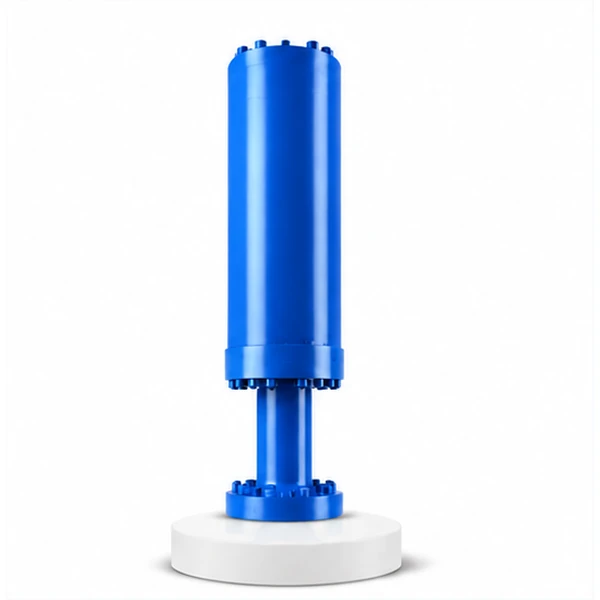
| Product | Hydraulic Press Side Cylinder |
| Function | Provide supplementary thrust alongside the master cylinder |
| Plunger Diameter | 420 mm – 1,000 mm |
| Stroke | ≤ 4,500 mm |
| Maximum Thrust Force | 24.7 MN per cylinder (plunger 1000 mm / 31.5 MPa) |
| Working Pressure | Up to 31.5 MPa |
| Typical Quantity Per Press | 2 (left + right) or 4 (corners) |
| Certification | ISO 9001 · 100% hydrostatic tested · matched to master cylinder |
Master Cylinder vs Side Cylinder — How They Divide the Work
On a press with both master and side cylinders, the total press force is the sum of all cylinder forces. The master cylinder typically provides 50–70% of the total force; the side cylinders share the remaining 30–50%. The exact split depends on the press design and the forging load distribution required.
| Characteristic | Master Cylinder | Side Cylinder |
|---|---|---|
| Position on press | Centre (1 per press) | Outboard (2 or 4 per press) |
| Primary role | Main thrust | Force balance & anti-tilt |
| Plunger range | 500–1,800 mm | 420–1,000 mm |
| Force per cylinder | Up to 80 MN | Up to 24.7 MN |
| Share of total press force | 50–70% | 30–50% (combined) |
| Can press operate without it? | No — essential | Depends on press design |
A 60 MN die-forging press might use one 40 MN master cylinder (plunger 1,270 mm) plus two 10 MN side cylinders (plunger 635 mm each). Total force: 40 + 10 + 10 = 60 MN. The master provides 67% of the force at the centre; the two side cylinders provide 33% distributed to the left and right edges of the ram.
Design Features Specific to Side Cylinders
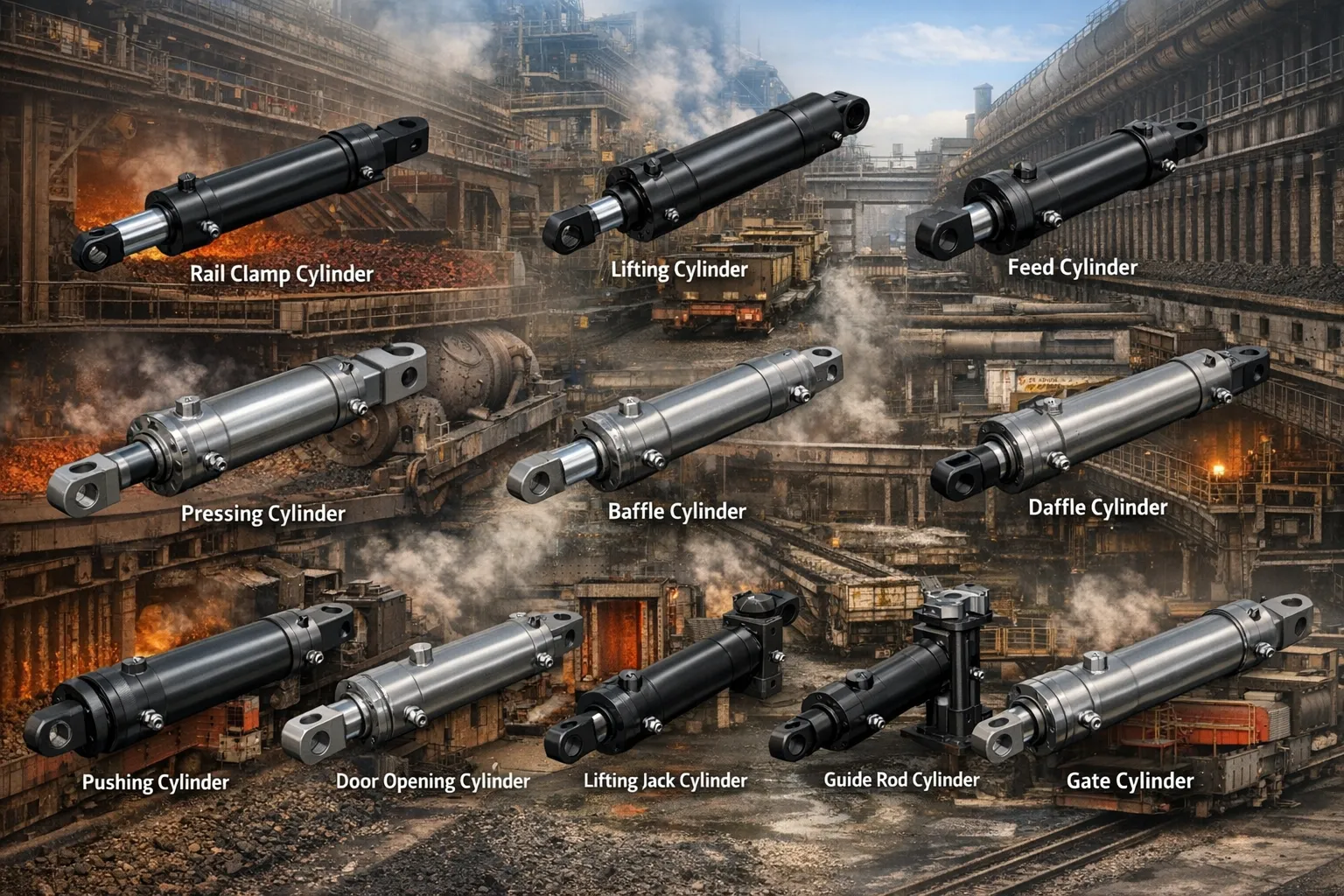
Side cylinders share many engineering fundamentals with the master cylinder — honed bore, chrome-plated plunger, high-pressure seals — but they have several design requirements that are specific to their outboard mounting position and their synchronisation role.
Stroke synchronisation with the master cylinder is the most critical design requirement. All cylinders on the press must extend at exactly the same rate — otherwise the ram tilts during the press stroke. Korea Ever-Power manufactures side cylinders with bore tolerances matched to the master cylinder, ensuring that the same hydraulic flow produces the same extension speed across all cylinders. For presses requiring tighter synchronisation, proportional flow divider valves are used in the hydraulic circuit.
Identical stroke length to the master cylinder is mandatory — even though the side cylinders have smaller plunger diameters. The ram is a rigid beam: if the master cylinder has a 3,000 mm stroke, the side cylinders must also stroke 3,000 mm so the ram remains parallel throughout the press cycle.
Symmetrical mounting — side cylinders are always installed in symmetrical pairs (left/right) or sets of four (corners). Asymmetric force application would cause the ram to tilt in the opposite direction from the imbalance, defeating the purpose of the side cylinders entirely. The mounting flange dimensions, bolt patterns, and port positions are mirrored between left and right cylinders.
When Side Cylinders Are Required
Not every hydraulic press uses side cylinders — smaller presses with narrow rams and concentric loads may operate with the master cylinder alone. Side cylinders become necessary when:
When the ram width exceeds approximately 1.5× the master cylinder plunger diameter, the unsupported edges begin to deflect under load. Side cylinders push the edges down, maintaining parallelism. Common on die-forging presses and multi-station stamping presses with wide bolsters.
When the workpiece or die is not centred under the ram (multi-cavity forging, asymmetric parts), the load centre shifts away from the master cylinder axis. Side cylinders compensate for this eccentric load, preventing ram tilt and uneven die contact.
Aerospace and automotive precision forgings require thickness tolerances of ±0.5 mm or tighter. Even minor ram tilt produces thickness variation. Side cylinders reduce ram angular deflection from the millimetre range to the hundredths-of-a-millimetre range — a 10–50× improvement in parallelism.
When the total required press force exceeds what a single master cylinder can provide at the available system pressure, side cylinders contribute additional thrust. A 100 MN press might use a 60 MN master cylinder plus two 20 MN side cylinders rather than attempting an impractically large single plunger.
Engineering Note — Sizing Side Cylinders for Your Press
The side cylinder plunger diameter is determined by how much supplementary force is needed and how many side cylinders the press frame accommodates. The calculation starts from the total press force minus the master cylinder force:
Step 1: Total press force required = 60 MN
Step 2: Master cylinder force (selected) = 40 MN
Step 3: Remaining force for side cylinders = 60 − 40 = 20 MN
Step 4: Using 2 side cylinders: 20 ÷ 2 = 10 MN each
Step 5: At 31.5 MPa → plunger area = 10 ÷ 31.5 = 0.317 m² → plunger ∅ ≈ 636 mm
Korea Ever-Power performs this sizing calculation as part of every press cylinder quotation — including the force split ratio, plunger diameters, and synchronisation verification. The side cylinders are manufactured as a matched set with the master cylinder to ensure dimensional compatibility and stroke synchronisation.
Matched-Set Manufacturing
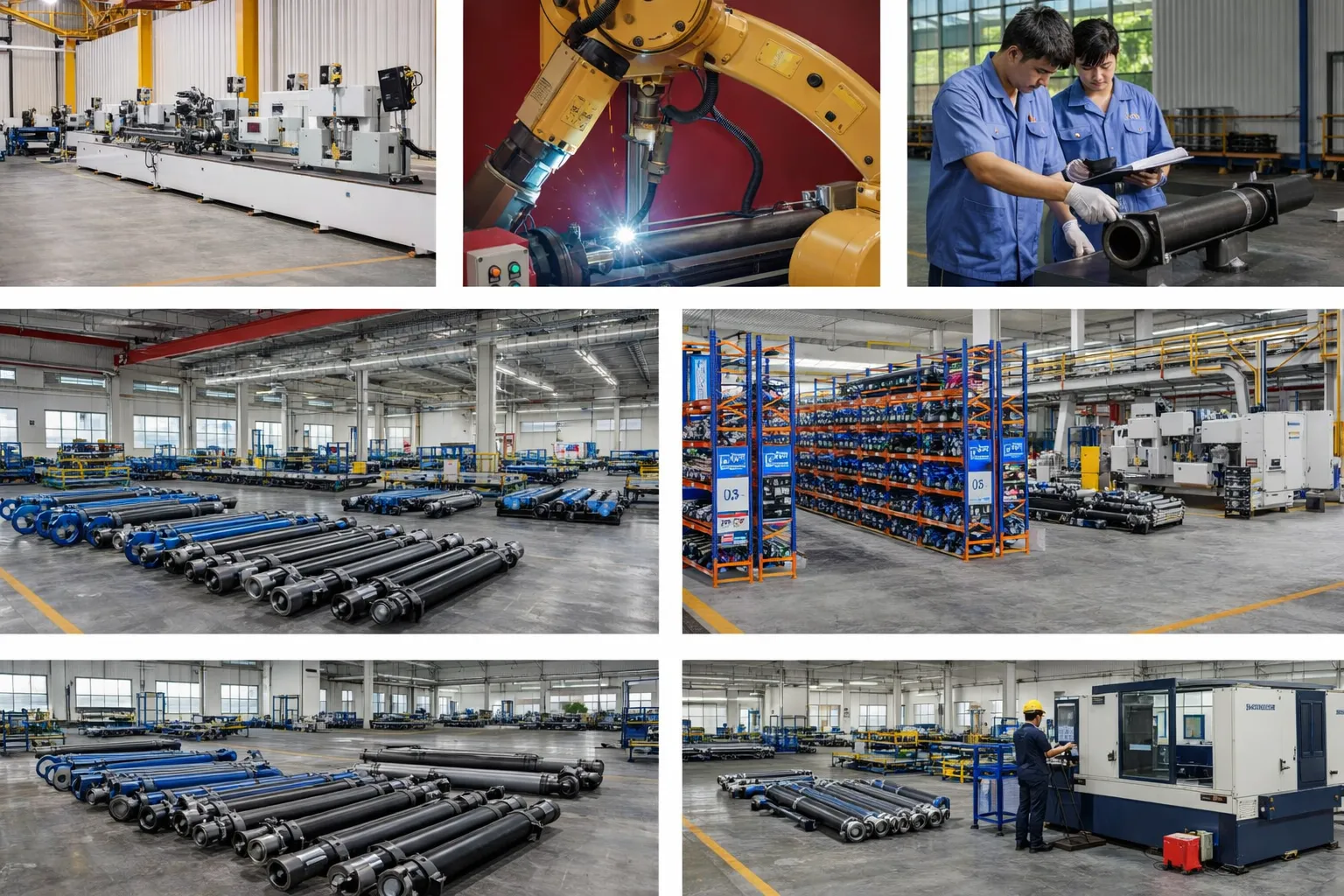
Side cylinders for a hydraulic press are never manufactured individually — they are produced as matched sets alongside the master cylinder for that specific press. "Matched" means: identical stroke length verified to ±0.5 mm, bore diameters within mutual tolerance for synchronised extension speed, identical seal specifications, and port positions mirrored for left/right symmetry.
All cylinders in the set — master and sides — are pressure-tested on the same bench using the same instrumentation, and their test certificates are issued as a set with cross-referenced serial numbers. This traceability ensures that if a side cylinder needs seal replacement or service in the future, the factory can retrieve the exact specification from the original set.
For replacement side cylinders on existing presses, Korea Ever-Power can manufacture a single replacement matched to the surviving cylinders — provide the serial number or drawing number of the original set, and the factory will reproduce the specification exactly.
OEM & ODM
FAQ
Related Categories
Детали
| Editor |
|---|
Похожие товары
-
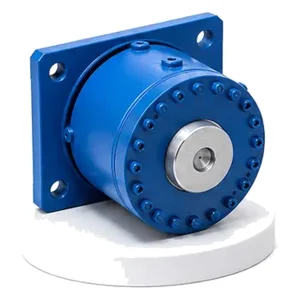
Pressurized Hydraulic Cylinder for Vulcanizing Machine
-
Injection Molding Machine Shooting Cylinder
-
Hydraulic Press Clamping Cylinder
-
Electric Furnace Lock Cylinder
-
Cement Equipment Vertical Mill Cylinder
-
Electric Furnace Lifting Cylinder
-
Cement Equipment Feeding Cylinder
-
Hydraulic Press Tilt Cylinder