
High-Temperature Pusher Cylinder for Hot Rolling Mill
Engineered strictly from 42CrMo alloy to completely eradicate barrel deformation while forcefully feeding heavy steel billets in extreme 100°C+ radiant heat environments.
Product Overview & Core Metallurgical Value
Within the aggressive and unforgiving environment of a continuous hot rolling line, the controlled physical transfer of raw material is the lifeblood of plant profitability. Before a continuously cast steel billet can be transformed into commercial sheet metal, heavy structural profiles, or wire rod, it must be forcefully extracted from the casting area, pushed into a reheating furnace, and subsequently aligned onto the main high-speed roller tables. The primary mechanical mechanism responsible for this relentless, heavy-duty material handling is the pusher cylinder. Operating mere inches away from massive blocks of steel radiating heat well over 1000°C, these heavy-duty linear actuators are subjected to thermal and physical conditions that routinely destroy standard commercial fluid power equipment in a matter of weeks.
When standard commercial actuators are exposed to these extreme temperatures—where the ambient air surrounding the equipment easily exceeds 100°C continuously—the carbon steel construction undergoes severe thermal expansion. The most critical and expensive failure mode in this specific furnace charging application is cylinder barrel deformation. As the standard steel barrel heats up unevenly from the glowing billet, its yield strength drops dramatically. Simultaneously, the immense internal fluid pressure required to push a 20-ton slab forces the heat-softened barrel to swell and warp out of its perfect geometric tolerance. Once this structural distortion occurs, the internal dynamic seals lose their tight compression against the bore wall. This results in catastrophic, high-pressure internal fluid bypass, a total loss of pushing force, and dangerous, unscheduled operational downtime across the entire hot strip line.
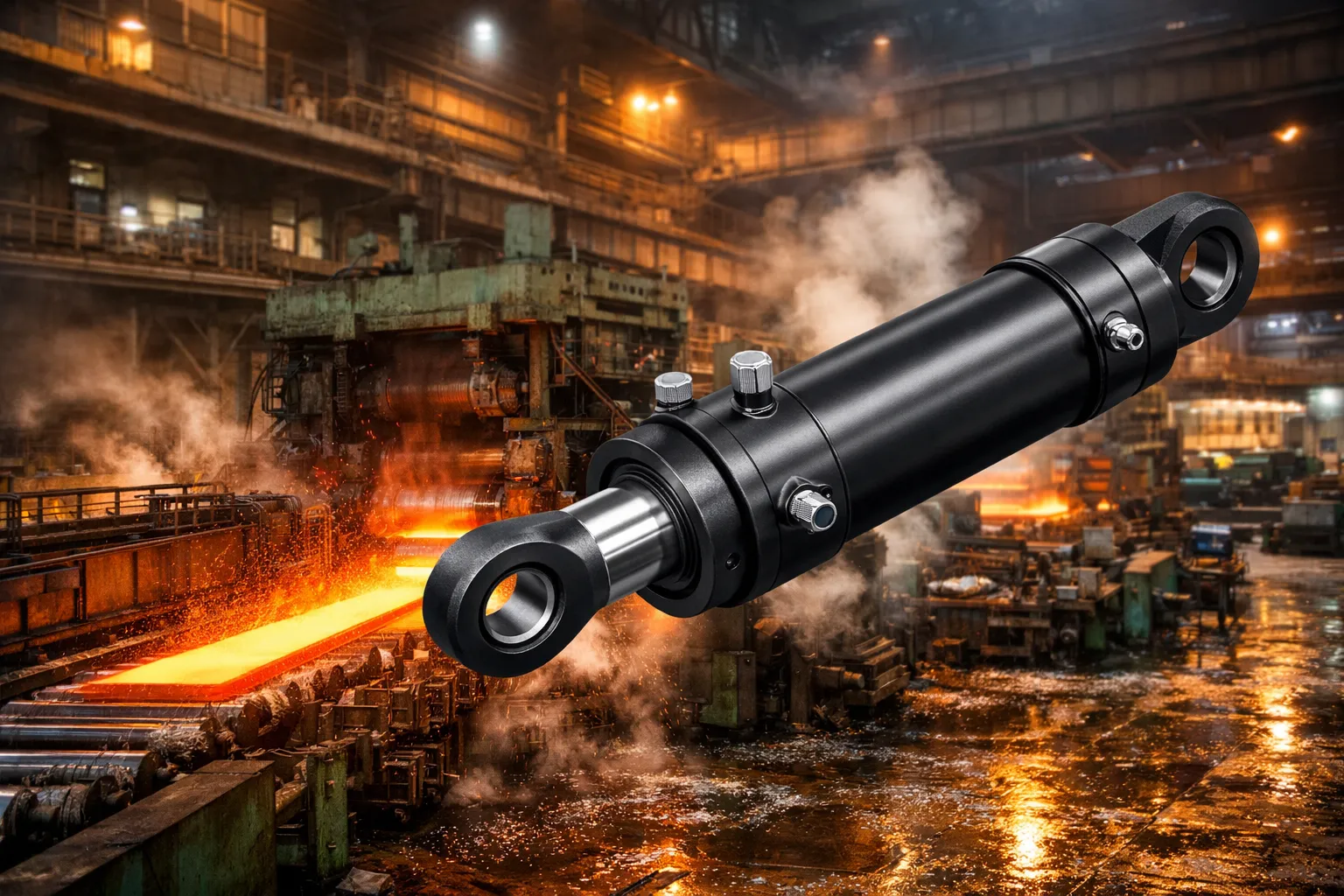
Conquering this exact metallurgical thermal challenge is what separates a generic hardware supplier from a highly specialized, globally trusted hydraulic cylinder manufacturer. Our custom-engineered pushing hydraulic cylinder is specifically architected to thrive in environments where others melt, warp, and leak. By completely discarding standard carbon steel tubing and exclusively utilizing highly advanced high-temperature alloy materials—specifically heavily forged 42CrMo steel—we ensure the actuator body maintains absolute dimensional rigidity regardless of the extreme thermal load. By integrating our specialized hydraulic parts into your hot rolling infrastructure, you guarantee uninterrupted billet feeding, permanently eradicate heat-induced barrel swelling, and drastically reduce your facility’s annual emergency maintenance downtime.
Comprehensive Technical Parameters
Surviving the intense thermal radiation and severe mechanical shock of a continuous hot rolling line requires exact material science and uncompromising engineering dimensions. The technical table below outlines the core foundational parameters of our hot line billet pushing actuators. Every unit we construct is highly customized by our engineering desk to match your facility’s exact tonnage requirements, precise stroke lengths, and existing structural mounting footprints.
| Engineering Parameter | Specification Details & Customization Matrix |
|---|---|
| Industry Sector | Metallurgy / Heavy Steel Manufacturing & Processing |
| Equipment Category | Rolling Mill / Continuous Hot Rolling Line |
| Subsystem Action Function | Pushing Billets / Cross-Transfer / Reheat Furnace Charging |
| Hydraulic Cylinder Designation | Pusher cylinder / Billet ejector cylinder |
| Hydraulic Action Mode | Double acting hydraulic cylinder for forced thrust and rapid return (双作用) |
| Internal Structure Type | Heavy-Duty Piston Type Actuator |
| Manufacturing Construction | Thick-Wall Welded Assembly (焊接) to eliminate tie-rod thermal stretch |
| Core Material System | Premium 42CrMo High-Temperature Alloy Forging |
| External Surface Treatment | Heavy Nickel Plating for superior anti-corrosion and heat defense |
| Operating Environmental Grade | Continuous Ambient High Temperature 100°C+ |
| Typical Failure Mode Prevented | Cylinder Barrel Deformation / Seal Melt |
| Recommended Configuration | High-Temperature Alloy Materials & FKM Sealing Matrix |
Operational Mechanics: Mastering High-Tonnage Thrust in Extreme Heat
To truly comprehend the incredible kinetic stress placed upon a pushing hydraulic cylinder, one must meticulously analyze the physics of transferring massive steel in a hot mill. A solid steel billet, often weighing up to thirty tons, sits entirely stationary on the entry grid. The static friction holding it in place is immense. To break this friction, the plant’s central fluid power unit directs highly pressurized hydraulic fluid into the cap end of the cylinder. This massive fluid column presses forcefully against the internal hydraulic cylinder piston, generating an instantaneous spike of linear mechanical thrust. This force drives the heavy, water-cooled mechanical pushing head directly against the glowing billet, sliding it smoothly and continuously into the reheat furnace or along the cross-transfer tables.
Because the continuous production timing of a hot rolling line is tightly synchronized down to the second, the pushing mechanism cannot slowly drift back to its starting position. It requires a powerful, high-flow double acting hydraulic cylinder. By electronically shifting the directional control valves, high-pressure fluid is instantly driven into the rod-end port of the cylinder. This forcefully and rapidly retracts the heavy pushing head back to its home position, pulling the extended rod out of the intense radiant heat zone and immediately readying the system for the next billet in the sequence. Applying a single acting hydraulic cylinder in this position—which relies entirely on gravity or weak external spring tension to retract—is completely inappropriate and would cause catastrophic delays in the mill’s cycle time.
The most insidious enemy during this high-tonnage operation is the combination of immense internal pressure and external heat. As the extended rod pushes the billet, the entire structure absorbs massive amounts of thermal energy. Standard carbon steel barrels will unevenly heat up, causing the metal to expand and the internal bore to warp slightly out of a perfect circle. Once the bore is no longer perfectly round, the high-pressure fluid easily slips past the piston seals—a process known as internal bypass—and the cylinder completely loses its ability to generate pushing force. Our exclusive integration of premium 42CrMo high-temperature alloy material ensures the molecular structure of the barrel remains geometrically perfect and entirely rigid, regardless of continuous thermal soaking.

Strategic OEM Equipment Upgrades & Exact Dimensional Replacements
Legacy steel mills are frequently burdened by aging actuators originally installed by European or American machine builders decades ago. When these critical pusher units inevitably fail under thermal stress, plant maintenance directors face a nightmare scenario: exorbitant replacement costs and entirely unacceptable six-to-eight month manufacturing lead times from overseas. Waiting half a year for a replacement actuator is an absolute impossibility for any profitable metallurgical operation. We specialize in providing a rapid, technically superior B2B alternative for the global steel manufacturing market.
Our precision engineering division expertly reverse-engineers and manufactures heavy-duty hydraulic rams that act as flawless, dimensionally identical drop-in replacements for globally recognized brands. Plant engineers can confidently substitute aging equipment originally supplied by heavy industry titans such as Bosch Rexroth, Parker Hannifin, Eaton Vickers, SMS Siemag, Danieli, and Primetals Technologies. (Please Note: The explicit mention of these corporate brand names is provided strictly for engineering cross-referencing and dimensional compatibility identification for procurement teams. We operate as a wholly independent manufacturing entity and hold no trademark affiliations, sponsorships, or endorsements with these respective corporations.)
By transitioning to our heavily reinforced 42CrMo hydraulic components, your facility not only secures a highly advantageous hydraulic cylinder price footprint, but you also actively upgrade your continuous rolling line’s resistance to thermal deformation. This translates directly to severely reduced maintenance interventions, minimized spare parts inventory, and massively maximized hot mill uptime.
Five Core Technical Advantages for High-Heat Environments
Surviving the intense thermal radiation and severe physical abuse of a hot rolling line requires deliberate, uncompromising metallurgical and structural design choices. We have deeply analyzed decades of forensic failure data from hot mills to embed five distinct technical advantages into our high-temperature solutions.
1. 42CrMo High-Temperature Alloy Construction
Standard carbon steel (like 1045 or Q345) loses significant yield strength rapidly when exposed to continuous 100°C+ ambient heat, leading to permanent barrel deformation. We exclusively forge our heavy pusher barrels from 42CrMo alloy steel. This highly specialized material possesses phenomenal creep resistance and retains its exceptional geometric stability even when continuously soaked in severe radiant heat.
2. Advanced Ductile Nickel Plating Protection
Cooling water reacting with hot steel creates highly corrosive, acidic steam in the pushing zone. Standard hard chrome is micro-cracked and allows this moisture to deeply rust the base metal of the rod. We apply a heavy, ductile layer of specialized Nickel plating. This non-porous barrier flexes with the rod under thermal load, providing supreme chemical corrosion defense while rejecting abrasive scale.
3. Monolithic Heavy-Wall Welded Assembly
Standard tie-rod cylinders fail miserably in hot environments because the thin tie-rods heat up and stretch, causing the end-caps to separate slightly and leak massive amounts of high-pressure fluid. Our monolithic, heavy-wall welded construction eliminates tie-rods entirely. The welded structure is inherently immune to differential thermal elongation, maintaining absolute pressure containment.
4. High-Temperature FKM Sealing Matrix
Ordinary NBR (Nitrile) or Polyurethane seals chemically degrade, harden, and literally shatter when fluid and ambient temperatures peak. Our billet pushers are strictly outfitted with premium FKM (Viton) and PTFE blended dynamic seals. These advanced polymers survive continuous high-heat cycling while maintaining an ultra-low friction profile, preventing stick-slip movement during heavy thrusts.
5. Extreme Abrasive Scale Defense
The transfer area near a reheating furnace is completely saturated with airborne, highly abrasive iron oxide scale. Soft polymer wiper seals ingest this sharp metallic scale easily, scoring the rod instantly. We deploy an aggressive multi-stage defense mechanism utilizing heavy-duty dual metallic scraper rings that physically sheer hardened slag off the retracting rod before it enters the cylinder body.
Autonomous Manufacturing & Relentless Quality Control
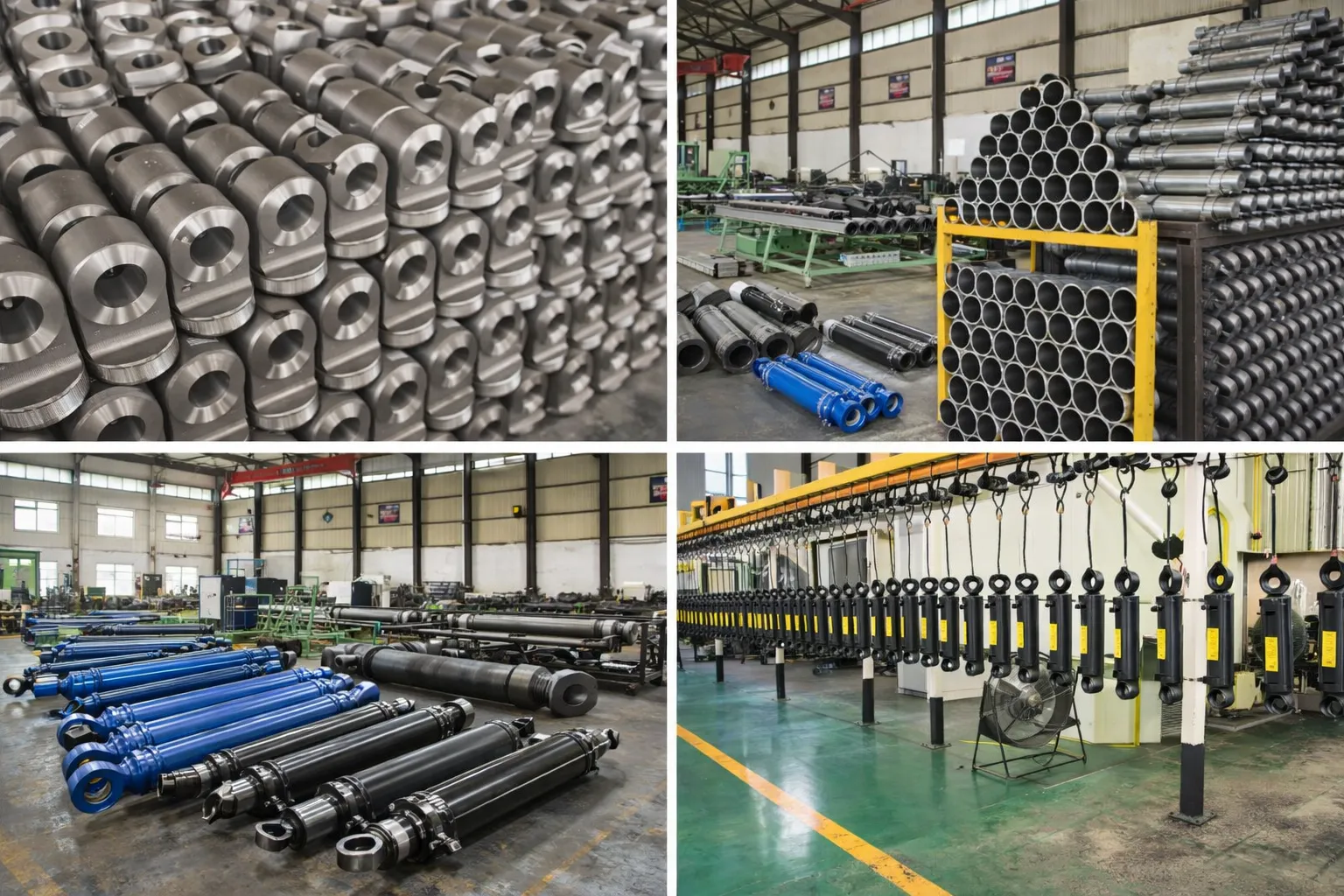
High-heat metallurgical reliability cannot be achieved through outsourced assembly. As a highly integrated engineering firm, we maintain strict, 100% vertical integration over our entire production process. We begin by ultrasonically testing raw 42CrMo alloy forgings to ensure absolute internal structural density and the absence of any micro-voids. Following precision deep-hole boring on multi-axis CNC machines, the internal barrel surfaces are heavily skived and roller-burnished, creating a flawless, glass-like finish that drastically minimizes friction and extends dynamic seal life under immense loads.
Because high-temperature seals are incredibly sensitive to microscopic contamination during installation, final assembly of all critical hydraulic cylinder components occurs strictly within positive-pressure, climate-controlled cleanroom environments. This prevents the abrasive airborne dust common to heavy manufacturing from embedding into the seals. Before any billet pusher leaves our facility, it undergoes a grueling barrage of automated testing. Every unit is locked into our test benches and subjected to 150% static overpressure tests, holding maximum load for extended durations to guarantee absolute zero internal fluid bypass.
This rigorous, highly scientific approach to manufacturing quality is precisely why leading industrial plant managers across Asia also rely heavily on our expert capabilities for fixing hydraulic cylinders that have warped, melted, or failed catastrophically from lesser suppliers. By utilizing our proprietary laser-etched traceability system, your maintenance teams gain permanent access to the exact material certificates, weld inspection logs, and dimensional seal data associated with your specific serial number.
Expansive Heavy Industry Applications
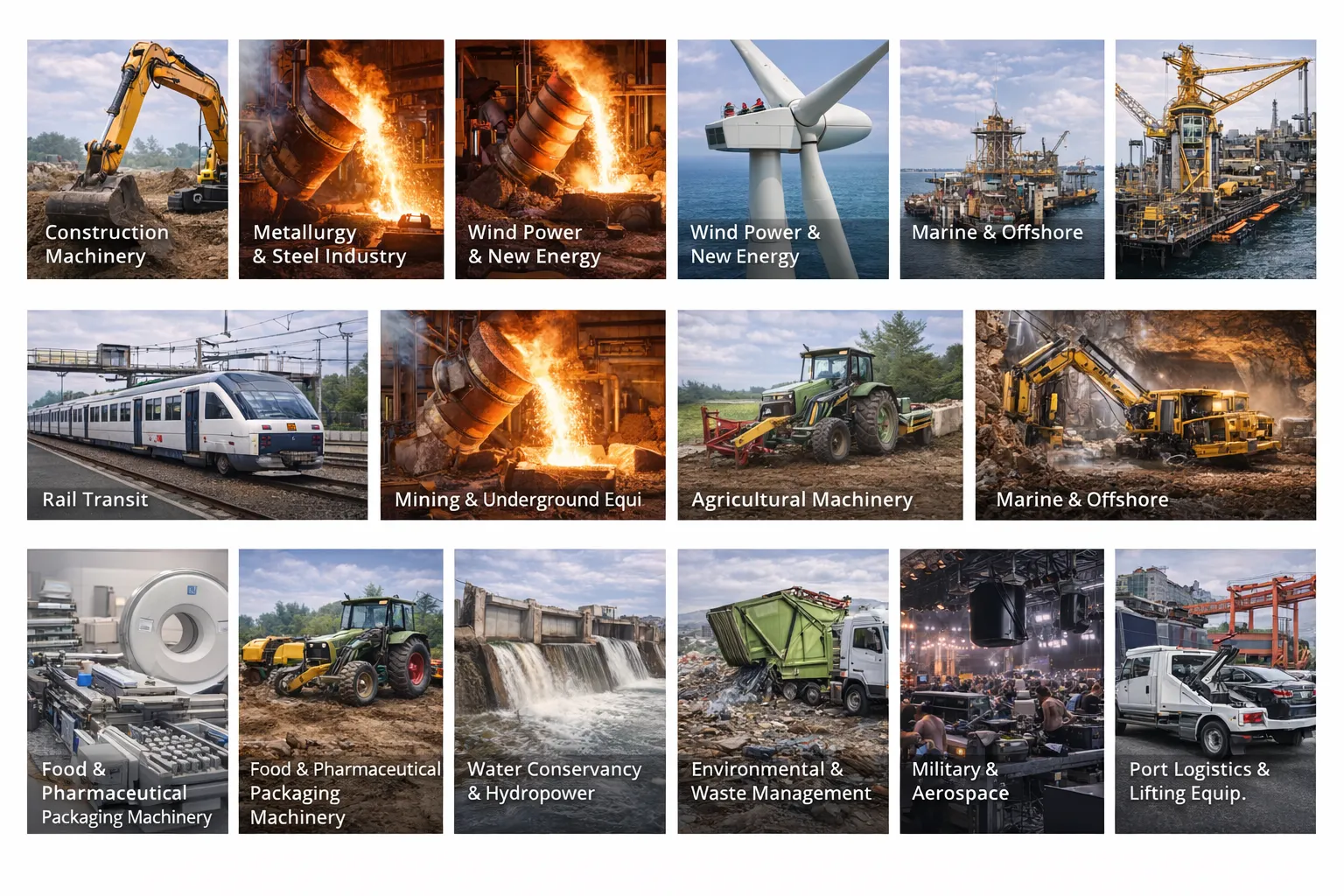
The advanced thermal resistance and extreme thrust capabilities required for pushing hot steel translate powerfully across other severe-duty industrial domains. We engineer fluid power solutions designed to survive where standard commercial components shatter. We encourage you to explore our complete portfolio via our main hydraulic cylinder equipment hub.
- Metallurgy & Heavy Smelting: Our primary focus. Discover our complete range of high-temperature solutions, from AGC servo roll gap cylinders to heavy uncoiler hold-downs, in our dedicated section for the metallurgical and iron industry.
- Mining & Mineral Extraction: Subterranean drilling rigs and massive rock crushers operate in choking, highly abrasive dust and extreme shock. See how our extreme metallic scraper technology protects fluid power in the mining industry.
- Construction & Earthmoving: Large excavators and heavy front-end loaders demand massive breakout force from rugged welded actuators. Review our highly resilient boom and bucket solutions tailored for the construction machinery industry.
- Material Handling Logistics: Massive gantry cranes rely heavily on our precise, fail-safe lift cylinder designs to securely hoist and synchronize heavy multi-ton shipping containers across international ports.
Comparative Analysis: Standard Commercial Actuator vs. High-Temp Pusher Cylinder
Installing an incorrectly specified fluid actuator in a hot rolling line guarantees premature catastrophic failure and massive financial loss. The following engineering comparison sharply delineates why plant managers strictly mandate our high-temperature metallurgy over standard commercial alternatives.
| Crucial Performance Metric | Ordinary Industrial Cylinder | Our Premium Pusher Cylinder |
|---|---|---|
| Thermal Deformation Resistance | Standard carbon steel warps out-of-round at 100°C+, causing immediate high-pressure leakage. | 42CrMo alloy steel maintains perfect geometric rigidity under continuous intense radiant heat. |
| High-Heat Sealing Integrity | Standard NBR / Polyurethane seals melt, harden, and shatter at elevated temperatures. | FKM (Viton) sealing matrix effortlessly survives constant exposure to hot operating fluids. |
| Corrosion & Scale Defense | Porous hard chrome rusts rapidly under acidic steam; soft wipers fail to stop heavy oxide scale. | Ductile Nickel plating stops chemical attack; heavy metallic scrapers eject hardened scale. |
| Structural Expansion Control | Tie-rods stretch under thermal load, allowing the end-caps to separate and leak fluid. | Heavy monolithic welded construction completely eliminates thermal stretching and separation. |
| Thrust Maintenance | Thermal bypass reduces pushing force, causing billets to stall dangerously on the transfer table. | Guaranteed 100% thrust translation, ensuring continuous, rapid movement of massive billets. |
Verified Field Success: 5 Regional B2B Case Studies
Operational reliability is strictly proven on the factory floor, not just in engineering software. Our high-temperature engineering footprint is deeply embedded in the aggressive steel manufacturing hubs of South Korea and greater East Asia. Below are five extensively documented instances where our robust fluid power solutions permanently resolved severe operational bottlenecks.
Case 1: Eradicating Barrel Deformation in a Major Plate Mill
Location: Pohang, South Korea | Client: Top-Tier Integrated Steelworks
The Challenge: Their primary furnace charging cylinders were located too close to the open furnace door. Radiant heat was causing the standard carbon steel barrels to warp out-of-round, resulting in massive internal leaks and loss of pushing force every two months, causing unacceptable line stoppages.
Contact & Implementation: The plant’s reliability engineers found us via a search for extreme-heat hydraulic rams. We engineered custom 42CrMo welded actuators integrated with specialized FKM high-temperature sealing systems.
The Result: Commissioned during a scheduled plant shutdown in late 2024. The upgraded actuators have performed flawlessly for 18 months, maintaining perfect bore geometry and absolute zero fluid leakage.
“The 42CrMo structural upgrade completely eliminated the thermal warping. We haven’t had a single stalled billet at the furnace entrance since installation. The ROI was realized in weeks.” — Chief Operations Manager.
Case 2: Defeating Caustic Steam in Continuous Casting
Location: Osaka, Japan | Client: Precision Specialty Steel Mill
The Challenge: Intense cooling sprays on hot billets created an environment of thick, acidic steam. This vapor rapidly corroded the standard hard chrome on their pusher rods, ripping the gland seals to shreds during the retraction stroke and pulling contamination inside the barrel.
Contact & Implementation: They reached out for an anti-corrosion solution. We provided heavily modified pushing cylinders featuring heavy-duty nickel plating and dual-lip metallic scrapers to forcefully eject scale and block moisture.
The Result: Installed in February 2025. Visual inspections confirm the piston rods remain incredibly bright and entirely free of subsurface rust and pitting, drastically extending seal life.
“The nickel plating technology is far superior to standard chrome in this highly caustic environment. It completely protected our investment and cleaned up our transfer area.” — Maintenance Engineering Lead.
Case 3: Urgent Drop-In Replacement for Cross-Transfer Line
Location: Kaohsiung, Taiwan | Client: Heavy Section Rolling Facility
The Challenge: A massive European OEM transfer cylinder split its tie-rods due to extreme thermal expansion, halting the entire line. The original manufacturer quoted an impossible 28-week lead time for a replacement unit.
Contact & Implementation: Connected through our rapid-response portal. Utilizing their 2D layout drawings, we rapidly reverse-engineered a dimensionally identical, yet structurally superior welded actuator to completely bypass the OEM delay.
The Result: Delivered and installed in just 6 weeks (April 2025). The unit dropped seamlessly into the existing mounting frame, bypassing months of disastrous downtime at a highly favorable hydraulic cylinder price.
“Their ability to deliver a heavy-duty, customized metallurgical actuator so rapidly saved our quarter. The welded upgrade is significantly tougher than the original tie-rod equipment.” — Plant Director.
Case 4: Resolving Thermal Seal Melt in a Billet Caster
Location: Rayong, Thailand | Client: Precision Billet Mini-Mill
The Challenge: Ambient temperatures frequently exceeded 110°C in the summer pushing zone, causing standard polyurethane seals to soften, melt, and physically extrude out of the gland, spraying highly flammable hydraulic fluid.
Contact & Implementation: Met during an industrial expo. We refitted their entire line with actuators utilizing exclusively high-temp FKM (Viton) and PTFE blended dynamic sealing matrices designed for extreme environments.
The Result: Installed in August 2025. The high-heat seals effortlessly handle the peak summer temperatures, entirely eliminating the dangerous fluid leaks and severe fire hazards.
“The transition to FKM seals was a game-changer for plant safety. The cylinders now run perfectly dry and safe, even when the ambient radiant heat is unbearable.” — Safety & Reliability Supervisor.
Case 5: Enhancing Retraction Speed for Higher Yield
Location: Incheon, South Korea | Client: High-Volume Wire Rod Producer
The Challenge: The existing actuators had undersized fluid ports, making the retraction stroke too slow to keep up with an aggressive new production scheduling target intended to boost overall mill output.
Contact & Implementation: They requested a comprehensive engineering review via our website. We designed high-flow double acting hydraulic cylinders with aerodynamically enlarged porting to handle massive fluid volumes without destructive cavitation.
The Result: Deployed in November 2025. Cycle times were reduced by 1.5 seconds per push, allowing the facility to process an additional 20 billets per shift, directly boosting profitability.
“Their fluid dynamics expertise allowed us to safely push our line speeds to absolute maximums. The violent retraction is handled flawlessly without damaging the mounts.” — Automation Director.
B2B Technical FAQ: Expert Insights for Procurement
Specifying heavy fluid power for elevated temperatures requires strict technical validation. Below are the most critical inquiries our engineering team addresses from international procurement directors and plant reliability engineers.
1. How hot can the ambient environment be before your cylinders fail?
2. What is the standard manufacturing lead time for a custom 42CrMo actuator?
3. Can you match the mounting dimensions of our existing European cylinders?
4. Are your high-temperature seals compatible with fire-resistant hydraulic fluids?
5. How do you prevent water hammer effects when retracting the pusher at high speeds?
6. Do you supply replacement internal seal kits directly to the plant?
Secure Unstoppable Movement for Your Hot Line Today
Do not allow catastrophic thermal barrel deformation, melted commercial seals, or unacceptable OEM lead times to stall your billet production. Partner with an expert manufacturer that deeply understands the severe heat, corrosive scale, and immense thrust requirements of modern continuous metallurgy.
Whether you urgently require an exact dimensional drop-in replacement to bypass supply chain delays, a complete heavy-duty structural upgrade utilizing 42CrMo alloy to eliminate chronic breakdowns, or a reliable long-term partner for high-performance fluid power technology across South Korea and East Asia, we are positioned to deliver. Provide our engineering desk with your ambient temperatures, thrust requirements, and mounting dimensions, and we will execute a flawless, highly durable solution.
Editor: Cxm


























