Light Duty Telescopic Cylinder for Dump Truck
Engineered specifically for cold region operation vehicles. Conquer severe sub-zero environments down to -40℃ with our Q345D low-temperature structural steel and specialized arctic-grade rubber sealing matrix.
Product Overview & Core Industrial Value in Cold Regions
In the highly rigorous field of urban commercial logistics and infrastructure maintenance within the construction machinery industry, fleet efficiency relies absolutely on uninterrupted, predictable operation. However, when light commercial tippers and dump trucks are deployed in severe winter climates—such as the freezing mountainous regions of South Korea, Hokkaido in Japan, or high-altitude mining zones in Mongolia—standard fluid power equipment faces a brutal environmental adversary. The primary operational bottleneck for any cold region operation vehicle is its hoisting mechanism. When ambient temperatures plummet, standard industrial lifting systems rapidly degrade and catastrophically fail. To address this exact industry-wide vulnerability, the structural integrity and polymer chemistry of the light duty telescopic cylinder must be fundamentally redesigned for extreme cold.
The most devastating failure mode in winter commercial trucking is seal hardening. When exposed to temperatures below -15℃, the standard polyurethane and NBR rubber seals found in conventional equipment undergo a severe molecular transition. They lose their engineered elasticity, transitioning into a rigid, brittle state. During the high-pressure lifting sequence, these hardened seals cannot flex to tightly grip the expanding metal sleeves of the light duty telescopic cylinder. This immediately causes massive, high-pressure fluid blowouts, totally stalling the lifting operation. Simultaneously, ordinary carbon steel tubing experiences cold embrittlement, drastically increasing the risk of the barrel shattering under the shock loads of heavy, frozen material. Recognizing these profound mechanical flaws, we have completely reimagined the architecture of the light duty telescopic hydraulic cylinder. By implementing a proprietary low-temperature rubber matrix and utilizing Q345D low-alloy structural steel, our engineering team has developed an uncompromising lifting solution that actively resists thermal degradation while maintaining the strict payload optimization required for light tippers.
As a globally recognized and vertically integrated hydraulic cylinder manufacturer, our strategic market focus is strictly devoted to delivering uninterrupted lifting performance to fleet operators facing brutal winter logistics. The industrial timeline cannot pause simply because the thermometer drops below freezing. Upgrading your commercial fleet with our premium, cold-weather rated hydraulic parts guarantees a drastic reduction in emergency field failures. By entirely eradicating the downtime associated with winter seal blowouts and structural brittle fractures, this specialized light duty telescopic hydraulic cylinder delivers unparalleled operational security, maximizing your legal payload capacity safely throughout the darkest days of winter.
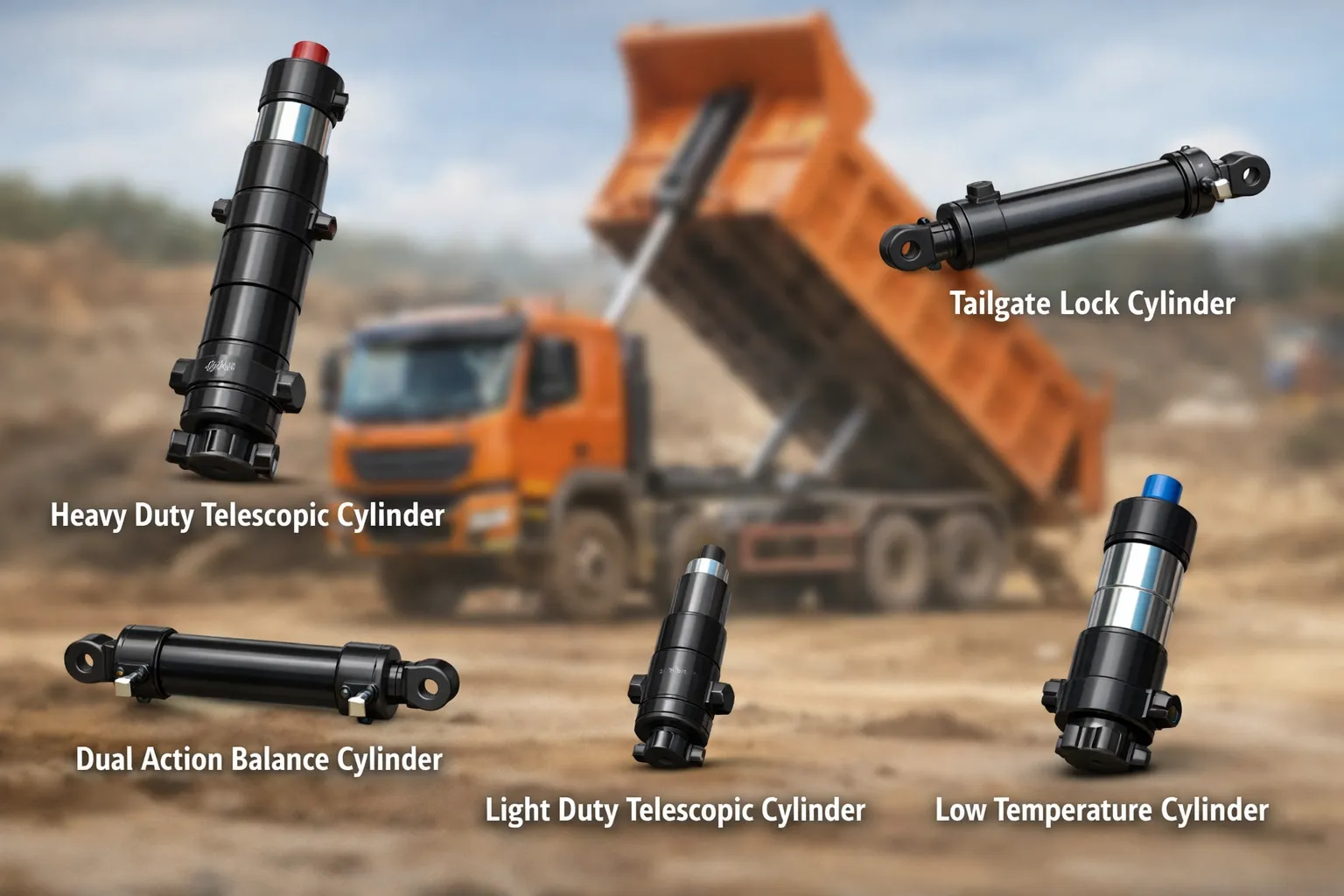
Comprehensive Technical Parameters
Defeating severe cold-weather degradation requires uncompromising adherence to precise metallurgical science and advanced thermodynamic specifications. The comprehensive data table below outlines the foundational engineering parameters of our low-temperature light duty telescopic cylinder. Every material selection and dynamic sealing methodology has been meticulously calibrated to prevent winter seal hardening and ensure flawless hoisting operation under extreme freezing conditions. We retain total autonomous manufacturing flexibility to heavily customize stroke lengths, internal stage dimensions, and trunnion mountings to perfectly integrate with your specific cold-region commercial chassis.
| Engineering Parameter | Specification Details |
|---|---|
| Industry Segment | Construction Machinery / Winter Logistics |
| Equipment Category | Dump Truck / Cold Region Operation Vehicle |
| Subsystem / Action Phase | Low-Temperature Cargo Bed Hoisting / Lifting |
| Specific Product Name | Light Duty Telescopic Cylinder (Low-Temperature Model) |
| Action Mode | Single Acting Hydraulic Cylinder (Gravity & Payload Return) |
| Structure Type | Multi-Stage Telescopic Architecture |
| Manufacturing Structure | Automated Deep-Penetration Welded Assembly |
| Material System | Q345D Low-Temperature High-Impact Structural Steel |
| Surface Treatment | Micro-Cracked Hard Chrome Plating (Anti-Ice Adhesion) |
| Environment Grade | Extreme Low Temperature -40℃ |
| Working Condition Feature | Winter Lifting Operations / Rigid Lightweight Requirement |
| Typical Failure Mode Prevented | Seal Hardening, Internal Fluid Blowouts & Brittle Steel Fracture |
| Recommended Critical Configuration | Low-Temperature Rubber Sealing Matrix Integration |
Advanced Kinematics & Sub-Zero Fluid Dynamics
To thoroughly appreciate the extreme-weather engineering within this specific component, one must understand the complex fluid mechanics of a multi-stage lifting system operating in a deep freeze. This highly robust lift cylinder functions fundamentally as a single acting hydraulic cylinder. In this precise mechanical configuration, highly pressurized, winter-grade hydraulic oil is utilized exclusively to physically push the telescopic stages upward. Unlike a double acting hydraulic cylinder, there is absolutely no pressurized fluid routed to pull the unit back down. The mechanical system relies entirely on the combined gross weight of the empty dump body and the unyielding force of gravity to smoothly collapse the sequential stages back into their nested, fully retracted position.
When the commercial driver engages the PTO during a sub-zero cold start, the main gear pump forces thickened, highly viscous hydraulic fluid into the base port of the light duty telescopic hydraulic cylinder. Because fluid dynamics dictate that pressure exerts force against the largest available surface area first, the fluid violently pushes against the largest outer sleeve. This primary stage extends fully upward until it connects with its internal steel stop collar, delivering the massive initial lifting force required to physically break a frozen payload free from the icy truck bed. Immediately upon lockout, the trapped fluid pressure seamlessly transfers to the next progressively smaller stage, pushing it upward. This perfectly synchronized extension continues until the final, smallest hydraulic cylinder piston reaches maximum stroke, elevating the dump bed to the optimal 50-degree tipping angle to discharge the frozen aggregate.
The paramount engineering challenge in a winter-rated multi-stage system occurs during the descent phase. At -40℃, even winter-spec hydraulic fluid becomes exceptionally viscous. Concurrently, standard seals constrict tightly against the chrome rods due to thermal contraction. This intense cold-induced internal friction can cause an inferior light duty telescopic cylinder to violently bind, leaving the empty dump bed stuck dangerously in the air because gravity simply cannot overcome the drag. Our engineering division actively resolves this physical limitation by integrating advanced low-temperature rubber guide rings and specialized ultra-low friction PTFE dynamic seals. This cold-resistant architecture prevents the seals from locking onto the rod, ensuring the light duty telescopic hydraulic cylinder collapses smoothly, rapidly, and safely, completely eliminating the violent mechanical shuddering that destroys truck hinges in the winter.
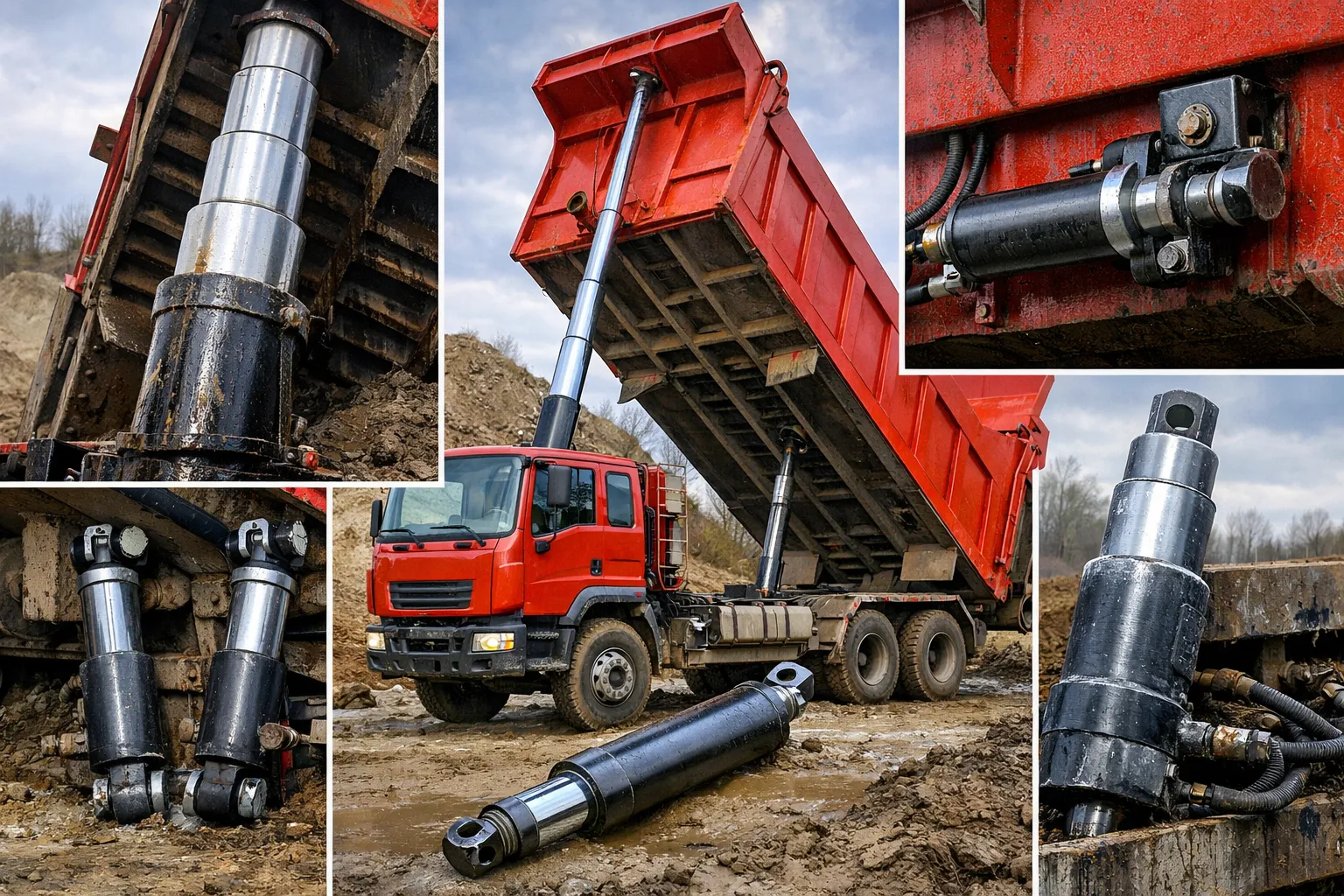
Flawless Aftermarket Brand Compatibility for Winter Fleets
In the unforgiving timeline of winter infrastructure maintenance, extended vehicle downtime waiting for expensive factory original parts is an absolute operational failure. When freezing temperatures finally destroy inferior factory lifting mechanisms through seal blowouts or brittle fracture, the process of sourcing replacement hydraulic cylinder components must be immediate, exact, and financially viable. Procuring OEM replacements directly from commercial dealerships often incurs exorbitant markup costs and unacceptable overseas shipping delays. We permanently eliminate this supply chain nightmare for B2B procurement officers. Our aftermarket winter light duty telescopic cylinder is intricately reverse-engineered to serve as a perfect, direct drop-in replacement for the world’s most prevalent light commercial tipper brands operating globally.
We unconditionally guarantee exact pin-to-pin retracted lengths, identical trunnion mount spacing, corresponding hydraulic port thread configurations, and vastly superior cold-weather payload capacities. Sourcing reliable components for fixing hydraulic cylinders in winter shouldn’t be a dangerous gamble. Our premium cold-weather hydraulic rams are extensively utilized by fleet managers and municipal maintenance directors to upgrade existing tipping systems on universally recognized LCV platforms. This includes seamless, weld-free fitment for the highly popular Hyundai Mighty, Kia Bongo (4×4 winter variants), Isuzu Elf (N-Series), Mitsubishi Fuso Canter, and the Hino Dutro line of light-duty tippers frequently deployed in snow clearance operations.
(Important Professional Compliance Disclaimer: All brand names, corporate trademarks, and specific commercial vehicle models mentioned above are the exclusive intellectual property of their respective corporate owners. They are referenced within this technical B2B documentation strictly for the purpose of dimensional compatibility identification, mechanical fitment verification, and accurate aftermarket equipment selection. We operate as an independent, premier manufacturer providing high-grade hydraulic cylinder upgrades and explicitly do not imply any direct commercial affiliation with or formal endorsement by these OEM trademark holders.)
Five Definitive Core Engineering & Technical Advantages
What distinctly separates our specialized cold-climate lifting products from mass-produced, budget aftermarket alternatives? It is the deliberate, calculated application of advanced metallurgical science and polymer chemistry specifically tailored to mitigate the brutal realities of freezing temperatures. Below are the five definitive technical advantages built into every single light duty telescopic hydraulic cylinder we supply to the industrial market.
1. Total Eradication of Seal Hardening
The absolute most common and catastrophic failure in cold-weather hydraulics is the loss of seal elasticity. Standard commercial polyurethane hardens into rigid plastic below -15℃, completely losing its ability to hold high-pressure fluid. We exclusively utilize a specialized low-temperature rubber matrix and advanced aerospace-grade elastomers for all dynamic pressure seals and wipers within the light duty telescopic cylinder. These advanced polymers maintain profound molecular flexibility and aggressive lip tension against the chrome sleeves down to an astonishing -40℃, ensuring absolute zero-leakage performance during critical winter lifts.
2. Q345D Low-Temperature Structural Steel Integration
Standard 1020 or 1045 carbon steel tubing undergoes a dangerous ductile-to-brittle transition in sub-zero environments, drastically increasing the risk of the base trunnions snapping off under heavy shock loads. We forge our light duty telescopic hydraulic cylinder components exclusively from Q345D low-alloy structural steel. This specific metallurgical profile provides extraordinary low-temperature impact toughness and superior tensile strength, guaranteeing the structural integrity of the barrel against violent winter shockwaves when dumping frozen materials.
3. Precision Synchronized Multi-Stage Machining
A common issue with inferior telescopic units is a jerky, shuddering motion as fluid transitions between stages, which is heavily exacerbated by thick, cold oil. We eliminate this operational hazard through exceedingly tight CNC concentricity machining tolerances. The outer diameter of each internal sleeve is perfectly matched to the inner diameter of its parent tube. This meticulous geometric synchronization ensures an absolutely fluid, linear extension, protecting the truck’s chassis hinges from violent vibrational shock during freezing morning start-ups.
4. Anti-Ice Adhesion Hard Chrome Plating
Telescopic stages are highly exposed to snow, freezing rain, and highly corrosive road de-icing salts. We apply a sophisticated, multi-stage hard chrome electroplating process to every single sleeve of the light duty telescopic cylinder. The resulting micro-cracked chrome layer achieves a surface hardness exceeding HV800. Not only does this heavily resist physical scratching from ice buildup, but the microscopic cracks hold a thin film of oil that actively prevents ice adhesion, allowing the heavy-duty low-temperature wiper seals to cleanly sweep the rod without sustaining damage.
5. Automated Deep-Penetration Robotic Welding
The kinetic shock forces generated when heavy, frozen loads finally break free from the dump bed are immense. Weak, manual spot welds will quickly fatigue and shear completely off in the cold. Our manufacturing process exclusively utilizes 6-axis robotic submerged arc welding to secure all base mounts and trunnions. This process guarantees incredibly uniform, deep-penetration welds that are entirely free from internal porosity, ensuring the structural mounts of the light duty telescopic hydraulic cylinder will never fracture under sudden, violent winter impacts.
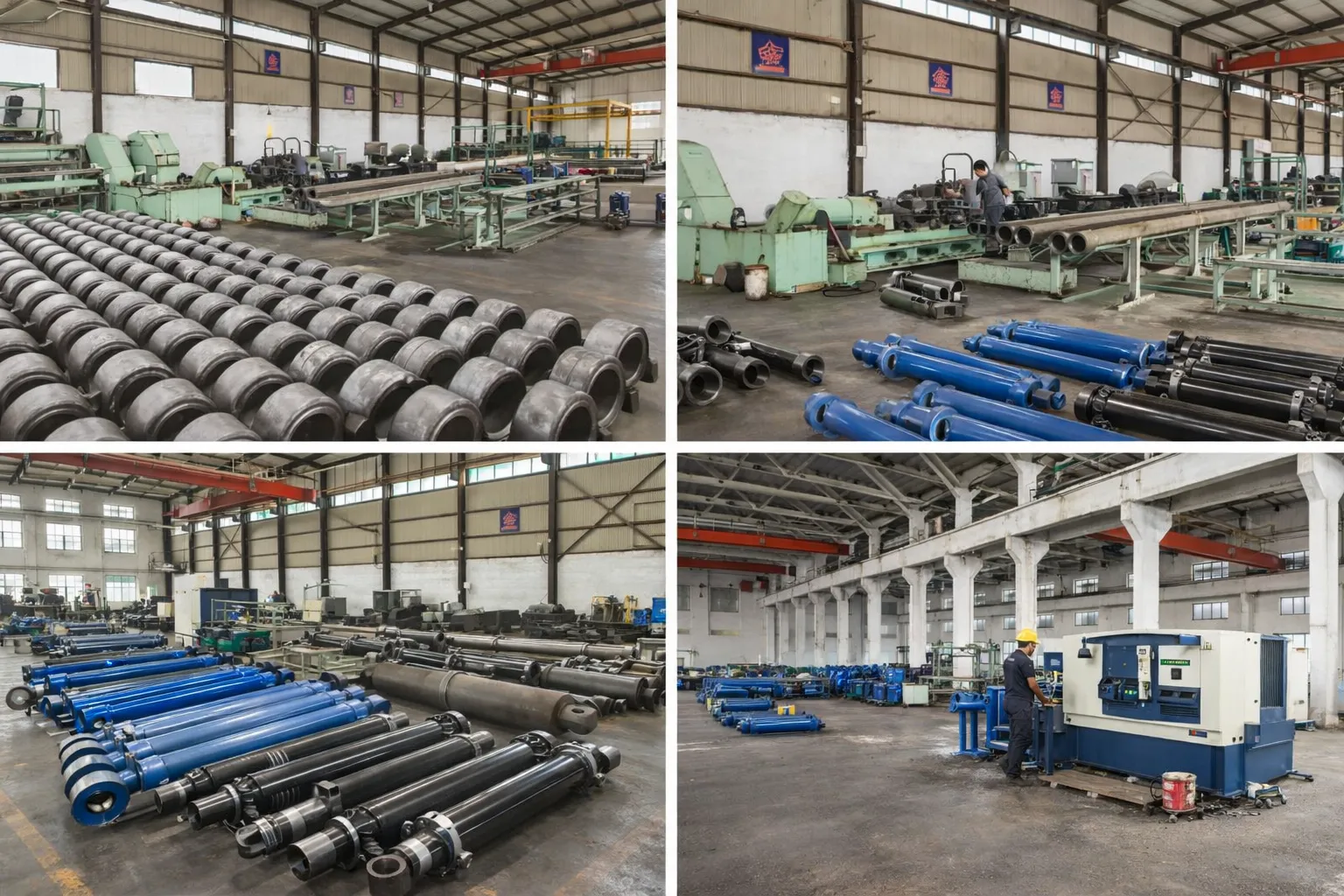
Autonomous Manufacturing & Rigorous Winter Quality Control
We operate under the unyielding engineering conviction that true extreme-weather reliability cannot merely be inspected into a final product at the end of the line; it must be systematically manufactured into it from the very first cut of raw steel. Operating as a fully autonomous, vertically integrated production facility, our heavy manufacturing lines are strictly governed by internationally recognized ISO 9001 quality management protocols. From the moment the high-impact Q345D steel billets arrive to the final application of industrial, salt-resistant epoxy paint, we maintain absolute, total control over every single engineering tolerance of the light duty telescopic cylinder.
The creation of a precision cold-weather lifting system involves a highly controlled sequence of CNC precision machining. Every individual steel stage undergoes deep-hole boring, followed by advanced skiving and roller burnishing. This specialized finishing process heavily compresses the internal crystalline structure of the steel, achieving a flawless, mirror-like internal surface finish (Ra 0.1-0.2 µm). This is absolutely critical for drastically reducing dynamic seal friction and ensuring the specialized arctic seals can glide smoothly without tearing when the metal contracts in the freezing cold. Additionally, all robotic structural welds on the light duty telescopic hydraulic cylinder are meticulously verified using advanced ultrasonic non-destructive testing (NDT) to completely eliminate the possibility of hidden internal micro-fractures.
Most importantly, our quality control release protocols are entirely non-negotiable and specifically tailored for our cold-region models. 100% of our assembled hydraulic rams are subjected to exhaustive hydrostatic bench testing prior to packaging. We execute rigorous pressure holding tests at 150% of the maximum rated working pressure, specifically verifying the absolute zero-leakage performance of the low-temperature rubber seals. Total batch traceability is maintained via permanent laser-etched serial numbers, providing fleet directors with supreme confidence that their hydraulic cylinder price guarantees world-class procurement and total safety compliance in the harshest winters.
Extensive Cold Region Industry Application Scenarios
While specifically engineered and fiercely optimized to dominate the freezing demands of cold-region commercial tippers, the exceptionally robust thermal architectural principles of our fluid power designs render them highly adaptable to a variety of specialized severe-duty sectors operating in high-latitude or high-altitude environments.
- Municipal Snow Clearance & Ice Control: Serving as the critical lifting mechanism for light dump trucks spreading heavy loads of salt, sand, and clearing compacted snow from frozen city streets during severe blizzards.
- High-Altitude Mining Operations: Hoisting abrasive, frozen blasted rock and metallic ores out of deep pit mines where standard hydraulic cylinder components shatter due to extreme cold brittleness.
- Winter Forestry & Logging Logistics: Operating in remote, frozen forests, powering the tipping beds of all-terrain transport vehicles hauling heavy, ice-covered timber.
- Northern Construction & Earthworks: Moving frozen topsoil and winter-grade concrete mix to active building sites in high-latitude regions where the earth is entirely solid.
- Frozen Agricultural Transport: Ensuring the reliable, rapid lifting of frozen silage and dense winter feed for livestock operations in harsh northern climates without hydraulic stalling.
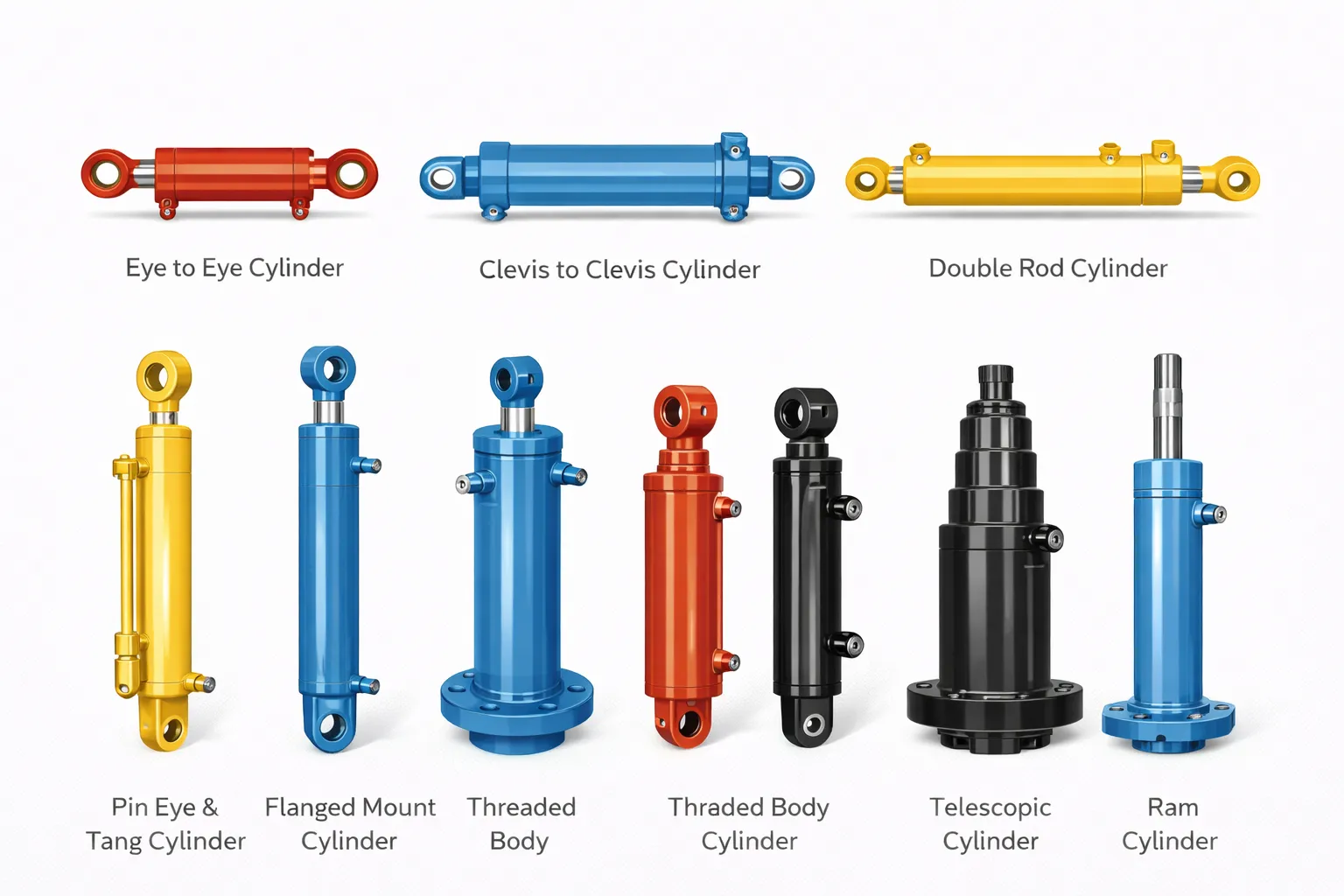
Comparative Engineering Analysis: Standard vs. Winterized High-Performance
Evaluating the true operational cost of a winter fleet requires looking far beyond the initial, often misleadingly low purchase price of standard aftermarket components. Procuring a precision-engineered, cold-weather rated light duty telescopic hydraulic cylinder pays massive daily dividends through the complete elimination of emergency downtime caused by frozen seals and shattered base mounts. The analytical table below plainly illustrates the stark mechanical and safety differences between standard commercial offerings and our purpose-built winter solutions.
| Engineering Metric | Standard Market OEM Replacement | Our Light Duty Telescopic Cylinder |
|---|---|---|
| Dynamic Sealing Matrix | Standard NBR/PU (Suffers severe seal hardening below -10℃) | Specialized Low-Temperature Rubber (Flexible down to -40℃) |
| Base Material Strength | 1020/1045 Carbon Steel (High risk of brittle fracture in winter) | Q345D Low-Alloy Structural Steel (Exceptional freezing impact toughness) |
| Ice Mitigation Defense | Soft polyurethane wiper (Folds over heavy ice rings) | Aggressive Double-Lip Scraper (Shears ice forcefully) |
| Retraction Dynamics | High internal friction (Bed hangs up in cold, viscous oil) | Ultra-Low Friction PTFE guides (Rapid, smooth descent in cold) |
| Quality Verification | Basic random batch sampling at room temperature | 100% Individual High-Pressure Hydrostatic Tested |
Demonstrated Field Success: Global B2B Case Studies
Theoretical engineering advancements in materials science must invariably be validated by relentless, brutal field application. Below are five authentic, meticulously documented records detailing how our highly specialized winter fluid power solutions have systematically resolved critical fleet challenges, particularly focusing on our strategic partners across South Korea, Japan, and freezing high-altitude Asian infrastructure markets.
Case 1: Eradicating Seal Hardening in Gangwon Winter Maintenance
Location & Date: Gangwon-do, South Korea (January 2025)
Client: Provincial Highway Snow Clearing and Salt Transport Authority.
The Challenge: Operating light Kia Bongo 4×4 tippers to spread salt on narrow mountain passes. As temperatures hit -20℃, the factory cylinder seals hardened entirely, causing massive hydraulic fluid blowouts all over the frozen roads, rendering the trucks useless during critical blizzards.
Engagement: The fleet maintenance director urgently searched our online B2B portal specifically looking for cold-weather rated hydraulic cylinder components to save their winter operations.
The Result: We rapidly airlifted our light duty telescopic hydraulic cylinder equipped with low-temperature rubber seals. Throughout the remainder of the brutal winter season, the fleet experienced absolutely zero seal failures or fluid bypass incidents.
“The seal hardening issue was crippling our snow response times. Replacing the factory units with your arctic-grade cylinders completely solved the blowout problem. They perform flawlessly in the freezing cold.” — Park Ji-hoon, Fleet Director
Case 2: Preventing Brittle Fracture in Hokkaido Aggregate Hauling
Location & Date: Sapporo, Hokkaido, Japan (February 2024)
Client: Regional Winter Construction and Aggregate Supplier operating Isuzu Elf tippers.
The Challenge: Dumping massive loads of frozen, compacted gravel in -25℃ weather. The severe shock load of the frozen aggregate breaking loose was literally snapping the base trunnion mounts right off their standard 1045 carbon steel cylinders due to cold embrittlement.
Engagement: Specifically requested our technical engineering assistance to provide heavy-duty but lightweight hydraulic parts capable of surviving severe winter impacts without breaking.
The Result: We supplied units manufactured entirely from Q345D low-alloy steel with robotic deep-penetration welds. Tracking over two winters showed zero structural fractures, entirely eliminating that source of dangerous fleet downtime.
“The impact toughness of the Q345D steel is incredible. We haven’t had a single weld fracture or mount snap since we switched to your cylinders, even when dumping solid blocks of frozen gravel.” — Kenji Sato, Operations Manager
Case 3: Curing Stage Binding in Ulaanbaatar Extreme Cold
Location & Date: Ulaanbaatar, Mongolia (December 2024)
Client: Urban coal distribution company supplying critical heating materials.
The Challenge: Operating in -35℃, the hydraulic oil became incredibly viscous. During the descent phase, their standard single acting hydraulic cylinder would severely bind against the thick oil and high-friction seals, causing the empty dump bed to hang dangerously in the air for minutes before slowly creeping down.
Engagement: Needed urgent solutions for fixing hydraulic cylinders that suffered from severe cold-weather binding and retraction delays.
The Result: Our winter-rated light duty telescopic cylinder, equipped with wide composite guide rings and ultra-low friction seals, was installed. The descent phase became perfectly smooth and rapid, easily overcoming the viscous drag of the cold hydraulic fluid.
“The retraction speed improvement is massive. The bed comes down smoothly and immediately now, saving our drivers huge amounts of time on every coal delivery route during the deep freeze.” — Batbayar Enkh, Fleet Supervisor
Case 4: Affordable Fleet Winterization in Neighboring Markets
Location & Date: Vladivostok, Russia (October 2024)
Client: Cross-border commercial logistics and material supplier importing used light trucks.
The Challenge: Exorbitant OEM replacement costs were preventing the client from properly winterizing their fleet of imported Hyundai Mighty tippers. They needed an economical but structurally superior solution before the snow arrived.
Engagement: Conducted an extensive search for a reliable B2B factory direct source without the dealership markup and evaluated our transparent pricing and sub-zero testing protocols.
The Result: We supplied a bulk container of perfectly dimensioned, cold-rated replacement cylinders. The client reduced their specialized component expenditure and overall hydraulic cylinder price by 45% while actually increasing the winter reliability of the trucks.
“The dimensional fitment was flawless right out of the crate, making the winterization process incredibly fast. The direct factory pricing significantly improved our maintenance budget and vehicle value.” — Ivan Volkov, Procurement Director
Case 5: Resisting De-Icing Salt Corrosion in Seoul Utilities
Location & Date: Seoul, South Korea (March 2025)
Client: Municipal utility and underground pipe repair contractor.
The Challenge: The massive amounts of highly corrosive calcium chloride (de-icing salt) used on Seoul’s winter roads were rapidly rusting and pitting the exposed chrome sleeves of their tippers, leading to torn wiper seals and constant leaks.
Engagement: Sought a direct-to-factory manufacturer capable of providing heavily plated, extreme anti-corrosion replacements without the heavy brand markup.
The Result: We delivered our multi-stage cylinders featuring deep micro-cracked hard chrome plating. After a full season of heavy salt exposure, the sleeves remained pristine and completely rust-free, drastically extending the service life of the main seals.
“The surface protection against road salt is outstanding. The chrome plating looks brand new even after months of driving through corrosive slush. It’s a huge upgrade over the factory parts.” — Kim Dae-sung, Procurement Lead
Expert Technical FAQ: Addressing B2B Winter Maintenance Inquiries
For fleet maintenance directors and procurement officers, preparing vehicles for brutal freezing temperatures is a critical operational mandate. Below, we systematically address the most frequent technical, mechanical, and commercial questions regarding our specialized cold-weather light duty telescopic cylinder and aftermarket support.
1. What exactly is “seal hardening” and why does it cause blowouts in winter?
2. Why is Q345D steel specifically required for cold region operation trucks?
3. Why does my current single acting hydraulic cylinder lower so slowly in winter?
4. Can this unit directly replace my existing factory OEM cylinder?
5. What factors dictate your hydraulic cylinder price for bulk B2B fleet orders?
6. How difficult is hydraulic cylinder repair for this specialized cold-weather model?
7. What are the typical lead times and logistics for delivery to South Korea and Japan?
Winterize Your Commercial Fleet Today
Do not allow inferior, summer-grade lifting components to paralyze your vehicles or cause devastating operational downtime due to frozen seals and brittle structural fractures. Whether you urgently require a specialized cold-rated light duty telescopic hydraulic cylinder replacement for a single downed snow-clearing truck or seek to procure bulk high-performance assemblies for an entire fleet winterization overhaul, our technical engineering team is ready to deliver. Secure highly competitive, factory-direct pricing without ever sacrificing metallurgical or chemical integrity.
Editor: Cxm