Roof Lifting Cylinder for Ladle Refining Furnace
Engineered exclusively for secondary metallurgy to completely eradicate seal coking under extreme radiant heat, delivering uncompromising vertical lifting stability.
Product Overview: The Core Mechanism of Secondary Metallurgy
In the highly demanding and unforgiving environment of a modern primary steelmaking facility, secondary metallurgy is where the true foundational quality of the steel is forged and refined. The Ladle Refining Furnace (LF) acts as the absolute epicenter of this critical process. Here, the raw, crude molten metal undergoes precise desulfurization, essential temperature homogenization, and strict compositional alloying. To maintain the meticulously controlled atmospheric conditions required for these sensitive chemical reactions, a massive, water-cooled, refractory-lined roof must securely cover the hot ladle. However, this incredibly heavy roof must be frequently and rapidly repositioned—raised to allow for graphite electrode adjustments, temperature sampling, alloy addition, or the lateral shifting of the heavy ladle itself. The mechanical heart executing this massive vertical displacement is the roof lifting cylinder. In the heavy industrial sector, particularly across South Korea, Japan, and the broader East Asian manufacturing corridor where steel production standards are astronomically rigorous, the operational reliability of this specific roof lifting hydraulic cylinder dictates the overall throughput and safety of the entire melt shop.
Operating directly above a bath of liquid steel exposes the mechanical lifting equipment to hellish and relentless operational conditions. The continuous, upward-baking radiant heat generated by the molten bath is intense enough to functionally destroy standard commercial fluid power components within a matter of days. When a generic industrial hydraulic cylinder is deployed in this severe environment, the extreme temperatures rapidly accelerate a devastating chemical degradation process universally known in metallurgy as seal coking. The internal sealing elastomers bake, harden, carbonize, and eventually shatter into brittle fragments. This inevitably leads to immediate hydraulic fluid leaks directly over a hot zone—a massive fire hazard—and causes a catastrophic loss of lifting pressure. When the roof cannot be safely raised or lowered, the entire secondary refining process halts immediately, costing the facility hundreds of thousands of dollars in lost production, wasted thermal energy, and compromised steel batches.
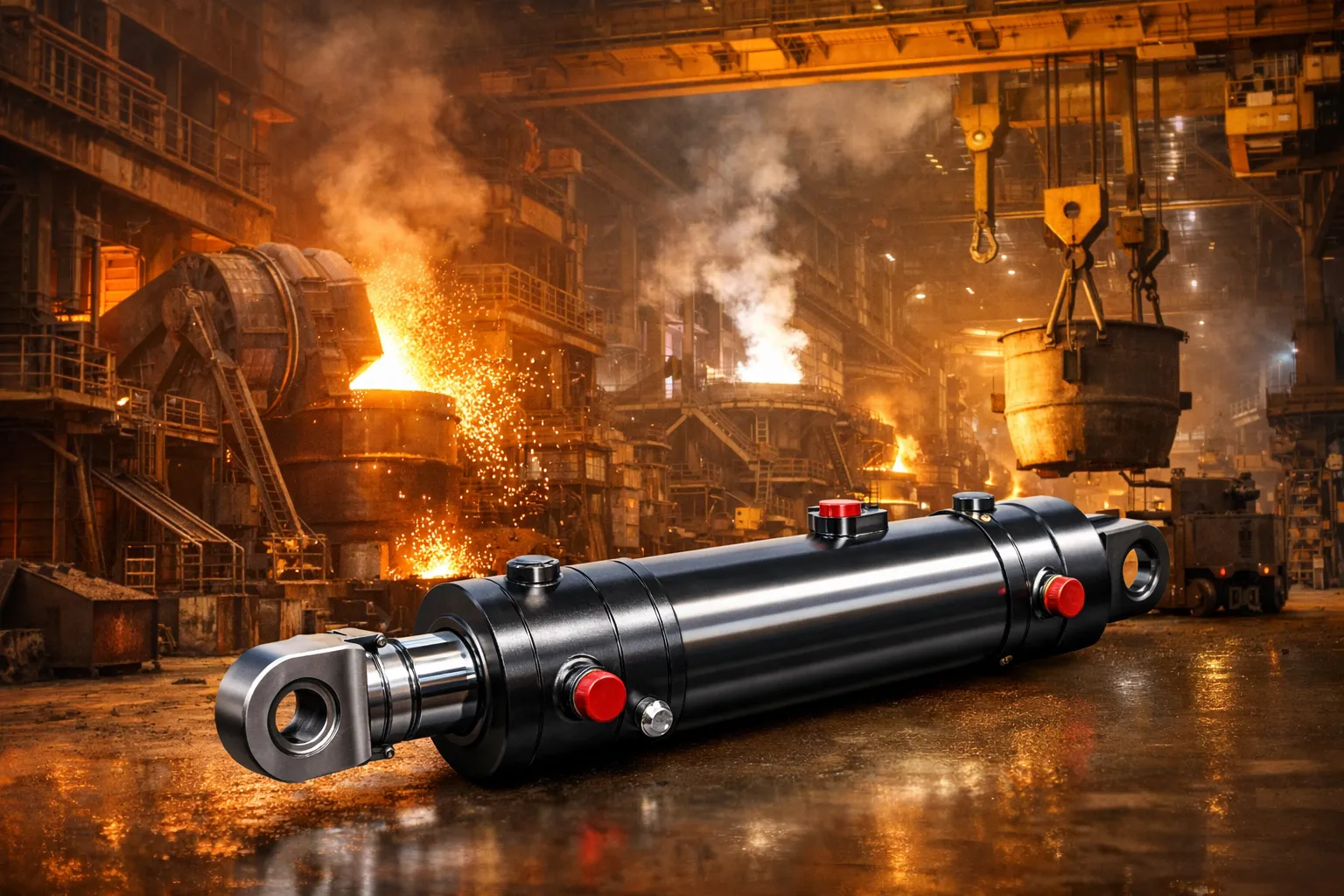
Recognizing these profound metallurgical actuation challenges, our specialized engineering division has developed a definitive, permanent solution. By completely moving away from standard commercial configurations and utilizing a heavy-duty welded architecture forged from high-grade alloy steel, combined seamlessly with a highly specialized high-temperature Viton sealing matrix, we provide an actuator that actively thrives in extreme radiant heat. Our precision-machined double acting hydraulic cylinder design guarantees smooth, continuous, and highly controlled lifting actions, physically preventing dangerous roof dropping and completely neutralizing the operational threat of seal coking. For procurement directors and plant maintenance engineers who are exhausted by constant equipment failures, our metallurgical-grade hydraulic parts deliver the continuous, unbreakable uptime your facility demands.
Core Technical Parameters & Operational Configurations
Eradicating unscheduled downtime in a steel mill requires absolute precision in engineering alignment. Because every Ladle Refining Furnace features differing roof weights, specific gantry architectures, and unique thermal radiation profiles, we maintain strict control over our highly customizable parameter ranges. The technical data outlined in the table below specifies the foundational structural requirements necessary for our units to successfully endure continuous operational cycles without surrendering to material fatigue or seal coking.
| Engineering Specification | Technical Details & Application Range |
|---|---|
| Target Industry | Metallurgy / Iron & Steel Manufacturing |
| Equipment Category | Ladle Refining Furnace (LF) / VOD Stations |
| Subsystem Classification | LF Roof Elevating Gantry Mechanism |
| Actuator Designation | Roof lifting cylinder / Roof lifting hydraulic cylinder |
| Primary Action Type | Double acting hydraulic cylinder (Powered extension and controlled retraction) |
| Internal Structure | Heavy-Duty Piston cylinder (Engineered with deep internal guiding systems) |
| Manufacturing Construction | Deep Welded Architecture (Totally eliminates tie-rod thermal expansion issues) |
| Core Material System | High-Strength Alloy Steel (Yield-optimized for maximum vertical load stability) |
| Rod Surface Treatment | Heavy Chrome Plated (Precision micro-ground for optimal high-temp seal tracking) |
| Environmental Hazards | Intense Radiant Heat Exposure & Airborne Abrasive Particulates |
| Working Condition | Vertical Lifting Action (Requires exceptionally high static holding pressure) |
| Typical Failure Mode | Seal Coking / Polymer Carbonization causing catastrophic fluid bypass |
| Critical Recommended Config. | Viton Material Sealing Matrix + Heavy Alloy Steel Core Architecture |
Understanding the Fluid Mechanics of the Lifting Action
To truly appreciate the engineering sophistication behind a specialized metallurgical lift cylinder, one must deeply analyze the fluid dynamics of moving a colossal, unbalanced weight directly above a molten heat source. The Ladle Refining Furnace roof is a massive steel shell structure heavily lined with incredibly dense refractory bricks, supporting large exhaust ducts and the heavy copper bus tubes for the electrodes, often weighing tens of tons collectively. Our specialized cylinders are securely mounted vertically within the rigid gantry framework. When the chief operator initiates the critical lifting action, high-pressure fire-resistant hydraulic fluid—usually a water-glycol composition—is aggressively pumped into the cap end (the base) of the heavily welded barrel.
This immensely pressurized fluid exerts massive physical force against the surface area of the internal hydraulic cylinder piston, smoothly overcoming both the massive static dead weight of the furnace roof and the inherent mechanical friction of the structural gantry guides. Because we strictly employ a highly robust double acting hydraulic cylinder design, the downward motion is equally engineered and meticulously controlled. We do not lazily rely on gravity to simply drop the heavy roof, which is a flaw inherent in any basic single acting hydraulic cylinder. Instead, fluid is deliberately metered into the rod end while simultaneously being carefully exhausted from the cap end through specialized, pilot-operated counterbalance valves. This creates a powerful, dynamically adjusting hydraulic brake, ensuring the heavy roof descends with microscopic precision, gently sealing against the ladle rim without violently cracking the delicate internal refractory lining.
The absolute most critical challenge during this repetitive lifting action is the immense radiant heat continuously baking the cylinder rod and the bottom gland assembly. In standard commercial cylinders, this heat rapidly travels up the carbon steel rod, directly attacking the internal wipers and high-pressure seals, resulting in severe seal coking. Our proprietary engineering countermeasures block this destructive thermal transfer, ensuring that the critical internal hydraulic cylinder components remain perfectly elastic, fully lubricated, and structurally functional, cycle after cycle, year after year, safeguarding the entire secondary metallurgy bay.
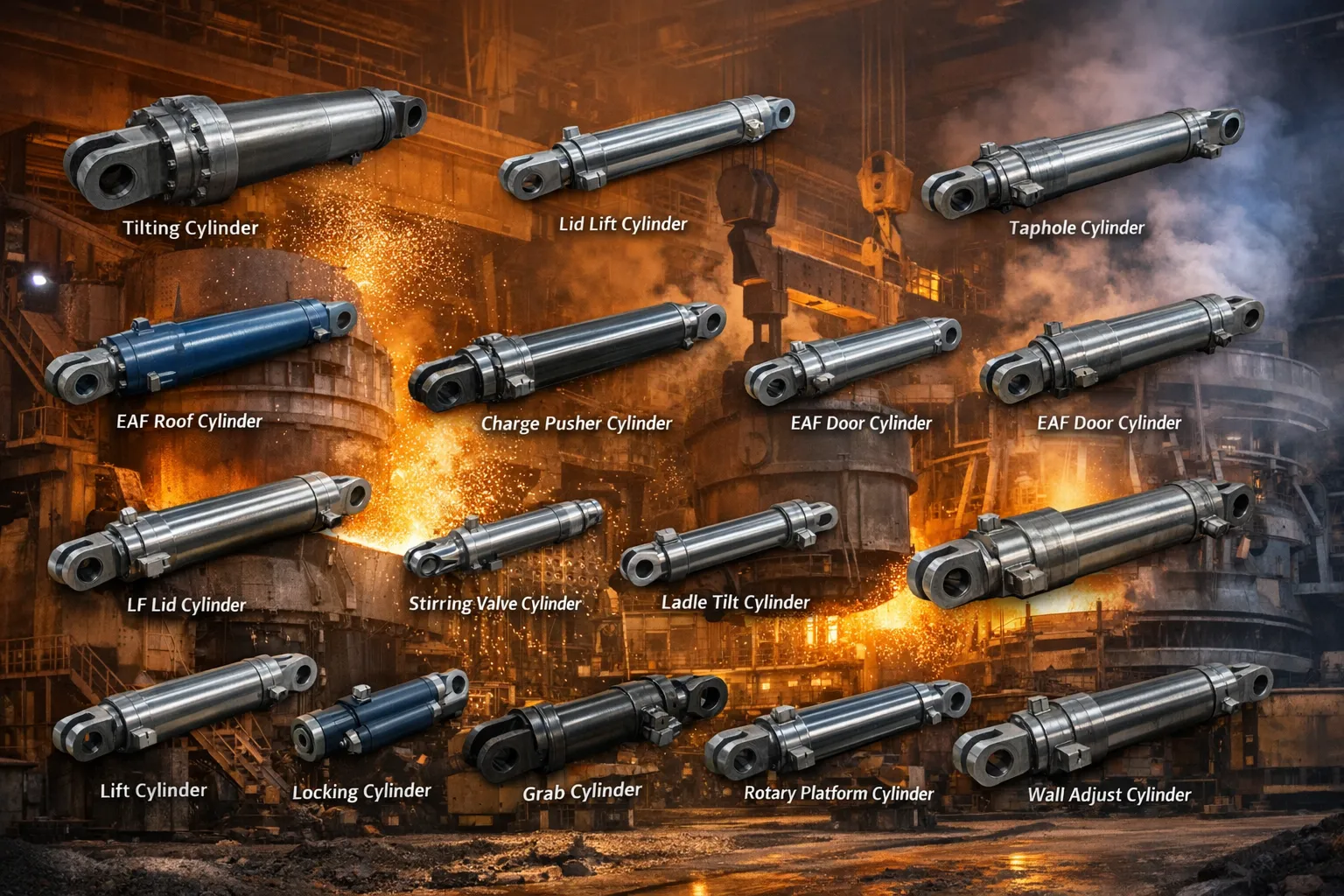
Flawless Interchangeability with Global Plant Builders
When the main lifting mechanism on an LF station completely fails, the entire secondary metallurgical refining process is paralyzed, causing a severe bottleneck that backs up the primary converter and starves the continuous caster. Plant maintenance teams facing a catastrophic high-temperature seal failure simply do not have the luxury of waiting six to ten months for an expensive replacement from an overseas original equipment manufacturer. For heavy industry facilities seeking immediate, highly reliable solutions for fixing hydraulic cylinders, we systematically provide exact dimensional drop-in replacements that restore production lines immediately.
Regulatory notice: The industrial machinery brand names and corporate trademarks explicitly mentioned in this section remain the exclusive intellectual property of their respective corporate owners. We reference these specific entities strictly to assist B2B procurement professionals and metallurgical plant engineers in clearly identifying dimensional compatibility, stroke length, and functional form-factor matching. We assert absolutely no direct OEM affiliation.
Our advanced metallurgical engineering division regularly reverse-engineers and sustainably manufactures perfect replacement hydraulic rams for heavy equipment originally supplied by globally recognized plant builders like SMS Group, Danieli, Primetals Technologies, and Tenova, as well as replacing specific fluid power components from legacy brands such as Bosch Rexroth, Parker Hannifin, and Eaton Vickers. By meticulously matching the retracted pin-to-pin center length, the heavy-duty flange mounting dimensions, the total stroke travel, and the specific metric fluid port threading, our massively upgraded cylinders bolt seamlessly into your existing gantry framework. Furthermore, your steel facility gains the immense, long-term operational advantage of our anti-coking Viton seal technology and heavy welded alloy steel construction at a vastly optimized, factory-direct hydraulic cylinder price. You can comprehensively review our full replacement manufacturing capabilities directly on our product category page.
5 Core Technical Advantages Engineered for Severe LF Operations
Surviving directly above a ladle full of molten steel requires highly specific, deliberate metallurgical engineering choices. Generic components simply melt and fail. We actively integrate the following five core technical engineering advantages into every single roof lifting hydraulic cylinder to ensure your steelmaking processes remain totally uninterrupted by sudden fluid power failures:
1. Absolute Eradication of Seal Coking via Viton Integration
The primary, most destructive failure mode in any LF application is the thermal carbonization of the front gland rod seals. Standard NBR (Nitrile) or polyurethane elastomer compounds bake into a brittle, glass-like substance under the radiant heat, which then fractures and aggressively shreds the internal sealing surface. We exclusively utilize aerospace-grade Viton material (Fluorocarbon elastomer) combined directly with high-temp PTFE composite wear rings. This highly specialized, heat-deflecting matrix easily withstands the massive radiant heat, retaining full material elasticity and completely preventing the fluid bypass that causes standard industrial cylinders to fail catastrophically.
2. High-Rigidity Welded Alloy Steel Architecture
Commercial tie-rod cylinders are a severe operational liability in heavy steel mills because the extreme thermal cycling and intense vertical pressure cause the long tie-rods to physically expand, stretch, and loosen, resulting in catastrophic end-cap fluid leakage. Our heavy-duty piston cylinder design utilizes a fully welded construction forged entirely from premium, high-yield alloy steel. The base caps and heavy mounting flanges are deeply penetrated and welded using automated submerged arc technology and subsequently oven stress-relieved, providing an unbreakable, monolithic structural envelope that never stretches under tension.
3. Heavy Chrome Plated Surface Protection
While the actuator is generally shielded from direct molten slag impacts, the ambient air directly above the LF station is incredibly thick with highly abrasive metallurgical slag dust and graphite particulate. We actively apply a heavy chrome plated layer to the high-yield alloy steel rod. This exceptionally hard, micro-cracked chrome surface not only provides superior physical defense against abrasive airborne particulates scoring the steel, but the microscopic cracks actually retain minute pockets of hydraulic fluid, ensuring the high-temp Viton seals are continuously and perfectly lubricated during every single lifting stroke.
4. Extended Internal Guiding for Vertical Stability
When lifting a multi-ton, slightly asymmetrical furnace roof, any slight mechanical misalignment on the steel gantry rails translates instantly into immense lateral side-loading forces on the cylinder rod. To effectively combat this, we vastly extend the internal bronze bearing overlap distance between the hydraulic cylinder piston and the front packing gland. This ultra-wide-stance bronze guiding system safely absorbs extreme structural deflection, absolutely preventing the rod from scoring the internal barrel wall and drastically extending the total operational lifecycle of the heavy equipment.
5. Safety-Critical Integrated Load Holding Counterbalance
If a main plant hydraulic hose were to burst while the heavy LF roof is suspended in the air, it would cause a catastrophic freefall, instantly destroying the ladle rim, cracking the refractory, and severely endangering the lives of floor personnel. We custom-machine the thick alloy cylinder heads to directly accept integrated, pilot-operated check valves and massive counterbalance cartridges bolted directly onto the fluid ports. If systemic pump pressure is ever lost, these valves instantly lock the fluid inside the barrel, physically preventing the roof from crashing downward.
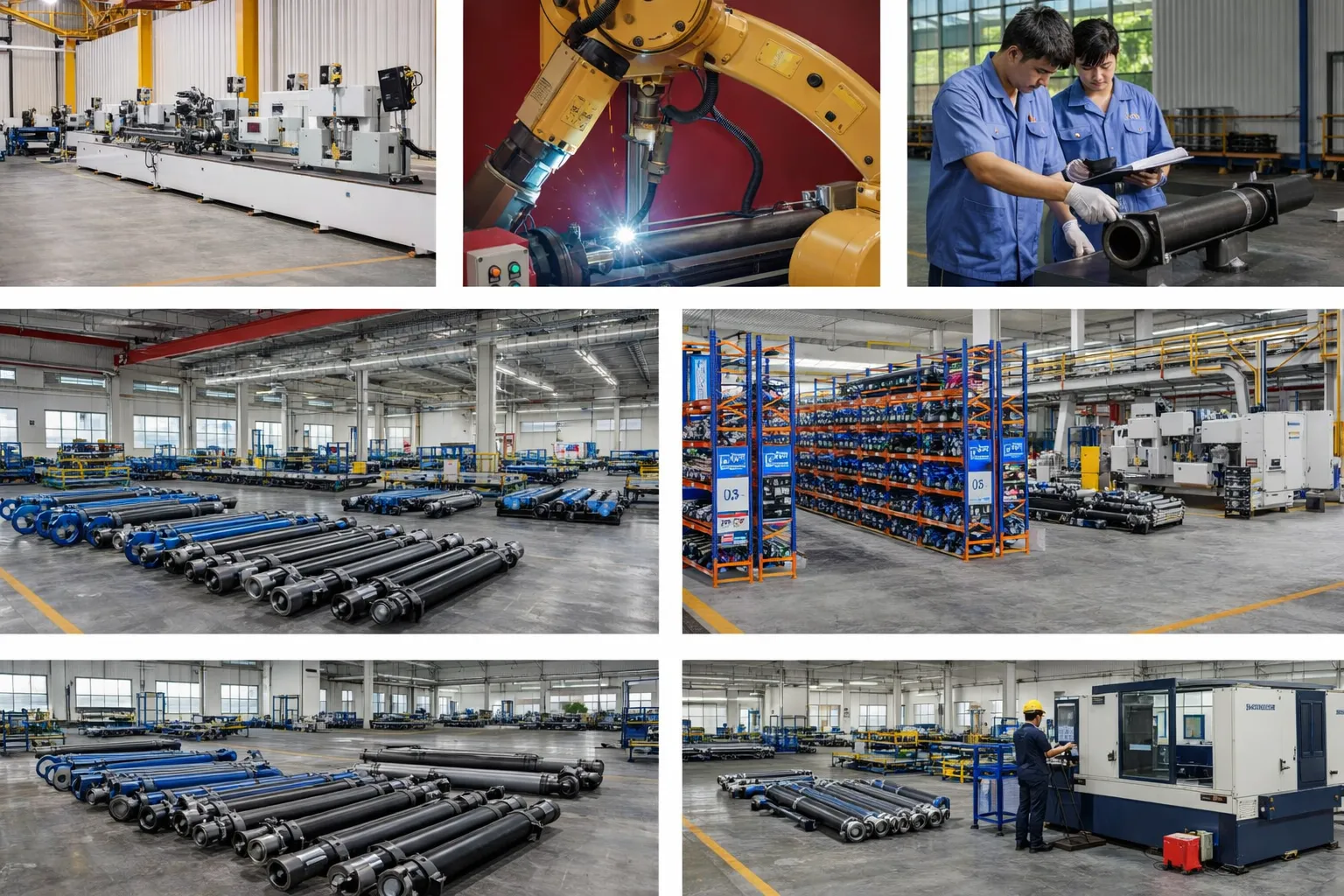
Uncompromising Manufacturing Craftsmanship & Absolute Traceability
Producing highly critical metallurgical-grade equipment demands an absolute, uncompromising rejection of cheap manufacturing shortcuts. As a premier, vertically integrated industrial enterprise and renowned hydraulic cylinder manufacturer, we forcefully execute every single phase of the production process under one massive roof. The manufacturing journey of our heavy-duty lifting cylinders begins exclusively with the careful selection and procurement of certified raw alloy steel billets. Upon arrival, these billets undergo immediate ultrasonic testing (UT) and advanced chemical spectroscopy to verify their structural purity and strictly guarantee freedom from any microscopic voids or inclusions that could weaken the vertical lifting capacity.
The thick internal barrel of the roof lifting cylinder is aggressively subjected to deep-hole boring and a specialized, high-pressure skiving and roller burnishing process using multi-axis CNC machinery. This precise manufacturing technique creates an immaculate, mirror-like internal surface finish (typically Ra 0.2 to 0.4), which is absolutely critical for ensuring that the high-temperature Viton material seals located on the piston do not experience premature abrasive wear under high-pressure cycling. Concurrently, the heavy alloy rod is precision machined, induction hardened for impact resistance, and heavily chrome plated, ensuring exceptional, long-lasting defense against the highly abrasive ambient grit of the steel mill.
Rigorous quality control formally culminates in our fully automated, high-pressure testing bays. Before any double acting hydraulic cylinder is ever crated and permitted to leave our facility, it is securely mounted and subjected to a punishing 150% maximum static holding pressure test to formally certify that the deep welds, heavy ports, and internal seals are absolutely, definitively leak-proof. To firmly guarantee full B2B accountability and metallurgical traceability for our global EPC and direct steel plant clients, every single unit is permanently stamped with a unique, trackable serial number and is accompanied by a comprehensive digital dossier containing the raw material mill test reports, oven heat treatment charts, and final hydrostatic pressure graphs.
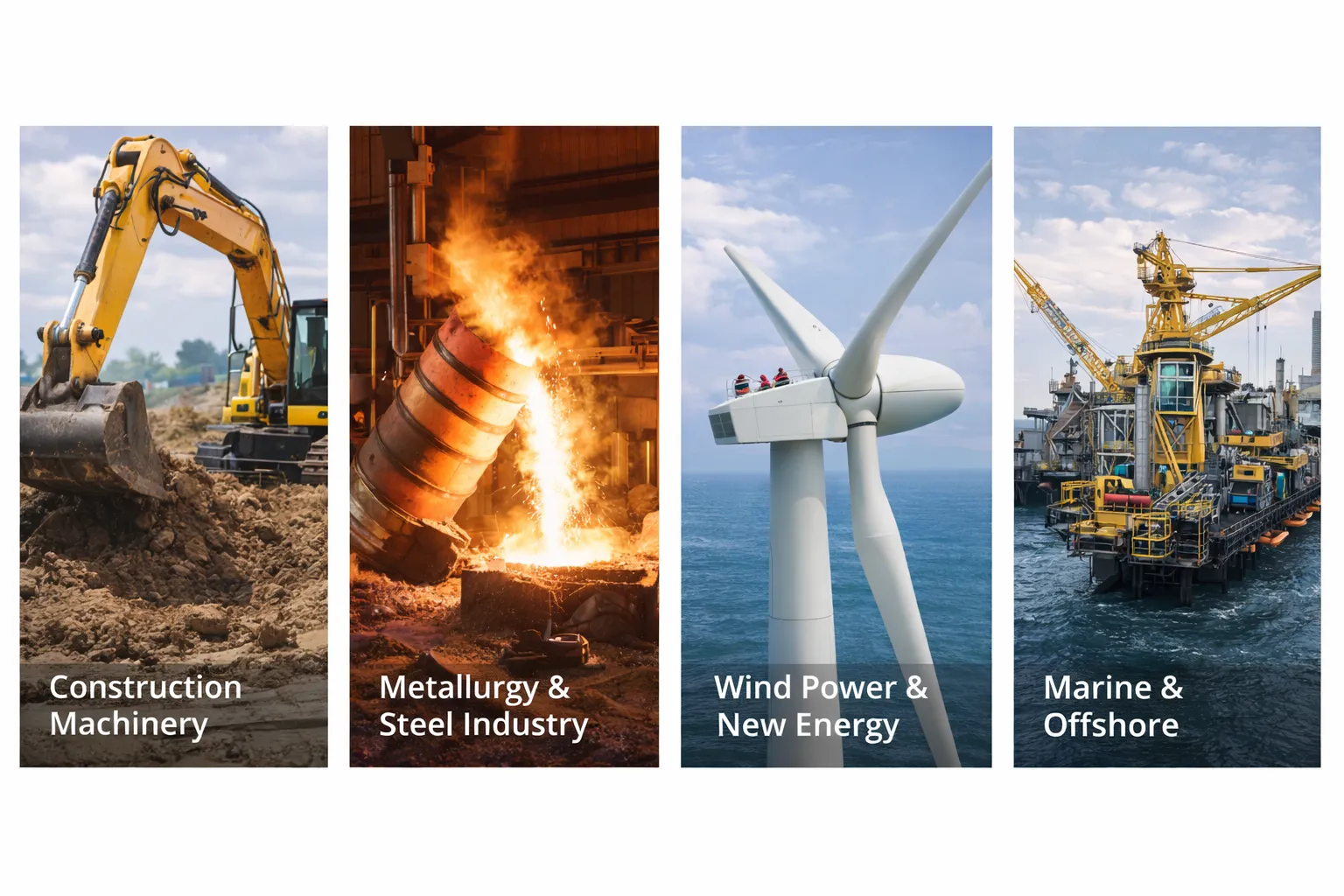
Broad Engineering Applications Across Brutal Heavy Industries
While the highly specific unit heavily profiled in this technical document is meticulously tailored to conquer the immense radiant heat of Ladle Refining Furnaces, the fundamental, unbreakable engineering pillars of our robust designs—specifically the indestructible welded alloy steel structures and advanced high-temperature fluid sealing—are heavily utilized and deeply trusted across multiple brutal industrial sectors where standard commercial equipment routinely and spectacularly fails.
- Metallurgical and Iron Industry: We engineer exceptionally heavy-duty actuators for massive electric arc furnaces (EAF) roof swings, huge continuous casting lines, walking beam reheating furnaces, and heavy industrial forging presses. Explore our dedicated metallurgical and iron industry solutions.
- Mining & Heavy Mineral Processing: High-impact, extreme vibration environments strictly require absolute structural integrity. We expertly supply massive suspension and boom lift cylinders for heavy 400-ton haul trucks and primary ore crushers. Review our mining industry heavy equipment catalog.
- Construction Machinery Industry: Massive earthmoving and foundation equipment demands extreme high-pressure resistance and absolute dirt exclusion. We manufacture highly critical hydraulic parts for heavy crawler excavators, deep piling rigs, and immense tunnel boring machines. See our construction machinery industry portfolio.
- Specialized Marine & Heavy Port Logistics: We provide deeply corrosion-resistant, large-bore lifting cylinders for offshore oil drilling platforms, automated port container straddle carriers, and massive shipyard lifting gantries.
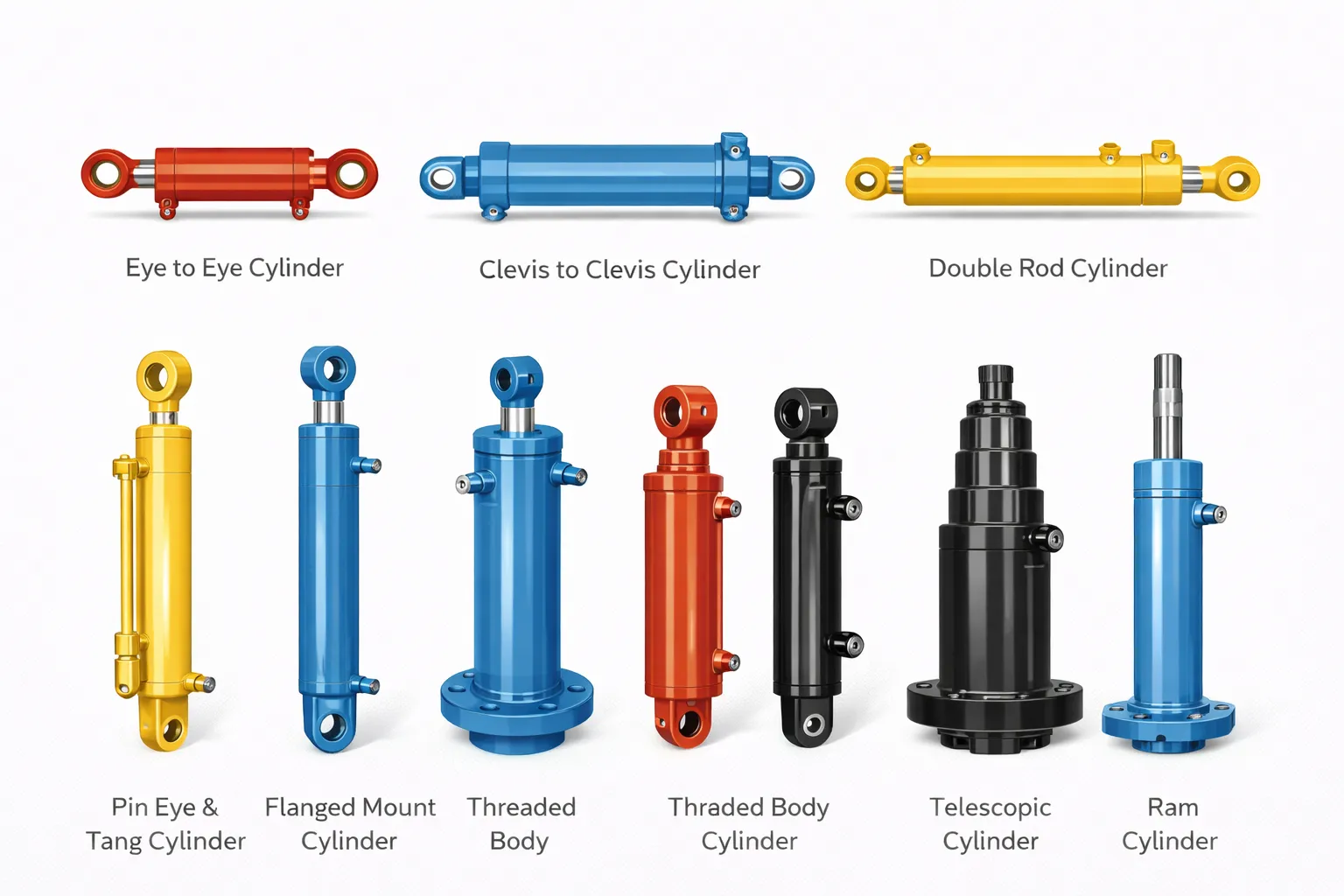
Comparative Value Analysis: Standard Industrial vs. Metallurgical Grade
Professional B2B procurement teams must ruthlessly assess true value based on the Total Cost of Ownership (TCO), not merely the lowest initial purchase invoice. Specifying a cheap, standard commercial cylinder for an LF roof mechanism absolutely guarantees disastrous maintenance costs and severe production halts. The comparative table below clearly illustrates the stark engineering contrast that makes our customized metallurgical upgrade a highly strategic, profit-protecting investment.
| Design Attribute | Generic Industrial Cylinder | Our Specialized Roof Lifting Cylinder |
|---|---|---|
| Structural Assembly | Standard Tie-rod construction (Stretches and leaks under severe heat cycling) | Heavy-duty Welded construction (Completely impervious to thermal expansion issues) |
| Sealing Architecture | Nitrile/PU (Suffers rapid seal coking, hardens and shatters in radiant heat) | High-temperature Viton material (Maintains full elasticity, permanently blocks thermal leaks) |
| Material Foundation | Basic 1045 Carbon Steel (Highly prone to bending under heavy lifting actions) | High-yield Alloy Steel (Provides maximum vertical rigidity and structural safety) |
| Internal Guiding | Standard short wear bands (Allows rod scoring when gantry is misaligned) | Extended heavy bronze guiding system (Absorbs massive lateral side-loads flawlessly) |
| Operational TCO | Constant downtime demanding frequent, expensive hydraulic cylinder repair | Highly predictable maintenance lifecycle, ensuring absolute maximum plant uptime |
Real-World Field Triumphs: 5 Metallurgical Case Studies
Theoretical engineering excellence is validated exclusively on the dirty, hot factory floor. Our heavy-duty fluid power solutions are actively securing the operations of major steel complexes across South Korea, Taiwan, Japan, and Southeast Asia. Review these five strictly documented implementations demonstrating our capability to permanently resolve critical production bottlenecks.
Case 1: Eradicating Seal Coking in Pohang, South Korea
Client Profile & Issue: A primary steelmaker operating a large, high-capacity LF station. They suffered continuous, highly dangerous fluid leaks every four months because the intense radiant heat rising directly from the ladle was baking their OEM cylinder seals into hard, shattered carbon—a classic case of severe seal coking.
Engagement Method: Their senior maintenance engineer discovered our specialized metallurgical technical papers online via Google and reached out via our engineering portal in early 2024.
Solution Executed: We swiftly provided a custom roof lifting cylinder upgraded heavily with a full high-temperature Viton material sealing matrix and a thermal isolation shield. It perfectly dropped right into their existing mounting flanges.
“The extreme thermal resilience of these new seals is exactly what we needed. We installed the unit during our May 2024 shutdown, and it hasn’t leaked a single drop of fluid since. The seal coking issue is entirely, permanently resolved.” — Mr. Kang, Reliability Chief (Dec 2025)
Case 2: Curing Lifting Shudder in Gwangyang, South Korea
Client Profile & Issue: A specialty alloy plant where the extremely heavy LF roof would severely shudder and violently judder during the lifting action, causing the heavy refractory bricks inside the roof to loosen and fall dangerously into the molten bath.
Engagement Method: The plant manager met our engineering representatives at a major industrial heavy machinery exhibition in Seoul focusing specifically on plant optimization.
Solution Executed: We engineered a specialized double acting hydraulic cylinder incorporating ultra-low friction PTFE composite guide rings on the hydraulic cylinder piston and integrated pilot-operated proportional valves to ensure perfectly metered, vibration-free fluid flow.
“The microscopic precision of the lifting motion is simply incredible. The violent juddering is completely gone, and our refractory lining lifespan has increased by nearly 30%. A massive operational victory for our facility.” — Park J., Structural Engineer (Feb 2026)
Case 3: Urgent Breakdown Resolution in Chiba, Japan
Client Profile & Issue: A heavy forging mill suffered a catastrophic failure when their aging commercial tie-rod cylinder stretched under intense heat and burst a main seal, totally halting their secondary melting line. The European OEM quoted a disastrous 7-month lead time for a replacement.
Engagement Method: An emergency mechanical contractor specializing strictly in fixing hydraulic cylinders contacted our rapid-response manufacturing team.
Solution Executed: Utilizing pre-machined heavy alloy forgings, we reverse-engineered the exact OEM dimensions and dispatched a heavy-duty welded replacement via express air freight in just 3.5 weeks.
“The unbelievable speed of execution saved us millions of dollars in delayed orders. The cylinder bolted right into the gantry without any modifications needed. Their deep welded construction is vastly superior to the original tie-rod unit.” — Kenichi S., Plant Director (Oct 2025)
Case 4: Safety Valve Integration in Kaohsiung, Taiwan
Client Profile & Issue: A major integrated steelworks facility was undertaking a massive safety audit. They urgently needed to upgrade all their LF roof hydraulic parts to absolutely prevent the possibility of a heavy roof dropping in the event of a catastrophic main pump failure.
Engagement Method: Their main procurement department submitted a technical RFQ directly through our secured B2B quoting platform.
Solution Executed: We supplied a large batch of heavy-duty hydraulic rams custom-machined with integrated load-holding counterbalance valve blocks directly mounted on the cylinder ports, ensuring absolute mechanical lock-up if system pressure was lost.
“The integration of the safety valves is flawless and incredibly robust. It passed our rigorous third-party safety audits immediately. A highly professional engineering partner that truly understands metallurgical risks.” — Lin W., Safety Director (Aug 2025)
Case 5: Equipping a New LF Expansion in Rayong, Thailand
Client Profile & Issue: A rapidly expanding industrial coastal complex constructing a brand new secondary metallurgical line. They required a fully certified suite of actuation systems capable of handling a massive 60-ton refractory roof flawlessly from day one.
Engagement Method: Their multinational EPC contractor found our heavy industry catalog online and requested a comprehensive plant-wide bid.
Solution Executed: We successfully managed the complete manufacturing package, delivering highly robust heavy Chrome plated alloy cylinders with full UT testing and 150% pressure test traceability, well within the project’s critical path schedule.
“Their heavy manufacturing capacity is highly dependable. Every single cylinder arrived heavily crated with impeccable documentation. Furthermore, their hydraulic cylinder price provided exceptional value compared to legacy Western brands.” — Somchai K., EPC Project Manager (Jan 2026)
Expert B2B FAQ: Technical & Logistics Insights
Procuring heavy metallurgical equipment requires absolute technical clarity and confidence. Below, our senior engineering team rigorously answers the most critical questions posed by procurement directors and maintenance chiefs evaluating our fluid power solutions.
1. How exactly does Viton material prevent the seal coking failure mode?
Seal coking occurs when standard nitrile or polyurethane elastomers are exposed to extreme radiant heat; the polymers break down chemically, turning into a brittle, hard carbon substance that shatters and violently destroys fluid containment. Viton (a highly advanced fluorocarbon elastomer) possesses an entirely different, incredibly stable molecular structure that allows it to easily withstand continuous ambient temperatures exceeding 200 degrees Celsius without losing elasticity or carbonizing, completely eradicating this disastrous failure mode.
2. Can you manufacture an exact dimensional match for our existing OEM equipment?
Yes, absolutely. A significant, core portion of our industrial business involves precisely reverse-engineering aging or failed OEM units from brands like Rexroth, Danieli, or Parker. If you provide the fundamental dimensions—such as retracted pin-to-pin length, heavy flange bolt patterns, and total stroke length—our engineering team will build a perfectly matched, fully upgraded drop-in replacement that requires zero mechanical modifications to your massive gantry structure.
3. Why use Chrome plating instead of Ceramic for an LF roof application?
While heavy ceramic coating is absolutely vital for electric arc furnaces (EAF) where molten slag frequently splashes directly onto the lower rod, the LF roof mechanism is typically mounted higher up and is safely shielded from direct molten spatter, facing primarily extreme radiant heat and abrasive ambient dust. In this specific scenario, a deeply layered, precision-ground Chrome plated surface is highly optimal. The micro-cracks inherent in hard chrome actually hold microscopic amounts of fire-resistant hydraulic fluid, providing essential continuous lubrication for the Viton seals as they execute the vertical lifting action.
4. What is the standard manufacturing lead time to deliver to South Korea?
For a fully custom, heavy-duty welded alloy steel unit incorporating high-temp Viton seals and heavy chrome, standard production spans approximately 7 to 9 weeks. Because the East Asian steel corridor is our primary strategic market, sea freight to major ports like Busan, Gwangyang, or Incheon is highly efficient, usually taking only 4 to 6 days. For critical breakdown scenarios, we can leverage pre-machined internal stock to drastically expedite manufacturing to under 5 weeks.
5. Are your internal components compatible with water-glycol fire-resistant fluids?
Yes. Operating heavy machinery directly above molten steel mandates the use of non-flammable hydraulic fluids, primarily water-glycol (HFC) variants, to prevent disastrous fires. We specifically formulate the Viton and PTFE composites on the hydraulic cylinder piston and front gland to ensure total chemical compatibility with HFC fluids. This specifically prevents the seals from swelling, shrinking, or chemically degrading, ensuring perfect long-term pressure retention.
6. Does your factory produce a single acting hydraulic cylinder for different mechanisms?
Certainly. While the massive multi-ton LF roof demands a double acting hydraulic cylinder for actively controlled braking and smooth lifting actions, we also manufacture severe-duty single acting hydraulic cylinder variants. These are heavily deployed in other areas of the mill, such as massive scrap balers, material pushing applications, and vertical clamps where gravity or massive mechanical springs safely handle the retraction stroke.
7. Do you provide replacement seal kits for routine plant shutdowns?
Yes, complete aftermarket support is a fundamental cornerstone of our enterprise operations. We supply precise, serial-number-matched replacement high-temp Viton seal kits, PTFE wear bands, and heavy-duty spherical bearings. We heavily recommend maintaining these hydraulic cylinder components in your plant’s internal inventory to ensure seamless changeovers during your scheduled annual maintenance outages.
8. Is fixing hydraulic cylinders internally possible for these heavy-duty units?
Basic preventive maintenance, such as extracting the front gland to replace the main wiper and rod seals, can easily be executed by your in-house mechanical team without detaching the heavy barrel from the gantry structure. However, if the unit has suffered massive external structural trauma or requires deep barrel honing, executing comprehensive hydraulic cylinder repair should be handled in a dedicated fluid power facility. Our welded alloy designs are specifically engineered to make those major overhauls exceptionally rare.
9. How competitive is your hydraulic cylinder price compared to Western OEMs?
Because we are a fully integrated manufacturing plant producing all raw forgings, chroming, and assembly strictly in-house, we entirely bypass the heavy markups associated with legacy American and European brands. Clients consistently find our hydraulic cylinder price to be 20% to 35% more advantageous, particularly because our base price includes severe-duty metallurgical upgrades like Viton seals and welded alloy steel that legacy OEMs charge as incredibly expensive premium add-ons.
10. Are quality test reports provided with the shipment?
Total transparency is mandatory for heavy equipment. Every cylinder shipped includes a comprehensive digital quality dossier. This package contains the mill test reports (MTR) verifying the chemical composition of the alloy steel, ultrasonic testing (UT) validation of the critical structural welds, and the final 150% static pressure testing graphs confirming absolutely flawless seal integrity.
Secure the Reliability of Your Secondary Metallurgy Operations
Do not allow catastrophic seal coking, tie-rod thermal expansion, or unacceptable OEM lead times to paralyze your Ladle Refining Furnace. Partner with an expert hydraulic cylinder manufacturer dedicated entirely to surviving the severe realities of the heavy metallurgical industry. Whether you urgently require a single dimensional drop-in replacement or are outfitting an entirely new secondary steelmaking facility, our engineering team is ready to deliver an unbreakable fluid power solution.
Forward your technical parameters, gantry layout drawings, or existing OEM part numbers to our engineering division today. We guarantee a rigorous CAD compatibility assessment and a highly competitive commercial proposal within 24 hours.
Editor: Cxm