
Product Overview and Industrial Value
Operating an aerial work platform demands absolute mechanical predictability. When workers and heavy tools are positioned dozens of meters above the ground, the slewing mechanism—the turntable base that allows the boom to rotate—becomes a critical focal point of safety. Wind shear, equipment vibration, and the shifting weight of personnel create severe eccentric load conditions at the base of the machine. If the turntable is not rigidly secured when rotation is intentionally halted, the platform can drift laterally. This unexpected movement is a primary cause of high-altitude workplace accidents. The rotary lock cylinder acts as the ultimate mechanical hard-stop, deploying a heavy-duty locking pin into the slewing gear or a chassis receptacle to physically freeze the turntable in place.
As a highly specialized hydraulic cylinder manufacturer serving South Korea, Japan, Taiwan, and the broader East Asian infrastructure market, we have extensively analyzed the failure modes of turntable rotation systems. Standard locking mechanisms frequently suffer from catastrophic lock failure due to material fatigue, side-loading deformation, or internal seal leakage causing the locking pin to slowly retract under pressure. We engineered our rotary lock hydraulic cylinder series to eliminate these risks entirely. By migrating away from standard carbon steel and transitioning to a highly refined alloy steel welded structure, we dramatically increased the shear resistance of the actuator. This ensures that even when the boom is fully extended and facing maximum lateral wind resistance, the locking mechanism will not bend, shear, or bypass fluid.
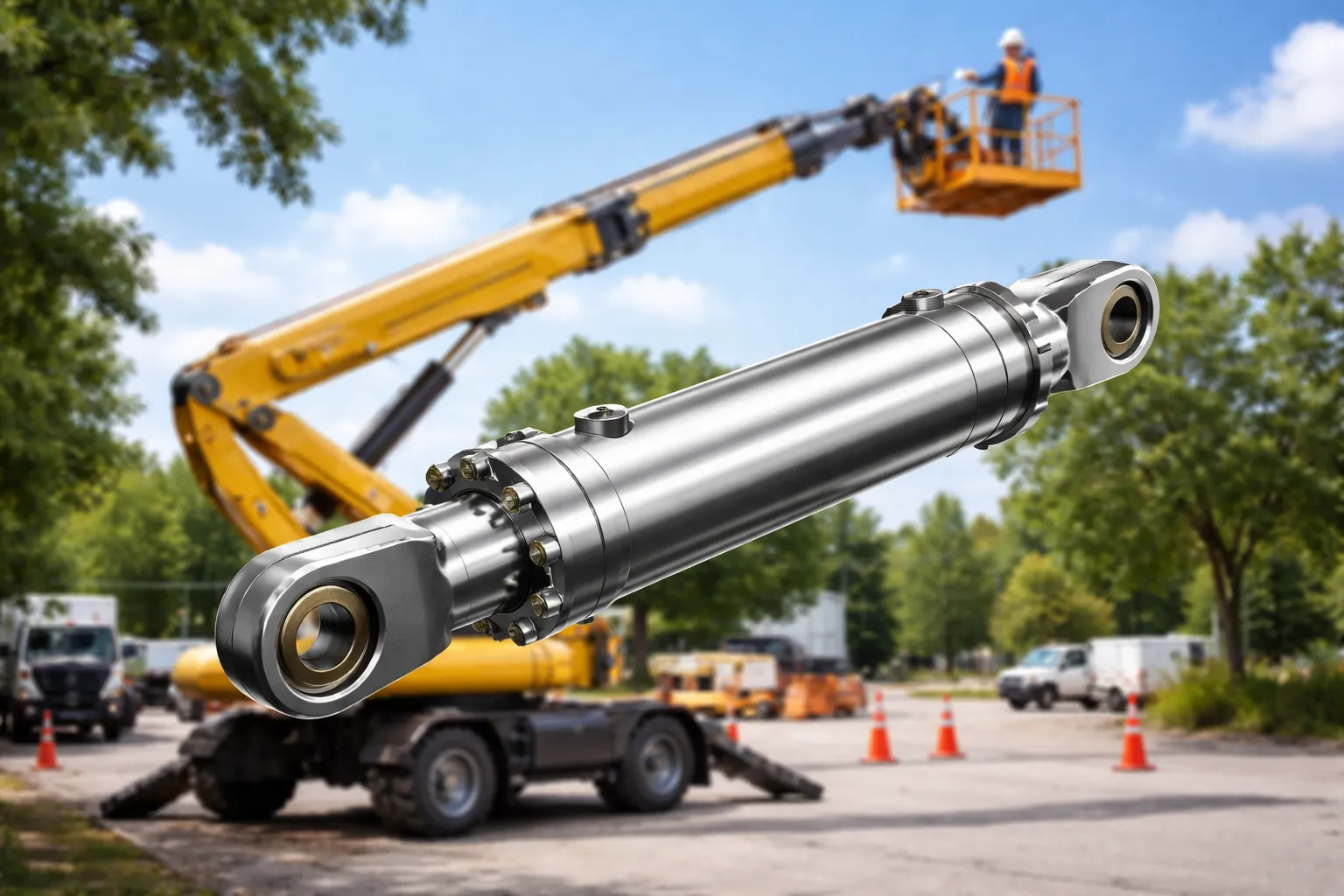
Our industrial value proposition is focused strictly on structural integrity. For fleet owners and maintenance directors, investing in highly reliable hydraulic parts reduces the frequency of emergency field repairs and mitigates the massive liability associated with platform instability. When evaluating the total lifetime operating cost, our premium components provide an incredibly competitive hydraulic cylinder price by virtually eliminating unscheduled downtime and drastically extending the maintenance intervals of the entire slewing drive system. Upgrading to a specialized rotary lock cylinder is not merely an operational improvement; it is a fundamental safety mandate for modern construction.
Comprehensive Technical Parameters
Engineering a flawless turntable safety lock requires precision in metallurgy, surface chemistry, and fluid dynamics. The following table outlines the exact manufacturing specifications and the highly adaptable parameters available to our B2B engineering partners. Every aspect of this rotary lock cylinder can be dimensionally customized to match your specific chassis architecture perfectly.
| Engineering Parameter Category | Standard Specifications and Customization Details |
|---|---|
| Industry Sector | Construction Machinery / Heavy Lifting Equipment |
| Equipment Category | Aerial Work Platform (Articulating, Telescopic, and Spider Lifts) |
| Subsystem / Action Target | Turntable Rotation Stabilization and Position Fixation |
| Component Name Designation | Rotary Lock Cylinder / Turntable Lock Actuator |
| Action Mode | Double acting hydraulic cylinder (Powered insertion and retraction) |
| Structural Design Type | Piston cylinder (Heavy-duty block profile) |
| Manufacturing Structure | Welded Construction (Deep-penetration automated seams) |
| Core Material System | Alloy steel (Specifically selected for maximum shear strength) |
| Surface Treatment Technology | Nickel plated (Superior anti-galling and advanced rust resistance) |
| Environmental Adaptation Rating | Safety lock grade (Immune to maritime and extreme dust environments) |
| Working Condition Characteristic | Eccentric load resistance (Handles severe lateral boom leverage) |
| Typical Failure Mode Addressed | Complete elimination of lock failure and pin bending |
| Recommended Configuration | Hydraulic control lock (Integrated Pilot-Operated Check Valve) |
Operational Principle and Fluid Mechanics
Understanding the fluid dynamics behind this component highlights why it is vastly superior to mechanical spring-locks. The rotary lock hydraulic cylinder is tasked with driving a hardened alloy steel pin directly into the slewing ring gear or a matching chassis locator hole. Because dirt, rust, and slight chassis misalignments occur naturally on construction sites, relying on a basic mechanical spring mechanism to engage the lock is highly dangerous and prone to sticking. Instead, we utilize a fully powered double acting hydraulic cylinder setup. When the operator engages the lock, high-pressure hydraulic fluid is routed to the cap end of the cylinder, generating immense linear pushing force against the hydraulic cylinder piston to drive the pin into the locking cavity, crushing through any debris or minor friction.
The most critical safety phase occurs once the pin is fully engaged. An aerial platform extended outwards acts as a giant lever, creating an enormous eccentric load on the turntable. This load attempts to twist the turntable, applying massive lateral shear force directly against the locking pin. To ensure the pin is not forced backward out of the hole by these violent lateral vibrations, our cylinder is equipped with a specialized hydraulic control lock machined directly into the solid steel head. This pilot-operated check valve traps the hydraulic fluid inside the barrel. Because hydraulic oil is incompressible, the piston cannot retreat. Even in the event of a severed external hydraulic hose or main pump failure, the hydraulic control lock maintains maximum clamping pressure, ensuring absolute safety and preventing any possibility of lock failure.
When rotation is required again, fluid is pumped into the rod end of the cylinder. The pressure pilot simultaneously opens the internal hydraulic control lock, allowing the trapped fluid to escape, and the piston violently pulls the locking pin out of the receptacle. This double-acting power ensures the pin never gets jammed under a heavy load, a common and frustrating issue when maintenance crews are tasked with fixing hydraulic cylinders of an inferior, single acting hydraulic cylinder design that relies on a weak return spring.
Seamless Direct Replacement Capability
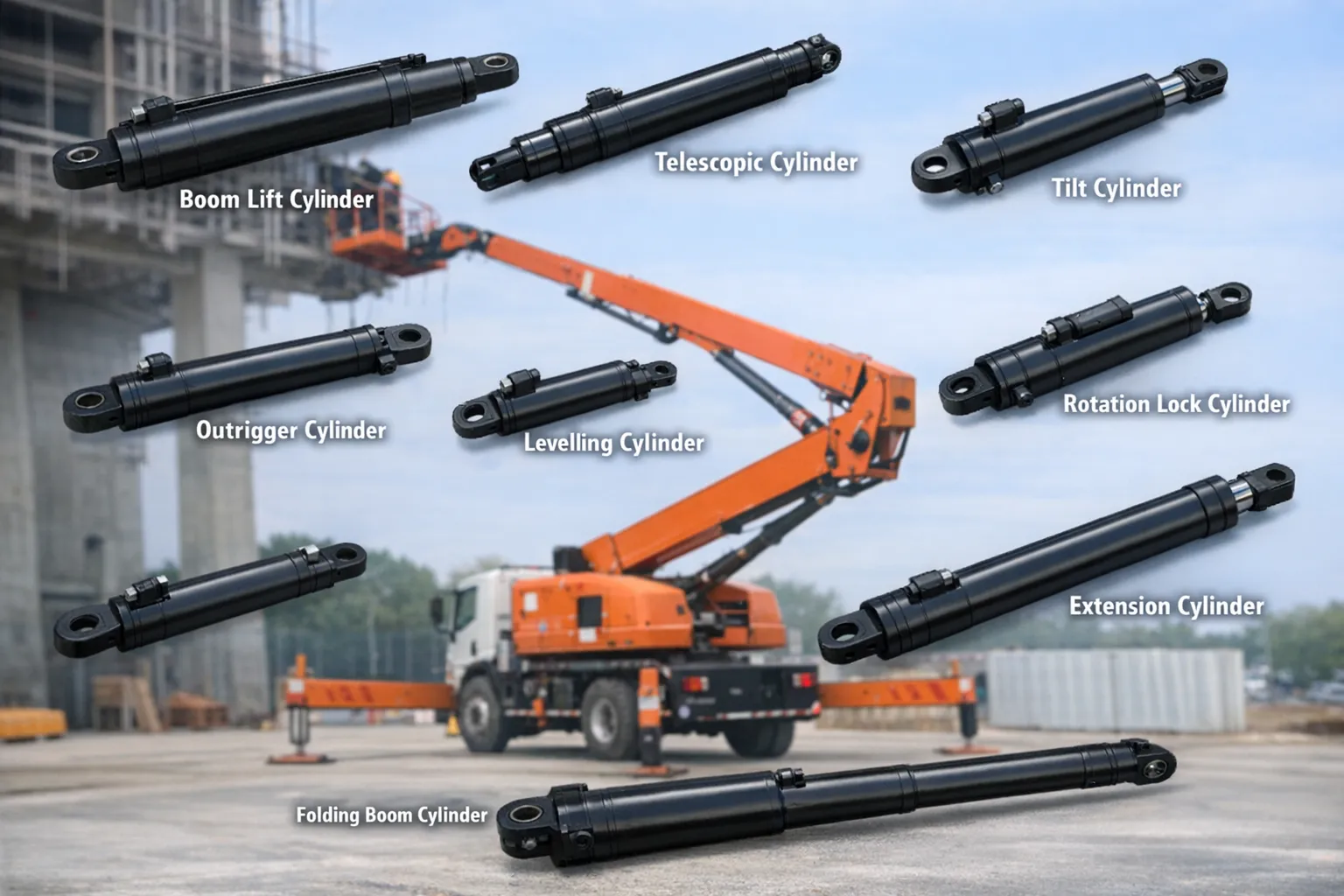
Procurement delays for specialized safety components can paralyze an entire equipment rental fleet. Sourcing original equipment manufacturer (OEM) parts often involves massive markups and extended international shipping times. Our engineered rotary lock cylinder series is dimensionally mapped to serve as precise drop-in replacements for major aerial work platform brands operating globally. We match the exact pin-to-pin mounting distances, port thread pitches, rod diameters, and stroke lengths to ensure your mechanics can swap the part in minutes without welding or modifying the host machine.
We frequently provide high-performance upgrade replacements for hydraulic rams and hydraulic cylinder components utilized on platforms built by global leaders such as JLG Industries, Genie (Terex), Haulotte, Skyjack, Snorkel, Dingli, Zoomlion, and XCMG. By partnering directly with us, you secure heavy-duty hydraulic parts that exceed original factory specifications, particularly in resisting eccentric load shear forces. Unlike a standard, constantly moving lift cylinder, these lock units are purpose-built for rigid, stationary security.
Important Engineering Notice: The brand names, equipment models, and trademarks mentioned above are the exclusive property of their respective corporate entities. They are referenced herein solely for the purpose of communicating dimensional compatibility, technical fitment, and assisting maintenance personnel with accurate cross-referencing. We operate as an independent engineering and manufacturing firm and make no claim of formal affiliation or endorsement by these trademark holders.
Five Core Technology Advantages
Transforming a standard fluid actuator into a critical safety lock requires a multi-disciplinary engineering approach. To combat the devastating effects of an eccentric load and sudden lock failure, we integrate five distinct technological advancements into every rotary lock hydraulic cylinder produced in our facility:
1. Flawless Hydraulic Control Lock Integration
The core feature of this rotary lock cylinder is its internal valving. External piping connecting to a separate check valve block is highly vulnerable to falling debris or severe vibration fatigue. We CNC-machine the valve cavity directly into the solid steel head of the cylinder block. This integrated hydraulic control lock guarantees zero fluid bypass. Once the locking pin is extended, it becomes a rigid, unyielding structural pillar, utterly immune to external hydraulic hose bursts or main pump pressure drops.
2. High-Shear Alloy Steel Welded Architecture
Turntable locking pins face incredible shear forces when a fully loaded, extended boom sways in the wind. Standard carbon steel pins can warp and deform over time, making them impossible to retract, thereby jamming the turntable completely. We machine our rods and barrels exclusively from premium, heat-treated alloy steel. This material offers a drastically higher yield strength, ensuring the pin maintains its perfectly cylindrical geometry even when absorbing violent lateral impacts.
3. Advanced Nickel Plated Surface Treatment
While hard chrome is the industry standard for a typical hydraulic cylinder, the locking pin environment is completely different. It slides tightly into hard metal receptacles, creating extreme metal-on-metal friction that strips standard chrome over time. We utilize a specialized electroless nickel plated surface process for the exposed locking sections. Nickel plating provides superior inherent lubricity, incredible anti-galling properties, and outstanding chemical resistance against corrosive salt spray and industrial solvents.
4. Ultra-Low Friction Piston Cylinder Matrix
Because the locking action must be swift and decisive, hesitation or “stick-slip” cannot be tolerated. We equip the internal hydraulic cylinder piston with a specialized composite seal matrix utilizing PTFE (Teflon) glide rings over heavy elastomeric energizers. This drastically lowers the dynamic friction coefficient inside the bore. The result is instant, smooth pin engagement and retraction, reducing wear on the internal hydraulic cylinder components and extending overall fatigue life.
5. Thermal Stability and Fatigue Life Optimization
Machines operating in scorching summer heat or freezing winters experience extreme hydraulic fluid viscosity changes. Our custom-blended seals maintain their physical elasticity across a massive temperature gradient. By combining this thermal stability with robotic, deep-penetration welding that eliminates micro-fissures in the steel structure, we achieve a tested fatigue life that significantly outpaces standard market offerings, greatly lowering your long-term hydraulic cylinder price investment.
Rigorous Manufacturing Process and Quality Control
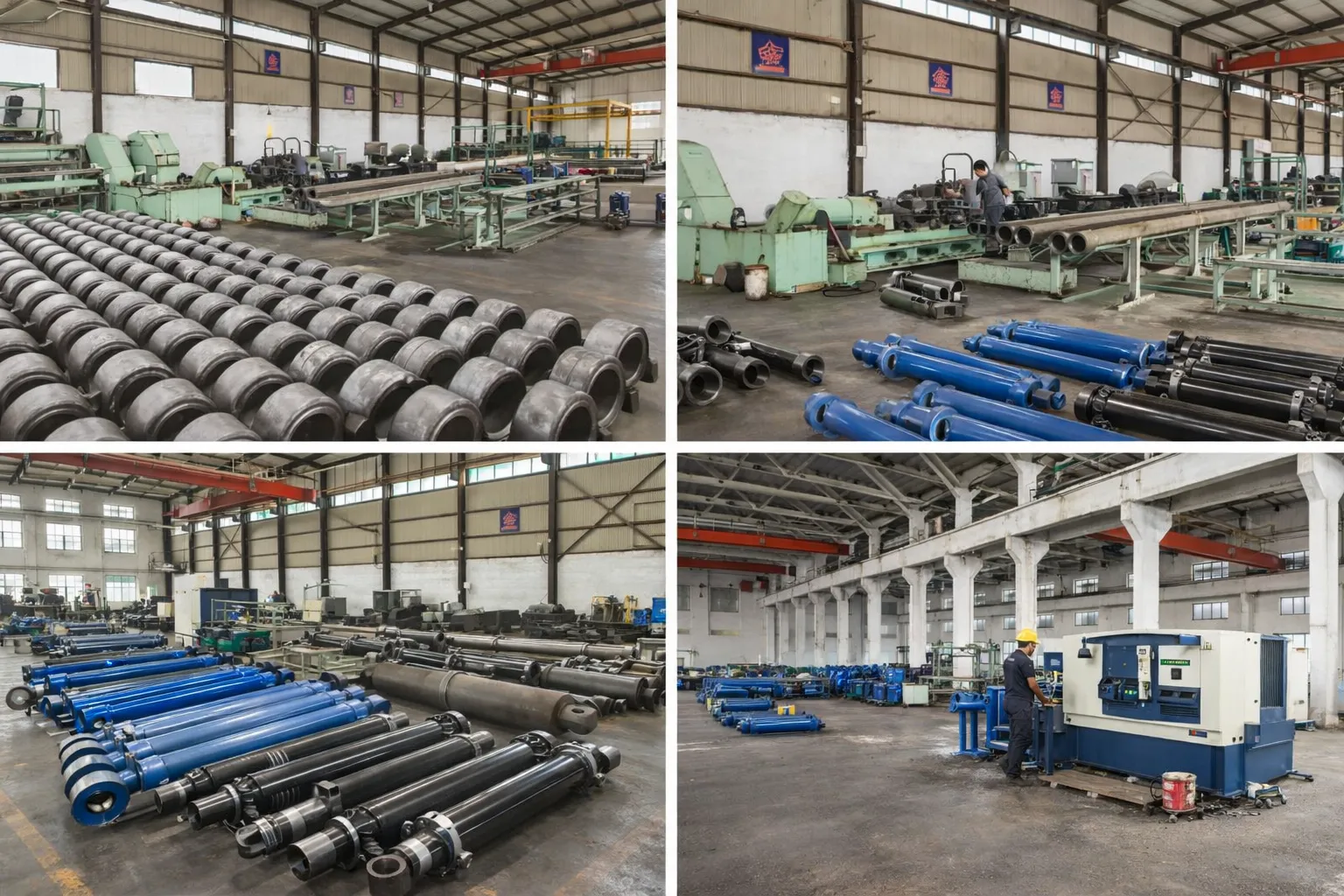
A component designed to prevent catastrophic equipment rotation cannot be manufactured casually. Our vertical integration strategy means we command every single step of the production cycle, from raw alloy steel verification to the final automated painting line. This total oversight eliminates the risks associated with outsourcing critical machining steps. Our deep-hole boring and skiving machines ensure the internal barrel finish is mathematically flawless, which is the necessary foundation for our absolute zero-leakage guarantee.
Before any rotary lock cylinder is approved for international shipping, it must survive our punishing testing protocol. 100% of our units are connected to high-pressure diagnostic test benches. We cycle them repeatedly under pressures exceeding their maximum working rating by 150%. We hold the pressure statically for extended durations to verify that the integrated hydraulic control lock does not permit even a fraction of a millimeter of internal fluid bypass across the piston.
To support our B2B clients globally, every completed unit is permanently laser-etched with a unique serial identification matrix. This guarantees total lifecycle traceability. Should a maintenance engineer need hydraulic cylinder repair parts five years down the line, pulling the serial code allows us to instantly identify the exact seal profile, alloy batch, and dimensional blueprints utilized during its specific production run.
Expansive Industry Applications
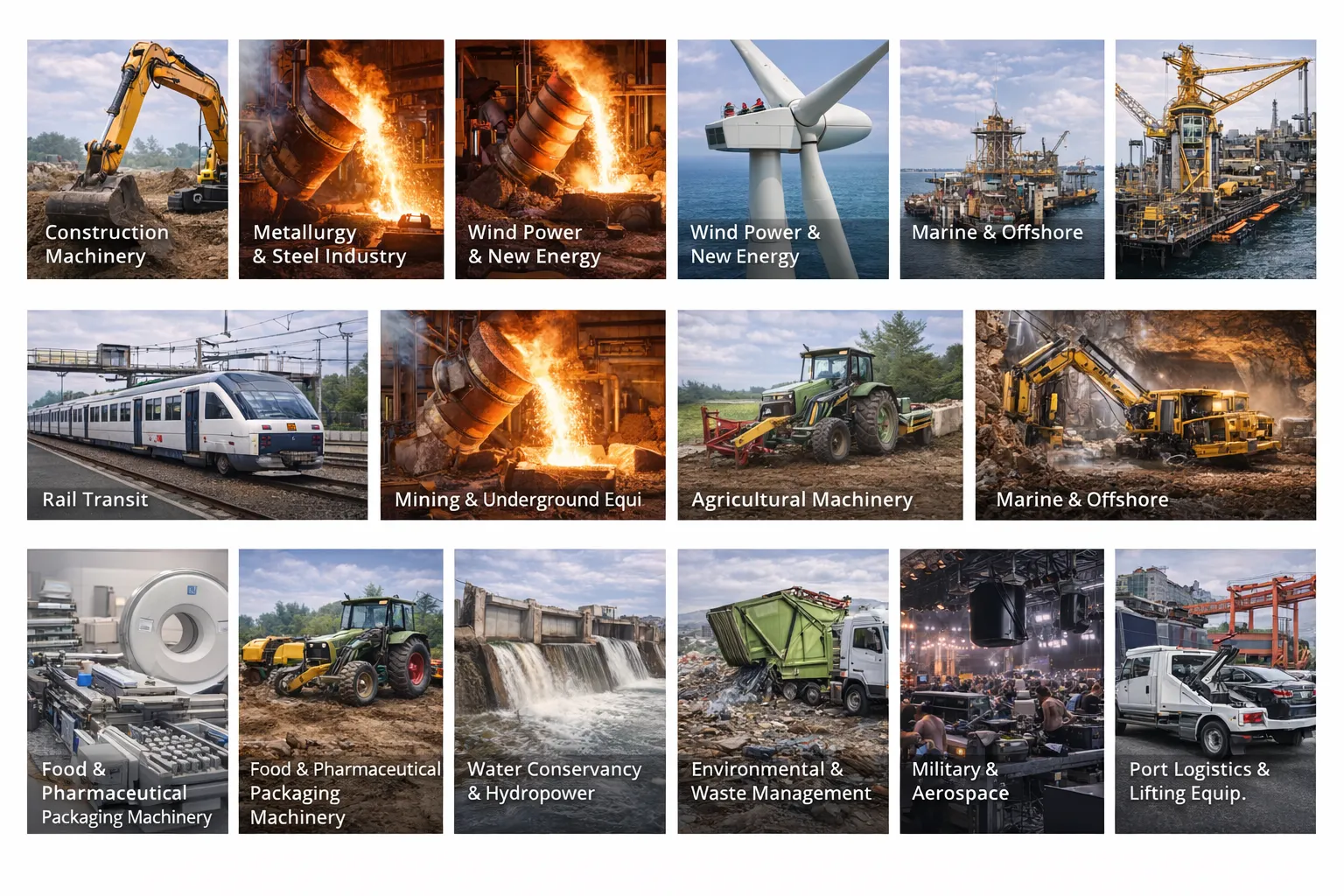
While specifically engineered to manage the intense eccentric load requirements of aerial platforms, the sheer stopping power and reliability of this safety lock make it highly desirable across multiple heavy industries. You can explore a wider array of our fluid power solutions and heavy machinery applications in our dedicated construction machinery industry sector hub.
- Construction Machinery: Securing the upper revolving superstructure on massive excavators and mobile truck cranes during high-speed highway transit to prevent dangerous swing.
- Metallurgy & Heavy Forging: Locking massive rotary positioning tables in steel mills where immense ambient heat and violent impacts require impenetrable mechanical holding forces.
- Plastics & Rubber Machinery: Engaging locking core pins in massive injection molding machines, ensuring heavy molds do not separate under extreme injection pressures.
- Material Handling & Automation: Freezing automated rotating cargo platforms and robotic articulated arms in exact positions for highly precise loading and unloading sequences.
- Renewable Energy Infrastructure: Fixing the pitch and yaw mechanisms on wind turbine nacelles during critical maintenance operations in highly unpredictable wind environments.
Comparative Analysis: Standard Market Lock Cylinders vs. Our Premium Solution
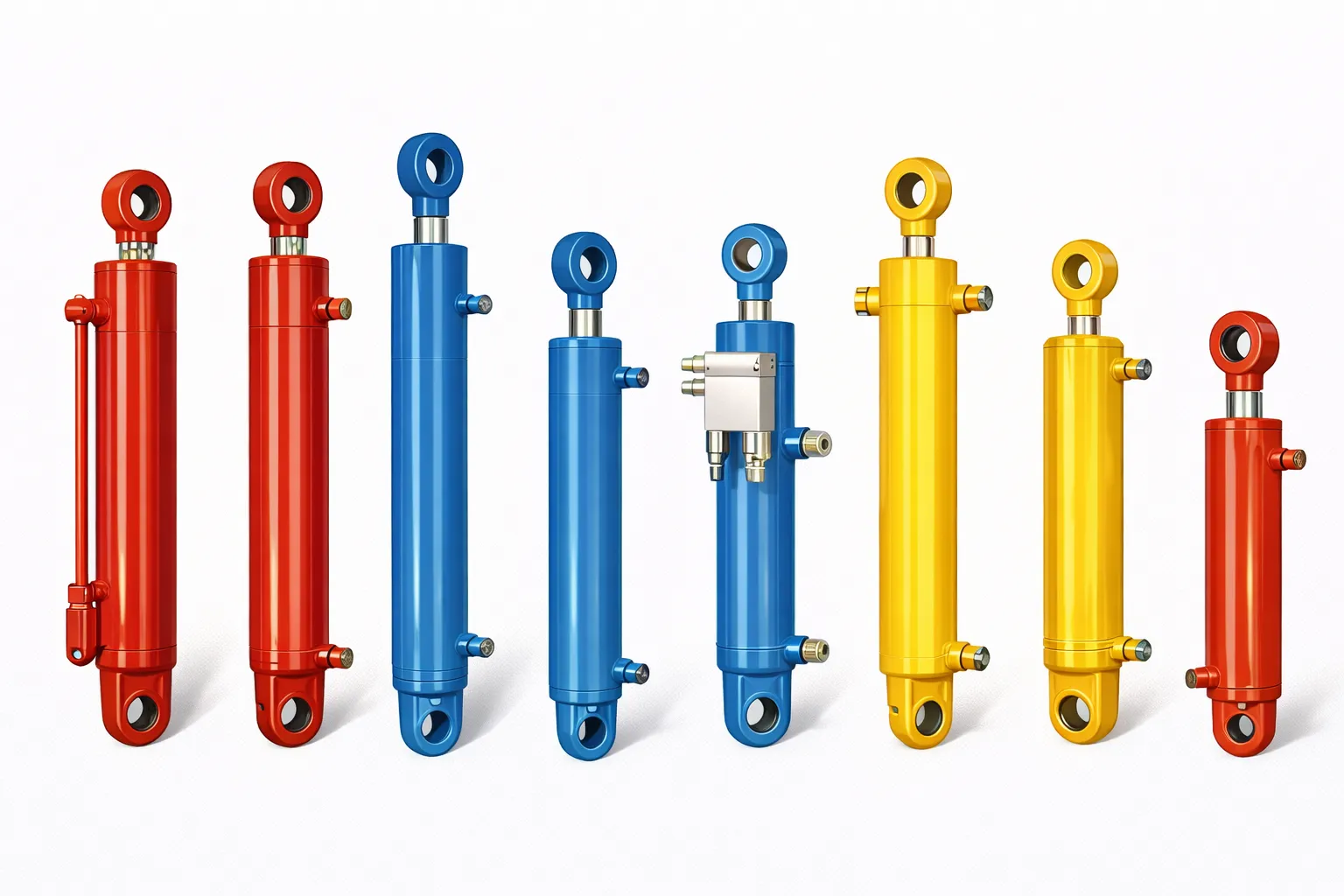
When evaluating critical safety components, focusing solely on the cheapest initial price is a dangerous procurement strategy that leads to extensive fleet downtime. The following technical comparison highlights the vast gap in reliability, fluid control, and material science between a generic market actuator and our specialized locking solution.
| Engineering Feature | Standard Ordinary Cylinder | Our High-Performance Rotary Lock Cylinder |
|---|---|---|
| Material Metallurgy | Standard Carbon Steel. Highly prone to bending and permanent shear under a severe eccentric load. | High-Yield Alloy Steel. Immense shear strength maintains pure structural integrity. |
| Locking Rod Surface | Thin hard chrome. Frequent galling, rust, and scratching against hard metal chassis receptacles. | Electroless Nickel Plated. Exceptional mechanical lubricity, anti-galling, and completely corrosion proof. |
| Holding Mechanism | External check valves or spring return. High risk of hose damage causing catastrophic lock failure. | Integrated internal Hydraulic control lock. Absolute zero fluid drift, completely immune to line failure. |
| Friction Dynamics | Basic NBR O-rings. Causes jerky “stick-slip” motion preventing smooth pin insertion and withdrawal. | PTFE Glide Matrix. Ultra-low internal friction for instant, smooth, and decisive lock engagement. |
| Quality Assurance | Random batch sampling. Internal weld porosity or minor seal leaks go undetected to the field. | 100% individual hydrostatic testing to 150% rating. Full laser-etched operational traceability. |
Proven Global Success: 5 Transformative B2B Case Studies
The true test of a safety component is its reliable performance under extreme job site conditions over many years. We have successfully partnered with major contractors and rental agencies across East Asia to resolve their most dangerous rotational stability issues. Here are five documented success stories from our engineering files.
Case 1: Eradicating Winter Lock Failures for a Mega Rental Fleet
Location & Client: Major Equipment Rental Corporation, Seoul, South Korea (November 2024)
The Challenge: During the freezing Korean winters, the client’s high-reach articulating booms experienced terrifying instances of lock failure. The internal seals in their OEM slewing cylinders shrank in the extreme cold, causing hidden fluid bypass. Turntables would slowly drift laterally under an eccentric load while workers were 30 meters high in the air.
Engagement: The fleet maintenance director contacted us after reading about our integrated hydraulic control lock technology on our website, urgently seeking winterized upgrades.
Solution & Result: We delivered a batch of double-acting replacement rotary lock cylinder units equipped with our extreme-temperature polyurethane seal matrix and integrated PO check valves. The result was a 100% elimination of turntable drift over the next severe winter season.
“The winter seal upgrade and the direct hydraulic control lock completely transformed our safety record. Zero drift, zero complaints from operators. Outstanding engineering.” — Mr. Park Ji-Hoon, Fleet Director
Case 2: Conquering Corrosion in Coastal Shipyards
Location & Client: Commercial Shipbuilding Facility, Busan, South Korea (May 2025)
The Challenge: Using boom lifts in maritime drydocks exposed the locking pins to highly corrosive salt spray and abrasive grinding dust. Standard chrome rods were pitting and galling against the metal receptacles, causing the pins to seize and jam the turntables, requiring constant fleet downtime for fixing hydraulic cylinders.
Engagement: The procurement team reached out to our specialized engineering desk for heavy-duty marine-grade solutions.
Solution & Result: We replaced their failing OEM units with our specialized electroless nickel plated cylinders. The self-lubricating, highly chemical-resistant nickel surface entirely stopped the galling and corrosion. Routine maintenance replacement costs dropped by 80%.
“Standard chrome does not survive here. Your nickel plating technology is incredible; the pins slide perfectly even after months of intense saltwater exposure.” — Kim Min-Su, Maintenance Lead
Case 3: Resisting Extreme Eccentric Loads on Bridges
Location & Client: Highway Infrastructure Maintenance Contractor, Tokyo, Japan (September 2025)
The Challenge: When inspecting underneath highway overpasses, the aerial platforms were extended fully horizontally. This created a massive eccentric load on the turntable. A sudden wind gust actually bent the carbon steel locking pins on two machines, requiring complex cutting to free the turntables.
Engagement: Submitted engineering blueprints through our portal asking if we could manufacture higher-yield strength replacements.
Solution & Result: We implemented our high-yield alloy steel design. The shear strength of the locking pin increased exponentially. Since the retrofit, the fleet has operated flawlessly in high-wind conditions without a single bent pin or lock failure.
“Platform safety over moving traffic is critical. Knowing the locking pin is made of specialized alloy steel gives our inspection crews the absolute confidence they need.” — Kenji Sato, Operations Manager
Case 4: High-Frequency Cycle Fatigue Resolution
Location & Client: National Telecommunications Repair Fleet, Taipei, Taiwan (January 2026)
The Challenge: Telecom bucket trucks move rapidly from pole to pole. Operators were engaging and disengaging the rotary lock dozens of times a day. This high-frequency cycling caused the standard NBR seals in the OEM cylinders to shred quickly, leading to constant fluid leaks and excessive downtime for hydraulic cylinder repair.
Engagement: They engaged our technical sales team at a regional heavy machinery exposition, searching for highly durable hydraulic cylinder components.
Solution & Result: We integrated our ultra-low friction PTFE glide matrix into their custom replacements. The reduced internal friction stopped the heat buildup and seal shredding. The lifespan of the locking actuators tripled compared to the original parts.
“We measure success by truck uptime. The durability of your PTFE sealing system is unmatched; we no longer have trucks sidelined for minor lock leaks.” — Lin Wei-Chen, Fleet Procurement
Case 5: Strategic OEM Partnership for Mass Production
Location & Client: Domestic Aerial Lift Manufacturer, Incheon, South Korea (February 2026)
The Challenge: A rapidly growing lift manufacturer needed a reliable supplier for their new line of compact spider lifts. They required a partner capable of high-volume, precision manufacturing with a flawless safety record to maintain their CE certifications, while also looking for an optimized hydraulic cylinder price structure.
Engagement: Reached out via our contact page for a mass-production quote to evaluate our factory capabilities.
Solution & Result: We established a dedicated robotic welding line for their specific SKU. By guaranteeing 100% factory pressure testing on every single unit, we removed their incoming QA bottleneck and delivered premium parts at a scalable cost, cementing a long-term JIT partnership.
“Finding a manufacturer that scales volume without dropping a single percentage point in quality is rare. Your testing protocols give us immense confidence in our final product safety.” — Choi Hyun-Woo, Supply Chain Director
B2B Buyer Frequently Asked Questions (FAQ)
For fleet operators and chief engineers, understanding the precise capabilities of a safety component is mandatory. Below are detailed answers to the most common technical inquiries regarding our locking solutions and hydraulic parts.
1. What exactly causes lock failure in a standard slewing system?
Lock failure typically occurs via two paths: mechanical or hydraulic. Mechanically, severe eccentric load conditions can bend a low-grade carbon steel pin, jamming it permanently inside the receptacle. Hydraulically, damaged internal piston seals allow pressurized fluid to bypass, slowly allowing the pin to drift backward and disengage under lateral pressure. We solve both by using high-yield alloy steel and integrating an absolute-zero-drift hydraulic control lock.
2. Why use nickel plating instead of the standard hard chrome found on a lift cylinder?
While hard chrome is excellent for linear sliding through softer non-metallic seals (like in a standard lift cylinder), a locking pin frequently grinds aggressively against hardened steel chassis holes. Chrome can chip or gall under heavy metal-to-metal contact. Electroless nickel plating provides superior lubricity, preventing galling, and offers vastly superior chemical resistance against the elements in exposed chassis areas.
3. How does the integrated hydraulic control lock ensure operator safety?
The hydraulic control lock is a pilot-operated check valve machined directly into the solid steel head. Once pressurized fluid pushes the pin outward, this valve slams shut, mechanically trapping the fluid inside the bore. Even if a falling tree branch slices the external hydraulic supply hose, the trapped fluid cannot escape, meaning the pin remains rigidly extended, preventing catastrophic turntable rotation.
4. Can this unit replace original OEM hydraulic parts without modifications?
Yes. We specialize in precision engineering. We map the exact pin-center dimensions, flange mounting patterns, and port thread specifications of the machinery used in your fleet. Our parts drop directly into place, drastically reducing the labor hours and complexity associated with fixing hydraulic cylinders in the field.
5. Do you supply hydraulic cylinder repair kits for ongoing fleet maintenance?
Absolutely. We design our hydraulic cylinder components to be fully serviceable to lower your long-term ownership costs. We supply OEM-grade seal replacement kits that include our proprietary PTFE glide rings and extreme-temperature polyurethane wipers, ensuring your in-house mechanics can execute a flawless hydraulic cylinder repair.
6. What is the production lead time for bulk orders shipping to East Asia?
For standard replacement profiles, we hold strategic component inventory to expedite assembly. For entirely custom OEM production runs requiring specific alloy forgings, our manufacturing lead time is generally 20 to 30 days. Fast, direct maritime shipping lanes to major ports like Busan, Incheon, or Yokohama add only a few days to the total delivery timeline.
7. Why not use a single acting cylinder instead of a double acting hydraulic cylinder for the lock?
A single acting hydraulic cylinder relies on an internal mechanical spring to pull the pin back. In a harsh construction environment, dirt, rust, or slight bending from an eccentric load can create enough friction to overcome the spring, leaving the pin permanently jammed out. Our double acting hydraulic cylinder design uses high-pressure fluid power to aggressively rip the pin back out, ensuring the machine never gets stuck.
Secure Your Turntable Operations Today
Do not gamble with operator safety by utilizing inferior locking components. Upgrade your fleet with our high-yield alloy steel and zero-drift valving technology. Discover our comprehensive range of specialized hydraulic cylinder models.
Editor: Cxm


























