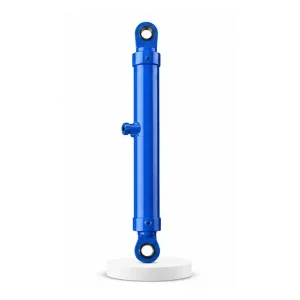
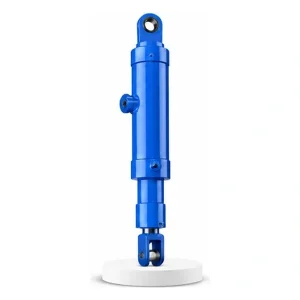
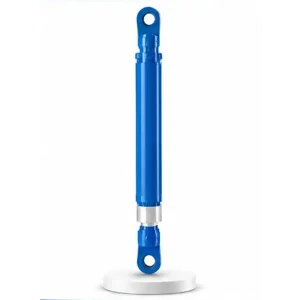
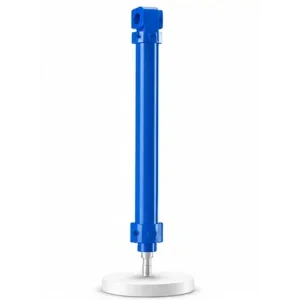
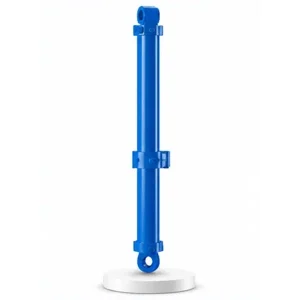
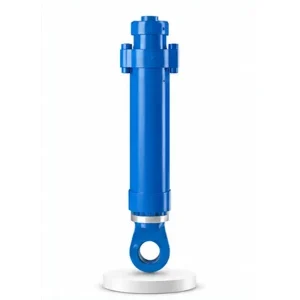
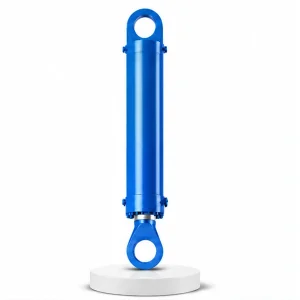
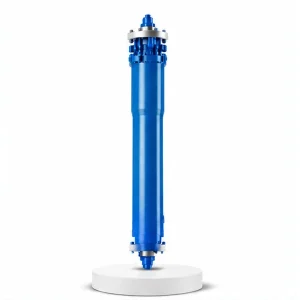
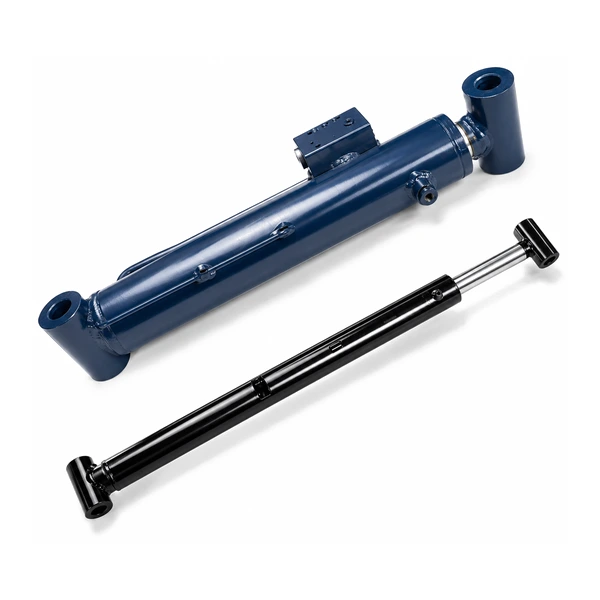
Injection Molding Machine Mold Opening and Closing Cylinder
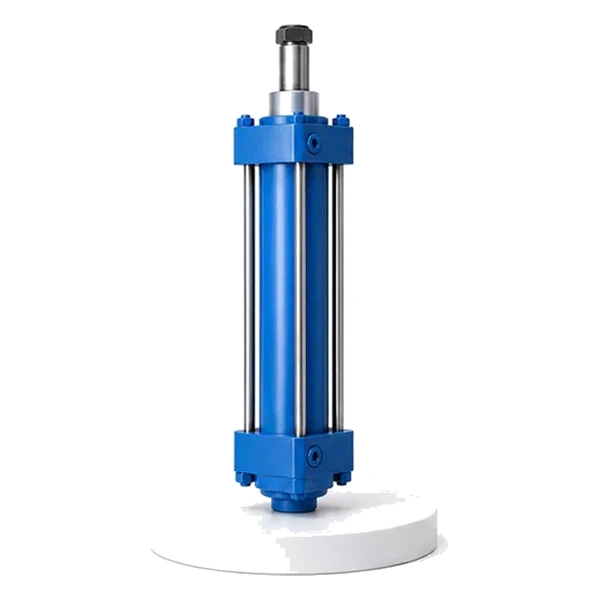
Mold Opening & Closing Cylinder
Open Fast.
Close Carefully.
Protect the Mold.
A precision injection mold costs $50,000 to $500,000 or more. The mold opening and closing cylinder moves the moving platen that carries half of this investment — opening the mold to release the part, then closing it for the next shot. Closing sounds simple. It is not. A stuck part, a fallen fragment, or a misaligned core pin between the mold halves will be crushed when the mold closes — destroying cavity surfaces that took weeks to machine. The closing phase must detect any obstruction and stop before damage occurs.
Two Opposite Motions, Two Different Engineering Problems
The cylinder performs two opposite motions every cycle — and each places different demands on the hydraulic circuit and the cylinder's response characteristics:
Korea Ever-Power manufactures the mold opening and closing cylinder with proportional-valve-compatible port sizing and low-friction seals that respond smoothly across the full speed range — from the fast traverse to the slow mold-protection crawl. Browse the complete injection moulding machine cylinder family.
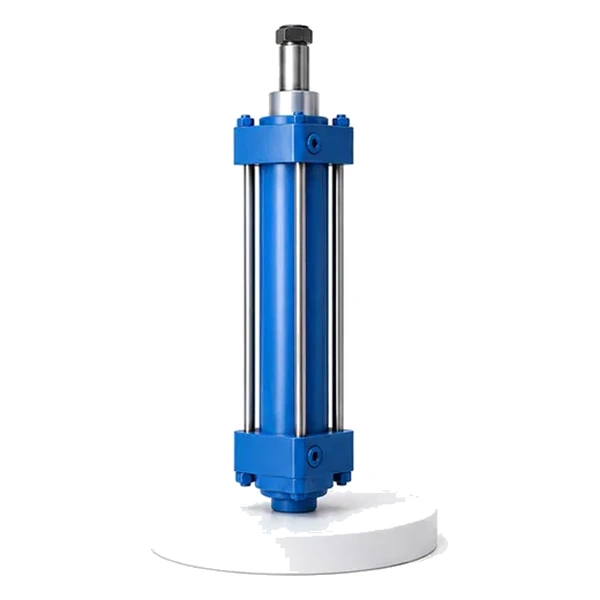
Technical Specifications
| Parameter | Value |
|---|---|
| Product | Injection Molding Machine Mold Opening and Closing Cylinder |
| Function | Traverse the moving platen — open and close the mold |
| Bore Diameter | 50 mm – 140 mm |
| Rod Diameter | 28 mm – 100 mm |
| Stroke | ≤ 700 mm |
| Maximum Thrust | 384 KN (bore 140 mm / pressure 25 MPa) |
| Working Pressure | Up to 25 MPa |
| Certification | ISO 9001 · 100% hydrostatic tested |
Mold Protection — The $500,000 Reason for Slow Closing
Mold protection is the most important function of the mold opening/closing cylinder — more important than speed, more important than force. Here is what it prevents:
If the ejection cylinder failed to push a part out completely, it hangs between the mold halves. Closing the mold at full speed and pressure crushes the part into the cavity surface — imprinting its shape into the polished cavity steel. Repairing the cavity requires re-machining, re-polishing, and possibly re-plating — weeks of mold shop time and $10,000–$100,000 in repair cost. The mold protection phase detects the 2–5 mm of resistance that the stuck part creates and stops the close before impact.
A metal chip from a runner cut, a fragment of flash, or even a dropped tool can land on the mold face between cycles. Closing on this debris indents the cavity surface — a permanent defect that prints onto every part until the mold is repaired. The mold protection phase runs at low pressure — if the cylinder encounters any resistance beyond the expected platen friction, the machine stops.
Complex molds have moving cores and slides that must retract before the mold closes. If a core pin fails to retract, the mold half closes onto it — bending or breaking the pin and potentially cracking the cavity block. The mold protection phase gives the machine controller time to verify all core and slide positions before committing to full closing force. Contact the hydraulic cylinder engineering team for mold protection specifications.
Three-Phase Closing — Fast, Slow, Lock
Phase 1 — Fast traverse (0–80% of stroke). The moving platen advances at maximum speed, covering most of the open gap in minimum time. Hydraulic pressure is moderate — just enough to overcome the platen mass and rail friction. This phase determines the "dry cycle time" (the minimum time for the machine to open, eject, and close without any injection) — faster traverse = more parts per hour.
Phase 2 — Mold protection (80–98% of stroke). The cylinder slows to a crawl — typically 5–20 mm/second. The hydraulic pressure drops to a low, adjustable value (the "mold protection pressure"). At this low pressure, even a small obstruction — a stuck part, a chip, a core pin — generates enough resistance to stop the platen. The machine controller monitors the platen position; if it does not reach the "mold closed" position within the expected time window, it alarms and reverses.
Phase 3 — Final lock-up (last 2%). The mold halves touch. The cylinder builds to full system pressure to seat the halves together, compress the mold parting line, and — on toggle-clamp machines — drive the toggle to its over-centre locked position. The clamping force (which is much larger than the cylinder's traverse force) is then held by the toggle lock or by a separate high-pressure clamp circuit.
Two Machine Architectures — One Cylinder, Different Roles
Toggle-clamp machines. The mold opening/closing cylinder drives a toggle linkage — a system of hinged arms that amplifies the cylinder's force at the end of travel. The cylinder provides the traverse motion (opening and closing the toggle arms); the toggle's over-centre geometry provides the clamping force (typically 5–10× the cylinder's thrust). The cylinder is relatively small (50–100 mm bore) because it only needs to drive the toggle — the toggle does the heavy clamping.
Direct-hydraulic-clamp machines. No toggle — the cylinder provides both the traverse motion and the clamping force directly. The cylinder bore is larger (100–140 mm range) because it must produce the full clamping force without mechanical advantage. Some designs use a separate high-pressure short-stroke "booster" cylinder for the final clamping force, with the opening/closing cylinder providing the long-stroke traverse only.
Korea Ever-Power manufactures the mold opening/closing cylinder for both architectures — with the bore diameter, rod diameter, and stroke matched to the specific machine's toggle geometry or direct-clamp force requirement. The 50–140 mm bore range covers small to mid-sized injection moulding machines across both architectures.
Manufacturing
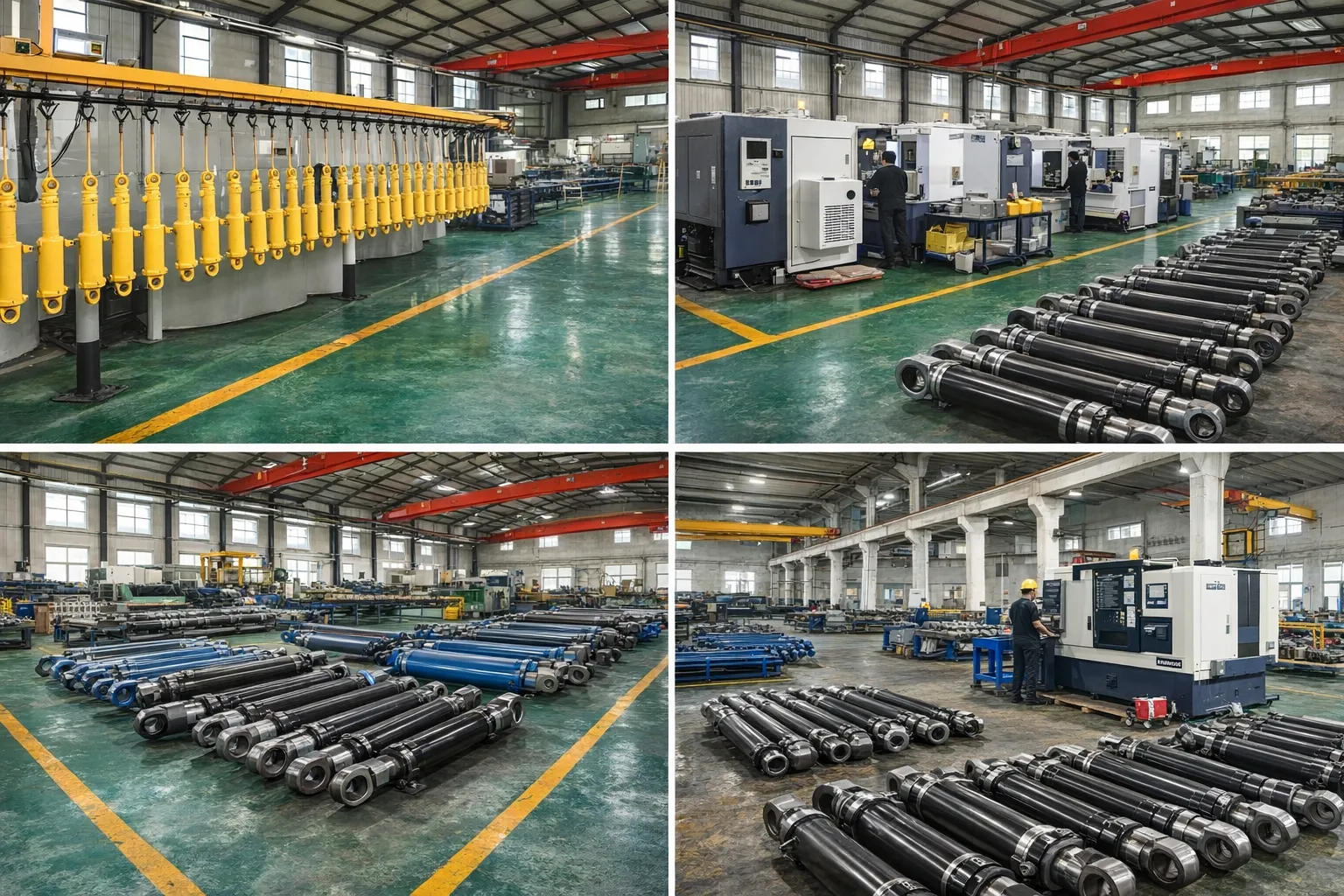
The mold opening/closing cylinder must transition smoothly from fast traverse to the slow mold-protection crawl without stiction or jerky motion. If the cylinder sticks at the start of the slow phase, the platen jumps forward — potentially bypassing the mold protection zone entirely. Korea Ever-Power specifies low-friction seals (polyurethane piston seal, PTFE-bronze rod seal) to minimise the difference between static and dynamic friction, ensuring smooth speed transitions at all flow rates. The bore is honed to Ra 0.2–0.4 µm. Chrome plating is 30–50 µm (clean environment). Every cylinder is hydrostatic tested at 1.5× working pressure and functionally tested for smooth speed transition from full speed to the mold-protection crawl speed — verifying that the cylinder responds proportionally without stick-slip at the critical transition point.
OEM & ODM
FAQ
Related Categories
Додатне информације
| Editor |
|---|