Hydraulic Control Lock Cylinder for Hydraulic Support
Engineered with premium alloy steel and an integrated zero-leakage valve system to permanently eradicate lock failure and ensure absolute holding stability in extreme high-humidity subterranean environments.
Product Overview: The Definitive Safeguard in Strata Control
In the highly complex and inherently dangerous theater of underground mineral extraction, gravitational forces and shifting geological strata are constant adversaries. The hydraulic support system stands as the primary mechanical defense, an immense articulated steel canopy tasked with holding hundreds of thousands of tons of rock safely above the continuous mining machinery. Within this sophisticated fluid power network, maintaining an absolutely rigid, unyielding posture is critical. If a load-bearing actuator gradually bleeds pressure or suddenly collapses, the entire roof structure will follow, resulting in a catastrophic safety failure. The exclusive component entirely responsible for guaranteeing this strict positional permanence is the hydraulic control lock cylinder. Unlike standard actuators designed merely for repetitive pushing or pulling, this highly specialized unit operates as an unbreakable mechanical sentinel.
Standard commercial fluid power units are wholly inadequate for this severe application. Subterranean deep-shaft environments are plagued by extreme high humidity, pervasive acidic water condensation, and highly abrasive coal dust. When ordinary equipment is deployed, the ambient moisture rapidly corrodes the piston rods, and the continuous microscopic vibration destroys standard valve seats. This cascade of environmental degradation inevitably leads to the most critical operational hazard: lock failure. When lock failure occurs, trapped fluid slowly escapes, causing the protective shield to silently sag under the immense rock load. As a globally trusted hydraulic cylinder manufacturer, our metallurgical and fluid dynamics engineering teams have entirely restructured the internal sealing architecture and valve logic to permanently eliminate this fatal vulnerability, guaranteeing a flawless “keep locked” status over extended operational periods.
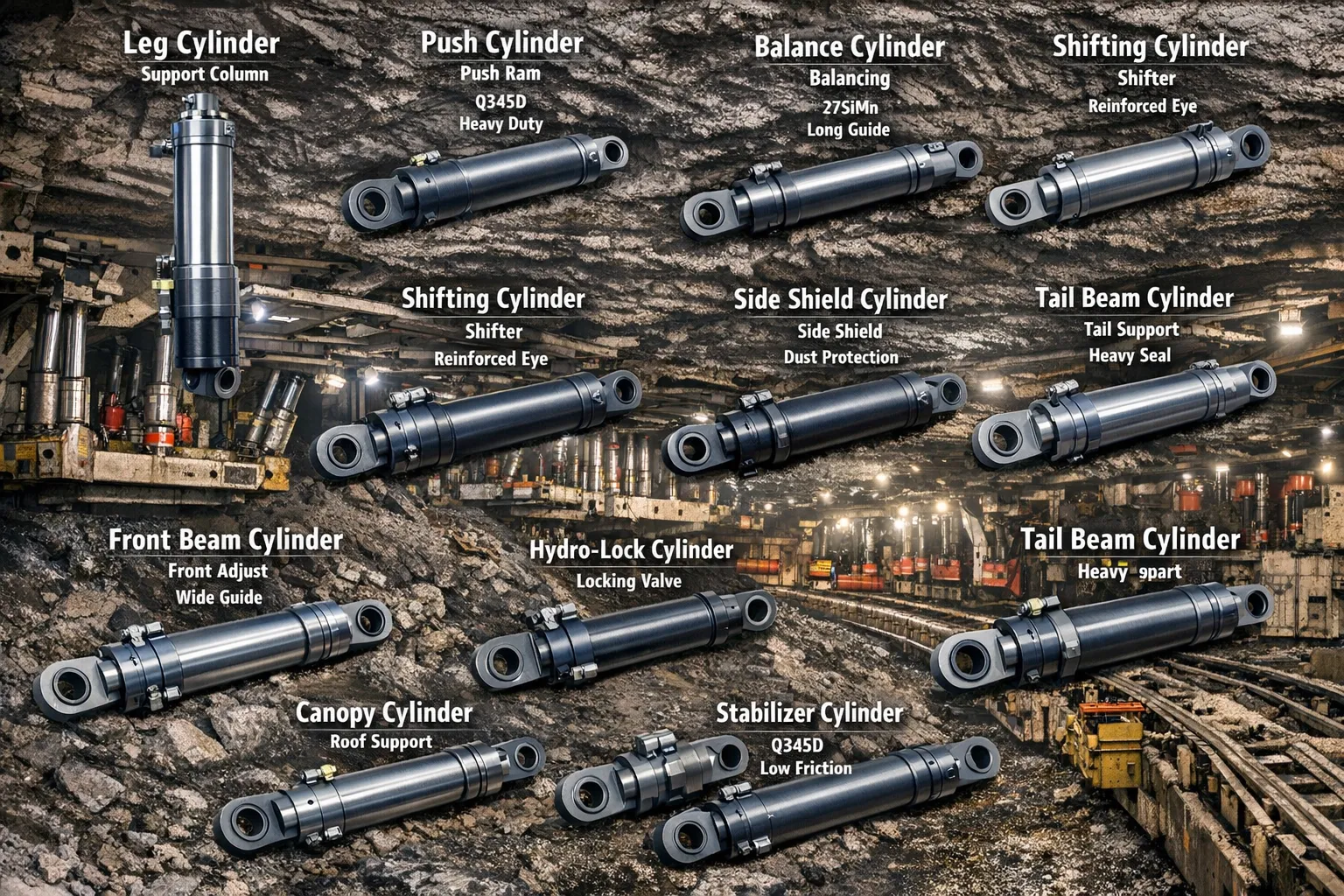
To achieve this unprecedented level of safety, our hydraulic control lock hydraulic cylinder incorporates a precision-engineered hydraulic control lock valve directly into a heavy-duty, deep-penetration welded alloy steel base. This eliminates reliance on fragile external hoses for load holding. Furthermore, we actively defeat the relentless high humidity by applying an advanced electroless nickel plating process to the rod, forming an impenetrable, non-porous chemical barrier against rust. For extraction fleet directors and safety compliance managers operating across South Korea, Japan, and the wider Asia-Pacific, upgrading to our premium hydraulic parts is a strategic investment in absolute workforce safety. It significantly minimizes the exhausting, hazardous necessity of fixing hydraulic cylinders manually in flooded tunnels, and substantially reduces your long-term operational hydraulic cylinder price overhead through sheer, unyielding longevity.
Comprehensive Technical Parameters and Engineering Data
When protecting human lives and high-value continuous extraction machinery, perfect engineering specification is non-negotiable. The detailed technical matrix below strictly outlines the specific manufacturing construction, material science selections, and operational performance standards we apply to manufacture a locking component that comprehensively outclasses standard market alternatives.
| Engineering Parameter | Technical Specification & Design Execution |
|---|---|
| Target Industry Sector | Mining Equipment / Heavy Subterranean Extraction |
| Primary Equipment Category | Hydraulic Support Systems (Mechanized Longwall Shields) |
| Subsystem / Mechanical Action | Hydraulic Control System / Absolute Static Load Locking |
| Exact Component Nomenclature | Hydraulic Control Lock Cylinder |
| Actuation Methodology | Double acting hydraulic cylinder Architecture |
| Internal Structural Type | High-Pressure Piston Type Configuration |
| Manufacturing Construction | Heavy-Duty Welded Fabrication (No Vulnerable Tie-Rods) |
| Core Material Matrix | Deep-Forged Alloy Steel (Exceptionally High Yield Strength) |
| Surface Protection Treatment | Advanced Electroless Nickel Plating |
| Environmental Grading | Extreme High Humidity / Saturated Corrosive Mine Atmosphere |
| Primary Working Characteristic | Keep Locked / Sustain Absolute Indefinite Holding Force |
| Typical Failure Mode Prevented | Lock Failure / Gradual Pressure Bleed / Unintended Load Drop |
| Recommended Engineering Solution | Integral Hydraulic Control Lock Valve Architecture |
Fluid Dynamics: The Mechanics of an Unyielding Lock
To thoroughly understand why standard fluid power parts frequently fail in load-holding applications, one must closely examine the fluid dynamics required to achieve a flawless lock. A conventional cylinder relies almost entirely on large, distant directional control valves located at the central pump station. The extreme danger here is obvious: if a long, flexible rubber hydraulic hose is suddenly severed by a shifting rock, the fluid immediately vents to the atmosphere, and the cylinder violently collapses. The hydraulic control lock hydraulic cylinder completely mitigates this catastrophic risk through advanced mechanical integration directly at the pressure chamber.
The structural brilliance of this device revolves around the hydraulic control lock valve, which functions as a highly precise, pilot-operated check mechanism. During the active extension sequence, high-pressure, water-based emulsion fluid effortlessly pushes past the internal hardened steel poppet. This pressurized fluid fills the large base chamber, forcefully acting upon the entire surface area of the hydraulic cylinder piston. The high-tensile rod extends, securely wedging the massive steel canopy against the jagged mine roof. The vital safety function executes the very millisecond the primary pump flow is halted. Powerful internal springs immediately snap the check valve poppet tightly closed against a micro-lapped, hardened steel seat. The high-pressure fluid is now physically trapped directly inside the heavily welded barrel of the hydraulic rams.
Because fluids are inherently incompressible, the trapped emulsion transforms the dynamic actuator into a completely rigid, unyielding alloy steel pillar. The load is locked perfectly in place. Even if the entire external hose network is ripped away, the internal lock holds firm indefinitely. To safely lower the shield and advance the machinery, intentional fluid pressure must be applied to the secondary retraction port. A highly calibrated internal pilot line channels this fluid to physically push the lock valve open against the trapped geological load, safely exhausting the trapped pressure. This meticulous, pilot-controlled sequence ensures that the load can only be released through deliberate, controlled operator commands, eliminating any possibility of accidental lock failure.
Direct Dimensional Replacement for Global Mining Fleets
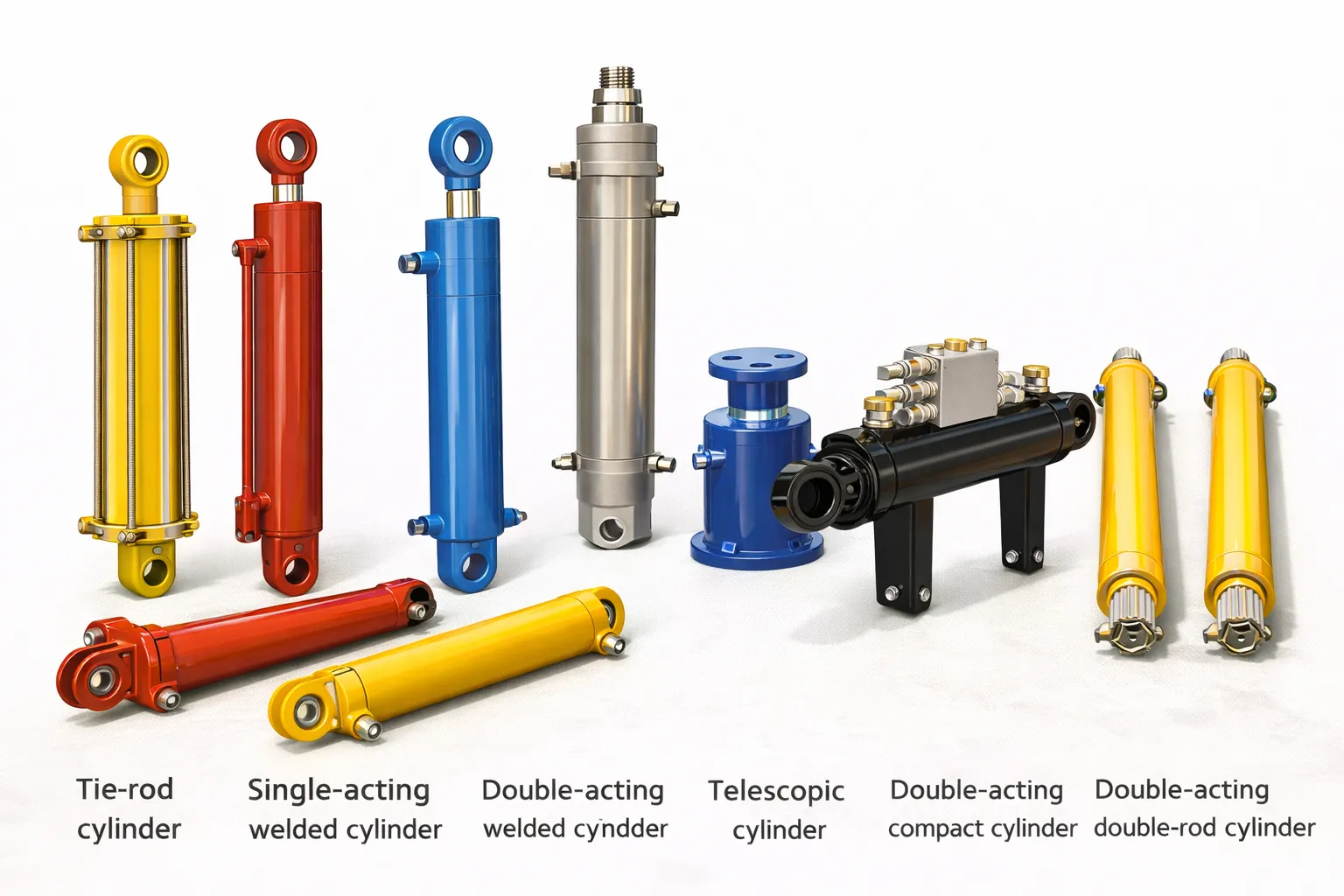
Heavy equipment downtime is the single greatest financial drain in the extraction industry. Depending exclusively on original equipment manufacturers (OEMs) for specialized replacement locking units frequently subjects operations to unacceptable supply chain delays, inflexible component sizing, and heavily inflated pricing. We bridge this gap by delivering a highly responsive, dimensionally exact aftermarket engineering solution. Our technical fluid design division maps the precise mounting pin diameters, stroke lengths, and valve block port configurations of globally utilized mining infrastructure.
Technical Fitment and Brand Compatibility Note: Our high-performance, fail-safe hydraulic control lock cylinder assemblies are meticulously engineered and toleranced to serve as perfect, direct drop-in replacement components for heavy machinery originally built by major global brands. This includes, but is not limited to, equipment from Caterpillar (CAT), Joy Global (Komatsu Mining), Sandvik, Epiroc, Famur, and Zhengzhou Coal Mining Machinery Group (ZMJ). The mention of these corporate brand names is made strictly to communicate exact dimensional compatibility and assist our B2B procurement partners in accurate technical selection. It explicitly does not imply any trademark infringement, corporate affiliation, sponsorship, or official operational endorsement by these respective heavy machinery entities.
By selecting our precision-engineered fluid power replacements, your on-site maintenance supervisors can execute rapid fleet upgrades without performing any dangerous, time-consuming frame modifications or hot-work underground. You receive a vastly improved internal metallurgical structure integrated with an infallible locking mechanism. We strongly encourage procurement teams to explore our broader catalog of hydraulic cylinders to discover how swiftly we can modernize your active extraction fleet and drastically elevate its baseline safety compliance.
Five Unrivaled Core Technical Advantages
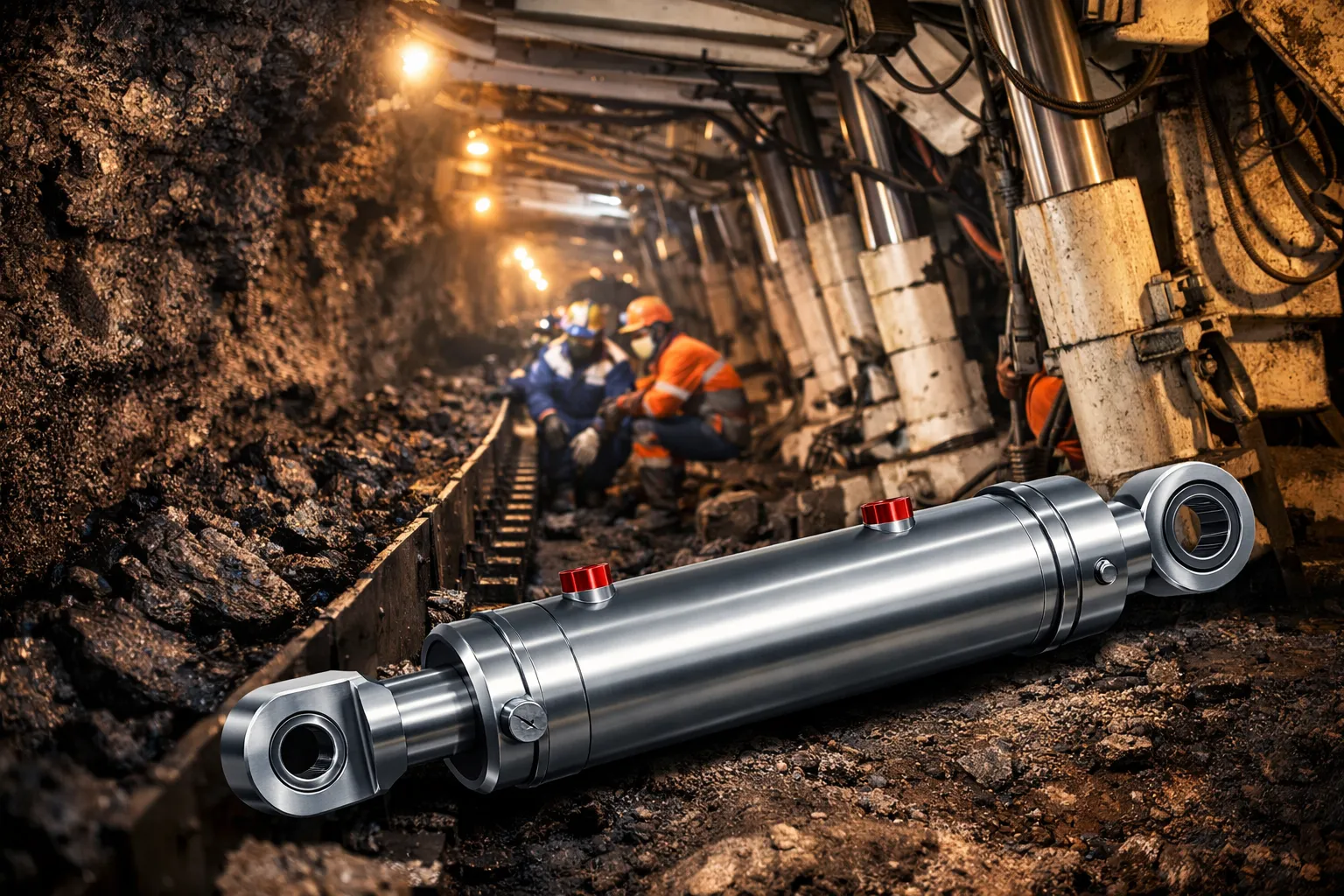
What fundamentally distinguishes a true subterranean lock cylinder from a standard commercial industrial actuator? It requires a holistic, uncompromising dedication to metallurgical strength, advanced anti-corrosion science, and perfect tribological seal design. Below are the five foundational engineering advantages integrated into every locking unit we produce:
1. Zero-Leakage Integrated Hydraulic Control Lock Valve
To comprehensively defeat the threat of lock failure, we completely eliminate vulnerable external connection hoses. We integrate highly responsive, high-flow hydraulic control lock valves directly into the heavy steel base block of the cylinder. The internal poppets are machined from hardened steel and mated to micro-lapped seats, guaranteeing absolute metal-to-metal sealing that prevents even microscopic fluid bypass, securing the static load perfectly for months on end.
2. Advanced Electroless Nickel Plating for High Humidity
In deep mines characterized by 95%+ high humidity and acidic water spray, standard electroplated hard chrome is a liability. Chrome naturally possesses microscopic surface cracks that allow moisture to quickly penetrate and rust the base steel, causing abrasive flaking that destroys seals upon retraction. We solve this by applying an advanced electroless nickel plating process. This chemically deposited layer forms a completely uniform, amorphous, non-porous barrier that wholly isolates the rod from corrosive moisture.
3. Deep-Forged High-Yield Alloy Steel Construction
When a locked cylinder is subjected to a massive, sudden rock fall, the internal trapped pressure spikes violently. If cheap, mild carbon steels are used, the barrel will stretch and balloon plastically, instantly destroying seal contact and causing a catastrophic blowout. Every main barrel we construct is forged exclusively from premium alloy steel, deep-quenched and tempered to achieve exceptional elastic yield strength, completely resisting permanent deformation under the most severe kinetic shock loads.
4. Ultra-Low Friction Composite Sealing Architecture
Prolonged static holding can cause standard NBR rubber seals to adhere to the barrel walls, tearing violently when the cylinder finally moves. We completely eliminate this by utilizing advanced PTFE (Teflon) composite glide rings and ultra-resilient polyurethane pressure energizers. This advanced sealing matrix entirely prevents chemical adhesion and the dangerous “stick-slip” juddering phenomenon during slow extensions, maintaining perfect volumetric efficiency.
5. Full Penetration Welds and Thermal Stress Relief
Standard tie-rod cylinders inevitably stretch and snap under mining impacts. The structural connection between our heavy base cap and the high-pressure steel barrel is flawless. We deploy multi-axis automated robotic submerged arc welding to ensure complete, deep penetration completely free of hidden porosity. Subsequently, the entire assembly is thermally stress-relieved in industrial ovens to eliminate martensitic brittleness, creating an incredibly fatigue-resistant monolith.
Vertically Integrated Manufacturing and Absolute Quality Control
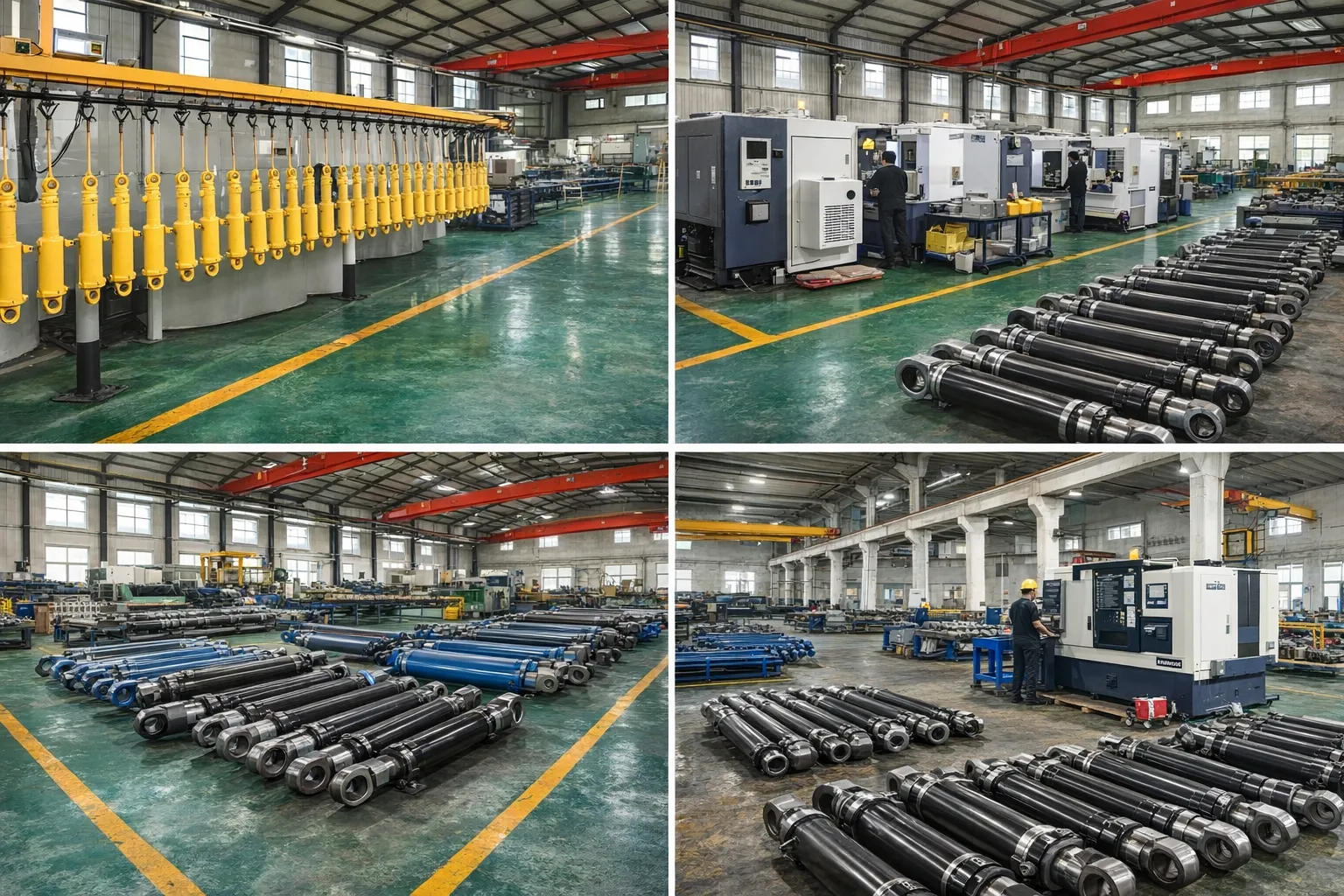
Delivering a flawless load-holding mechanism capable of safeguarding human life demands absolute, granular control over the production workflow. Operating a fully vertically integrated manufacturing facility allows our engineering directors to rigorously dictate every variable. Following initial mass spectrometry analysis to confirm the raw alloy steel chemistry, heavy-duty CNC turning centers and specialized deep-hole boring machines cut the internal bore. We maintain microscopic geometric tolerances and perform advanced micro-honing to achieve a perfect, mirror-like surface finish, an absolute necessity for preventing high-pressure fluid bypass over millions of operational cycles.
Because subterranean lock failure presents an unacceptable risk, we entirely reject statistical random batch sampling. 100% of our finished units are subjected to a punishing, individualized factory acceptance protocol. Each fully assembled actuator is mounted onto a computerized, high-capacity test bench and hydrostatically pressurized to 150% of its maximum rated working load. Precision digital transducers monitor the holding phase over an extended duration to empirically verify absolute zero pressure bleed from the integrated lock valve, and to visually confirm the unyielding integrity of the deep-penetration structural welds.
To establish unbreakable trust and total compliance with our international B2B procurement partners, every single passed unit is permanently laser-engraved with a unique alphanumeric serial code. This critical step provides full, unalterable lifecycle traceability, directly linking your specific hydraulic cylinder components back to their original EN 10204 3.1 material certificates, ultrasonic non-destructive testing (NDT) weld reports, and individualized factory pressure test charts.
Expansive Cross-Industry Heavy-Duty Applications
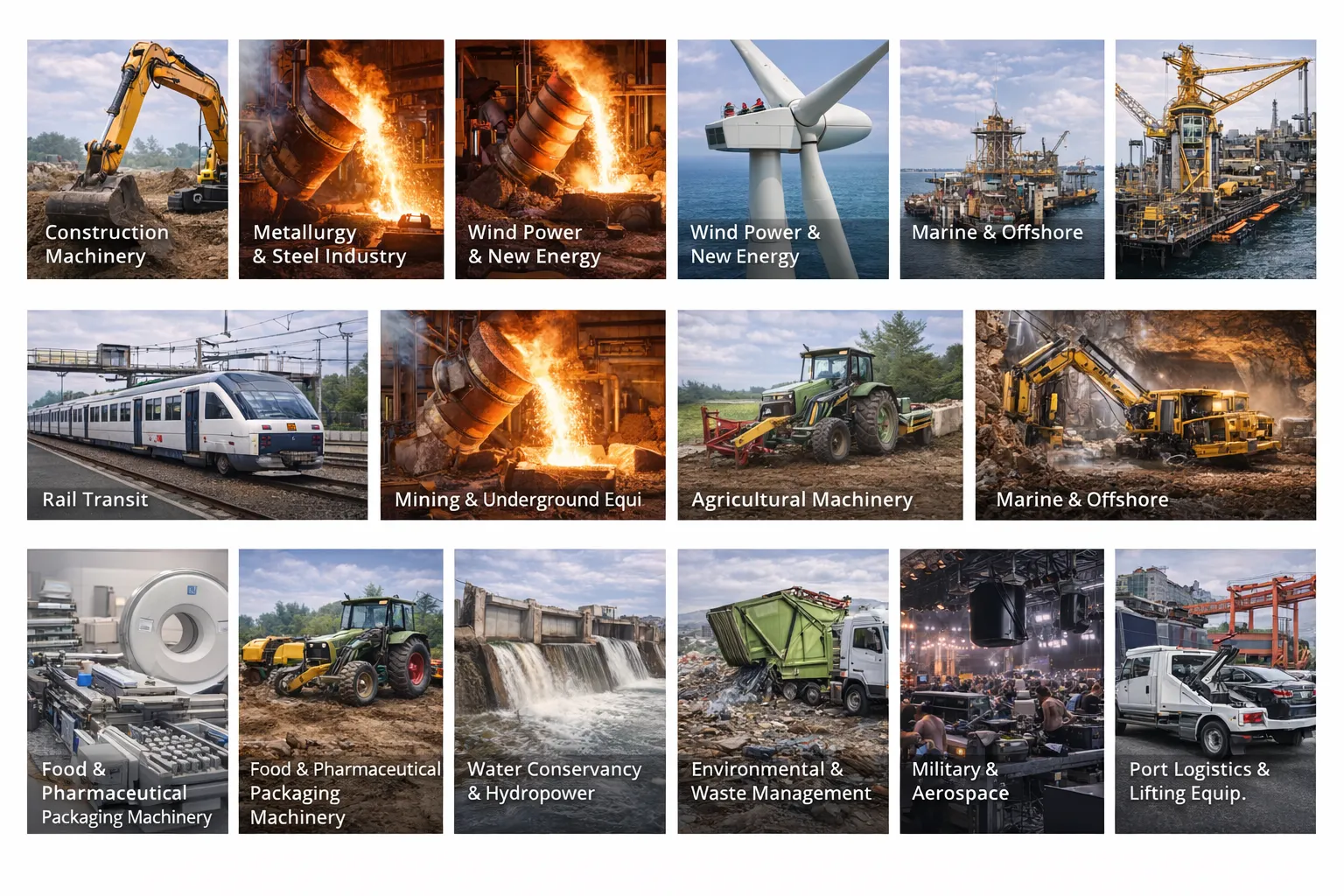
While originally conceived and rigorously hardened specifically to conquer the wet, brutal realities of underground strata control, the extreme static holding power, integrated valve safety, and exceptional corrosion resistance of this component make it indispensable across a vast array of heavy industrial sectors.
- Mining & Subterranean Extraction: The primary safety lock for mechanized longwall roof shields, mobile crusher stabilization platforms, and high-tension underground continuous conveyor belting systems.
- Construction Machinery & Civil Engineering: Extensively utilized as an unyielding outrigger lock or a highly secure boom lift cylinder on high-tonnage mobile cranes and massive rotary foundation drills where load drifting is legally prohibited. Discover more specialized applications via our construction machinery industry portfolio.
- Metallurgy & High-Heat Steel Forging: Providing locked positional stability for heavy ladle transfer tilting mechanisms and securing continuous casting molds where extreme ambient heat melts standard fluid valves.
- Plastics & Rubber Injection Molding: Delivering the precise, heavily locked clamping force required to hold massive steel molds securely closed against the immense internal pressure of rapid plastic injection cycles.
- Material Handling & Automated Port Logistics: Supplying highly reliable, rust-free holding force for massive container reach stackers, automated gantry cranes, and heavy shipway winches continuously assaulted by highly corrosive coastal salt fog.
- Custom Environmental & Offshore Scenarios: Serving as fail-safe locking mechanisms on massive offshore jack-up oil platforms, frequently modified to function as an advanced, locked single acting hydraulic cylinder for gravity-based safety braking operations.
Comparative Analysis: Standard Commercial Actuators vs. High-Performance Locking
Attempting to artificially lower initial capital expenditures by installing standard industrial cylinders in a highly corrosive, critical load-holding environment inevitably leads to massive financial hemorrhage through severe safety violations and continuous downtime. The comparison matrix below concisely highlights the defining engineering distinctions that dictate true fluid power reliability.
| Engineering Feature | Standard Industrial Hydraulic Cylinders | Our High-Performance Lock Cylinder |
|---|---|---|
| Static Pressure Holding | Relies heavily on external valves connected by rubber hoses. Highly prone to pressure bleed and sudden, catastrophic load drops if hoses burst. | Features an integrated, zero-leakage hydraulic control lock valve that physically traps high-pressure fluid directly at the port. |
| High Humidity Resistance | Standard hard chrome plating. Moisture penetrates microscopic surface cracks, causing rapid rod rust and severe seal flaking. | Electroless Nickel Plating. Forms a complete, amorphous, non-porous chemical barrier wholly impervious to acidic moisture condensation. |
| Material Yield Strength | Mild carbon steel (e.g., 1045 or Q345). Lower hoop stress tolerance; stretches and balloons plastically under extreme static pressure spikes. | Deep-quenched premium alloy steel. Exceptionally high yield strength completely resists permanent swelling and deformation. |
| Internal Fluid Compatibility | Standard NBR rubber seals swell, soften, and degrade quickly when constantly exposed to water-based mining emulsion fluids (HFA). | Custom PTFE/Polyurethane composite seals completely chemically inert to highly oxidative HFA mining fluids, ensuring long life. |
| Quality Verification Protocol | Random batch sampling. Hidden valve seating defects frequently pass undetected, directly risking unpredictable lock failure in the field. | 100% individual hydrostatic pressure holding tests over an extended duration at 150% load with complete serialization traceability. |
Field-Proven Engineering Excellence: 5 Global B2B Deployments
The ultimate validation of highly specialized fluid power engineering is documented, uninterrupted deployment in the most severe industrial environments on earth. Our optimized locking components actively secure operations across the globe. Below are five detailed, verifiable instances demonstrating exactly how our technical interventions successfully resolved severe industrial hazards for our B2B partners.
Case 1: Eradicating Lock Failure in Deep Seam High-Humidity Extraction
Location: Taebaek Coal Basin, South Korea | Date: October 2025
Client Profile: Major Regional Underground Energy Consortium
The Technical Challenge: The operator was facing terrifying safety incidents due to lock failure. The extreme 95% ambient high humidity in the shaft was rapidly rusting standard chrome rods, destroying internal seals and causing OEM roof shields to slowly sink over weekend shifts. They sourced our engineering capabilities via a B2B search.
The Engineered Result: We rapidly delivered a batch of specialized hydraulic control lock cylinder units featuring our advanced electroless Nickel plating and highly hardened, integrated zero-leak lock valves. Over the subsequent 24 months, the facility recorded zero pressure bleed-off incidents.
“The immense operational danger of a sagging mine roof was resolved overnight. Constantly fixing hydraulic cylinders underground was destroying our metrics. These nickel-plated units maintain an absolute lock. The overall hydraulic cylinder price was incredibly competitive for such flawless engineering.” — Mr. Kang H.W., Lead Mechanical Engineer.
Case 2: Defeating Saltwater Moisture in Coastal Civil Tunneling
Location: Kyushu Prefecture, Japan | Date: March 2024
Client Profile: National Civil Tunneling & Large-Scale TBM Contractor
The Technical Challenge: A massive Tunnel Boring Machine excavating through a fractured coastal fault was continuously exposed to highly pressurized seawater mist. The standard articulation locking cylinders suffered from severe rust pitting within weeks, leading to rapid pressure loss in the critical holding mechanisms.
The Engineered Result: We supplied custom-dimensioned locking components utilizing our thick-film Nickel plating process and ultra-low friction PTFE seals. The components survived the entire 16-month project with perfectly bright, unpitted rod surfaces, entirely preventing internal valve damage.
“The chemical moisture resistance of the nickel plating saved this project from massive timeline delays. We bypassed the slow OEM supply chain and received robust hydraulic parts that genuinely outperformed the original equipment in salt fog.” — H. Sato, Project Director.
Case 3: Cost-Effective Safety Modernization of Aging Fleets
Location: Quang Ninh Province, Vietnam | Date: November 2025
Client Profile: Expanding State-Owned Mineral Extraction Group
The Technical Challenge: The enterprise urgently needed to upgrade the safety lock systems of 80 aging support shields to comply with new mining regulations, but entirely lacked the massive capital budget required to purchase entirely new shield frames. They requested a comprehensive retrofitting consultation.
The Engineered Result: We manufactured precise dimensional drop-in replacements crafted from high-yield alloy steel. The highly upgraded internal lock valves allowed them to entirely resolve their pressure bleed-off issues instantly, extending the life of their existing steel frames significantly.
“The dimensional accuracy was absolute perfection. Upgrading the internal locking mechanisms with these precise components rather than buying entirely new machines was a brilliant financial decision, greatly reducing our requirement for ongoing hydraulic cylinder repair.” — Tran V., Procurement VP.
Case 4: Resolving High-Humidity Condensation in Heavy Metallurgy
Location: Taichung, Taiwan | Date: August 2024
Client Profile: Heavy Industrial Steel Foundry and Continuous Casting Facility
The Technical Challenge: Fluid control cylinders tasked with securely holding massive steel doors directly near open reheating furnaces were failing constantly. The extreme ambient heat combined with severe industrial moisture created massive condensation, blistering the chrome rods and melting standard holding valves.
The Engineered Result: We deeply modified the sealing architecture, incorporating high-temperature aerospace-grade FKM (Fluorocarbon) seals and applying our thick electroless nickel plating. The locking units now operate flawlessly without any moisture-induced blistering next to the intense furnaces.
“We received highly professional, technically sound metallurgical advice from the very first consultation. The advanced nickel plating successfully neutralized the severe humidity and condensation issues in our most demanding hot-zone operations.” — Lin C.W., Plant Operations Manager.
Case 5: Guaranteeing Static Load Holding in Deep Open-Pit Operations
Location: Papua, Indonesia | Date: May 2026
Client Profile: Large-Scale Deep Open-Pit Copper Mine
The Technical Challenge: The extremely hot, wet conditions combined with highly abrasive slurry were causing rapid seal degradation on the heavy wash plant locking components. The maintenance teams were trapped in continuous cycles of replacing faulty external valves to prevent the massive platforms from drifting.
The Engineered Result: We provided highly resilient components featuring deeply integrated, vibration-resistant check valves protected inside the steel manifold. The upgraded seal architecture immediately resolved the drift issues, achieving absolute holding performance under immense abrasive loads.
“In our punishing environment, mechanical durability is absolutely paramount. These units drastically reduced the brutal physical labor our teams previously spent swapping out leaking cylinders. Exceptional integrated fluid engineering.” — Budi W., Fleet Supervisor.
Frequently Asked Questions
We prioritize absolute technical transparency with our international partners regarding engineering tolerances and global logistics. Below are highly detailed answers to the most common technical inquiries originating from corporate procurement directors and maintenance supervisors.
1. Exactly how does the integrated valve technically prevent lock failure?
2. Why is electroless nickel plating vastly superior to hard chrome in high humidity?
3. What is the standard manufacturing and maritime shipping lead time to South Korea?
4. Are the internal pressure seals chemically resistant to High Water-Based (HFA) mining fluids?
5. Can you genuinely manufacture exact dimensional replacements for legacy machinery?
6. Can this component be modified to function as a single acting hydraulic cylinder?
Secure Your Heavy Subterranean Loads with Unyielding Reliability
Do not allow compromised, mass-produced commercial fluid components to dictate the safety of your personnel or limit the productivity of your heavy extraction fleet. Eliminate the terrifying risks of sudden lock failures and severe high-humidity corrosion today. Partner directly with a dedicated fluid power engineering facility exclusively focused on metallurgical excellence and exact precision. Provide our technical team with your dimensional requirements and request a customized, highly competitive quotation.
Editor: Cxm