
Plate Rapping Cylinder for Electrostatic Precipitator
Guarantee absolute environmental compliance and continuous dust removal efficiency. Engineered with advanced surface hardening and wear-resistant guidance to eliminate plunger scoring in extreme high-temperature and severe abrasive dust environments.
Strategic Equipment Overview and Industrial Value
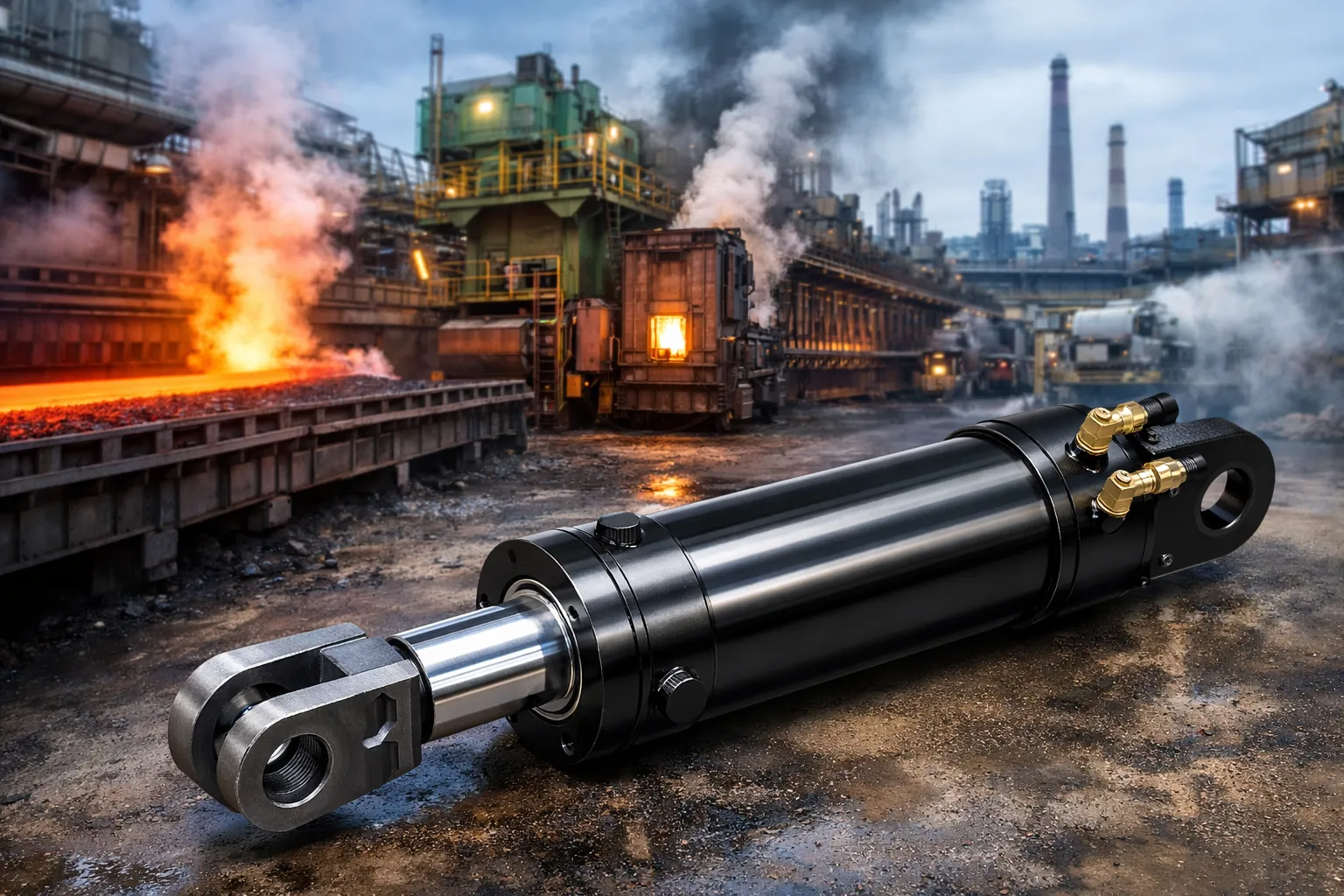
In the highly regulated landscape of modern metallurgical and heavy industrial production, environmental compliance is indistinguishable from operational continuity. At the absolute core of plant emission control lies the Electrostatic Precipitator (ESP). This massive filtration system utilizes high-voltage electrostatic fields to attract and capture microscopic particulate matter from exhaust flue gases before they reach the atmosphere. However, capturing the dust is only half the process; the accumulated particulate must be physically dislodged from the collection plates so it can fall into the bottom hoppers for removal. This is achieved through periodic, high-impact mechanical strikes known as rapping. Generating the precise, relentless kinetic energy required to strike the anvil beams and vibrate massive arrays of steel plates is the exclusive responsibility of the heavy-duty Plate Rapping Cylinder.
Operating generic commercial hydraulic cylinder equipment within the rapping mechanism of an ESP represents a profound and costly engineering error. The ambient environment enclosing the ESP roof and rapping shafts is exceptionally hostile. It is constantly bombarded by radiant heat from the flue gases and saturated with incredibly dense, abrasive fly ash and metallurgical dust. Standard utility actuators fail rapidly in this specific zone. The sharp, glass-like dust particles effortlessly bypass standard rod wipers, clinging to the chrome surface. As the unit cycles, these abrasive particles are dragged into the internal gland, leading to severe plunger scoring. Once the plunger is deeply scored, high-pressure hydraulic fluid escapes the system, causing the rapping mechanism to lose its impact force. Without adequate rapping, dust buildup bridges across the collection plates, suppressing the electrostatic field. This results in an immediate spike in chimney emissions, severe regulatory fines, and eventually forces the plant into an emergency shutdown for massive hydraulic cylinder repair.
Understanding the severe mechanical and environmental vulnerabilities inherent to ESP operation, our specialized fluid power engineering team fundamentally redesigned the actuation architecture required for periodic plate rapping. As an elite, globally trusted hydraulic cylinder manufacturer, we engineered our specialized Plate Rapping Hydraulic Cylinder utilizing a robust welded carbon steel body, an advanced surface-hardened plunger, and a proprietary wear-resistant guidance matrix. For plant maintenance directors evaluating the true total cost of ownership, the initial hydraulic cylinder price is mathematically insignificant when weighed against the devastating financial penalties of environmental emission violations and unscheduled furnace shutdowns. Our distinct industrial positioning is founded strictly upon delivering unyielding structural reliability, completely eliminating plunger scoring, and guaranteeing the flawless, continuous shedding of dust from your ESP plates without the relentless need for fixing hydraulic cylinders on active, high-temperature precipitator roofs.
Comprehensive Technical Engineering Parameters
Surviving extreme abrasive dust densities and high-temperature flue gas environments requires absolute transparency regarding structural material specifications and tribological defenses. The detailed data matrix below outlines the specific structural capabilities, material protocols, and customizable parameters integrated into our specialized rapping actuators, specifically adapted for the Metallurgical and Iron Industry.
| Engineering Category | Specification Detail & Component Architecture |
|---|---|
| Target Industry & Equipment | Metallurgy | Dust Removal & Environmental | Electrostatic Precipitator |
| Subsystem & Mechanical Action | Collection Plate Maintenance | Periodic Rapping of Plates |
| Hydraulic Component Designation | Plate Rapping Cylinder / Plate Rapping Hydraulic Cylinder |
| Kinematic Action Profile | Optimized single acting hydraulic cylingder (Fluid extension, gravity/spring return) |
| Internal Structure Type | Heavy-duty solid Plunger Cylinder architecture |
| Manufacturing Methodology | Deep-penetration Welded Construction (Maximizes high-frequency impact rigidity) |
| Core Material Architecture | High-Yield Carbon Steel (Optimized for impact fatigue absorption) |
| Plunger Surface Defense | Induction Hardened & Thick Hard Chrome Plating (Exceptional abrasive resistance) |
| Working Condition Hazard | High-Temperature Zones + Dense Abrasive Dust Particulate |
| Typical Failure Mode Defeated | Severe plunger scoring, abrasive seal destruction, high-frequency guide wear |
| Recommended Engineering Configuration | Surface Hardening Treatment + Wear-Resistant Guidance Matrix |
| Mounting Customization | Heavy Front Flange, Base Clevis, Threaded Plunger End for impact anvil attachment |
Operational Fluid Dynamics and Mechanical Working Principle
To fully comprehend the critical operational reliability of this specialized actuator, one must deeply analyze its fluid dynamic execution within the repetitive, high-shock rapping cycle. Unlike complex multi-axis machinery, a rapping system requires pure, unidirectional lifting followed by an instantaneous free-fall release. Therefore, utilizing a complex double acting hydraulic cylingder is unnecessary and overly complicated for this specific application. Instead, the optimal engineering solution is a highly responsive, heavy-duty single acting hydraulic cylingder engineered specifically as a plunger-type actuator. In a plunger cylinder design, there is no traditional internal hydraulic cylinder piston with seals riding against the inner barrel wall; instead, the entire solid steel plunger acts as the piston, and all critical dynamic sealing occurs at the heavy-duty neck gland of the cylinder.
During the active lifting phase of the periodic rapping cycle, the centralized hydraulic power unit injects high-pressure fluid directly into the base of the thick-walled carbon steel barrel. Because hydraulic oil is fundamentally incompressible, this fluid volume generates an immense upward hydrostatic force against the base of the solid plunger. This kinetic energy smoothly and forcefully drives the hardened, chrome-plated plunger outward, actively lifting the massive heavy steel rapping hammer against the force of gravity. This lifting phase must be steady and controlled to position the striking mass accurately at its peak elevation without damaging the mounting framework or the precipitator casing.
The critical event occurs during the release phase. Once the programmable logic controller determines the exact peak height has been reached, a rapid-exhaust directional control valve is triggered. The hydraulic fluid is instantly evacuated from the cylinder base back to the reservoir. Deprived of hydrostatic support, the heavy plunger and the attached hammer mass go into an immediate, unrestricted free-fall under the force of gravity. The hammer violently strikes the anvil connected to the ESP collection plates, sending a massive mechanical shockwave through the steel to shear off the accumulated particulate matter. Because the plunger operates in a cloud of hot abrasive dust during this rapid descent, our specialized wear-resistant guidance bands and aggressive metallic rod scrapers work in unison to physically block dust ingress, ensuring the gland seals remain perfectly intact and completely preventing the destructive plunger scoring that ruins standard commercial hydraulic rams.
Seamless Dimensional Integration and Global OEM Replacement
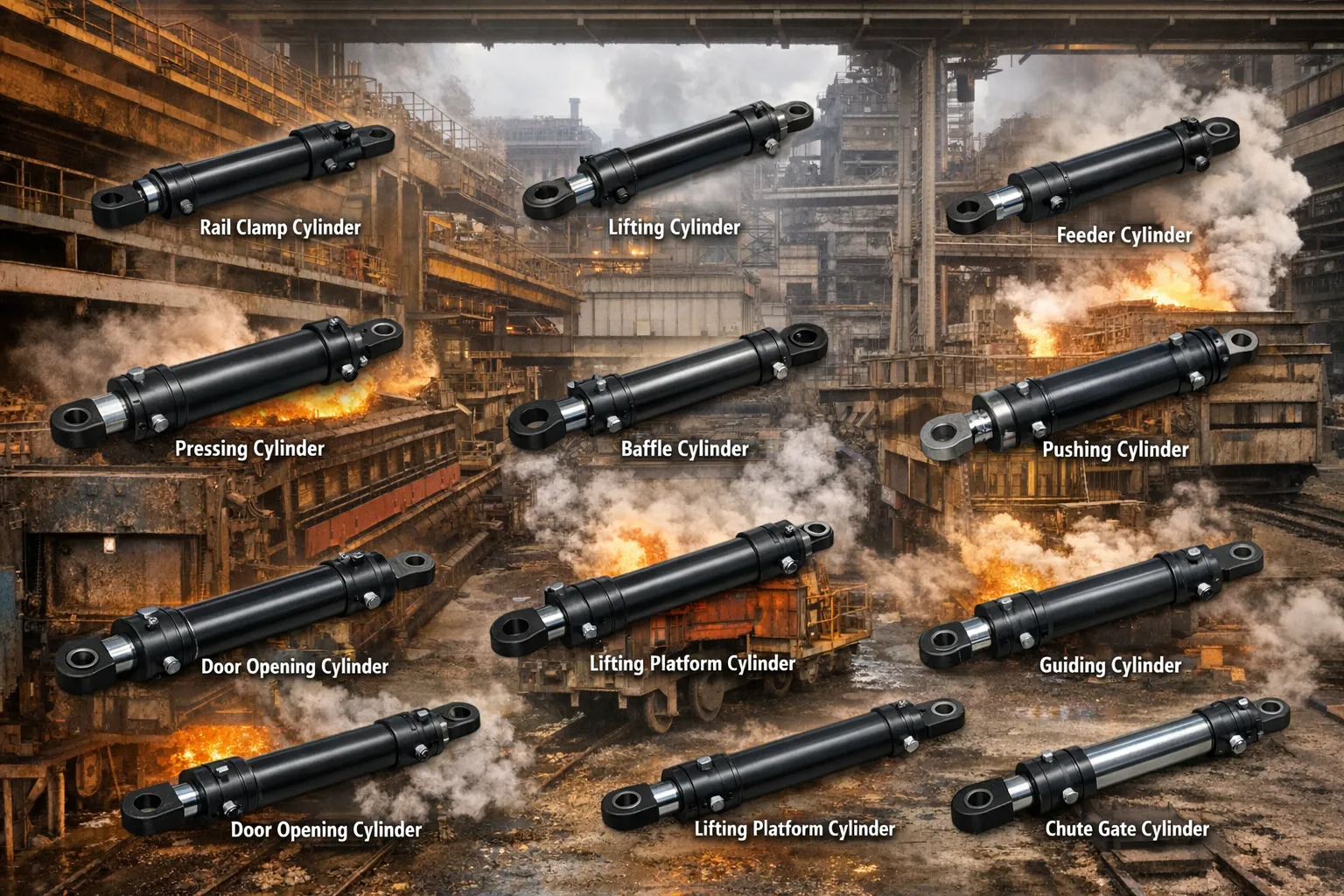
Environmental facility directors operate under strict regulatory scrutiny; when an ESP rapping system fails, the plant risks exceeding emission limits within hours. In such critical breakdown scenarios, maintenance engineers cannot afford the luxury of modifying heavy steel structural mounts to fit non-standard replacement parts. We eliminate this operational friction by engineering our heavy-duty environmental series to provide absolutely seamless dimensional compatibility with your existing precipitator infrastructure.
Our specialized Plate Rapping Cylinder units are meticulously reverse-engineered to act as flawless, exact-fit drop-in upgrades for failing commercial OEM machinery. By accurately mirroring all critical structural parameters—including exact front flange bolt circles, retracted pin-to-pin lengths, massive plunger diameters, and specific high-flow fluid port threading profiles—you can effortlessly retrofit vulnerable OEM units originally supplied by legacy global brands. Upgrading your ESP from standard off-the-shelf components to our heavily armored fluid power solutions ensures an immediate return to environmental compliance without requiring a single welding modification to your plant structure. Utilizing our robust components is the ultimate strategy for avoiding continuous fixing hydraulic cylinders during critical production windows.
8 Core Technical Engineering Advantages
Surviving high-frequency mechanical impact in an atmosphere dense with high-temperature abrasive dust requires uncompromising material science and precision manufacturing. Our specialized Plate Rapping Cylinder vastly outperforms commercial market alternatives because we rigorously enforce these eight foundational engineering pillars:
1. Advanced Plunger Surface Hardening Treatment
The primary mode of failure in ESP rapping is deep scoring of the plunger by sharp silica and metallic dust. We neutralize this completely. Prior to chrome plating, the solid carbon steel plunger undergoes a specialized high-frequency induction hardening process. This dramatically increases the substrate’s yield strength and surface hardness, ensuring that even if highly abrasive dust bypasses the external scrapers, it physically cannot scratch or score the hardened steel surface, preserving the fluid seal indefinitely.
2. Proprietary Wear-Resistant Guidance Matrix
Rapping hammers often introduce slight lateral side-loads during the lift-and-drop cycle. To prevent the heavy plunger from tilting and grinding against the steel gland, we integrate extra-wide, heavy-duty phenolic composite wear bands. These specialized guides possess exceptionally high compressive strength and an ultra-low friction coefficient, keeping the plunger perfectly centered throughout the violent, high-speed dropping motion and preventing metal-to-metal galling.
3. High-Temperature Dust Exclusion System
Standard polyurethane rod wipers melt in ESP ambient heat and are rapidly shredded by abrasive particulate. We deploy an aggressively armored mechanical defense. The primary outer layer is a rigid, heat-resistant metallic scraper ring that physically chisels crusted, baked-on dust away from the plunger during every single retraction stroke. A secondary high-temperature elastomeric buffer seal sweeps away any remaining microscopic dust, isolating the internal pressure boundary.
4. Monolithic Welded Carbon Steel Architecture
High-frequency shockwaves generated by continuous rapping will instantly vibrate loose and fracture standard tie-rod cylinders. We strictly utilize heavy-duty welded construction. Using deep-penetration robotic Submerged Arc Welding, the heavy mounting flanges and base caps are fused directly to the thick-walled carbon steel barrel. This creates an indestructible, monolithic pressure vessel completely immune to mechanical loosening and structural fatigue.
5. Thermal Stability and High-Temperature Elastomers
The radiant heat continuously emitted from the precipitator casing can rapidly vulcanize standard nitrile (NBR) seals, turning them brittle and causing immediate fluid leaks. To combat this ambient thermal degradation, all critical dynamic and static seals within our hydraulic cylinder components are molded from advanced aerospace-grade fluorocarbon elastomers (FKM/Viton). These polymers safely maintain their flexible memory in sustained ambient temperatures up to 200°C.
6. Plunger-Specific Fluid Dynamics
By utilizing a solid plunger architecture rather than a traditional piston-on-rod, we eliminate the internal piston seals entirely. This means there are zero internal seals rubbing against the barrel bore, completely negating internal barrel scoring risks. All sealing occurs at the easily accessible, heavily reinforced cylinder neck, dramatically simplifying future maintenance procedures and extending operational uptime.
7. Micro-Cracked Hard Chrome Plating
To further protect the hardened plunger steel, we apply a thick layer of hard chrome featuring a controlled micro-cracked surface topography. These microscopic fissures act as tiny oil reservoirs, generating a continuous, self-lubricating boundary layer between the plunger and the wear guides, minimizing friction during the high-speed gravity drop.
8. High-Flow Porting for Instantaneous Release
To maximize the kinetic energy of the rapping strike, the hammer must drop as fast as gravity allows without hydraulic restriction. We engineer our base fluid ports with significantly enlarged flow diameters. This minimizes fluid back-pressure during the rapid exhaust phase, allowing the single acting hydraulic cylingder to retract instantly and deliver the maximum possible impact force to the collection plates.
Autonomous Manufacturing and Unyielding Quality Assurance
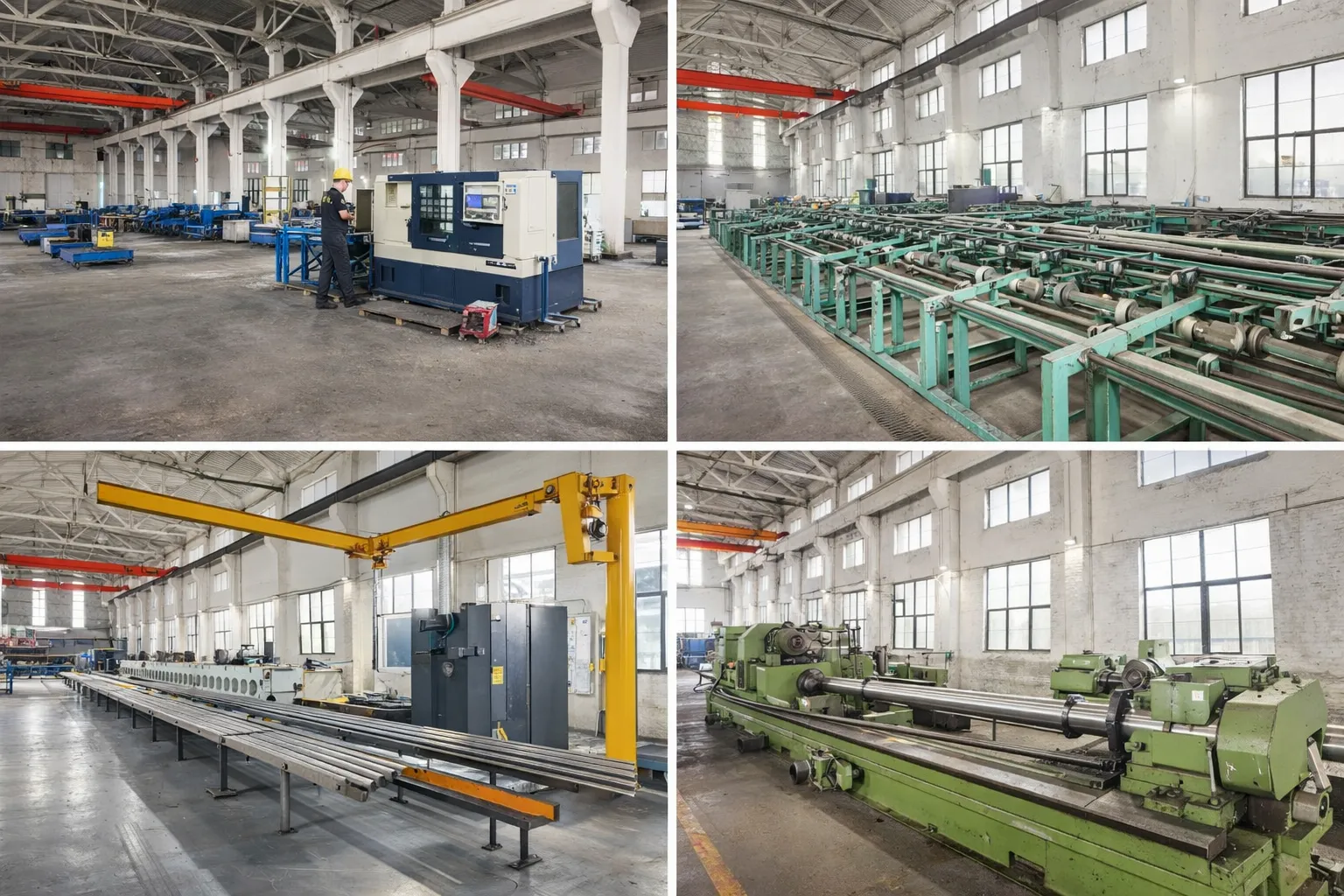
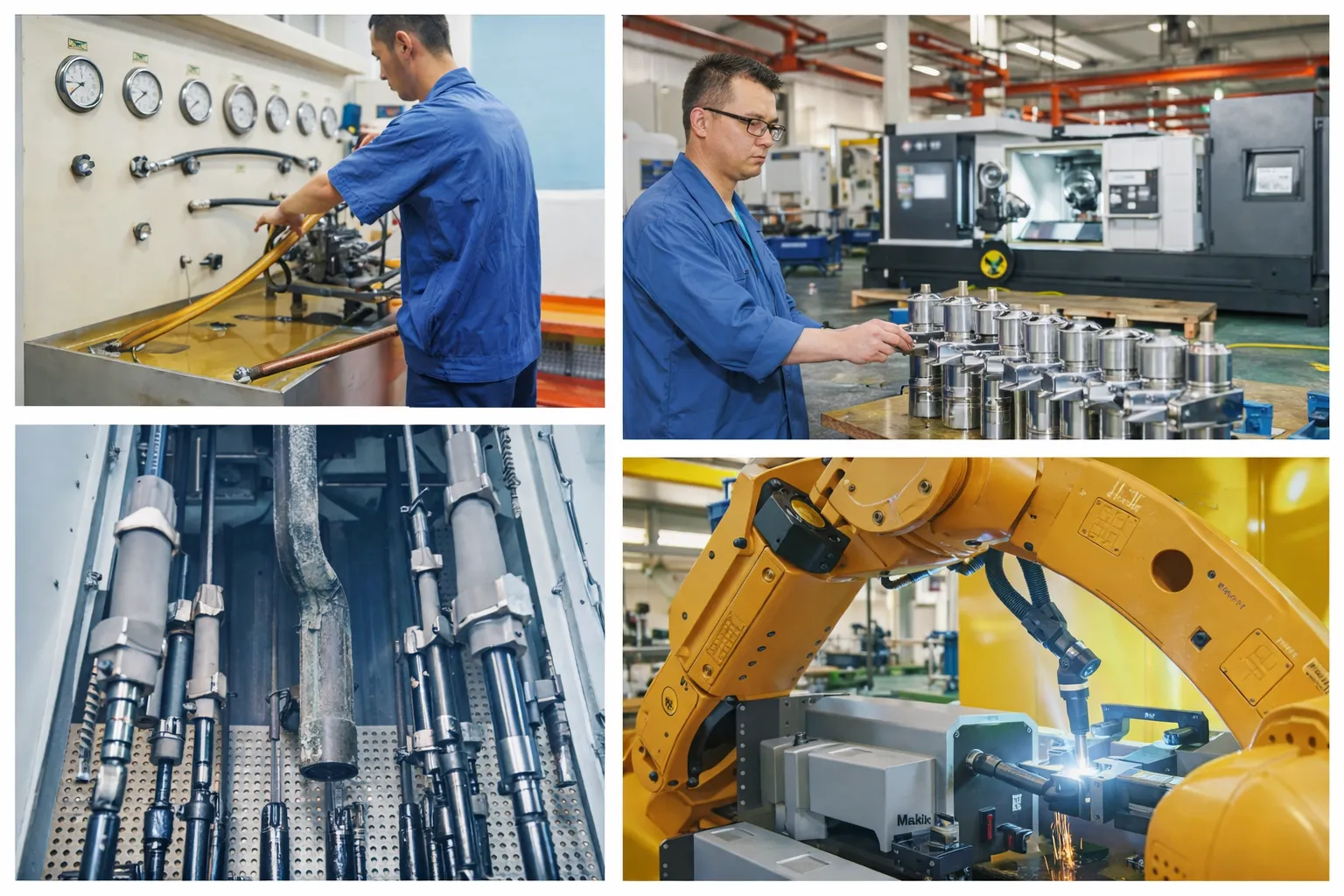
Our established global authority as an uncompromising hydraulic cylinder manufacturer is built entirely upon the rigorous capabilities of our advanced, digitally integrated factory floor. We exercise absolute, sovereign control over every single phase of production, explicitly rejecting the high-risk industry practice of assembling outsourced, unverified low-grade components. From the initial heavy CNC machining of the massive carbon steel plungers, to the specialized induction surface hardening processes, and finally the automated robotic welding of the heavy base flanges, every critical manufacturing operation is executed within our fully integrated facility. To guarantee absolute seal longevity, our plunger surfaces are precision-ground and polished to achieve a pristine, mirror-like surface finish of Ra < 0.2µm prior to final assembly.
Quality validation is actively embedded directly into our engineering workflow. Before any machining commences, all incoming raw carbon steel billets undergo rigorous ultrasonic flaw detection (UT) and spectrographic chemical analysis to verify the absolute absence of hidden internal material laminations or inclusions that could compromise structural integrity under severe high-frequency shock loading. Following complete mechanical assembly, 100% of our products are clamped securely into a computerized, high-capacity hydrostatic test bench. The Plate Rapping Cylinder is pressurized to an extreme 150% of its maximum designated operating load, while highly sensitive digital transducers continuously monitor for zero fluid leakage or pressure decay. Finally, each unit is permanently laser-etched with a unique alphanumeric serial number, providing our global B2B engineering clients with absolute material traceability and simplifying the rapid procurement of exact replacement hydraulic parts for future maintenance cycles.
Extensive Cross-Industry Heavy Engineering Deployments
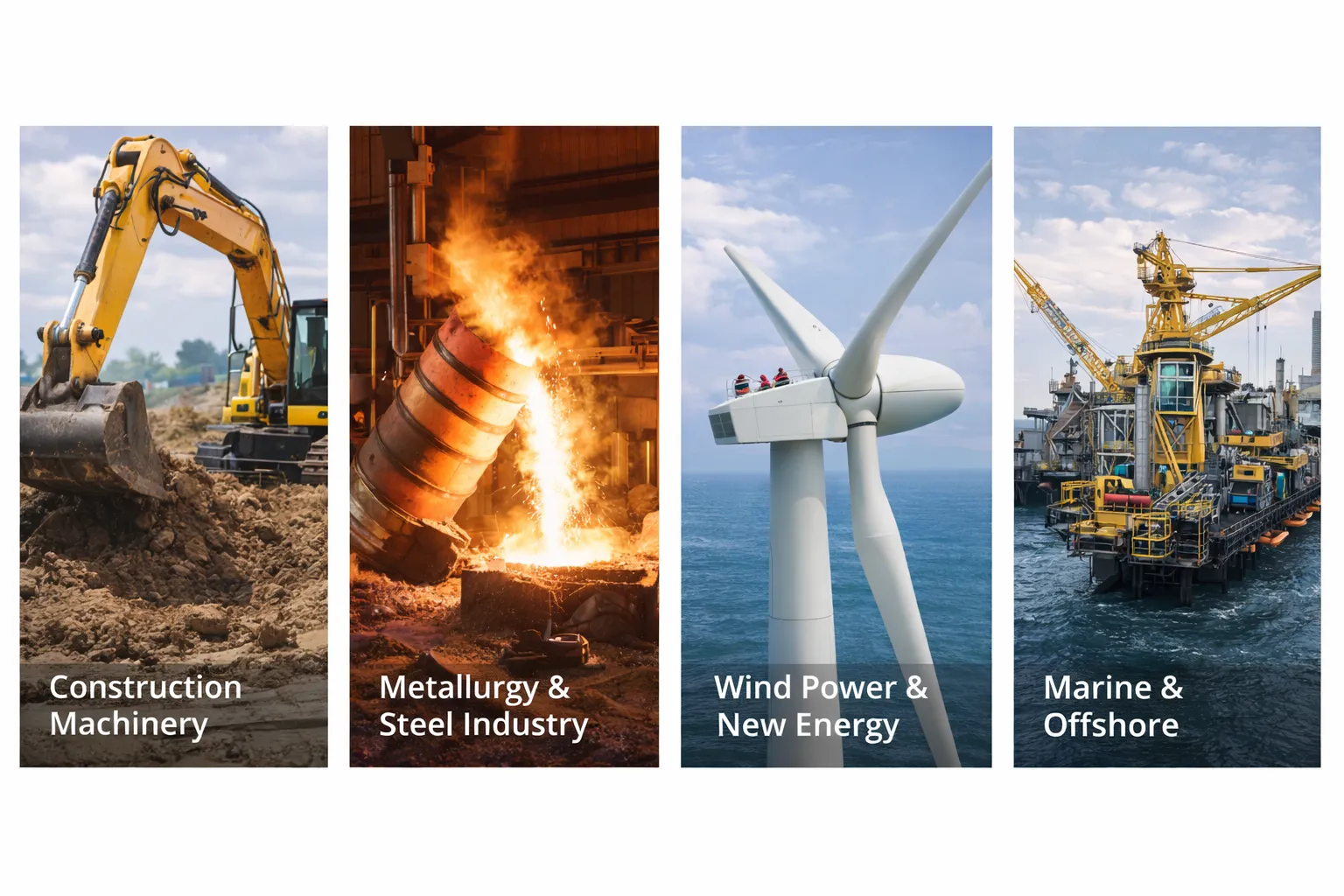
While meticulously optimized to conquer the extreme abrasive dust and severe high-frequency shock loads of ESP rapping systems, the immensely robust baseline architecture of our fluid power systems makes them the premier choice across a vast array of punishing industrial sectors. We encourage you to explore our comprehensive product portfolio to understand how we support heavy global infrastructure:
- Mining & Mineral Processing: Delivering unstoppable force for primary jaw crushers, massive apron feeders, and dust suppression systems operating in highly abrasive atmospheres. Review our Mining Industry solutions.
- Civil Engineering & Construction Machinery: Providing absolute structural shock resistance acting as a heavy-duty boom arm or robust lift cylinder on high-tonnage crawler excavators and rotary piling rigs. Explore our Construction Machinery Industry capabilities.
- Power Generation & Cement Processing: Actuating massive damper gates, silo discharge mechanisms, and clinker cooler systems where high heat and intense abrasive particulate are constant threats.
- Material Handling & Logistics: Powering heavy port-side ship loaders, automated straddle carriers, and container handlers functioning continuously in highly corrosive environments.
- Specialized Bespoke Engineering Projects: Rapidly prototyping customized fluid power solutions engineered specifically for extreme high-frequency cycling, unique spatial constraints, or severe environmental hazards where generic catalogs fail entirely.
Data-Driven Comparative Analysis: Standard Commercial vs. Specialized Performance
Industrial procurement driven exclusively by the lowest initial capital cost inevitably results in disastrous total lifecycle expenditures due to persistent, predictable machinery failures and severe environmental compliance violations. The technical data matrix below clearly delineates the massive engineering gap between generic off-the-shelf actuators and our purpose-built environmental control solutions.
| Engineering Evaluation Metric | Standard Commercial Cylinder | Our Heavy-Duty Plate Rapping Cylinder |
|---|---|---|
| Plunger Scoring Vulnerability | High Risk (Soft substrate allows abrasive dust to gouge deep scratches instantly) | Zero Scoring (Induction surface hardening repels sharp silica particulate) |
| Abrasive Particulate Defense | Single soft PU wiper (Melts and shreds in hot dust environments) | Aggressive Metallic Scraper + High-Temp FKM Buffer Seal |
| Lateral Guide Wear Tolerance | Poor (Thin nylon guides crush under side-loads, causing metal-to-metal galling) | Exceptional (Extra-wide phenolic wear bands center the high-speed plunger) |
| High-Temperature Tolerance | Standard NBR Elastomers (Vulcanize and shatter from duct proximity) | FKM / Viton Engineered Elastomers (Retain flexible memory up to 200°C) |
| ESP Rapping MTBF Expectancy | Months before catastrophic fluid leakage causes rapping impact failure | Years of continuous, powerful, zero-leak high-frequency rapping impact |
Proven Global Operational Success: 5 Verified Engineering Case Studies
True engineering authority and E-E-A-T (Experience, Expertise, Authoritativeness, and Trustworthiness) are demonstrated exclusively through verifiable field deployments in extreme environments. Our specialized fluid power components are deeply integrated into the heaviest environmental sectors of South Korea, Japan, and Taiwan. Review these specific accounts of our technology successfully eliminating critical downtime and emission violations.
Case 1: Eradicating Plunger Scoring at POSCO Steelworks
Location: Pohang, South Korea | Date: August 2024 | Client Profile: Tier-1 Global Integrated Steel Producer
Application: Primary ESP plate rapping mechanisms on a massive iron ore sintering line.
The Challenge & Connection: The facility faced severe pressure from environmental regulators due to dropping ESP efficiency. The OEM cylinders were suffering from rapid plunger scoring caused by abrasive hot sinter dust, leading to massive fluid leaks and weak rapping impacts. The lead environmental engineer found our surface hardening technology via an organic Google search and engaged our technical team.
Implementation & Results: We rapidly delivered customized Plate Rapping Cylinder units featuring our induction-hardened plungers and metallic scraper rings. Operating continuously at high frequencies, the new cylinders completely eliminated all scoring and fluid bypass. The reliable rapping restored 100% filtration efficiency, saving the plant massive costs associated with emergency downtime and hazardous hydraulic cylinder repair.
“The plunger scoring issue that threatened our emission permits has entirely vanished. Their engineering team understood the brutal abrasive demands of our precipitators perfectly. The initial hydraulic cylinder price was recouped immediately by avoiding fines.” — Mr. Kang D.H., Lead Environmental Maintenance Engineer
Case 2: Defeating High-Temperature Seal Vulcanization at Hyundai Steel
Location: Dangjin, South Korea | Date: November 2024 | Client Profile: Premier Heavy Automotive Steel Producer
Application: Rapping actuators operating directly above the extremely hot basic oxygen furnace (BOF) exhaust line.
The Challenge & Connection: The plant struggled continuously with sudden fluid blowouts. The intense radiant heat from the hot gas ducts was baking the standard polyurethane seals in their OEM cylinders, turning them into brittle plastic that shattered under pressure.
Implementation & Results: We engineered a specialized design utilizing FKM/Viton high-temperature elastomers. The new heavy-duty units safely absorbed the intense ambient heat without losing their flexible memory. Implemented plant-wide, yielding a 100% reduction in thermal seal failures.
“The thermal stability of their FKM seals is unmatched. We haven’t experienced a single seal blowout or fluid leak since transitioning our hot-zone ESPs to this manufacturer. A superbly reliable engineering partner.” — Park J.S., Emission Control Maintenance Manager
Case 3: Efficient CAPEX Upgrades via Exact OEM Replacement for China Steel Corp
Location: Kaohsiung, Taiwan | Date: February 2025 | Client Profile: Massive Integrated Steel Mill
Application: Complete retrofit of failing European OEM cylinders across the entire precipitator array.
The Challenge & Connection: Facing massive procurement costs and agonizing 16-week supply chain delays from their original legacy European supplier, the procurement division aggressively searched for a direct-to-market manufacturer capable of exact dimensional matching to lower the excessive hydraulic cylinder price overhead. They emailed our engineering team the original OEM blueprints.
Implementation & Results: We rapidly delivered exact 1:1 dimensional drop-in replacements within just 4 weeks. The maintenance team successfully retrofitted the aging system without modifying a single bolt on the ESP roof chassis. This reduced their initial procurement CAPEX by over 35% while instantly solving their lateral shock issues by implementing our heavy-duty wear bands.
“This was a flawless drop-in replacement. The mechanical installation was incredibly smooth at that elevation, and the cost to operational performance ratio provided is simply incredible. They are our new procurement standard.” — Lee H.J., Plant Procurement Director
Case 4: Eliminating Galling at a Nippon Steel Cement Subsidiary
Location: Nagoya, Japan | Date: July 2025 | Client Profile: Advanced Cement and Slag Processing Plant
Application: Heavy clinker dust collection ESP rapping system.
The Challenge & Connection: The heavy rapping hammers were causing lateral side-loading on the plungers as they dropped. Standard thin nylon guide rings inside the OEM cylinders were crushing, leading to metal-to-metal galling between the plunger and the gland, which seized the cylinder completely.
Implementation & Results: We custom-designed replacement cylinders engineered with extra-wide phenolic composite wear bands. These robust guides absorbed the lateral shock safely. The facility has achieved 100% operational reliability since the retrofit, eliminating all seizing events.
“The structural rigidity provided by those phenolic bands is exactly what we needed. It physically withstands the side-loading under any circumstance, completely protecting the plunger and maintaining our rapping force.” — T. Watanabe, Chief Plant Maintenance Engineer
Case 5: Solving High-Frequency Fatigue at Dongkuk Steel
Location: Incheon, South Korea | Date: October 2025 | Client Profile: Large-scale EAF Steel Manufacturer
Application: Fast-acting, high-frequency discharge rapping on primary filter housings.
The Challenge & Connection: The plant required a very rapid drop speed for maximum impact, but their existing cylinders restricted the exhaust fluid flow, creating a “cushioning” effect that weakened the hammer blow. The dust was not dislodging efficiently.
Implementation & Results: We engineered specific high-flow base porting in our welded design, allowing the hydraulic oil to evacuate instantly upon valve opening. The single acting hydraulic cylingder now executes a true free-fall, delivering maximum kinetic energy to the plates. Dust clearing efficiency improved by 40%.
“The modification to the fluid exhaust dynamics transformed our system. The hammer drops with incredible force now, shaking the plates completely clean. Excellent engineering insight.” — Lee S.K., Lead Mechanical Foreman
Frequently Asked Questions (FAQ)
Procuring heavy-duty fluid power components for highly abrasive and strictly regulated environmental control systems requires absolute technical certainty. Below are highly detailed, expert answers to the most common technical inquiries we receive from B2B buyers, plant maintenance directors, and reliability engineers regarding fixing hydraulic cylinders on ESP roofs.
1. How exactly does surface hardening prevent plunger scoring in the ESP environment?
Standard plungers are made of untreated carbon steel beneath the chrome layer. When sharp silica or iron dust gets trapped in the wiper, it acts like a diamond cutting tool, pressing through the thin chrome and gouging the soft steel beneath. We utilize induction surface hardening to dramatically increase the core hardness of the steel substrate before plating. This prevents the abrasive dust from physically penetrating the surface, entirely neutralizing the scoring threat and keeping the plunger perfectly smooth.
2. Why is a single acting cylinder specifically required for ESP rapping? Why not use a double acting hydraulic cylingder?
Rapping efficiency relies on transferring maximum kinetic energy (shock) to the collection plates. A double acting hydraulic cylingder utilizes fluid to push down, which creates hydraulic resistance (backpressure) and slows the descent, weakening the impact. A single acting hydraulic cylingder uses fluid only to lift the hammer. Upon release, the fluid evacuates freely, and gravity pulls the massive weight down in an unrestricted free-fall, delivering a vastly superior, harder mechanical strike to dislodge the caked dust.
3. Can you guarantee dimensional exactness when replacing legacy European OEM brands?
Yes, absolutely. A vast majority of our industrial operations involve upgrading legacy environmental machinery across the Asia-Pacific. By supplying our engineering division with your existing technical drawings or the specific OEM model numbers, we actively custom-manufacture the external geometry. We perfectly match every critical dimension—including base mounting flanges, stroke lengths, plunger threads, and fluid port sizing—to ensure a flawless, direct bolt-on installation without any structural modifications required.
4. How do metallic scrapers protect against high-temperature abrasive dust?
The environment surrounding an ESP roof is filled with sharp, hot particulate that bakes onto the extended plunger. A standard polyurethane wiper will simply melt or be physically shredded by this crust. We install aggressive, heavy-duty metallic scraper rings. These rigid, heat-proof rings act as a plow, violently shearing the baked-on abrasive dust away from the chrome plunger upon every rapid retraction, perfectly isolating the internal fluid boundary from contamination.
5. Why choose a plunger structure over a standard piston cylinder?
In a standard cylinder, the hydraulic cylinder piston seals drag against the internal barrel wall. In high-speed, repetitive, unidirectional actions like rapping, this can cause rapid internal wear. A plunger cylinder lacks an internal piston head entirely; the solid rod acts as the piston, and all sealing occurs exclusively at the heavy-duty neck gland. This eliminates internal barrel scoring, maximizes durability under high-frequency shock, and simplifies future maintenance.
6. Do you supply replacement hydraulic cylinder components for future maintenance?
Yes. Maximizing the operational lifespan of our products is our core priority. Because every Plate Rapping Cylinder we build is permanently laser-serialized, we hold exact digital blueprints of your unit on file. When a routine plant overhaul is scheduled, we immediately supply identically matched, high-performance FKM seal kits, heavy phenolic guide rings, metallic scrapers, and other necessary hydraulic cylinder components to ensure rapid, predictable internal maintenance by your team.
7. What is the standard lead time for orders shipped to South Korea and Japan?
Due to our fully autonomous, vertically integrated manufacturing process, our lead times are highly optimized compared to traditional Western suppliers. For standard high-performance environmental configurations, fabrication and testing require approximately 3 to 4 weeks. Ocean freight logistics to major regional ports (such as Busan, Incheon, or Yokohama) typically add only 7 to 10 days. We also fully support expedited air freight protocols for severe emergency breakdowns.
8. How does your pricing structure dynamically compare to major Western OEMs?
Because we maintain absolute control over a 100% vertically integrated production process—from raw billet machining to final robotic assembly and testing—we completely eliminate reliance on trading companies and third-party markup. Consequently, our pricing structure is highly aggressive. We routinely save our international B2B clients between 30% to 40% on initial CAPEX and hydraulic cylinder price compared to sourcing from legacy European or American brands, while actively delivering a vastly superior mechanical lifespan.
9. Are comprehensive factory testing reports provided with the shipments?
Yes. Uncompromising Quality Assurance is our standard operating procedure. Every unit dispatched internationally includes a full QA dossier. This highly detailed document contains the raw steel mill certificates validating the carbon steel composition, the ultrasonic flaw detection (UT) reports for structural weld integrity, and the digital hydrostatic pressure test graphs proving the unit successfully held 150% of its rated operational pressure with zero fluid bypass.
10. How does your equipment actively reduce the frequency of hydraulic cylinder repair?
The continuous necessity for hydraulic cylinder repair on ESP roofs predominantly stems from abrasive fly ash destroying plungers, and extreme heat vulcanizing internal seals. We eliminate these distinct vulnerabilities via superior engineering. The subsurface hardened rod combined with heavy metallic scrapers actively blocks all contaminant scoring, while our FKM high-temperature seals resist heat decay. This approach effectively extends the MTBF by multiples, saving significant maintenance labor.
Ready to Guarantee Your Plant’s Emission Compliance?
Do not allow unpredictable, easily scored fluid power actuators to dictate your metallurgical production schedule, compromise your environmental filtration efficiency, or artificially inflate your emergency repair budgets. Connect directly with our heavy engineering specialists to analyze your specific dimensional blueprints, secure a highly competitive technical proposal, and understand precisely why heavy industry leaders across East Asia exclusively rely on our robust, wear-resistant fluid power technology.
Rapid global engineering support, precise drop-in OEM replacements, and highly streamlined logistics are available immediately for South Korea, Japan, Taiwan, and the broader Asia-Pacific heavy manufacturing sector.
Editor: Cxm


























