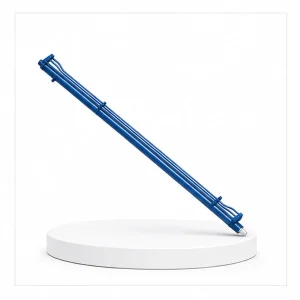
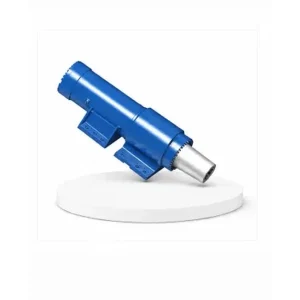
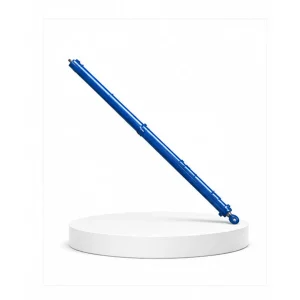
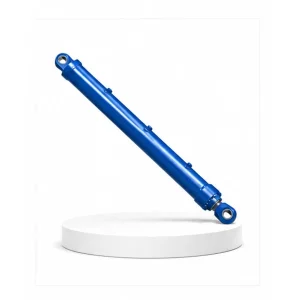
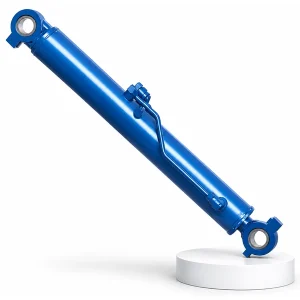
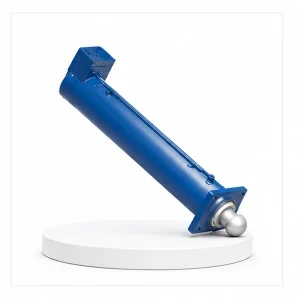
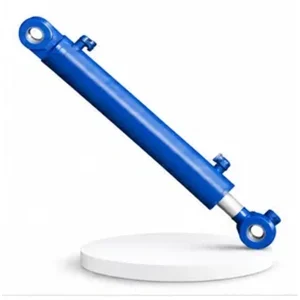
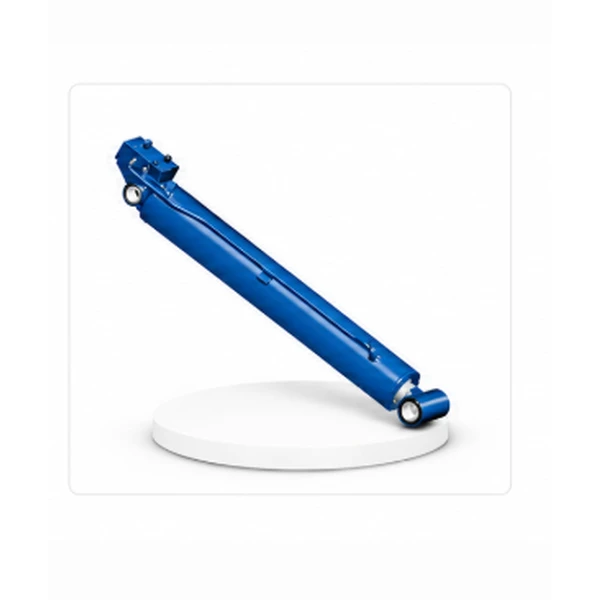
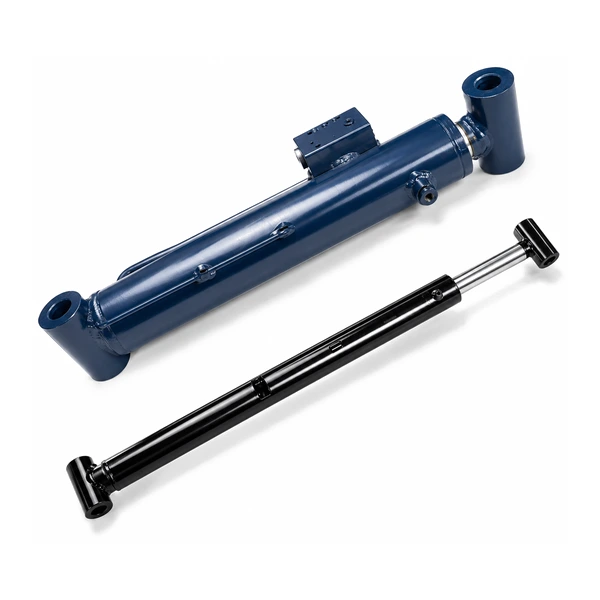
Aerial Work Platform Leveling Cylinder
Why Only 300 mm of Stroke Is Enough to Level a Platform Through 80° of Boom Travel
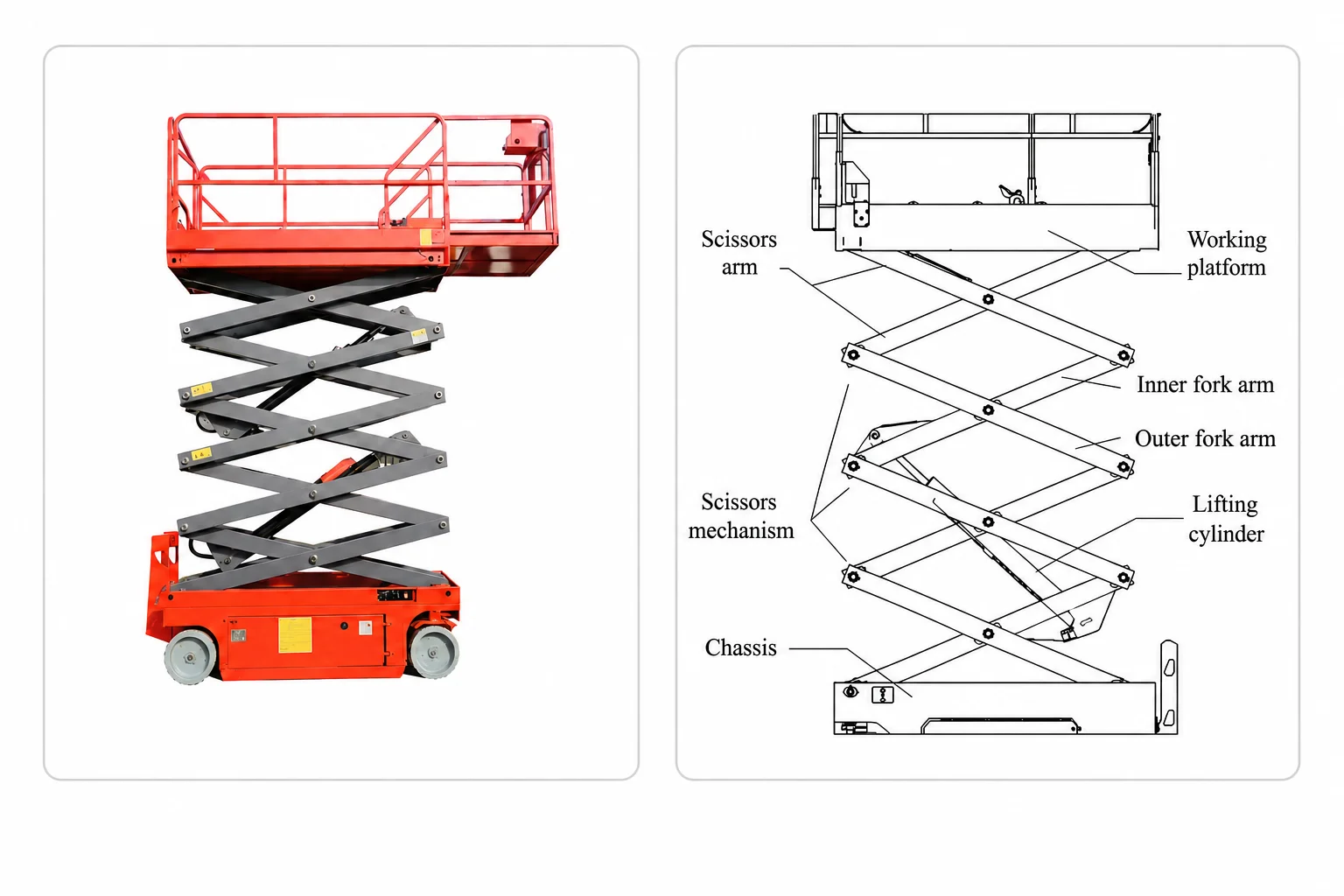
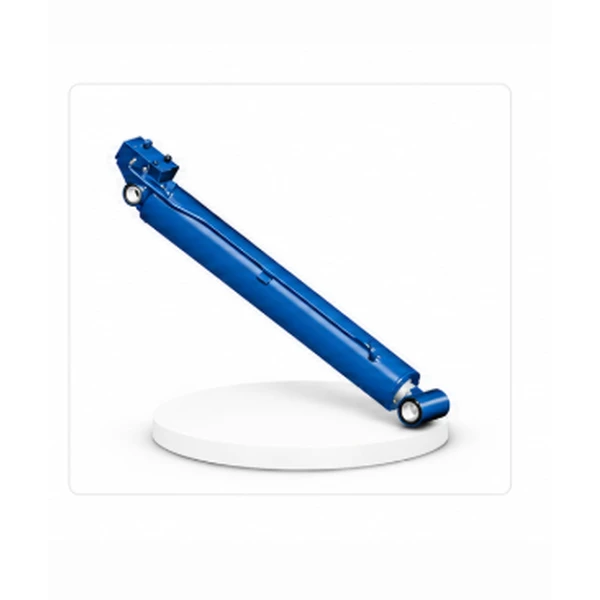
The leveling cylinder mounts at the basket pivot — a short lever arm (typically 150–300 mm from the pivot centre). The basket only needs to rotate ±10–15° relative to the boom tip to compensate for the full boom angle range. Through the short lever arm, 300 mm of cylinder stroke converts to approximately 30° of basket rotation — more than enough to keep the basket horizontal across the entire boom operating envelope from 0° to 80°.
This makes the leveling cylinder the shortest-stroke hydraulic cylinder in the seven-product aerial work platform family (and comparable to the small excavator bulldozing cylinder #4 at 250 mm). But the short stroke creates a design challenge: the leveling adjustment must be precise. A 5 mm error in cylinder position translates to a 1–2° tilt at the basket — and a 2° tilt on a 2-metre-wide basket creates a 70 mm height difference between the two edges that workers can feel underfoot.
Korea Ever-Power manufactures the leveling cylinder with low-friction seals and tight positional tolerance as the fifth of seven aerial work platform hydraulic cylinders.
Technical Specifications
| Parameter | Specification |
|---|---|
| Product | Aerial Work Platform Leveling Cylinder |
| Function | Adjust basket angle to maintain horizontal (±2°) |
| Bore | 85 mm – 180 mm |
| Rod | 50 mm – 100 mm |
| Stroke | ≤ 300 mm (shortest in AWP family) |
| Max Pressure | 30 MPa |
| Application | Boom lift basket leveling (articulating / telescopic) |
| Certification | ISO 9001 · EN 280 / ANSI A92 compatible |
Mechanical vs Hydraulic Leveling — Passive Geometry or Active Closed-Loop
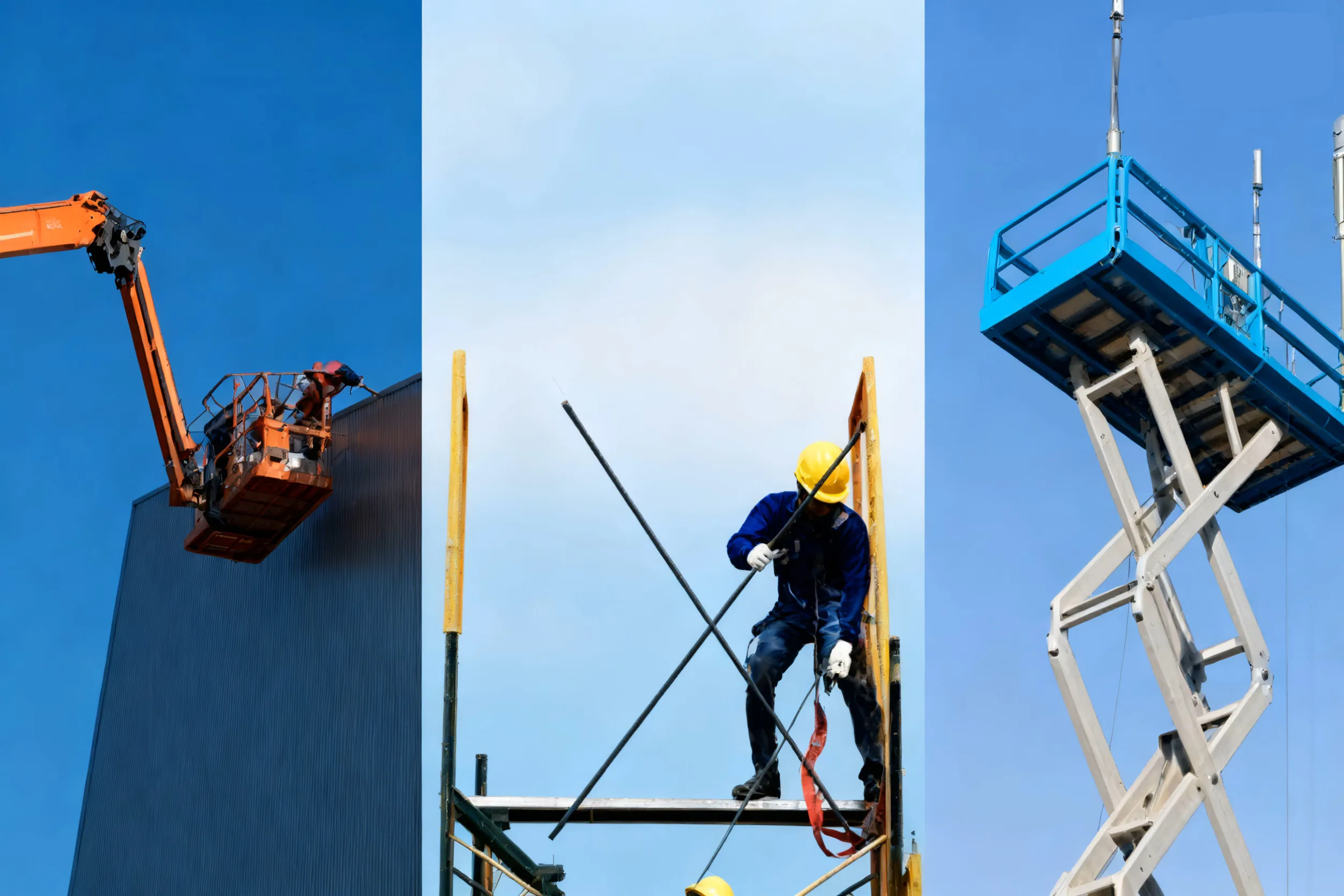
Some simple boom lifts use a parallelogram linkage that keeps the basket level through geometry alone — no hydraulic cylinder, no sensor, no control system. This works on straight articulating booms but cannot compensate for boom deflection under load, thermal expansion, or wind loading. When the boom flexes under a full platform load, the geometric leveling is no longer accurate — and the basket tilts 3–5° from horizontal.
An inclinometer on the basket measures actual tilt. The control system compares it to horizontal and drives the leveling cylinder to correct the deviation — continuously, in real time. This active closed-loop system compensates for everything: boom angle, deflection, load, wind, and thermal effects. ±2° accuracy across all operating conditions. Contact Korea Ever-Power for leveling cylinder specifications.
Manufacturing Process
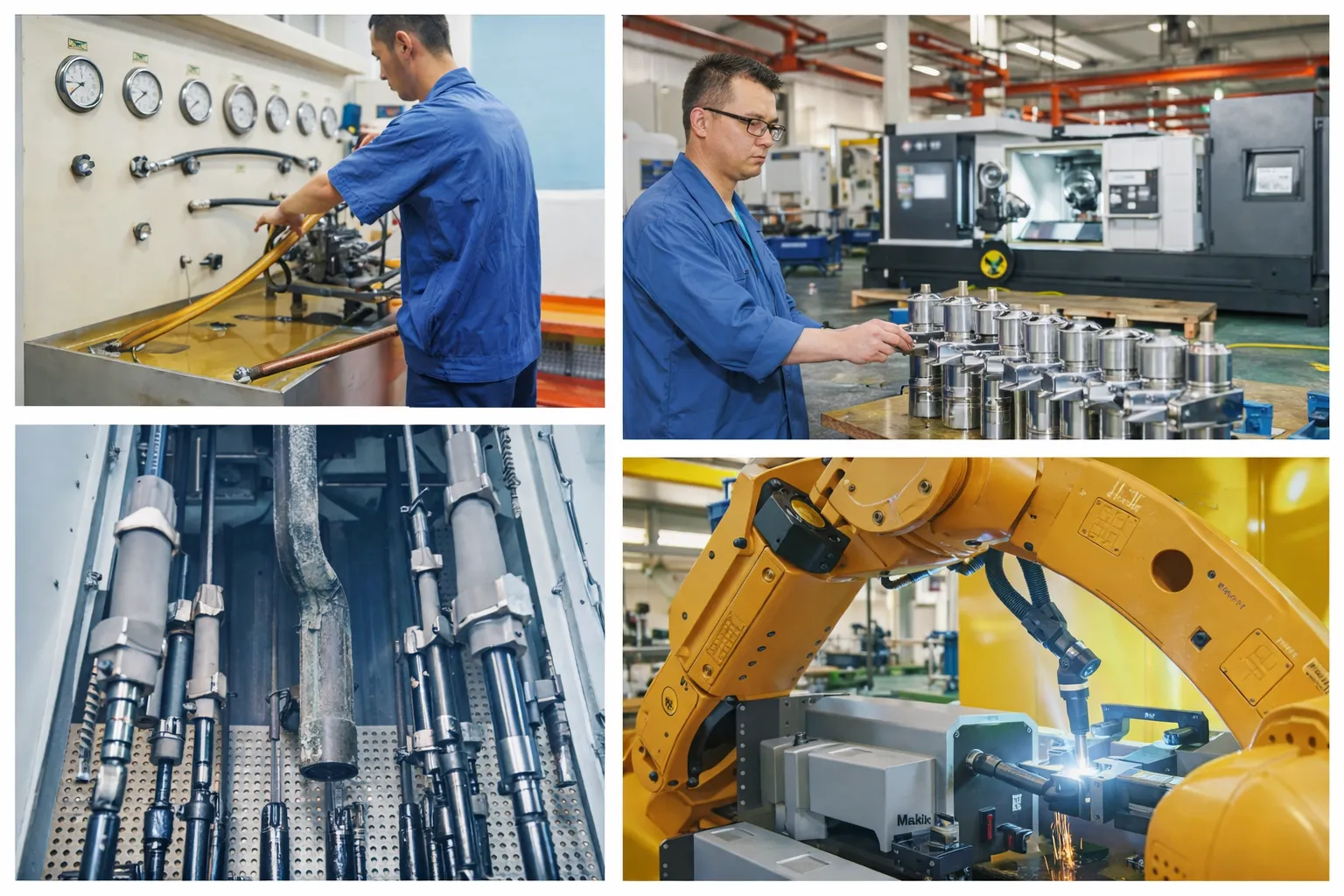
The compact 300 mm stroke cylinder — overall retracted length approximately 400 mm — is honed to Ra 0.2–0.4 µm. Chrome 50 µm (the leveling cylinder is mounted at the basket pivot, partially shielded from debris). Low-friction PTFE guide rings and polyurethane seals for smooth, stick-slip-free proportional response — the cylinder adjusts continuously as the boom moves, making micro-corrections that workers cannot perceive.
Every leveling cylinder is hydrostatic tested at 45 MPa and level-accuracy tested — the cylinder is installed on a test rig with an inclinometer, and the basket angle is measured at 10 boom positions across the full 0–80° range. The maximum deviation from horizontal must be ≤2° at every position.
OEM & ODM
FAQ
Related Categories
Additional information
| Editor |
|---|