
Forklift Tilt Hydraulic Cylinder — Double-Acting Mast Tilt Cylinder for 1.5–10 Ton Forklifts
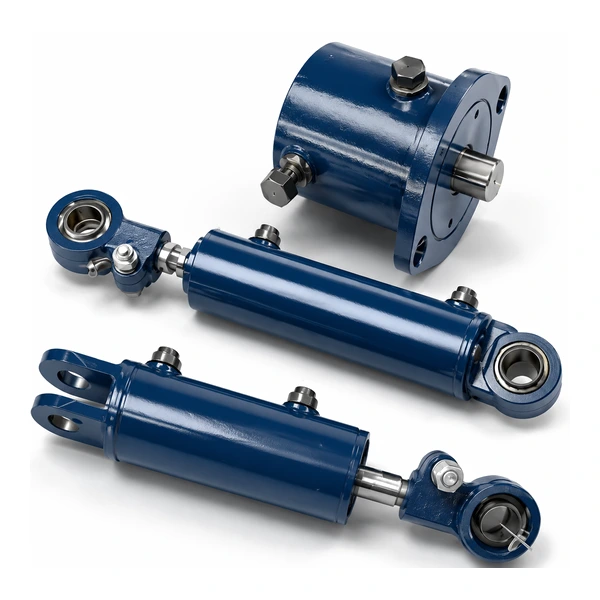
Forklift Tilt Hydraulic Cylinder — Precision Mast Angle Control
The tilt cylinder does something no other cylinder on the forklift can: it changes the angle of the entire mast assembly relative to the chassis. That angle — typically 6° forward for load pickup and 12° backward for transport — is the difference between a pallet that slides off the forks during transit and one that stays locked against the fork face by gravity. Every forklift hydraulic cylinder serves a purpose, but the tilt cylinder is the one that directly governs load security during movement.
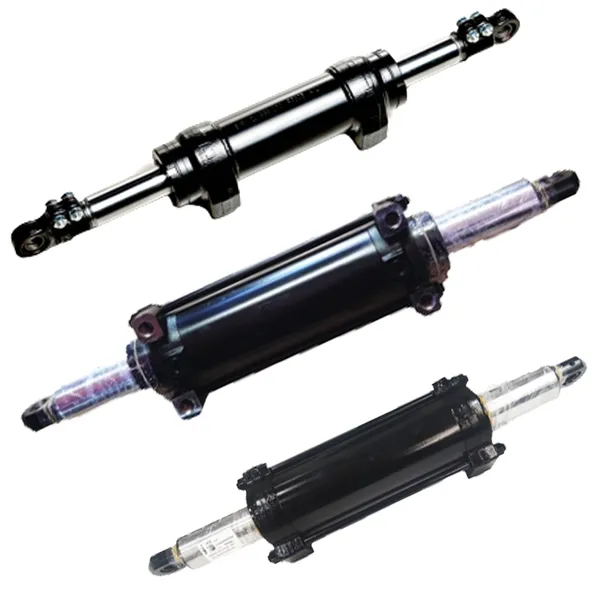
Korea Ever-Power manufactures these tilt cylinders as double-acting units — hydraulic pressure extends the rod to tilt the mast forward, and hydraulic pressure on the opposite port retracts the rod to tilt backward. This bidirectional power means the operator has positive control in both directions, unlike single-acting lift cylinders that rely on gravity for the return stroke. Seven model numbers span the range from compact 1.5-ton warehouse forklifts (Φ60 bore, 32 mm stroke, 3.4 kg) to heavy-duty 10-ton container handlers (Φ100 bore, 193 mm stroke, 22 kg).
3.4–22 kg
Clevis Mount
How the Forklift Tilt Mechanism Works
The forklift mast pivots on a pair of trunnion pins located near the bottom of the mast assembly, roughly 200–400 mm above the truck frame. Two tilt cylinders — one on each side of the mast — connect to the upper mast channel via clevis pins and to the truck frame via spherical bearings. When the operator pushes the tilt lever forward, the directional control valve routes hydraulic fluid to the rod-end port of both cylinders simultaneously. The piston rods extend, pushing the top of the mast forward and rotating the entire mast-and-carriage assembly around the trunnion pivot. The forks, mounted on the carriage at the front of the mast, tilt downward toward the load.
Pulling the lever backward reverses the flow: oil enters the bore-end port, the rods retract, and the mast tilts backward. Because the pivot geometry creates a mechanical advantage that varies with tilt angle, the cylinder force required to tilt forward (against the load weight) is substantially higher than the force needed to tilt backward (with gravity assisting). This asymmetry is why the tilt cylinder must be rated for full system pressure in both directions — the bore-side area handles the heavy forward-tilt force, while the rod-side area handles the lighter but still significant backward-tilt load during emergency stops with a raised load.
Why Two Cylinders, Not One?
A single centrally-mounted tilt cylinder would work mechanically, but it creates a torsional load path through the mast frame that causes uneven wear on the mast roller bearings. Two cylinders — one per side — apply the tilt force symmetrically, eliminating the twist moment and distributing the bearing loads evenly across both mast channels. This symmetry also provides a degree of redundancy: if one cylinder develops a slow internal leak, the other cylinder maintains partial mast control until the operator can park the forklift safely.
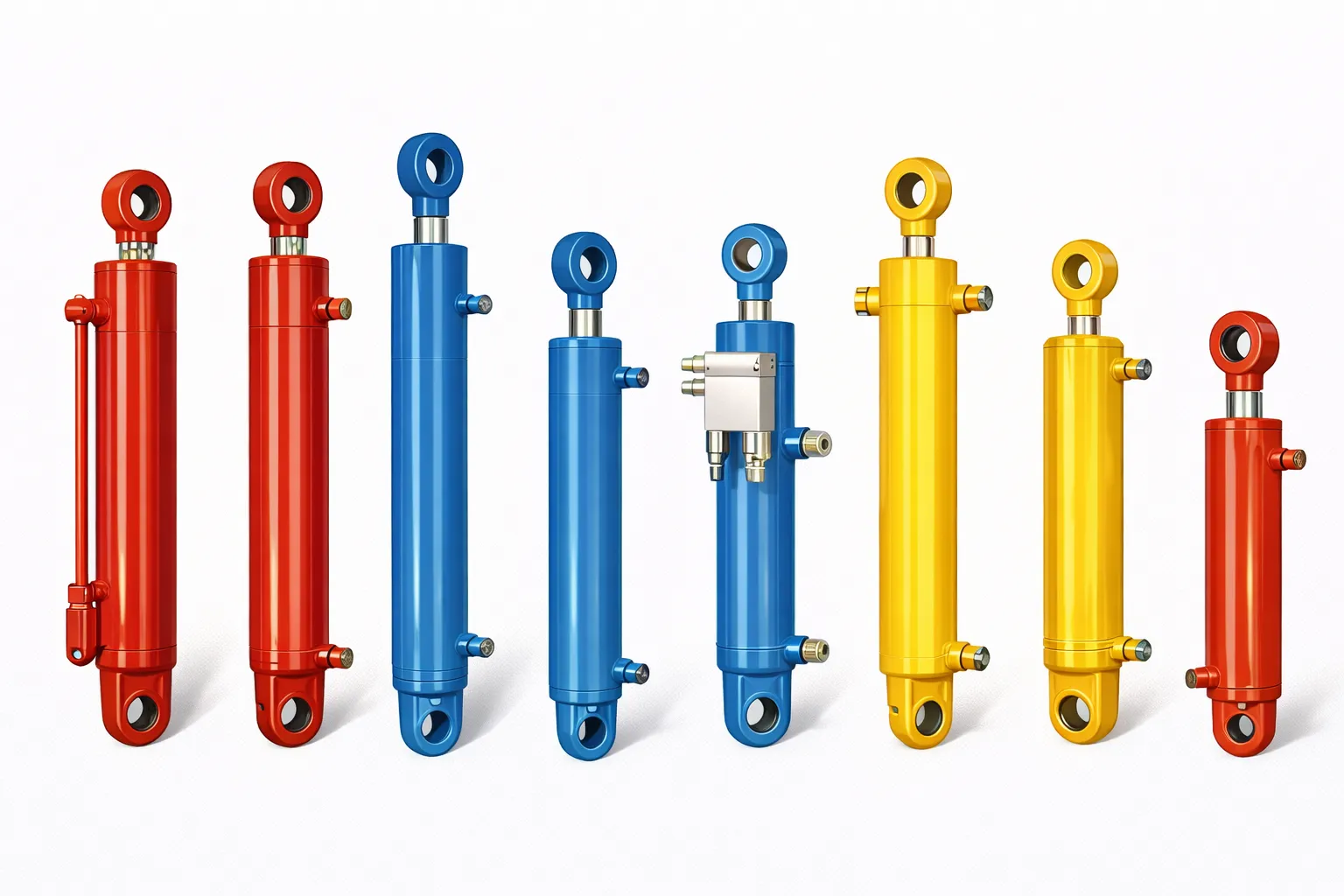
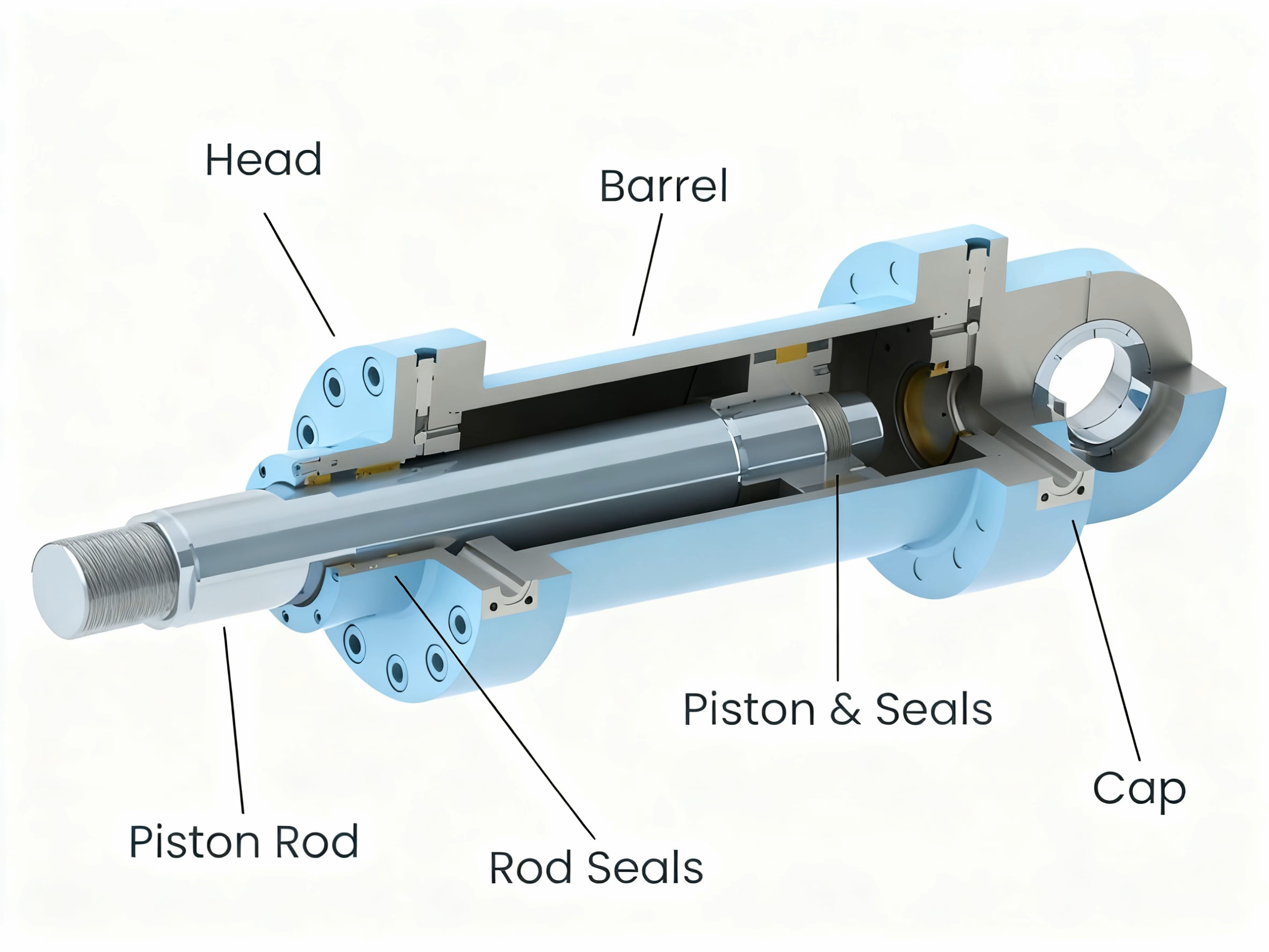
Complete Dimensional Specifications — All 7 Models
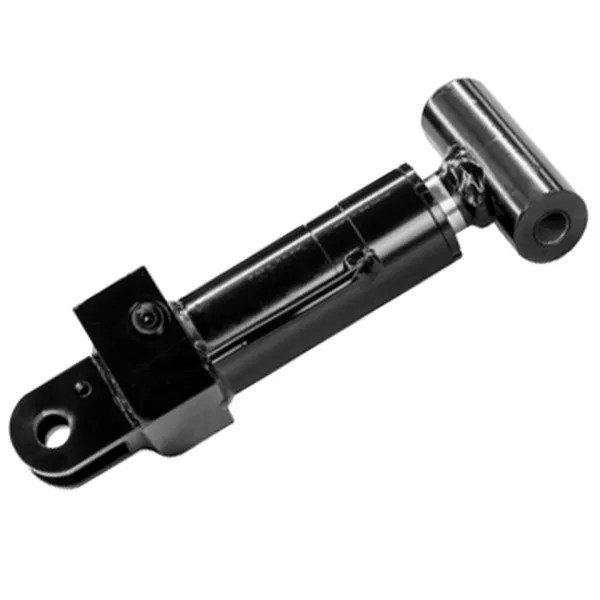
Korea Ever-Power produces the forklift tilt hydraulic cylinder in seven configurations spanning three mounting geometries. Each configuration uses a different bore-to-rod ratio and stroke length optimized for a specific forklift capacity class. All models share the same seal kit architecture (polyurethane rod seal, NBR piston seal, PTFE wear ring) and the same 18–18.1 MPa working pressure rating. Select your model based on the bore diameter and installation distance that matches your forklift chassis.
Configuration A — Compact Mount (Pin-to-Pin Type)
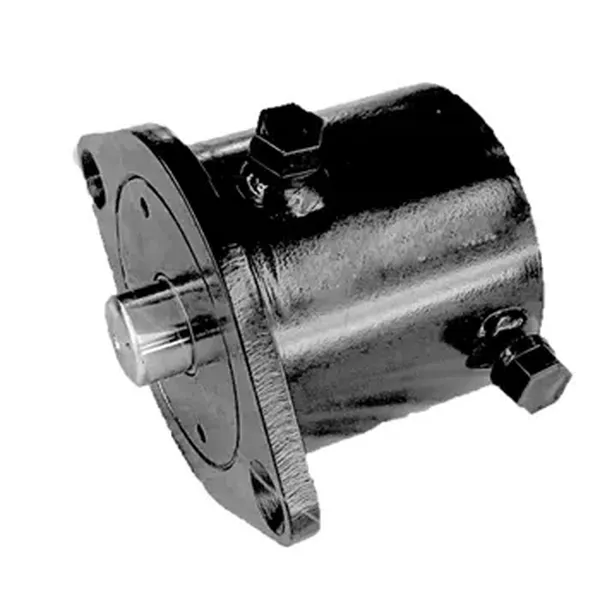
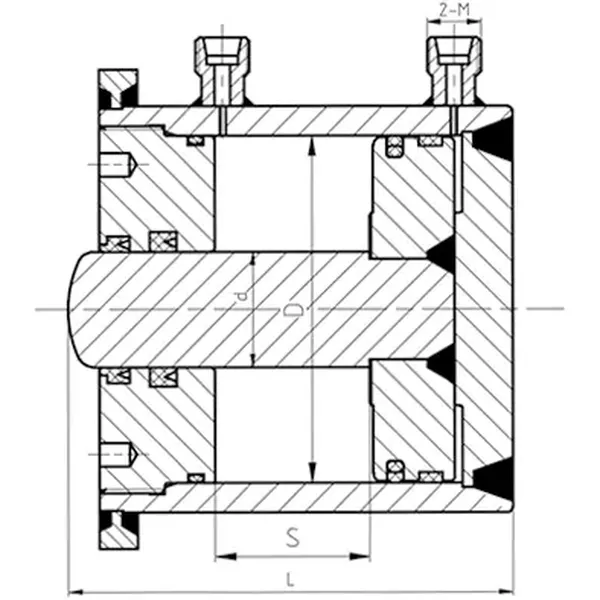
| Drawing Number | Bore (D) | Rod (d) | Stroke (S) | Install Dist (L) | Pressure | Ports (M) | Weight |
|---|---|---|---|---|---|---|---|
| QA20V500-405000-000 | Φ60 | Φ30 | 32 | 109 | 18 MPa | 2-M14×1.5 | 3.4 kg |
Configuration B — Standard Clevis Mount

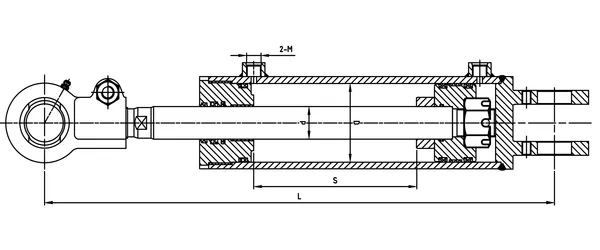
| Drawing Number | Bore (D) | Rod (d) | Stroke (S) | Install Dist (L) | Pressure | Ports (M) | Weight |
|---|---|---|---|---|---|---|---|
| S16N450-600000-001Z | Φ63 | Φ25 | 55 | 368 | 18.1 MPa | 2-G1/4 | 8.2 kg |
| A15N450-600000AZ | Φ65 | Φ25 | 109 | 514 | 18.1 MPa | 2-G1/4 | 11.6 kg |
| RTE35M300-600000-500 | Φ85 | Φ35 | 180 | 565 | 18.1 MPa | 2-M16×1.5 | 17 kg |
Configuration C — Heavy-Duty Flange Mount
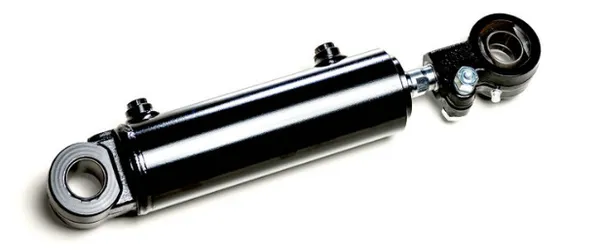
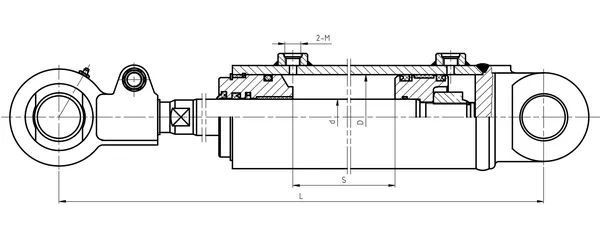
| Drawing Number | Bore (D) | Rod (d) | Stroke (S) | Install Dist (L) | Pressure | Ports (M) | Weight |
|---|---|---|---|---|---|---|---|
| A30M300-600000-000B | Φ70 | Φ30 | 156 | 453 | 18.1 MPa | 2-G1/4 | 12 kg |
| A35M300-600000-000C | Φ80 | Φ30 | 156 | 456.5 | 18.1 MPa | 2-G1/4 | 13 kg |
| A45M300-600000Z | Φ100 | Φ40 | 193 | 498 | 18.1 MPa | 2-M16×1.5 | 22 kg |
All dimensions in mm. Working pressure is maximum continuous operating pressure at the cylinder ports. Installation distance (L) is measured pin centre to pin centre at full retraction. Interface dimensions (M) indicate hydraulic port thread specification. Weights are dry (without hydraulic oil).
Internal Components — 25-Part Precision Assembly
Every Korea Ever-Power forklift tilt hydraulic cylinder is assembled from 25 precision-machined and quality-inspected components. The critical sealing group — rod seal, U-ring, dust wiper, and O-rings — uses imported polyurethane and NBR materials rated for 50,000+ tilt cycles before scheduled replacement. The guide bush and Du bush (dry-lubricated PTFE-lined bronze bushing) eliminate metal-to-metal contact between the piston rod and the cylinder head, preventing scoring and extending rod surface life.
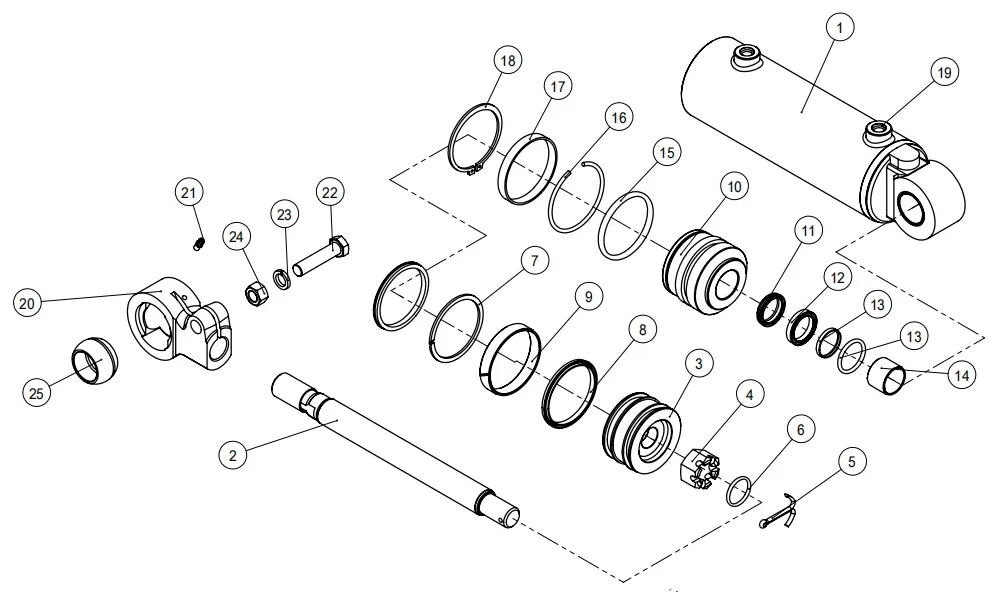
| 1 | Cylinder Housing Assy | 10 | Guide Bush | 18 | Circlips for Shaft |
| 2 | Piston Rod | 11 | Dust Wiper | 19 | Plug |
| 3 | Piston | 12 | U-Ring | 20 | Clevis |
| 4 | Hex Nut | 13 | Rod Seal | 21 | Grease Nipple |
| 5 | Cotter Pins | 14 | Du Bush | 22 | Bolt |
| 6 | O-Ring | 15 | O-Ring | 23 | Spring Washers |
| 7 | Back-Ring | 16 | Round Wire | 24 | Nut |
| 8 | Hole Seal | 17 | Key Ring | 25 | Spherical Bearing |
| 9 | Wear-Ring |
Push Force and Return Force — Engineering Reference
The double-acting tilt cylinder produces different force values on the push stroke (rod extends, mast tilts forward) and the pull stroke (rod retracts, mast tilts backward) because the effective piston area changes. On the push stroke, the full bore area drives the piston. On the pull stroke, the annular area (bore area minus rod area) drives the piston. This table calculates the theoretical force output for each model at rated working pressure.
| Model | Bore Area (cm²) | Annular Area (cm²) | Push Force (kN) | Pull Force (kN) | Force Ratio |
|---|---|---|---|---|---|
| QA20V (Φ60/Φ30) | 28.27 | 21.21 | 50.9 | 38.2 | 1.33 : 1 |
| S16N (Φ63/Φ25) | 31.17 | 26.26 | 56.4 | 47.5 | 1.19 : 1 |
| RTE35M (Φ85/Φ35) | 56.75 | 47.12 | 102.7 | 85.3 | 1.20 : 1 |
| A45M (Φ100/Φ40) | 78.54 | 65.97 | 142.1 | 119.4 | 1.19 : 1 |
Force = pressure × area. Push force uses bore area; pull force uses annular area (bore − rod). Calculations at rated working pressure (18.1 MPa for most models). Actual force at the fork tips depends on the tilt cylinder mounting geometry and the mast pivot point location — the mechanical advantage ratio varies by forklift model and typically ranges from 3:1 to 5:1 (cylinder force to effective tilt force at the carriage).
Tilt Cylinder vs. Lift Cylinder — Understanding the Difference
Buyers replacing forklift cylinders sometimes confuse tilt cylinders with lift cylinders because both mount on the mast assembly. However, these two cylinder types differ fundamentally in their operating principle, construction, and failure mode. The comparison below clarifies the distinctions that matter for correct part selection.
| Characteristic | Tilt Cylinder | Lift Cylinder |
|---|---|---|
| Action Type | Double-Acting | Single-Acting |
| Function | Tilts mast angle | Raises/lowers forks |
| Quantity Per Forklift | 2 (one per side) | 1 or 2 (central or dual) |
| Typical Stroke | 32–193 mm (short) | 1,500–1,800 mm (long) |
| Return Mechanism | Hydraulic (powered both ways) | Gravity (load weight) |
| Failure Consequence | Mast drifts — load slides off forks | Forks descend gradually |
| Typical Weight | 3.4–22 kg | 32–50 kg |
Where Tilt Cylinder Performance Matters Most
Warehouse and Distribution Centers
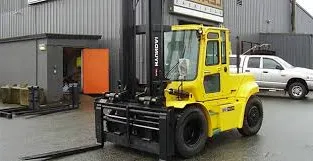
Indoor counterbalance forklifts in warehouses perform 80–120 tilt cycles per shift across load pickup, transport, and placement operations. The tilt cylinder actuates on every single cycle — twice (forward tilt for pickup, backward tilt for transport). At three shifts per day, that is 720+ tilt actuations daily, or approximately 180,000 cycles per year. The cylinder seal kit, rod surface finish, and bore honing quality directly determine whether the cylinder reaches the 3-year service interval or fails prematurely with internal leakage that causes slow mast drift under load.
Port and Container Handling
Heavy-duty port forklifts in the 7–10 ton class use the larger A45M and A35M tilt cylinders to handle loaded containers and heavy palletised cargo from ship-to-shore. The combination of high load weights, salt-air corrosion, and continuous outdoor operation makes this the most demanding environment for tilt cylinder durability. Hard chrome rod plating with a minimum thickness of 20 μm and corrosion-resistant hydraulic port fittings are standard on all Korea Ever-Power hydraulic cylinders for this application class.
Cold Storage and Freezer Operations
Forklifts operating in -25°C to -35°C cold storage environments subject the tilt cylinder seals to extreme thermal contraction. Standard NBR (nitrile rubber) seals harden and lose elasticity below -20°C, causing leakage and mast drift. For cold storage applications, Korea Ever-Power offers FKM (fluoroelastomer) seal kits that maintain flexibility and sealing integrity down to -40°C — specify the cold-weather option when ordering for refrigerated warehouse use.
Diagnosing Tilt Cylinder Problems — Field Guide
Tilt cylinder failures present with three distinct symptoms. Identifying which symptom is occurring determines whether the repair is a seal kit replacement, a rod resurfacing, or a complete cylinder replacement.
Symptom: Mast Drifts Forward Under Load
Internal piston seal bypass. Hydraulic fluid leaks past the piston seal from the bore side to the rod side, allowing the rod to slowly extend under the weight of the load. The mast creeps forward, shifting the load centre of gravity ahead of the front axle. This is the most dangerous tilt cylinder failure mode because it can lead to a forward tip-over. Replace the piston seal and U-ring. If the bore shows scoring, replace the entire cylinder.
Symptom: External Oil Leak at Rod Seal
Rod seal wear or rod surface damage. Check the piston rod for scoring, pitting, or chrome flaking. Minor scoring (scratch depth below 5 μm) can be polished in situ; deeper damage requires rod re-chroming or replacement. Replace the rod seal, dust wiper, and back-ring as a set — never replace the rod seal alone, as the dust wiper prevents contaminant ingress that would immediately damage a new rod seal.
Symptom: Tilt Speed Noticeably Slower in One Direction
This is typically not a cylinder problem. Uneven tilt speed usually indicates a directional control valve spool issue (sticky spool, worn metering notch) or a hydraulic hose restriction on one port. Before removing the cylinder, swap the two hydraulic hoses at the cylinder ports. If the slow direction reverses, the problem is upstream of the cylinder. If the slow direction stays the same, the cylinder has an internal flow restriction — likely a partially blocked port passage — and needs inspection.
Manufacturing Capability Behind Every Cylinder
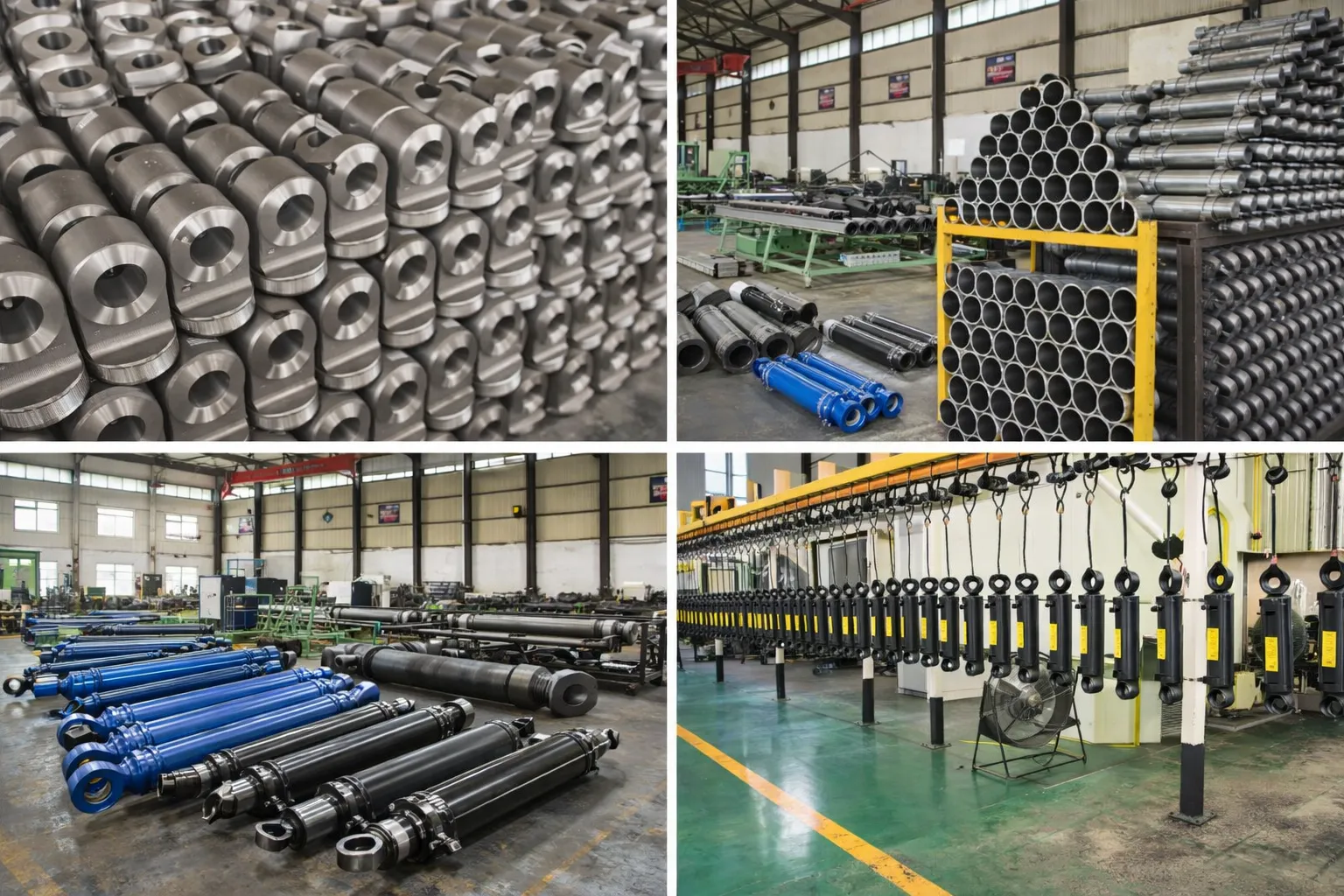
Korea Ever-Power operates dedicated forklift cylinder production lines with a designed annual output exceeding 1,000,000 units. The tilt cylinder line is fully automated — from CNC bore honing (achieving Ra 0.2–0.4 μm surface finish), through robotic MIG welding of the clevis and mounting brackets, to automated piston rod chrome plating and automated seal assembly. Every cylinder passes a hydrostatic pressure test at 1.5× rated working pressure (27 MPa) and a leakage test at rated pressure with zero visible leakage permitted over a 3-minute hold period.
Forklift Tilt Hydraulic Cylinder — Frequently Asked Questions
Complete the Forklift Hydraulic System
Additional information
| Editor | Cxm |
|---|
Related products
-
Forklift Lifting Cylinder | EP-HCYY11112000 Model
-

Forklift Steering Cylinder | EP-HCYY11112002 Model
-
Forklift Tilt Cylinder | EP-HCYY11112001 Model
-
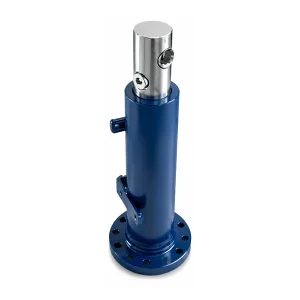
OEM Single Acting Forklift Hydraulic Cylinder
-
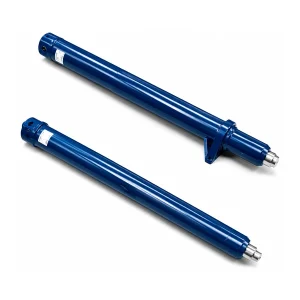
Custom Hydraulic Lift Cylinder — OEM Lift Cylinder with Integrated Check Valve and Sprocket for Forklifts
-
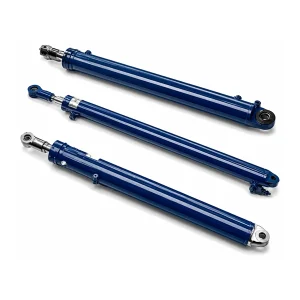
Forklift Distance Adjustment Hydraulic Cylinder — Fork Positioner Cylinder
-
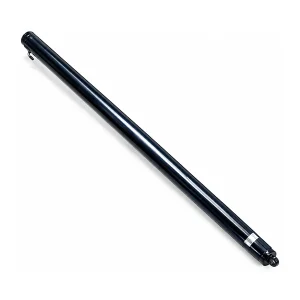
Forklift Lifting Hydraulic Cylinder — Single-Acting Mast Lift Cylinder
-
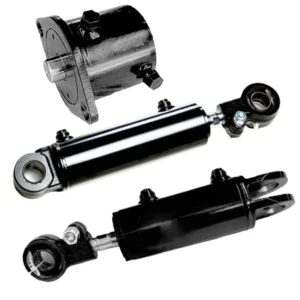
Forklift Tilt Hydraulic Cylinder


























