Forklift Truck Lift Oil Cylinder — Single-Acting Hydraulic Lift Cylinder
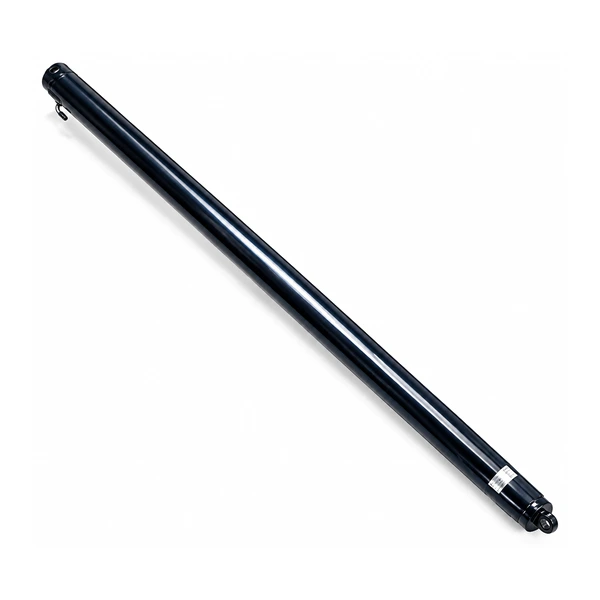
Forklift Truck Lift Oil Cylinder
The lift oil cylinder converts hydraulic pressure into the vertical force that raises the forks, the carriage, and the load from ground level to the top shelf of the warehouse rack. It is the single most heavily loaded cylinder on the forklift — absorbing the full weight of every pallet, every crate, and every container the machine handles, shift after shift, for 10,000+ operating hours. When this cylinder leaks, drifts, or fails, the forklift stops earning money.
Korea Ever-Power manufactures forklift lift oil cylinders for every mast configuration — simplex, duplex, triplex, and full-free-lift — in both standard catalogue and OEM custom formats. Whether you need a direct replacement for a 3-tonne warehouse forklift or a custom-engineered cylinder for a 25-tonne container handler, the same ISO 9001-certified production lines, the same premium seal options, and the same 100% pressure testing apply across every unit.
Product Specification
| Product Name | Forklift Truck Lift Oil Cylinder |
| Acting Type | Single-acting (gravity return) — standard for all lift functions |
| Structure | Piston cylinder — 8, 25, or 27-component architecture per application |
| Standard Models | 5 main lift (Φ56–Φ60, 1500 mm stroke) + 5 short lift (Φ75–Φ95, 775–800 mm) |
| Custom Range | Any bore, stroke, pressure, mounting — OEM/ODM service |
| Body Material | 20# carbon steel / 45# medium carbon steel |
| Rod | C45 induction-hardened + hard chrome (20–40 μm) |
| Seal Options | Parker, NOK, Hallite, Busak Shamban |
| Load Holding | Steel ball check valve (8-part) or spring-loaded check valve (27-part) |
| Drift Specification | ≤ 25 mm fork descent in 10 min at rated load (ISO standard) |
| Certification | ISO 9001:2015, ISO 14001, ISO 45003 |
| Quality | 100% proof pressure + leakage tested · Test certificate provided |
| MOQ / Annual Capacity | 1 piece / 1,200,000 cylinders per year |
| Shipping | Crate or pallet · Port: Shanghai / Ningbo |
Three Lift Oil Cylinder Types — Choose by Mast Configuration
The type of lift oil cylinder you need is determined by your mast configuration and the function the cylinder serves within it. There are three distinct types, and they are not interchangeable.
Main Lift Cylinder
The primary lift actuator that extends the mast rails. One or two per mast channel, running the full height of the outer rail. These cylinders have the longest stroke in the forklift system — typically 1,500 mm — and are single-acting (gravity return). When the mast reaches maximum height, these cylinders are at full extension, carrying the entire load plus the mast weight as a structural column.
Short Lift / Free-Lift Cylinder
The inner cylinder that provides free-lift travel — raising the forks inside the collapsed mast before the mast itself begins to extend. It has a shorter stroke (500–900 mm) because it must fit within the collapsed inner rail. Includes an integrated chain sprocket for 2:1 stroke multiplication and a check valve for load holding. This is the 27-component architecture.
Bare-Actuator Lift Cylinder
The minimalist 8-component design — housing, rod, seals, steel ball check valve, and nothing else. No sprocket, no oil pipe. Used as an aftermarket replacement where the mast already has external sheaves and plumbing, or for non-forklift lift applications (tables, platforms, farm equipment) where the chain drive is handled externally.
How a Forklift Lift Oil Cylinder Works
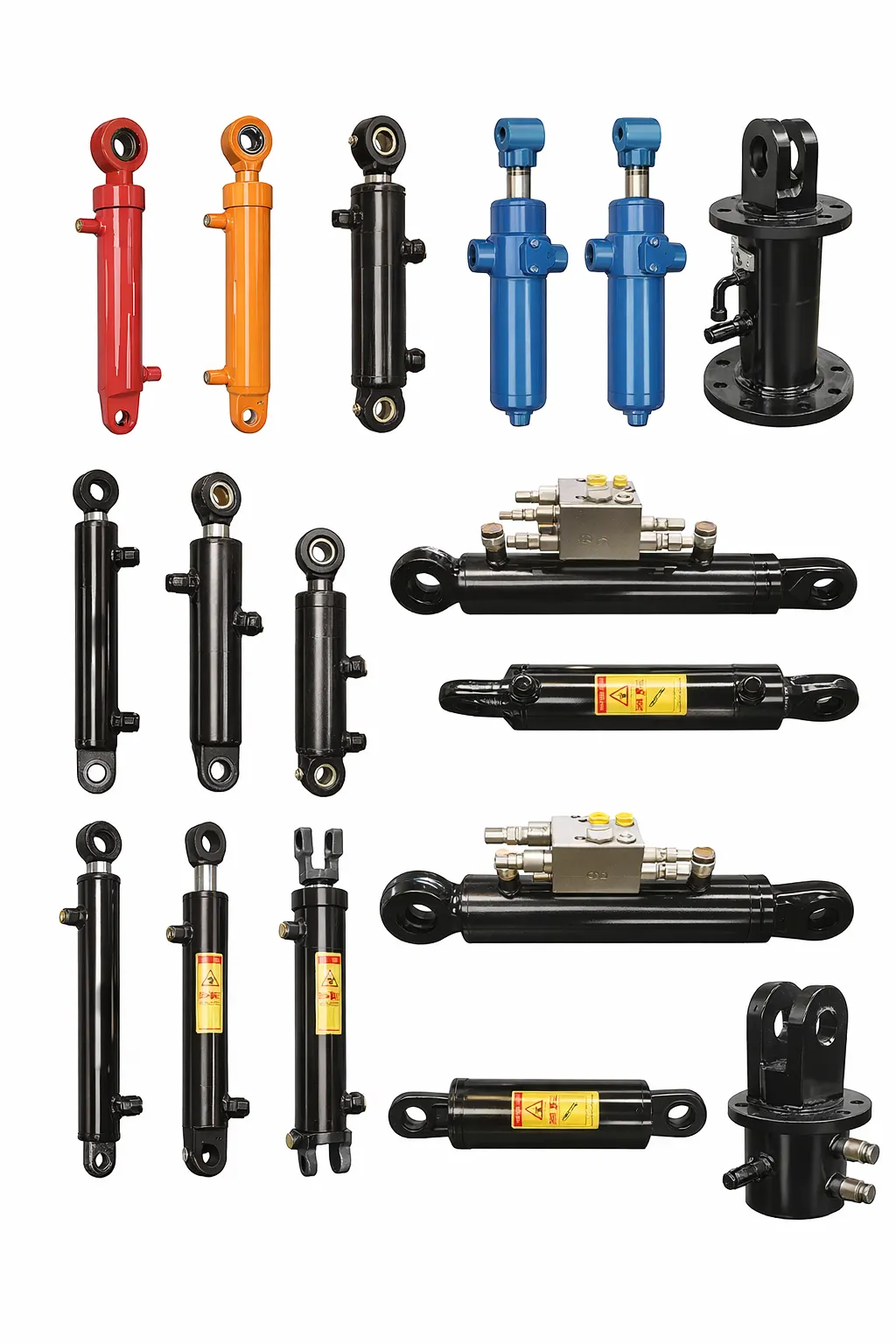
The operating cycle is simple in principle and precise in execution. The hydraulic pump draws oil from the reservoir and pressurises it to the system working pressure (typically 16–21 MPa). The directional control valve routes this pressurised oil through a hose to the lift cylinder's single port at the bore end. The oil enters the bore below the piston, pushing the piston upward. Because the rod is connected to the carriage (directly or via chain), the forks rise.
When the operator returns the lever to neutral, the directional valve closes, and the check valve inside the cylinder traps the oil. The load stays at height — indefinitely, without any pump pressure. This is the "hold" phase, and it depends entirely on the check valve seal integrity and the piston seal bypass rate. The Korea Ever-Power drift specification is ≤ 25 mm of fork descent in 10 minutes under rated load.
When the operator pushes the lever to lower, the directional valve opens a metered return path from the cylinder bore back to the reservoir. The load weight pushes the piston down, displacing oil back through the metering orifice. The orifice size controls the descent speed — smaller orifice means slower descent. The lowering speed is always controlled, never free-fall.
How to Identify Which Lift Oil Cylinder You Need
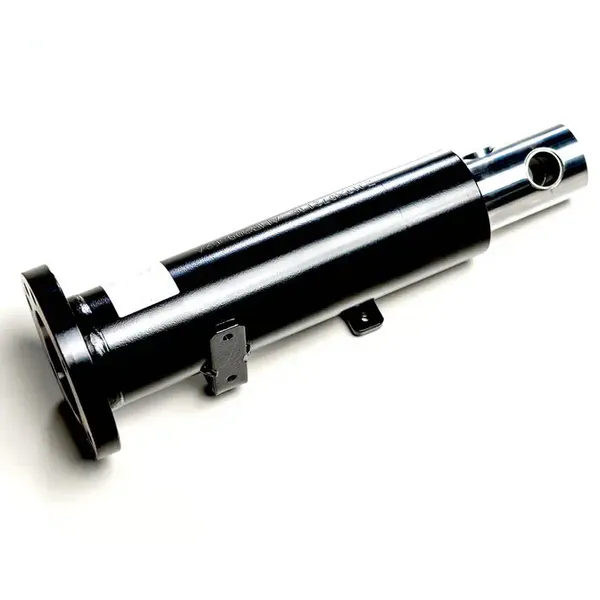
Ordering the wrong cylinder type is the most common mistake buyers make — a main lift cylinder cannot replace a short lift cylinder, and a 27-component cylinder is unnecessary where an 8-component bare actuator will do. Answer these four questions to identify the correct cylinder type for your application.
Question 1: Does your mast have a free-lift function?
If the forks can rise without the mast rails extending, your mast has a free-lift function, and you need a short lift cylinder (Type B) for the free-lift stage in addition to the main lift cylinders (Type A) for the mast extension stage. If the mast rails begin extending immediately when the forks rise, you have a simplex or basic duplex mast and only need main lift cylinders (Type A).
Question 2: Does the existing cylinder have a chain sprocket on top?
If yes, you need the 27-component architecture with integrated sprocket (Type B). If no, you need either a main lift cylinder (Type A — no sprocket, long stroke) or a bare actuator (Type C — no sprocket, shorter stroke, external sheave).
Question 3: Is the stroke greater or less than 1,000 mm?
Greater than 1,000 mm → most likely a main lift cylinder (Type A). Less than 1,000 mm → most likely a short lift or bare actuator (Type B or C). Measure the stroke by fully extending the rod and measuring from the gland face to the rod end.
Question 4: Do the bore and stroke match a standard model?
If your measurements match one of the 10 standard models (5 main lift + 5 short lift), order the catalogue product for the fastest delivery and lowest cost. If any dimension deviates, order through the OEM custom service — Korea Ever-Power will manufacture to your exact specification.
Manufacturing — From Raw Steel to Tested Cylinder
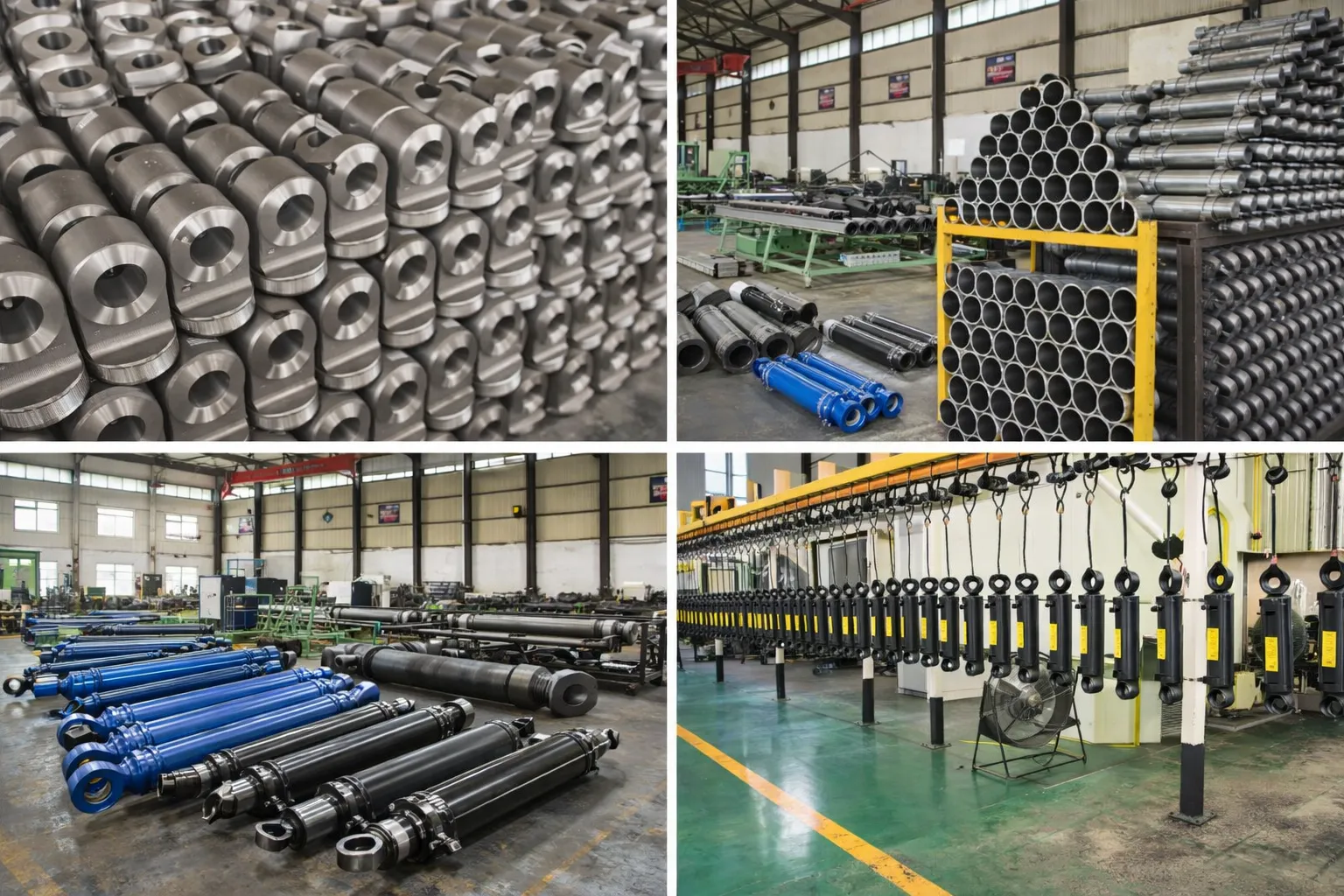
Every lift oil cylinder begins as cold-drawn seamless steel tube (DIN 2391 / EN 10305-1) and C45 chrome-plated rod stock. The tube is honed to a mirror-finish bore (Ra ≤ 0.4 μm), the rod is induction-hardened and chrome-plated (20–40 μm), the seals are installed in a dust-controlled assembly area, and the completed cylinder is proof-pressure tested at 1.5× working pressure before packaging. The Korea Ever-Power facility operates over 300 sets of CNC equipment with a designed annual capacity of 1,200,000 cylinders across all product types.
Forklift Lift Oil Cylinder — Frequently Asked Questions
Customer Reviews
Verified Purchase · April 2025
We run 14 forklifts in a beverage distribution warehouse. Had two lift cylinders go within a month — both leaking past the rod seal after about 9,000 hours. The OEM wanted $1,400 each and 6 weeks. Got both from Ever-Power for less than half that and they arrived in under 3 weeks. Our mechanic said the finish quality on the rod is actually better than the originals. Both trucks back in service, no issues after 5 months of double-shift operation.
Verified Purchase
Replaced the main lift cylinders on a TCM FD30 triplex mast. I sent photos and measurements because the original part number was worn off. Ever-Power's engineer identified the correct spec within a day and even pointed out that my rod diameter measurement was slightly off — he was right, I had measured over a worn spot. That kind of attention to detail makes a difference. Cylinders fit perfectly.
Verified Purchase · February 2025
Good cylinder. We use it in a textile warehouse. The only reason for 4 stars is that the first sample had the wrong port thread — BSP instead of metric. To their credit, Ever-Power reshipped the correct version at their own cost and it arrived in 10 days. The replacement cylinder itself is working very well, no leak after 4 months. For future orders we will double-check the port spec on the drawing confirmation before production.
Verified Purchase · June 2025
Third time ordering from Ever-Power. This time was a short lift cylinder for a Hangcha CPCD25 — needed the 27-component version with sprocket. Asked for Hallite seals because we had good experience with them on the tilt cylinders we ordered last year. Everything arrived exactly as specified. The sprocket tooth profile matched the original chain perfectly. Already planning our next order — two main lift cylinders for a Clark forklift that's due for rebuild next quarter.
Verified Purchase
Simple transaction, no drama. Ordered, paid, received in 19 days. Cylinder works. That's all I need from a supplier. Will order again.
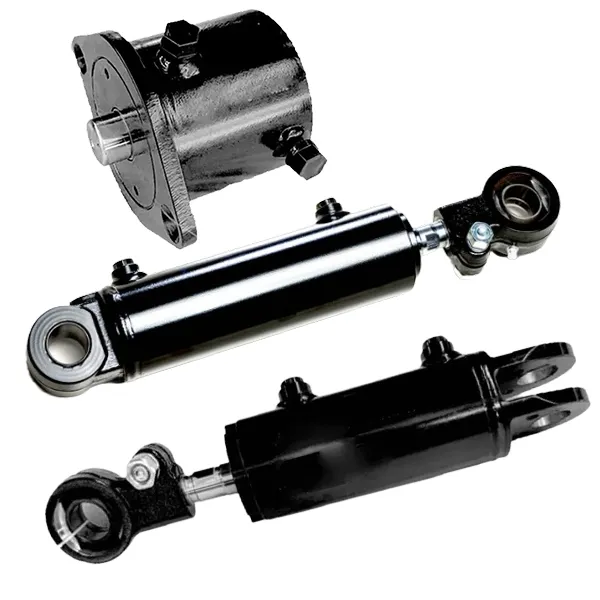
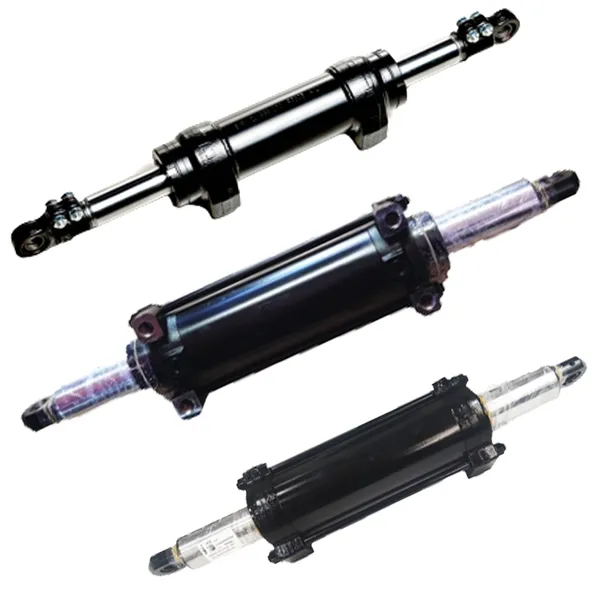
Other Forklift Cylinder Types
Additional information
| Editor | Cxm |
|---|
Related products
-
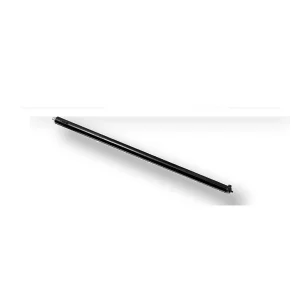
Forklift Short Lifting Cylinder | Bore Φ75–95mm | Free-Lift Stage
-
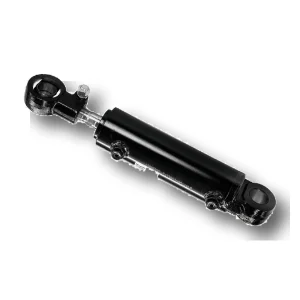
Forklift Tilt Cylinder | EP-HCYY11112001 Model
-
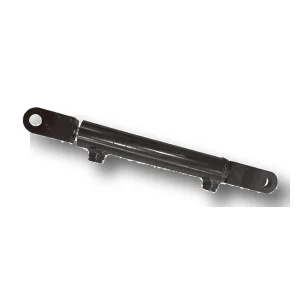
Pallet Truck Lift Cylinder | Bore Φ40–45mm | Ultra-Compact
-
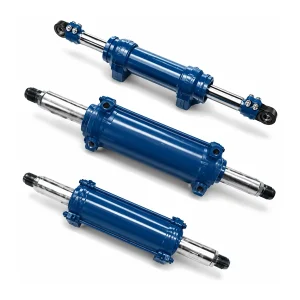
LS-HCZD30N-03 Forklift Truck Steering Cylinder
-
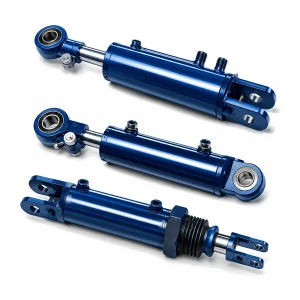
20176B-02000 Forklift Truck Support Hydraulic Cylinder
-
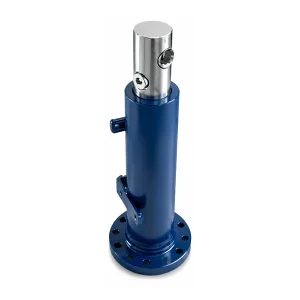
OEM Single Acting Forklift Hydraulic Cylinder
-
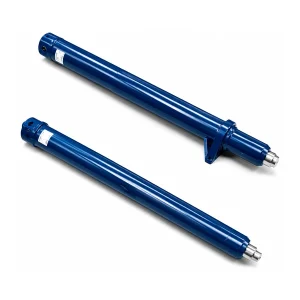
Custom Hydraulic Lift Cylinder — OEM Lift Cylinder with Integrated Check Valve and Sprocket for Forklifts
-
Forklift Lifting Hydraulic Cylinder