Nozzle Adjustment Cylinder for Continuous Casting Machine
A 100% 316L stainless steel fluid power component designed explicitly for mold cooling systems. Permanently stop pitting corrosion, protect your hydraulic fluid from water contamination, and maintain absolute control over the cooling nozzle opening degree.
Product Overview: The Foundation of Metallurgical Heat Control
Within the intensive processing environment of a heavy steel manufacturing plant, the continuous casting machine is highly dependent on extremely accurate thermal extraction to successfully solidify liquid metal into a structurally sound steel slab. The primary cooling zone, situated directly within the water-jacketed copper mold, and the secondary spray zone directly below it, dictate the formation of the initial steel shell. The exact volume, pressure, and distribution of the cooling water flowing through these sections must be dynamically adjusted in real-time based on the casting speed and the specific alloy grade. The essential mechanical actuator entrusted with modulating this high-volume water flow by physically adjusting the control aperture is the nozzle adjustment cylinder.
While its functional role is to provide precise linear positioning, the operating environment is chemically destructive. These specialized actuators operate directly in the primary splash zone, perpetually subjected to high-velocity industrial cooling water. Water loops in steel mills are heavily treated with biocides, algaecides, and heavy scale inhibitors. Due to continuous evaporation, the water naturally concentrates aggressive chloride ions. When conventional carbon steel fluid power components are installed in this zone, the environmental moisture initiates immediate surface oxidation. Within weeks, severe pitting corrosion attacks the chrome plating on the rod. Once the rod surface is compromised, the jagged microscopic pits physically shred the dynamic seals. This leads to immediate failure: pressurized hydraulic fluid leaks directly into the primary cooling water system, or corrosive water bypasses the seals into the central power unit. Both failure modes force immediate, expensive plant shutdowns and extensive fixing hydraulic cylinders operations.
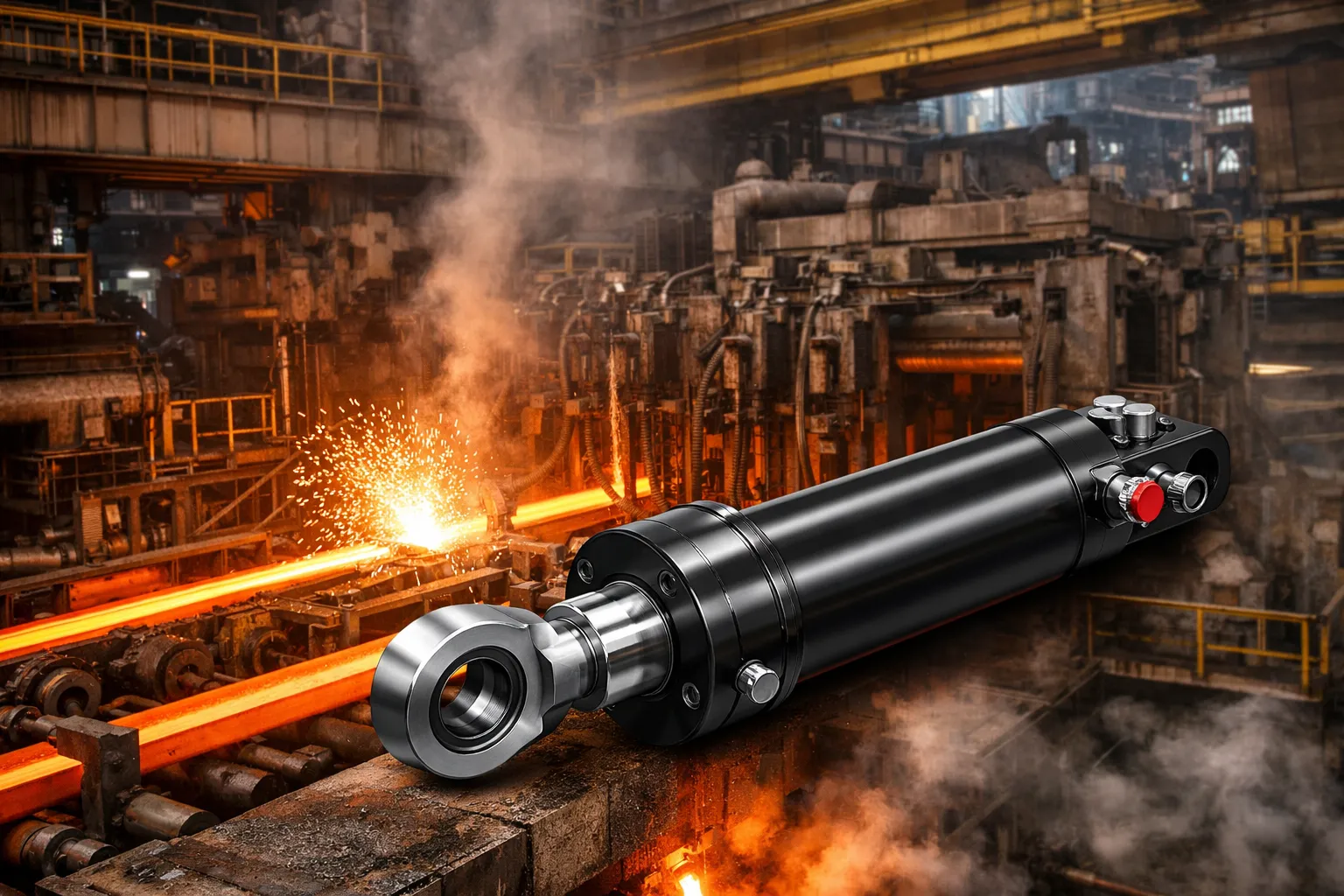
As a dedicated hydraulic cylinder manufacturer focusing strictly on severe-duty metallurgy applications, our unique engineering positioning is defined by directly confronting this chemical reality. We have completely abandoned traditional carbon steel architecture for this specific mold cooling application. Our engineered nozzle adjustment hydraulic cylinder is manufactured entirely from premium 316L stainless steel. By utilizing a full 316L material matrix, we provide absolute, unyielding immunity against chloride-induced pitting corrosion. When plant managers and reliability engineers integrate our stainless steel technology, they effectively eliminate the primary failure mode of the mold cooling subsystem, securing years of uninterrupted precision flow control and drastically optimizing the total lifecycle hydraulic cylinder price.
Comprehensive Technical Parameters
Because continuous casting cooling manifolds and primary header pipes vary significantly between different engineering designs and steel output capacities, a rigid off-the-shelf sizing approach is invalid. We maintain a deeply flexible manufacturing framework, allowing us to customize stroke lengths, bore diameters, and mounting geometries to perfectly match your specific mold cooling architecture. The technical matrix below outlines the uncompromising material standards and functional specifications that define our metallurgical stainless steel actuators.
| Engineering Parameter | Specification Details & Configuration |
|---|---|
| Primary Industry Sector | Metallurgical Manufacturing, Iron & Steel Processing |
| Target Equipment Category | Continuous Casting Machine (Slab, Bloom, Billet) |
| Subsystem Implementation | Mold Cooling Zone & Secondary Spray Header |
| Component Designation | Nozzle adjustment cylinder |
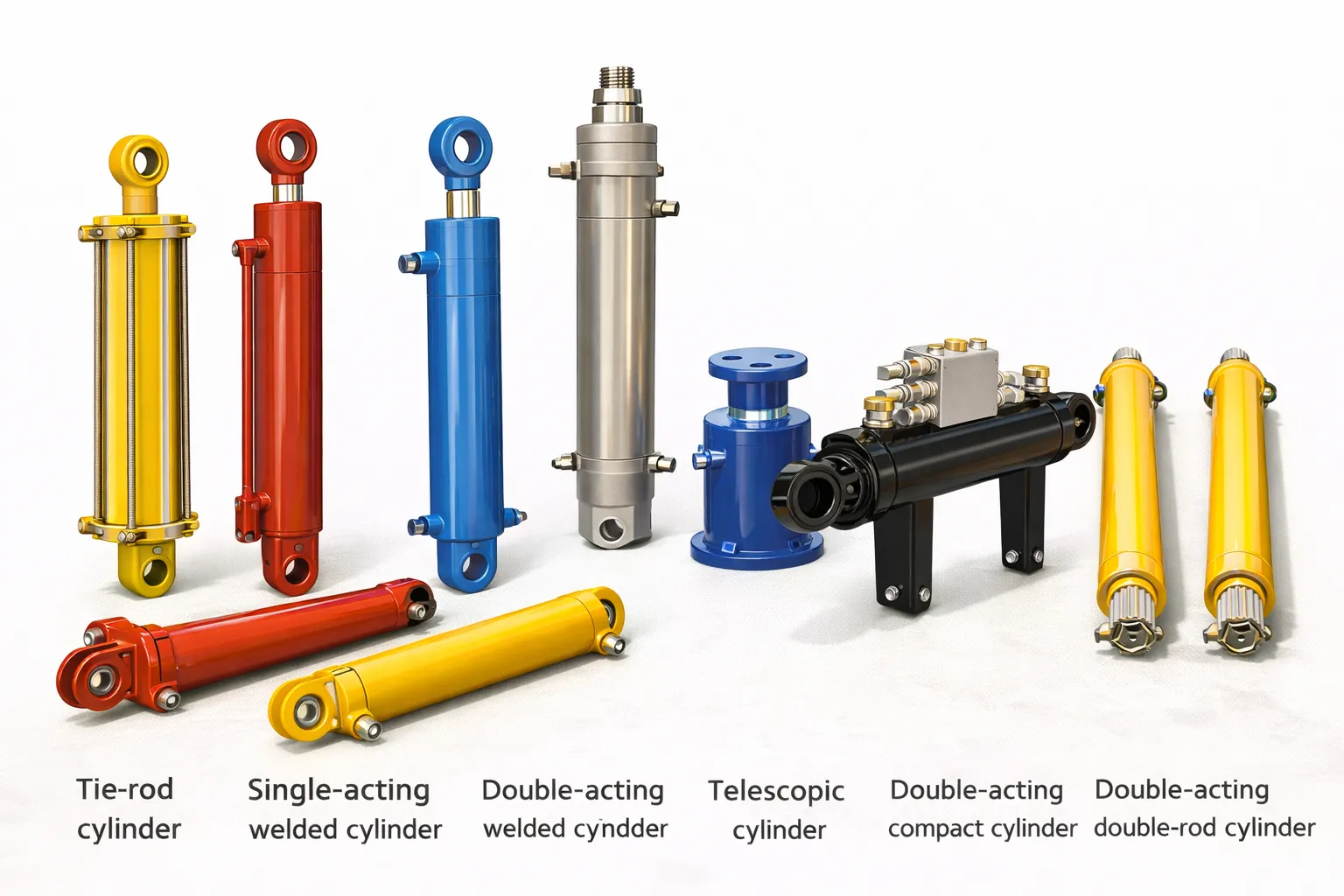
| Mechanical Action Mode | Double acting hydraulic cylinder for precise bidirectional control |
| Internal Architecture | Stainless steel piston cylinder design |
| Manufacturing Method | Precision TIG / Argon Arc Welded Assembly |
| Primary Material Matrix | 316L Full Material (Provides exceptional chloride resistance) |
| Surface Finish Treatment | High-Grade Mechanical Polishing (Ra < 0.2 micrometer) |
| Environmental Operation Grade | Heavy Cooling Water Corrosion, High Chloride Ion Exposure |
| Working Condition Task | Control nozzle opening degree to modulate cooling flow rates |
| Targeted Critical Failure Mode | Absolute prevention of Pitting Corrosion and fluid cross-contamination |
| Recommended Configuration | Full 316L structure paired with extreme water-resistant wiper seals |
Fluid Dynamics and Mechanical Working Principle
To truly understand the necessity of this robust 316L engineering, one must dissect the operational mechanics of the continuous casting cooling feedback loop. The mold is lined with highly sensitive thermocouples that constantly monitor the thermal dissipation of the liquid steel. This thermal data is instantly transmitted to the plant’s automated logic controllers. Depending on the casting speed and the metallurgical grade, the system must constantly tweak the cooling water volume. The physical translation of this electronic command relies entirely upon the nozzle adjustment cylinder pushing or pulling the heavy mechanical linkages attached to the water spray headers.
Because the internal water manifolds operate under immense municipal or booster pump pressure, opening and closing the nozzles is not a passive action. The actuator must possess the brute mechanical force to overcome massive hydrostatic resistance and internal valve friction in both directions. Therefore, relying on a gravity-return or single acting hydraulic cylinder is fundamentally impossible. The process demands a heavily powered, highly responsive double acting hydraulic cylinder. When the cooling rate must be increased, highly pressurized clean hydraulic fluid is metered strictly into the cap-end chamber. The immense pressure drives the piston forward, extending the polished 316L rod to widen the nozzle opening.
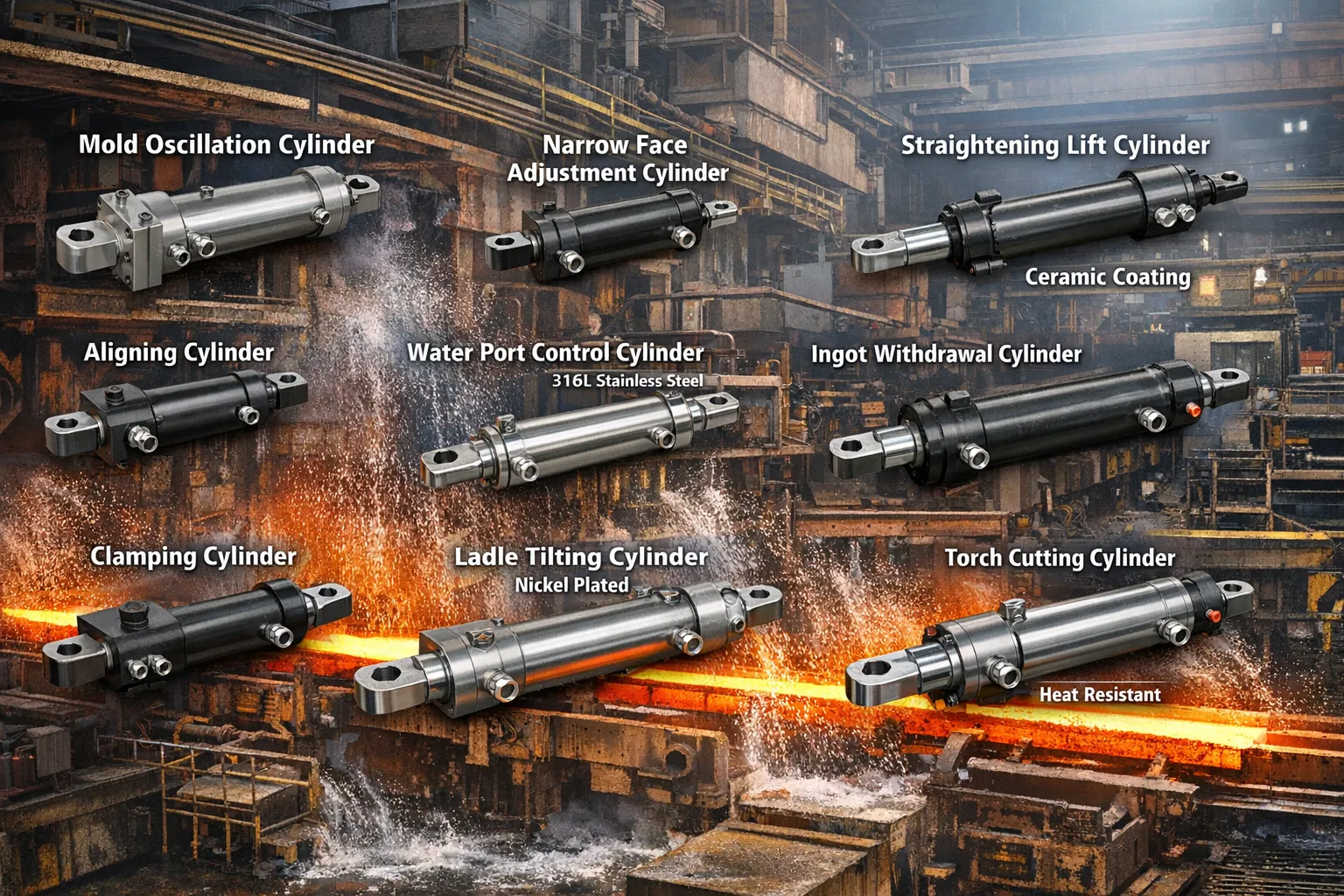
Conversely, to throttle the flow and reduce the cooling rate, hydraulic fluid is forcefully directed into the rod-end chamber, pulling the piston back and restricting the nozzle aperture. Because this entire mechanical action takes place while the nozzle adjustment hydraulic cylinder is continuously showered in corrosive cooling water, maintaining the perfection of the extending rod is the single most critical factor in the unit’s lifespan. Our mirror-polished 316L stainless steel rod completely rejects mineral scaling. It glides effortlessly through the advanced rod gland seals without introducing a single drop of contaminated cooling water into the clean hydraulic fluid, ensuring perfectly smooth, stutter-free sub-millimeter positional control across the hydraulic cylinder piston.
Effortless Drop-In Upgrades for Legacy Machinery Brands
Maintenance directors are constantly pressured to optimize downtime. When a critical cooling actuator inevitably fails due to rust, navigating the six-month lead times and exorbitant brand premiums demanded by overseas original equipment manufacturers (OEMs) creates a massive operational bottleneck. We actively bypass this supply chain friction by engineering highly precise, completely custom hydraulic rams that serve as effortless dimensional drop-in replacements for standard global machinery systems.
(Important Notice: The subsequent mention of specific heavy machinery corporate brands is provided strictly for engineering reference, mounting compatibility validation, and rapid component selection for B2B procurement professionals. We firmly respect all intellectual property, assert no trademark affiliations, and exclusively manufacture fully independent, materially upgraded hydraulic parts.)
Our specialized technical department routinely reverse-engineers and supplies 100% 316L stainless steel replacements for cooling zone actuators originally installed by legacy brands such as Bosch Rexroth, Parker Hannifin, SMC, Festo, Danieli, and SMS Group. We flawlessly replicate the external mounting threads, clevis pin diameters, stroke lengths, and fluid port orientations according to your technical drawings. Your mechanics receive a superior replacement that bolts directly into the existing manifold without requiring any bracket modifications or mechanical rework, instantly upgrading the cooling system’s resistance to catastrophic water ingress.
Five Critical Advancements in Corrosion Defense Engineering
Transforming a standard fluid power actuator into a device capable of surviving constant immersion in aggressive industrial cooling water requires discarding conventional design paradigms. To guarantee an extreme operational lifespan, we build five core technical advancements directly into every 316L unit we supply.
1. Full 316L Austenitic Material Matrix
We refuse to rely on fragile external coatings or basic 304 stainless steel. Every wetted component—the thick cylinder barrel, the piston rod, the end caps, and the mounting trunnions—is machined from solid 316L stainless steel. The addition of molybdenum (2-3%) creates an impenetrable passivation layer that effectively neutralizes aggressive chloride ions, completely eradicating the root cause of pitting corrosion in cooling water environments.
2. Ultra-Smooth Mirror Polishing Protocol
Industrial cooling water is packed with heavy minerals that easily calcify and bond to rough metal surfaces. We subject the 316L piston rod to an intensive, multi-stage mechanical polishing process, achieving a surface roughness (Ra) of less than 0.2µm. This flawless mirror finish denies calcium and magnesium deposits the microscopic crevices they need to anchor, drastically extending the life of the dynamic seals.
3. Advanced Hydrolysis-Resistant Sealing
Standard urethane seals suffer from hydrolytic breakdown when exposed to warm water over time. We implement specialized hydrolysis-resistant PTFE (Teflon) and engineered elastomer composites for all internal dynamic seals and heavy-duty external wipers. These advanced materials fundamentally repel water ingress, maintaining their structural geometry and preventing fatal fluid cross-contamination.
4. Precision TIG Welded Architecture
Welding stainless steel requires immense technical discipline to prevent heat-affected zone (HAZ) carbide precipitation, which invites localized rusting. We utilize highly controlled, automated Tungsten Inert Gas (TIG) argon-shielded arc welding. This ensures flawless, full-penetration structural integration of the 316L components, securing the cylinder’s ability to absorb violent pressure spikes without structural fatigue.
5. Eradication of Stick-Slip Friction
Because controlling the water nozzle demands high-frequency, micrometer-level adjustments from the PLC, internal mechanical stiction is utterly unacceptable. We pair the mirror-polished 316L internal bore with highly specialized bronze-filled dynamic guide bands. This architecture drastically reduces kinetic friction, completely eliminating the jerky stick-slip phenomenon and allowing flawlessly smooth, continuous aperture modulations.
Stringent Manufacturing Traceability and Quality Control
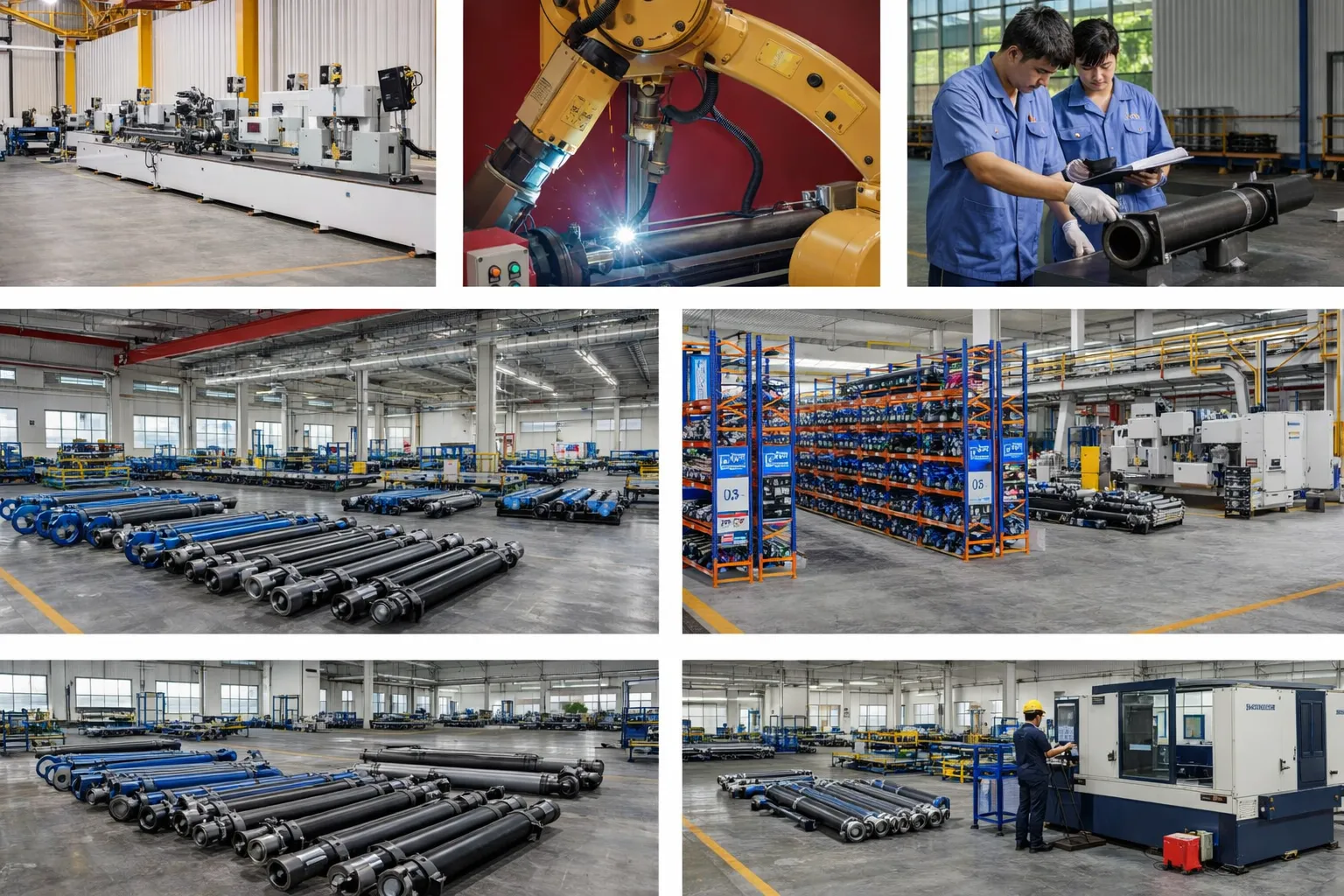
Delivering absolute corrosion immunity relies heavily on verifying raw material chemistry before the manufacturing process even initiates. Operating a completely autonomous, in-house production facility allows us to enforce uncompromising quality control protocols. Upon receiving raw stainless steel bar stock at our facility, we utilize highly sensitive handheld optical emission spectrometers to strictly verify the material composition. We guarantee the molybdenum, chromium, and nickel content perfectly meets the severe 316L international metallurgical standard.
Following precision multi-axis CNC machining and controlled argon arc welding, every single assembled nozzle adjustment hydraulic cylinder undergoes an exhaustive factory hydrostatic pressure testing regimen. We pressurize the unit dynamically in both directions, holding the clean hydraulic fluid static at levels significantly above standard continuous operating pressures. Digital flow sensors are employed to mathematically verify that internal leakage is absolutely zero. Once successfully validated, the unit is permanently laser-etched with a unique serial identifier. This comprehensive traceability ensures that decades from now, our engineering team can instantly recall the exact dimensions, seal chemistry, and material heat lots used to construct your specific hydraulic cylinder components.
Expansive Cross-Industry Applications for 316L Technology
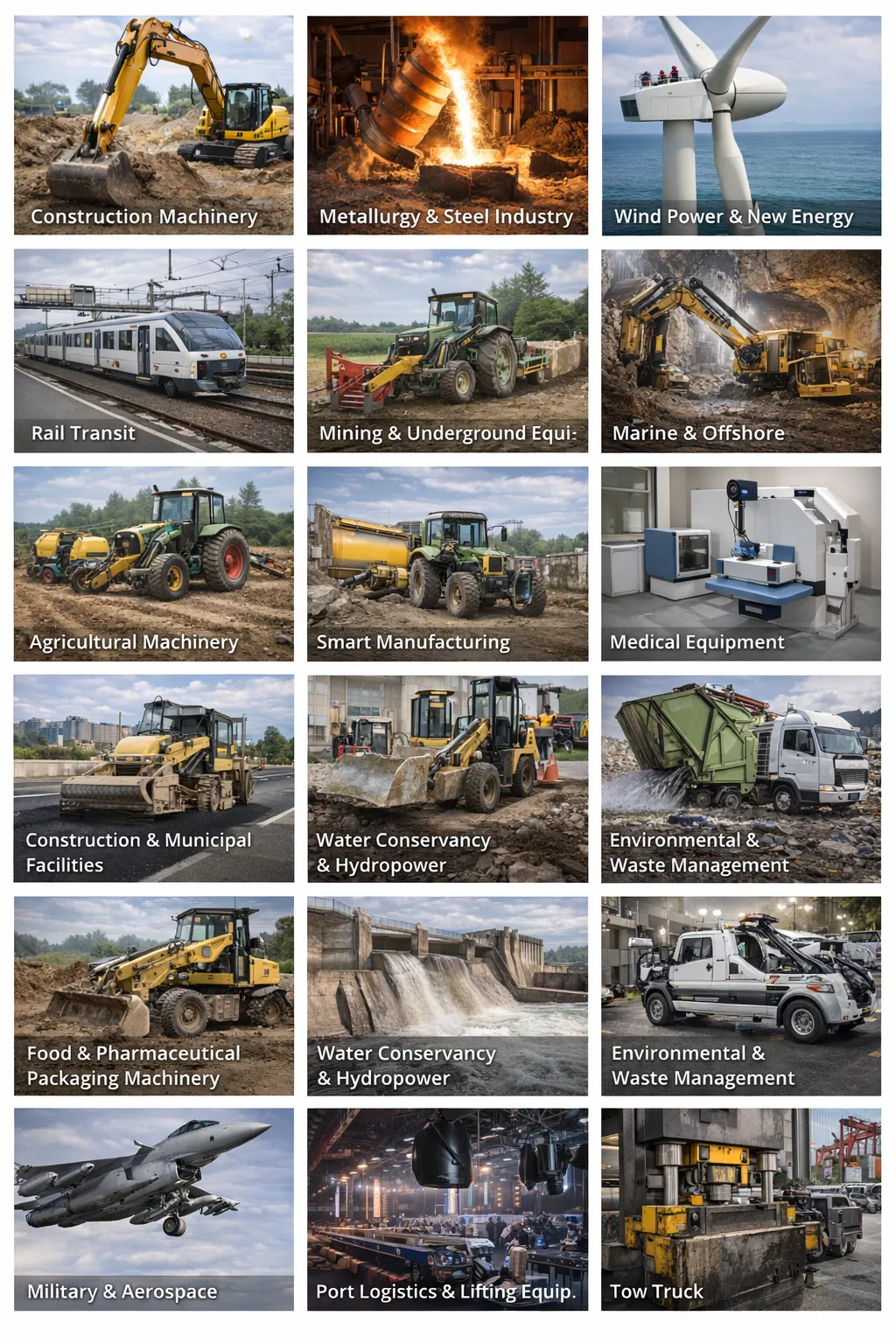
The advanced fluid power engineering capabilities required to manufacture full stainless steel actuators make this technology highly sought after across any heavy industrial sector suffering from severe environmental corrosion, continuous water submersion, or highly acidic atmospheric conditions.
- Metallurgical and Heavy Iron Industry: Expanding far beyond continuous casting mold cooling, these corrosion-proof units are heavily deployed in primary descaling spray header controls, hot strip rolling mill water curtain regulation, and highly acidic pickling line tensioning systems.
- Mining and Mineral Extraction: In deep-shaft underground mining environments dealing with highly acidic or sulfur-rich groundwater, standard carbon steel equipment dissolves rapidly. Our 316L equipment operates effortlessly in these toxic sumps, controlling heavy dewatering pumps and thickener valves.
- Specialized Construction Machinery: Heavy tunnel boring machines navigating through underwater aquifers, as well as coastal marine piling rigs, frequently require full stainless steel articulation components to prevent rapid, unseen subterranean saltwater corrosion.
- Marine, Offshore, & Renewable Energy: The exact 316L architecture utilized here is mandated for offshore oil rig platforms, heavy port cargo locks, and specialized submerged lift cylinder applications on offshore wind turbine pitch control mechanisms constantly exposed to aggressive saltwater environments.
Comparative Matrix: Standard Carbon Steel vs. Full 316L Stainless
Installing generic carbon steel components in a primary water cooling zone is structurally irresponsible and mathematically guarantees severe equipment failure. The detailed analytical table below clearly illustrates the stark engineering contrast between cheap commercial units and our purpose-built metallurgical solution.
| Engineering Metric | Standard Commercial Cylinder | Our 316L Metallurgical Cylinder |
|---|---|---|
| Structural Material Base | Standard #45 / 1045 Carbon Steel | Full 316L Austenitic Stainless Steel |
| Pitting Corrosion Resistance | Extremely Poor (Rusts heavily within weeks) | Absolute Immunity against chloride ions |
| Rod Surface Chemistry | Thin Flash Chrome (Easily flakes off in water) | Mirror-polished solid 316L (No peeling possible) |
| Seal Degradation Risk | High risk of seal shredding from rusted, pitted rod | Zero risk; rod remains permanently smooth and clean |
| Long-Term Maintenance Cycle | Requires constant replacement every 3 to 6 months | Continuous multi-year operation without structural failure |
Documented Field Success: B2B Case Studies in East Asia
Our advanced 316L stainless steel technology has profoundly impacted major metallurgical operations across the East Asian manufacturing corridor. Review these highly detailed field implementations demonstrating our deep capability in diagnosing heavy industry failures, expertly fixing hydraulic cylinders through advanced material science, and drastically reducing operating costs.
1. Eliminating Fluid Cross-Contamination in Pohang, South Korea
Client Profile: A massive Tier-1 integrated steel facility managing multiple high-volume continuous slab casters.
The Problem: Aggressive pitting corrosion on their standard OEM carbon steel cylinders had completely shredded the primary rod seals. This allowed pressurized hydraulic oil to constantly leak directly into the primary cooling water system, causing severe environmental compliance violations and massive fluid replacement costs.
Engagement: The plant’s environmental and safety director located our specialized 316L components via an extensive technical web search in mid-2024.
The Solution: We delivered custom nozzle adjustment cylinder units manufactured entirely from 316L, permanently immunizing the subsystem against the highly chlorinated cooling water.
“The upgrade was entirely transformative. Installed in October 2024, our hydraulic oil consumption dropped to absolute zero, and the cooling water remains perfectly clean today. The 316L construction permanently solved a multi-million won environmental problem.” — Mr. Lee S., Reliability Engineer.
2. Restoring Precision Micro-Control in Incheon, South Korea
Client Profile: A specialty alloy producer requiring ultra-precise thermal control to prevent surface cracking on high-grade automotive steel blooms.
The Problem: Heavy mineral scale buildup on the rusted carbon steel cylinder rods caused massive internal stiction. The PLC could no longer execute fine micro-adjustments; the cylinders would stick and then violently jerk forward, leading to erratic cooling rates and a highly unacceptable scrap rate of expensive alloy steel.
Engagement: Connected directly with our senior engineering team at a heavy industry trade exposition in Seoul.
The Solution: Integrated our polished 316L stainless steel pistons with advanced low-friction PTFE dynamic guide bands, ensuring perfectly smooth actuation regardless of the water’s heavy mineral content.
“The micro-positioning accuracy has been restored flawlessly. Evaluated thoroughly since early 2025, the mirror-polished rods completely repel mineral scaling, allowing our PLC to dictate perfect flow rates.” — Director Kim, Operations Head.
3. Drastic Procurement Optimization in Osaka, Japan
Client Profile: An established mid-sized electric arc furnace (EAF) continuous billet casting facility.
The Problem: They were facing exorbitant costs associated with importing standard European OEM replacements that were continuously failing and rusting out every six months. The total lifecycle hydraulic cylinder price was severely damaging their annual maintenance budget.
Engagement: Specifically searched for custom stainless steel drop-in hydraulic parts matching their exact legacy system dimensions online.
The Solution: We comprehensively reverse-engineered the entire assembly, delivering perfectly matching physical dimensions but radically upgrading the base material to 316L at a highly competitive unit cost.
“They bolted directly into our existing cooling headers with zero bracket issues. Commissioned in mid-2025, we cut our immediate procurement costs by 30% while effectively tripling the expected operational lifespan.” — Hiroshi T., Plant Manager.
4. Solving Critical Pump Downtime in Kaohsiung, Taiwan
Client Profile: A rapidly expanding heavy structural steel casting plant.
The Problem: Severe reverse water ingress. Corrosive cooling water was bypassing the ruined seals on their generic carbon cylinders and entering the hydraulic return lines, causing massive internal rust damage to the central hydraulic pump stations located far from the casting deck.
Engagement: Desperately requested rapid engineering assistance via our B2B technical contact portal.
The Solution: Expedited the manufacturing of heavy-duty 316L units featuring specialized hydrolysis-resistant dual wiper arrays that physically block pressurized water from entering the rod gland during retraction.
“Their deep understanding of aggressive fluid separation saved our main pump stations. Since the late 2025 installation, our hydraulic oil samples have remained perfectly devoid of water contamination.” — Chen W., Operations Head.
5. Comprehensive Factory Overhaul Program in Gwangyang, South Korea
Client Profile: A massive steel manufacturing conglomerate seeking to overhaul their entire secondary cooling control system across multiple lines.
The Problem: The facility possessed dozens of severely corroded legacy cylinders and needed a highly reliable partner capable of extensive, high-volume hydraulic cylinder repair and massive material upgrades without halting plant production entirely.
Engagement: Physically audited our autonomous manufacturing facility to verify our strict quality control and 316L TIG welding capabilities.
The Solution: Executed a meticulously phased factory rebuild program. We accepted the rusted cores, discarded the ruined carbon steel components, re-machined entirely new 316L structures, and delivered vastly superior rebuilt units back to the plant in staggered batches.
“Their rebuilding capacity is absolutely unmatched. Throughout early 2026, they systematically upgraded our entire cooling deck to full stainless steel at a fraction of the cost of buying completely new OEM machinery.” — Procurement Manager Park.
Critical Technical FAQ for B2B Evaluation
When upgrading critical continuous casting infrastructure to advanced stainless steel metallurgy, absolute technical clarity is essential. Review our most frequently encountered inquiries to assist your procurement strategy and long-term engineering planning.
1. Why is 316L stainless specifically required over cheaper 304 stainless steel?
2. What dictates the precise hydraulic cylinder price for a custom 316L drop-in replacement?
3. Why must this nozzle mechanism be controlled by a double acting hydraulic cylinder?
4. Does your facility provide ongoing, long-term support for replacement hydraulic cylinder components?
5. Can you execute severe factory-level hydraulic cylinder repair on heavily rusted OEM units?
6. What is the typical lead time for custom stainless steel manufacturing?
7. Can these cylinders function as a lift cylinder in marine environments?
Secure Your Cooling Deck Against Corrosive Failure Today
Do not allow severe pitting corrosion and substandard commercial components to dictate your plant’s reliability, cause unpredictable slab cracking, or lead to massive internal fluid contamination. Evolve your continuous casting machinery by permanently integrating uncompromising 316L stainless steel technology.
Whether you are engineering an entirely new secondary cooling framework demanding premium hydraulic cylinder solutions or you urgently require exact dimensional drop-in replacements for failing legacy brands, our technical engineering department is ready to execute.
Editor: Cxm