Product Overview & Core Industrial Value
Within the highly demanding disciplines of subterranean geotechnical exploration, open-pit quarrying, and deep foundation engineering, the structural integrity and precise spatial alignment of heavy machinery dictate the ultimate success of the project. The carriage system functions as the critical sliding framework on the rig mast, responsible for guiding the massive rotary head and aligning the drill string deep into the bedrock. The exact positioning, angular adjustment, and rigid stabilization of this heavy steel mast are entirely reliant upon the performance of the carriage adjustment cylinder. If this vital actuator fails to hold its precise coordinate, the entire drilling trajectory becomes fundamentally compromised, leading to bent drill rods, accelerated downhole tool wear, and highly dangerous operational instability on the job site.
It is a common engineering oversight to equate this specialized component with a standard vertical lift cylinder. A conventional lifting actuator primarily manages linear forces working directly against gravity. In stark contrast, a carriage adjustment hydraulic cylinder exists in a state of constant mechanical conflict. As the rig operates on uneven terrain or angles the mast to perform directional boring, the immense weight of the overhanging rotary drive imposes massive side loads directly onto the extended cylinder rod. This phenomenon, technically defined as eccentric loading, acts as a massive lever attempting to bend the rod and heavily compresses the internal guide bands. Standard commercial cylinders will microscopically deflect under these lateral stresses, leading to the rapid and uneven destruction of their internal sealing profiles.
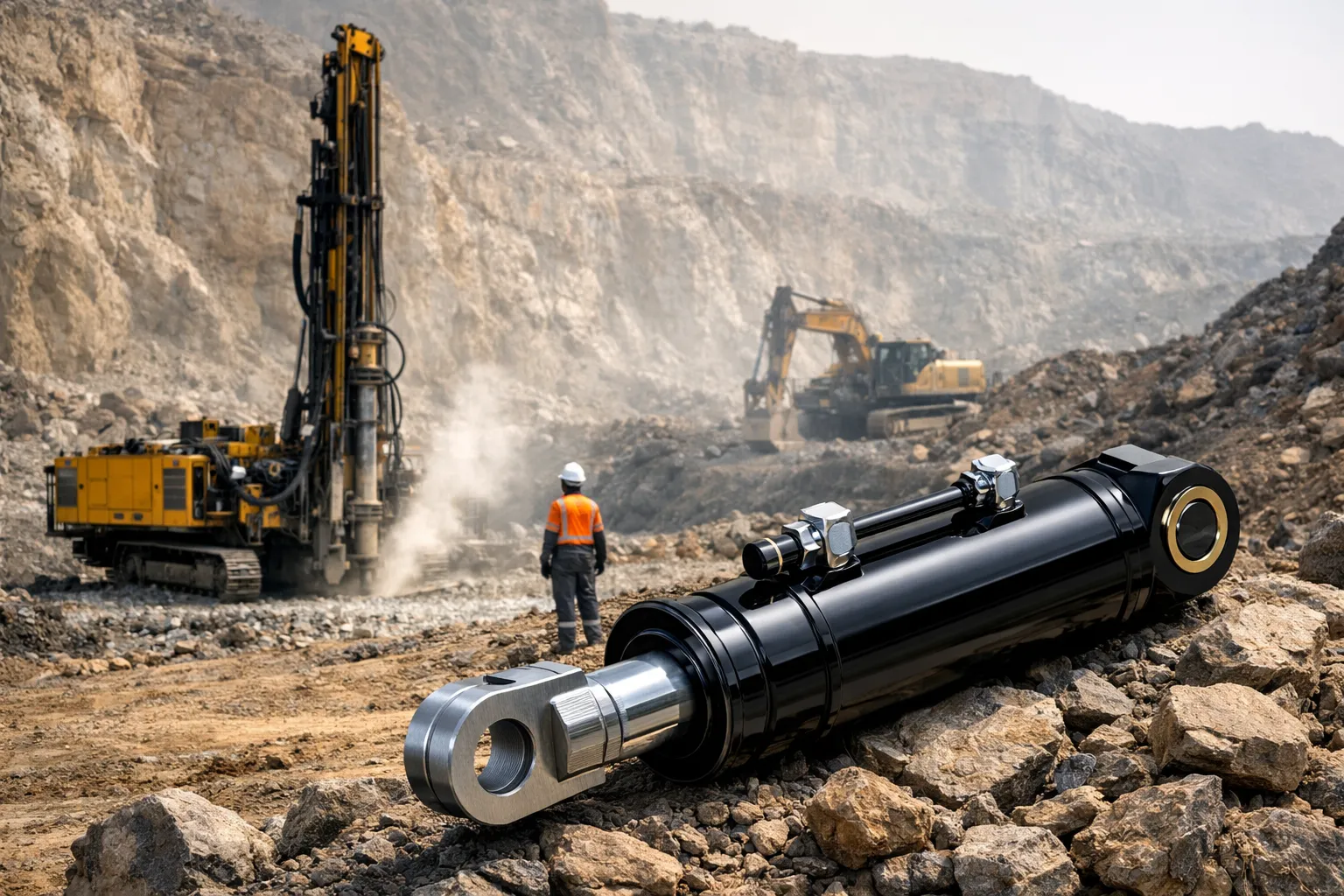
The inevitable result of this continuous seal degradation is internal leakage—a silent, catastrophic failure mode where highly pressurized fluid bypasses the main hydraulic cylinder piston. When this volumetric loss occurs, the carriage slowly drifts down the mast, ruining the drilling angle. As a globally trusted hydraulic cylinder manufacturer, our unique market positioning is built entirely upon neutralizing this specific failure mode. By abandoning weak commercial carbon steels and adopting a high-yield 27SiMn alloy architecture paired with an advanced, high-memory servo sealing matrix, we guarantee that our cylinders will hold their position relentlessly, regardless of the brutal offset loads and high-frequency chattering generated by the drill bit.
For fleet managers, chief mechanics, and procurement directors, investing in our specialized fluid power solutions fundamentally alters the total lifecycle cost of the equipment. While a lower initial hydraulic cylinder price might seem appealing for generic, off-the-shelf components, the true and often devastating expense is incurred during unscheduled rig downtime. The constant cycle of stopping production and fixing hydraulic cylinders in the mud severely damages project profitability. By integrating our heavily reinforced hydraulic parts, you secure uninterrupted daily meterage, protecting your capital equipment investment and ensuring your heavy operations remain continuously operational and highly profitable.
Engineered Technical Parameters & Customization Envelope
Sourcing reliable hydraulic cylinder components for capital mining equipment demands absolute precision. There is zero margin for error regarding dimensional fitment, metallurgical load-bearing capacities, and fluid circuit compatibility. The following matrix details the core technical attributes and the extensive customization range of our carriage positioning actuators, demonstrating our capacity to match exacting engineering requirements perfectly.
| Technical Attribute | Specification Details & Optimization Options |
|---|---|
| Target Industry | Mining Equipment, Civil Foundations, Geotechnical Exploration |
| Equipment Category | Drilling Rigs, Rotary Blast Hole Drills, Continuous Core Samplers |
| Subsystem Designation | Carriage System / Mast Alignment Mechanism |
| Hydraulic Cylinder Name | Carriage Adjustment Cylinder |
| Kinematic Action Mode | Double Acting Hydraulic Cylinder (Powered positioning in bidirectional planes) |
| Internal Structure Type | Piston Type with elongated load-bearing internal guide bands |
| Manufacturing Structure | Heavy-Duty Welded construction (Impervious to tie-rod stretching) |
| Core Material System | 27SiMn Alloy Steel (Provides superior tensile strength against bending moments) |
| Rod Surface Treatment | Thick Hard Chrome Plating (Maximum abrasion defense against silica dust) |
| Environmental Load Grade | Severe Eccentric Load, Extreme High-Frequency Chattering |
| Working Condition | Carriage positioning, rigorous angular adjustments during active drilling |
| Targeted Failure Mode | Internal leakage (volumetric bypass) due to rod deflection |
| Recommended Configuration | Servo Sealing Architecture, Integrated Pilot-Operated Holding Valves |
Detailed Kinematics and Actuation Principle
To fully leverage the capabilities of this heavy-duty system, one must comprehend its internal fluid dynamics. A rudimentary single acting hydraulic cylinder is entirely inappropriate for mast adjustment, as the heavy steel carriage must be forcefully and precisely manipulated against varying gravitational vectors. This necessitates a highly responsive double acting hydraulic cylinder configuration, granting the rig operator active, pressurized hydraulic control over both the extension and retraction phases.
When the operator commands a shift in mast angle, the directional control valve routes high-pressure hydraulic fluid into the cap end (blind end) of the heavy-wall welded barrel. This incoming hydrostatic pressure distributes uniformly across the entire surface area of the hydraulic cylinder piston. The fluid energy is instantaneously converted into massive linear outward thrust, forcefully extending the heavily chromed piston rod to tilt the carriage outward. Conversely, to retract the mast, pressurized fluid is directed into the annular rod end while the cap end safely vents to the reservoir, allowing for a highly controlled, smooth pulling force that safely manages the descending mass.
However, the absolute most critical engineering challenge occurs during the static holding phase. Once the mast reaches the desired drilling coordinate, the control valves close tightly, trapping the fluid inside the cylinder. The cylinder must now transform from a dynamic actuator into a rigid, unyielding structural beam. Because the drilling process inherently generates violent torsional forces, massive pressure spikes occur within the trapped fluid chambers. If the internal seals deform even slightly under this severe eccentric load, high-pressure fluid slips past the piston. This volumetric loss means the cylinder rod will slowly extend or retract on its own. To absolutely prevent this disastrous outcome, our hydraulic rams are engineered with mathematically optimized diametrical clearances and sophisticated servo seals that physically expand under pressure to completely block any microscopic bypass pathways, effectively locking the carriage permanently in place.
Seamless OEM Fleet Upgrades and Dimensional Matching
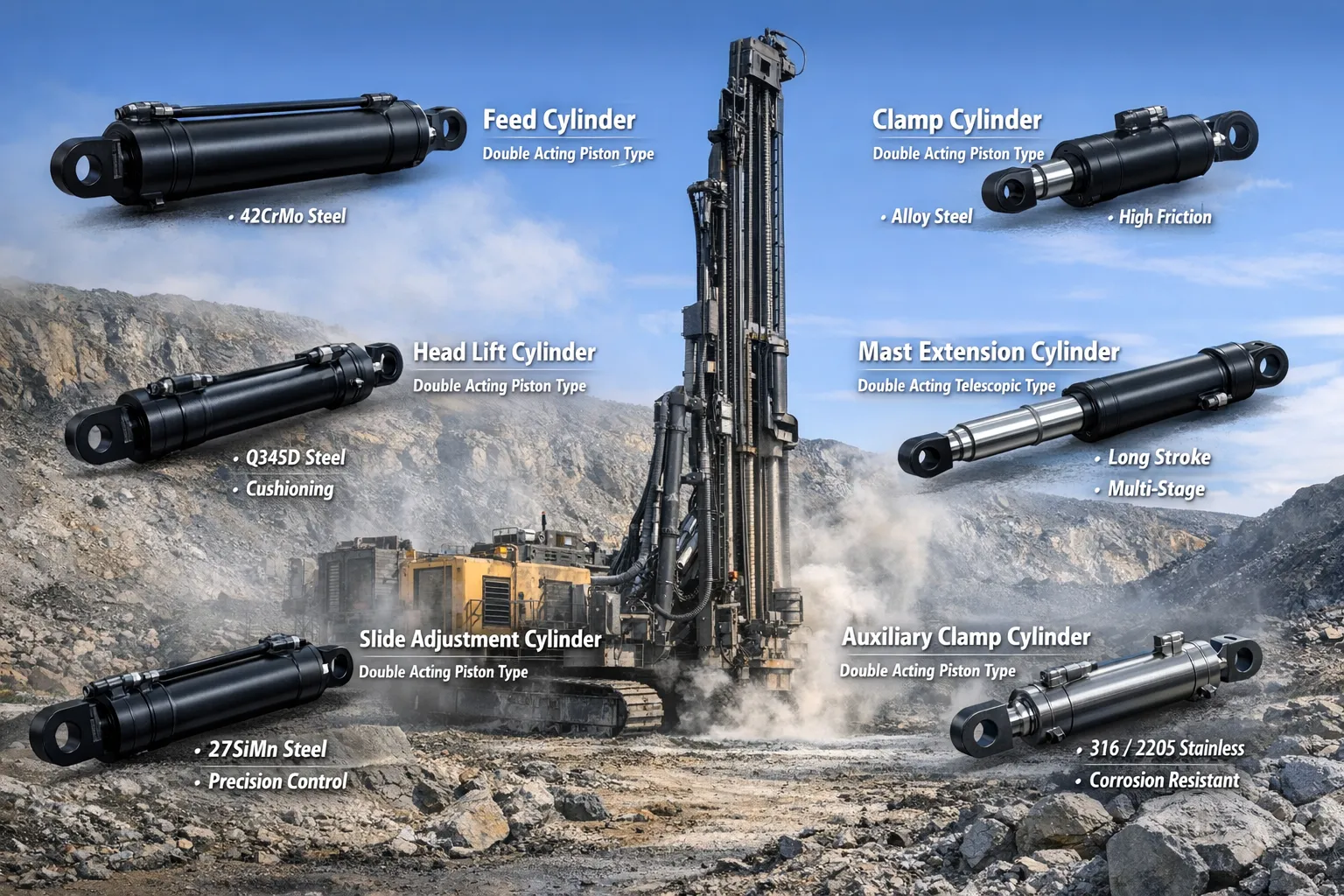
Extended machinery downtime on a remote project site equates to thousands of dollars in lost productivity per hour. When a critical positioning component fails, waiting months for an overpriced factory original replacement from an overseas conglomerate is a severe logistical failure. As an agile, highly capable independent manufacturer, we specialize in precision reverse-engineering. We manufacture fluid power products that serve as flawless, heavily upgraded drop-in replacements for the world’s leading drilling machinery brands.
Our heavy-duty carriage adjustment cylinder solutions are meticulously engineered to perfectly upgrade the existing actuators found on prominent rigs manufactured by global industry giants such as Epiroc, Sandvik, Atlas Copco, Bauer, Soilmec, Furukawa, Soosan, and Junjin. By strictly adhering to standardized international metrics for trunnion mounting pin diameters, exact retracted closed-center lengths, matched stroke distances, and specific fluid port thread pitches, we guarantee that our cylinders will integrate directly into your rig’s existing chassis without requiring any costly structural cutting, welding, or complex hydraulic circuit modifications.
Disclaimer: The specific brand names, corporate models, and trademarks mentioned above are the exclusive intellectual property of their respective owners. They are referenced within this text strictly to define dimensional compatibility, facilitate sizing reference, and aid procurement convenience for maintenance teams. We operate as an independent specialized manufacturer and claim no legal affiliation, sponsorship, or endorsement from these original equipment trademark holders.
By opting for our engineered aftermarket solutions, procurement directors not only drastically accelerate their supply chain timelines but also secure a vastly superior component specifically designed to permanently outlast standard factory setups in aggressive offset-loading environments.
5 Core Technical Advancements Resolving Field Failures
Decades of conducting frontline forensic troubleshooting and continuously fixing hydraulic cylinders pulled from abusive mining environments have profoundly informed our manufacturing philosophy. We build products that systematically eliminate known weak points. Below are five scientifically verified engineering advantages that elevate our actuators above standard commercial offerings:
-
1. Defeating Internal Leakage via Servo Sealing Architecture
Standard elastomeric U-cup seals fail rapidly under eccentric side loads because the piston is forced slightly off-center, crushing the seal on one side and opening a microscopic gap on the other. Our proprietary solution employs an advanced servo sealing architecture. This dynamic seal profile utilizes highly resilient polymer matrices that actively expand and compensate for microscopic radial shifts. Even when the cylinder is experiencing intense lateral leverage, the servo seal maintains uniform, relentless contact pressure against the barrel wall, absolutely eliminating high-pressure volumetric bypass and preventing mast drift.
-
2. Unbreakable Rigidity with 27SiMn Alloy Steel
When a rig carriage is pushed to maximum extension, the cylinder rod becomes a highly stressed lever arm. Ordinary carbon steels (like 1045 or ST52) will yield and permanently bend under these conditions, destroying the internal geometry. We construct our critical hydraulic cylinder components exclusively using 27SiMn (Silicon-Manganese) alloy steel. This specific metallurgical composition provides exceptionally high tensile strength and impact toughness. It possesses a profound natural resistance to mechanical bending moments, ensuring the rod remains perfectly straight and concentric during extreme drilling torque spikes.
-
3. Monolithic Heavy-Duty Welded Construction
Standard light-duty cylinders utilizing tie-rod designs suffer from severe stress concentration factors; the high-frequency rig vibrations literally shake the tie-rods loose, causing catastrophic external leakage at the end caps. Our heavy-duty design utilizes a massive, monolithic welded construction. The heavy-wall 27SiMn barrel is fused to precision-machined end caps using multi-pass, deep-penetration automated robotic sub-arc welding. This creates a hyper-rigid pressure vessel that is entirely immune to torsional twisting and barrel ballooning under maximum pressure peaks.
-
4. Severe-Duty Hard Chrome Plating Surface Defense
The environment directly surrounding a drill rig mast is constantly saturated with razor-sharp silica rock dust and abrasive mud. If this debris pits the extended cylinder rod, those microscopic pits will rapidly shred the external wiper seals upon retraction. To provide ultimate surface defense, our 27SiMn rods undergo a meticulous, high-thickness industrial chrome plating process over an induction-hardened base layer. This achieves a micro-cracked hard chrome layer that exceeds standard hardness ratings, offering exceptional abrasion resistance and maintaining a mirror-smooth finish that actively repels particle adhesion.
-
5. Advanced Internal Guide Mechanisms for Load Distribution
To further neutralize the destructive effects of an eccentric load before it ever reaches the delicate servo sealing matrix, we engineered an expanded internal guidance architecture. By significantly increasing the axial length of the internal composite wear bands on both the hydraulic cylinder piston and the rod gland, we dramatically increase the physical bearing surface area. This calculated geometry distributes the severe lateral side-loads over a much larger footprint, drastically reducing localized contact pressure and completely preventing metal-to-metal scoring against the barrel wall.
Excellence in Autonomous Manufacturing & Quality Control
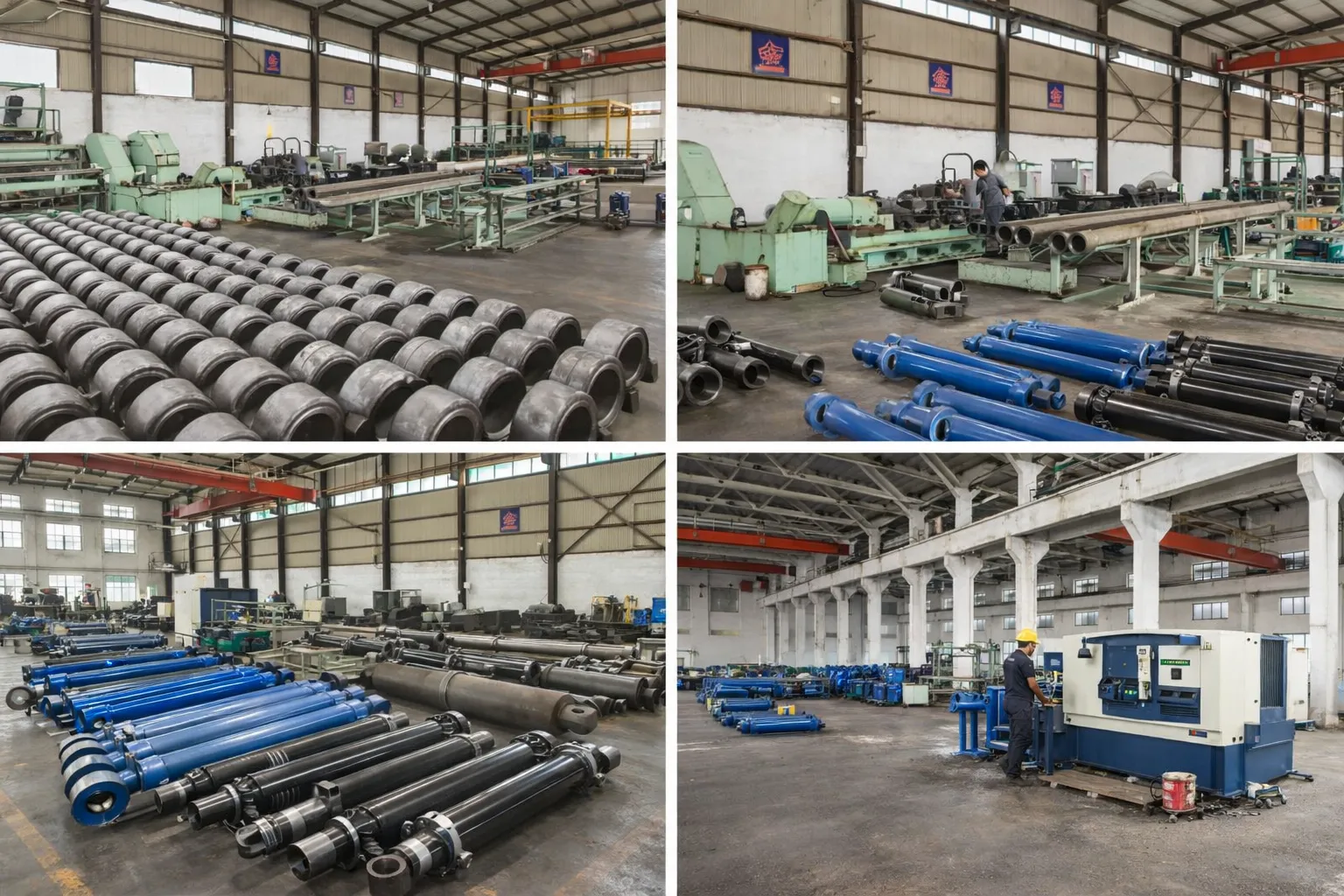
The uncompromising performance of our fluid power products in the field is not an accident; it is the direct, calculated result of a strict, vertically integrated manufacturing philosophy. True heavy-duty quality cannot simply be inspected into a finished product; it must be engineered and built into it from the molecular level up. By retaining absolute, end-to-end control within our advanced production facilities, we guarantee that every unit perfectly matches our engineered metallurgical and dimensional blueprints without compromise.
The foundation of our quality ecosystem relies heavily on high-precision CNC multi-axis turning and milling centers. These advanced machines ensure that internal bore concentricity and rod straightness are maintained within incredibly tight micrometer tolerances, guaranteeing the piston glides with flawless parallel precision. To ensure absolute operational safety for the end-user operating beneath the rig mast, every single completed carriage adjustment hydraulic cylinder is subjected to a grueling 100% factory hydrostatic pressure test. We aggressively push the units to extreme peak pressures, holding them statically to empirically verify zero internal fluid bypass and zero external weeping from the structural welds.
Furthermore, our unwavering commitment to quality is backed by comprehensive, transparent data tracking. Every individual cylinder is permanently laser-engraved with a unique alphanumeric serial identifier. Should your fleet operations ever require specific hydraulic cylinder replacement seal kits or custom rod machining five years in the future, our engineering desk can instantly access the exact CAD schematic and heat-treatment records associated with your serial number, ensuring immediate, accurate aftermarket support without guesswork.
Expansive Heavy Industry Application Scenarios
While fundamentally designed to conquer the brutal eccentric loads of geotechnical drilling, the extreme structural rigidity and precise positional holding capabilities of our technology make these actuators highly sought after across multiple severe-duty industrial sectors.
Mining Equipment & Subterranean Extraction
Providing the critical mast tilt, carriage sliding, and feed alignment forces necessary for large-scale surface blast hole rigs and underground jumbo drills. Review our dedicated Mining Industry solutions.
Construction Machinery & Deep Foundations
Crucial for controlling the massive heavy leaders on pile driving equipment, ensuring perfect vertical alignment before driving immense concrete anchors into the bedrock. Explore our Construction Machinery catalog.
Metallurgy & Heavy Forging Automation
Integrated into the heavy manipulator arms of automated steel forging presses, where extreme radiant heat and heavy lateral impact forces are standard operating parameters.
Plastic & Rubber Injection Molding
Serving as primary injection molding machine mold clamping and carriage mechanisms, requiring absolute micrometer parallelism and immense static holding force.
Material Handling & Port Logistics
Serving as the primary mast adjustment actuators on heavy-duty rough terrain forklifts and massive port reach stackers handling fully loaded shipping containers.
New Energy Infrastructure Machinery
Employed in specialized offshore installation vessels and land cranes for the rigid, precise positioning of massive wind turbine tower sections against aggressive ocean swells.
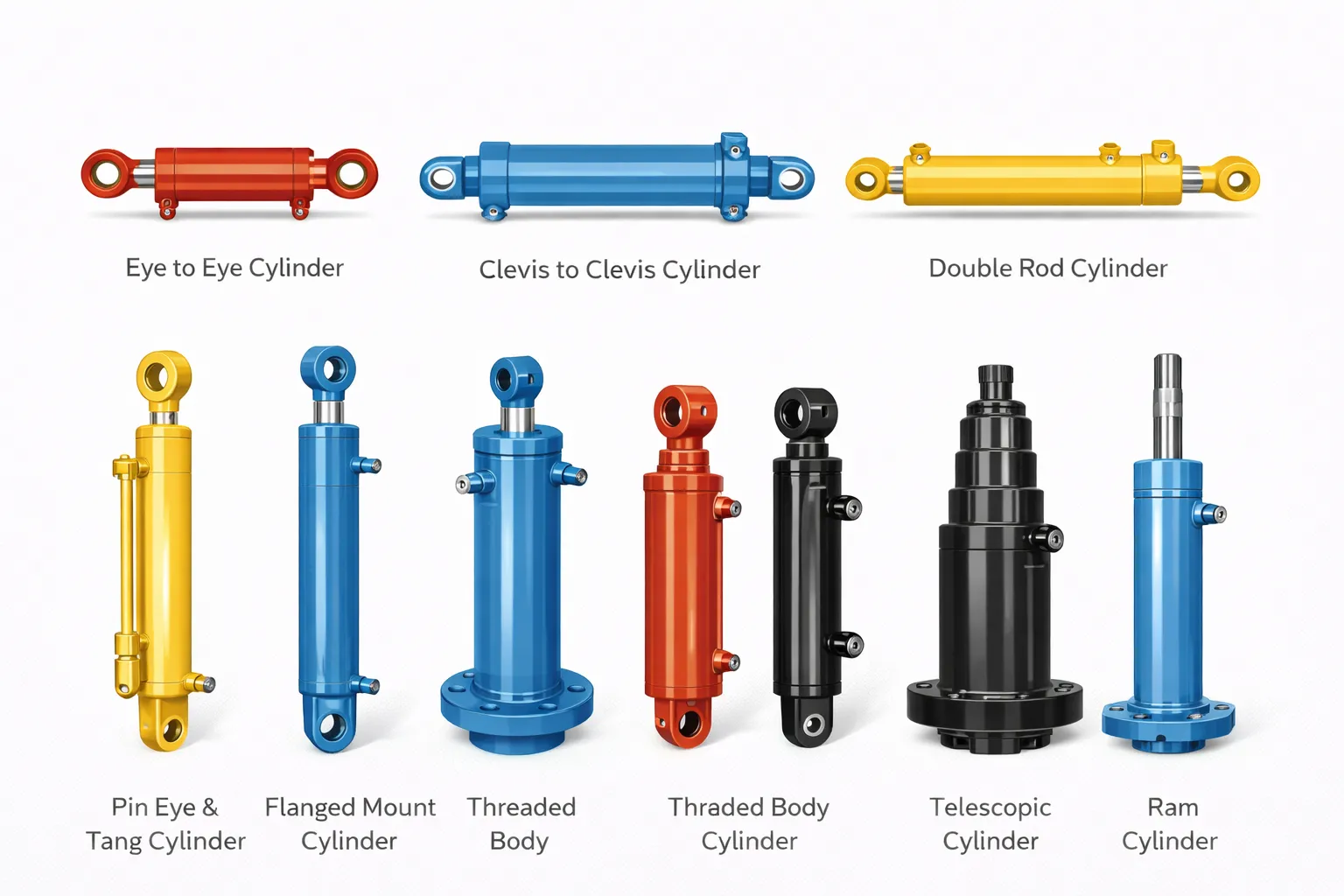
Comparative Analysis: Standard Commercial Cylinders vs. Heavy-Duty Engineering
Procuring fluid power components based exclusively on the lowest initial hydraulic cylinder price is a mathematically hazardous strategy when severe side-loads are involved. Examine this objective technical breakdown to comprehend why standard cylinders inevitably fail in carriage alignment applications.
| Evaluation Metric / Feature | Standard Ordinary Hydraulic Cylinders | Our Heavy-Duty Carriage Cylinder |
|---|---|---|
| Response to Eccentric Loads | Severe rod deflection, causing the piston to drag directly against the barrel wall, leading to rapid catastrophic scoring. | Extended internal composite guide bands absorb extreme leverage, keeping the rod concentric at all times. |
| Internal Leakage Resistance | Basic NBR U-cups deform and crush under uneven pressure, allowing fluid bypass and causing the mast to drift dangerously. | Advanced servo sealing technology actively compensates for micro-movements, maintaining an absolute pressure lock. |
| Structural Material Rigidity | Constructed from standard carbon steel with tie-rods, which stretch and fatigue under heavy operational vibration. | Forged from 27SiMn alloy steel utilizing monolithic automated welding, providing immense yield strength and rigidity. |
| Rod Surface Durability | Thin, commercial-grade chrome prone to micro-pitting, quickly destroyed by abrasive silica rock dust ingress. | Heavy-duty, high-thickness hard chrome plating, offering extreme abrasion resistance in aggressive environments. |
| Testing & Quality Verification | Randomized batch sampling only, leading to highly inconsistent field reliability and problematic out-of-box failures. | 100% individual hydrostatic over-pressure testing paired with deep, transparent laser-engraved quality tracking. |
5 Transformative Real-World Engineering Case Studies
Superior engineering must be empirically proven in the dirt, rock, and mud. We take immense pride in actively solving the most complex fluid power failures across the Asia-Pacific theater. Below are five comprehensively verified field implementations where our highly specialized technology delivered immediate, measurable operational improvements for major B2B fleets.
Case 1: Eradicating Mast Drift in Deep Foundation Piling – Busan, South Korea
Client Profile: Tier-1 Coastal Infrastructure & Marine Engineering Contractor
Implementation Timeframe: Early Spring 2025
The Engineering Challenge: While driving massive concrete piles into coastal bedrock, the sheer vibration caused the standard OEM positioning cylinders to suffer from rapid internal leakage. The 20-ton carriage would silently drift downward mid-drill, bending expensive casing pipes and completely ruining the strict verticality tolerances required for the high-rise foundation.
Our Intervention: Frustrated by severe delays, the chief mechanic searched online for a manufacturer capable of neutralizing heavy side loads. We engaged their technical team and engineered a custom batch of 27SiMn carriage adjustment cylinder units. These were specifically equipped with our proprietary anti-extrusion servo seals to physically block the volumetric bypass causing the drift.
The Measurable Result: Following immediate installation, mast drift was entirely eradicated. The fleet operated for 14 straight months without a single realignment pause, increasing total daily piling depth by nearly 20%.
“The structural rigidity of your 27SiMn barrels is remarkable. Not only was the initial pricing highly competitive, but the rig mast now holds perfectly still under maximum rotary torque. It completely changed our project timeline.” – Mr. Park Min-ho, Lead Fleet Maintenance Engineer.
Case 2: Overcoming Extreme Thermal Shock in Geothermal Drilling – Hokkaido, Japan
Client Profile: Advanced Renewable Energy Prospecting Corporation
Implementation Timeframe: Late Winter 2024
The Engineering Challenge: Drilling in sub-zero volcanic regions presents brutal thermal contrasts. The extreme ambient cold caused their commercial carriage seals to harden and shrink, while sporadic hot steam blowback expanded the steel barrels. This violent thermal shock caused standard cylinders to violently leak fluid externally, constantly contaminating the pristine job site.
Our Intervention: The client sourced us online searching specifically for thermal-resistant hydraulic parts. We re-engineered their entire carriage actuation system, deploying specialized cylinders outfitted with aerospace-grade, wide-temperature range PTFE seals and meticulously calculated diametrical clearances to safely absorb the extreme thermal expansion without binding.
The Measurable Result: Environmental contamination incidents plummeted to absolute zero. The newly configured carriage mechanisms maintained smooth, powered adjustment through the most punishing winter blizzards, keeping the exploration project firmly on schedule.
“Your thermodynamics engineering team truly understands metallurgical limits in freezing environments. We haven’t lost a single hour to a frozen seal or fluid leak since the fleet retrofit.” – Kenji T., Director of Procurement Operations.
Case 3: Surviving Heavy Abrasives in Open-Pit Coal Operations – Quang Ninh, Vietnam
Client Profile: State-Owned Enterprise Open-Pit Mining Operator
Implementation Timeframe: Mid-Summer 2025
The Engineering Challenge: Intense volumes of razor-sharp, airborne coal and silica dust were easily bypassing the weak wiper seals on their factory cylinders. This acted like grinding paste inside the barrel, aggressively scoring the chrome rods, destroying the internal seals, and causing massive system-wide hydraulic fluid contamination.
Our Intervention: Following an urgent consultation, we entirely retrofitted their blast-hole rig fleet. We deployed our specialized dust-resistant carriage cylinders featuring an ultra-hard, double-layered hard chrome rod and a proprietary heavy-duty dual brass and polyurethane scraper system designed to physically block particulate ingress.
The Measurable Result: Invasive particulate oil contamination plummeted by an astonishing 95%. The rods remained mirror-smooth, exponentially extending the maintenance interval and saving their mechanics from constantly fixing hydraulic cylinders in the dirty mine environment.
“The abrasive dust here destroys normal cylinders in weeks. Your heavy-duty dual-wiper design completely protected the internal seals. The reduction in our overall maintenance budget has been massive.” – Tran V., Head of Heavy Machinery Maintenance.
Case 4: Mega-Fleet Upgrade for National Marine Infrastructure – Manila, Philippines
Client Profile: Joint Venture Highway & Marine Construction Group
Implementation Timeframe: Early Summer 2025
The Engineering Challenge: A massive fleet of aging European piling rigs operating on coastal barges was suffering from severe carriage failures due to saltwater corrosion and stretched tie-rod cylinders. The monopoly on the original equipment pricing was bleeding the project’s margins, compounded by unacceptable four-month shipping delays.
Our Intervention: Seeking rapid alternatives, they engaged our factory. We quickly reverse-engineered the complex European metrics and manufactured a fleet-wide batch of our fully welded, 27SiMn carriage adjustment hydraulic cylinder units, equipped with marine-grade epoxy coatings. We dispatched the entire container within a tight 4-week window.
The Measurable Result: The drop-in replacement was seamless. The contractor saved approximately 40% on capital procurement costs while outfitting their fleet with a significantly stronger, fully welded asset that completely eliminated the stretching and rusting issues.
“Unbelievable turnaround time and the quality is visibly superior to the original European parts. They bolted right on without any modifications. You effectively rescued our marine highway timeline.” – Marco R., Lead Site Procurement Officer.
Case 5: Precision Jack-Up Barge Mast Alignment – Offshore Taiwan
Client Profile: Offshore Geotechnical Surveyors & Windfarm Installers
Implementation Timeframe: Autumn 2024
The Engineering Challenge: Operating from a floating jack-up barge subjected the rig mast to continuous, rhythmic oceanic sway, generating severe eccentric leverage. Standard cylinders could not maintain precise carriage positioning; the internal leakage caused the drill string to wander off coordinates, invalidating incredibly expensive seabed core samples.
Our Intervention: Reaching out for urgent consultation, we supplied heavy marine-spec cylinders. These featured internal pilot-operated check valves integrated seamlessly with our servo sealing technology to create an absolute, mechanical-grade hydraulic lock, rendering the actuator completely impervious to the barge’s swaying motion.
The Measurable Result: The carriage achieved rigid, unyielding stabilization. Core sampling accuracy hit 100%, allowing the surveying firm to finalize their offshore geotechnical mapping report ahead of schedule without a single rejected sample due to drift.
“The hydraulic locking capability of your servo-equipped cylinders is unmatched. The mast didn’t budge a millimeter, even in rough offshore swells. Easily the best hydraulic investment we’ve made for marine operations.” – Capt. D. Anwar, Offshore Operations Manager.
FAQ: Technical Procurement Guidance
Transparent communication regarding engineering specifications is paramount to building long-term trust. To assist chief mechanics and procurement officers in validating our technology, we have thoroughly addressed the most critical technical inquiries regarding our heavy-duty fluid power solutions.
1. Exactly how does the servo sealing technology prevent internal leakage and carriage drift?
2. Why do you insist on using 27SiMn alloy steel over standard carbon steel for the cylinder barrel?
3. What is the fundamental operational difference between your unit and a single acting hydraulic cylinder?
4. How do you guarantee the replacement cylinder will perfectly match our rig’s mounting brackets?
5. Can we reliably acquire seal kits or perform hydraulic cylinder repair on these units locally in the future?
6. What is the typical lead time for manufacturing OEM replacement units for the South Korean market?
7. Do you support small batch orders or single-unit prototype testing for our engineering team?
8. How do your cylinders perform in extremely cold or hot operating environments?
Ready to Eliminate Carriage Drift and Secure Your Drilling Operations?
Do not allow inadequate standard cylinders to dictate your rig’s reliability and your project’s profitability. Escaping the costly cycle of constant internal leakage, rod deflection, and expensive downtime requires an uncompromising, engineered fluid power solution designed specifically for extreme eccentric loads.
Editor: Cxm