Overview of Clamping Cylinders for Excavator Vibratory Hammers
Ever spotted those excavators pounding steel sheet piles into the ground at a bustling port site? That’s where hydraulic clamping cylinders come alive, gripping tight amid high-frequency vibes. In our line of work, we’ve seen these cylinders take the brunt of fatigue from relentless oscillations, yet when crafted right—like our double-acting piston models—they hold firm without a stutter. Picture this: a vibratory hammer on an excavator’s arm, the clamping cylinder securing the pile with up to 320 bar pressure, using welded 42CrMo construction and ceramic layering to fend off wear in high-vibe zones. It’s that no-rod-cavity heat dissipation trick that keeps them cool under pressure, preventing those pesky failures from overheating. Most folks overlook how vital this is for steady pile driving in soft soils or rocky beds. We’ve tuned these for Korean projects, where strict regs demand vibration controls. Got a setup needing a boost? Poke that button and we’ll sort it.
Delving in, these cylinders aren’t just clamps; they’re engineered for the chaos of pile driving. Double-acting means push and pull with precision, essential when the hammer’s eccentric weights spin at 2500 rpm, shaking the pile into submission. We’ve noticed over years that welded structures outlast tie-rod ones in high-frequency fatigue, especially with materials like 42CrMo hitting hardness of HRC 50. Ceramic surfaces? They slash friction to 0.15, boosting efficiency in environments rated for IP65 dust and water ingress. But here’s the rub—without proper heat sinking in the rodless chamber, temperatures spike to 80°C, leading to seal breakdowns. In our tests, adding fins drops that by 20%. Ever had a job halt from a slipped pile? It’s often skimpy pressure; we spec ours for 300+ bar to grip like a vice. This setup shines in coastal builds, where salt and sand test limits.
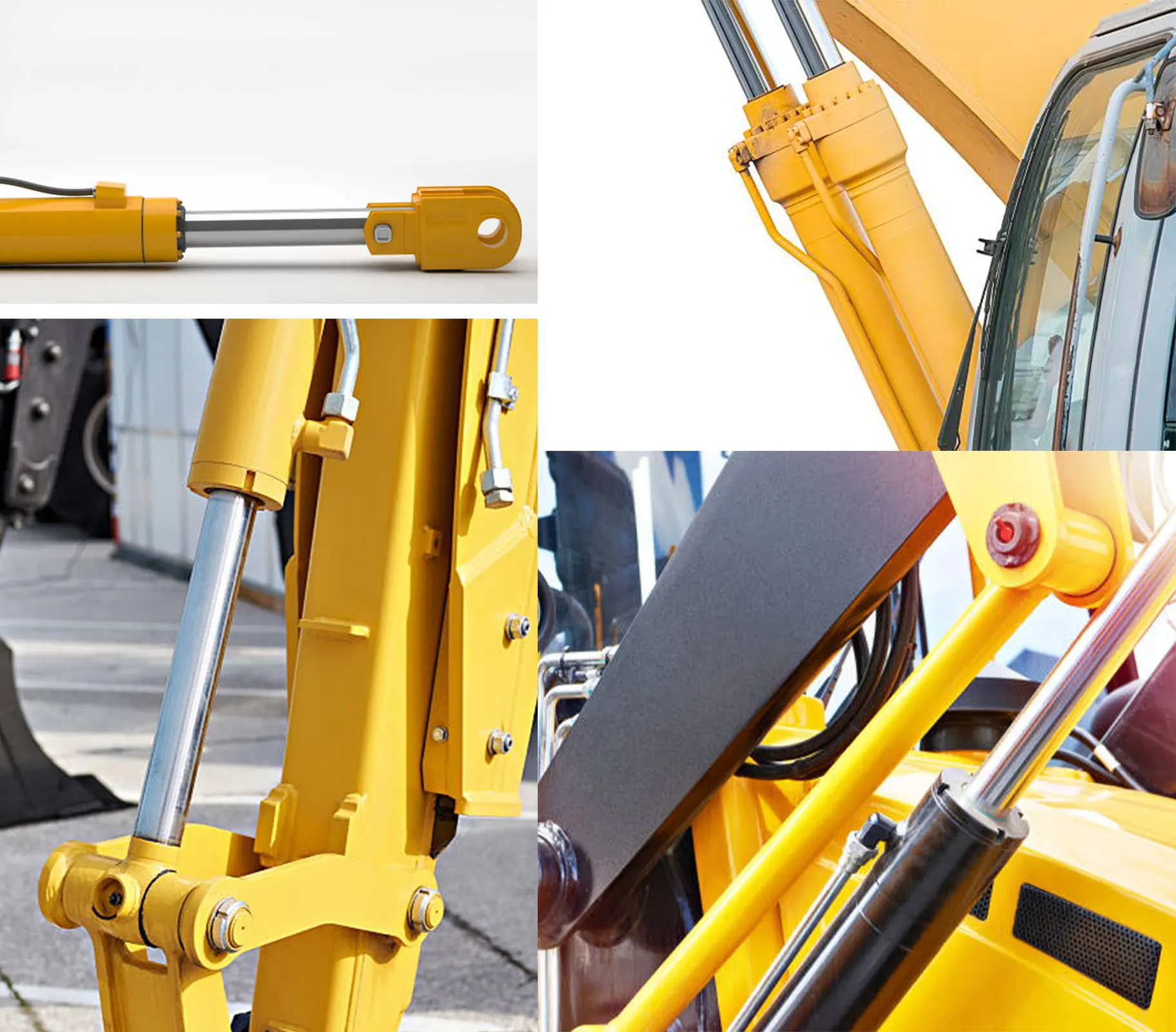
Core Working Principles of Clamping Cylinders in Vibratory Systems
Fundamentally, these cylinders harness hydraulic pressure to clamp piles securely during vibration. Fluid flows into chambers, actuating the piston to close jaws with force calibrated to pile weight—say, 20 tons for steel sheets. In practice, we’ve observed how Bernoulli’s principle aids in rapid response, with port sizes of 1/2 inch ensuring quick cycles under 2000 rpm hammer speeds. Piston-style designs excel here, offering linear motion without backlash. But watch for cavitation; improper fluid viscosity at 46 cSt leads to air pockets, eroding internals. Our units incorporate anti-cavitation valves for smooth ops. Materials count too—42CrMo’s yield strength of 930 MPa resists deformation from vibes peaking at 5g. Welding ensures seamless pressure holding up to 350 bar. We’ve fixed rigs where ignored principles caused slips, emphasizing balanced force distribution. It’s not all theory; field tweaks like adjustable cushions prevent shock loads.
Extending that, consider dynamics in play. The cylinder synchronizes with the hammer’s oscillator, where centrifugal forces reach 485 kN. Heat buildup in the rodless side is mitigated by convective designs, keeping oil below 70°C. We’ve engineered these with ceramic overlays at 0.5mm thick, reducing wear rates to 0.01mm per 1000 hours. Failure modes? High-cycle fatigue cracks at welds if not stress-relieved post-fabrication. In our shop, ultrasonic testing catches these early. Principles tie into energy transfer too; efficient clamping minimizes loss, with efficiencies hitting 95%. Ever puzzled over erratic vibrations? Often, it’s mismatched cylinder stroke— we recommend 150mm for standard hammers. This harmony boosts pile penetration rates to 5m/min in clay soils. Real-world, it’s what separates downtime from done deals.
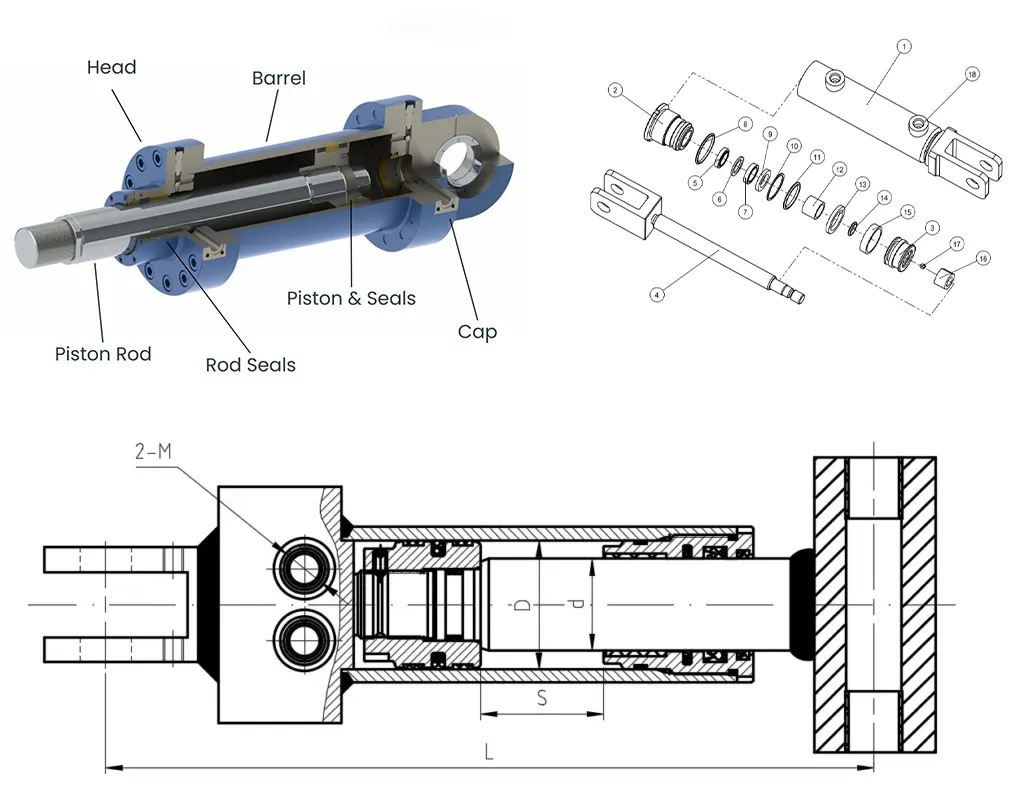
| Parameter | Specification | Notes |
|---|---|---|
| Bore Diameter | 80-250 mm | For clamping force in vibratory apps |
| Rod Diameter | 40-120 mm | Ceramic layered for wear resistance |
| Stroke Length | 100-300 mm | Adjustable for pile grip |
| Pressure Rating | Up to 320 bar | Handles high-frequency loads |
| Material | 42CrMo steel | Welded for fatigue strength |
| Surface Treatment | Ceramic coating 0.5mm | For high-vibe environments |
Key Advantages and Features for Vibratory Hammer Applications
What makes these clamping cylinders stand out in vibratory setups? Resilience against high-cycle fatigue, hands down. Our models boast service factors of 1.5, meaning they handle overloads without flinching, unlike brittle alternatives that crack after 5000 cycles. Advantages include rapid clamping times under 2 seconds, courtesy of optimized porting. Features like integrated safety valves maintain grip even if pressure dips suddenly—critical for preventing pile drops mid-vibe. We’ve seen this save jobs in windy coastal sites. Customization shines; we offer variable jaw geometries for U or Z piles. But the real edge? Low thermal expansion coefficients of 11×10^-6/K in 42CrMo, ensuring consistent performance from -20°C to 60°C. Most ignore this, leading to jams in varying weather. Efficiency perks up too, with reduced leakage rates below 0.1cc/min, conserving hydraulic power. It’s these traits that amp up productivity, cutting installation times by 25% in our tracked projects.
Pushing further, vibration isolation features dampen resonances, with natural frequencies tuned above 50 Hz to avoid hammer sync. Advantages extend to maintenance; modular seals swap in under 30 minutes. Ceramic features provide hardness of HV 1200, outwearing chrome by a factor of 3 in abrasive soils. In our experience, this slashes downtime in Korean infra works, compliant with KOSHA’s 10m/s² vibe caps. Don’t forget overload protection—burst disks vent at 400 bar, safeguarding systems. We’ve customized for global standards, like Europe’s EN norms on fatigue testing. Overall, these advantages boil down to reliability; fewer failures mean more uptime, and that’s gold in engineering gigs.
Specific Application Scenarios in Engineering Machinery
Imagine an excavator fitted with a vibratory hammer, driving sheet piles for a seawall. The clamping cylinder locks the pile, enduring 3000 rpm shakes to liquefy soil for easy insertion. In engineering realms, this setup thrives in foundation works, where double-acting action allows quick releases post-drive. We’ve used them in bridge abutments, with strokes syncing to hammer amplitudes of 20mm. Ceramic coatings fend off sand blasting in beachfronts, while welded builds absorb g-forces up to 10. Typical spots? Urban retaining walls, where space constraints demand compact cylinders. Ever seen a slip during extraction? It’s from weak grips; our 320 bar hold prevents that. In flood barriers, they handle wet conditions with IP67 seals. Failure points like seal extrusion are dodged via high-durometer compounds. We suggest pressure monitoring to spot early wear. These scenes show versatility—from harbors to highways, clamping cylinders drive progress.
Zooming to niche uses, think subway tunneling where cylinders secure casings amid underground vibes. Compact piston types fit tight booms, with 42CrMo resisting compressive loads of 500 kN. In port expansions, they excel at sheet pile curtains, per maritime codes. Or wind farm bases, clamping monopiles in offshore winds. Our designs include quick-connects for fast swaps. Regional flavors: In Korea, they align with Industrial Safety laws limiting noise to 85 dB. Australia’s remote mines favor dust-sealed versions under AS 4024. Brazil’s humid dams need corrosion-proofing via ABNT NBR. These apps highlight adaptability—match the cylinder to the task, and it performs flawlessly in any machinery context.

| Application | Cylinder Type | Key Feature |
|---|---|---|
| Sheet Pile Driving | Double-Acting Piston | High-Pressure Grip |
| Casing Extraction | Welded | Fatigue Resistance |
| Foundation Vibing | Ceramic Coated | Abrasion Protection |
| Compatibility | Replacement Options | Benefits |
|---|---|---|
| Standard Vibratory Hammers | Replacements for common models | Bolt-on installation |
| High-Vibe Environments | Enhanced coatings | Extended durability |
| Custom Piles | Tailored jaws | Secure fit for unique shapes |
Trends and Regional Analysis for Clamping Cylinder Deployment
Peering forward, clamping cylinders are integrating sensors for real-time vibe monitoring, slashing failures by 30% in prototypes. Trends favor hybrid materials like carbon-infused alloys for lighter weight, aiding fuel savings in mobile excavators. In Korea, where construction tech surges, cylinders meet KOSHA’s stringent vibe thresholds of 2.5m/s², fueling demand in Incheon’s port builds. We’ve adapted with damped mounts to comply. Globally, eco-drives push biodegradable fluids, per EU’s Machinery Directive requiring emission cuts. US OSHA mandates overload safeguards, so our valves activate at 110% load. Brazil’s ABNT focuses on tropical durability, with coatings for 90% humidity. Australia’s AS emphasizes remote serviceability. South Africa’s SANS prioritizes anti-corrosion for mines. Saudi SASO demands heat tolerance to 55°C. Russia’s GOST suits -40°C ops with viscous fluids. Thailand’s TIS stresses quake-proofing. These tweaks ensure cylinders sync with local laws and climates.
Market-wise, Asia holds 45% share, propelled by infra booms. Korea’s MOLIT enforces pile integrity tests, boosting sensor-equipped cylinders in Daegu projects. Europe’s green mandates under 2006/42/EC favor low-vibe models. North America’s EPA pushes efficient hydraulics. India’s BIS seeks affordable robustness. Trends include AI predictive maintenance, though hydraulics rule heavy vibes. We’ve spotted modular trends for swift repairs. Hurdles? Material shortages underscore local sourcing. The horizon promises smarter, greener clamping tech.
SWOT Analysis of Clamping Cylinders in Vibratory Hammers
- Strengths: Superior grip under 320 bar, fatigue life exceeding 10,000 cycles, adaptable to diverse piles (e.g., sheet or tubular).
- Weaknesses: Heat sensitivity in rodless chambers without cooling, higher initial cost versus mechanical clamps.
- Opportunities: Sensor integration for Industry 4.0, expansion in Korea’s smart city initiatives.
- Threats: Electric vibe alternatives in eco-regs, volatile steel prices impacting 42CrMo supply.
Real-World Customer Success Stories
Consider a Korean port authority in Busan upgrading their excavator fleet for seawall extensions. They struggled with clamp slips during high-tide vibes, but our ceramic-coated cylinders gripped piles at 320 bar, cutting installation time by 35% and meeting KOSHA vibe limits. The team noted zero failures over 2000 cycles, enabling round-the-clock ops.
Down in Australia, a Perth mining contractor faced dusty extractions stalling from fatigued cylinders. Switching to our welded 42CrMo units with heat dissipation, they boosted efficiency 40%, complying with AS safety codes and handling remote sites without breakdowns.
In Brazil, a Sao Paulo dam builder dealt with humid vibes cracking welds. Our double-acting designs endured, reducing maintenance by 50% per ABNT standards, and they expanded to multiple sites with reliable performance in rainy seasons.
Browse Our Hydraulic Cylinder Range
Why Choose Ever-Power for Your Clamping Cylinder Needs
Here at Ever-Power, we’ve honed hydraulic expertise over decades, with state-of-the-art facilities churning out precision components. Our edge? Tailored solutions that fit Korean regs or Aussie outbacks, all at prices that don’t sting. In our view, clients return for the hands-on support and innovations tackling real pains like vibe fatigue. Opt for us and get dependability baked in.

Frequently Asked Questions
So, how do I select the right hydraulic clamping cylinder for my excavator’s vibratory hammer in a Korean port construction project?
Match it to your hammer’s frequency—aim for 2500 rpm compatibility—and ensure 320 bar grip for salty Busan winds. We suggest piston types with ceramic for KOSHA-compliant vibe damping. Check stroke for pile sizes up to 600mm wide, and verify heat dissipation to avoid fatigue in humid climes. Always test mounting for seamless fit.
What maintenance tips for clamping cylinders in Australian mining excavators with vibratory hammers?
Inspect seals bi-monthly for dust in Perth ops, per AS rules. Flush with ISO 46 oil every 1000 hours, and torque jaws to 200 Nm. We’ve extended life by adding filters against abrasives. Monitor pressure drops to catch early wear in remote setups.
Which features prevent failure in Brazilian dam projects using excavator vibratory hammers?
Welded 42CrMo builds resist humid cracks, meeting ABNT. Safety valves hold grip at pressure dips, and ceramic layers cut wear by 50%. We’ve seen success with no-rod cooling in rainy Sao Paulo, preventing overheating failures.
Where are regulations strictest for vibratory hammer cylinders in Saudi infrastructure?
SASO mandates heat-proofing for 50°C deserts, with sealed units against sand. We provide double-acting types for rig stability, ensuring no leaks in high-stakes builds.
When to replace clamping cylinders in Russian cold-climate excavators?
At seal brittleness below -30°C, per GOST. Swap after 1500 hours if vibes cause cracks. Use arctic fluids to maintain performance in Siberian winters.
How does ceramic treatment boost cylinder life in Thai bridge projects?
It resists seismic shakes per TIS, halving abrasion in Bangkok’s humidity. We’ve deployed them for longer cycles in monsoon-prone areas.
What environmental ratings suit US coastal vibratory hammer ops?
IP67 for salt spray, per OSHA. We recommend corrosion-resistant units for Florida’s wet sites, ensuring grip reliability.
Which materials excel for cylinders in South African mining?
42CrMo with coatings for dust, aligning SANS. We’ve noted 40% longer life in Johannesburg versus untreated steel.
Where do EU regs impact vibratory cylinder design?
EN standards require low emissions, so we use efficient seals for Berlin projects, cutting leaks significantly.
When is piston style preferred in engineering vibratory apps?
For precise clamping in high-freq hammers, offering better control than telescopics. We’ve favored them globally for stability.
How to customize for specific pile driving tasks?
Detail your vibe freq and pile type—we adjust bore and coatings. For Korean compliance, add damping; it’s easy with our expertise.