
Narrow Face Cylinder for Continuous Casting Machine
Precision-engineered fluid power solutions designed for absolute dimensional regulation of the mold narrow face. Capable of withstanding extreme metallurgical radiant heat and abrasive dust while delivering zero internal leakage during dynamic width adjustments.
Product Overview: The Core of Metallurgical Precision
In the highly rigorous and uncompromising environment of heavy steel manufacturing, the continuous casting machine represents the critical bridge between liquid molten metal and solid semi-finished steel products. The continuous casting mold serves as the primary cooling and shaping vessel, dictating the surface quality, internal structure, and dimensional accuracy of the emerging steel strand. To maximize operational flexibility and plant yield without completely halting the casting process, modern steelmakers rely on a sophisticated mechanical procedure known as automatic width control or “flying width adjustment.” The absolute primary actuator responsible for executing this heavy-duty mechanical task is the narrow face adjustment cylinder.
Operating mere inches away from liquid steel, these specialized actuators face a hostile environment that is practically unmatched in any other industrial sector. The ambient radiant temperatures frequently exceed the thermal degradation limits of standard elastomeric seals. Furthermore, the casting deck atmosphere is relentlessly saturated with highly abrasive mold flux powder, metallic oxide scale, and corrosive cooling water vapor. The mold itself is in a state of continuous, high-frequency mechanical oscillation to prevent the solidifying steel shell from sticking to the copper plates. Subjecting standard commercial fluid power components to these brutal conditions results in rapid, catastrophic failure. As a globally trusted hydraulic cylinder manufacturer, we have developed a unique engineering positioning by acknowledging and systematically conquering these exact failure modes.
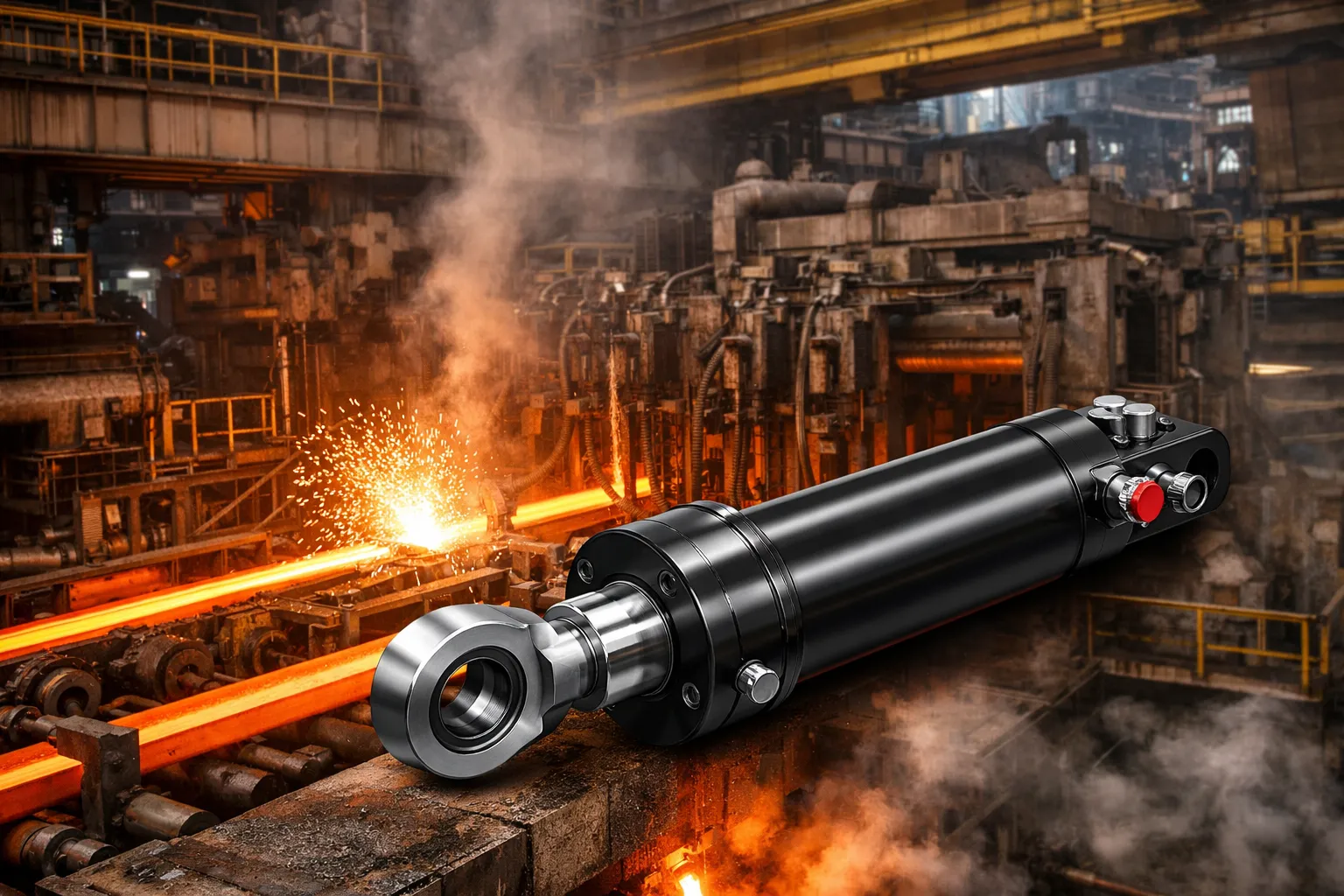
We do not supply generic equipment; we engineer highly specialized narrow face adjustment hydraulic cylinder units designed explicitly to eradicate internal fluid bypass. When a generic cylinder is utilized, heat destroys its internal seals, allowing pressurized hydraulic fluid to slip past the piston. Once internal leakage occurs, the cylinder loses its rigid holding force. The immense ferrostatic pressure of the liquid steel core pushes the narrow copper plates outward, leading to unacceptable slab bulging, dimensional rejection, or a highly dangerous molten breakout on the caster floor. By investing in our thermally stabilized, zero-leakage hydraulic cylinders, plant managers ensure continuous, safe production, thereby dramatically optimizing the total hydraulic cylinder price over the extensive lifecycle of the machine.
Comprehensive Technical Parameters
Because every metallurgical facility operates with specific spatial constraints, fluid pressures, and servo-control requirements, standard off-the-shelf sizing is rarely sufficient. We provide an extensive range of customizable engineering parameters to guarantee a flawless mechanical and hydraulic fit for your specific continuous caster. The comprehensive table below outlines the robust specifications and customizable variables of our metallurgical grade actuators.
| Engineering Parameter | Specification Details & Customization Range |
|---|---|
| Target Industry | Metallurgical and Heavy Iron Industry |
| Equipment Category | Continuous Casting Machine (Slab, Bloom, and Billet Casters) |
| Subsystem / Specific Action | Mold Narrow Face Regulation & Width Adjusting |
| Component Designation | Narrow face adjustment cylinder |
| Action Methodology | Double acting hydraulic cylinder for precise bidirectional force control |
| Structural Architecture | Heavy-Duty Piston Cylinder |
| Manufacturing Assembly | Deep Penetration Automated Welded Construction |
| Primary Material System | Q345D Low-Alloy Structural Steel (Superior fatigue & impact resistance) |
| Rod Surface Treatment | Micro-cracked Hard Chrome Plating (Thickness > 0.05mm, HV850+) |
| Environmental Rating | Extreme High Temperature, Heavy Abrasive Dust Zones |
| Working Condition Profile | Dynamically adjusting narrow face dimensions against liquid steel pressure |
| Targeted Failure Mode Prevented | Eradication of Internal Leakage and Abrasive Rod Scoring |
| Recommended Configuration | High-Temperature Resistant Sealing Matrix (PTFE/FKM composite) |
Detailed Working Principle & Fluid Dynamics
Understanding exactly how this robust equipment functions requires a detailed examination of both mechanical leverage and fluid dynamics. Within a standard continuous casting mold, there are two large, stationary wide copper plates and two adjustable narrow copper plates that are firmly clamped between them. To alter the physical width of the casting strand, these narrow plates must be moved inward or outward. This movement must be flawlessly synchronized and executed with micrometer precision. The mechanical force required to overcome the immense clamping friction and push the plates is generated entirely by the narrow face adjustment hydraulic cylinder.
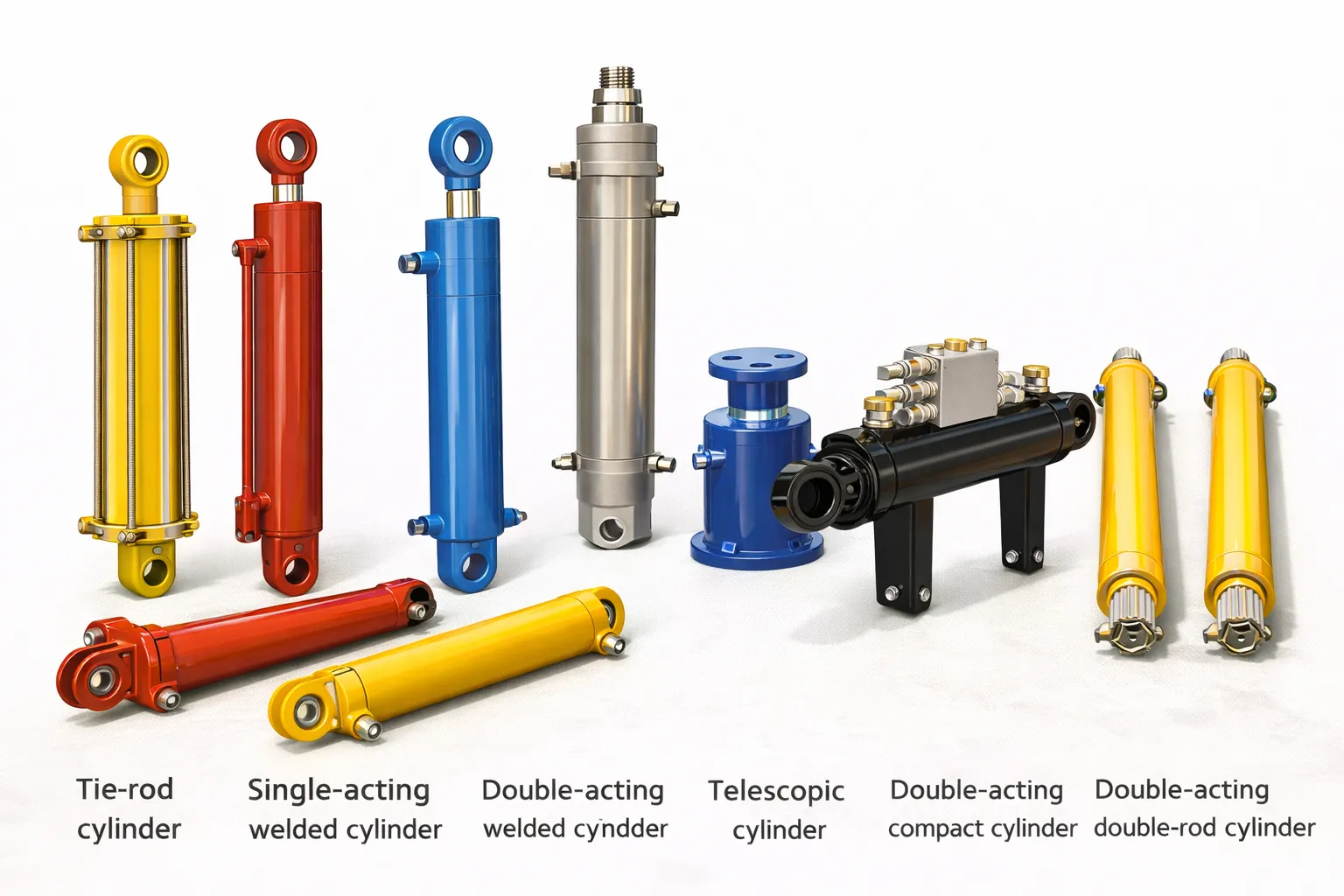
Unlike lifting applications that might rely on gravity and utilize a basic single acting hydraulic cylinder, adjusting a mold requires powered, strictly controlled movement in both directions. Therefore, it functions exclusively as a highly specialized double acting hydraulic cylinder. During an automatic width adjustment command, the central PLC coordinates with proportional servo valves to direct highly pressurized hydraulic fluid into the cap end chamber of the cylinder. This massive fluid pressure pushes against the hydraulic cylinder piston, forcing the rod to extend and moving the narrow face inward to decrease the slab width. Conversely, when fluid is metered into the rod end chamber, the piston retracts, pulling the narrow face outward.
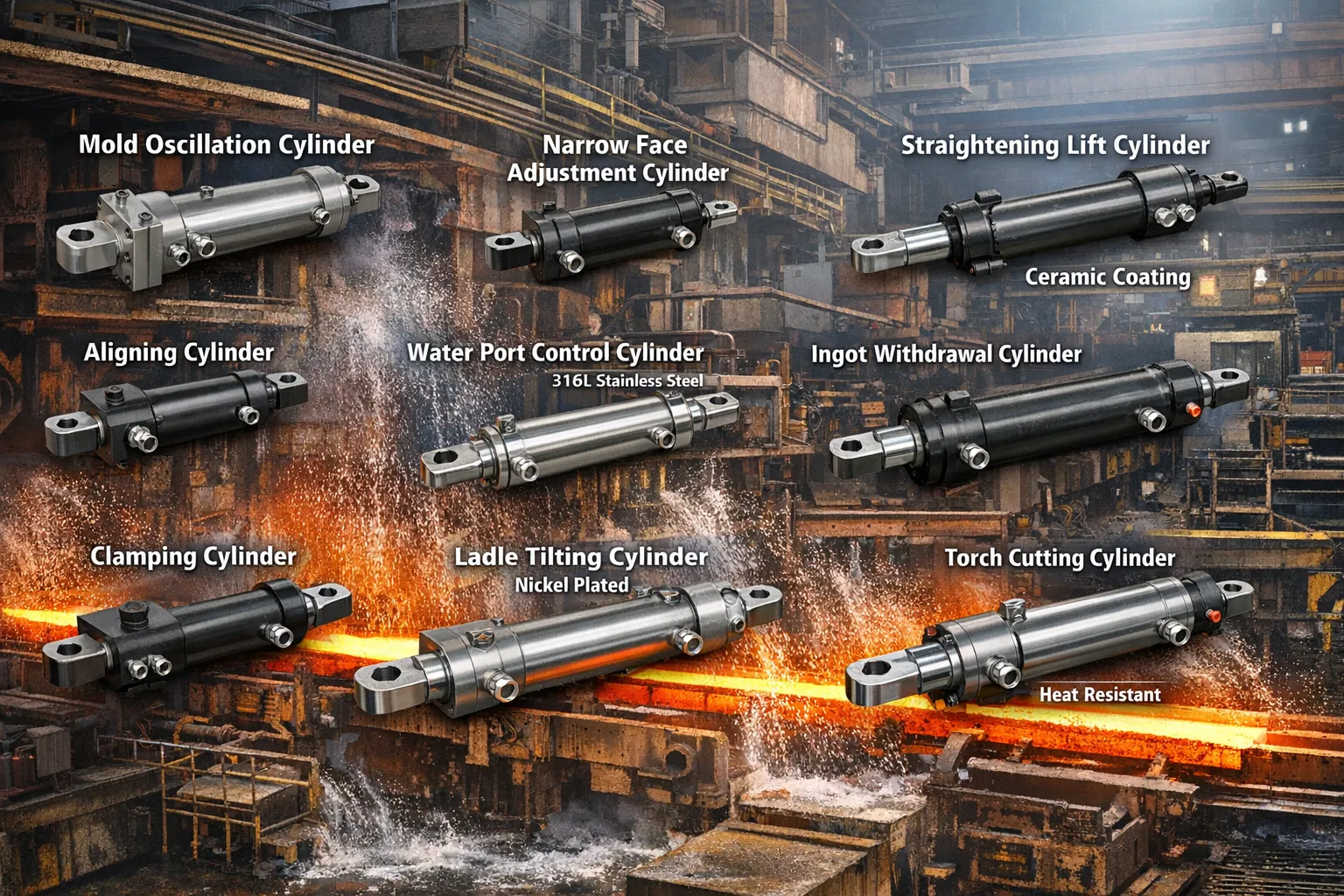
The most critical phase of this operation, however, is not the movement itself, but the holding phase. Once the precise width is achieved, the servo valves close, trapping the fluid column. The liquid steel inside the mold acts as a dense, heavy fluid, pushing outward with staggering ferrostatic pressure. The narrow face adjustment cylinder must now transform into an incompressible, rigid mechanical lock. If there is even microscopic internal leakage—where fluid bypasses the high-temperature piston seals—the narrow face will slowly drift outward. Our precision CNC honing processes and proprietary step-seal lock configurations guarantee absolute zero fluid bypass, keeping the mold dimensions rigidly intact throughout the entire casting sequence.
Seamless Brand Replacement & Upgrades for Continuous Casting
In heavy industrial maintenance, long lead times for spare parts translate directly into catastrophic revenue loss. Plant operators frequently experience severely restrictive delays when attempting to procure original equipment parts from overseas legacy brands. We actively solve this logistical nightmare by engineering fully customized hydraulic rams and cylinders that serve as exact dimensional drop-ins for standard machinery brands across the globe.
(Please note: The subsequent mention of specific corporate brands is provided exclusively for the convenience of engineering selection, mounting compatibility verification, and to assist maintenance managers in rapid part identification. We strictly respect all intellectual property, do not claim any trademark affiliation or endorsement, and manufacture entirely independent, highly upgraded hydraulic parts.)
Our engineering team routinely analyzes technical drawings to provide direct, physically identical replacements for systems originally equipped with cylinders from Bosch Rexroth, Parker Hannifin, SMC, Eaton Vickers, SMS Group, and Danieli. We replicate the external trunnion mounts, pin diameters, and fluid port locations flawlessly. However, we radically upgrade the internal architecture, meaning you receive a product with superior thermal resistance and dust immunity, significantly extending your equipment’s operational lifespan while avoiding extensive mechanical bracket rework.
Five Core Technical Engineering Advantages
What exactly differentiates a standard fluid power actuator from an elite, metallurgical-grade component? The answer lies in the uncompromising, obsessive engineering details developed specifically to combat the harsh realities of the casting floor. Here are the five core technical advantages built into every unit we produce:
1. Ultra-Low Friction Dynamic Sealing
To facilitate precise automatic width control, the detrimental “stick-slip” phenomenon must be eliminated. We utilize a proprietary blend of Polytetrafluoroethylene (PTFE) and bronze-filled guide bands. This advanced elastomeric matrix minimizes static friction, allowing incredibly smooth, sub-millimeter positional adjustments without the jerky, stuttering movements that cause surface cracking on the solidifying steel slab.
2. Q345D High-Rigidity Welded Body
Standard carbon steel barrels can balloon or deform under the intense pressure spikes generated during mold oscillation. By fabricating our cylinder barrels and structural mounts entirely from Q345D low-alloy high-strength steel, we provide a massive increase in structural yield strength. The cylinder maintains its perfect internal concentricity regardless of extreme external mechanical shock loads.
3. Complete Eradication of Internal Leakage
Standard NBR seals melt and degrade rapidly near liquid steel. We deploy high-temperature Fluoroelastomer (FKM/Viton) O-rings combined with staggered step-seal locking profiles. This heat-resistant barrier ensures that pressurized hydraulic fluid simply cannot migrate past the piston, guaranteeing that the holding force on the narrow copper plate remains absolute and uncompromising.
4. Anti-Scoring Heavy Duty Wiper Systems
Airborne casting powder is highly abrasive, akin to liquid sandpaper. We apply an ultra-thick, micro-cracked hard chrome plating to the piston rod, paired directly with a dual-lip metal-encased scraper ring. As the rod retracts into the barrel, this heavy-duty scraper physically shears the bonded slag off the surface, protecting the internal bearing bands from catastrophic dust contamination.
5. Smart Sensor Shielding & Thermal Clearance Optimization
Because these units operate near 1500°C molten steel, unmanaged thermal expansion can cause piston binding and sensor failure. Our engineers calculate precise internal clearance tolerances for all hydraulic cylinder components based on extreme operating temperature curves. Furthermore, the sensitive LVDT position sensors required for PLC feedback are housed within thermally shielded, hollowed rod compartments, ensuring accurate signal transmission even during extreme ambient heat spikes.
Autonomous Manufacturing Process & Rigorous Quality Control
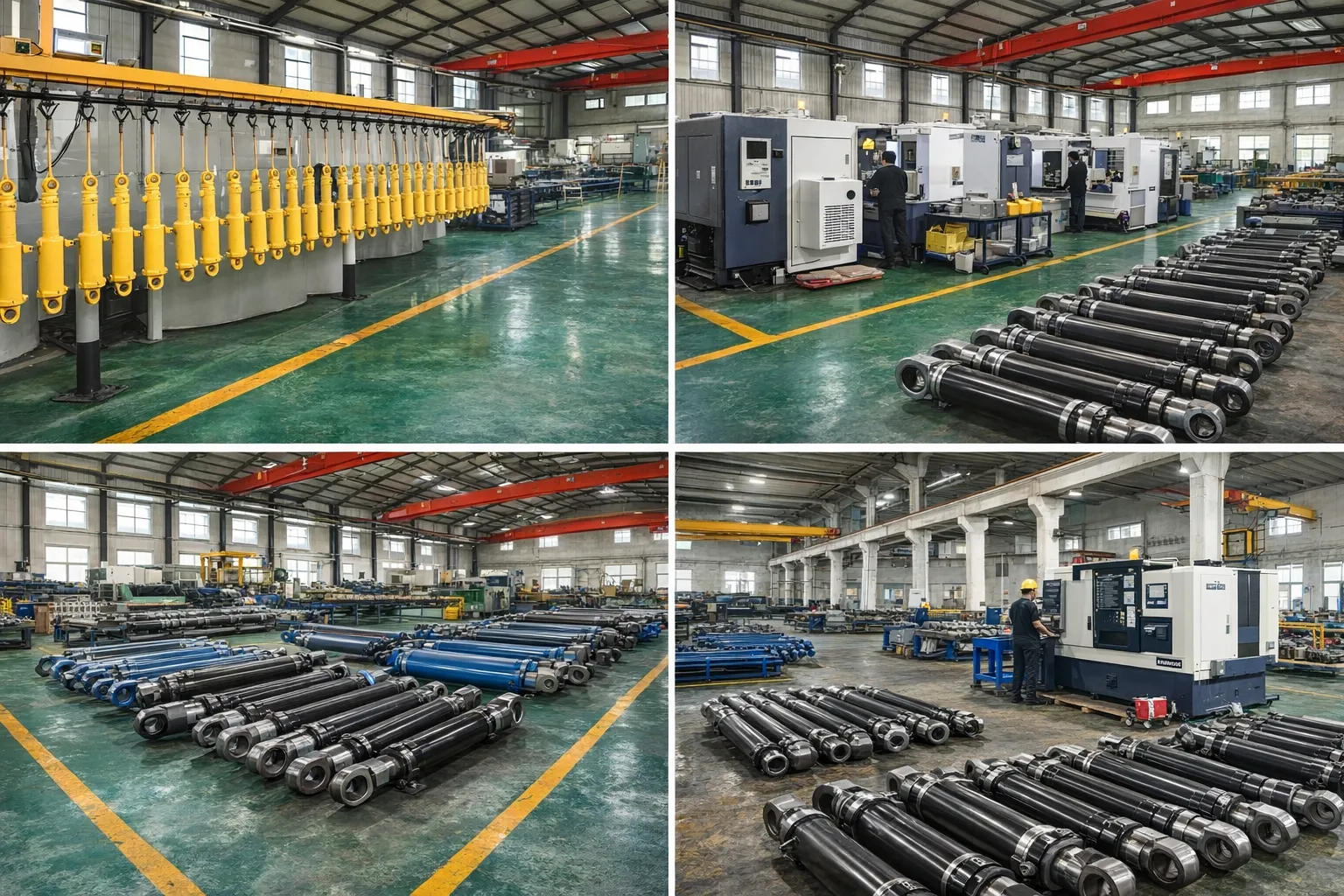
A highly pressurized fluid system is only as reliable as the strict quality control protocols governing its physical creation. We maintain a completely autonomous, full-lifecycle manufacturing facility. From the arrival of raw steel billets to the final coat of high-temperature industrial paint, every single step is executed directly in-house. This comprehensive, unbroken oversight guarantees that absolutely no compromised materials or subcontracted errors enter our assembly line.
Incoming Q345D steel undergoes strict ultrasonic non-destructive testing (NDT) to verify the absolute absence of internal voids or metallurgical cracks. Our heavy multi-axis CNC machining centers ensure perfect concentricity. Following the automated, stress-relieved submerged arc welding process, every single narrow face adjustment hydraulic cylinder is subjected to a rigorous factory pressure test. We pressurize the unit to 1.5 times its rated continuous working pressure and hold it statically, monitoring highly sensitive digital flow meters to verify that internal leakage is absolute zero. A unique serial number is laser-engraved onto every unit, ensuring total material traceability for the entire lifetime of the product.
Versatile Industry Applications Beyond Continuous Casting
While the intense engineering focus discussed here heavily targets the continuous casting environment, the robust mechanical nature of these heavy-duty designs makes the underlying technology incredibly adaptable. The engineering principles developed to resist massive heat and exclude heavy abrasive dust are universally valuable across multiple heavy-duty industrial sectors.
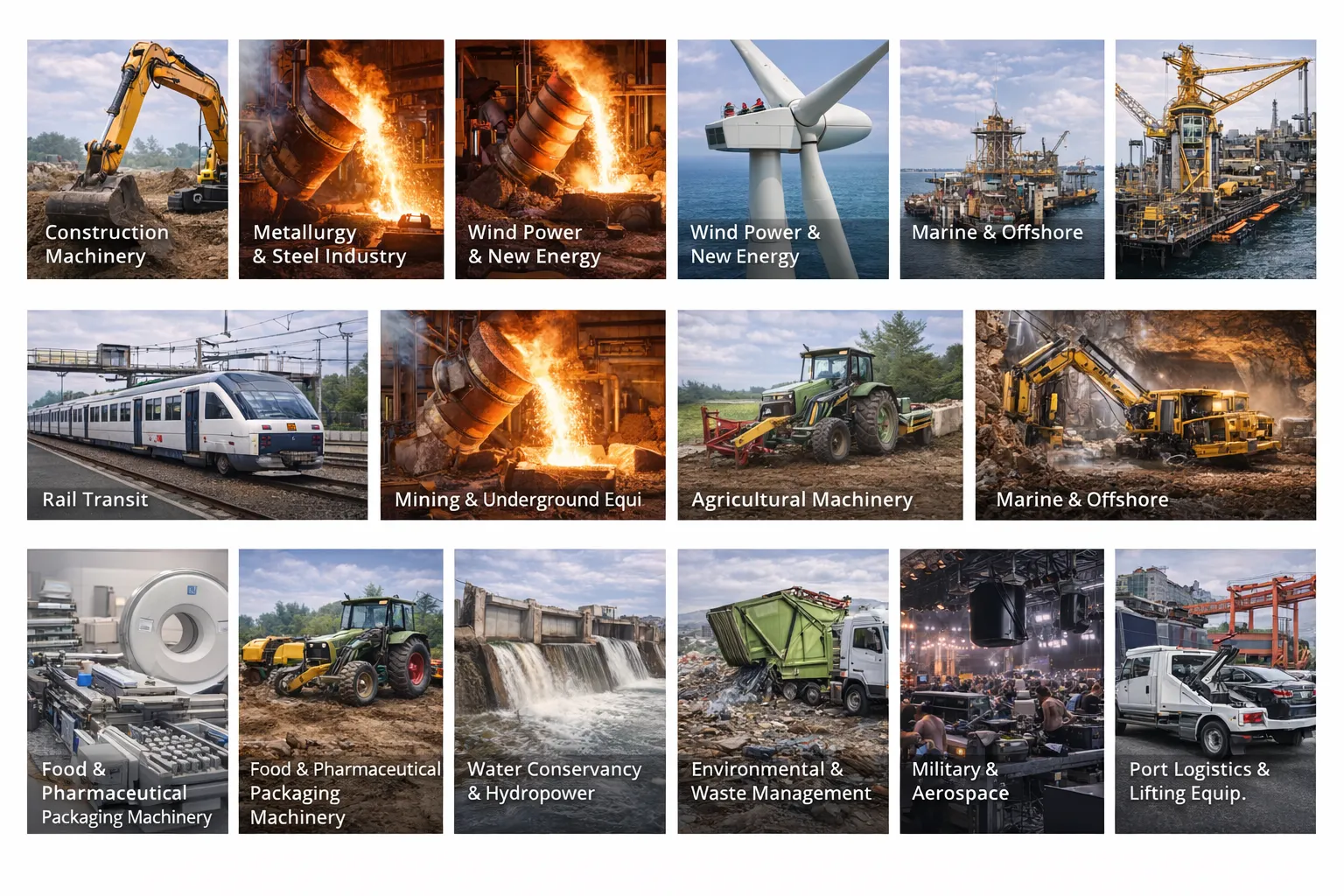
- Metallurgical and Iron Industry: Beyond the caster mold, these high-stress double acting hydraulic cylinder units are engineered to actuate massive ladle turrets, rolling mill automatic gauge controls (AGC), and heavy electric arc furnace tilting roofs.
- Mining Industry: Extreme rock dust and heavy impact loads require the exact Q345D welded construction utilized here. Our equipment powers jaw crushers, massive stacker-reclaimers, and tunnel boring machinery.
- Construction Machinery Industry: Heavy excavator booms and grading equipment heavily benefit from the high-strength hard chrome plating that aggressively resists environmental mud and corrosion.
- Material Handling Logistics: Massive port cranes and automated heavy logistics platforms depend on highly reliable components similar to our heavy-duty lift cylinder products to elevate colossal loads safely over decades of continuous use.
Comparative Analysis: Standard Cylinder vs. Our High-Performance Solution
Procuring standard commercial cylinders for a highly specialized continuous caster inevitably leads to unscheduled failure, massive downtime, and compromised safety. The detailed table below clearly illustrates the stark engineering differences between a generic industrial product and our dedicated metallurgical solution.
| Feature Metric | Standard Market Cylinder | Our Metallurgical Grade Cylinder |
|---|---|---|
| Barrel Structural Material | Basic Carbon Steel (e.g., #45 / 1045) | Q345D Low-Alloy High-Strength Steel |
| Dynamic Seal Architecture | Standard Nitrile/Polyurethane (Melts easily) | High-Temp Viton/PTFE Bronze Composite |
| Piston Rod Protection | Thin commercial flash chrome (0.02mm) | Micro-cracked heavy chrome (>0.05mm) + Scraper |
| Mold Holding Capability | Prone to dangerous drift under thermal load | Absolute rigidity, zero internal fluid leakage |
| Expected Maintenance Interval | Typically 3 to 6 months before seal failure | Consistently exceeds 18 to 24+ months safely |
Real-World Success: Asian Market Case Studies
Our custom engineering solutions have been heavily deployed across East Asia, actively solving critical operational bottlenecks for major industrial producers. Review these highly detailed field implementations demonstrating our deep capability in engineering and fixing hydraulic cylinders for extreme environments.
1. Resolving Thermal Degradation in Pohang, South Korea
Client Background: A Tier-1 Integrated Iron and Steel Works facility operating multiple high-capacity slab casters.
The Challenge: The plant’s original OEM cylinders were failing disastrously every 4 months due to severe internal leakage caused by localized radiant heat spikes, leading directly to erratic mold width dimensions and a high risk of breakouts.
How They Connected: The maintenance director found our profound technical capabilities via an extensive online search for high-temperature fluid power solutions.
The Landed Result: We custom-engineered specialized narrow face adjustment cylinder units utilizing our proprietary Viton-composite sealing architecture.
“The thermal stability of these units is absolutely phenomenal. Since the installation in October 2024, our mold adjustment accuracy has been flawless, achieving 18 months of continuous operation without a single pressure drop incident.” — Mr. Park, Maintenance Director.
2. Defeating Abrasive Scoring in Gwangyang, South Korea
Client Background: A large-scale Heavy Plate Mill utilizing a massive continuous bloom caster.
The Challenge: Heavy concentrations of abrasive casting powder were bypassing the standard wiper seals, severely scoring the chrome rods, and leading to massive external fluid loss requiring constant hydraulic cylinder repair.
How They Connected: Referred to us through a regional metallurgical engineering consultant deeply familiar with our heavy-duty armor upgrades.
The Landed Result: Deployed units featuring ultra-thick hard chrome plating combined with aggressive dual-metallic scraper rings, physically blocking the abrasive dust.
“Our maintenance team is finally free from constant rod replacements. Validated in early 2025, we haven’t seen a single drop of fluid leak since. The rods remain completely unscratched.” — Lead Mechanical Engineer.
3. Eradicating Stick-Slip Friction in Kobe, Japan
Client Background: A specialized Specialty Alloy Steel Producer demanding extreme surface quality for automotive applications.
The Challenge: High static friction in the generic mold adjustment mechanism caused violent stick-slip jerking, resulting in unacceptable transverse surface cracks on the specialty steel slabs during automatic width control (AWC).
How They Connected: Established a relationship during a major international heavy industry machinery exhibition.
The Landed Result: We provided cylinders equipped with highly specialized dynamic PTFE guide rings and micro-honed barrels to ensure perfectly smooth, sub-millimeter actuation.
“The smooth actuation is unparalleled. Commissioned smoothly in August 2025, the micro-positioning accuracy achieved completely resolved our slab cracking issues.” — Kenji T., Process Control Head.
4. Optimizing Procurement Budgets in Kaohsiung, Taiwan
Client Background: A rapidly expanding Electric Arc Furnace (EAF) Billet Casting Plant.
The Challenge: The exorbitant cost and unacceptable 6-month lead time for sourcing European OEM replacement parts severely impacted their maintenance schedule and profitability.
How They Connected: Searched our site specifically for custom heavy-duty hydraulic rams and drop-in replacements.
The Landed Result: Delivered exact dimensional drop-in replacements within 5 weeks, fully matching the European footprint but drastically upgrading the internal seal chemistry.
“The dimensional match was perfect, requiring zero bracket modifications. Installed in November 2025, saving us 40% on the overall hydraulic cylinder price while doubling the MTBF.” — Lin C., Procurement Manager.
5. Emergency Breakdown Resolution in Rayong, Thailand
Client Background: A major regional steelworks facility running a high-speed thin slab caster.
The Challenge: A catastrophic failure of their aging OEM cylinders caused a complete, unscheduled halt of their primary casting line, costing thousands of dollars per hour.
How They Connected: Desperately searched online for emergency rapid manufacturing and extensive hydraulic cylinder repair capabilities.
The Landed Result: Recognizing the emergency, we fast-tracked the manufacturing of completely upgraded hydraulic cylinder components and full units, delivering them via air freight in just 14 days.
“Their manufacturing speed during our emergency in December 2025 saved us from disastrous losses. The new units are visibly vastly superior to the original equipment.” — S. Chaiporn, Operations Head.
B2B Technical Frequently Asked Questions (FAQ)
For procurement managers and lead mechanical engineers evaluating critical metallurgical components, absolute clarity is entirely mandatory. Review our most frequent technical and commercial inquiries below to aid your decision-making process.
1. What is the standard manufacturing lead time for highly customized models?
2. How exactly is the accurate hydraulic cylinder price determined for custom drops-ins?
3. Do you consistently supply aftermarket hydraulic cylinder components?
4. Why does this application strictly require a double acting hydraulic cylinder instead of a single acting hydraulic cylinder?
5. Are your metallurgical cylinders chemically compatible with fire-resistant fluids?
6. Can your facility handle extensive hydraulic cylinder repair and refurbishment?
7. Is it possible to seamlessly integrate internal linear displacement sensors?
Ready to Drastically Optimize Your Steel Plant’s Reliability?
Do not allow unpredictable internal fluid leakage and substandard off-the-shelf actuators to aggressively dictate your production schedule or cause highly hazardous breakouts. Invest heavily in reliability. Upgrade your continuous casting machine with our premium engineered fluid power solutions.
Editor: Cxm


























