
Product Overview & Industrial Value
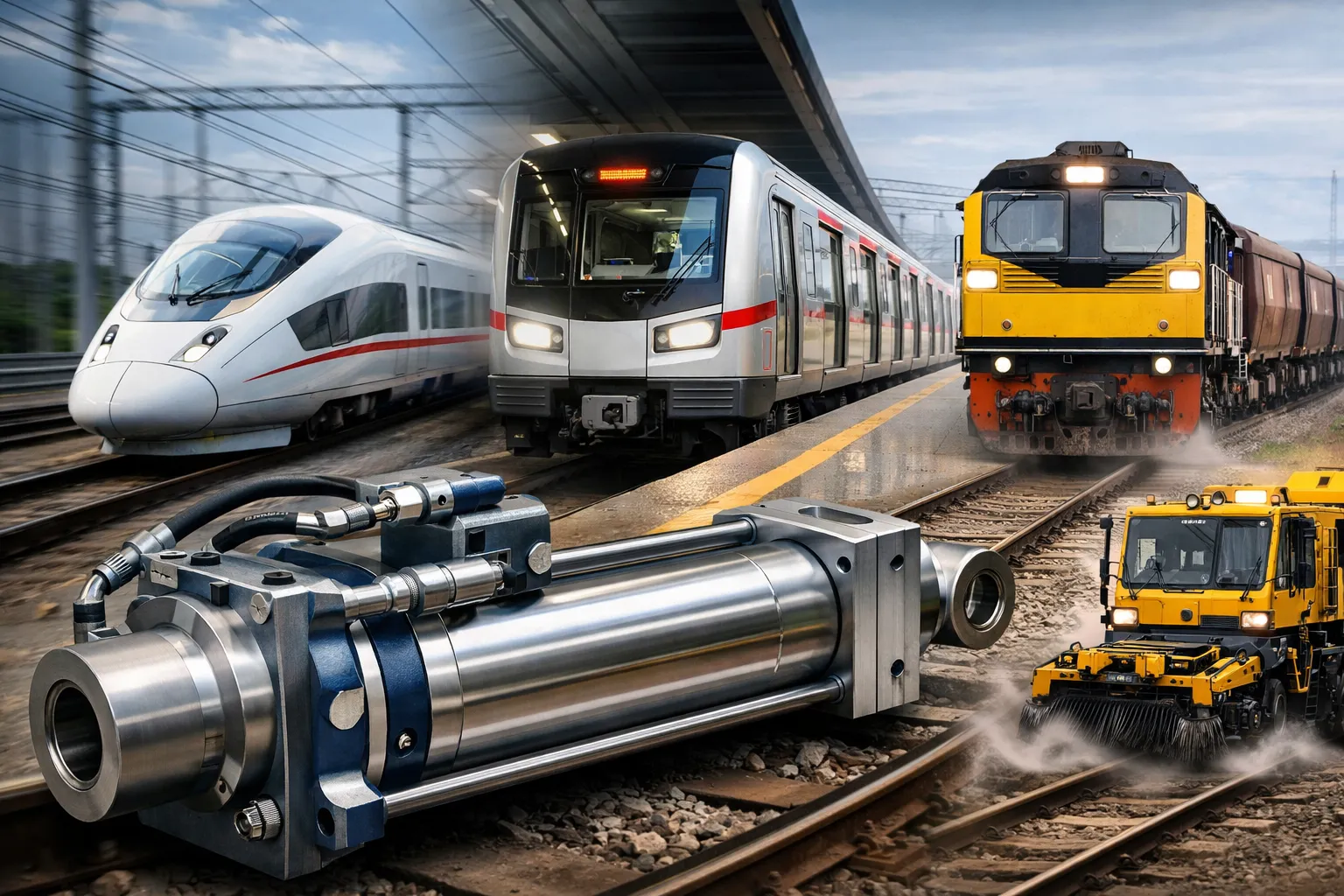
Operating at the pinnacle of modern transportation infrastructure requires an absolute commitment to passenger safety and mechanical reliability. In the rapidly expanding railway transit networks across South Korea and neighboring East Asian economies, high-speed trains frequently navigate complex topographies, plunging through mountainous tunnels and executing sweeping curves at velocities exceeding 300 kilometers per hour. During these intense operational phases, the train bogie and passenger carriage are subjected to immense, multi-directional kinetic forces. The secondary suspension system acts as the critical barrier between the harsh realities of the steel track and the comfort of the passenger cabin. Within this complex architecture, the Air Spring Auxiliary Cylinder performs a specialized, non-negotiable function.
While pneumatic air springs are exceptionally proficient at bearing the heavy static weight of the train and making slow adjustments to ride height, compressed air is inherently elastic. It severely lacks the precise fluid friction necessary to rapidly dissipate the kinetic energy generated by sudden track anomalies or the centrifugal forces of high-speed cornering. Without mechanical intervention, the train carriage would suffer from severe, uncontrolled oscillation. Our specialized hydraulic cylinder operates in parallel with the air springs, providing immediate, velocity-sensitive dampening to stabilize the carriage, ensuring a seamless transit experience.
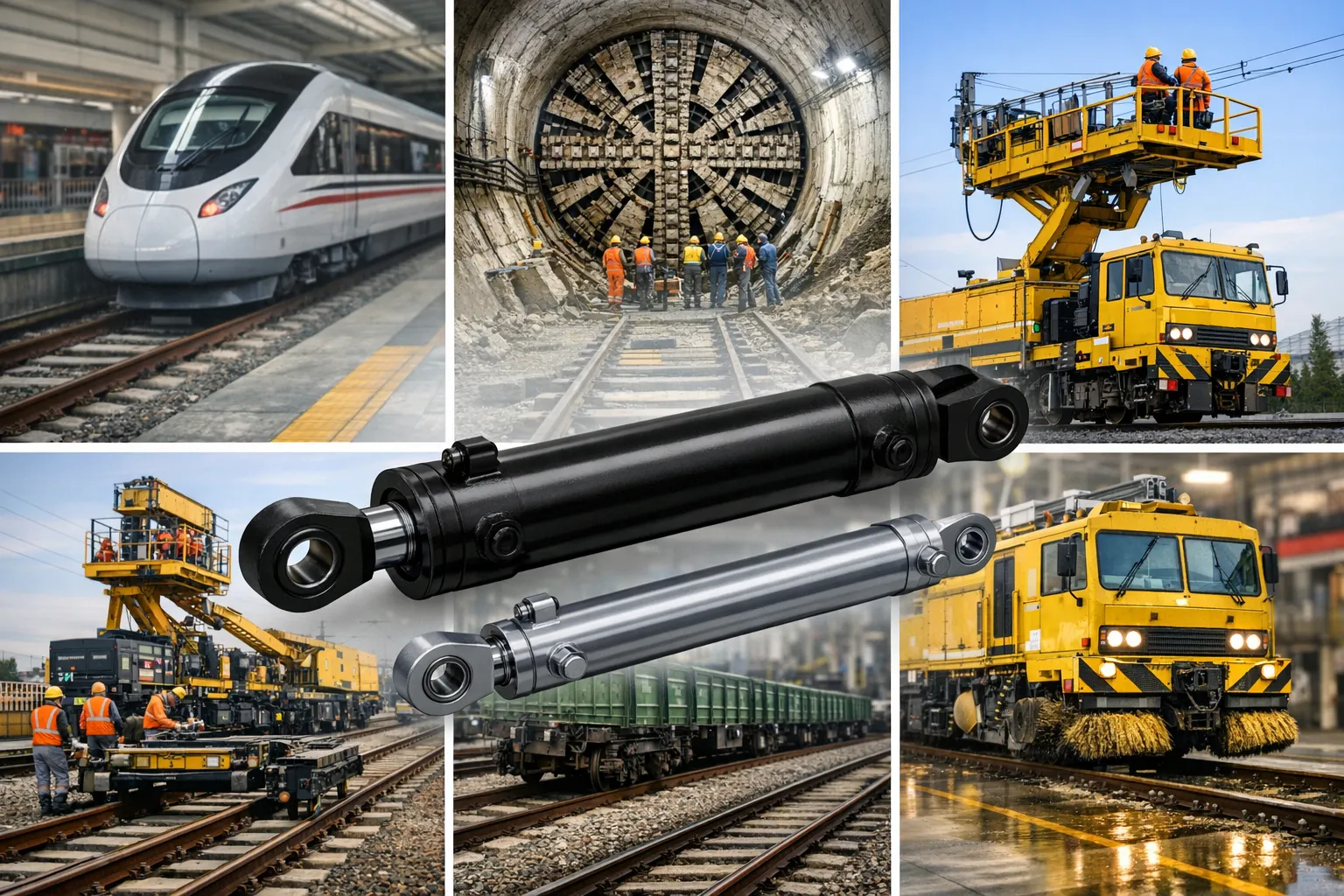
However, the undercarriage of a train is a brutally hostile environment. When generic industrial actuators are placed in this setting, they fail catastrophically. The combination of relentless high-frequency vibration and lateral offset loads forces the internal rod to bend against the sealing gland. As a dedicated hydraulic cylinder manufacturer, we have engineered a definitive solution to this industry-wide problem. By utilizing a robust welded carbon steel architecture integrated with high-load ball joints, our suspension control cylinders physically decouple the lateral track forces from the internal sealing mechanism. This innovation entirely prevents rod eccentric wear, granting rail operators an unprecedented extension in fleet maintenance intervals and offering an exceptional return on their hydraulic cylinder price investment.
Comprehensive Technical Parameters
Designing a fluid power component capable of safeguarding human life at extreme velocities requires strict adherence to exacting metallurgical and dimensional standards. Below is a detailed breakdown of the highly customizable engineering specifications for our railway-grade suspension dampeners. Every parameter is meticulously calculated to meet the rigorous demands of international rolling stock safety protocols.
| Engineering Specification | Customizable Range & Configuration Details |
|---|---|
| Target Industry | Railway Transit (Public Transit Infrastructure) |
| Equipment Category | High-Speed Trains, Intercity Commuter Rail, Urban Metro |
| Subsystem & Action | Secondary Suspension System / Dynamic Suspension Control |
| Product Designation | Air Spring Auxiliary Cylinder |
| Action Mode | Double acting hydraulic cylinder – Provides fluid resistance during both extension and retraction. |
| Structure Type | Piston Cylinder – Features complex internal valving for precise velocity control. |
| Manufacturing Structure | Deep-Penetration Welded Construction – Eliminates tie-rod fatigue. |
| Material System | High-Yield Carbon Steel – Supreme tensile strength for structural stability. |
| Surface Treatment | Micro-Cracked Hard Chrome Plated – Prevents moisture corrosion and track debris pitting. |
| Environmental Grade | Continuous High-Frequency Vibration + Extreme Eccentric Load |
| Typical Failure Mode Addressed | Rod Eccentric Wear (Unilateral seal scoring caused by side-loading forces). |
| Recommended Configuration | Ball Joint / Spherical Plain Bearing – Facilitates 3D multi-axis articulation to neutralize offset forces. |
Operational Fluid Dynamics & Working Principle
To comprehend the true engineering value of the Air Spring Auxiliary Cylinder, it is necessary to examine the sophisticated fluid dynamics occurring within its carbon steel housing. As a train travels along the tracks, the bogie moves vertically due to rail joints, and laterally as it navigates curves. This movement aggressively forces the internal hydraulic cylinder piston to travel within the highly pressurized fluid chamber.
Because this unit is a precisely tuned double acting hydraulic cylinder, high-viscosity hydraulic fluid is present on both sides of the piston head. During both the compression (jounce) and extension (rebound) strokes, the solid piston forces this incompressible fluid through a matrix of microscopic orifice valves and spring-loaded shim stacks. Forcing thick fluid through these severely restricted pathways requires tremendous mechanical effort. This exact mechanism effectively dissipates the chaotic kinetic energy of the train carriage, instantly transforming it into low-grade thermal energy. The heavy carbon steel barrel acts as a thermal conductor, radiating this heat safely into the surrounding atmosphere, effectively stopping the carriage from bouncing and restoring absolute equilibrium to the passenger cabin.
The most pivotal aspect of our design is the mechanical handling of offset track forces. When a train rounds a sharp curve, massive centrifugal forces try to push the carriage outward. If the suspension damper is rigidly mounted using a standard clevis pin, this lateral force transmits directly into the piston rod, causing it to bend and scrape aggressively against one side of the internal seal gland. This phenomenon is known as rod eccentric wear, and it destroys ordinary hydraulic rams in a matter of months. To combat this, we equip the mounting interfaces with heavy-duty ball joints. These spherical bearings act identically to a human shoulder joint, providing seamless multi-axis rotation. As the bogie twists laterally, the ball joint swivels dynamically, ensuring the massive force traveling down the rod remains perfectly straight. This absolute mitigation of side-load friction is why our cylinders endure millions of cycles longer than the competition.
Perfect OEM Replacement & Fleet Modernization
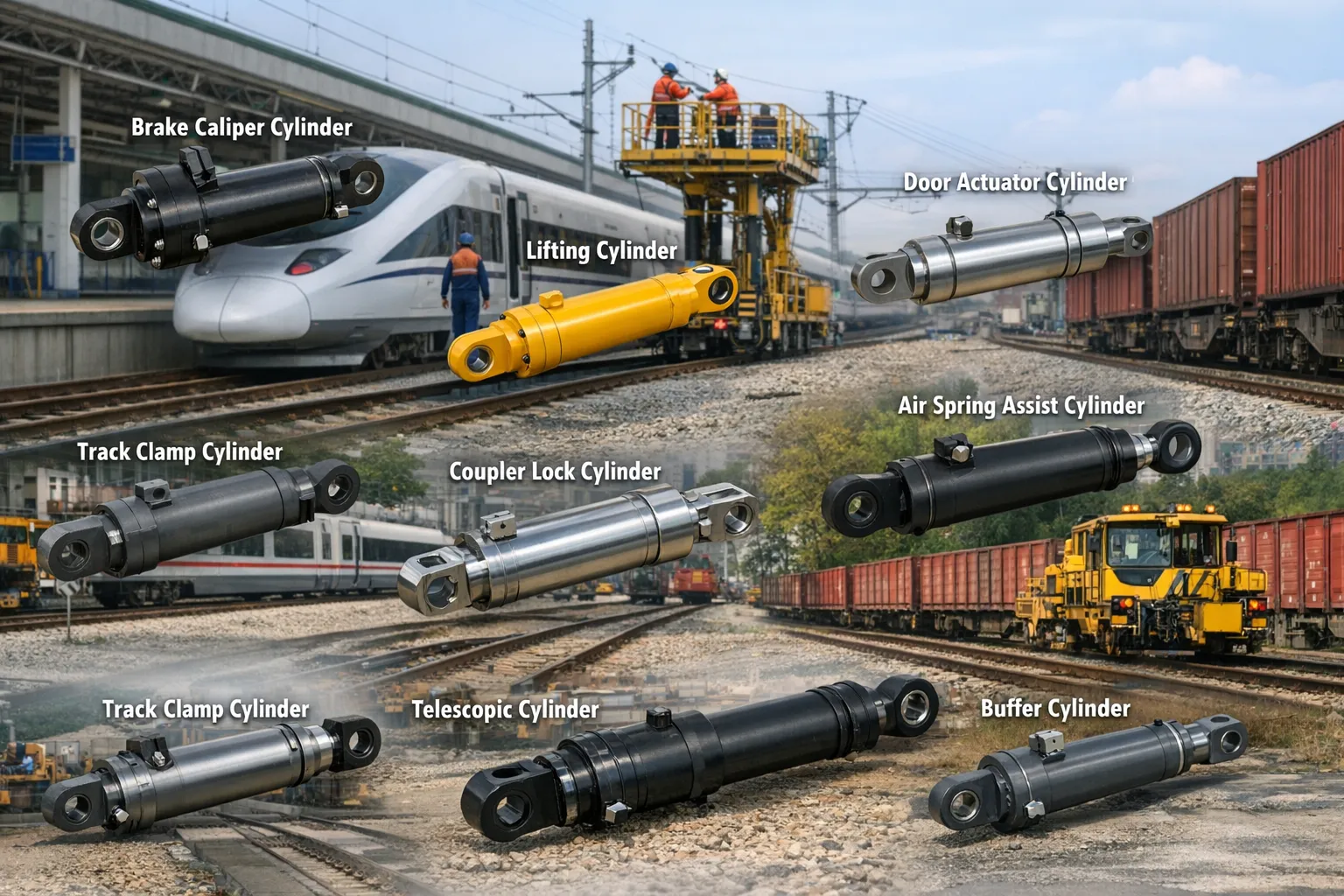
For transit authority procurement directors and heavy maintenance supervisors, managing the supply chain for aging rail infrastructure is a complex hurdle. Relying solely on Original Equipment Manufacturers (OEMs) frequently results in exorbitant pricing models and unacceptable shipping delays that threaten to ground operational carriages. Our engineering division resolves these logistical bottlenecks by executing precise reverse-engineering. We manufacture flawless, drop-in replacement hydraulic parts designed to seamlessly integrate with your existing fleet.
Procurement Engineering Disclaimer: Our customized Air Spring Auxiliary Cylinders serve as perfect dimensional and functional replacements for suspension equipment originally manufactured by recognized global brands, including Bosch Rexroth, Parker Hannifin, Liebherr, Koni, and ZF Sachs. Please note that these brand names are referenced strictly for technical cross-referencing, stroke dimension matching, and selection convenience. We operate as a wholly independent hydraulic cylinder manufacturer and claim no trademark affiliation, sponsorship, or endorsement from these respective OEM entities. Our sole objective is to provide rail operators with a superior, upgraded alternative.
By specifying our precisely machined cylinders, your engineering teams are guaranteed exact matching of the retracted center-to-center length, maximum stroke, spherical pin diameters, and customized damping force curves. This ensures you can upgrade your bogie’s dampening capabilities without executing any costly structural modifications to the train chassis. Furthermore, transitioning to our localized manufacturing efficiency provides transit authorities with an incredibly competitive hydraulic cylinder price, drastically lowering the overall lifecycle cost of the fleet.
8 Core Technical Engineering Advantages
What fundamentally elevates our suspension dampers above standard commercial actuators is our uncompromising approach to fluid power engineering. When passenger safety is at stake, every micro-tolerance is critical. Below are the definitive technical advantages built into every single unit:
1. Absolute Mitigation of Rod Eccentric Wear
The incorporation of high-load capacity ball joints at both mounting interfaces allows the cylinder to actively pivot, accommodating lateral geometric shifts in the suspension. This mechanical decoupling ensures the piston rod remains perfectly concentric, preventing the unilateral metal-on-metal friction that destroys conventional seals.
2. Ultra-Low Friction Sealing Architecture
High-speed rail travel generates high-frequency micro-vibrations. Standard rubber seals suffer from high static friction, causing a jerky “stick-slip” motion. We utilize a proprietary blend of PTFE composite step seals that provide a near-zero friction coefficient, allowing for exceptionally smooth, instantaneous damping responses.
3. Monolithic Welded Carbon Steel Rigidity
Continuous, heavy vibration causes bolted and tie-rod cylinder designs to stretch and loosen. We utilize an automated robotic welding process to fuse the high-strength carbon steel end caps directly to the barrel. This monolithic structure easily withstands immense torsional stress without fatigue.
4. Micro-Cracked Chrome Plated Longevity
The exterior piston rod faces a brutal environment of track ballast and corrosive elements. Our rods receive a thick layer of micro-cracked hard chrome plating. These microscopic fissures retain lubricating fluid for the wiper seals while presenting an impenetrable shield against atmospheric rust.
5. Optimized Thermodynamic Stability
Continuous kinetic energy conversion generates substantial heat, which can thin standard hydraulic fluids. Our Air Spring Auxiliary Cylinder features an optimized internal volume-to-surface-area ratio for rapid heat dissipation, paired with high-temperature synthetic elastomers that maintain exact damping metrics from -40°C to +90°C.
6. Superior Fatigue Life via FEA
Through advanced Finite Element Analysis (FEA) performed during the CAD phase, we actively identify and structurally reinforce high-stress concentration areas around the trunnion mounts. This proactive optimization yields a dynamic fatigue life that consistently outpaces standard industry requirements.
7. Precision Internal Fluid Valving
To deliver true active suspension control, the internal hydraulic cylinder components feature highly sophisticated, velocity-dependent shim stacks. This allows the cylinder to provide firm resistance during slow rolling motion, yet bypass fluid rapidly during sudden, high-velocity track impacts.
8. Accessible Depot Maintenance
While some competitors hermetically weld their units shut to force complete replacement, our cylinders feature accessible, heavily secured threaded gland heads. This empowers your depot technicians to easily access the internals for routine fixing hydraulic cylinders, maximizing the asset’s productive lifecycle.
Manufacturing Excellence & Total Quality Traceability
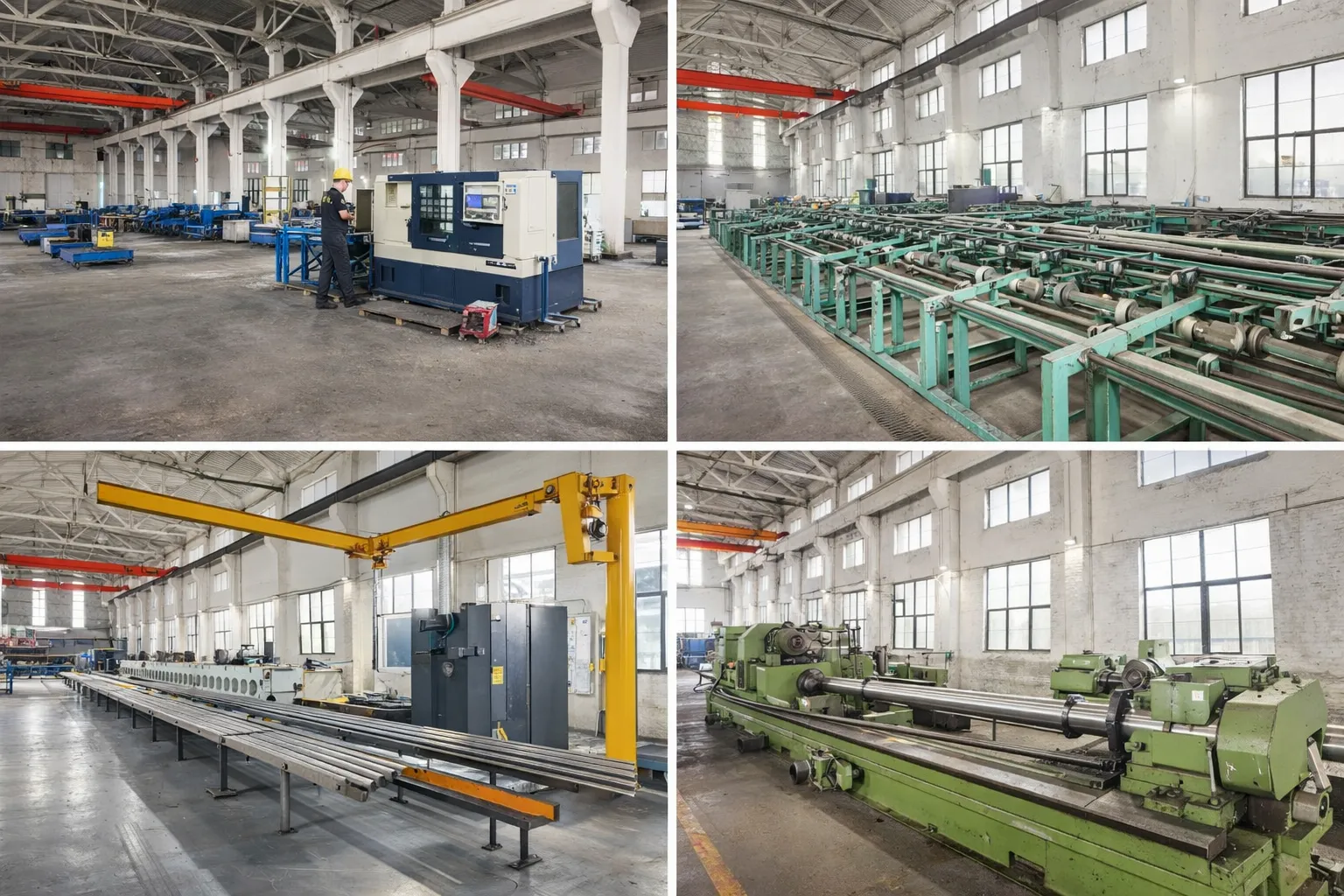
Producing a component that safeguards the lives of thousands of daily commuters requires an absolute obsession with quality control. As a fully vertically integrated manufacturer, we retain 100% control over the entire production ecosystem. Our process commences with stringent metallurgical verification; all incoming raw carbon steel billets are subjected to ultrasonic flaw detection and optical emission spectrometry to confirm the exact alloy composition and ensure internal homogeneity.
The machining of the cylinder barrel and piston is executed on advanced multi-axis CNC turning centers, achieving dimensional H8 tolerances measured in strict micrometers. To create the high-rigidity structure required for rail transit, our certified technicians employ automated robotic orbital welding, ensuring deep, uniform weld penetration. Following fabrication, all components are assembled in a climate-controlled, dust-free cleanroom to prevent microscopic environmental contamination from compromising the ultra-low friction PTFE seals.
Quality assurance within our facility is paramount. We do not rely on randomized batch testing. Instead, 100% of our suspension cylinders undergo comprehensive factory acceptance testing (FAT). This protocol includes a hydrostatic high-pressure hold test at 150% of the maximum operational pressure to verify zero internal bypass. We also conduct dynamic friction dynamometer testing to ensure the damping curve perfectly matches your specific train schematics. Finally, every unit is laser-engraved with a permanent serial number, providing our clients with absolute backward traceability linking the physical cylinder to its specific raw material heat certificates and final test performance data.
Cross-Industry Application Capabilities
While the sophisticated ball joint articulation and specific thermal valving of the Air Spring Auxiliary Cylinder are natively optimized for high-speed railway suspension control, the core engineering principles—namely its absolute immunity to rod eccentric wear and extreme high-frequency vibration—make it extraordinarily valuable across multiple punishing heavy industrial sectors.
- High-Speed Rail and Metro Transit: Serving as the critical secondary suspension damper, actively stabilizing the carriage during rapid transit across South Korea and East Asia.
- Heavy Construction Machinery: The extreme durability of our welded construction is perfectly suited for the construction machinery industry, where large earthmoving equipment requires a heavy-duty lift cylinder capable of surviving off-axis loads on uneven, rocky terrain.
- Metallurgy & Iron Manufacturing: We provide specialized high-temperature components to the metallurgical and iron industry, effectively dampening the violent mechanical shocks generated by continuous casting lines and heavy steel rolling mills where standard pneumatic setups instantly fail.
- Automated Material Handling: Ensuring structural stability and precise load leveling in heavy automated guided vehicles (AGVs) transporting massive cargo across unpredictable factory floors.
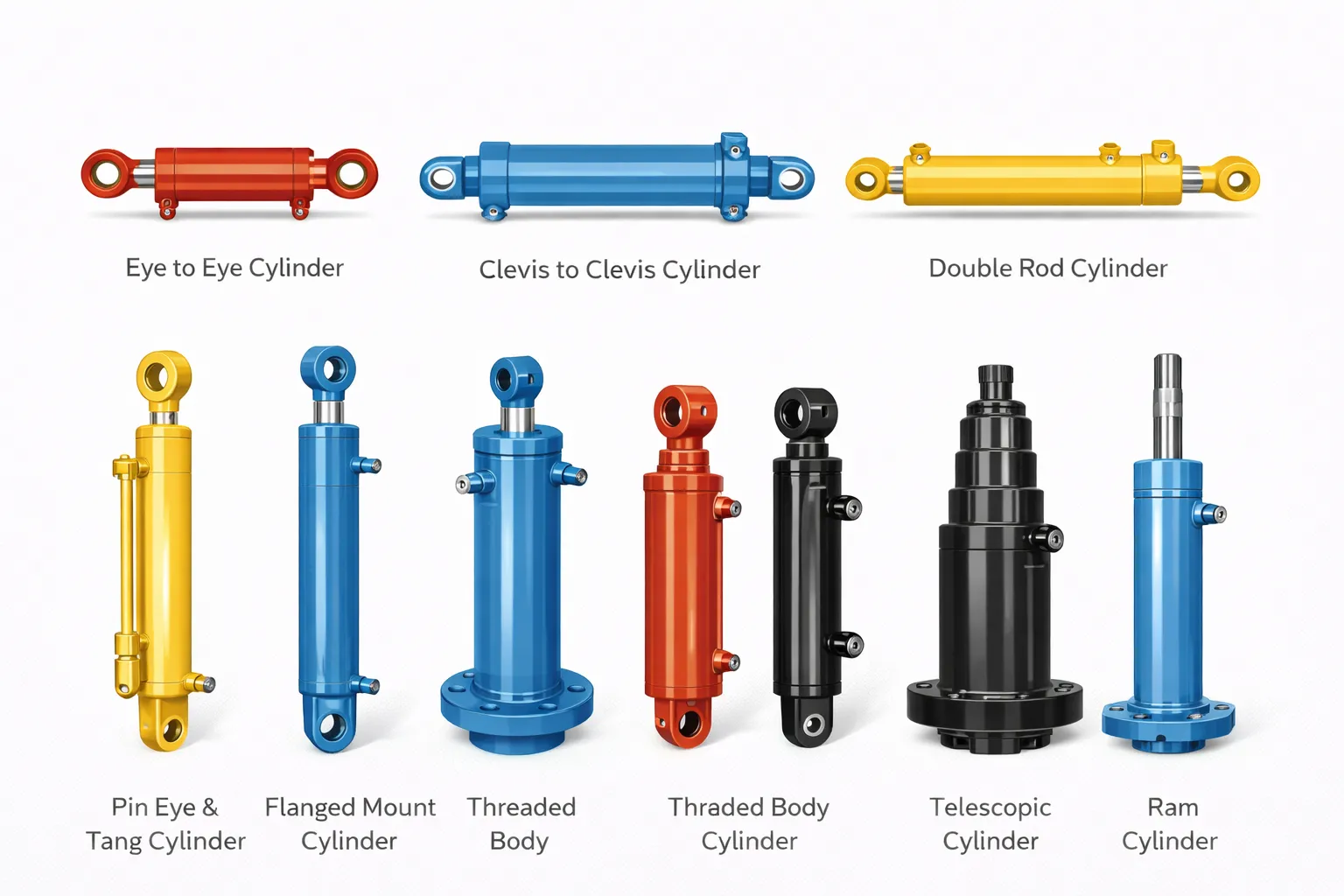
Comparative Analysis: Standard vs. High-Performance Design
For engineering procurement officers, distinguishing between a generic off-the-shelf industrial actuator and a highly specialized rail-grade suspension damper is essential for accurate lifecycle cost forecasting. The comparative table below outlines the technical necessity of upgrading your fleet to our engineered solutions.
| Operational Metric | Generic Commercial Hydraulic Cylinder | Our Air Spring Auxiliary Cylinder |
|---|---|---|
| Eccentric Load Handling | Rigid mounting transfers track lateral force directly into the rod, causing rapid seal blowout. | Ball joint articulation actively neutralizes offset vectors, keeping rod stroke purely linear. |
| Friction Dynamics | High static friction from basic NBR seals leads to jerky “stick-slip” passenger ride quality. | PTFE-composite step seals provide ultra-low friction for seamless, instant high-frequency damping. |
| Structural Assembly | Tie-rod designs stretch and violently rattle loose under continuous rail harmonics. | Monolithic robotic-welded carbon steel barrel guarantees absolute structural integrity. |
| Action Configuration | Often a rudimentary single acting hydraulic cylinder unable to control rebound properly. | Fully tuned double acting hydraulic cylinder that perfectly manages both jounce and rebound. |
| Total Cost of Ownership | High long-term costs due to continuous unscheduled downtime and frequent replacements. | Exceptional ROI; higher initial durability maximizes carriage uptime for years. |
Global Engineering Success: Real Case Studies in East Asia
Theoretical physics parameters only hold value when proven on the track. Our suspension control systems are trusted globally by leading transit authorities and rolling stock integrators. Below are documented deployments where our specialized fluid power engineering resolved critical operational failures across the demanding Asia-Pacific rail network.
Case Study 1: Resolving Rod Eccentric Wear on South Korean High-Speed Rail
Date & Location: August 2024 | Seoul, South Korea.
Client Profile: South Korea National High-Speed Transit Authority.
The Operational Challenge: The transit authority was facing ballooning maintenance expenditures. Their fleet engineers were endlessly fixing hydraulic cylinders on the secondary bogie suspensions. At speeds of 280 km/h in mountainous terrain, the OEM rigid-mount dampers were failing at under 1.5 million cycles due to catastrophic rod eccentric wear, resulting in complete fluid leakage.
The Solution Delivered: The lead procurement engineer actively sought a highly specialized hydraulic cylinder manufacturer capable of custom designing a new articulation joint system. We supplied a heavily reinforced batch of Air Spring Auxiliary Cylinders utilizing oversized ball joints and customized PTFE seal guide bands.
The Tangible Result: Installed across 40 carriages, the upgraded units easily surpassed 4.5 million cycles without a single instance of seal failure. The ball joint integration successfully decoupled the lateral forces, saving the authority millions in unscheduled downtime.
“The structural integrity of the welded joints and the wear resistance of the chrome rods have surpassed our previous European suppliers. We finally solved our eccentric load problem.” — Mr. Park, Fleet Maintenance Director, Seoul.
Case Study 2: Passenger Comfort Upgrade for Urban Commuter Rail
Date & Location: Late 2024 | Fukuoka, Japan.
Client Profile: Fukuoka Regional Railway Operator.
The Operational Challenge: Commuters were continuously filing complaints regarding harsh, jerky vibrations during aggressive stop-and-go acceleration phases in the commuter tunnels. The legacy linear dampers utilized standard NBR seals, creating high static friction that prevented the cylinders from making smooth micro-adjustments.
The Solution Delivered: We successfully retrofitted the commuter fleet with upgraded double acting hydraulic cylinder units featuring proprietary ultra-low friction composite seals.
The Tangible Result: The breakaway friction was reduced by over 60%. Accelerometer testing within the passenger cabin confirmed a vast improvement in ride smoothness, dramatically increasing customer satisfaction indices across the network.
Case Study 3: Overcoming Severe Supply Chain Lead Times
Date & Location: Early 2025 | Taipei, Taiwan.
Client Profile: Taipei Metropolitan Subway Authority.
The Operational Challenge: The metropolitan maintenance depot was facing an impending crisis due to exorbitant OEM pricing and an 8-month lead time for critical suspension replacement parts, directly threatening to ground multiple trains.
The Solution & Result: The contractor submitted exact OEM dimensional drawings to our engineering team. We provided perfectly matched, 100% compatible replacement hydraulic parts within a mere 6 weeks. Not only did we bypass their supply chain bottleneck, but the highly competitive hydraulic cylinder price allowed them to complete the overhaul well under the fiscal budget.
Case Study 4: Reinforcing Heavy Locomotive Logistics
Date & Location: Mid-2025 | Incheon Port, South Korea.
Client Profile: Industrial Mining and Freight Logistics Corporation.
The Operational Challenge: Massive variations in raw material hauling were overloading standard suspension units, causing tie-rods to shear and massive fluid blowouts under the extreme vertical pressure.
The Solution & Result: We systematically replaced their inadequate single acting hydraulic cylinder units with our heavy-duty welded carbon steel suspension variants, adapting them to act as a highly rugged lift cylinder to bear the immense unsprung mass. The structural rigidity successfully stabilized the freight bogies under maximum load capacity with zero reported failures.
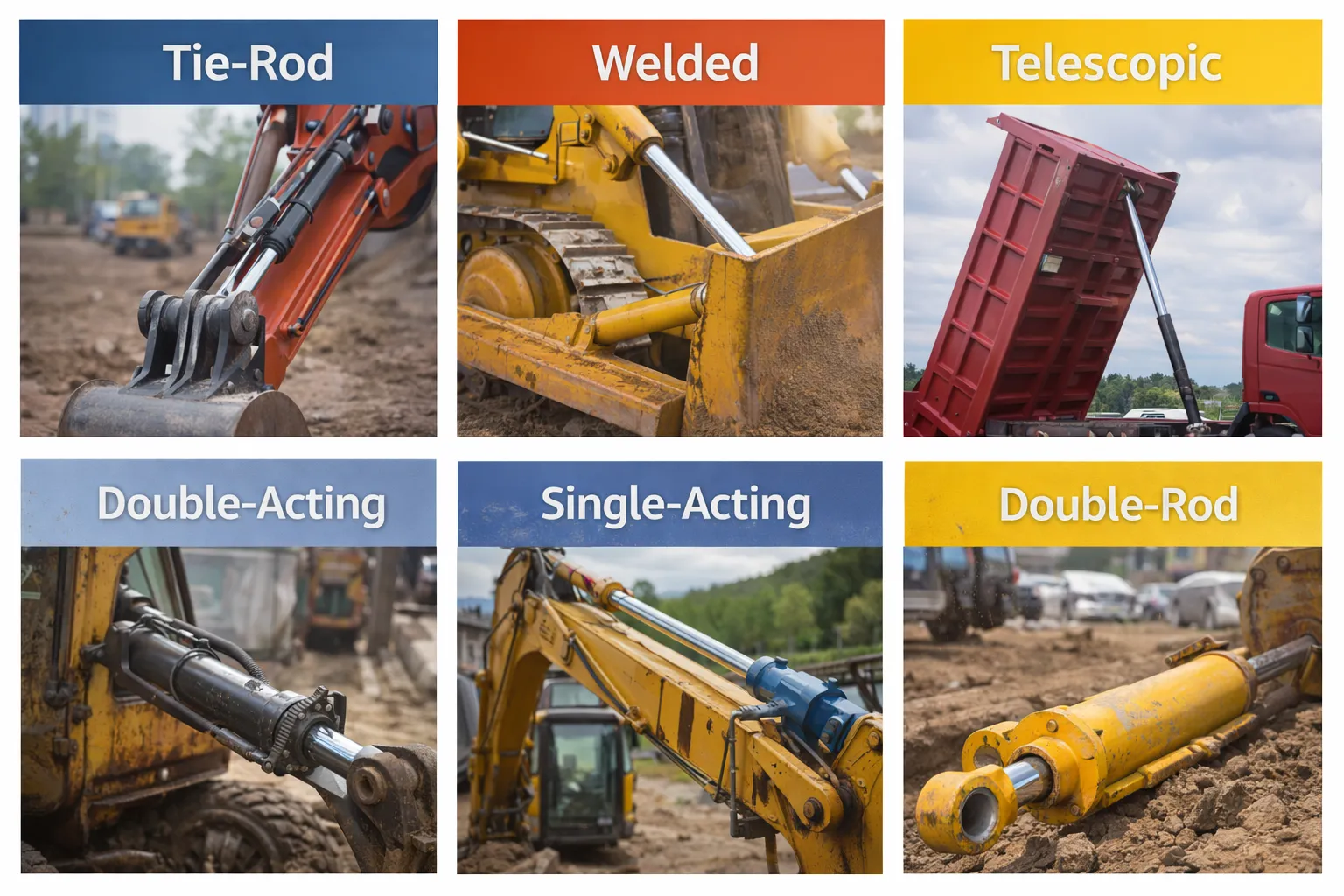
Expert B2B Engineering FAQ
Procuring highly specialized suspension components involves strict technical validation and rigorous vetting. Below is a comprehensive compilation of the most frequent technical inquiries our engineering team receives from rail operators, procurement directors, and maintenance supervisors across East Asia.
1. How exactly does the ball joint configuration prevent rod eccentric wear?
2. Can your engineering team match the damping profiles of our existing OEM hydraulic parts?
3. What makes a double acting hydraulic cylinder necessary for modern rail suspension?
4. Do you supply specialized seal kits for routine depot hydraulic cylinder repair?
5. What are the primary structural advantages of carbon steel welded construction?
6. How quickly can you manufacture and deliver a custom batch to South Korea?
7. Are these suspension cylinders capable of operating in extreme winter temperatures?
Ready to Elevate Your Fleet’s Suspension Capabilities?
Do not allow persistent rod eccentric wear and premature seal failure to compromise the dynamic safety, passenger comfort, and operational efficiency of your mass transit fleet. Partner with a veteran fluid power manufacturer capable of delivering precision-engineered Air Spring Auxiliary Cylinders tailored strictly to your exact bogie kinematics. Whether you require a specialized prototype or are initiating a comprehensive fleet-wide modernization program, our engineering experts are ready to deliver a definitive solution.
Editor: Cxm


























