
Clamping Hydraulic Cylinder for Loader Wood Grapples
Engineered explicitly with 42CrMo alloy steel and an integrated pilot-operated check valve to deliver relentless high clamping force. Permanently eliminate dangerous seal leakage and load drops in the most severe, humid forestry environments.
Product Overview & Core Industrial Value
In specialized material handling sectors such as commercial forestry logging, scrap metal recycling, and heavy pipe laying, standard loader buckets are frequently replaced by articulated grapple attachments. These specialized attachments operate on a fundamental principle of kinetic tension: they must physically grab, crush, and secure massive, irregularly shaped payloads while the machine maneuvers aggressively over uneven terrain. The absolute operational heart of a wood grapple or sorting attachment is the clamping hydraulic cylinder. Unlike standard construction machinery industry equipment that simply pushes a load upward against gravity using a standard lift cylinder, a clamping actuator must generate an immense, continuous crushing force and, more importantly, hold that exact pressure indefinitely while the machine travels. If this holding pressure drops even fractionally during transport, multi-ton logs or heavy steel pipes will shift, slip, and fall, creating a catastrophic hazard for ground personnel and nearby equipment.
The operational environment for these attachments is notoriously unforgiving. Forestry and port operations frequently expose the equipment to a severe humid environment, persistent rain, corrosive saltwater spray, and highly acidic timber sap. Standard commercial hydraulic cylinders deployed in these attachments suffer from two immediate, lethal failure modes. First, the basic chrome rods rust rapidly under constant moisture, causing the rust flakes to physically shred the internal wiper seals upon retraction. Second, and far more dangerous, standard fluid seals invariably suffer from micro-leakage under continuous high-pressure holding states. This seal leakage causes the grapple jaws to slowly open during transit—a condition known universally in the industry as load drop. Once the internal seals begin to bypass fluid, the clamping force is lost, rendering the attachment completely unsafe and legally unusable on modern, tightly regulated job sites.
Through exhaustive field data analysis and advanced fluid power engineering, we have eliminated these fatal vulnerabilities entirely. As a premier global hydraulic cylinder manufacturer, our approach to attachment clamping involves an uncompromising redesign of both the metallurgical foundation and the hydraulic circuitry. By forging the main structural components from ultra-high-tensile 42CrMo alloy steel, plating the rods with advanced nickel-chrome defense, and integrating critical pilot-operated check valves directly into the cylinder body, our design guarantees absolute load security. Whether you are managing an expansive logging fleet across South Korea’s rugged mountains or sorting heavy scrap in humid Southeast Asian ports, upgrading to our engineered hydraulic parts ensures a profound reduction in safety incidents, eliminates unplanned downtime, and maximizes your operational throughput and overall profitability.
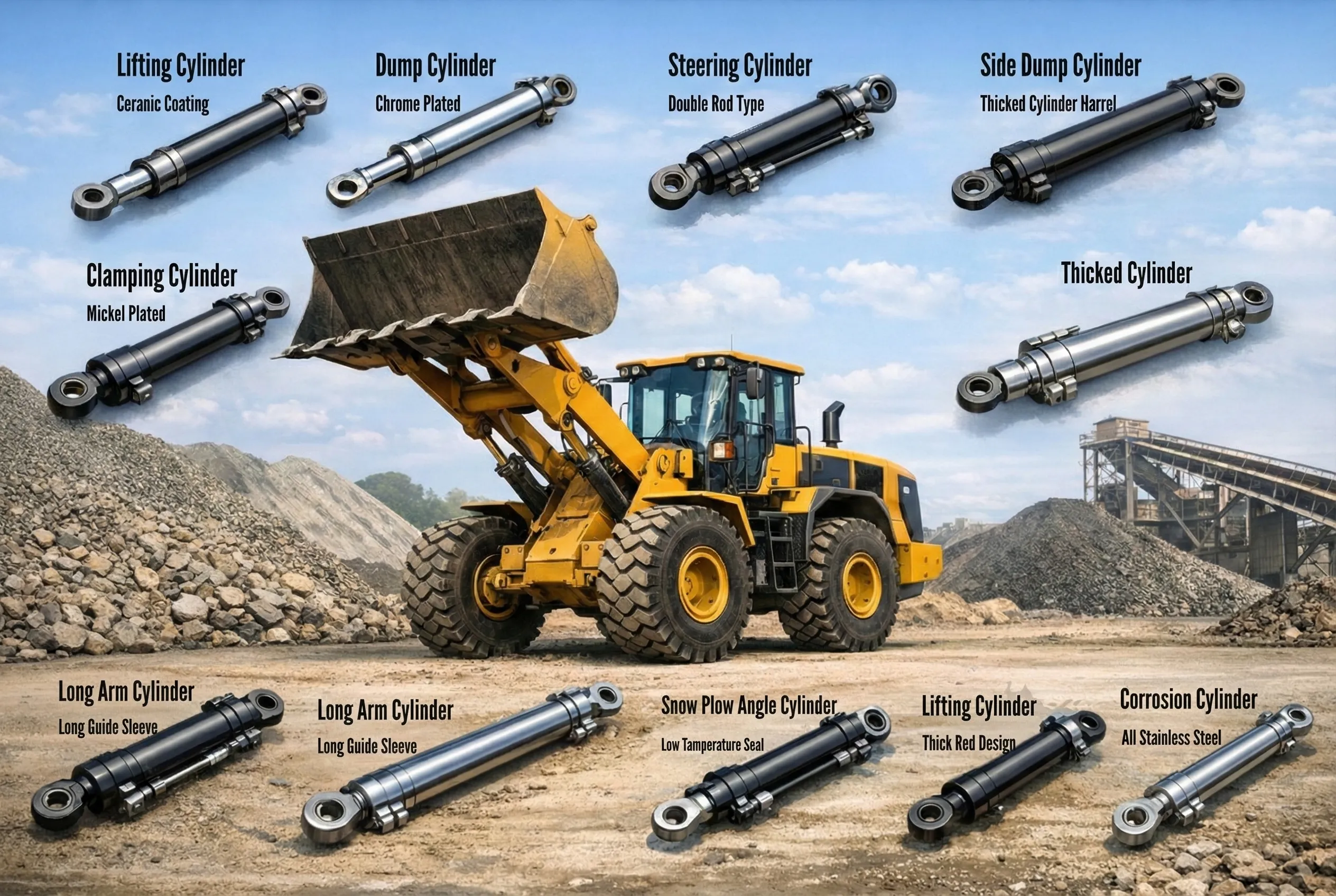
Comprehensive Technical Specifications
True reliability in high-risk material handling requires total engineering transparency. The following data matrix details the exact material science, physical constraints, and highly specialized configurations of our premium clamping actuator. These parameters are precisely calibrated to surpass the brutal demands of heavy forestry operations and intense recycling environments.
| Engineering Parameter | Material Data & System Configuration |
|---|---|
| Target Industrial Sector | Engineering Machinery / Forestry / Recycling |
| Primary Equipment Type | Wheel Loader / Material Handler |
| Subsystem Application | Log Grapple / Wood Grabber / Pipe Handler |
| Actuator Designation | Clamping Hydraulic Cylinder |
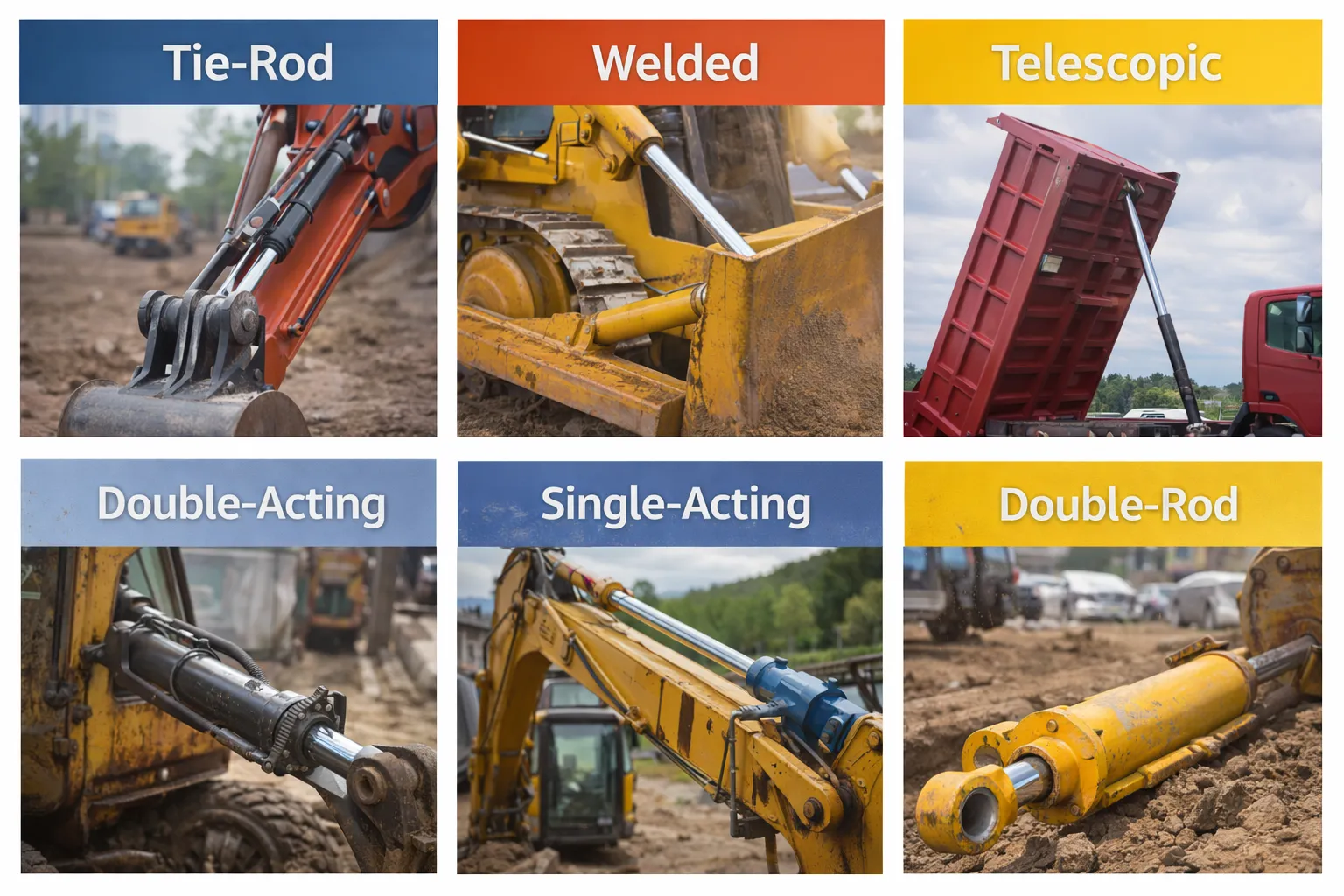
| Kinematic Action Mode | Double acting hydraulic cylinder |
| Internal Architecture | High-Pressure Piston Design |
| Manufacturing Construct | Robotic Deep-Penetration Welded Assembly |
| Core Metallurgical System | 42CrMo Ultra-High Tensile Alloy Steel |
| Rod Surface Defense | Nickel Plated (Extreme Moisture Resistance) |
| Environmental Exposure | Severe Humid Environment / Corrosive Rain |
| Dynamic Work Characteristics | Continuous High Clamping Force / Shock Loading |
| Fatal Failure Mode Prevented | Seal Leakage leading to Load Drop |
| Critical Required Configuration | Integrated Oil Control Check Valve |
The Physics of Secure Load Handling: Actuation Principle
To comprehend why standard actuators fail to secure loads safely, one must analyze the complex fluid dynamics required for articulated clamping. The grapple arms demand immense crushing power to grip uneven logs, combined with a specialized hydraulic lock to maintain that grip. This unit functions as a heavy-duty double acting mechanism. The actuator is typically mounted horizontally or diagonally across the pivot points of the heavy steel grapple tines. When the loader operator commands the grapple to close, the primary hydraulic pump forces high-pressure fluid (frequently exceeding 350 bar or 5000 PSI) into the cap-end port of the cylinder.
This massive influx of pressurized oil acts upon the entire surface area of the internal hydraulic cylinder piston. The resulting mechanical force violently extends the ultra-hardened rod, pivoting the grapple arms inward to crush and grip the payload. The critical engineering challenge begins the exact moment the operator neutralizes the joystick. In a standard setup, the hydraulic pressure holding the grapple closed relies entirely on the integrity of the directional control valve located far away in the machine’s main body, and on the rubber seals on the piston itself. Over time, these seals inevitably suffer from microscopic wear. As tiny amounts of fluid slowly leak past the piston or bleed back through the control valve, the cylinder rod begins to retract marginally. This loss of clamping force causes the grapple to open slightly while driving, leading to highly dangerous load slippage.
We eliminate this fatal flaw by directly machining a heavy-duty pilot-operated check valve (PO check) into the base of the clamping hydraulic cylinder barrel. When the operator grips a load and stops the fluid flow, this mechanical valve snaps shut instantly. It traps the high-pressure fluid directly inside the cylinder chamber, creating an impenetrable hydraulic lock. The fluid simply cannot flow backward. Even if the loader’s main pump fails or a hydraulic hose violently bursts during transit, the PO check valve guarantees the grapple jaws remain locked under maximum crushing pressure until the operator actively sends pilot pressure to release the valve. This failsafe fluid dynamic architecture transforms a standard actuator into a certified, life-saving load retention system.
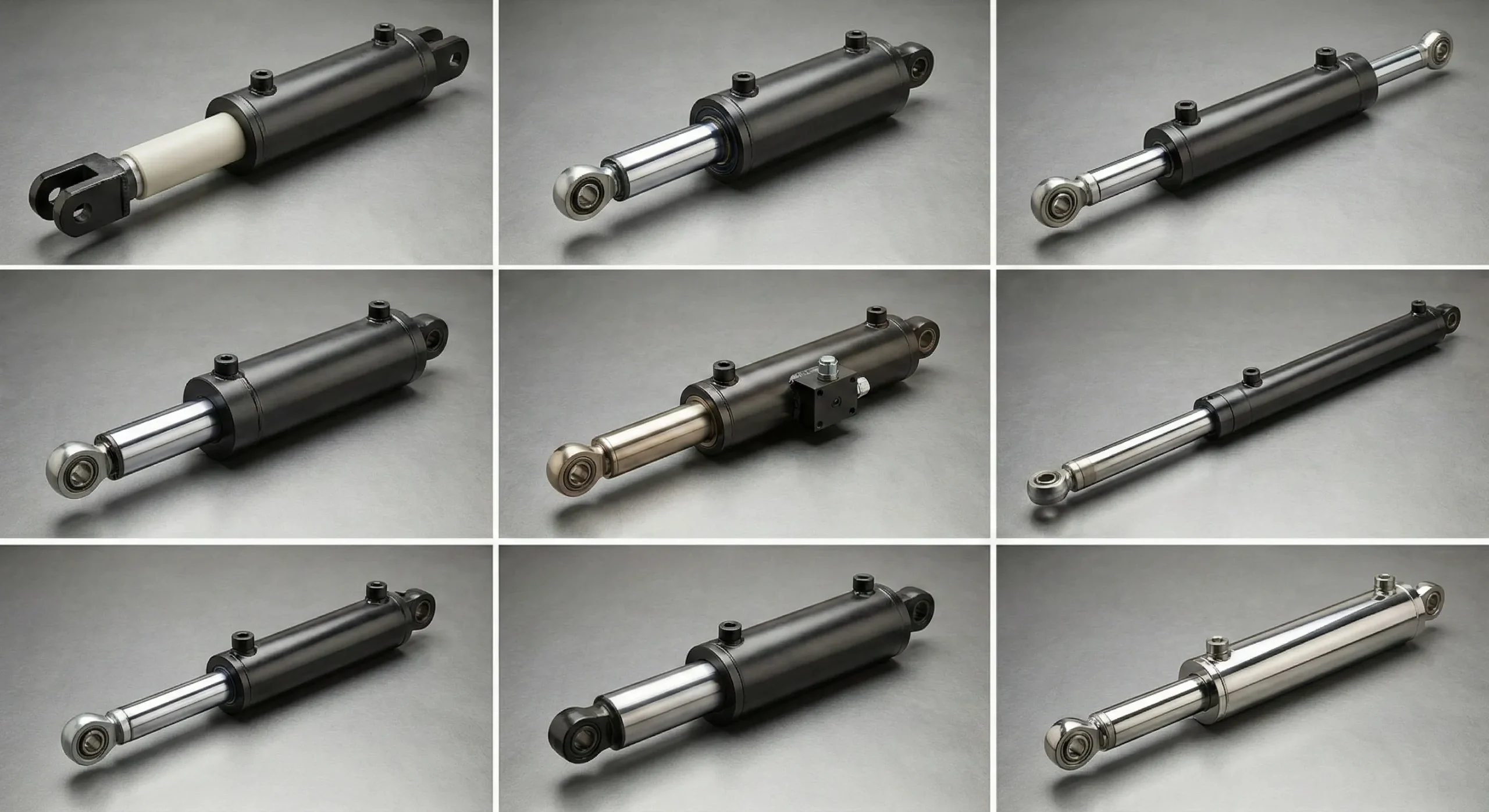
Seamless B2B Fleet Integration & Brand Compatibility
When a grapple cylinder suffers from seal leakage, the entire loader becomes an unacceptable safety liability and must be grounded immediately. For maintenance supervisors and procurement directors tasked with fixing hydraulic cylinders rapidly, sourcing replacement parts that require field modifications is a logistical nightmare. We painstakingly reverse-engineer our specialized clamping actuators to mirror the exact OEM dimensional footprints—matching pin-to-pin closed centers, heavy trunnion widths, mounting eyelet tolerances, and complex high-pressure port alignments perfectly.
Our fatigue-resistant welded assemblies serve as supreme aftermarket upgrades for specialty logging and recycling machines manufactured by the leading global brands deployed across South Korea, Japan, and Asia. These include exact structural fitments for loaders and material handlers built by Volvo CE, Doosan (Develon), Caterpillar (CAT), Komatsu, HD Hyundai Construction Equipment, and Liebherr. Upgrading your heavily utilized hydraulic rams to our 42CrMo locking design instantly restores certified load-holding capability to your fleet without requiring any risky chassis cutting or bracket welding by your field mechanics.
*Notice: The heavy equipment brand names, specialized machine models, and corporate trademarks mentioned above are utilized exclusively for the strict purpose of dimensional cross-referencing and part compatibility identification. We operate as a premier independent fluid power engineering firm and claim no formal affiliation, sponsorship, or endorsement from these original equipment manufacturers.
Five Pillars of Technical Engineering Superiority
Standard aftermarket replacements are designed to meet basic lifting needs, often lacking the structural enhancements required for violent grasping and severe moisture exposure. When you procure your fluid power components through our advanced engineering channels, you acquire five distinct mechanical superiorities that guarantee unparalleled safety and operational life:
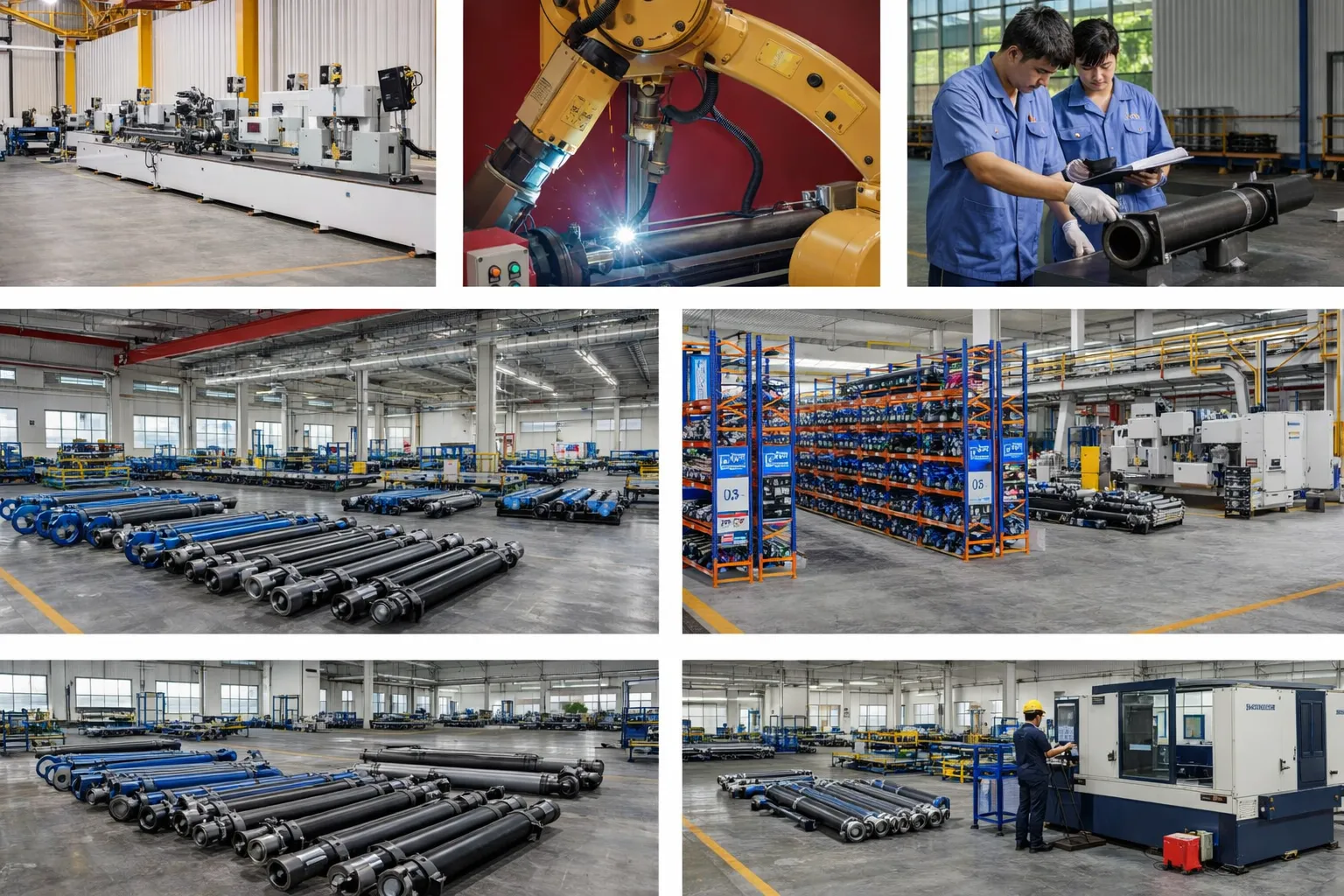
Precision Manufacturing & Absolute Quality Verification
Manufacturing a failsafe component for high-risk material handling requires total vertical integration over the entire production lifecycle. We do not assemble outsourced kits; we execute full-process autonomous manufacturing. Our quality protocol begins with exact metallurgical verification using optical emission spectrometry to certify the chemistry of every batch of 42CrMo alloy steel. The internal cylinder bores are then precision-machined utilizing advanced skiving and roller burnishing technology. This intense cold-working compresses the metal grain, resulting in an internal mirror finish (Ra 0.2 to 0.4) that practically eliminates primary hydraulic cylinder piston seal friction, ensuring smooth action and long-lasting pressure retention.
Recognizing that structural joints are the primary failure point under heavy torsional loads, all robotic welds undergo rigorous ultrasonic non-destructive testing (NDT) to verify absolute internal joint integrity beneath the surface. Furthermore, the delicate assembly of the PO check valves and internal piston seals is executed strictly within pressurized, climate-controlled, dust-free cleanrooms. This prevents any microscopic particulate from entering the valving, which could hold the valve open and cause fatal pressure loss.
Most critically, we flatly reject the inadequate industry standard of random batch sampling. We enforce a mandatory 100% factory hydrostatic holding test protocol. Every single completed clamping unit is mounted to a computerized diagnostic bench. The cylinder is pressured to 1.5 times its maximum working limit, the valve is locked, and the unit must hold that exact pressure without dropping a single PSI over an extended holding period. We strictly verify absolute zero fluid bypass before stamping it with a unique traceability serial number. This exhaustive validation guarantees performance that justifies the optimal hydraulic cylinder price.
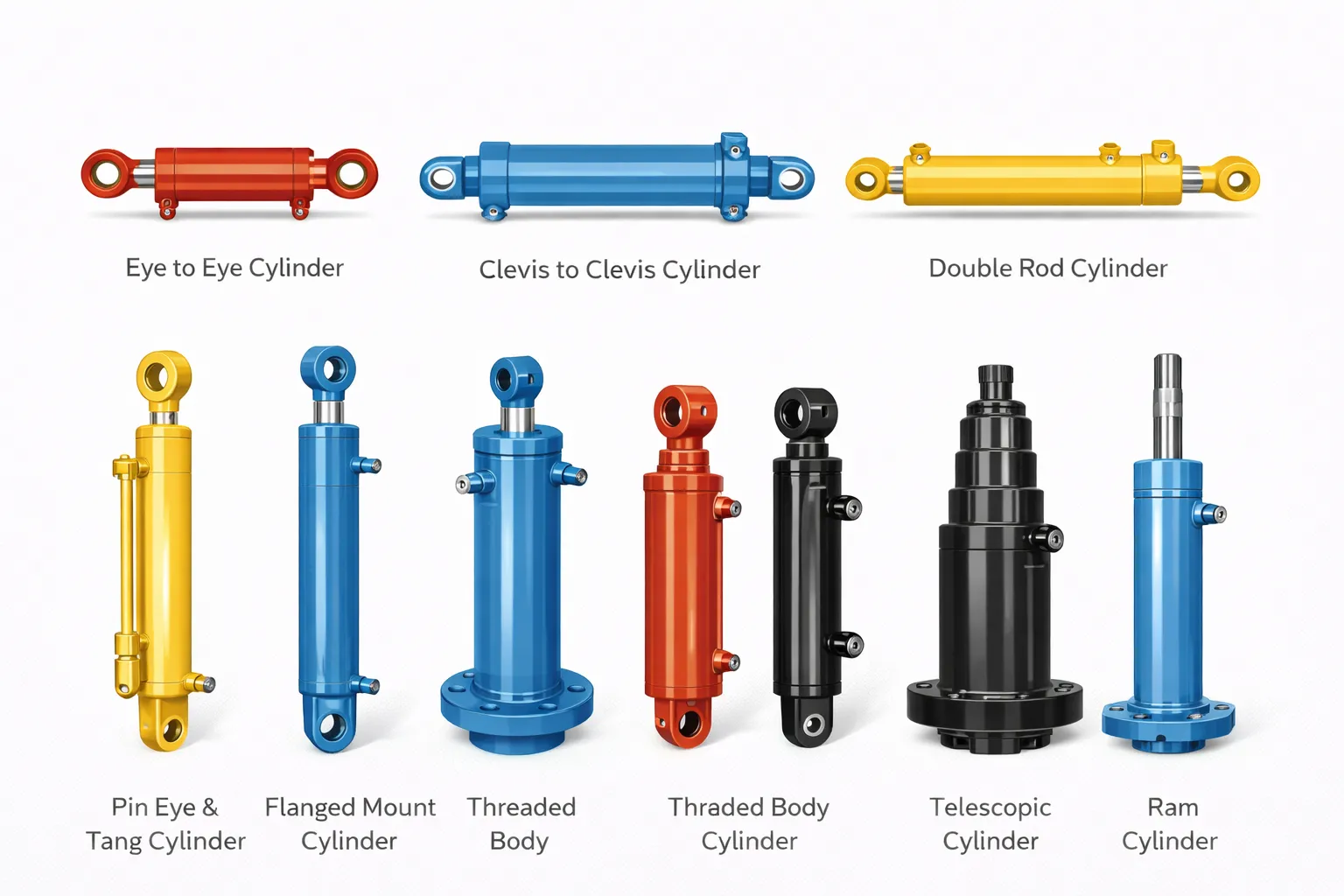
Expansive Cross-Industry Application Scenarios
While originally architected to guarantee safety in massive log grapples, the unparalleled load-holding capability and rust resistance of our clamping technology make it the actuator of choice across a vast array of severe-duty material handling sectors.
Forestry & Logging Operations
Serving as the core safety mechanism on wheel loader log grapples and timber forwarders operating deep in high-humidity tropical or rainy environments.
Oil & Gas Pipe Handling
Ensuring absolute load security and preventing catastrophic pipe drops for heavy material handlers moving massive steel piping in coastal port facilities.
Recycling & Scrap Metal
Providing immense, locked-in crushing force for multi-tine grapples picking up jagged, heavy, and irregularly shaped scrap metal and compacted car bodies.
Biomass & New Energy
Maintaining secure high clamping force on specialized attachments handling massive, loose bundles of damp wood chips, bamboo, and agricultural biomass.
Heavy Demolition
Empowering heavy sorting grapples attached to large excavators to safely tear down, hold, and transport massive slabs of reinforced concrete.
Specialty Attachments
Custom-engineering high-security fluid power solutions for heavy industrial forklifts handling large paper rolls or delicate cylindrical payloads where pressure loss causes damage.
Comparative Analysis: Standard Commercial vs. High-Performance Clamping Actuators
Astute procurement decisions in fleet management must focus strictly on risk mitigation and total cost of ownership. The comparative matrix below highlights exactly why upgrading to our highly engineered clamping hydraulic cylinder yields a massive operational advantage by drastically increasing safety and eliminating downtime.
| Critical Performance Metric | Basic Market Cylinder | Our Premium Clamping Cylinder |
|---|---|---|
| Load Security System | None (Relies entirely on main control valve spool) | Integrated PO Check Valve (Physically locks fluid inside) |
| Structural Metallurgy | Basic 45# Carbon Steel (Prone to bending under side loads) | Premium 42CrMo Alloy (Extreme rigidity and twisting resistance) |
| Corrosion Defense (Humidity) | Standard Chrome (Micro-cracks allow moisture to cause rust) | Electroless Nickel + Hard Chrome (Absolute moisture barrier) |
| Continuous Holding Pressure | Basic NBR rubber seals (Flattens and leaks under long holding) | Anti-extrusion Polyurethane Matrix (Zero pressure decay) |
| Drop Hazard Risk Level | High (Susceptible to hose bursts and bouncing leaks) | Eliminated (Valve mechanically prevents jaw opening) |
Verified B2B Global Success Stories
Our advanced hydraulic cylinder components are fiercely trusted by major forestry conglomerates, port authorities, and heavy recycling firms across East Asia to ensure absolute workplace safety. Review these five verified deployment scenarios detailing how our fluid power engineering resolved chronic load-dropping issues.
Case 1: Eradicating Load Drops in South Korean Forestry
Location & Time: Gangwon-do, South Korea (November 2024)
Client & Equipment: Major commercial logging operation utilizing Volvo wheel loaders equipped with heavy timber grapples.
The Challenge: When transporting heavy bundles of wet logs over deeply rutted mountain roads, the standard grapple cylinders suffered internal seal leakage. The bouncing caused the jaws to slowly open, resulting in highly dangerous log drops.
How They Found Us: The safety manager specifically searched organic listings for heavy-duty manufacturers to stop the drops, focusing on fixing hydraulic cylinders permanently.
The Solution & Result: We deployed our 42CrMo models equipped with integrated PO check valves. The valves mechanically locked the fluid, completely solving the leakage. The loaders have run for over a year with zero dropped payloads.
“The check valve design is flawless. The grapple bites down and absolutely refuses to let go, no matter how much the machine bounces. Our site safety has improved immensely.” — Mr. Kim Seung-ho, Safety Operations Director
Case 2: Defeating Saltwater Rust in Japanese Ports
Location & Time: Yokohama Port, Japan (Neighboring Market, January 2025)
Client & Equipment: Port logistics firm running heavy Doosan material handlers moving large diameter steel pipes.
The Challenge: The humid, salty oceanic environment was rapidly oxidizing the standard chrome cylinder rods on their pipe clamps. The rust ripped through the primary seals, causing catastrophic pressure loss and halting loading operations.
How They Found Us: Discovered our advanced metallurgical treatments while researching solutions to maintain port equipment efficiency.
The Solution & Result: We upgraded their fleet to our nickel-plated rod technology. The pore-free nickel entirely blocked the salty humidity. The rods remain factory-smooth after 14 months, tripling their maintenance lifecycle.
“Standard chrome does not survive here. Your nickel-plated rods have completely stopped the rust issue. We are no longer replacing blown seals every quarter.” — Hiroshi Watanabe, Maintenance Lead
Case 3: Defeating Bending Forces in Vietnamese Rubber Clearing
Location & Time: Binh Phuoc Province, Vietnam (August 2025)
Client & Equipment: Agricultural contractor utilizing Komatsu loaders with heavy root grapples to clear old rubber plantations.
The Challenge: Yanking massive, irregular root balls out of the ground exerted immense lateral twisting forces on the grapple. Standard 45 carbon steel cylinder rods were bending and snapping near the eyelets.
How They Found Us: Reached out to us after viewing our heavy-duty B2B specifications to order stronger hydraulic parts.
The Solution & Result: We manufactured exact replacement actuators forged entirely from 42CrMo alloy steel. The immense tensile strength effortlessly absorbed the twisting forces. Zero rods have bent since the upgrade.
“The standard factory cylinders were too weak for this brutal work. Your 42CrMo steel design is incredibly rigid; it handles the worst twisting loads without flinching.” — Tran H., Operations Manager
Case 4: High Holding Power in Indonesian Paper Mills
Location & Time: Sumatra, Indonesia (December 2025)
Client & Equipment: Massive pulp and paper facility running CAT wheel loaders handling huge, damp paper rolls.
The Challenge: The humid environment caused severe machine issues, but more critically, the grapple clamps were slowly losing pressure during transport, causing the heavy paper rolls to slip and suffer costly damage.
How They Found Us: Contacted our technical team via the website while sourcing solutions for complete hydraulic cylinder repair upgrades.
The Solution & Result: We supplied units with our anti-extrusion polyurethane seal matrix and PO check valves. The cylinders locked the clamping pressure perfectly, ensuring zero pressure decay and eliminating product damage.
“Your valves hold the pressure absolutely rock solid. The clamps do not loosen a single millimeter during transit anymore. This upgrade saved us thousands in damaged product.” — Budi S., Facility Director
Case 5: Rapid Supply Chain Rescue for Malaysian Biomass Handling
Location & Time: Johor, Malaysia (February 2026)
Client & Equipment: Biomass energy plant operating SDLG loaders to move massive, loose bundles of palm fronds.
The Challenge: A blown factory cylinder grounded their primary feeding loader. Local dealers quoted outrageous prices and long lead times for a heavy-duty replacement, threatening to halt the plant’s fuel supply.
How They Found Us: Reached out after finding our highly competitive hydraulic cylinder price models online.
The Solution & Result: Using their provided dimensions, we manufactured and air-freighted a superior PO-valve equipped cylinder in under 14 days, keeping the biomass plant fully operational.
“Incredible turnaround time without sacrificing high-end safety features. The dimensional fit was exact, and the pricing was excellent for such a specialized part.” — Lee M., Procurement Lead
Frequently Asked Questions
We believe in complete technical transparency when engaging with fleet maintenance engineers and procurement directors. Review our most frequently asked logistical and engineering questions below.
1. How exactly does the pilot-operated check valve prevent load drops?
2. Why is Nickel plating superior to standard Chrome in humid environments?
3. Why upgrade to 42CrMo steel instead of standard 45# carbon steel?
4. Can these act as direct drop-in replacements for my entire mixed fleet?
5. Do you supply separate hydraulic cylinder components for maintenance shop rebuilds?
6. How do you guarantee the structural quality and zero-leak performance before shipping?
7. How do I initiate a technical pricing proposal for my fleet?
Eradicate Dropped Loads & Secure Your Fleet Today
Stop risking severe workplace accidents, damaged product, and thousands of dollars in downtime due to substandard aftermarket cylinders that leak and rust. Partner with a true fluid power engineering expert. Whether you require a specialized dimensional drawing, a single replacement actuator, or bulk contract pricing to upgrade an entire material handling fleet, our technical specialists are ready to architect your solution.
Contact Our Engineering Division
We guarantee a deeply technical, comprehensive response to all global B2B inquiries within 24 hours.
Editor: Cxm


























