Furrow Depth Control Hydraulic Cylinder for Peanut Planters
Dust-resistant, double acting welded cylinder engineered for precise furrow depth regulation in peanut seeding operations across Asia and beyond.
When Furrow Depth Goes Wrong, the Whole Crop Pays the Price
Picture a peanut field in late April. The soil has been prepared, the planter is loaded with seed, and the tractor pulls forward at a steady pace. Everything looks right from the operator seat. But three weeks later, germination is patchy. Some rows sprout thick and even. Others show gaps where seeds were buried too deep to emerge, or sit so close to the surface that birds and wind took them before they could root.
Nine times out of ten, the culprit is not bad seed or poor soil preparation. It is inconsistent furrow depth caused by a worn or undersized hydraulic cylinder on the planter’s opener assembly. The furrow depth control cylinder is a small component, easy to overlook, but it carries an outsized responsibility: holding the opener disc or shank at a precise depth as the machine travels over uneven terrain. When this cylinder cannot maintain stable pressure or drifts due to internal seal wear, the opener bounces up and down by centimeters that translate directly into lost yield.
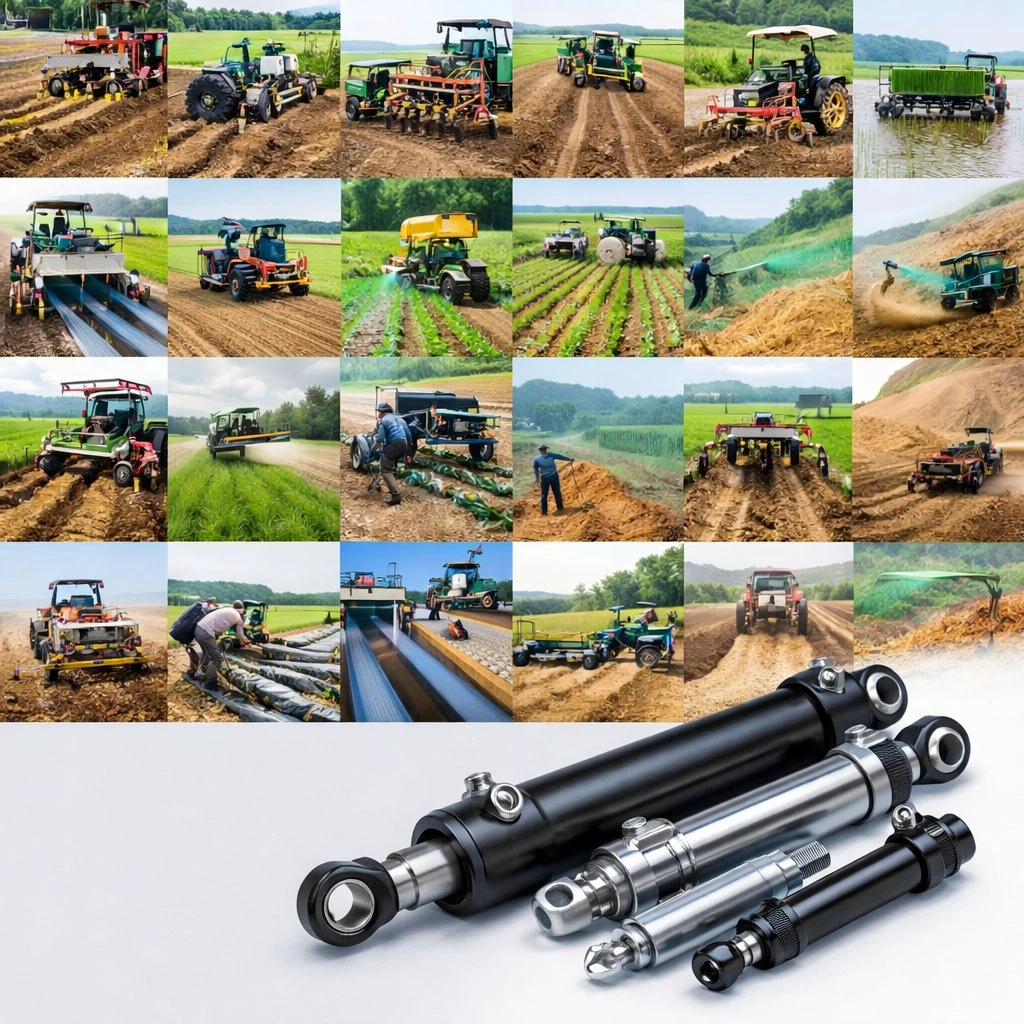
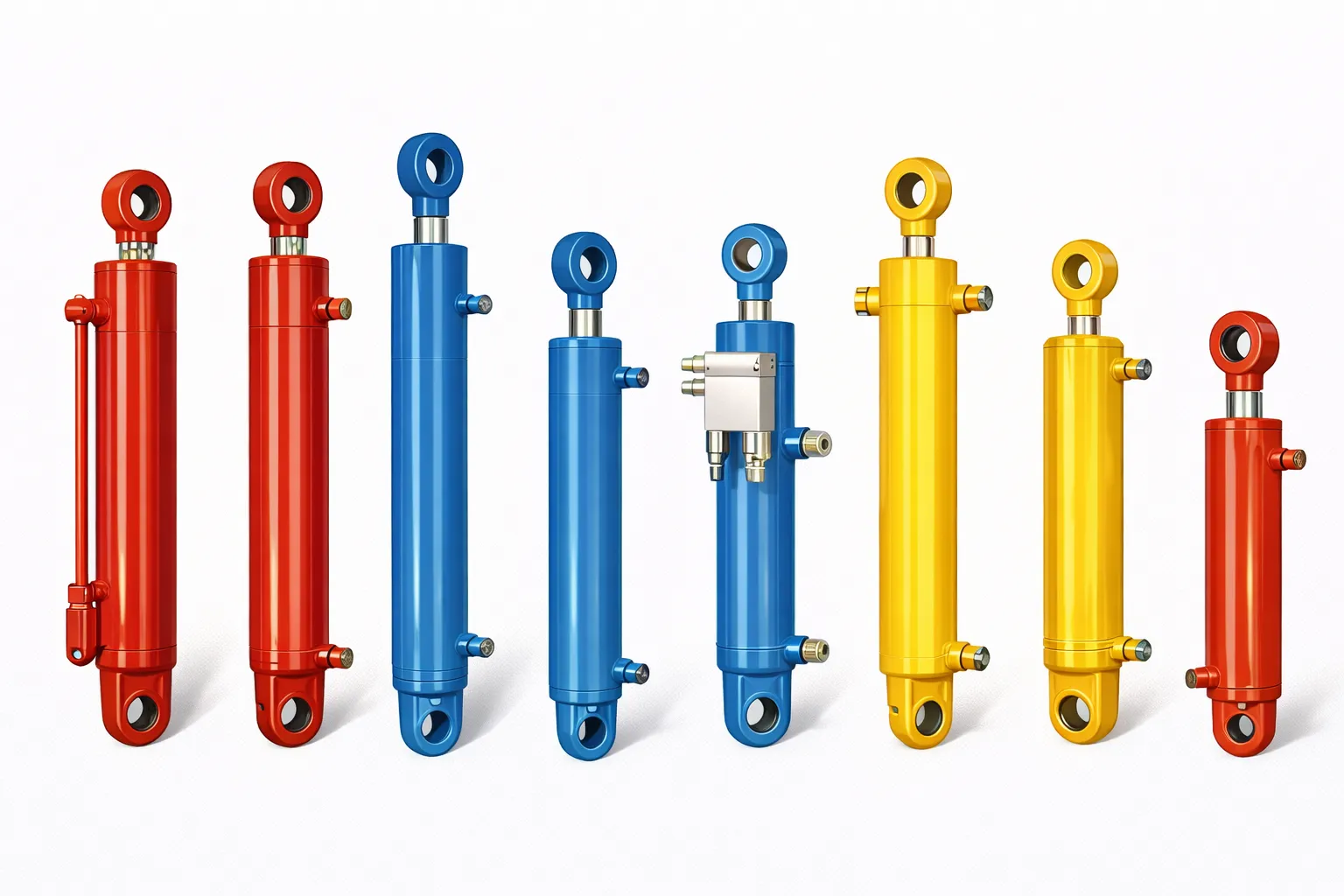
We designed this hydraulic cylinder for peanut planter applications from the ground up around one goal, keeping furrow depth locked within a tight tolerance no matter how rough the field surface gets. It is a compact, welded-body, double acting hydraulic cylinder built from carbon steel with a hard chrome-plated piston rod and a dedicated dust wiper seal that addresses the number one failure mode in this application: abrasive soil particles grinding through the rod seal and causing slow leaks that worsen with every pass across the field.
Whether you are an equipment OEM building planters for the Korean or Southeast Asian market, a farm cooperative looking for reliable aftermarket replacement parts, or an agricultural dealer sourcing hydraulic cylinder components for your service inventory, this page covers everything you need to evaluate our furrow depth cylinders against your requirements.
Six Engineering Advantages Built for Dusty Field Reality
Peanut planting happens in sandy, loose, and often dusty soils. A cylinder designed for clean workshop conditions will not last in this environment. Here is what sets our furrow depth control cylinder apart from generic catalog alternatives.
Dual-Stage Dust Exclusion Seal
Standard agricultural cylinders typically use a single wiper seal at the rod gland. In sandy peanut field conditions, fine particles bypass this single barrier within a few hundred hours. Our design adds a secondary polyurethane dust wiper ring positioned ahead of the primary rod seal, creating a two-stage barrier. Particles that slip past the outer wiper are caught by the inner seal before they reach the pressurized zone. This arrangement extends rod seal life by 2 to 3 times compared to single-wiper designs, directly addressing the most common failure mode in furrow depth cylinders: seal wear from abrasive ingress.
High-Cycle Fatigue Resistance
A furrow depth cylinder on a peanut planter does not simply extend and hold. As the machine moves across the field, the opener constantly reacts to changes in soil hardness and surface undulation. The cylinder absorbs these micro-shocks as rapid pressure spikes that stress the barrel, welds, and piston. Our welded joints undergo a controlled stress-relief process after welding, and the barrel wall thickness is calculated with a fatigue safety factor that accounts for at least 500,000 micro-load cycles per season. This prevents the hairline weld cracks that cause slow external leaks on cheaper cylinders after one or two planting seasons.
Precision Bore Honing for Holding Stability
Furrow depth control depends on the cylinder’s ability to hold a set position under varying external load. Internal leakage past the piston seal causes the rod to creep, which translates into furrow depth drift during planting runs. Our bore is honed to Ra 0.2 or better, reducing the micro-channels that allow oil to seep past the piston seal. Field measurements on our cylinders show holding drift of less than 0.3 mm over a 10-minute static hold test at rated working pressure, which is well within acceptable tolerance for consistent seed placement depth.
Chrome Rod with Micro-Polished Finish
The piston rod on our small bore hydraulic cylinder receives hard chrome plating of 20 micrometers minimum, followed by a micro-polishing step that brings the rod surface to a mirror finish. This is not cosmetic. A smoother rod surface creates better contact with the seal lip, which improves both sealing performance and seal longevity. The chrome layer also provides excellent resistance to scratching from soil particles that inevitably contact the exposed rod section during field operation. For buyers operating in coastal or high-humidity zones, we offer an optional nickel undercoat beneath the chrome for enhanced corrosion protection.
Compact Welded Body for Tight Planter Frames
Peanut planter opener assemblies leave very little room for bulky hydraulic components. Our welded hydraulic cylinder for agriculture eliminates external tie rods and through-bolts, producing a body profile that is 12 to 18 mm narrower than equivalent tie-rod designs. This smaller envelope fits comfortably within the cramped spaces around opener discs, depth wheels, and seed tubes without requiring frame modifications. The one-piece welded barrel also adds torsional stiffness, reducing barrel flex under dynamic side loads from soil contact.
Optimized Port Configuration for Field Servicing
Connecting and disconnecting hydraulic hoses on a planter should be quick and tool-friendly, even with gloves on and soil on your hands. Our port bosses are positioned and angled to provide clear wrench access without removing adjacent components. We machine every port thread to BSP or NPT standard with a lead-in chamfer that protects O-rings during assembly. Ports can be specified in side-mount, end-mount, or angled configurations to match your existing hose routing, eliminating the need for extra adapters or elbows that add leak points.
Technical Specifications
Every parameter listed below can be adjusted to match your specific planter model and field requirements. These ranges represent our standard production capability for furrow depth control cylinders. If your application falls outside any listed range, contact our engineering team to discuss a tailored solution.
| Specification | Available Range / Options |
|---|---|
| Bore Diameter | 30 mm – 80 mm |
| Rod Diameter | 16 mm – 45 mm |
| Stroke Length | 50 mm – 300 mm |
| Working Pressure | Up to 16 MPa (2,320 PSI) |
| Burst Pressure | 48 MPa (6,960 PSI) |
| Action Type | Double Acting |
| Cylinder Structure | Compact Welded Piston Cylinder |
| Body Material | Carbon Steel (S45C / AISI 1045) |
| Piston Rod Surface | Hard Chrome Plated, 20+ micron |
| External Finish | Black Oxide / Epoxy Paint / Powder Coat |
| Piston Seal | Polyurethane (PU) Compact Seal |
| Rod Seal | NBR + PTFE Back-up Ring |
| Dust Seal | Polyurethane Dual-Stage Wiper |
| Mounting Options | Clevis, Pin Eye, Trunnion, Foot Mount, Custom Bracket |
| Port Thread | BSP / NPT / Metric (per request) |
| Operating Temperature | -25 C to +80 C |
| Hydraulic Fluid | ISO VG 32 / VG 46 Mineral Oil |
| Environment Rating | Dusty / Sandy Field Conditions |
How a Furrow Depth Control Cylinder Works on a Peanut Planter
Understanding how this agricultural hydraulic cylinder operates within the planter system helps buyers select the right specifications and troubleshoot issues in the field. Here is the functional sequence from start to finish.
A peanut planter’s opener assembly consists of a disc or chisel-type shank mounted to the planter toolbar through a parallel linkage arm. The furrow depth control cylinder connects between the toolbar frame and the linkage arm, typically at a pin or clevis mount point. This cylinder governs how far down the opener penetrates into the soil.
When the operator sets the desired planting depth using the cabin controls, pressurized hydraulic oil flows into the cylinder’s rod-side port. The oil pushes the piston forward, extending the rod, which in turn pushes the linkage arm downward and drives the opener deeper into the ground. To raise the opener or reduce depth, oil enters through the bore-side port, retracting the piston rod and pulling the linkage arm upward. Because this is a double acting design, the operator has full control in both directions without relying on spring return or gravity.
During planting, the cylinder does not remain static. As the tractor moves forward, field surface irregularities, buried stones, compacted layers, and elevation changes constantly push back against the opener. The cylinder must absorb these reaction forces while maintaining a consistent rod position. A properly functioning depth cylinder does this through tight internal sealing: the piston seal prevents oil from migrating across the piston, which would allow the rod to drift. Our precision-honed bore and matched piston seal combination keeps internal leakage below 0.5 ml per minute at rated pressure, ensuring the opener stays locked at the set depth even over rough ground.
The most demanding part of the cycle occurs when the planter hits a patch of hard or compacted soil. The sudden resistance spike sends a pressure pulse through the cylinder that can exceed normal working pressure by 30 to 50 percent for a fraction of a second. Our barrel wall thickness and weld design are calculated to handle these transient peaks safely, preventing the micro-fatigue cracking that causes barrel leaks on thinner-walled cylinders after extended use.
Dust Protection and Seal Engineering for Sandy Soil Conditions
Peanuts are typically grown in light, sandy, well-drained soils. These soil types generate significant airborne dust during tillage and planting operations. For any exposed hydraulic cylinder mounted close to the ground on a planter frame, this dust environment is the single biggest threat to service life.
Fine sand and soil particles settle on the exposed section of the piston rod between strokes. When the rod retracts, these particles are dragged past the wiper seal and into the gland area. If they reach the primary rod seal, they act like abrasive grinding paste, cutting microscopic grooves into both the seal lip and the chrome rod surface. Over time, these grooves become leak paths. This is why “seal wear” is listed as the number one failure mode for furrow depth cylinders in peanut planting applications.
Our approach addresses this problem at three levels:
Level 1 – External Dust Wiper: A heavy-duty polyurethane scraper ring mounted at the outermost position of the rod gland. This ring has a sharp lip profile designed to shear dried soil and caked particles off the rod surface as it retracts. Unlike softer rubber wipers that deform and let particles pass, our PU wiper maintains its edge hardness through temperature swings from below freezing to over 40 C.
Level 2 – Internal Buffer Seal: Behind the external wiper, a secondary seal ring creates a low-pressure buffer chamber. Any fine particles that get past the outer wiper are trapped in this chamber and flushed out with a small amount of oil that naturally migrates past the rod seal during operation. This self-cleaning action prevents particle accumulation against the primary seal face.
Level 3 – Chrome Rod Surface Integrity: The 20-micron hard chrome layer on the piston rod is micro-polished to reduce surface roughness. A smoother rod gives particles fewer places to lodge and provides a cleaner sealing surface for both the wiper and the primary seal. The chrome hardness (minimum 850 HV) also means that particles which do contact the rod are far less likely to scratch through the plating than they would on an unplated or thin-chrome rod.
Together, these three layers of protection extend the service interval for rod seal replacement from the typical 1 to 2 seasons on standard cylinders to 4 to 5 seasons on our units, based on field data from customers in sandy soil regions across Korea and Southeast Asia.
Application Scenarios Beyond Peanut Planters
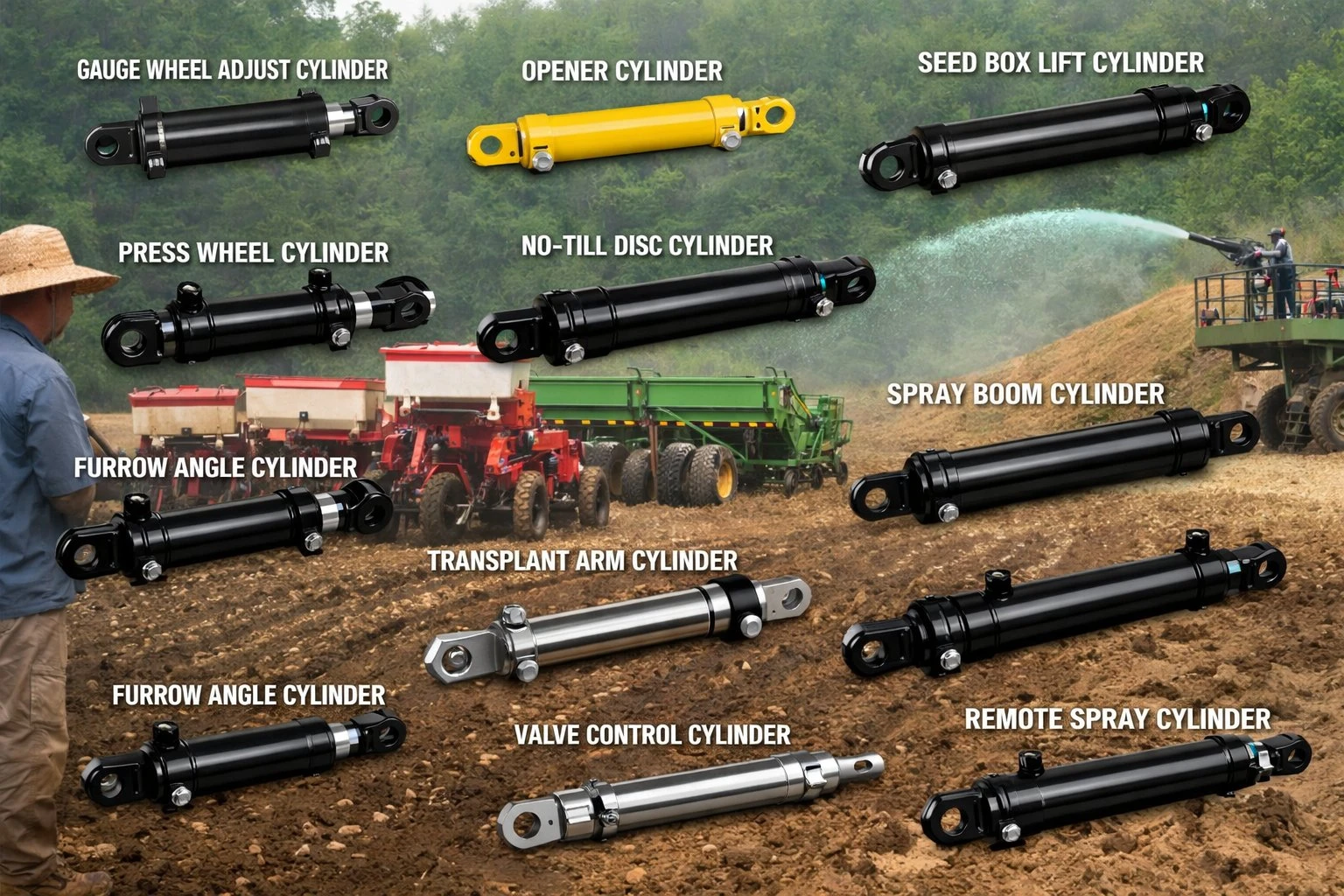
While peanut seeding machines are the primary application for this cylinder, the same dust-resistant, depth-holding design works across a broad range of hydraulic cylinders for agricultural machinery applications. Here are some of the most common use cases our customers have deployed these cylinders in.
Peanut Planter Furrow Openers
The core application. Multi-row peanut planters use individual depth cylinders on each opener unit, or a single master cylinder that sets depth for all units simultaneously via a mechanical linkage. Our cylinders fit both configurations with clevis, pin eye, or custom bracket mounting options to match specific planter frame geometries.
Grain and Corn Planter Depth Control
Corn, soybean, wheat, and sorghum planters face similar depth control challenges, especially in regions with sandy or loamy soils. The same bore, stroke, and seal specifications used for peanut planters adapt directly to grain planter opener assemblies. This hydraulic cylinder for planting equipment is sized to fit the compact spaces on precision planter frames without interfering with seed meters, closing wheels, or press wheel assemblies.
Fertilizer Injector Depth Regulation
Sub-surface liquid or granular fertilizer application systems use injection shanks that need precise depth control to place nutrients at the correct soil horizon. Our depth cylinders maintain consistent shank position through varying soil densities, ensuring fertilizer is injected where plant roots can access it rather than being placed too shallow or too deep.
Seed Drill Coulter Pressure
On seed drills with hydraulically adjustable coulter pressure, small piston cylinders regulate the downforce applied to each coulter disc. The cylinder holds a set pressure to maintain consistent soil penetration depth across the full working width. Our compact hydraulic cylinder for farming handles this application well due to its low breakaway pressure and smooth stroke travel.
Bed Shaping and Ridge Forming Equipment
Ridge tillers and bed shapers for vegetable and root crop production use hydraulic cylinders to set the working depth of the forming blades. Consistent ridge height depends on stable blade depth, which in turn depends on a cylinder that holds position without drift. The dust protection features of our cylinder make it particularly suitable for this application, where soil contact is constant and heavy.
Standard Planter Cylinder vs. Our Furrow Depth Control Cylinder
The differences that matter in this application are not about maximum pressure ratings or flashy features. They are about seal survival in dust, holding accuracy under dynamic loads, and how many seasons you get before a cylinder needs attention. Here is a direct comparison based on metrics relevant to real planting field conditions.
| Field-Relevant Metric | Standard Planter Cylinder | Our Furrow Depth Cylinder |
|---|---|---|
| Rod Seal Life in Sandy/Dusty Soil | 1 – 2 seasons | 4 – 5 seasons |
| Dust Wiper Configuration | Single rubber wiper | Dual-stage PU wiper + buffer seal |
| Depth Holding Drift (10 min static test) | 1.5 – 3 mm | Less than 0.3 mm |
| Bore Surface Finish (Ra) | 0.4 – 0.8 micrometers | 0.2 or finer |
| Chrome Plating Thickness | 10 – 15 micron | 20+ micron (nickel undercoat option) |
| Transient Pressure Spike Tolerance | 1.2x rated pressure | 3x rated pressure (burst tested) |
| Body Width (for narrow opener spacing) | Tie-rod, 10-15 mm wider | Welded body, minimum envelope |
| Maintenance Interval (sandy soil) | Every season / 300 hrs | Every 3-4 seasons / 1,500 hrs |
Manufacturing Process and Quality Assurance
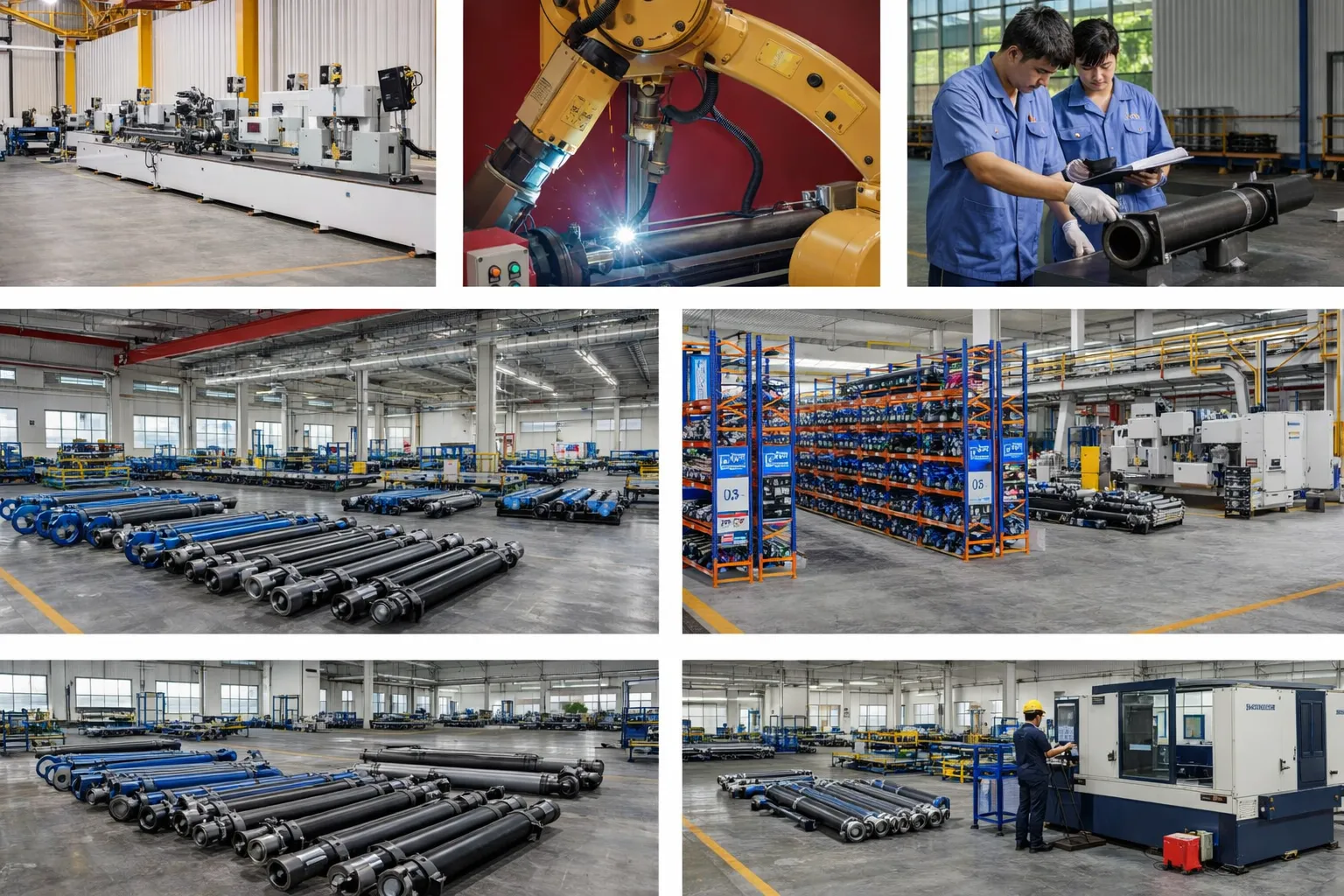
We are a vertically integrated hydraulic cylinder manufacturer that controls every production step in-house, from raw material inspection through final pressure testing. There are no outsourced sub-assemblies and no third-party welding shops involved. This matters because quality in a small agricultural cylinder comes down to details that are easy to miss if you do not own the entire process.
Raw Material Verification
Carbon steel tube and rod stock arrive with mill certificates. We verify chemical composition with a portable XRF spectrometer on every incoming batch before releasing material to the cutting area. Tubes that fall outside our specified carbon and manganese ranges are rejected and returned, regardless of what the mill cert says. This prevents heat-treatment inconsistencies that lead to premature barrel fatigue.
Precision Machining
Cylinder tubes are bored on CNC lathes, then honed on dedicated horizontal honing machines to achieve bore roundness within 0.01 mm and surface finish of Ra 0.2. Piston rods are turned, ground to h7 tolerance, and chrome plated before final micro-polishing. Pistons, gland caps, and end fittings are CNC machined from solid bar stock with tolerances held to plus or minus 0.02 mm.
Welding and Post-Weld Treatment
All barrel-to-cap welds are performed by qualified welders using MIG shielded arc welding. Weld quality is verified by visual inspection and magnetic particle testing on a statistical sampling basis. After welding, cylinders that require it go through a stress-relief heat treatment to remove residual stresses that would otherwise accelerate fatigue cracking in high-cycle applications like furrow depth control.
Assembly in Clean Conditions
Seal installation and cylinder assembly take place in a designated clean area with filtered air and lint-free work surfaces. Every internal component is washed in filtered hydraulic fluid before assembly to remove machining chips, metal fines, and any contamination that could damage seals during initial operation. Seal kits are opened at the point of installation, never stored loose on the assembly bench.
100% End-of-Line Testing
No cylinder leaves the factory without passing a full functional test. Each unit is pressurized to 1.5 times rated working pressure and held for a minimum of three minutes. We inspect for external leaks at all ports, welds, and the rod seal. Stroke smoothness is verified by cycling the cylinder at rated pressure at least five times. Test results are recorded digitally and linked to a unique serial number stamped on every cylinder body, providing full traceability back to raw material batch, production date, and operator for a minimum of ten years.
Certifications and Documentation
Our production facility is ISO 9001 certified. We can supply material test reports, dimensional inspection reports, and pressure test certificates with every shipment as standard. For OEM customers selling into CE-regulated markets, we provide documentation that supports their machine-level CE declaration.
Field-Proven Results: Customer Case Studies
Numbers in a catalog are one thing. Performance in actual field conditions is what counts. Here are five real projects where our furrow depth cylinders delivered measurable improvements.
Gimje City, Jeollabuk-do, South Korea
Customer Type: Farming cooperative managing 850 hectares of peanut and sweet potato production
Equipment: 12 Korean-manufactured 4-row peanut planters with hydraulic depth control
How They Found Us: The cooperative’s machinery manager searched Google for “peanut planter depth cylinder replacement Korea” in January 2025 after three machines required mid-season cylinder swaps during the 2024 season.
Results: All 12 machines were fitted with our cylinders before the April 2025 planting season. Through the entire spring campaign, not a single cylinder required attention. The cooperative measured planting depth variation across sample rows and found it dropped from an average 8 mm deviation to under 2 mm. Their equipment manager estimated that eliminating mid-season cylinder changes saved approximately 15 hours of downtime and avoided replanting costs on 6 hectares that would have had poor emergence from depth inconsistencies.
“I have been servicing planters for this co-op for eleven years. The OEM cylinders we were using needed new seals almost every year because of the sandy soil here. These new cylinders went through the entire 2025 season dry as a bone. I wish we had switched sooner.” – Mr. Jeon, Machinery Manager, July 2025
Andong City, Gyeongsangbuk-do, South Korea
Customer Type: Agricultural machinery dealership specializing in planting and tillage equipment
Equipment: Aftermarket cylinder inventory for multiple Korean and Japanese planter brands
How They Found Us: Referral from a dealer in Chungcheong Province who had ordered our row spacing cylinders. Initial inquiry received via email in March 2025.
Results: The dealer ordered a test batch of 20 depth cylinders in three size variants. After fitting them to customer machines for the 2025 season, the warranty claim rate on replaced cylinders dropped to zero compared to a historical average of 8% with their previous supplier. The dealer has since placed two repeat orders totaling over 100 units and listed our cylinders as their primary aftermarket replacement line.
“Warranty claims kill my margin. When farmers come back complaining about leaks after half a season, I eat the cost of replacement parts plus labor. Since switching to this supplier, I have not had a single comeback. That speaks for itself.” – Mr. Choi, Owner, August 2025
Chiba Prefecture, Japan
Customer Type: OEM manufacturer producing specialized peanut and root vegetable planting equipment
Equipment: New-production 2-row and 4-row peanut planters for the Japanese domestic market
How They Found Us: Their sourcing team contacted us after seeing our product catalog at the AGRITECHNICA Asia exhibition in Bangkok, November 2024. Sample evaluation began in December 2024.
Results: After a 90-day bench endurance test running 50,000 extend-retract cycles under simulated field load and dust exposure, our cylinders showed zero measurable internal leakage increase. The OEM approved our cylinder for series production use starting from their 2026 model year. Current order schedule is 300 units per year across two bore sizes.
“We specifically tested for seal degradation under dust contamination because that is the primary failure mode we see in our warranty data. After 50,000 cycles with dust injection, internal leakage was still within new-cylinder specification. That result gave us confidence to approve this as our production supply.” – Engineering Division, via written test report, March 2025
Tay Ninh Province, Vietnam
Customer Type: Large-scale peanut farm operating over 400 hectares in the southeastern region
Equipment: Chinese-manufactured multi-row peanut planters adapted for tropical conditions
How They Found Us: The farm’s procurement officer found our listing while browsing double acting hydraulic cylinder options online. First contact was through WhatsApp in August 2024.
Results: The farm replaced depth cylinders on eight planters before the October 2024 dry-season planting campaign. Vietnamese peanut soils in Tay Ninh are extremely sandy and fine-grained, causing original Chinese-made cylinders to leak within 150 to 200 hours. Our dual-wiper cylinders completed the full 2024-2025 season (approximately 600 hours) with no visible leakage. The farm placed a second order for spare cylinders and additional units for their corn planters.
“The sand here destroys cylinder seals faster than anywhere else I have worked. Our old cylinders lasted maybe two months. Yours went the whole season and still look fine. We already ordered extras for next year.” – Mr. Nguyen, Farm Operations Manager, February 2025
Gujarat State, India
Customer Type: Agricultural equipment importer and distributor serving peanut-growing regions in western India
Equipment: Aftermarket hydraulic parts for Indian-assembled and imported peanut planters
How They Found Us: Discovered our website through a Google search for “hydraulic cylinder manufacturer for planting machinery” in June 2024. After exchanging technical drawings, they placed a trial order of 50 units in September 2024.
Results: The distributor supplied our cylinders to farms across Junagadh and Amreli districts for the 2024 monsoon planting season. Gujarat’s laterite and sandy soils are notoriously abrasive. End users reported a 65% reduction in cylinder-related field breakdowns compared to locally sourced alternatives. The distributor has since increased quarterly orders to 150 units and expanded the product line to include our custom hydraulic cylinder options for tillage equipment.
“Gujarat is one of the biggest peanut regions in India, and every farmer here fights dust and sand problems with their machinery. Finding a cylinder that actually survives a full Kharif season in these conditions was a turning point for our parts business.” – Mr. Patel, Director of Procurement, January 2025
Field Troubleshooting Guide for Furrow Depth Cylinders
Even a well-built cylinder can encounter issues if system conditions are wrong. Use this quick-reference guide to diagnose and resolve the most common depth cylinder problems encountered during planting operations. Addressing these early prevents small issues from becoming costly mid-season failures.
| Symptom | Likely Cause | Recommended Action |
|---|---|---|
| Opener slowly sinks deeper during operation | Internal piston seal bypassing, allowing oil migration across piston | Check system pressure first. If pressure is correct, replace piston seal kit. Inspect bore surface for scoring. |
| Oil weeping at rod gland area | Rod seal wear from dust ingress or rod surface damage | Inspect rod chrome surface for scratches or pitting. Replace rod seal and dust wiper. If rod is damaged, rod resurfacing or replacement may be needed. |
| Cylinder extends/retracts slowly or unevenly | Restricted oil flow from clogged filter, kinked hose, or partially blocked port | Check hydraulic filter condition. Inspect hoses for kinks or collapse. Verify port fittings are fully open. |
| Jerky or stuttering rod movement | Air trapped in cylinder or supply line | Bleed air from the circuit by cycling the cylinder fully open and fully closed several times at low pressure. Check for suction-side leaks in pump lines. |
| Cylinder does not hold position when valve is closed | Control valve not seating properly, or internal cylinder seal failure | Test by disconnecting hoses and plugging ports. If cylinder holds with plugged ports, the problem is in the valve circuit, not the cylinder. |
If you encounter a problem not covered here, or if the above steps do not resolve the issue, our technical support team can assist with remote diagnostics. Send a short video of the symptom along with your cylinder serial number to get a hydraulic cylinder quote or request troubleshooting support through the same form.
Frequently Asked Questions
What bore size hydraulic cylinder is best for a peanut planter depth control?
How does a furrow depth control cylinder maintain consistent planting depth?
Can this cylinder replace the OEM depth cylinder on my existing peanut planter?
What causes hydraulic cylinder seals to wear out fast in sandy soil?
What is the typical lead time for custom peanut planter hydraulic cylinders?
How often should I inspect a depth control cylinder during planting season?
Do you deliver hydraulic cylinders to South Korea, Japan, and Southeast Asia?
Stop Losing Yield to Inconsistent Furrow Depth
Share your planter model, existing cylinder dimensions, or a quick photo. Our team will match the specifications and send you a detailed quotation within 48 hours. No commitment required.
Editor: Cxm