Premium Side Shift Cylinder for Motor Grader
Engineered to neutralize severe eccentric loads, our heavy-duty fluid power solutions guarantee absolute blade control, zero drift, and unparalleled longevity in the most punishing earthmoving environments.
Comprehensive Product Overview & Industrial Value
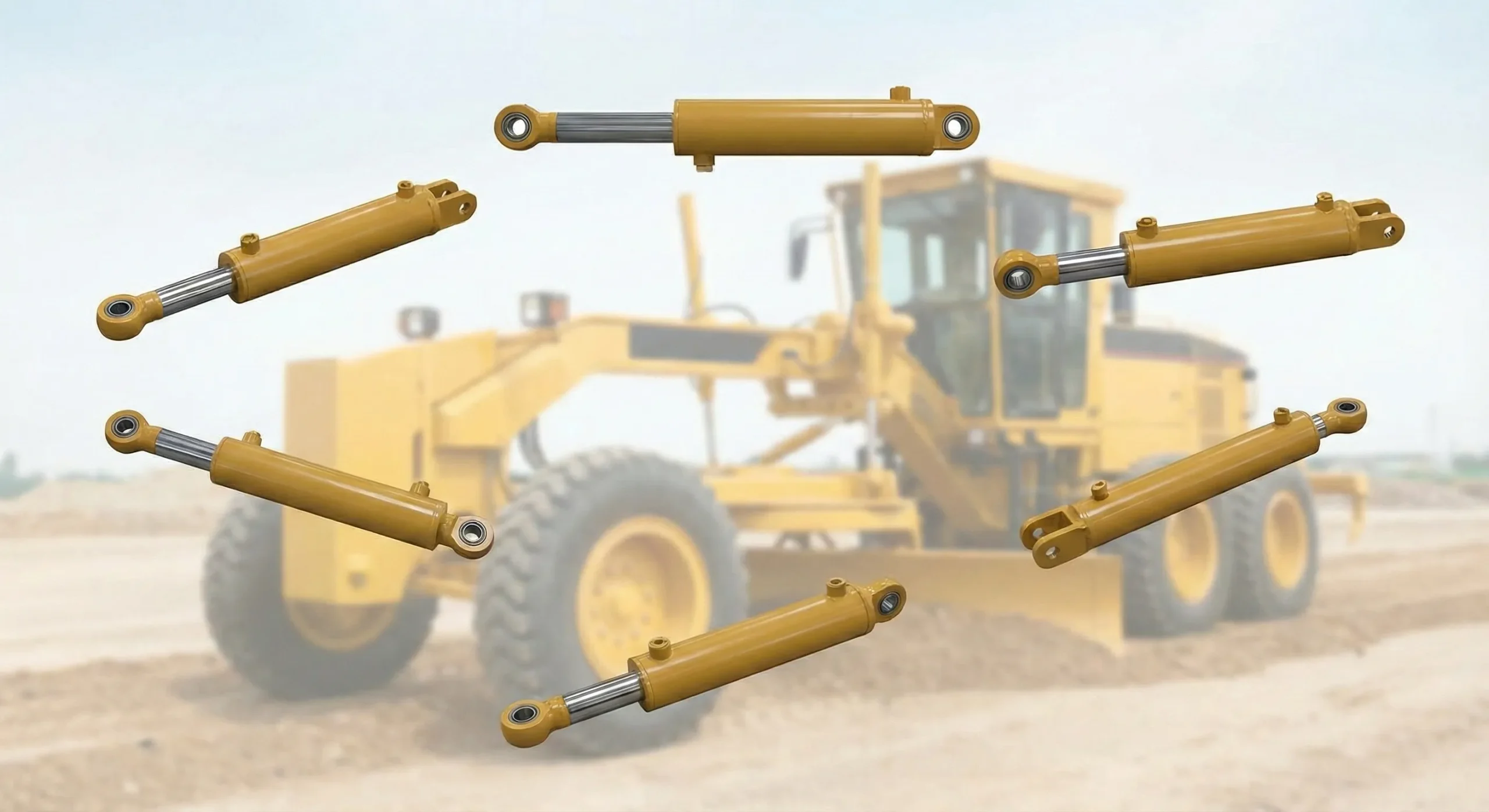
In the highly demanding realm of modern infrastructure development and highway construction, the motor grader stands as the ultimate instrument for achieving precise final surface grades. The absolute core of this machine’s extraordinary versatility is the blade side shift mechanism. This critical subsystem is entirely governed by a highly specialized side shift cylinder. It dictates the lateral movement of the moldboard, enabling operators to seamlessly extend the blade beyond the width of the machine’s tires. This capability makes it possible to execute complex ditching, bank sloping, and obstacle avoidance maneuvers while maintaining the grader’s center of gravity on stable ground.
However, operating primarily in dynamic, high-stress environments presents a monumental engineering challenge. A side shift hydraulic cylinder must constantly battle severe eccentric loads—off-center forces that attempt to bend and twist the internal components. When the grader blade strikes buried rocks or highly compacted soil, the radial stress transferred to the cylinder is immense. Recognizing these exact failure modes, we, as an industry-leading hydraulic cylinder manufacturer, have completely reimagined the structural architecture of this component. By integrating advanced 27SiMn alloy steel and heavily reinforced wide guide ring configurations, we have developed a premium product that vastly outlasts standard market offerings.
Equipment downtime in high-stakes civil engineering projects translates to staggering financial losses. This is particularly true in fast-paced construction markets such as South Korea, Japan, and the broader Asian region, where project deadlines are uncompromising. Therefore, our singular focus is on maximizing equipment uptime and ensuring absolute reliability in every single hydraulic stroke. Whether you are an OEM designing a next-generation grader fleet or a procurement manager sourcing durable hydraulic parts for extensive fleet maintenance, our cylinders provide an exceptional drop-in solution that elevates the overarching performance of the entire machine.
Detailed Technical Parameters
Precision fluid power engineering requires absolute transparency in technical specifications. The data table below outlines the foundational architectural and material parameters of our specialized lateral movement actuators. Every metric is meticulously calibrated to meet and exceed the rigorous operational demands of modern heavy-duty motor graders. We maintain the manufacturing flexibility to adapt these baseline specifications to accommodate unique chassis designs and custom mounting requirements.
| Engineering Parameter | Specification Details |
|---|---|
| Industry | Construction Machinery |
| Equipment Category | Motor Grader |
| Subsystem / Action | Scraper Blade Side Shift |
| Hydraulic Cylinder Name | Side Shift Cylinder |
| Action Mode | Double Acting Hydraulic Cylinder |
| Structure Type | Piston Style Architecture |
| Manufacturing Structure | Heavy-Duty Welded Construction |
| Material System | 27SiMn High-Yield Alloy Steel |
| Surface Treatment | Micro-Cracked Hard Chrome Plating |
| Environment Grade | Severe High Dust / Abrasive Conditions |
| Working Condition Feature | Eccentric Load / Continuous Angle Adjustment |
| Typical Failure Mode Prevented | Guide Wear & Internal Scoring |
| Recommended Configuration Point | Extra-Wide Guide Ring Integration |
Advanced Kinematics & Working Principle
To fully comprehend the extraordinary reliability of our products, one must examine the internal fluid dynamics and operational mechanics of the side shift mechanism. This actuator functions strictly as a double acting hydraulic cylinder. In this specific closed-loop configuration, high-pressure hydraulic fluid generated by the grader’s main hydrostatic pump is directed through a complex manifold of proportional control valves into either the cap end port or the rod end port of the cylinder barrel.
When the machine operator inputs a command to shift the moldboard outward, pressurized fluid rapidly fills the cap end chamber. This fluid acts against the total surface area of the internal hydraulic cylinder piston, converting hydraulic pressure into immense linear mechanical force. This action forcefully extends the rod, pushing the heavy blade assembly laterally. Conversely, to retract the blade, the directional valve redirects the pressurized oil into the rod end chamber. Here, the fluid pushes against the smaller annular area (the total piston area minus the cross-sectional area of the rod itself), pulling the blade back toward the machine’s centerline while simultaneously exhausting the oil from the cap end back into the hydraulic reservoir.
The defining challenge of this application is the dynamic resistance it encounters. Because graders slice through compacted earth, heavy gravel, and hidden subterranean roots, the blade generates massive and unequal resistance. This resistance does not push directly back against the rod in a straight line; rather, it creates a severe twisting lateral force. Our specialized side shift hydraulic cylinder is engineered with exceptionally tight machining tolerances and robust internal holding seals. This ensures that once the operator sets the specific blade angle, the trapped, incompressible hydraulic fluid holds the position rigidly without microscopic drifting, guaranteeing an impeccably flat grading pass. Unlike a basic single acting hydraulic cylinder which relies on gravity or a spring to retract, the active fluid control in both directions ensures total command over the grader blade at all times.
Seamless Brand Replacement & Dimensional Accuracy
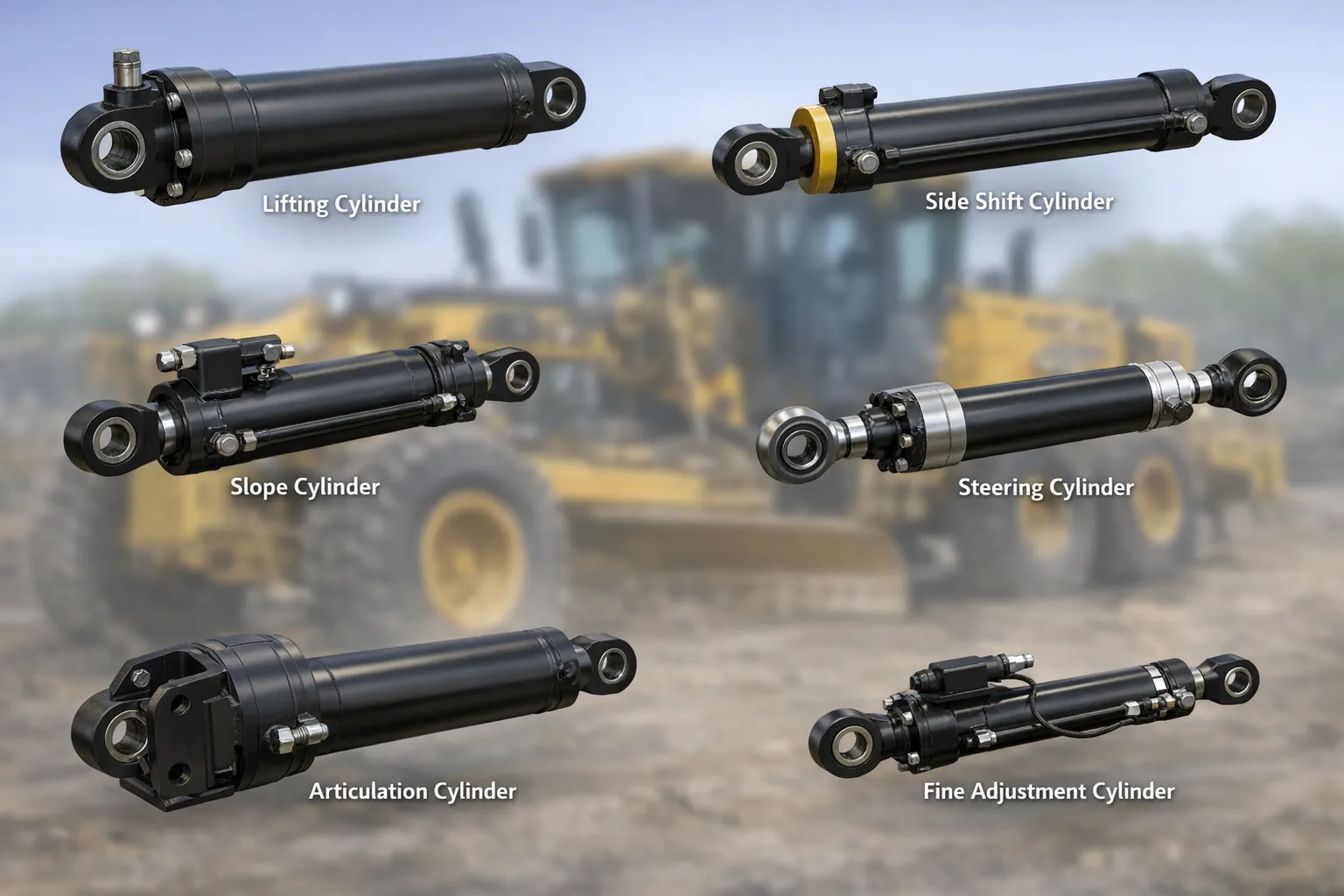
In the heavy equipment maintenance sector, minimizing the time spent fixing hydraulic cylinders is absolutely paramount to preserving fleet profitability. Procuring exact fitment aftermarket replacements is often a frustrating challenge for fleet managers, with prolonged downtime waiting for OEM parts drastically inflating operational costs. We completely eliminate this bottleneck. Our aftermarket replacement units are meticulously dimensionally engineered to serve as direct, flawless drop-in replacements for the world’s leading machinery brands.
We guarantee exact pin-to-pin retracted lengths, identical port thread sizes (UNF, Metric, or BSPP), matching trunnion or spherical bearing mounts, and equivalent or superior stroke capacities. Our high-performance hydraulic rams are heavily utilized to upgrade original equipment on globally recognized grader platforms, including but not limited to Caterpillar (Cat 140H, 140K, 12M series), Komatsu (GD655, GD555), Volvo Construction Equipment (G930, G946), John Deere (670G, 770G), XCMG, and SANY.
(Important Disclaimer: The brand names, trademarks, and specific machine models mentioned above are the exclusive property of their respective corporate owners. They are referenced within this technical documentation strictly for the purpose of dimensional compatibility identification, mechanical fitment, and accurate equipment selection. We operate as an independent manufacturer providing premium aftermarket hydraulic cylinder upgrades and do not imply any direct affiliation with or endorsement by these trademark holders.)
Five Core Engineering & Technical Advantages
What distinctly elevates our specialized products above standard, off-the-shelf alternatives? It is the culmination of our deep metallurgical research, fluid dynamics optimization, and aggressive mitigation of known field failures. Below are the five definitive technical advantages built into every unit we supply to the B2B market.
1. Extra-Wide Guide Ring Technology for Eccentric Loads
The most devastating failure mode for a grader’s lateral mechanism is “Guide Wear.” When the moldboard encounters immovable subterranean obstacles, massive off-center radial forces attempt to bend the cylinder rod, pressing it violently against the internal barrel wall. We counteract this by incorporating heavily reinforced, extra-wide guide rings crafted from self-lubricating, high-compressive-strength composite materials. This dramatic expansion of the bearing surface area actively disperses the lateral force, preventing catastrophic metal-to-metal scoring and safeguarding the primary fluid seals.
2. High-Yield 27SiMn Alloy Steel Construction
Standard aftermarket offerings predominantly utilize conventional 1045 or 1020 carbon steel to reduce costs. We refuse to compromise. Our cylinder barrels and vital hydraulic cylinder components are exclusively forged from 27SiMn (Silicon-Manganese alloy steel). Following advanced quenching and tempering treatments, this metallurgical profile provides substantially higher tensile and yield strength. It guarantees the cylinder tube will not balloon, distort, or fracture under the extreme hydraulic pressure spikes inherent to heavy earthmoving.
3. Ultra-Low Friction Dynamic Sealing Matrix
To facilitate micro-millimeter angle adjustments without experiencing the disruptive, jerky “stick-slip” phenomenon, we utilize a premium blend of polyurethane and PTFE (Teflon) dynamic seals. This ultra-low friction architecture drastically reduces internal heat generation during continuous blade oscillation. By minimizing friction, we significantly extend the thermal stability and overall operational lifespan of the internal sealing elements, ensuring absolute zero-leakage performance.
4. Automated Deep-Penetration Welded Structure
Grader environments subject every component to relentless, severe multi-axis vibration and shock. Our base mounts and hydraulic port connections are secured using an advanced, heavily reinforced welded structure. Executed exclusively via automated robotic MIG/MAG and submerged arc welding, this process guarantees deep, incredibly uniform weld penetration that is entirely free from internal porosity or slag inclusions. This ensures the structural mounts will never shear or fatigue, even under sudden impact loads.
5. Micro-Cracked Hard Chrome Surface Treatment
The piston rod operates mercilessly in highly abrasive, dusty, and often corrosive atmospheric conditions. To combat this, we apply a sophisticated, multi-stage hard chrome plating process. The carefully controlled micro-cracking matrix within the chrome layer is designed to hold a microscopic film of hydraulic oil. This provides constant, self-renewing lubrication to the wiper seals while forming an impenetrable defense against chemical corrosion and physical rock strikes.
Autonomous Manufacturing & Rigorous Quality Control
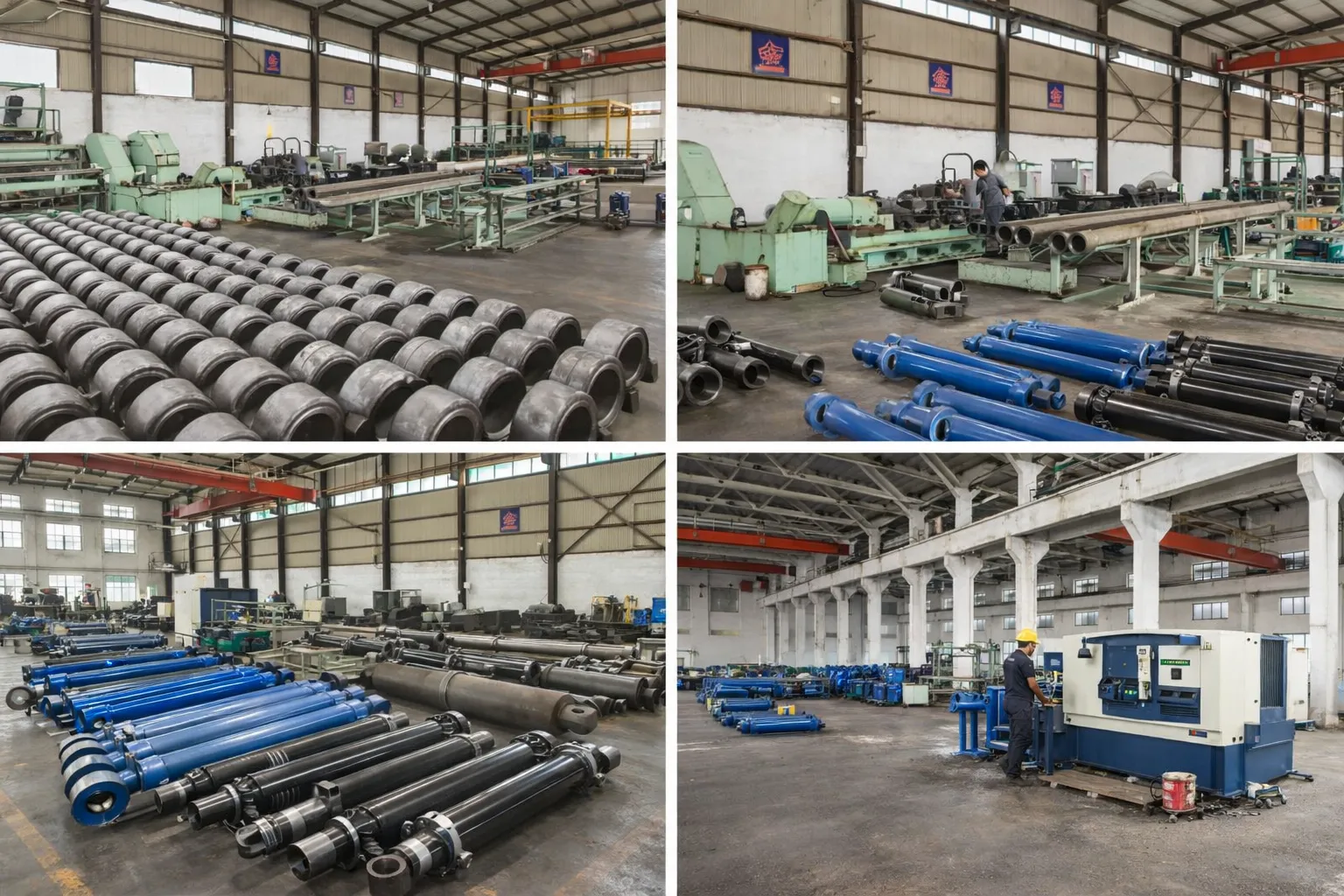
We firmly believe that true industrial quality cannot merely be inspected into a final product; it must be systematically manufactured into it from the very first cut of steel. Operating as a fully autonomous, vertically integrated hydraulic cylinder facility, our production lines are governed by strict, internationally recognized ISO 9001 quality management systems. From the moment the raw 27SiMn steel billets arrive to the final coat of industrial-grade epoxy paint, we maintain absolute total control over the engineering tolerances.
The creation of a heavy-duty side shift cylinder or a massive mast lift cylinder involves a highly controlled sequence of precision machining. Every steel tube undergoes deep-hole boring followed by advanced skiving and roller burnishing. This advanced process achieves a flawless, mirror-like internal surface finish (Ra 0.1-0.2 µm), which is absolutely critical for drastically reducing seal friction and maximizing component longevity. Furthermore, our robotic welds are meticulously verified using ultrasonic non-destructive testing (NDT) to eliminate the possibility of internal micro-fractures before assembly.
Most importantly, our quality control release protocols are completely non-negotiable. 100% of our produced units are subjected to exhaustive hydrostatic bench testing prior to dispatch. We execute rigorous pressure holding tests at 150% of the maximum rated working pressure to definitively verify the integrity of the welded structure and the absolute zero-leakage performance of the dynamic seals. Total traceability is maintained via laser-etched serial numbers, ensuring that every batch of steel and every seal kit can be audited, giving our B2B clients supreme confidence in their procurement choices.
Extensive Cross-Industry Application Scenarios
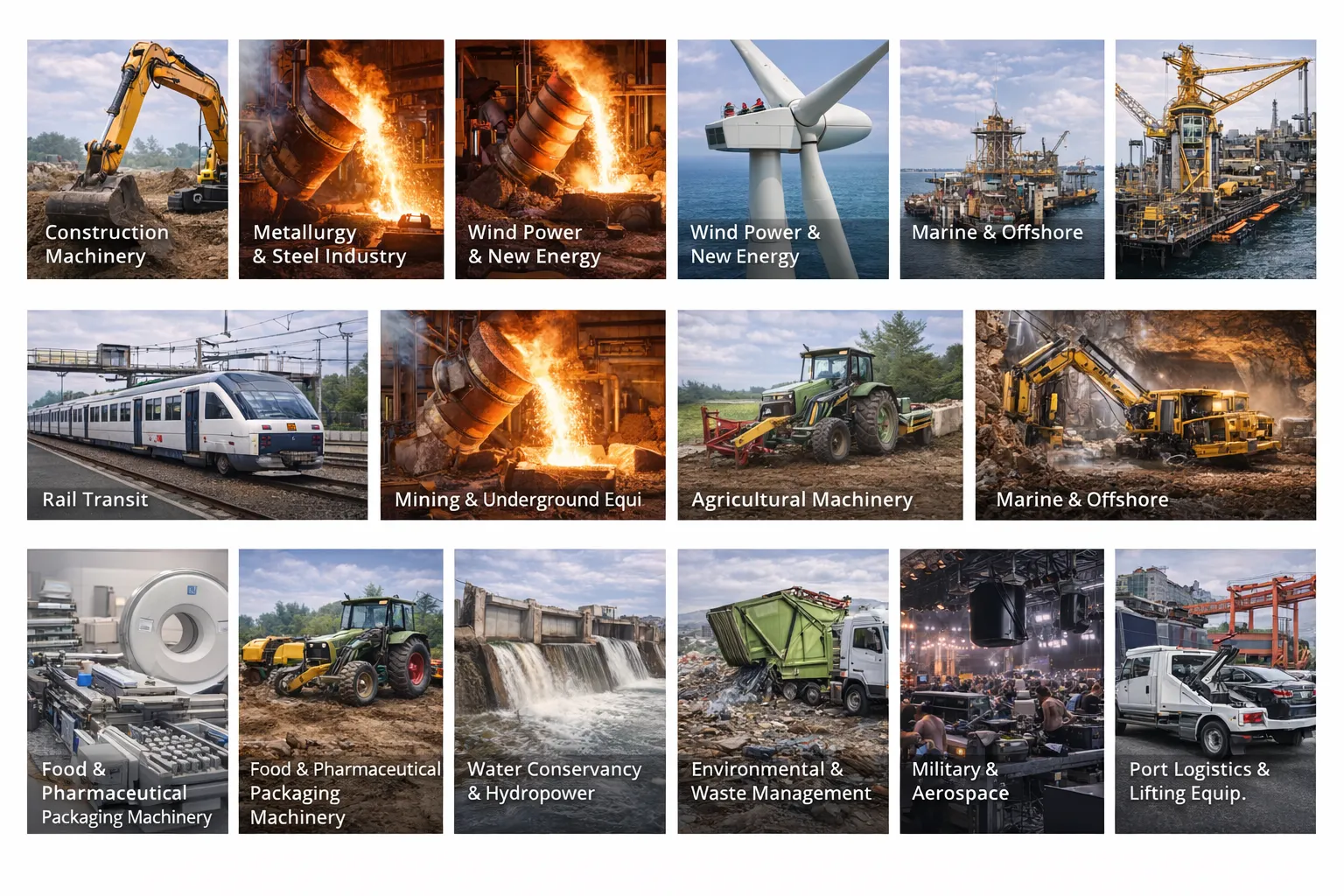
While engineered and optimized specifically for the punishing demands of motor grader blade articulation within the construction machinery industry, the exceptionally robust architectural principles of our fluid power designs render them highly adaptable to a wide spectrum of severe-duty sectors. The fundamental capacity to reliably handle massive eccentric loads and resist severe environmental degradation is a universal requirement in heavy manufacturing.
- Earthmoving & Highway Construction: Essential for precise grade leveling, ditch cutting, and bank sloping using motor graders, as well as powering excavator booms and bulldozer blade tilt functions.
- Metallurgy & Heavy Manufacturing: Operating furnace doors, ladle handlers, and heavy-duty forging presses where extreme radiant heat and massive linear force requirements destroy standard seals.
- Plastics & Rubber Machinery: Providing the rigid holding force required for injection molding clamping units, guaranteeing perfect mold alignment.
- Material Handling & Logistics: Powering high-capacity forklift side shifters, container reach stackers, and automated gantry cranes handling asymmetrical heavy loads at major shipping ports.
- New Energy & Environmental: Rigid pitch control in large-scale wind turbines and heavy compaction rams in solid waste management facilities dealing with highly corrosive materials.
- Specialized Custom Scenarios: We routinely engineer bespoke stroke lengths and mounting configurations for tunnel boring machines, marine deck cranes, and specialized agricultural harvesting equipment.
Comparative Engineering Analysis: Standard vs. Premium
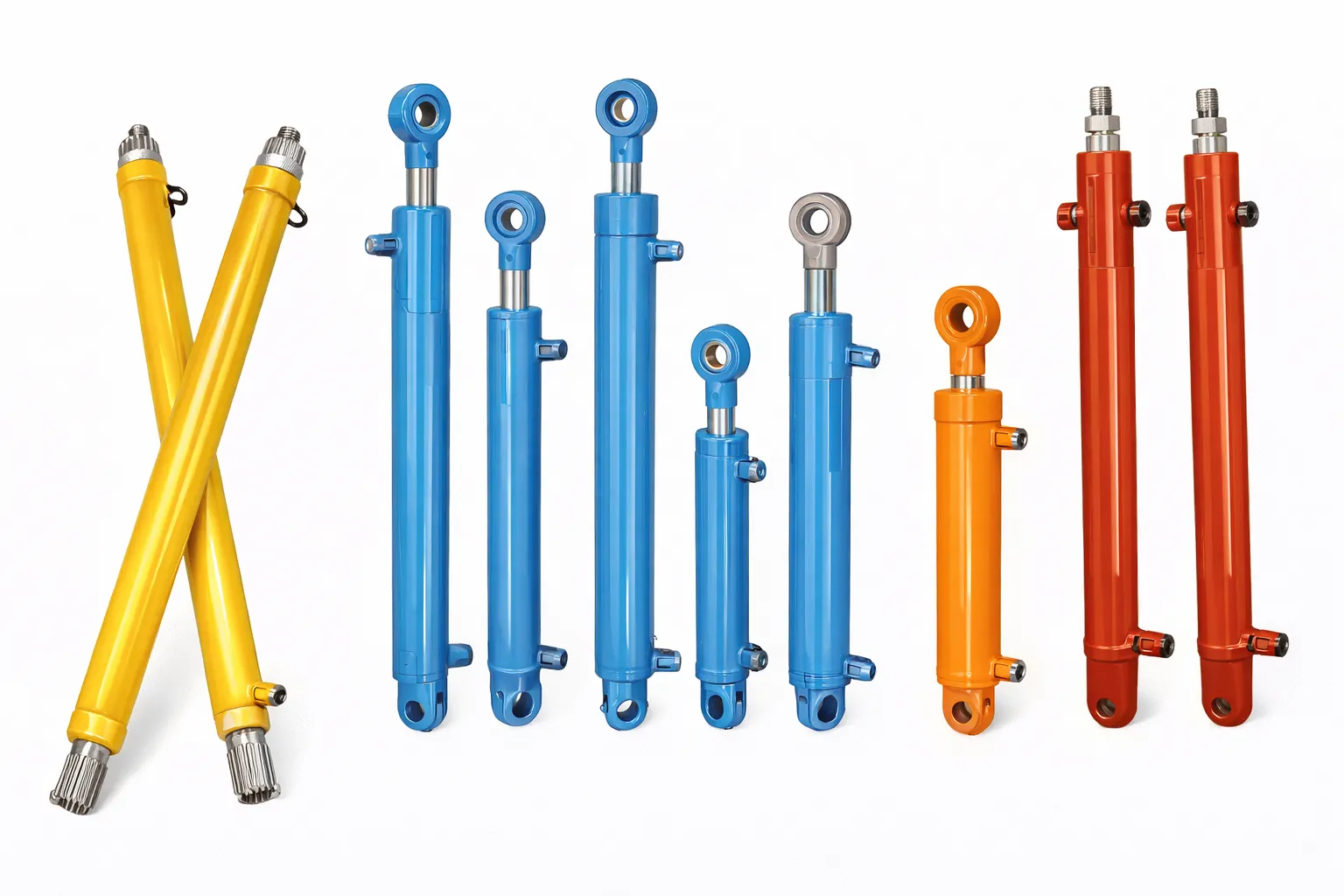
Evaluating the true cost of ownership requires looking far beyond the initial hydraulic cylinder price. Investing in a high-performance actuator pays massive dividends in the long run through drastically reduced downtime. The analytical table below illustrates the stark mechanical and economic differences between standard off-the-shelf market offerings and our purpose-built heavy-duty solutions.
| Comparison Metric | Standard OEM Replacement Cylinder | Our Premium Side Shift Cylinder |
|---|---|---|
| Barrel Material Strength | Standard 1045 Carbon Steel (Prone to ballooning) | 27SiMn High-Yield Alloy Steel |
| Eccentric Load Defense | Narrow Bronze/Nylon Band (High scoring risk) | Extended Wide Composite Guide Ring |
| Sealing Architecture | Basic NBR Static/Dynamic Seals (Heat degrades quickly) | Ultra-Low Friction PTFE & PU Matrix |
| Rod Surface Protection | Thin Flash Chrome Plating (Chips & rusts easily) | Deep Micro-Cracked Hard Chrome (HV800+) |
| Quality Assurance | Batch Sampling Testing Only | 100% Individual High-Pressure Bench Tested |
Demonstrated Field Success: Global B2B Case Studies
Advanced engineering theories must invariably be validated by relentless field application. Below are five authentic, documented records detailing how our highly specialized fluid power solutions have systematically resolved critical heavy infrastructure challenges, particularly focusing on our strategic partners across South Korea and surrounding high-demand Asian markets.
Case 1: Resolving Chronic Seal Failure in Seoul Earthmoving Fleet
Location & Date: Seoul, South Korea (October 2024)
Client: Major Civil Engineering and Highway Grading Contractor.
The Challenge: Operating a fleet of Cat 140H graders on highly compacted, rocky soil containing granite composite. The violent off-center loads during extreme angle adjustments were entirely destroying the internal guides and extruding the seals on their OEM cylinders every 400 hours.
Engagement: The fleet maintenance director meticulously researched optimized fluid power solutions online to lower operating costs and engaged our engineering team directly via our main portal.
The Result: We rapidly deployed our 27SiMn side shift hydraulic cylinder featuring the extra-wide guide ring architecture. Post-installation tracking showed zero guide wear or internal bypass leakage past 2,000 continuous operating hours. Unplanned downtime was slashed by over 75%.
“The mechanical stability of the moldboard under extreme eccentric load has transformed our grading precision. The wide guide ring concept completely eliminated our seal extrusion nightmare. An absolutely phenomenal upgrade for our machines.” — Mr. Park Joon-seo, Fleet Director
Case 2: Overcoming Severe Rod Corrosion in Coastal Port Construction
Location & Date: Busan, South Korea (March 2025)
Client: Provincial Maritime and Coastal Highway Development Firm.
The Challenge: Saline ocean air, heavy rainfall, and highly abrasive wet sand caused severe pitting on standard carbon steel cylinder rods, rapidly tearing the wiper seals and heavily contaminating the grader’s entire hydraulic system with saltwater.
Engagement: The procurement officer found us while desperately searching for corrosion-resistant, heavy-duty hydraulic parts to replace their failing OEM units.
The Result: We supplied customized cylinders featuring our advanced micro-cracked deep hard chrome plating process and dual-lip scraper seals. After 14 months of harsh coastal operation, the rods remained entirely unblemished, preserving absolute fluid purity.
“We used to systematically replace rods annually due to aggressive saltwater pitting. Your metallurgical surface treatment is vastly superior to the factory originals. It’s built perfectly for the coast.” — Lee Ji-hoon, Project Manager
Case 3: Eliminating Stick-Slip for Precision Fine Grading
Location & Date: Tokyo, Japan (July 2024)
Client: Municipal Airport Runway Paving and Laser-Grading Contractor.
The Challenge: Achieving millimeter-perfect sub-grades was significantly hindered by severe hydraulic “stiction” (stick-slip phenomenon) during minute lateral blade adjustments on their Volvo graders, causing the blade to jump unpredictably.
Engagement: Contacted our technical support division specifically looking for advanced, low-friction hydraulic cylinder components to rebuild their fleet.
The Result: Fitted our perfectly dimensioned cylinders incorporating the low-friction PTFE/PU sealing matrix. The exceedingly smooth, linear force delivery allowed the laser-guided systems to perform flawless, stutter-free micro-adjustments.
“The hydraulic responsiveness is immediate and exceptionally smooth. The operator can dial in the precise grade without the blade jerking or stuttering, saving us countless hours of manual rework.” — Kenji Sato, Operations Lead
Case 4: Preserving Weld Integrity Under Mining Shock Loads
Location & Date: Gangwon Province, South Korea (January 2025)
Client: Large-Scale Aggregate Quarry and Mine Operations.
The Challenge: Massive, instantaneous shock loads from grading blasted bedrock and frozen earth were literally fracturing the base trunnion welds on their standard articulation and shift cylinders.
Engagement: Directly referred to us by an industry peer who praised our heavy-duty, customized fluid power solutions and reliable high-pressure hydraulic rams.
The Result: Implemented our automated deep-penetration welded cylinders, 100% ultrasonic tested before shipping. Zero structural weld failures or cracks have been recorded since the implementation, even in sub-zero winter temperatures.
“These cylinders take a terrifying beating every single twelve-hour shift. The automated structural welding and the forged 27SiMn steel are practically indestructible in our mine.” — Choi Min-ho, Chief Mechanic
Case 5: Cost-Effective Fleet Overhaul with Premium Components
Location & Date: Gyeonggi-do, South Korea (November 2025)
Client: Heavy Machinery Leasing and Complete Refurbishment Enterprise.
The Challenge: Exorbitant OEM replacement costs were severely eroding profit margins during the scheduled complete refurbishment of a dozen John Deere and Komatsu graders. They needed rapid solutions for fixing hydraulic cylinders across the fleet.
Engagement: Extensively searched for a highly reliable B2B factory capable of large batch OEM-equivalent production without the premium brand markup.
The Result: We successfully delivered a bulk container order of perfectly dimensioned replacement cylinders. The client reduced component expenditure by 40% while ultimately delivering a technically superior, more reliable machine to their lessees.
“The internal build quality easily exceeds the OEM parts we replaced. The dimensional fitment was perfect right out of the crate, and the financial savings dramatically improved our refurbishment ROI.” — Yoon Seo-joon, Procurement Director
Expert FAQ: Addressing B2B Technical Inquiries
For procurement officers, maintenance directors, and heavy equipment engineers, making the correct specifying decision is absolutely vital. Below, we address the most frequent technical and commercial questions regarding our lateral moldboard control solutions and aftermarket support.
1. What exactly causes my current side shift cylinder to slowly drift during grading operations?
2. How does 27SiMn alloy steel compare to standard cylinder tubing?
3. What maintenance protocols are recommended for fixing hydraulic cylinders in the field?
4. How do I ensure correct dimensional fitment when ordering a replacement?
5. What dictates your hydraulic cylinder price for bulk fleet orders?
6. What is the typical lead time and shipping logistics to South Korea and Japan?
7. How do single acting vs double acting hydraulic cylinder systems differ here?
Upgrade Your Earthmoving Equipment Today
Do not let an inferior, mass-produced component compromise your grading precision or cause devastating, expensive project delays. Whether you urgently require a specialized side shift cylinder replacement for a single motor grader or seek to procure bulk high-performance assemblies for an entire fleet overhaul, our technical engineering team is ready to assist. Secure highly competitive pricing points without sacrificing a single ounce of metallurgical integrity.
Contact Our Engineering Experts Now
Explore more fluid power solutions by visiting our Full Product Catalog.
Editor: Cxm