Towing Cable Adjustment Cylinder For Mooring Equipment
Engineered with heavy-duty welded alloy steel and an integrated hydraulic control lock valve to provide unyielding cable adjustment and absolute protection against severe ocean wave impact in the most hostile maritime environments.
Product Overview: The Core of Offshore Mooring Equipment Stability
The operational safety of any deep-water vessel, anchor handling tug supply (AHTS) ship, or offshore platform relies entirely on the steadfast reliability of its mooring equipment. Operating in an unpredictable environment defined by violent weather patterns and relentless ocean swells, a ship’s towing cable system must absorb and manipulate massive amounts of kinetic energy. The most critical component responsible for maintaining proper line tension, safely spooling heavy wire rope, and securing the vessel’s geometric positioning is the Towing Cable Adjustment Cylinder. This heavy-duty mechanical actuator is the literal muscle of the deck, translating pressurized fluid energy into the immense linear force required to control thousands of tons of floating steel.
As a globally trusted and highly specialized hydraulic cylinder manufacturer, we understand that deploying standard commercial industrial actuators in an offshore towing environment is a recipe for catastrophic failure. The most frequent and dangerous failure mode encountered in these specific applications is severe rod wear. This rapid degradation is caused by a brutal combination of abrasive crystallized sea salt, constant micro-vibrations from the towing cable, and massive lateral shock loads. Once the rod surface is compromised, the dynamic seals are immediately shredded, resulting in rapid fluid pressure loss, environmental deck contamination, and a total failure of the mooring operation.
Our purpose-built Towing Cable Adjustment Hydraulic Cylinder is specifically engineered to permanently eradicate these threats. By utilizing a high-yield alloy steel welded construction, advanced marine-grade chrome plating, and an integrated hydraulic control lock valve, we deliver a fluid power solution that guarantees absolute reliability. Whether you are constructing a new dynamic positioning vessel in a South Korean shipyard, or upgrading the aging deck machinery of a fleet across East Asia, our heavy-duty hydraulic parts are designed to maximize your operational uptime, fiercely protect your crew, and significantly lower your total long-term maintenance expenditure.
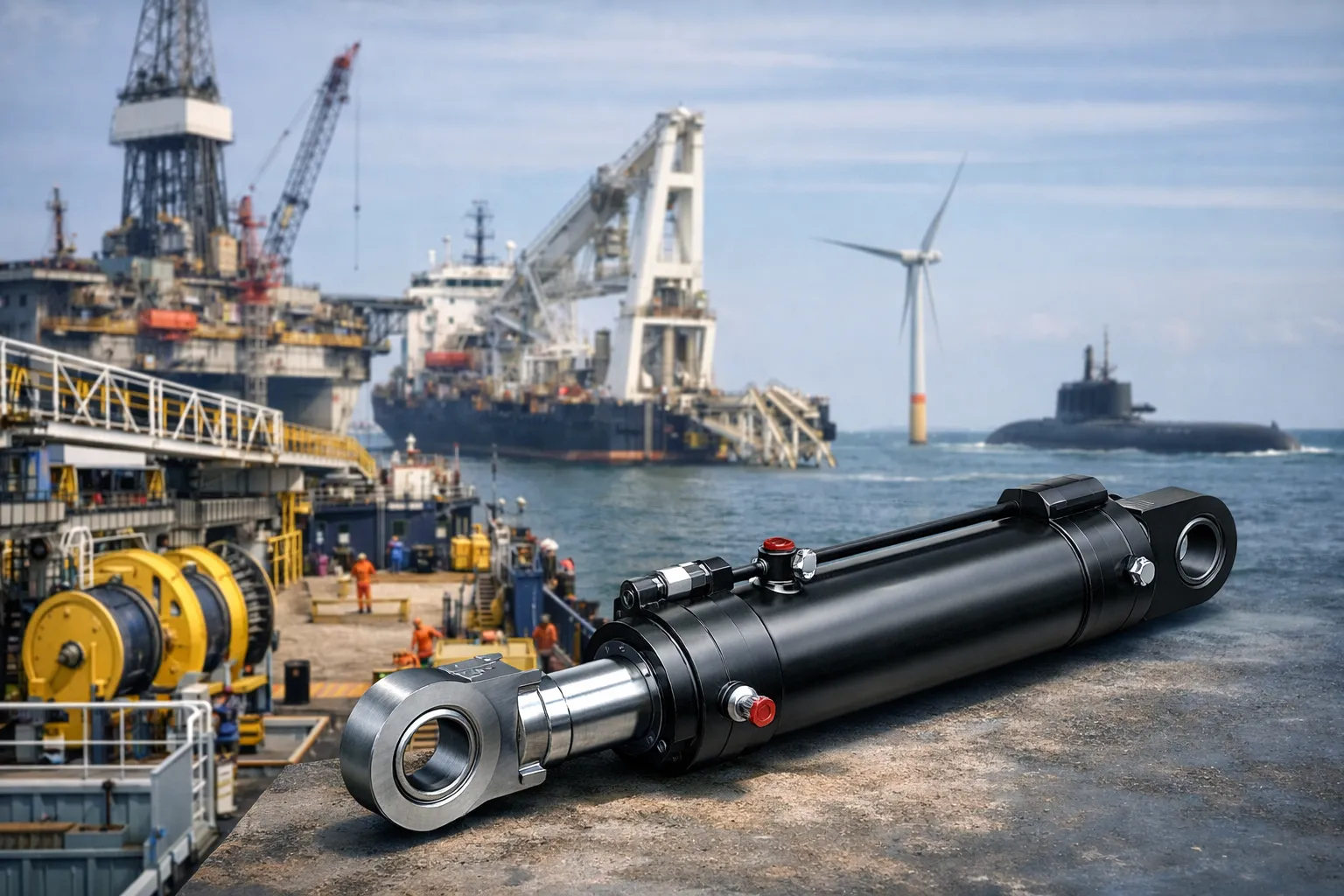
Comprehensive Technical Parameters and Manufacturing Specifications
Naval architecture demands absolute adherence to precise load calculations, safety margins, and classification society regulations. We offer an extensively customizable manufacturing program to perfectly match the specific winch capacities, cable diameters, and deck footprint constraints of your mooring system. The following technical matrix comprehensively outlines the foundational engineering specifications of our primary towing actuators.
| Specification Category | Engineering Detail & Customizable Range |
|---|---|
| Target Industry | Marine & Offshore Engineering |
| Equipment Category | Mooring Equipment / Heavy Deck Machinery |
| Subsystem / Action | Towing Cable System / Dynamic Cable Adjustment |
| Product Designation | Towing Cable Adjustment Cylinder |
| Action Mechanism | Double acting hydraulic cylinder (Positive bidirectional power) |
| Structure Configuration | Heavy-Duty Piston Cylinder |
| Manufacturing Structure | Welded Construction (Deep penetration automated welding for monolithic strength) |
| Core Material System | High-Yield Alloy Steel (Engineered to resist bending moments and brittle fracture) |
| Rod Surface Treatment | Multi-layer Hard Chrome Plated (Highly polished to repel abrasive salt particles) |
| Environmental Grade | Extreme Ocean Wave Impact & Continuous Corrosive Saltwater Exposure |
| Operating Condition | Precision Cable Adjustment under highly variable and massive tension loads |
| Primary Failure Mitigation | Specifically optimized to totally prevent severe Rod Wear and seal blowout |
| Mandatory Safety Configuration | Integrated Hydraulic Control Lock Valve (Provides absolute zero-leakage load holding) |
| Installation Mountings | Heavy-duty clevis mounts, spherical bearing trunnions, or custom flange configurations |
The Operational Dynamics: Fluid Power and Ocean Physics
To truly appreciate the necessity of advanced engineering in this sector, one must analyze the complex mechanical physics required to manage a mooring system. A rudimentary single acting hydraulic cylinder is fundamentally useless in this environment; towing operations do not rely on gravity for retraction. Adjusting a massive steel hawser against ocean currents strictly requires a heavy-duty double acting hydraulic cylinder. When the bridge officer commands a change in towing length, the centralized hydraulic power unit (HPU) drives high-pressure synthetic fluid through heavy braided hoses and into either the extension or retraction port of the cylinder barrel.
This highly pressurized fluid acts directly upon the massive surface area of the internal hydraulic cylinder piston. This generates an immense linear pushing or pulling force that vigorously drives the chrome-plated rod, physically manipulating the massive tow pins, shark jaws, or tensioning sheaves. These robust hydraulic rams operate in continuous synchronicity to ensure the towing cable pays out smoothly or hauls in tightly, keeping the towed vessel in perfect alignment with the tugboat’s wake.
However, the true danger of maritime towing occurs when the winch stops turning and the ship must hold the tension passively. If a massive ocean wave strikes the towed barge, the towing cable experiences a sudden, violent spike in kinetic energy. If the hydraulic system relies on distant valves to hold this load, the resulting pressure surge will instantly blow out the external deck hoses, causing the cylinder to retract violently and the cable to uncontrollably spool out. To completely eliminate this fatal risk, our cylinders feature an integrated hydraulic control lock valve. Bolted directly onto the steel cylinder block, this valve instantaneously snaps shut the moment fluid flow stops, creating a hydrostatic lock. This mechanically traps the incompressible fluid inside the barrel, turning the Towing Cable Adjustment Hydraulic Cylinder into a rigid, unyielding steel pillar that effortlessly absorbs the ocean wave impact, maintaining absolute tension control and securing the vessel.
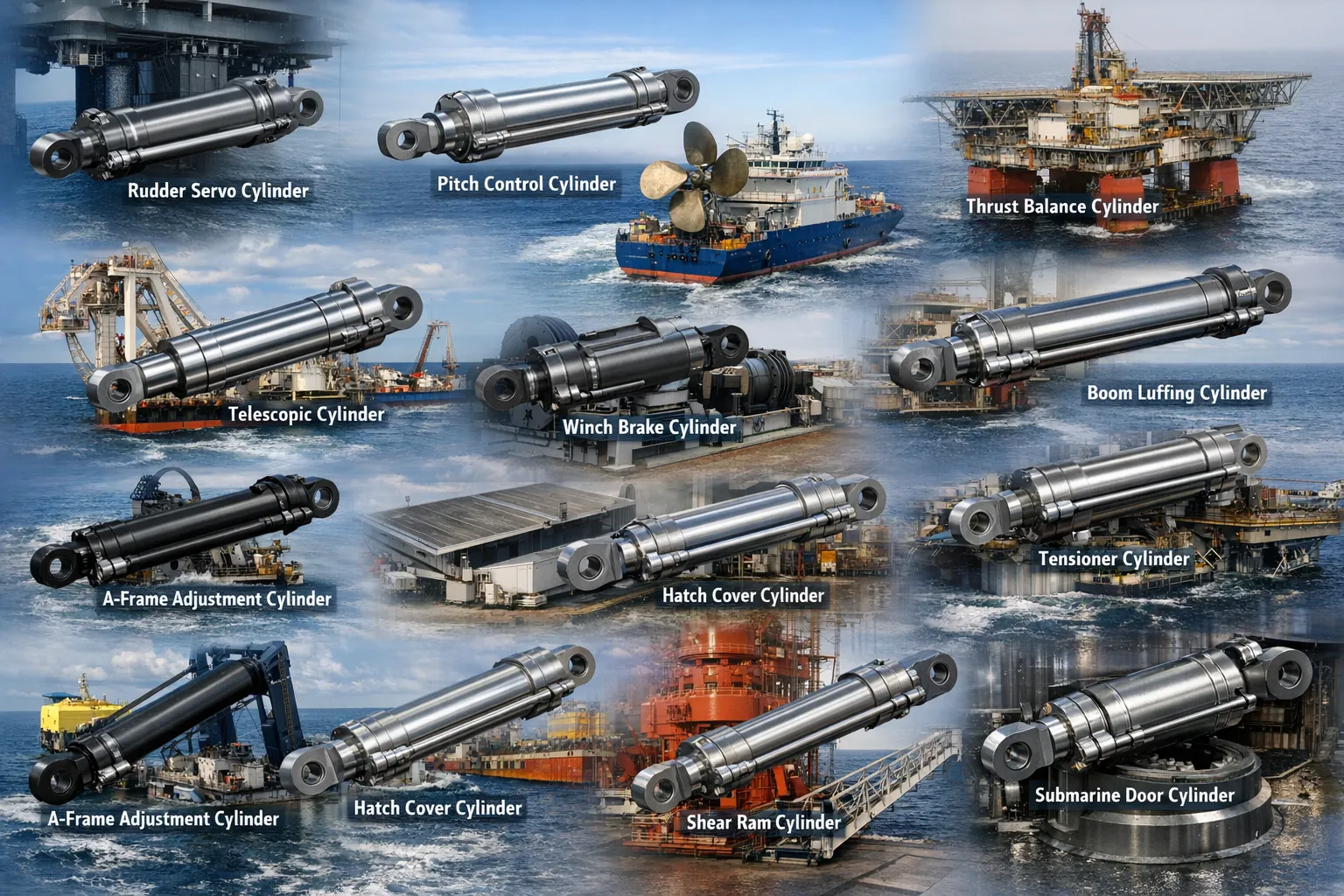
Seamless Equipment Integration and Direct Brand Replacement
Commercial fleet directors and shipyard procurement managers are frequently held hostage by the exorbitant hydraulic cylinder price markups and painfully slow international delivery schedules enforced by European OEM conglomerates. When a critical mooring actuator fails during a tight drydock schedule in Busan or Singapore, waiting 14 weeks for a proprietary replacement component translates to hundreds of thousands of dollars in lost charter revenue. We specialize in engineering high-fidelity, dimensionally exact drop-in replacements for aging marine deck machinery. Our engineers precisely map your existing installation footprint, trunnion dimensions, and fluid port alignments to guarantee a rapid, zero-modification installation directly on the aft deck.
Technical Reference Notice: To assist naval architects, chief engineers, and purchasing departments in component sizing, urgent cross-referencing, and rapid fleet standardization, we clearly state that our highly durable Towing Cable Adjustment Cylinder is expertly engineered to perfectly replace tensioning equipment originally manufactured by respected legacy brands such as MacGregor, Kongsberg Maritime, Rolls-Royce, Hatlapa, TTS, and Fukushima. We operate entirely as an independent precision manufacturing facility; we mention these specific trademarks strictly for the convenience of dimensional compatibility matching. No commercial affiliation, sponsorship, or endorsement is implied.
Furthermore, if your vessel’s existing cylinder barrels remain structurally sound but are suffering from severe internal seal bypass or deep rod scoring, completely replacing the unit may be unnecessary. Our dedicated hydraulic cylinder repair division offers comprehensive, class-certified remanufacturing services. We excel at fixing hydraulic cylinders by entirely stripping the unit, precision re-honing the inner tube, installing a completely new heavily chrome-plated alloy rod, and upgrading all dynamic seals. By integrating our premium hydraulic cylinder components into your existing casing, we deliver a refurbished unit that typically outlasts its original factory lifespan, at a fraction of the cost of new capital equipment.
Core Engineering Advantages: Built to Conquer the Ocean
Designing a fluid power actuator capable of surviving the unforgiving, violent conditions of marine towing requires a total refusal to compromise on metallurgical principles. Here are the distinct technical advantages that separate our equipment from generic commercial alternatives:
- 1. Absolute Mitigation of Destructive Rod Wear
The leading nemesis of towing equipment is severe rod wear. Salt crystals from ocean spray dry on the extended rod, and as the cylinder retracts, these sharp particles act like aggressive sandpaper, shredding the rod surface and destroying the seals. We combat this by utilizing a multi-stage, exceptionally thick hard chrome plating process over the alloy steel substrate. This creates a brutally hard (exceeding 68 HRC), highly polished barrier that physically crushes salt crystals and deflects abrasive cable debris without sustaining micro-scratches. - 2. Unbreakable High-Yield Alloy Steel Architecture
When a vessel pitches violently, the massive towing cables can exert severe lateral side-loads on the extended cylinder rod. Standard carbon steel tubes will easily stretch, buckle, or deform under this immense stress. We machine our barrels and rods from premium high-tensile alloy steel. This specific metallurgy provides superior fracture toughness and immense structural rigidity, guaranteeing perfect axial alignment even under maximum shock loading. - 3. Monolithic Welded Construction Integrity
Ocean wave impacts transfer massive shock waves directly through the cylinder’s mounting points. Standard commercial MIG welds easily develop microscopic fatigue cracks in these conditions. We construct our cylinders using automated, deep-penetration submerged arc welding (SAW) processes. This ensures complete, flawless structural fusion between the thick end-caps and the heavy-wall barrel, providing maximum resistance against catastrophic mechanical tearing. - 4. Fail-Safe Integrated Hydraulic Control Lock Valve
As previously detailed, safety in towing is non-negotiable. By directly flanging a heavy-duty hydraulic control lock valve to the cylinder body, we eliminate the reliance on vulnerable external hoses. This zero-leakage pilot-operated valve guarantees absolute load holding security, firmly locking the massive cable tension and averting a potential maritime disaster if the main power unit fails. - 5. Advanced Marine-Grade Dynamic Sealing Matrix
Fluctuating temperatures and constant saltwater exposure rapidly degrade standard industrial rubber. We utilize advanced polyurethane U-cups, PTFE bronze-filled step seals to handle high-pressure extrusion forces, and massive composite wear bands on the hydraulic cylinder piston to absorb lateral impact. Furthermore, aggressive double-lip wiper seals actively carve hardened salt rings off the retracting rod, keeping the internal hydraulic fluid pristinely clean.
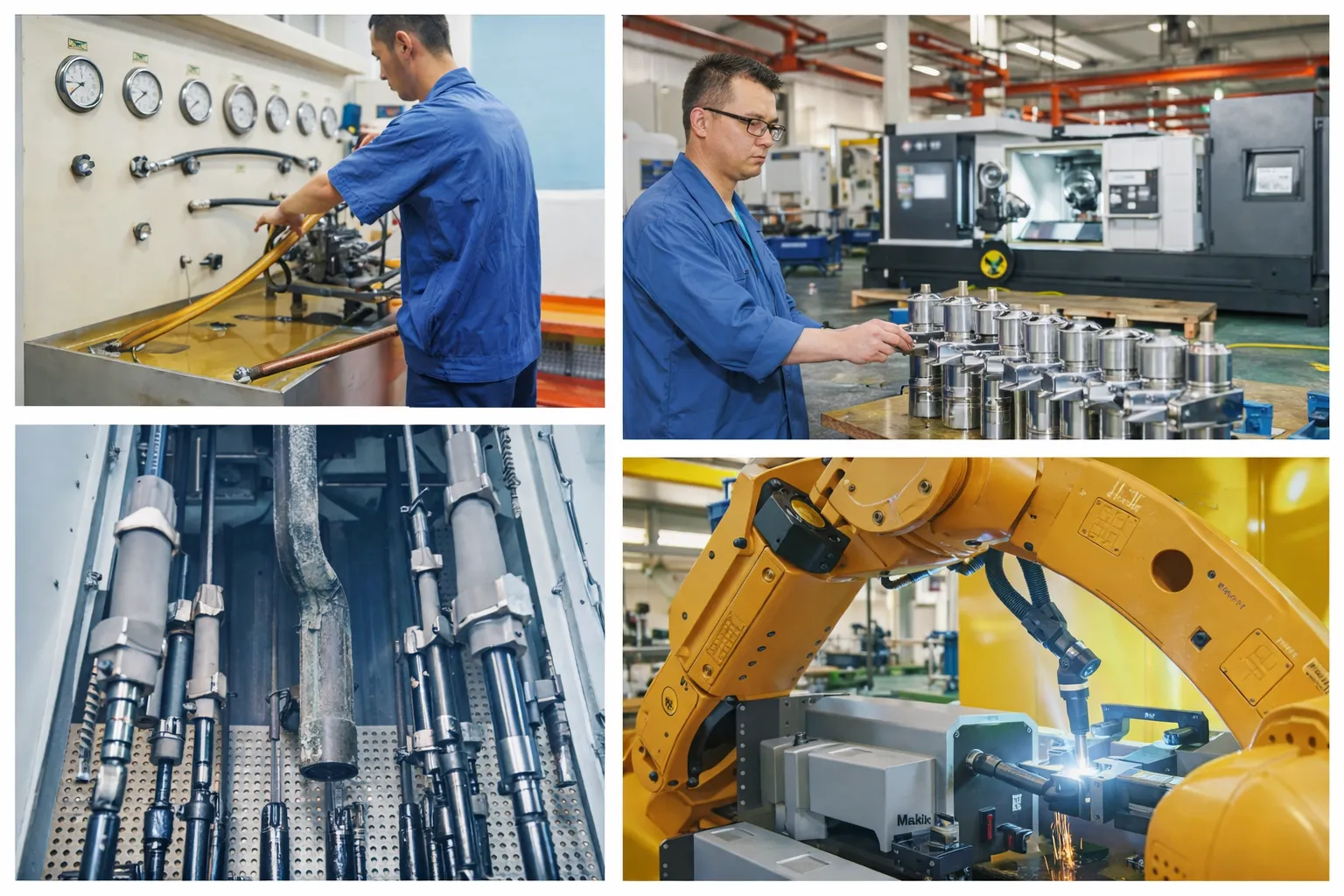
Uncompromising Manufacturing Processes and Complete Traceability
True operational reliability on the high seas cannot be merely inspected into a product; it must be meticulously manufactured into the component from the very first steel cut. As an elite, fully integrated hydraulic cylinder manufacturer, we operate a completely autonomous production ecosystem. We flatly refuse to rely on fragmented, unverified outsourced supply chains for our critical pressure-retaining components. Every crucial fabrication step, from the initial raw material processing to the final coat of multi-part marine epoxy, is executed and rigorously documented strictly within our own facility.
The manufacturing journey begins with strict ultrasonic testing (UT) and magnetic particle inspection (MPI) of the raw alloy steel billets to completely guarantee the absence of internal micro-voids or material flaws prior to shaping. High-precision, multi-axis CNC deep-hole boring and specialized honing machines sculpt the internal barrels to exacting micron-level tolerances, achieving an optimal cross-hatch surface finish (Ra roughness) that retains a microscopic film of oil, perfectly optimizing the lifespan of the dynamic seals. Concurrently, our automated rotary welding positioners ensure mathematically perfect, deep-penetration weld beads that effortlessly pass strict X-ray structural inspections.
Quality assurance is a relentless, non-negotiable gateway process. Final assembly occurs in positive-pressure, climate-controlled cleanrooms to prevent any microscopic particulate contamination. Every single Towing Cable Adjustment Hydraulic Cylinder is subjected to a punishing 100% Factory Acceptance Test (FAT). This includes static pressure hold testing at 150% of the nominal working pressure to aggressively verify the absolute zero-leakage performance of the integrated lock valves. Because our products are heavily utilized in the highly regulated shipping sectors of South Korea and Japan, we maintain absolute material traceability and routinely manufacture to the rigorous standards of major marine classification societies, seamlessly facilitating third-party surveyor inspections by DNV, ABS, Lloyd’s Register (LR), and the Korean Register (KR).
Cross-Industry Heavy Engineering Applications
While the highly sophisticated architectural features detailed here are optimized perfectly for the brutal dynamics of marine towing and mooring systems, the foundational technologies—extreme structural rigidity, absolute resistance to rod wear, and flawless lock-valve load holding—are highly sought after across multiple global heavy industries. The intensive engineering required to survive a typhoon easily translates to the harsh, unforgiving realities of land-based industrial applications.
- Other Marine Deck Machinery: Beyond towing cables, our heavy-duty welded design serves perfectly as a high-capacity lift cylinder for massive folding deck cranes, heavy anchor windlasses, and stern ramp articulation systems where failure is not an option.
- Metallurgical and Iron Industry: Steel mills and foundries are characterized by extreme radiant ambient heat, heavy mechanical shock, and highly abrasive airborne metallic scale. Our thick chrome rods and heavy welded bodies provide exceptional longevity for continuous casting machinery, heavy slab manipulators, and rolling mill tensioners where unexpected downtime means millions in lost production.
- Mining Industry: Operating deep underground or in vast open pits, equipment handles relentless vibration, dirt contamination, and massive crushing forces. Our custom-engineered hydraulic rams provide unmatched reliability for massive bucket-wheel excavator positioning, heavy haul truck suspensions, and primary rock crusher gap adjustments.
- Construction Machinery Industry: Large-scale civil engineering requires massive, reliable force. We supply incredibly durable actuation solutions for heavy crawler crane luffing systems, massive rotary drilling rigs, and heavy-duty bridge launching gantries.
- Material Handling & Logistics: In busy automated port terminals, continuous operation is mandatory. We engineer highly reliable lifting solutions acting as the primary actuators for massive straddle carriers and automated guided vehicles (AGVs) handling heavy shipping containers.
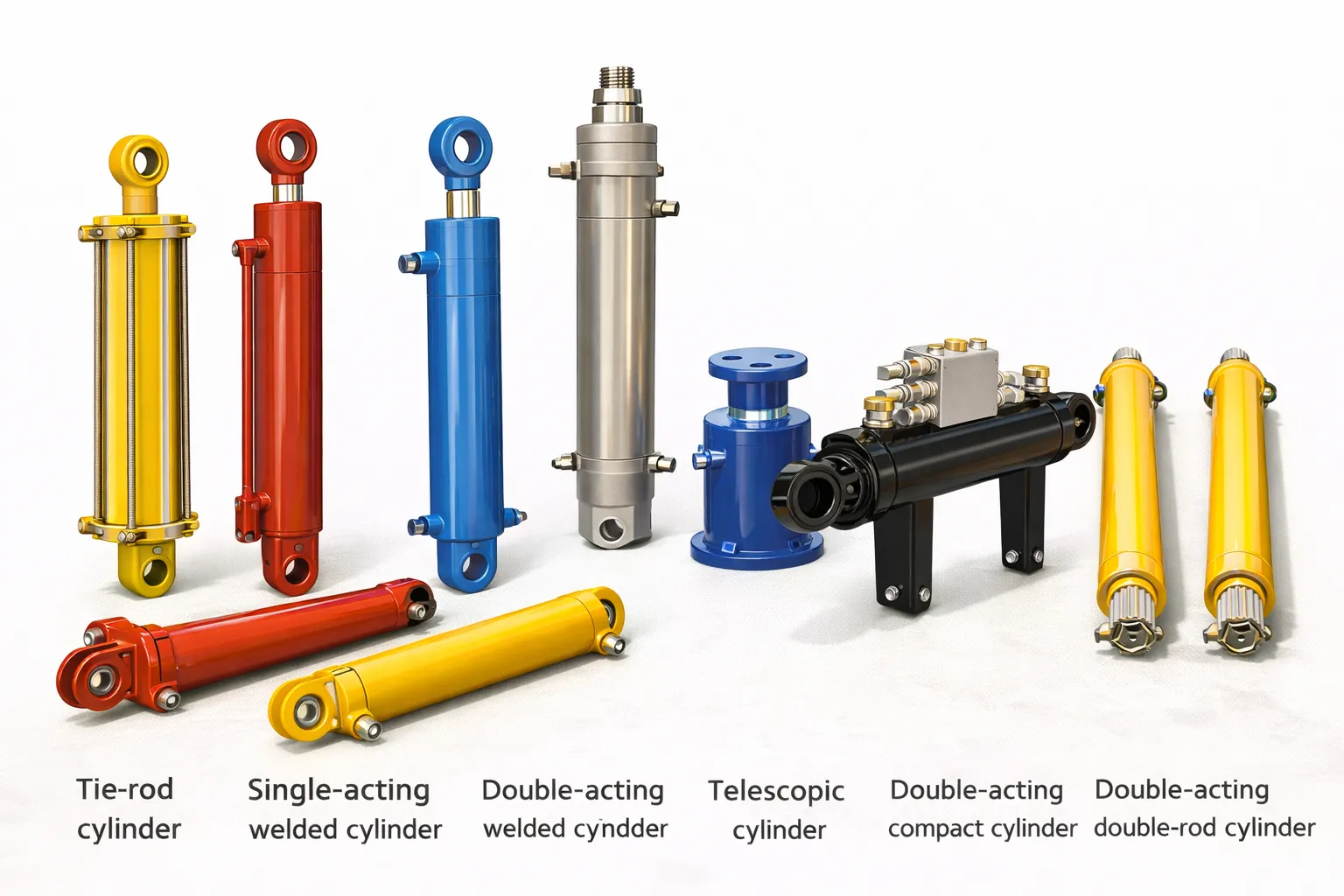
Comparative Analysis: Standard Commercial vs. Offshore Engineered
When evaluating heavy capital expenditure for vessel maintenance, comparing the initial quoted hydraulic cylinder price against the actual total lifecycle cost is paramount for fleet managers. Attempting to lower initial capital expenditure by procuring light-duty industrial cylinders for offshore mooring always results in catastrophic long-term costs due to rapid equipment failure and severe safety risks. The matrix below highlights the stark operational contrast between conventional adaptations and our purpose-built premium engineering.
| Engineering Feature Matrix | Standard Commercial Cylinder | Our Towing Cable Adjustment Cylinder |
|---|---|---|
| Rod Wear Resistance | Thin commercial chrome plating. Quickly micro-scores and permanently degrades when exposed to crystallized salt and cable friction. | Multi-layer, high-thickness chrome on hardened alloy steel. Massively extends operational life against abrasive wear. |
| Structural Material & Integrity | Basic carbon steel tubing with standard MIG welds. Highly prone to structural deformation and fatigue cracking under shock loads. | High-yield alloy steel with deep-penetration automated welds. Superior tensile strength inherently absorbs massive wave impacts. |
| Load Holding Security | Relies entirely on distant HPU valves and deck hoses. Highly susceptible to slow, dangerous cable drift and immediate hose rupture hazards. | Integrated Hydraulic Control Lock Valve. Physically locks the fluid column locally at the port for absolute, zero-drift security. |
| Lateral Force Handling | Narrow standard guide rings. Susceptible to internal metal-to-metal scoring when the vessel pitches heavily. | Massive composite wear bands absorb high side-loads, keeping the internal piston movement perfectly axial. |
| Maintenance Lifespan | Typically requires complete overhaul or replacement every 12 to 24 months in harsh marine environments due to leaks. | Engineered to comfortably align with major 5-year classification society survey intervals with only minimal basic seal maintenance. |
Proven in the Field: Global Maritime Success Stories
Theoretical engineering blueprints and specifications must be strictly validated by relentless, punishing field performance. Our bespoke fluid power solutions are heavily relied upon by top-tier maritime operators globally, with a particularly dominant and proven track record in the technically stringent South Korean and East Asian shipbuilding hubs. Below are heavily documented operational case studies where our interventions resolved critical engineering crises.
Case Study 1: AHTS Fleet Mooring System Overhaul in Busan, South Korea
The Engineering Challenge: During a scheduled fleet survey in Busan, a major offshore support operator discovered chronic and severe damage to their primary deck towing systems across multiple vessels. The original European OEM cylinders were suffering from extreme rod wear, heavily scored by the abrasive combination of thick steel tow cables rubbing and crystallized sea salt. This wear shredded the gland seals, causing massive hydraulic fluid leaks onto the deck, creating a severe environmental MARPOL hazard and rendering the cable tensioning system completely unsafe.
The Solution Delivered: We rapidly reverse-engineered the spatial constraints and manufactured a completely customized set of Towing Cable Adjustment Cylinders. We utilized heavily applied hard chrome over alloy steel to defeat the abrasive wear and integrated directly flanged hydraulic lock valves to ensure absolute load security under all weather conditions.
The Result: The new units bolted perfectly into the existing deck footprint without structural modifications. Three years post-installation, recent underwater surveyor reports confirm the cylinder rods maintain a flawless mirror finish with zero evidence of seal leakage, drastically reducing the crew’s daily maintenance workload.
“The robust engineering and thick chrome plating out of this facility completely eliminated our leakage nightmares. The integrated lock valves gave our deck crew immense confidence during heavy weather maneuvering. The overall reduction in our total lifecycle hydraulic cylinder price is remarkable. A truly exceptional manufacturing partner.” — Senior Technical Superintendent, Busan Operations.
Case Study 2: Heavy Transport Barge Tensioning Safety Upgrade in Ulsan, South Korea
The Engineering Challenge: A vessel specializing in transporting massive offshore rig components across the Pacific required absolutely reliable tensioning on its heavy mooring and towing winches. The existing standard hydraulic systems were failing to hold pressure during violent storms. When ocean wave impact struck, the massive securing cables would slacken dangerously, allowing multi-million dollar cargo to shift on the deck.
The Solution Delivered: We engineered highly specific double acting hydraulic cylinder units equipped with specialized, zero-leakage hydraulic control lock valves mounted directly to the heavy welded alloy steel barrels. The heavy construction was explicitly modeled using finite element analysis (FEA) to absorb the sudden mechanical shock generated by shifting sea states.
The Result: The retrofitted deck winches now maintain an unyielding, rigid tension regardless of the external storm conditions or the main power unit’s active status, ensuring massive cargo modules remain safely secured to the deck during entire trans-Pacific voyages.
Case Study 3: Emergency Winch Actuator Logistics for a Salvage Tug in Yokohama, Japan
The Engineering Challenge: A crucial ocean-going salvage tugboat was immediately grounded by port state control due to a catastrophic structural failure on its main deck winch actuator caused by a severe wave impact. Local attempts at fixing hydraulic cylinders were impossible due to the severe deformation of the barrel. The European OEM quoted a disastrous 14-week lead time, which would result in massive off-hire demurrage financial losses.
The Solution Delivered: Reached via an emergency inquiry, we activated our rapid production lane. Utilizing our extensive inventory of forged alloy steel billets, the replacement unit was machined, welded, assembled, FAT tested, ClassNK certified, and air-freighted directly to the Yokohama dockside within an astonishing 21 days.
“Their rapid engineering response and ability to supply a fully certified, heavy-duty marine actuator saved us weeks of downtime and hundreds of thousands in lost charter rates. They deeply understand the urgency of maritime operations. This is premium industrial agility.” — Fleet Operations Manager, Ocean Salvage Fleet, Japan.
Frequently Asked Questions
Specifying critical marine safety components involves rigorous technical due diligence. Below, we address the most common and pressing inquiries received from naval architects, drydock purchasing managers, and chief engineers regarding the operational specifications and rapid logistics of our products.
1. Why is a hydraulic control lock valve strictly necessary for a Towing Cable Adjustment Cylinder?
2. How does your manufacturing process address severe rod wear in saltwater environments?
3. Why not use a single acting hydraulic cylinder for steering or towing applications?
4. Are your manufacturing facilities capable of producing units certified by major Classification Societies?
5. What information is required to provide an accurate custom hydraulic cylinder price quotation?
6. Do you supply replacement hydraulic cylinder components for routine shipboard maintenance?
7. Can you assist us with extensive hydraulic cylinder repair and remanufacturing?
Ensure the Safety of Your Marine Mooring Operations Today
Offshore deck machinery failure is an entirely preventable risk. Do not permit sub-standard, mass-produced industrial actuators to jeopardize the safety of your crew, your environmental compliance, or the profitability of your commercial towing operations. Partner directly with an engineering facility that thoroughly understands the severe mechanical demands of the maritime environment.
Whether you urgently require an emergency dimensional retrofit in a major South Korean shipyard or are systematically specifying highly engineered fluid power systems for a massive new-build offshore vessel project, our technical team is ready to assist. Provide us with your tension loads and dimensional constraints, and we will deliver a completely secure fluid power solution engineered to defeat the ocean.
Editor: Cxm