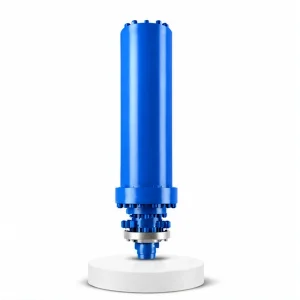
Hydraulic Press Return Cylinder
The Stroke Nobody
Talks About
Everyone measures a press by its downward force — 40 MN, 60 MN, 80 MN. But the return stroke is what sets the cycle time. A press that takes 5 seconds to retract instead of 3 seconds loses 40% of its potential output. The return cylinder is the difference between a productive press and one that waits.
What the Return Cylinder Does
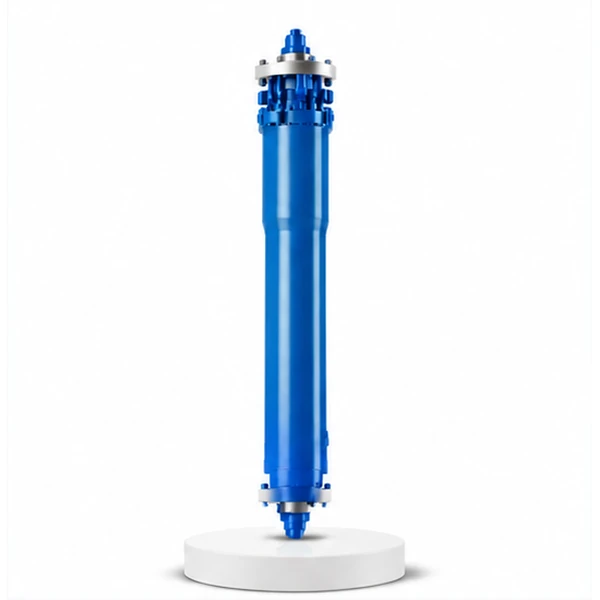
The hydraulic press cycle has two halves: the press stroke (ram moves down, workpiece is formed) and the return stroke (ram moves back up to top dead centre, ready for the next cycle). The master cylinder and side cylinders handle the press stroke. The return cylinder handles everything after — lifting the ram, the tooling, and the upper die back to the starting position so the operator can remove the finished part and load the next blank.
On a large forging press, the ram assembly alone can weigh 50–200 tonnes. The return cylinder must overcome this weight plus any friction and hydraulic resistance in the system. The return force is much smaller than the pressing force (kilonewtons, not meganewtons), but it must be reliable and fast — because the return stroke is non-productive time. Every second of return time is a second the press is not making parts. Korea Ever-Power manufactures return cylinders as part of the complete industrial engineering hydraulic cylinder set for press builders.
Technical Specifications
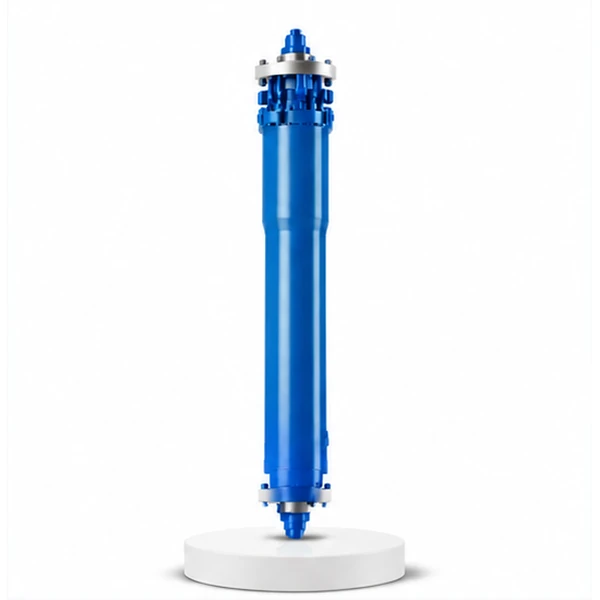
| Parameter | Piston Type | Plunger Type |
|---|---|---|
| Function | Return force for master cylinder and side cylinders | |
| Bore / Plunger | Bore 180–410 mm Rod 120–360 mm |
Plunger 140–360 mm |
| Stroke | ≤ 4,500 mm | ≤ 3,000 mm |
| Max Thrust | 2,612 KN (bore 410 mm / 31.5 MPa) | 3,206 KN (plunger 360 mm / 31.5 MPa) |
| Working Pressure | Up to 31.5 MPa | |
| Certification | ISO 9001 · 100% hydrostatic tested | |
Two Configurations — Plunger Type vs Piston Type
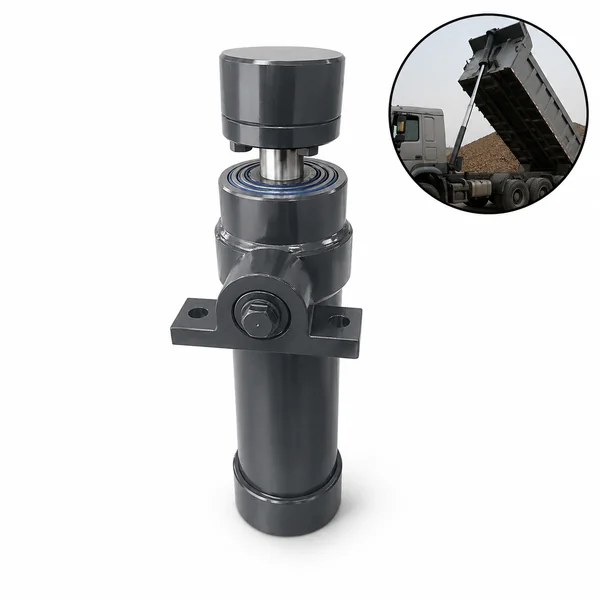
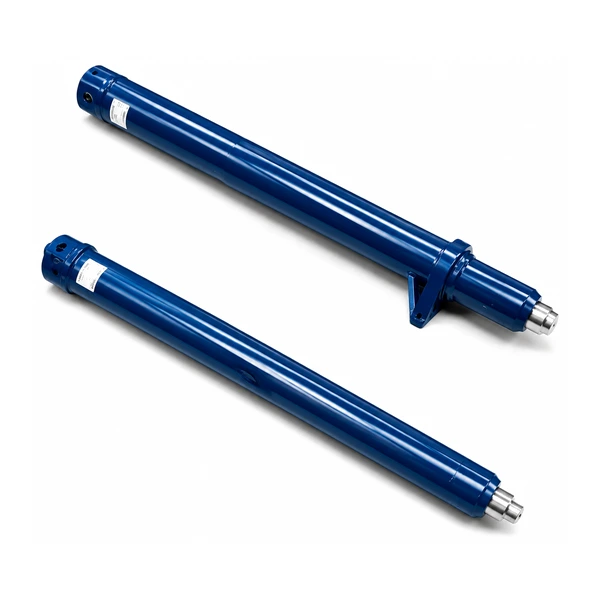
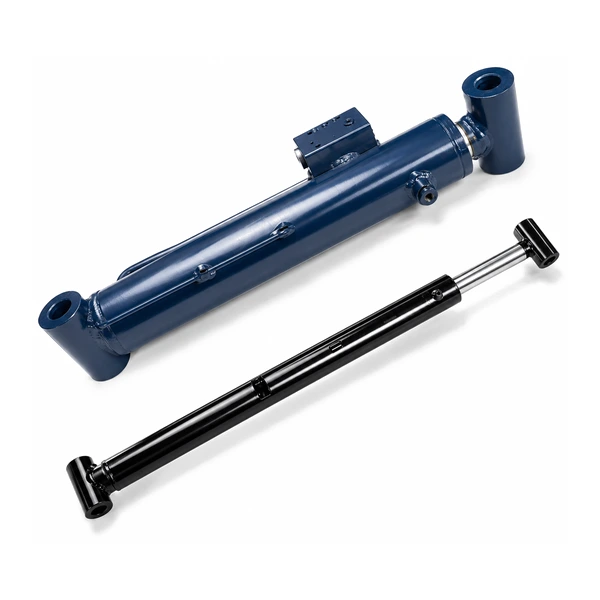
The return cylinder is available in two fundamentally different configurations. The choice depends on the press geometry, the return force required, and whether the cylinder needs to pull (piston type) or push (plunger type) the ram upward.
If the return cylinder mounts below the ram and pushes upward — plunger type (simpler, lower maintenance). If the return cylinder mounts above and pulls the ram up via a rod connection, or if controlled downward speed is needed — piston type (more versatile, longer stroke available). Korea Ever-Power's engineering team recommends the optimal type based on your press frame geometry.
Why Return Speed Determines Your Output
A press cycle consists of: approach (fast descent), forming (slow, high-force pressing), dwell (hold at pressure), return (ram lifts), and part handling (operator loads/unloads). The forming and dwell phases are determined by the process — they cannot be shortened without changing the product quality. The return phase, however, is pure machine overhead. Shortening it directly increases throughput.
Return speed is determined by the return cylinder's effective area and the available hydraulic flow. A larger plunger or bore diameter (larger area) means a slower return at the same flow — the cylinder must fill more volume per millimetre of stroke. Conversely, a smaller return cylinder retracts faster but provides less return force. The optimisation challenge is to select the smallest return cylinder that still provides enough force to reliably lift the ram assembly — maximising speed without compromising reliability.
On a press producing 200 forgings per shift with a 3-second return stroke, reducing the return to 2 seconds saves 200 seconds per shift — enough for approximately 18 additional forgings. Over a year of production, that translates to thousands of additional parts from the same press, with no change to the forming process. The return cylinder is the lowest-cost productivity upgrade on most hydraulic presses. Contact the hydraulic press cylinder specialist for return speed optimisation.
Maintenance Focus — The Return Cylinder Wears Differently
The return cylinder operates under very different conditions from the master and side cylinders — and its wear patterns reflect this. Understanding these differences helps you schedule maintenance correctly and avoid unexpected downtime.
The return cylinder operates at much lower pressure than the master cylinder (it lifts the ram weight, not forges the workpiece). But it cycles at exactly the same frequency — every press stroke requires a return stroke. Lower pressure means less seal extrusion, but higher cycle count means more cumulative seal wear. Return cylinder seals typically last as long as master cylinder seals despite the lower pressure — the cycle count balances the pressure difference.
On forging presses, the return cylinders are often mounted in exposed positions — below the bolster or alongside the frame — where they are subjected to scale, forge spray (water/graphite lubricant), and radiant heat from the hot workpiece. This environmental exposure accelerates wiper seal degradation and barrel corrosion faster than the master cylinder, which is typically mounted inside the press crown (more protected). Inspect return cylinder wipers and barrel finish more frequently than master cylinder seals.
When scheduling a press overhaul, replace the return cylinder seals at the same time as the master and side cylinder seals — even if the return seals appear to have remaining life. The labour cost of disassembly is the dominant expense; the seal kit cost is minor. Replacing all seals during a single shutdown eliminates the risk of a return cylinder seal failure between master cylinder overhauls.
What Happens When the Return Cylinder Fails
A return cylinder failure does not create a safety emergency in the way a master cylinder failure might — the ram simply stays at the bottom of the stroke. But the operational consequences are severe:
The press stops producing. The ram cannot return to top dead centre, so the press cannot cycle. Every minute of downtime on a large forging press costs hundreds to thousands of dollars in lost production.
The workpiece may be trapped. If the ram stops at the bottom of the press stroke with the dies closed on a hot forging, the workpiece cools in the die — potentially welding itself to the die surface. Extracting a stuck forging requires additional equipment and risks die damage.
Cascade delays. On integrated forging lines, a press stoppage blocks every upstream and downstream process — furnace scheduling, manipulator operations, trim press, and heat treatment sequencing are all disrupted. A 2-hour return cylinder repair can cost 8 hours of total line recovery time.
Manufacturing
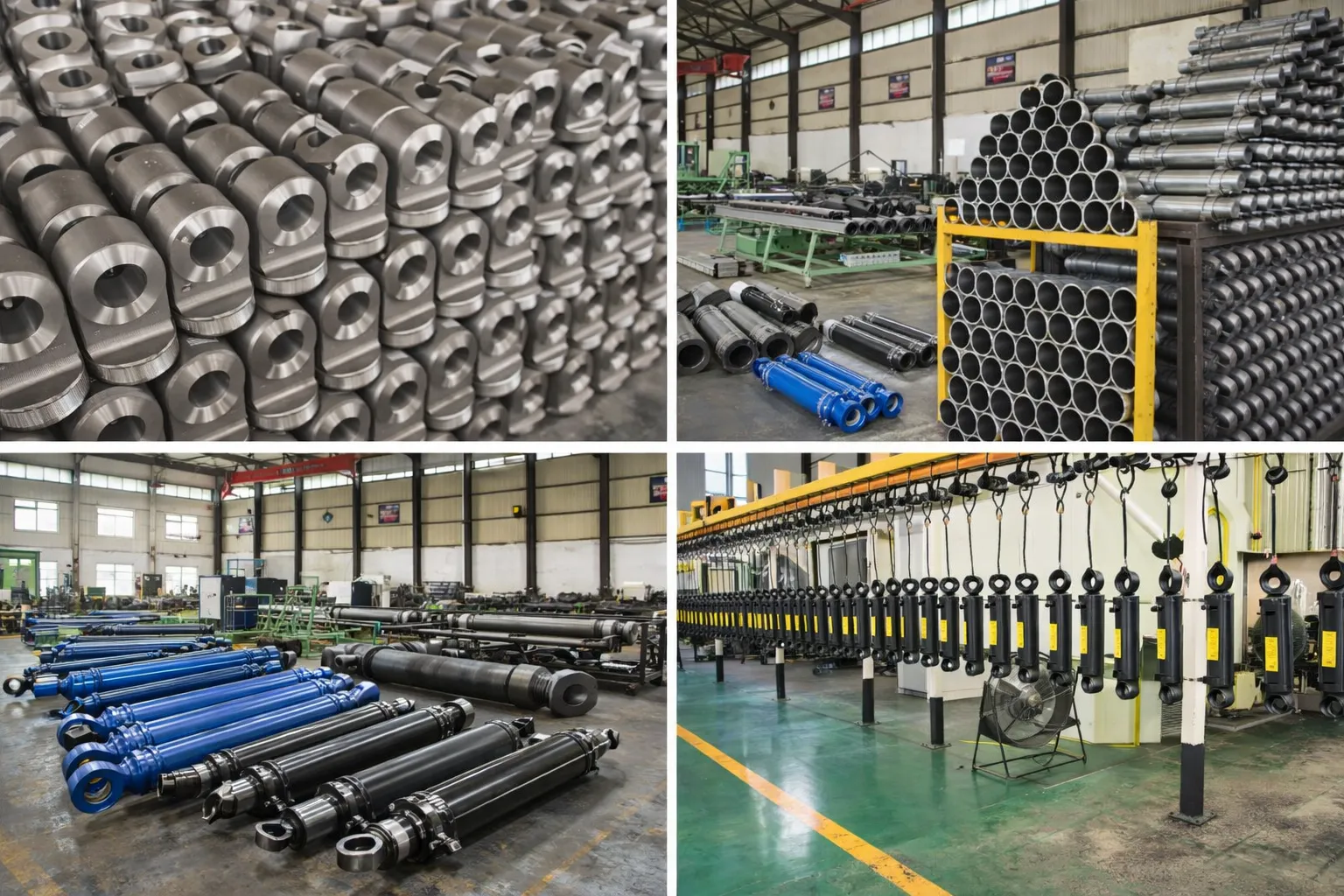
Return cylinders are manufactured alongside the master and side cylinders for each press order — sharing the same production batch, quality procedures, and test bench. The return cylinder's bore or plunger diameter is smaller than the master cylinder, but the machining precision is identical: the same honing specification (Ra 0.2–0.4 µm), the same chrome plating on the plunger or rod, and the same seal groove tolerances. Every return cylinder is hydrostatic tested at 1.5× working pressure with an individual test certificate. The complete cylinder set — master, side, and return — ships together with cross-referenced serial numbers for full traceability.
OEM & ODM
FAQ
Related Categories
Ek bilgi
| Editor |
|---|
İlgili ürünler
-
Tipping Cylinder for Vulcanizing Machine
-
Injection Molding Machine Shooting Cylinder
-
Cement Equipment Vertical Mill Cylinder
-
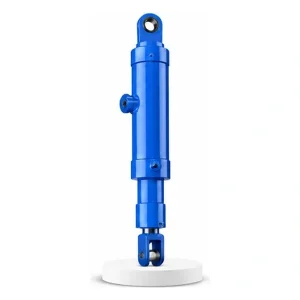
Electric Furnace Lock Cylinder
-
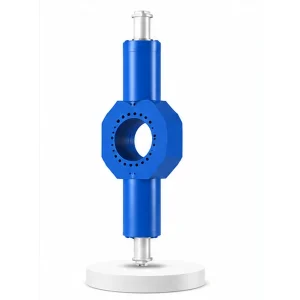
Hydraulic Press Rear Side Shift Cylinder
-
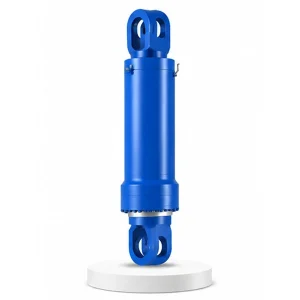
Electric Furnace Cover Lifting Cylinder
-
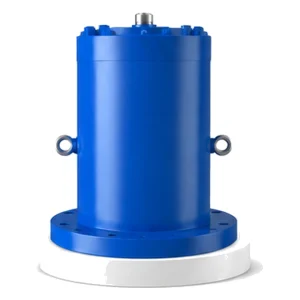
Cement Equipment Roller Press Cylinder
-
Hydraulic Press Master Cylinder