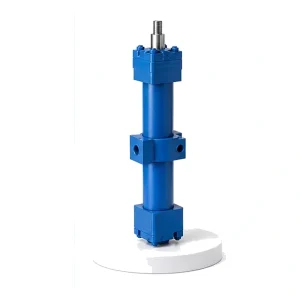
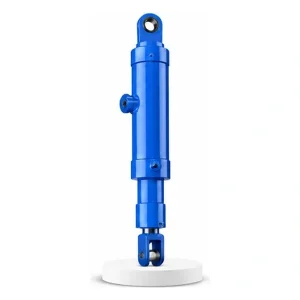
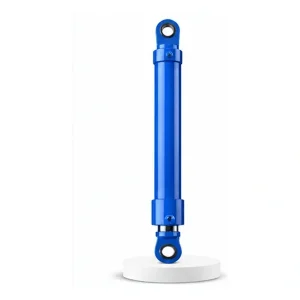
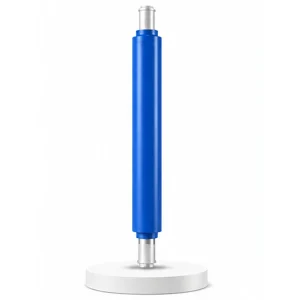
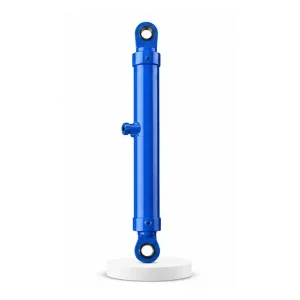
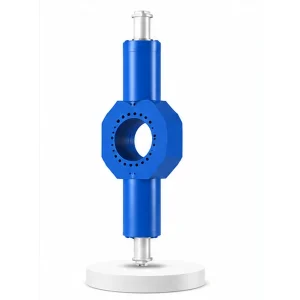
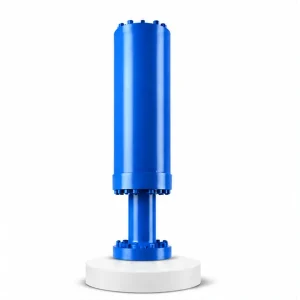
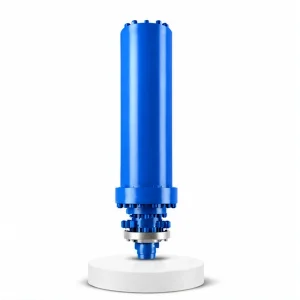
Injection Molding Machine Reciprocating Cylinder (Mold Shifting Cylinder)
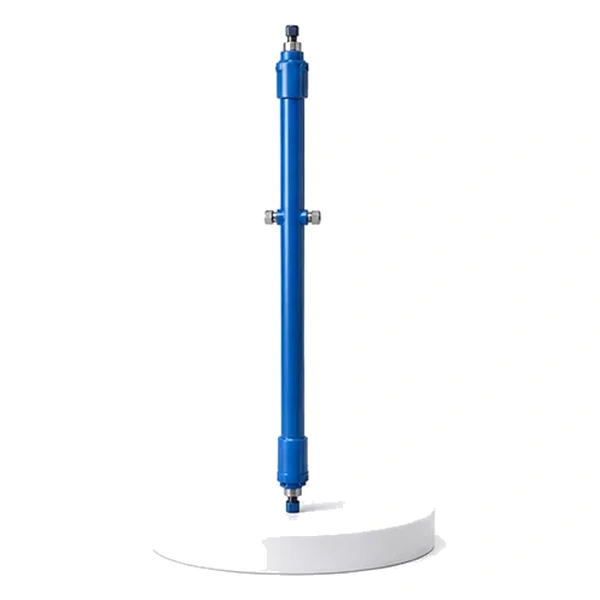
Mold Shifting Cylinder · 4th of 4
4 Metres of Stroke.
Hours of Changeover
Compressed to Minutes.
The shooting cylinder docks the nozzle. The ejection cylinder pushes the part out. The mold opening/closing cylinder opens and closes the mold. All three operate during every injection cycle. The mold shifting cylinder operates between production runs — sliding the old mold out of the machine and the new mold in. It runs a few times per day, but every minute it saves on changeover is a minute of production recovered. On a machine making $200/hour of product, a 30-minute faster changeover pays for the cylinder in weeks.
What Mold Shifting Means — Swapping the Entire Mold, Not Opening It
The mold opening/closing cylinder (#26) opens the mold halves for part ejection during every production cycle — the mold stays in the machine. The mold shifting cylinder does something entirely different: it removes the complete mold from between the platens and replaces it with a different mold for the next production run.
Traditional mold changes require a crane: unclamp the mold, lift it out with an overhead crane, set it aside, crane the next mold in, align it, clamp it. This takes 1–4 hours with two technicians. The mold shifting cylinder replaces the crane operation: the mold sits on a roller bed or guided carrier. The cylinder slides the old mold out to a staging position (where it can be disconnected from water, hydraulics, and electrics at ground level) and slides the new mold in — all in under 10 minutes. Korea Ever-Power manufactures mold shifting cylinders as the fourth component of the injection moulding machine cylinder family.
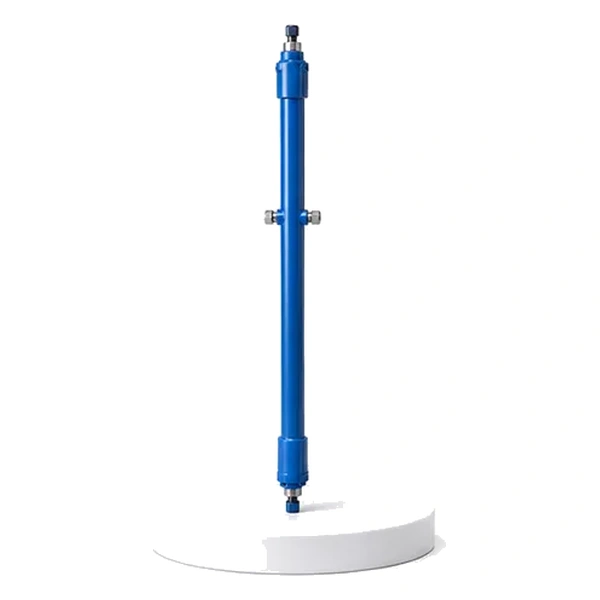
Technical Specifications
| Parameter | Value |
|---|---|
| Product | Injection Molding Machine Reciprocating Cylinder (Mold Shifting) |
| Function | Slide the mold carrier in/out for quick mold changes |
| Bore Diameter | 63 mm – 180 mm |
| Rod Diameter | 45 mm – 125 mm |
| Stroke | ≤ 4,000 mm (longest in family) |
| Maximum Thrust | 407 KN (bore 180 mm / pressure 16 MPa) |
| Working Pressure | Up to 16 MPa |
| Certification | ISO 9001 · 100% hydrostatic tested |
From Hours to Minutes — The Economics of Fast Changeover
Quick Mold Change (QMC) transforms injection moulding economics. Without it, long changeover times force manufacturers to produce large batches (to spread the changeover cost across more parts). With QMC, small batches become profitable — enabling just-in-time production, more product variants, and less warehoused inventory.
Unclamp old mold → crane lift out → transport aside → crane new mold in → align → clamp → connect utilities → purge → first good part. Total time: 1–4 hours. Requires crane availability, two skilled technicians, and the machine sits idle throughout — producing zero parts.
Unclamp old mold → cylinder slides old mold out to staging → disconnect utilities at ground level → cylinder slides new mold in (pre-staged with utilities pre-connected) → clamp → purge → first good part. Total time: 5–15 minutes. No crane needed. One technician. Machine idle time reduced by 80–95%.
On a machine producing $200/hour of product, a 2-hour changeover reduction saves $400 per changeover. At 2 changeovers per day, that is $800/day or approximately $200,000 per year — from a single cylinder. Contact the hydraulic cylinder engineering team for QMC system cylinder specifications.
Why 4,000 mm of Stroke — The Mold Must Clear the Machine Entirely

The other injection moulding cylinders have short strokes: the shooting cylinder needs 1,500 mm to retract the injection unit, the ejection cylinder needs 600 mm to push the part out, and the mold opening/closing cylinder needs 700 mm to separate the platens. The mold shifting cylinder needs 4,000 mm because it must move the entire mold — which sits between the platens — completely outside the machine frame to a staging position where technicians can safely access it from all sides.
The mold itself may be 400–1,200 mm wide (in the direction of travel). But the staging position must be far enough from the machine for the technician to walk around the mold, disconnect the water hoses, the hydraulic core-pull lines, the hot runner electrical cables, and the thermocouple connections — all without reaching into the machine frame. The 4,000 mm stroke provides clearance for the mold width plus the technician working space plus the connection access zone.
On large machines with wide molds, the full 4,000 mm is used. On smaller machines, a shorter stroke suffices — the same cylinder design with a shorter barrel accommodates the range. Korea Ever-Power manufactures the mold shifting cylinder at whatever stroke the machine builder specifies, up to the 4,000 mm maximum.
The Complete Injection Moulding Cylinder Family — Four Functions, One Machine
| # | Cylinder | Stroke | MPa | Function | When |
|---|---|---|---|---|---|
| 24 | Shooting | ≤1,500 | 25 | Dock nozzle to mold | Every cycle |
| 25 | Ejection | ≤600 | 10 | Push part out | Every cycle |
| 26 | Mold Open/Close | ≤700 | 25 | Open/close mold halves | Every cycle |
| 27 | Mold Shifting | ≤4,000 | 16 | Swap entire mold | Between runs |
Three cylinders run every cycle (thousands per shift); one cylinder runs between production runs (a few times per day). Korea Ever-Power supplies all four as a coordinated set for injection moulding machine builders.
Moving 1–30 Tonnes on a Roller Bed
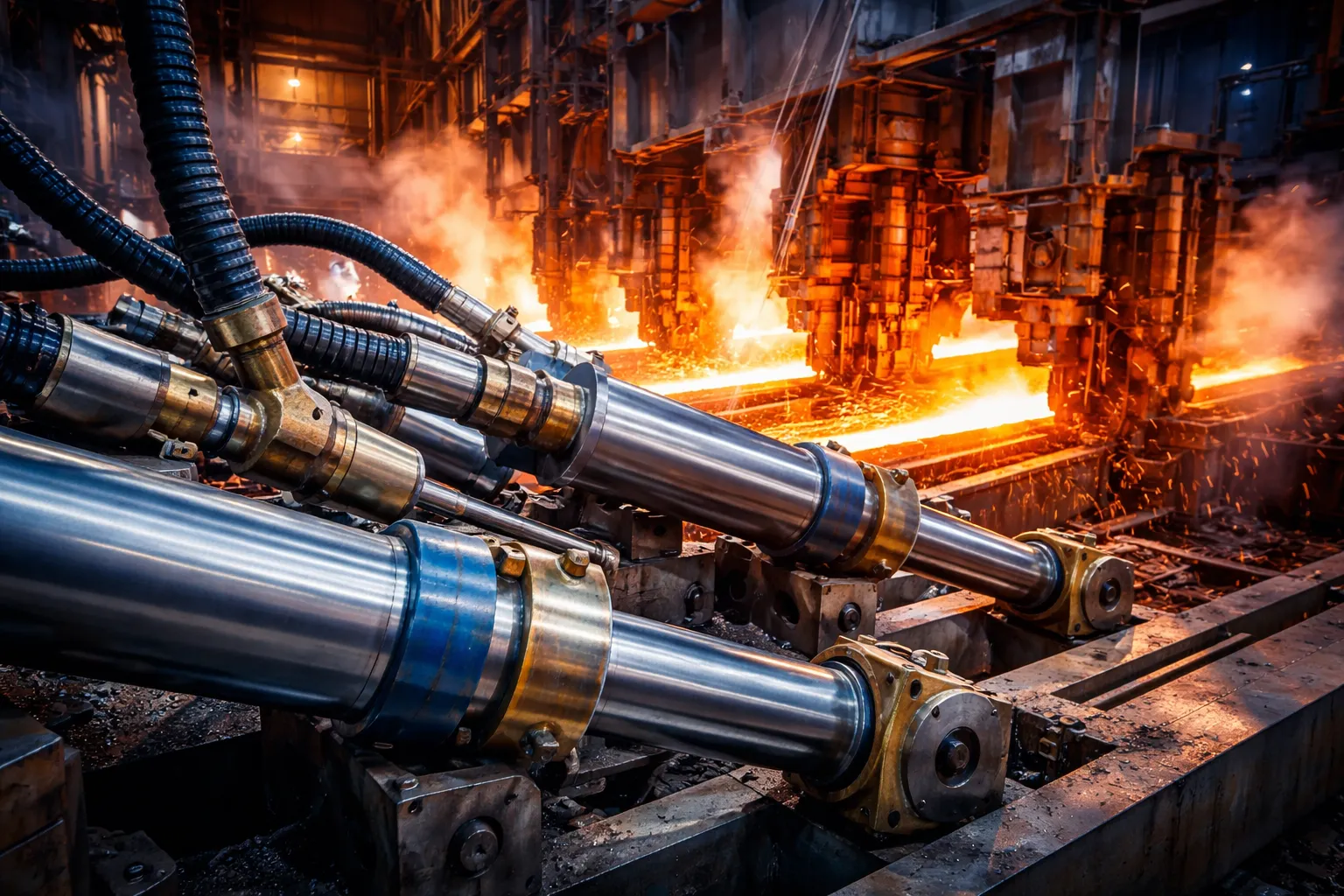
Injection moulds weigh from 50 kg (small consumer product moulds) to 30 tonnes (automotive bumper and dashboard moulds). The mold shifting cylinder must start, move, and stop these masses smoothly on the roller bed or guided carrier rails. The force to start the mold moving (overcoming static friction on the rollers) is higher than the force to keep it moving — the cylinder must deliver a burst of force at the start of the stroke without jerking the mold off its alignment.
At the end of the stroke, the mold must stop at an exact position — either centred between the platens (for the incoming mold) or centred at the staging station (for the outgoing mold). Overshoot or undershoot means the mold is misaligned with the platen bolt holes or the utility connection points, requiring manual correction that adds changeover time. Korea Ever-Power designs the mold shifting cylinder with adjustable end-of-stroke cushioning for precise positioning at both the machine-centre and staging positions.
The 4,000 mm stroke at 180 mm bore creates a long, slender cylinder that must resist lateral loading from roller bed misalignment. The rod guide bearing is oversized for the horizontal mounting — the same long-stroke engineering that Korea Ever-Power applies to the cement equipment roll over cylinder (#22), which shares the same long-stroke challenges.
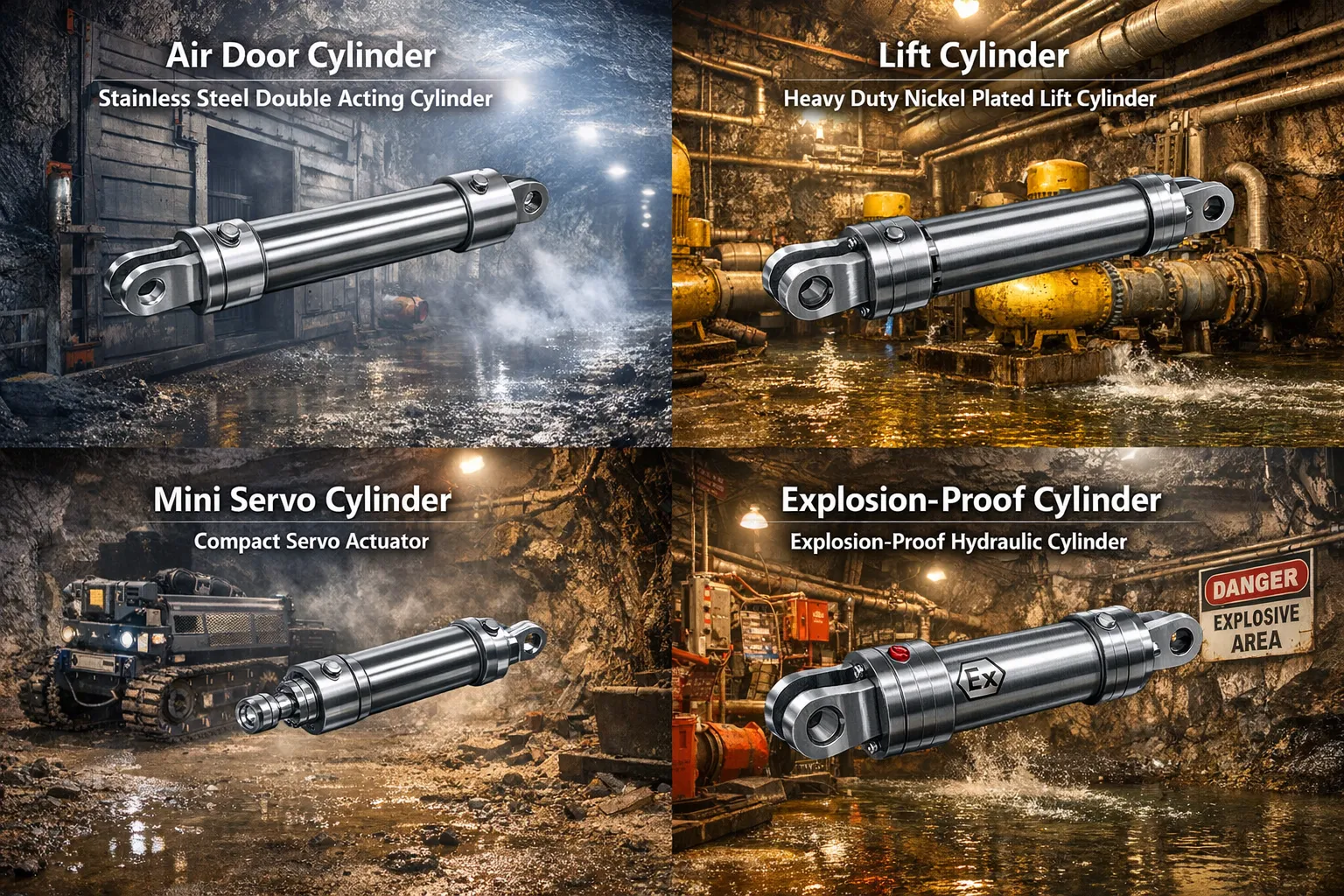
Manufacturing
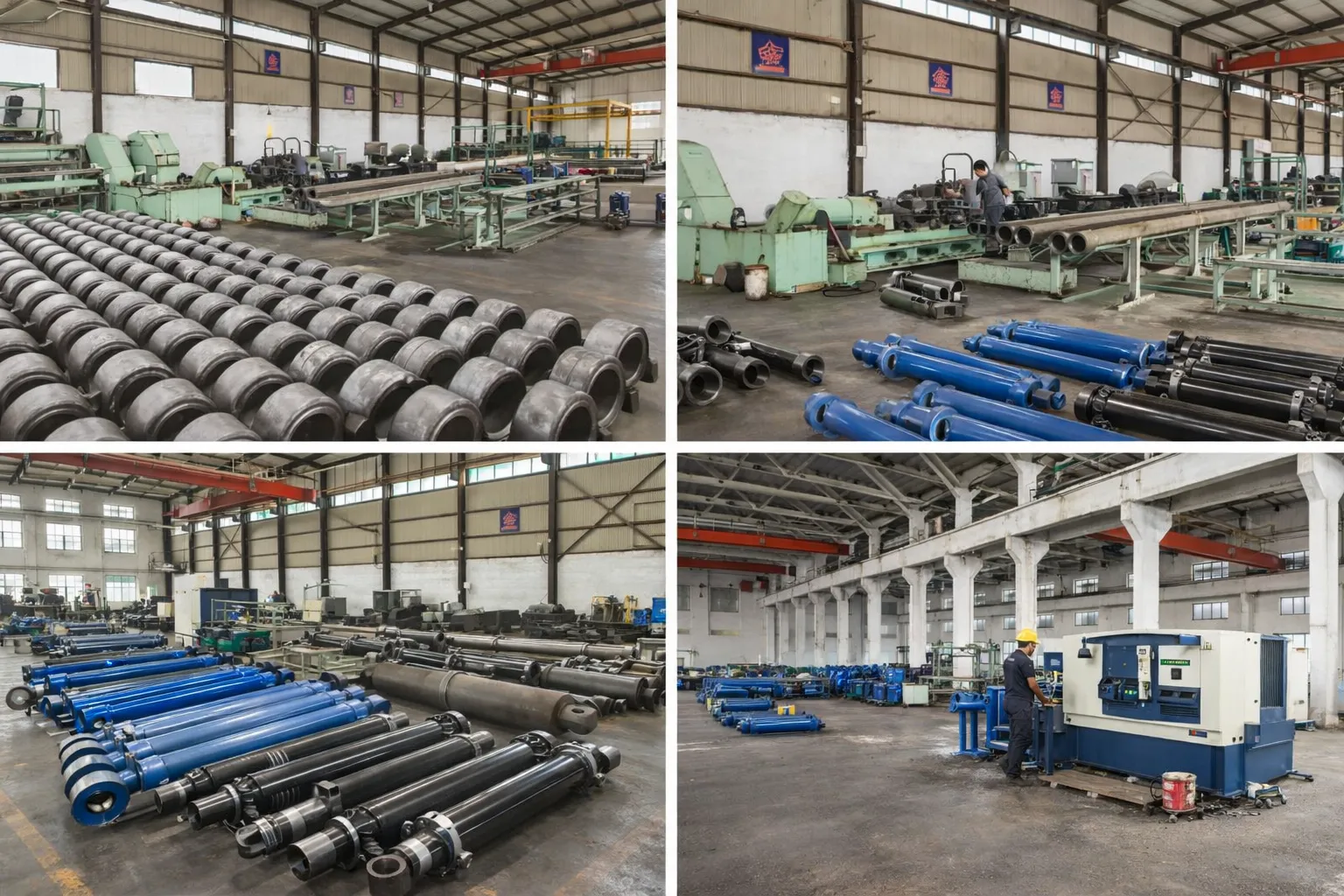
The mold shifting cylinder shares long-stroke engineering challenges with the cement roll over cylinder (#22): Euler buckling verification at full extension, oversized rod guide bearings for horizontal duty, and rod straightness verification (≤0.2 mm/metre). The bore is honed to Ra 0.2–0.4 µm. Chrome plating is 30–50 µm (clean factory environment). Seals are standard NBR or polyurethane — selected for smooth low-speed motion during the final positioning phase. End-of-stroke cushions are fitted at both ends and calibrated for the heaviest mold mass in the customer's range. Every mold shifting cylinder is hydrostatic tested at 1.5× working pressure (24 MPa) and functionally tested for full-stroke extension and retraction with cushion verification at both positions.
OEM & ODM
FAQ
Related Categories
Ek bilgi
| Editor |
|---|