Spindle Brake Cylinder for Wind Turbine
Engineered with advanced 42CrMo forging and ceramic coating technology to deliver absolute holding power, securing massive rotor inertia and ensuring unwavering personnel safety during critical nacelle maintenance operations.
Product Overview & Critical Industrial Value
In the rapidly expanding sector of multi-megawatt wind power generation, the operational safety and mechanical integrity of a wind turbine nacelle are paramount. When routine maintenance, vital inspections, or emergency repairs are required within the turbine hub, the immense rotational kinetic energy of the rotor blades and the main drive shaft must be completely neutralized. The essential safety mechanism responsible for this critical immobilization is the spindle brake cylinder. Operating high within the cramped, hostile environment of the nacelle, this specialized fluid power actuator provides the massive clamping force necessary to lock the rotor brake disc securely in place. By physically engaging the heavy-duty brake calipers against the main shaft, the main shaft brake cylinder ensures absolute mechanical lockout, allowing engineers and maintenance crews to perform their life-critical tasks without the catastrophic risk of unexpected rotor rotation caused by unpredictable aerodynamic wind gusts.
As a highly experienced hydraulic cylinder manufacturer with over two decades of deep metallurgical and fluid dynamics expertise, we profoundly understand that standard commercial actuators are fundamentally unsuited for the extreme demands of wind turbine applications. Wind turbines, especially those deployed in the harsh coastal regions, alpine ridges, and offshore blocks of South Korea and the broader East Asian maritime corridor, are subjected to continuous, aggressive multidirectional vibrations and pervasive, salt-laden moisture. When generic hydraulic parts are deployed in these punishing conditions, they rapidly succumb to rod pitting, extreme corrosion, and debilitating fluid leaks. Our exclusive engineering focus is dedicated to solving these exact failure modes. We have meticulously developed a heavy-duty double acting hydraulic cylinder explicitly tailored for the rigorous and unforgiving demands of spindle maintenance braking.
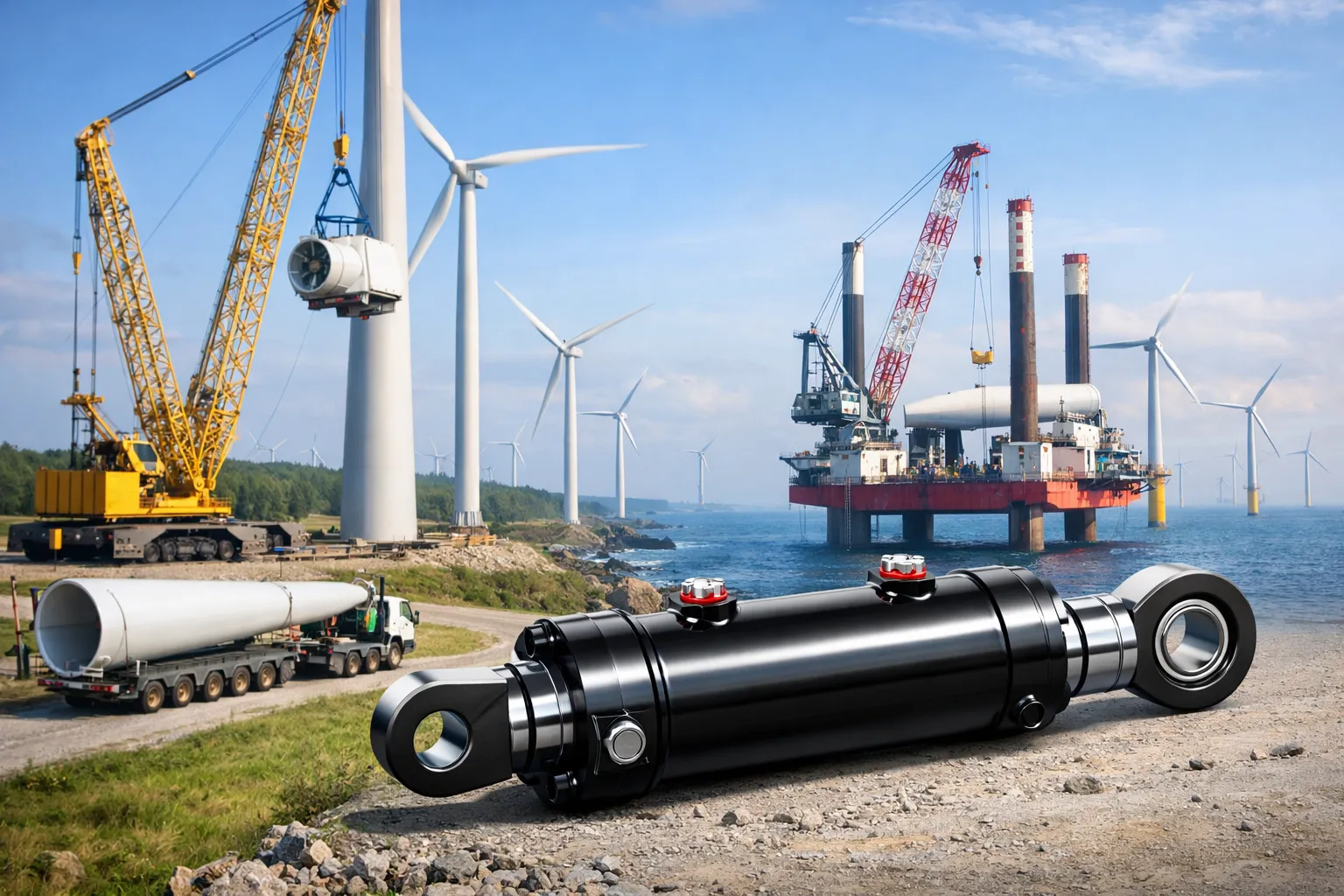
By abandoning outdated conventional chrome plating in favor of advanced ceramic coating technology, and by utilizing high-yield 42CrMo forgings for the structural body, our spindle brake cylinder offers unprecedented environmental resistance. These advanced actuators guarantee zero-leakage pressure holding capabilities, completely eradicating the typical seal failure modes that consistently plague inferior units. Whether you are outfitting next-generation offshore wind platforms or upgrading aging onshore infrastructure, our robust solutions drastically reduce the need for dangerous, unscheduled nacelle interventions and costly downtime.
Technical Parameters & Customization Envelope
Integrating a high-pressure braking system into a heavily congested turbine nacelle requires absolute dimensional fidelity and superior material specifications. We maintain an agile, vertically integrated manufacturing process, allowing us to perfectly scale our spindle brake hydraulic cylinder configurations to match specific caliper designs, hydraulic porting layouts, and rotor hub spatial constraints. The comprehensive matrix below outlines the fundamental engineering parameters and the extensive customization options available for our wind energy braking series.
| Engineering Variable | Designated Specification | Application Context & Advantage |
|---|---|---|
| Target Industry | Wind Power Generation | Engineered specifically for extreme onshore and offshore utility-scale wind farms. |
| Equipment Category | Wind Turbine | Highly scalable for 1.5MW legacy units up to modern 15MW+ offshore drivetrains. |
| Subsystem Integration | Spindle locking (Main shaft braking) | Delivers mechanical intervention force directly to the primary rotor brake disc. |
| Product Designation | Spindle brake cylinder | The primary hydraulic fluid power actuator responsible for personnel safety immobilization. |
| Operating Action | Double acting hydraulic cylinder | Provides active, highly pressurized fluid force for both the clamping and retracting phases. |
| Specific Structure Type | Piston cylinder | Engineered to provide maximum internal surface area for extreme high-pressure force generation. |
| Manufacturing Assembly | Welded construction | Eliminates tie-rod stretching and structural loosening under continuous severe vibration. |
| Core Material System | 42CrMo Alloy Steel | Ultra-high tensile strength forging prevents internal deformation under extreme clamping loads. |
| Surface Treatment | Ceramic coating | Creates an impenetrable, pore-free barrier that completely prevents marine salt-spray corrosion. |
| Environmental Rating | Moisture + Vibration | Engineered specifically to survive pervasive condensation and continuous multidirectional oscillation. |
| Working Condition | Main shaft maintenance braking | Must hold massive static pressure for days without exhibiting any internal fluid bypass. |
| Typical Failure Mode Prevented | Seal failure | Completely prevents the sudden loss of clamping pressure that leads to lethal rotor slippage. |
| Recommended Configuration | Ceramic rod + Heavy-duty seal | The ultimate engineering combination for infinite fatigue life and unyielding pressure retention. |
Operational Mechanics: How This Brake Cylinder Works
To truly appreciate the critical nature of a spindle brake cylinder, one must understand the immense kinetic forces at play within a wind turbine drivetrain. This component is not a dynamic braking system used for continuous rotational speed regulation; it is an absolute, static holding mechanism designed for maximum safety. When maintenance personnel prepare to enter the hub or service the gearbox, the turbine is first brought to a halt aerodynamically by pitching the massive blades out of the wind. Once the rotor is nearly stationary, the central hydraulic power unit (HPU) engages the primary mechanical braking circuit.
High-pressure hydraulic fluid is forcefully metered into the cap end of the welded cylinder housing. This immense fluid pressure acts violently against the meticulously machined hydraulic cylinder piston, instantly driving the high-strength 42CrMo alloy rod outward. The rod is mechanically linked to heavy-duty brake pads, which clamp violently onto the massive steel brake disc mounted directly on the main shaft. Because this system utilizes a highly responsive double acting hydraulic cylinder architecture, the retraction phase is equally controlled and positive; when the maintenance operation is successfully completed, pressurized fluid is actively routed to the rod end of the cylinder, safely pulling the brake calipers away from the disc to allow free and frictionless rotation during normal power generation.
The paramount engineering challenge during this entire operation is pressure retention. A standard maintenance evolution may take upwards of 48 hours, during which the turbine structure is constantly battered by high winds, causing severe micro-vibrations throughout the nacelle. Standard hydraulic cylinder components often succumb to this constant vibration, experiencing microscopic seal bypass that slowly degrades the clamping force. If the pressure drops below a critical safety threshold, the brake slips, and the massive rotor can unexpectedly turn, causing catastrophic equipment damage or fatal injuries to the crew. By utilizing a highly specialized internal sealing geometry combined with pilot-operated check valves, our spindle brake hydraulic cylinder maintains a 100% rigid hydraulic lock, ensuring the holding pressure remains absolute and unwavering until the system is intentionally depressurized.
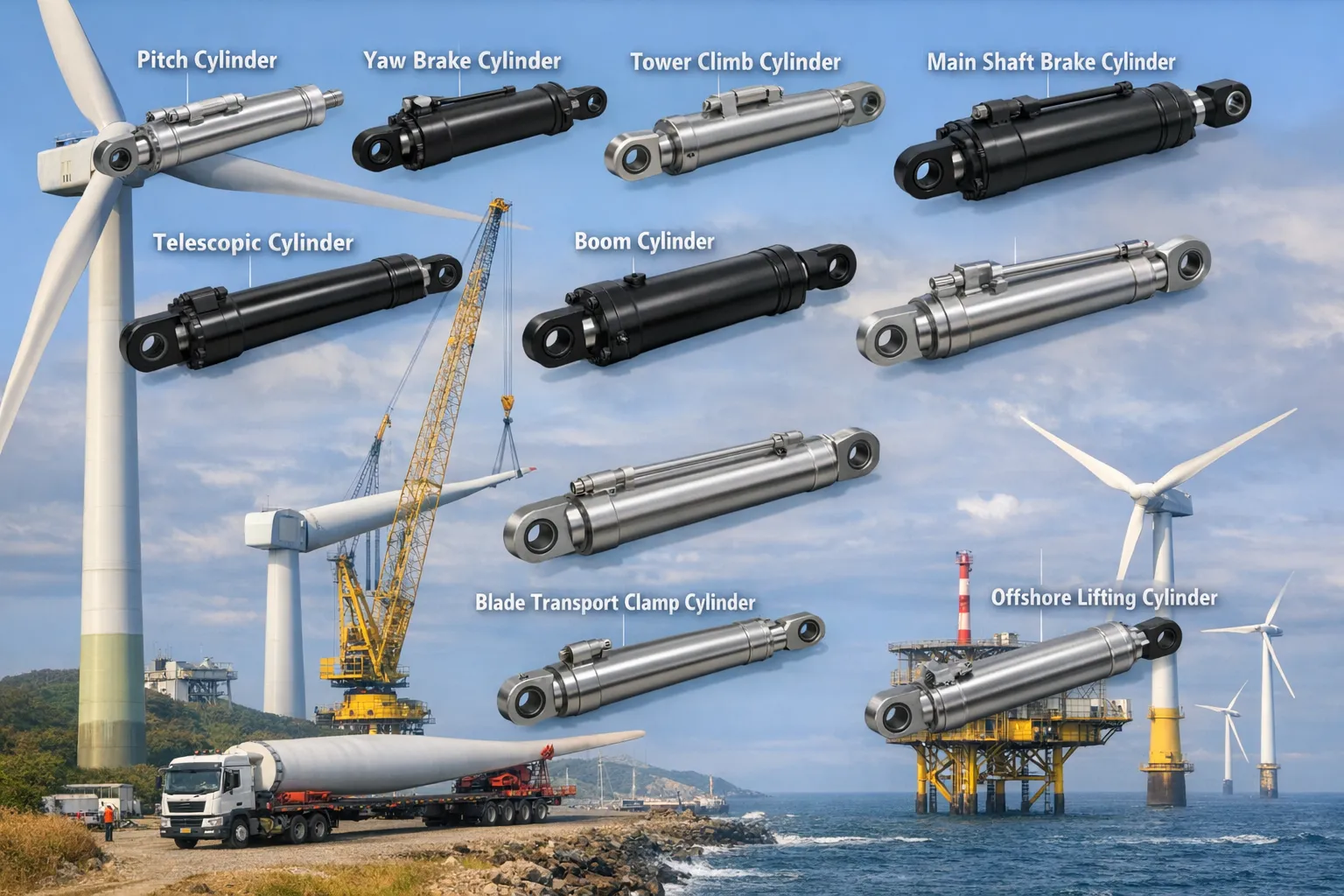
Seamless Direct Replacement for Leading Global Brands
Wind farm operators and independent service providers (ISPs) frequently encounter debilitating supply chain delays and highly inflated procurement costs when attempting to source replacement braking components. Original Equipment Manufacturers (OEMs) in Europe often impose restrictive lead times that can severely cripple a wind farm’s profitability. To decisively resolve this industrial bottleneck, our engineering division has meticulously reverse-engineered our braking actuators to function as flawless, drop-in replacements for ubiquitous global fluid power brands.
We possess the extensive technical capacity to supply custom spindle brake cylinder units that exactly match the spatial footprint, port threading, stroke lengths, and clamping tonnage of equipment originally produced by industry leaders such as Svendborg Brakes, Bosch Rexroth, Parker Hannifin, Eaton, and Hydac. When field technicians are tasked with fixing hydraulic cylinders high in the nacelle, they can execute a direct hardware swap with our superior units without altering the existing heavy-iron brake caliper brackets or modifying the complex HPU plumbing.
Disclaimer: The mention of these specific third-party brands is strictly intended for the purpose of demonstrating dimensional compatibility and facilitating rapid technical cross-referencing for maintenance engineers. It does not imply any direct partnership, affiliation, nor does it constitute trademark infringement against the respective trademark owners. We independently design and manufacture our own highly robust alternative solutions, offering an exceptionally competitive hydraulic cylinder price.
Six Core Technical Advantages
What elevates a standard linear actuator to the status of a mission-critical safety device? It requires an uncompromising dedication to solving the specific tribological and mechanical challenges inherent to wind energy. Here are six core engineering advantages that establish the superiority of our main shaft brake cylinder:
1. Advanced Ceramic Coating Technology
Coastal and offshore installations present a devastating combination of highly corrosive salt fog and extreme humidity. Standard hard chrome plating possesses microscopic micro-cracks; over time, salt penetrates these fissures, causing underlying rust that shreds internal seals. We utilize state-of-the-art thermal ceramic spraying to coat the piston rod, creating a dense, pore-free surface that is completely impervious to marine corrosion.
2. High-Yield 42CrMo Material Architecture
When the brake calipers are fully engaged, the internal hydraulic pressure can spike drastically. To prevent the cylinder barrel from experiencing microscopic elastic ballooning—which leads to fluid bypass—we forge our primary hydraulic cylinder components from premium 42CrMo alloy steel, providing exceptional tensile strength and rigidity under massive shock loads.
3. Heavy-Duty Sealing System for Zero Leakage
The most common point of catastrophic failure in braking systems is seal degradation. We have engineered a proprietary heavy-duty sealing matrix comprising robust step seals, highly resilient elastomeric energizers, and anti-extrusion backup rings. This multi-stage configuration guarantees zero internal fluid bypass, completely preventing seal failure.
4. Vibration Mitigation via Welded Construction
Nacelles are subjected to continuous harmonic oscillations. Standard tie-rod cylinders rapidly suffer from stretched threads and structural loosening under these conditions. Our spindle brake cylinder utilizes a deeply penetrated, automated welded construction, creating a monolithic pressure vessel that cannot vibrate apart.
5. Optimized Thermal Resilience
Temperatures fluctuate wildly from freezing winter nights to blistering operations. Our heavy-duty seals are carefully compounded to maintain optimal elasticity across a massive thermal envelope, ensuring the hydraulic cylinder piston actuates smoothly without binding or leaking, regardless of extreme thermal expansion or contraction.
6. Ultra-Low Friction Gliding Surfaces
While maintaining clamping force is vital, the brake must also release quickly without sticking. We incorporate PTFE-blended guide rings and optimize the surface finish of the ceramic rod to an incredibly fine micro-roughness. This ultra-low friction interface ensures effortless gliding during the retraction phase.
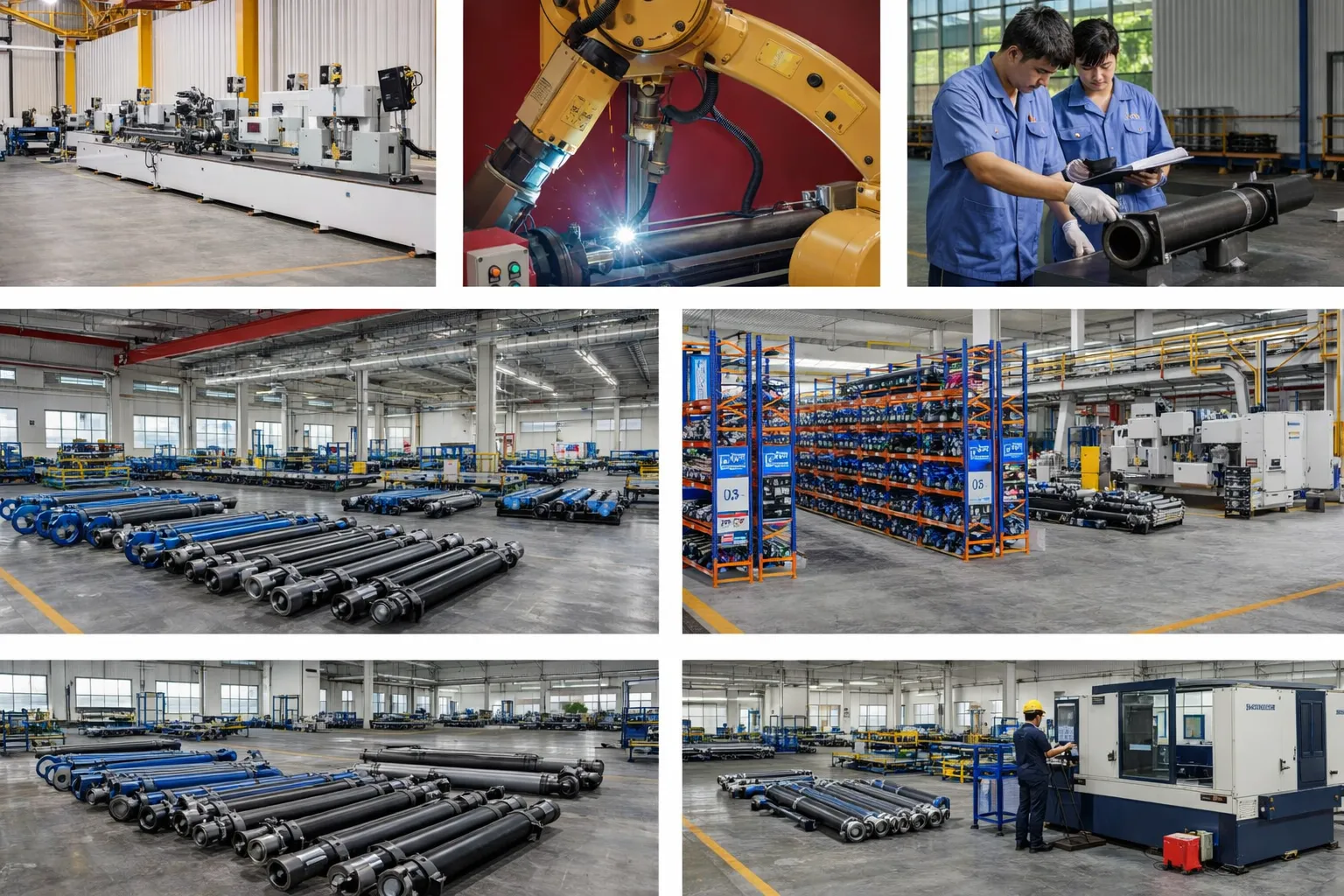
Autonomous Manufacturing & Unrelenting Quality Control
Producing a component where a single microscopic flaw could endanger human life dictates that a premier hydraulic cylinder manufacturer must maintain total sovereignty over their production ecosystem. We operate a fully integrated, state-of-the-art manufacturing facility, meaning we do not outsource critical mechanical operations. The process initiates with exhaustive metallurgical validation; every batch of raw 42CrMo steel undergoes ultrasonic non-destructive testing (NDT) to verify the absolute absence of internal voids, micro-cracks, or slag inclusions. Our heavy-duty multi-axis CNC machining centers then mill and turn the hydraulic cylinder components to exact, single-digit micron tolerances.
Following the precision application of the advanced ceramic spray, the rods are diamond-polished to a flawless mirror finish. Assembly takes place exclusively within climate-controlled, positively pressurized cleanrooms to ensure that absolutely no airborne particulate contamination compromises the heavy-duty seals before the unit is sealed.
The bedrock of our safety promise is an uncompromising 100% Factory Acceptance Testing (FAT) protocol. Every assembled spindle brake hydraulic cylinder is locked into an automated test rig. We subject the units to severe hydrostatic proof testing, pressurizing them to 150% of their maximum rated capacity for extended durations. We utilize highly sensitive digital flow meters and pressure transducers to verify absolute zero internal leakage. Once a cylinder passes this rigorous gauntlet, it receives a permanent, laser-etched serial number, providing full lifetime traceability back to its original steel heat number and test certification.
Extensive Cross-Industry Applications
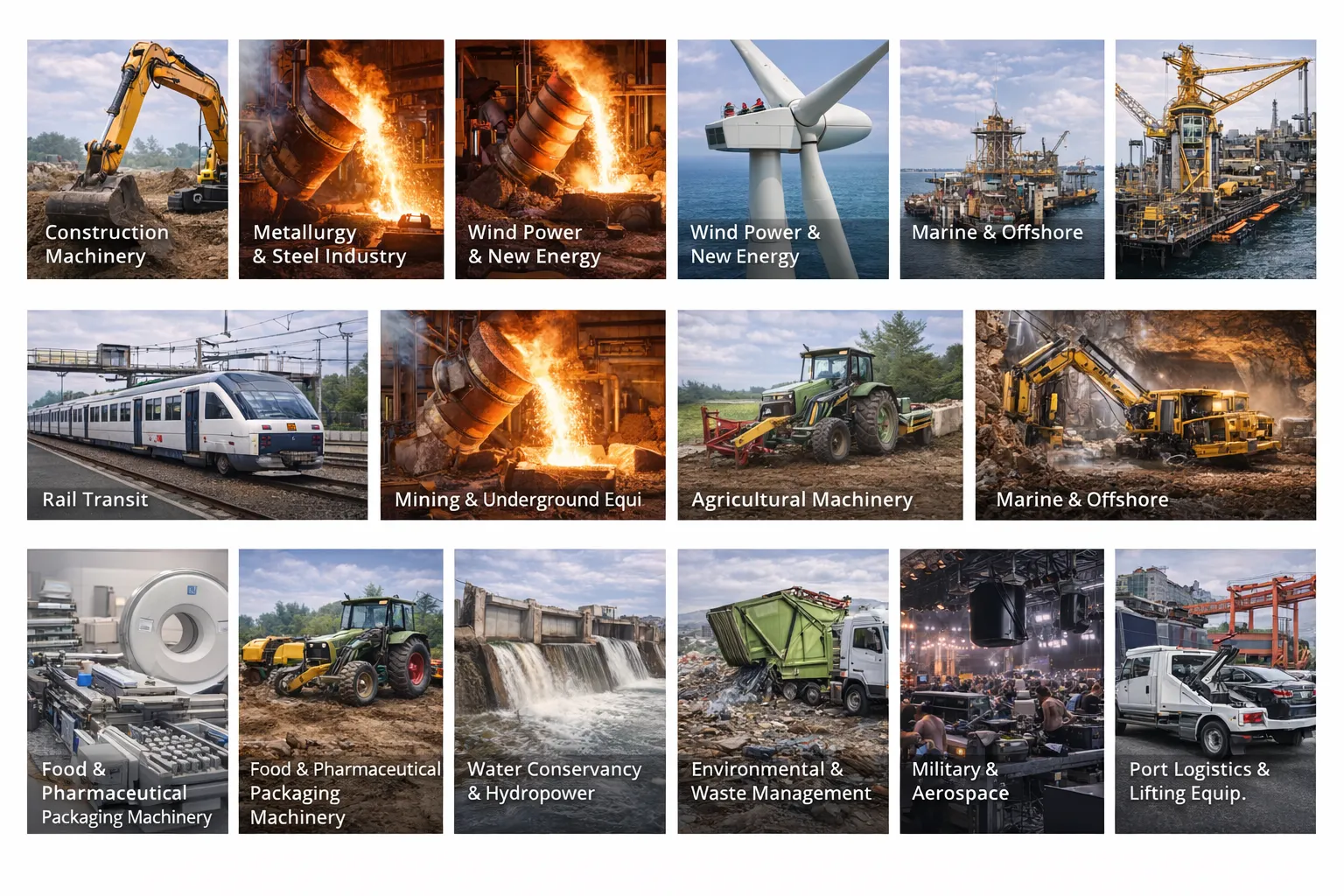
While the heavily armored, ceramic-coated architecture detailed above represents the ultimate safety mechanism for wind turbine spindle locking, the foundational fluid power engineering we have mastered translates flawlessly across multiple extreme-duty industrial sectors. Whenever a commercial environment demands immense, unwavering holding force and total resistance to environmental decay, our technology delivers. Explore our comprehensive hydraulic cylinder product lineup to see our full capabilities.
- Metallurgical and Heavy Iron Manufacturing: We supply heat-resistant, high-tonnage clamping actuators for continuous casting lines, electric arc furnace tilting, and heavy rolling mill gap control. Discover our robust solutions for the metallurgical and iron industry.
- Subterranean Extraction and Earthmoving: Highly durable, impact-resistant hydraulic rams engineered specifically to survive the abrasive dust, falling rock debris, and brutal shock loads inherent in the mining industry.
- Heavy Infrastructure and Building: Precision steering actuators, boom extensions, and critical primary lift cylinder applications essential for the safe operation of massive mobile cranes and excavators within the construction machinery industry.
- Plastics and Rubber Machinery: High-speed injection molding clamping units that require rapid cycling combined with immense, unwavering lock-up tonnage.
- Maritime Logistics and Material Handling: Salt-resistant locking actuators for ship-to-shore crane spreaders, automated port lifting platforms, and heavy maritime container handling equipment.
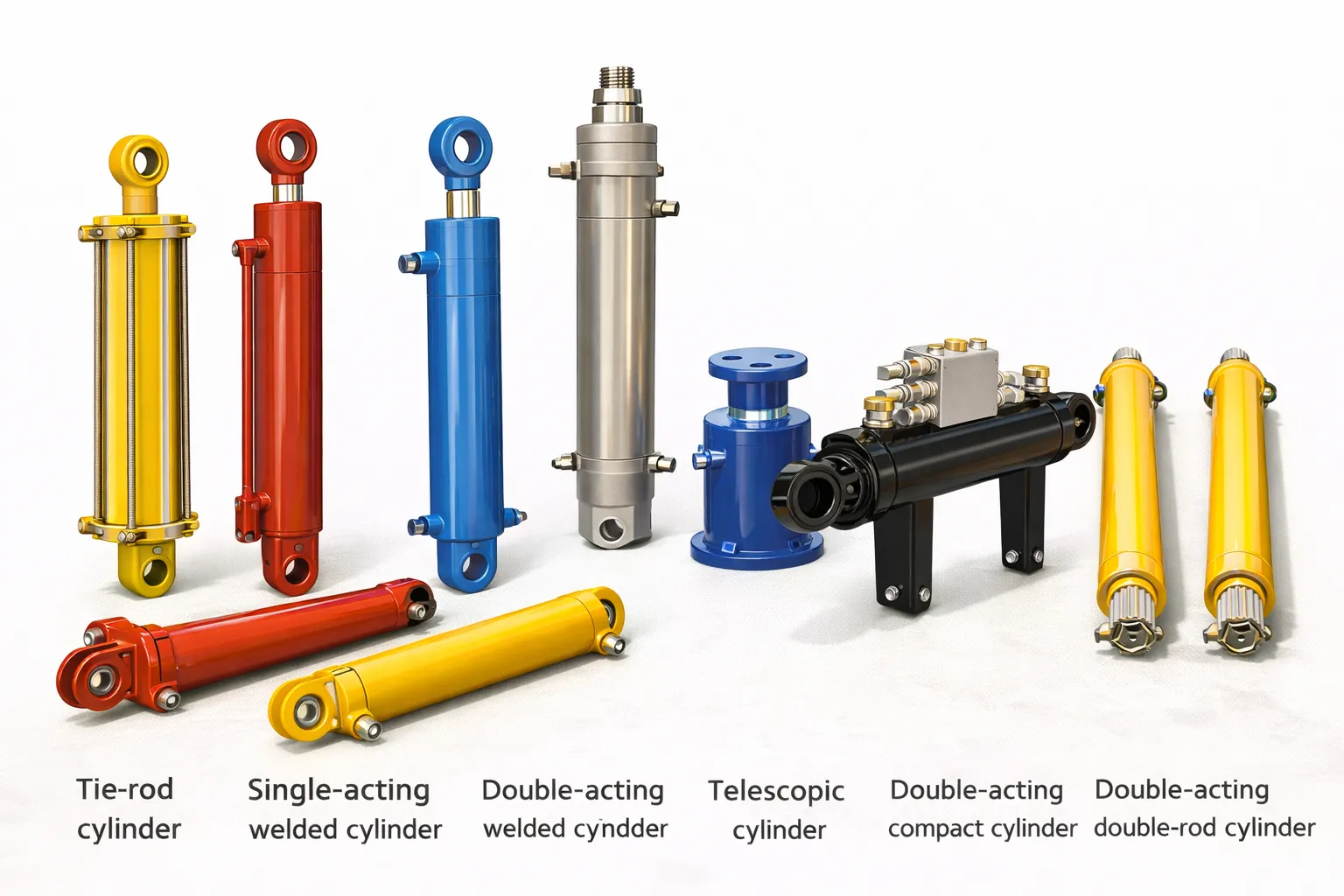
Comparative Analysis: Standard Actuators vs. Our High-Performance Braking Cylinders
When evaluating procurement options for turbine safety systems, focusing solely on the initial hydraulic cylinder price is a dangerous false economy. The true cost lies in unplanned maintenance downtime, expensive offshore vessel chartering, and the catastrophic risks of hardware failure. The comparative matrix below highlights why investing in purpose-built engineering provides massive long-term financial and operational security.
| Technical Dimension | Standard Market Hydraulic Cylinder | Our High-Performance Spindle Brake Cylinder |
|---|---|---|
| Rod Surface Defense | Standard hard chrome plating; susceptible to micro-cracking, pitting, and rapid rust in coastal salt-spray. | Advanced thermal ceramic spraying; completely pore-free, rendering it highly immune to marine corrosion. |
| Pressure Retention | Standard U-cup PU seals; frequently suffer from extrusion and bypass under prolonged static clamping. | Proprietary heavy-duty seal geometry; guarantees absolute zero leakage and unwavering holding force. |
| Structural Integrity | Tie-rod construction; threads stretch and vibrate loose under the continuous harmonic oscillation of the nacelle. | Deep-penetration welded construction; forms a monolithic, highly rigid vessel that cannot rattle apart. |
| Metallurgical Base | Standard carbon steel (e.g., 1045); prone to microscopic elastic expansion under extreme high pressure. | High-yield 42CrMo forging; exceptional tensile strength ensures zero structural deformation under load. |
Real-World Case Studies: Validating Engineering Excellence
Theoretical specifications must always be proven in the unforgiving theater of industrial application. Over the past decade, we have heavily supplied the rapidly expanding East Asian wind energy sector, a region notorious for its punishing coastal weather and aggressive typhoons. Below are five documented cases demonstrating how our solutions resolved critical operational crises.
Case 1: Eradicating Coastal Corrosion – Jeju Island, South Korea
Client: Prominent South Korean Offshore Wind Utility
The Challenge: A massive offshore wind farm was experiencing premature braking failures. The pervasive oceanic salt fog was penetrating the nacelles, causing the standard chrome-plated brake cylinders to rust, flake, and subsequently shred the internal seals, resulting in dangerous clamping pressure drops.
How They Contacted Us: The lead maintenance procurement officer discovered our specialized marine-grade solutions via an extensive online search for corrosion-resistant hydraulic parts.
The Solution & Result: We rapidly deployed a fleet replacement utilizing our advanced ceramic-coated spindle brake cylinder systems. Following the brutal 2024 typhoon season, detailed boroscopic inspections revealed absolute zero rod pitting or seal degradation. Unplanned nacelle maintenance climbs dropped by 60%.
“The salt spray here destroys standard equipment in months. Transitioning to your ceramic rod cylinders permanently solved our corrosion nightmares. The technical superiority of your materials is undeniable.” — Mr. Kang, Chief Offshore Operations Manager (October 2024).
Case 2: Securing Fatal Pressure Drops – Hokkaido, Japan
Client: Independent Alpine Wind Service Provider
The Challenge: During a routine 48-hour gearbox servicing window in freezing conditions, technicians noticed the main shaft brake slowly losing grip due to internal fluid bypass in the OEM cylinders, creating a lethal safety hazard for the crew working inside the hub.
How They Contacted Us: Met our lead engineers at an international renewable energy exposition in Tokyo, urgently seeking a retrofit solution with zero-leakage guarantees.
The Solution & Result: We replaced the failing actuators with our proprietary units featuring the heavy-duty seal matrix optimized for extreme temperatures. During subsequent major servicing overhauls, the hydraulic pressure gauges remained absolutely static for days. The engineers could perform their tasks with total psychological security.
“Safety is our absolute priority. A slipping rotor during a gearbox swap is our worst nightmare. These new cylinders hold pressure like a solid block of steel. Outstanding engineering.” — T. Yamamoto, Lead Safety Engineer (January 2025).
Case 3: Absorbing Severe Vibration – Kyushu, Japan
Client: Regional Wind Farm Asset Management Group
The Challenge: The financial burden of continuously chartering cranes and specialized crews for high-altitude hydraulic cylinder repair was destroying the profitability margin of an older 2.0MW turbine fleet. The original tie-rod cylinders were constantly vibrating loose, leaking fluid everywhere.
How They Contacted Us: Reached out directly through our digital B2B portal, looking for highly durable aftermarket replacements that could eliminate recurring structural failure cycles.
The Solution & Result: We provided a highly cost-effective fleet overhaul package. By utilizing our robust welded 42CrMo cylinders, we eliminated the structural loosening caused by nacelle vibration entirely. The client saw a 400% increase in Mean Time Between Failures (MTBF) for the braking subsystem.
“We were spending exorbitant amounts on continuous field interventions to tighten leaking tie-rods. Partnering with you provided an incredibly fair hydraulic cylinder price coupled with equipment that simply refuses to break down. Our operational expenditures have plummeted.” — K. Takahashi, Fleet Asset Director (August 2024).
Case 4: Beating OEM Lead Times – Taichung, Taiwan
Client: Domestic Turbine Assembly Plant
The Challenge: Suffering massive 6-month lead times waiting for mechanical lock components from Europe, threatening severe contractual penalties and halting nacelle production lines.
How They Contacted Us: Reached out via our website looking for an agile regional manufacturing partner for custom hydraulic cylinder components.
The Solution & Result: We rapidly reverse-engineered the spatial envelope and delivered custom cylinders that matched the European specifications perfectly. We cut the supply chain lead time down to 5 weeks and reduced costs significantly, unblocking their assembly line.
“Their engineering response speed is phenomenal. They matched the European specifications perfectly and totally unblocked our assembly line. Excellent technical support.” — Lin Wei, Procurement Manager (January 2025).
Case 5: Upgrading to Double-Acting Relibility – Binh Thuan Province, Vietnam
Client: Independent Power Producer (IPP)
The Challenge: Aging single acting hydraulic cylinder brake units with weak return springs were failing to fully retract the caliper pads. This caused severe brake dragging, generating excessive heat, burning through pads, and reducing overall turbine generation efficiency.
How They Contacted Us: A referral from a previous client in the heavy port machinery sector who vouched for our custom manufacturing capabilities.
The Solution & Result: We rapidly delivered custom dual-port actuators that forcefully and actively retract the pads using hydraulic pressure. Technicians successfully retrofitted the entire fleet, totally eliminating all instances of pad dragging and friction loss.
“Upgrading to their double acting hydraulic cylinder design paid for itself in a matter of months by saving us from constantly replacing burnt brake pads. Fixing hydraulic cylinders and upgrading systems is vastly easier with a partner like this.” — Nguyen V., Operations Manager (May 2025).
B2B Frequently Asked Questions (FAQ)
Procuring critical safety equipment demands rigorous technical scrutiny. Below are detailed, expert responses to the most common questions our engineering division fields from international procurement officers and lead service technicians.
1. How exactly does ceramic coating improve the lifespan of the spindle brake cylinder?
2. Can you provide custom hydraulic cylinder components for obsolete turbines?
3. What is the typical lead time for deliveries to South Korea and Japan?
4. How do you prevent seal failure in highly vibrating environments?
5. Do you supply aftermarket seal kits for hydraulic cylinder repair?
6. How does the double acting hydraulic cylinder function in this braking system?
7. What factors influence the hydraulic cylinder price for bulk orders?
Fortify Your Turbine Safety Systems Today
When human lives and multi-million dollar renewable assets depend on absolute mechanical immobilization, compromise is not an option. Do not rely on generic industrial actuators to secure your wind fleet. As an elite hydraulic cylinder manufacturer, our engineering division is prepared to analyze your braking schematics and deliver the ultimate fluid power safety solution.
Expect immediate, professional B2B engineering support. We rigorously evaluate your custom specifications and typically return highly detailed technical assessments and quotations within 24 hours.
Editor: Cxm